Orchid tattoo ideas, meaning and designs
An orchid tattoo is built from three petals, three sepals and one modified petal called the labellum, and the labellum is what people recognize.
- An orchid flower has three sepals and three petals. One petal, the labellum, is the lip.
- Most orchid buds rotate 180 degrees as they open, so the lip sits at the bottom.
- The column at the center fuses the male and female parts into one structure.
- Vanilla comes from the seed pods of an orchid, Vanilla planifolia.
- A Cattleya has a large frilled lip, a lady's slipper has a pouch, and a Phalaenopsis lip is small with two curling tips.
- Pain level4 / 10 on the outer thigh
- Healing2 to 3 weeks on the surface
- Typical size8 to 25 cm (3 to 10 in)
- Studio cost$180 to $700
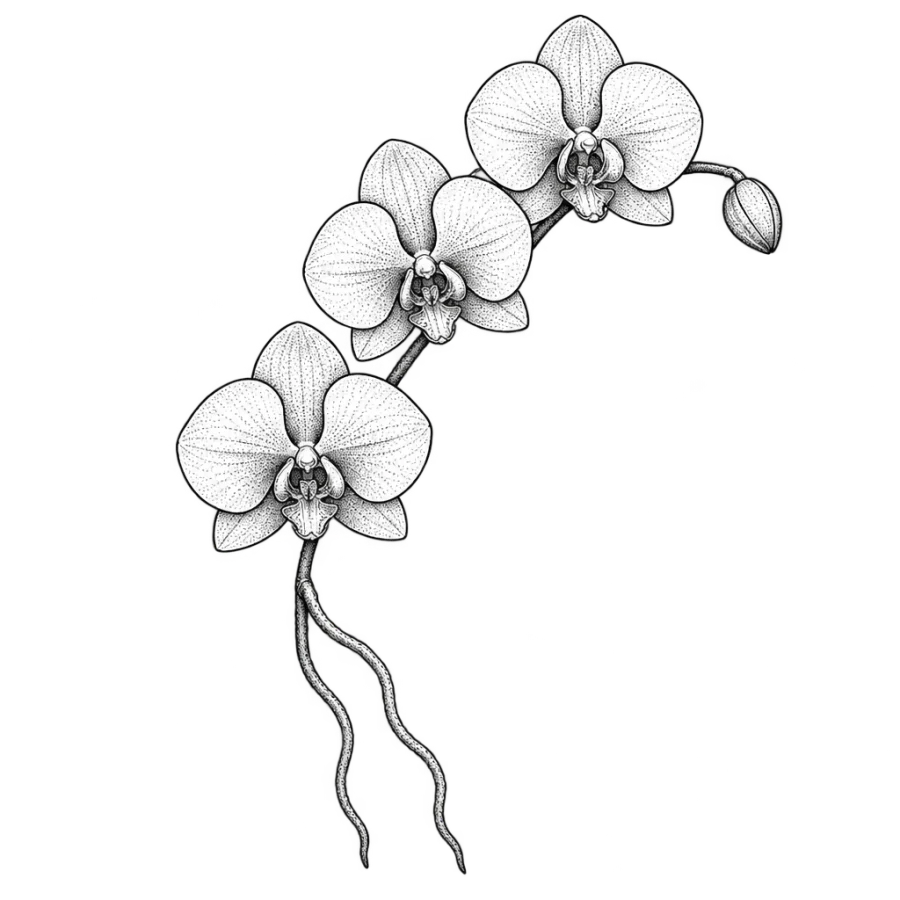
Orchid flowers are bilaterally symmetrical, like a face, which is unusual among flowers. Three sepals form the outer triangle, two petals sit left and right, and the third petal is the labellum, the lip, reshaped into something broader, frillier or pouched. Most of the flower's visual interest lives in that lip, and an artist who treats it as just another petal gives you a bloom nobody can identify.
Most orchid buds also twist 180 degrees as they open, so the lip ends up at the bottom, which is why a drawn orchid looks wrong with the lip on top. The flower people usually mean is a Phalaenopsis, the moth orchid from the supermarket: two broad flat side petals, three narrower sepals behind them, and a small lip with two appendages curling forward at the front.
Three petals, three sepals and the lip
Draw the sepals first. They sit behind everything else, one pointing up and two down at roughly four and eight o'clock, narrower than the petals and usually a shade paler. The two petals fill the gaps left and right, broad and flat on a Phalaenopsis, narrow and twisted on a Vanda or a Brassia. The lip goes last, and it goes at the bottom.
The lip is where the species shows. A Phalaenopsis lip is a small three lobed shape with two thin appendages curling forward like antennae. A Cattleya lip is a large frilled trumpet taking up half the flower. A lady's slipper lip is a smooth pouch, easy to draw and strange looking to anyone who does not know the plant. Pick one and tell your artist which, because the three are not interchangeable.
Common orchids and how each one reads
- Phalaenopsis, flat and wide, the easiest to recognize and the most forgiving at 8 cm
- Cattleya, dominated by a frilled lip, needs 14 cm or more to make sense
- Lady's slipper, with a pouch and a tall dorsal sepal, a strong silhouette for blackwork
- Dendrobium, small blooms along an arching cane, good for a long narrow placement
- Vanda, flat and almost circular with a checkered pattern, suits dotwork
Size, and the structure that collapses first
The column at the center of the flower is a small complicated object, and it is the first casualty. On a bloom under about 7 cm across, the column, the lip's side lobes and the two curling appendages run into each other and the middle becomes a grey patch. That patch is exactly where the eye goes, so the flower stops reading as an orchid before anything else has gone wrong.
A single Phalaenopsis bloom wants 8 to 10 cm across. A spray of three blooms on an arching stem needs 20 to 30 cm of length, which works on a forearm, down a spine or along the ribs. Cattleya and anything with a heavily frilled lip needs 14 cm minimum, because a frill drawn below that size comes out as a wobbly line.
| Bloom width | What reads | What to simplify |
|---|---|---|
| 5 to 6 cm (2 to 2.4 in) | petals, sepals, the lip as one shape | the column, the lip's side lobes |
| 8 to 10 cm (3 to 4 in) | full lip with side lobes and two tips | fine petal veining |
| 12 to 16 cm (5 to 6.5 in) | the column, lip texture, petal creasing | nothing |
| 20 cm plus (8 in plus) | spotting, veining, translucent petal edges | nothing |
Why orchids suit black and grey better than fine line
An orchid petal is broad, slightly cupped and almost translucent, so what defines it is tone rather than outline. Black and grey realism handles that: a long soft gradient across the petal, a hard shadow where the lip overlaps, and open skin for the highlight. The result still reads as an orchid from across a room, which no amount of outline detail achieves on its own.
Fine line is the more common request and the harder brief. With no tonal range, the lip has to be described entirely by outlines and the column has to be stippled rather than shaded. It can be done well at 10 cm and up by someone who draws plants regularly. At 5 cm it produces the flower everyone politely calls pretty and nobody can name. White orchids are a particular trap, because a white flower in a tattoo is made of grey and open skin, never white ink.
Placement, companions and aging
A single bloom is roughly circular and fits the shoulder, the hip, the outer thigh or the shoulder blade. A spray is a long arc, which is why orchids end up on forearms, spines and ribs more often than most flowers do. The arch of the stem should follow the limb, so ask for the stencil to be bent around your arm rather than drawn flat on paper and stuck on.
Orchids age according to how much grey they carry. Light wash in the petals, put in too light, can lift away almost entirely in five to seven years and leave an outline with nothing inside it, which is the most common orchid complaint. Ask for the mid tones to be packed properly, accept that the tattoo looks darker than the reference on day one, and it settles toward the reference over the first year.
12 orchid tattoo designs, with the prompt behind each one
Every design below came out of AI Tattoo Lab. Tap one to load its prompt into the generator, then change a word and make it yours.
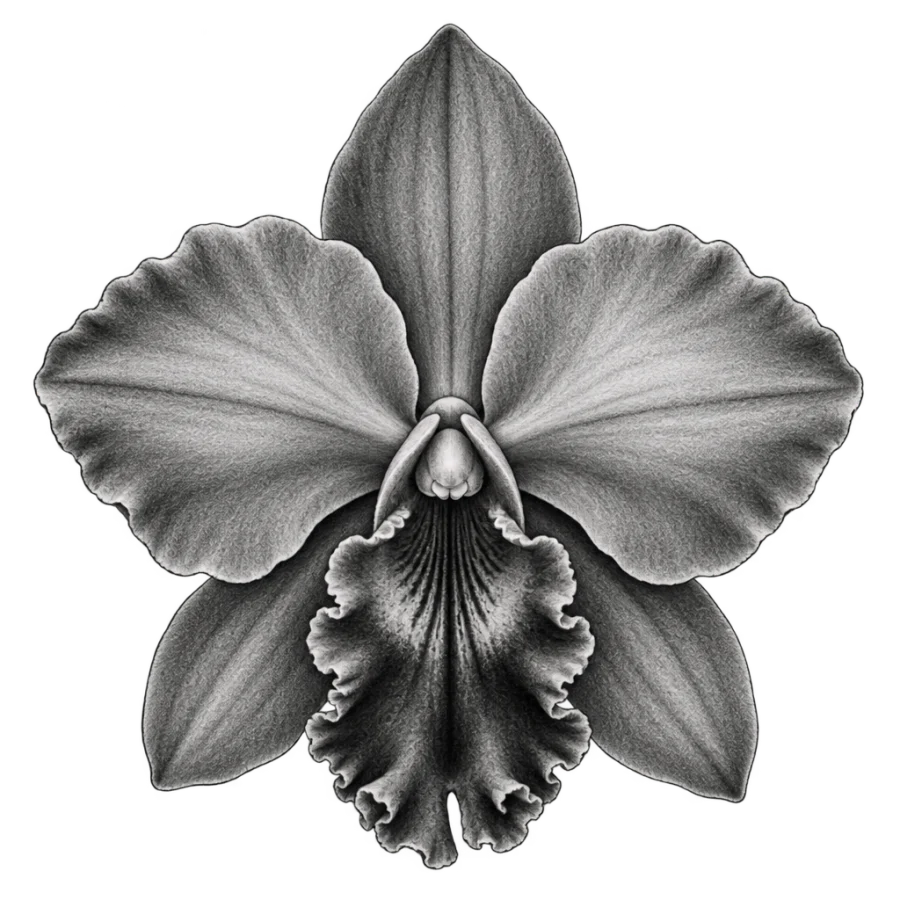
One open orchid bloom close up, black and grey realism
Use this prompt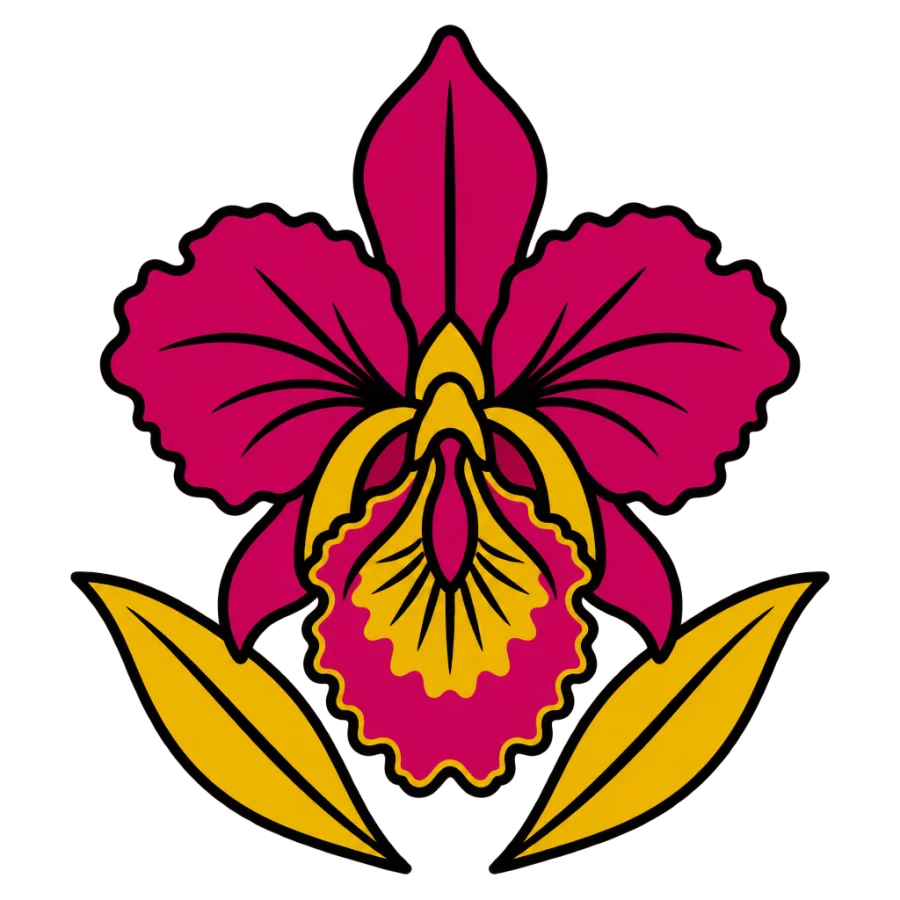
A bold cattleya orchid in magenta and gold, American traditional
Use this prompt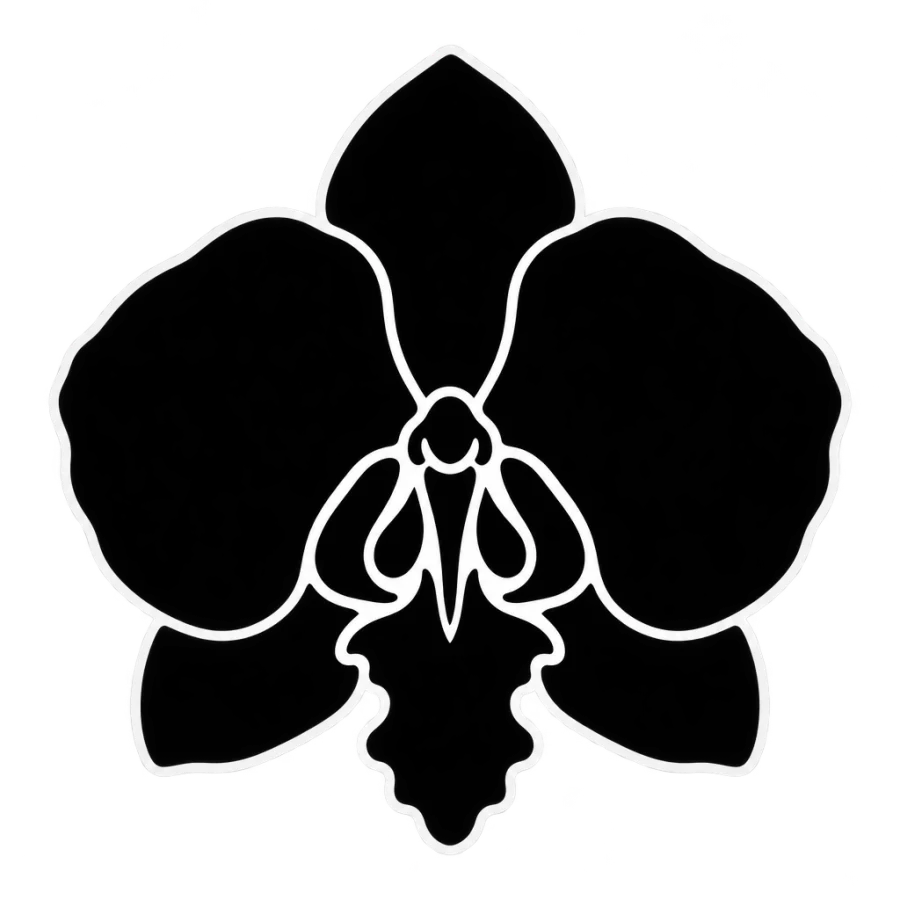
An orchid in heavy solid black with a white gap outline
Use this prompt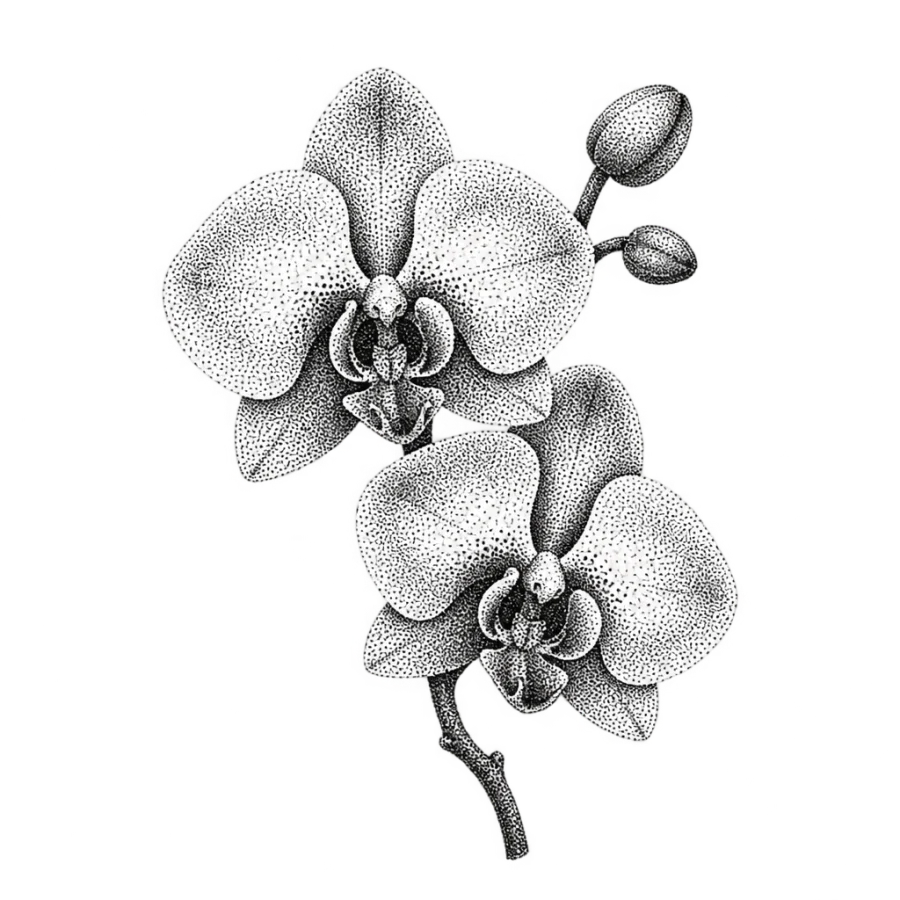
Two orchid blooms in dotwork stippling with no outline at all
Use this prompt
An orchid inside a diamond with nested arcs, geometric lines
Use this prompt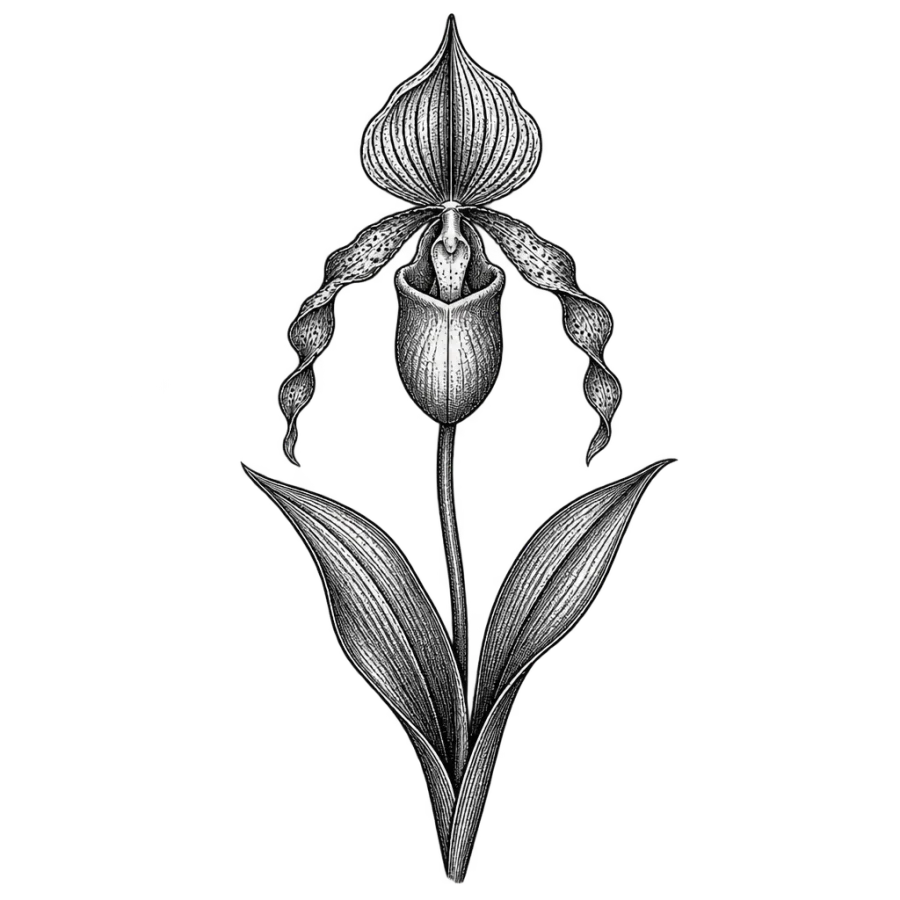
A lady slipper orchid botanical plate, engraved cross hatching
Use this prompt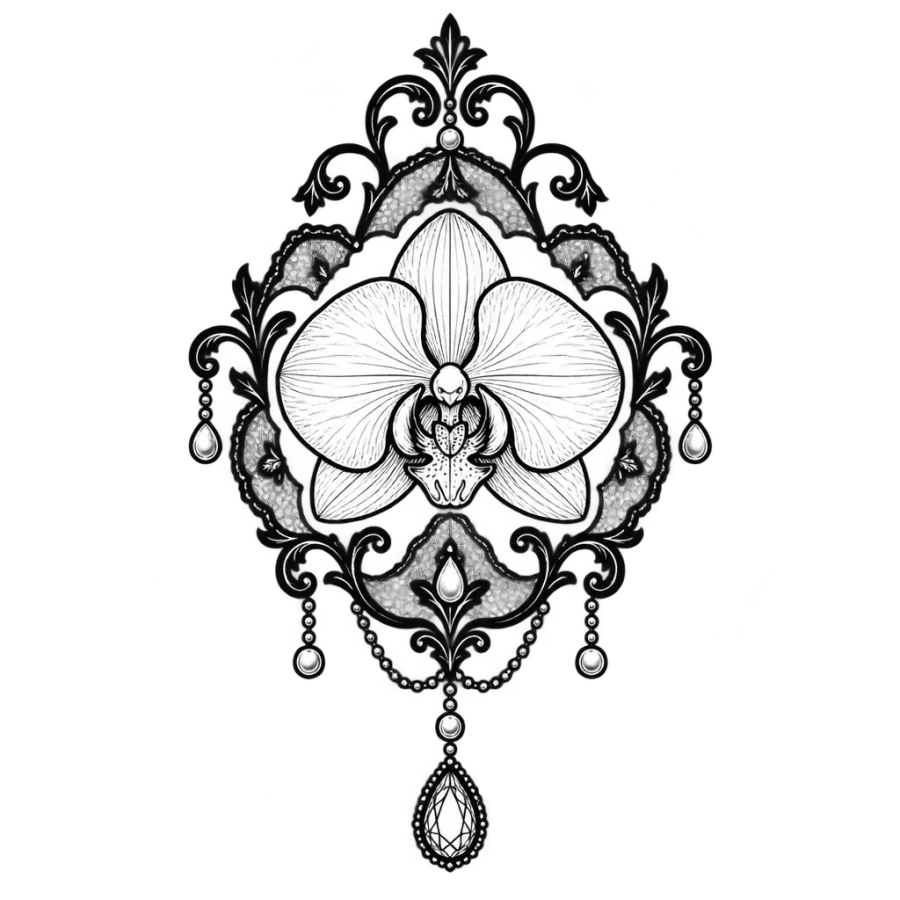
An orchid framed in lace filigree with pearls and a gem
Use this prompt
An orchid in profile drawn with one continuous line, very spare
Use this prompt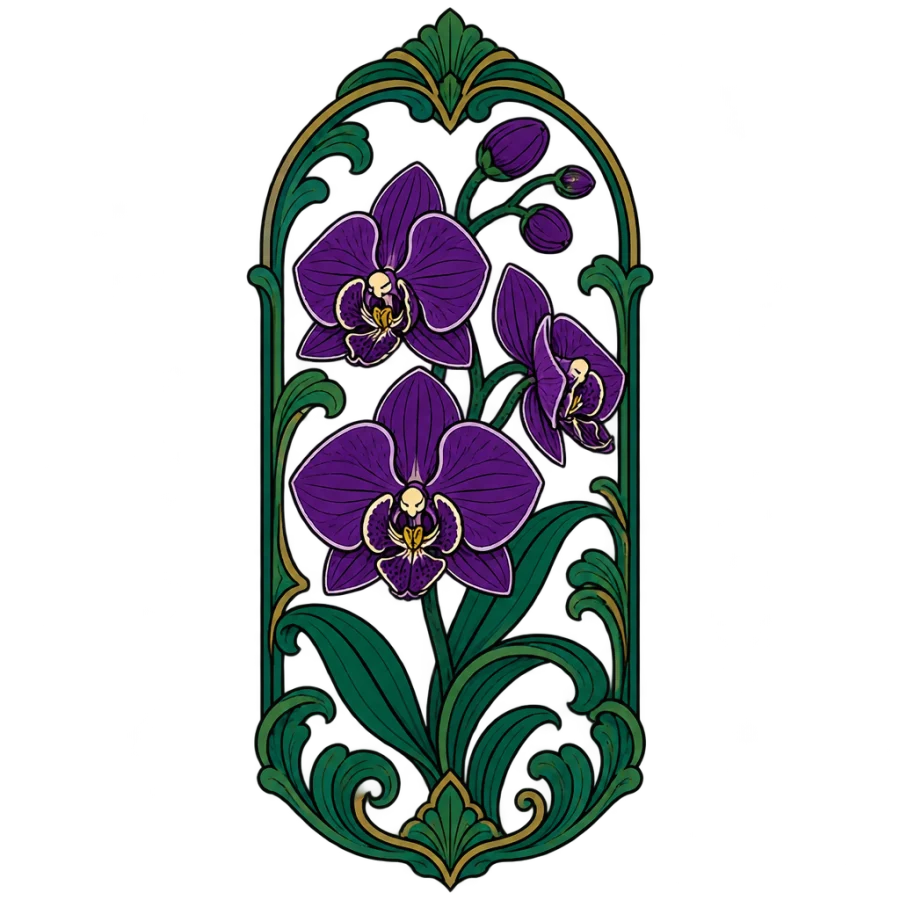
An orchid spray in an art nouveau arch, violet and jade
Use this prompt
Three orchids on a curving stem with wind bars, Japanese style
Use this prompt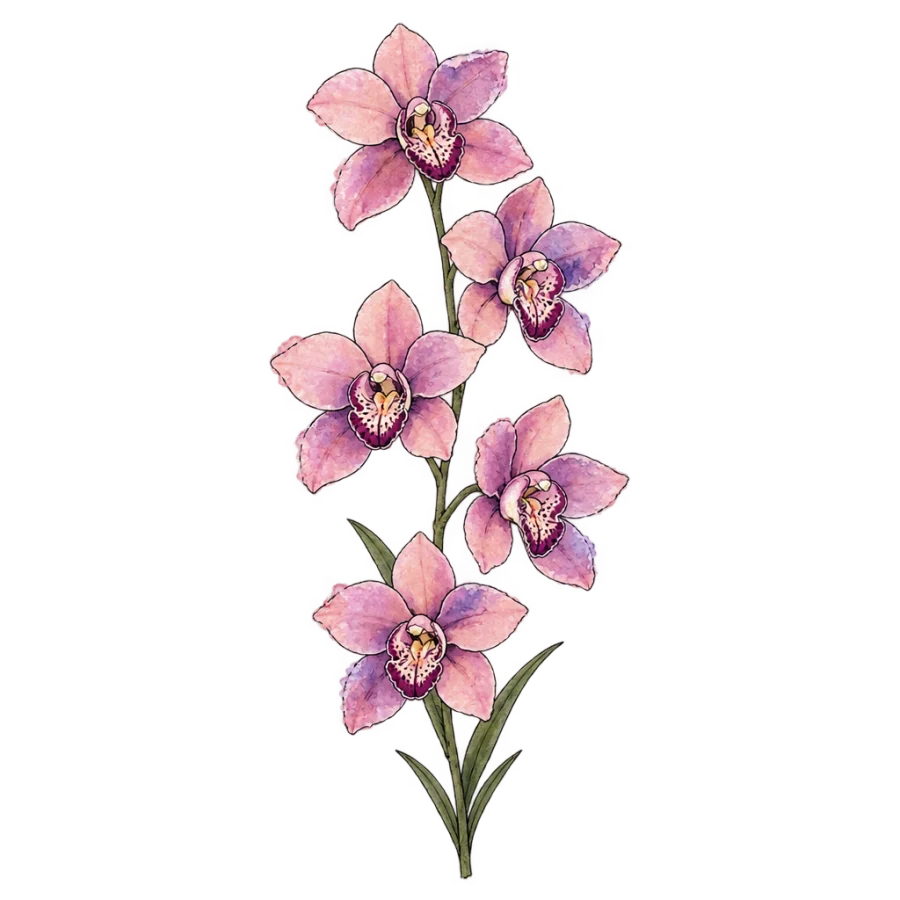
A tall orchid stem of five blooms in blush and violet watercolour
Use this promptDescribe an idea of your own and get four designs back in about 20 seconds.
Open the generator
Questions people ask
What does an orchid tattoo mean?
Refinement, and a certain amount of expense, which traces back to the Victorian collecting mania for imported orchids. In Chinese painting the orchid is one of the Four Gentlemen and is tied to integrity and quiet cultivation. The Greek root of the name, orkhis, is where an older fertility reading comes from.
How many petals does an orchid have?
Three petals and three sepals. One of those petals, the labellum or lip, is reshaped into something broader, frillier or pouched, and it sits at the bottom of the flower because the bud twists 180 degrees as it opens. The lip is what makes a drawing recognizable as an orchid.
How big does an orchid tattoo need to be?
About 8 to 10 cm for a single Phalaenopsis bloom, because the column and the lip's side lobes merge into a grey patch below roughly 7 cm. A Cattleya with a frilled lip wants 14 cm or more. A spray of three blooms on a stem needs 20 to 30 cm of length.
Is fine line or black and grey better for an orchid tattoo?
Black and grey, for most people. An orchid petal is broad, cupped and translucent, so tone describes it better than outline, and the shadow under the lip is what gives the flower depth. Fine line works from 10 cm up with an artist who draws plants often, and struggles below that.
Can I bring an AI orchid design to a tattoo artist?
Yes, as a reference. Generate it, download the stencil, then take it to a licensed artist who will put the lip at the bottom, decide which species you actually want, and pack the mid tones hard enough that the petals do not empty out in five years. A generator invents orchid anatomy freely.