Tattoo drawing, from sketch to stencil
Tattoo drawing is the stage where a design is still negotiable, and almost every problem that shows up in a stencil was already there in the sketch.
- A thumbnail at 2 to 3 cm tests the silhouette. If the shape is unreadable there, it will not read on skin.
- Tracing paper over a photo of the placement printed at life size keeps proportion honest.
- A digital drawing for tattoo use is set in centimetres at 300 to 600 dpi, with a monoline brush for the final pass.
- The final line drawing carries one stroke per edge, no construction marks and no second contour.
- Thumbnail size2 to 3 cm
- Full sketchTrue size, tracing paper
- Digital canvasTrue cm at 300 to 600 dpi
- Final lineOne stroke per edge
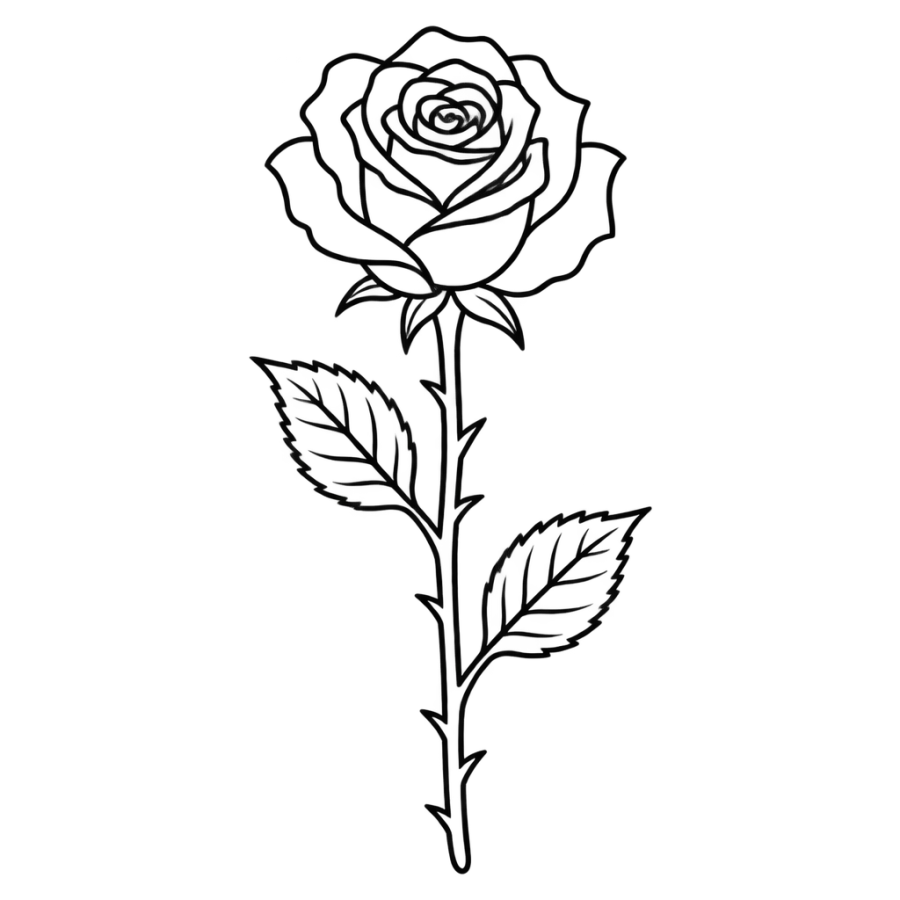
A tattoo goes through three drawings. A thumbnail two or three centimetres across that tests whether the shape reads at all. A full size sketch that works out proportion against the actual body part. Then a clean line version with one stroke per edge, which is the stencil. Skipping the first two is how people end up with a stencil that is technically correct and badly proportioned.
AI Tattoo Lab gives you the third drawing directly, as black line at the size you set. The first two are still worth doing on paper, because they are where you find out that the design wants to be taller, or that the bird should face the other way.
Thumbnails before anything else
Draw the design eight times at 2 cm before you draw it once at 20. A thumbnail that small cannot hold detail, so it only shows you the silhouette and the big internal division, which happens to be exactly what survives in a healed tattoo. If you cannot tell what the thumbnail is, the full size drawing is decorating a shape that does not work.
This is also the cheapest place to change your mind. Eight thumbnails take fifteen minutes and one of them is usually obviously better than the rest. Reversing the direction of a snake or flipping a bird to face inward is a pencil line at this stage and a redraw later.
Drawing a tattoo sketch that can become a line
The sketch stage is where proportion gets settled, so draw loosely and large, with light construction lines you intend to erase. Keep the stroke count low even here, because a sketch built from fifty short hatches tends to become a line drawing with fifty short lines in it.
Line confidence is a physical habit. Pull long lines from the elbow or the shoulder rather than the wrist, rotate the paper so each curve comes toward you, and make one committed stroke instead of three nervous ones. A shaky traced line on transfer paper puts a doubled contour on the skin, which is the one stencil error nobody can tattoo their way out of.
Habits that make a cleaner line
- Rotate the paper for every curve so you are always pulling toward yourself
- Draw the long strokes first and the short ones last
- Keep the pencil light until the shape is settled, then commit once in ink
- Check the drawing in a mirror, which shows up asymmetry the eye has stopped seeing
- Put the drawing away overnight and look again before you print
Tattoo designs drawings that fit a curved body
A page is flat and a forearm is a tapered cylinder. A design drawn to fill a rectangle wraps out of sight on the sides, and a design drawn for a 10 cm square will not sit on a spine. Photograph the spot, print the photo at life size, and draw on tracing paper over the top. Digitally the same rule applies: set the canvas in centimetres at 300 to 600 dpi so the drawing has a real size from the start.
Some work never becomes a stencil at all. Large organic pieces, designs that wrap a limb and anything that follows a muscle are often drawn straight onto the skin with a surgical marker, because the artist can watch the body move while they draw. Japanese body work, Polynesian pieces and big blackwork are commonly freehanded this way, sometimes with a light stencil marking two or three anchor points.
| Placement | Draw the panel at | Thumbnail test |
|---|---|---|
| Inner wrist | 5 by 7 cm | 1 cm |
| Inner forearm | 10 by 24 cm | 2 cm |
| Outer upper arm | 12 by 15 cm | 2 cm |
| Shoulder blade | 15 by 18 cm | 2.5 cm |
| Calf | 13 by 25 cm | 2.5 cm |
| Sternum | 12 by 16 cm | 2 cm |
Cleaning a sketch down to one line
The last pass removes everything the needle will not lay. One stroke per edge, no construction marks, no soft second contour, no hatching that was standing in for shading. Where two lines in the sketch sit less than 1 mm apart at final size, choose one. Where a line broke because the pen lifted, close it.
Then test it the way the stencil will be tested. Print it at true size, measure the printed piece with a ruler, and hold it against the placement in a mirror. Most drawings come back from that test needing to be 20 percent larger, and it is much easier to change the file than to change the arm.
12 tattoo drawings, with the prompt behind each one
Every design below came out of AI Tattoo Lab. Tap one to load its prompt into the generator, then change a word and make it yours.
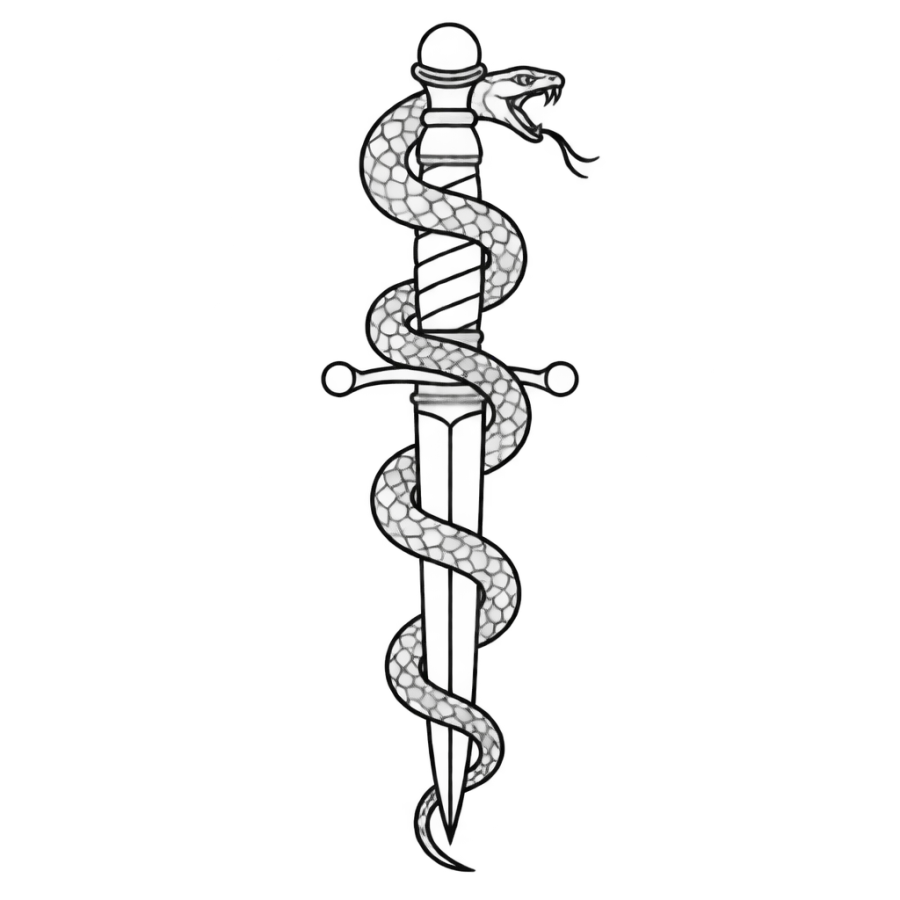
A snake coiled around a dagger, pure outline, no shading
Use this prompt
A moth with open wings and a crescent above it, outline only
Use this prompt
A round lotus rosette medallion with petals, outline only
Use this prompt
Two swallows facing each other with a blank ribbon between them
Use this prompt
A poppy, a cornflower and a wheat ear side by side, outline
Use this prompt
A crescent moon with scattered small stars, pure outline
Use this prompt
A koi fish curving upward through water lines, outline only
Use this prompt
A lighthouse with two gulls inside a thin oval frame, outline
Use this prompt
A standing bear in profile, bold outline only, no shading
Use this prompt
An hourglass with feathered wings on both sides, outline only
Use this prompt
A wolf head facing forward, loose sketch outline, no shading
Use this promptDescribe an idea of your own and get four designs back in about 20 seconds.
Open the generator
Questions people ask
How do I draw a tattoo design?
Start with eight thumbnails at 2 to 3 cm to test the silhouette, then one full size sketch on tracing paper over a life size photo of the placement, then a clean line version with one stroke per edge. The thumbnails decide whether the shape works. The sketch decides proportion. The line version becomes the stencil.
What is the difference between a tattoo sketch and a stencil?
A sketch can keep construction lines, doubled contours and hatching that stands in for shading. A stencil keeps only the lines that will be tattooed, in one even weight. Turning one into the other means choosing a single stroke for every edge and deleting anything the needle will not lay.
Do I need to be able to draw to design a tattoo?
No. Most people bring references and let the artist draw, which is what the drawing fee covers. If you want to work the idea out yourself, thumbnails are the part that needs no drawing skill, because a 2 cm shape is about composition. AI Tattoo Lab also outputs clean linework you can print and mark up.
What paper and tools do tattoo artists draw on?
Tracing paper or vellum over a printed reference for the drawing stage, then four layer thermal transfer paper for the stencil. Digitally, most work in a drawing app with the canvas set in centimetres at 300 to 600 dpi and a monoline brush for the final line. A ballpoint is still standard for hand tracing a stencil.
Can I use tattoo drawings I find online?
As a reference, yes. As a design to copy, usually no. The drawing belongs to whoever made it, and most artists will not reproduce another artist’s work, including with small changes. Flash sheets are the exception, because they are drawn to be repeated, and anything you generate yourself is yours to bring in.