Panther tattoo ideas, meaning and designs
The crawling panther tattoo has been drawn in roughly the same pose since the 1930s, and the reason is the amount of solid black in it.
- A black panther is a melanistic leopard (Panthera pardus) or jaguar (Panthera onca), not a separate species.
- Jaguar rosettes have spots inside them. Leopard rosettes do not.
- Melanistic cats keep their rosettes as faint ghost markings, visible in angled light.
- The crawling panther is drawn head down so it reads as moving down the limb toward the hand or foot.
- Solid black is the most stable thing you can put in skin, which is why forty year old panthers still read clearly.
- Pain level5 / 10 on the outer bicep
- Healing3 to 4 weeks, heavy black
- Typical size12 to 25 cm (5 to 10 in)
- Studio cost$250 to $900
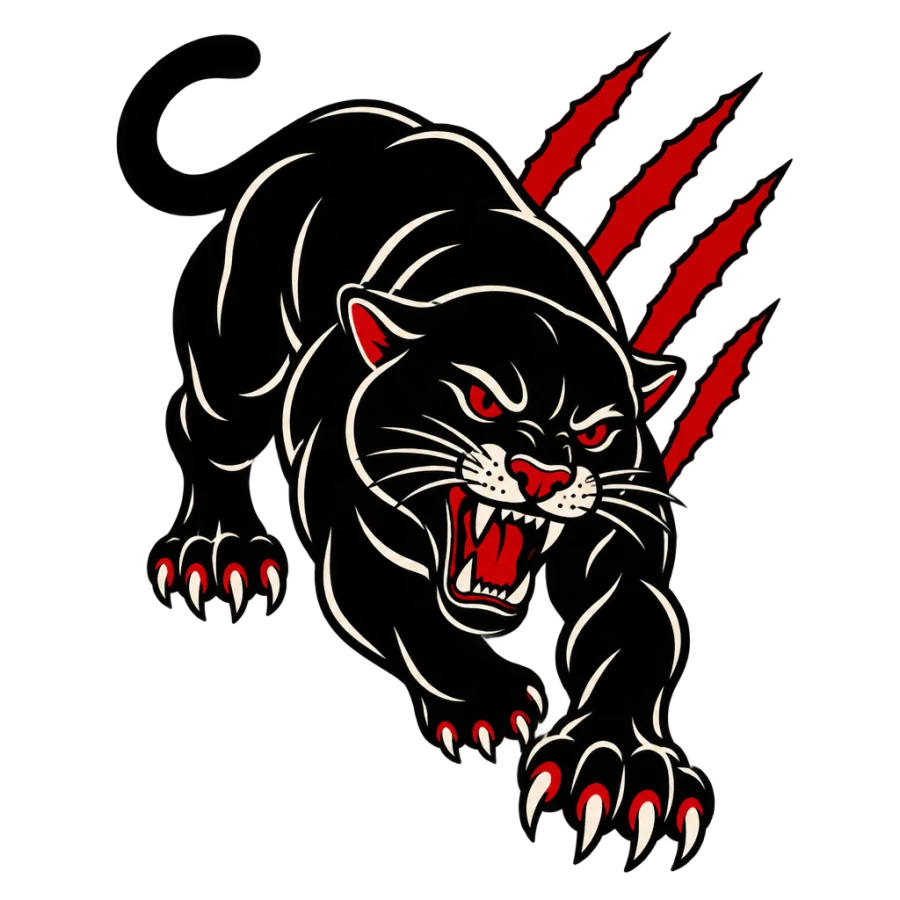
A black panther is not a species. It is a melanistic leopard or a melanistic jaguar, an ordinary cat carrying a gene that floods the coat with dark pigment. The rosettes are still there under the black and show up in angled light as ghost markings, which is a detail almost no panther tattoo uses and which gives an artist something real to do with a shoulder.
The design most people mean is the crawling panther. Head low and turned out, mouth open, one paw reaching, the body built from solid black with a handful of hard white gaps doing the muscle. It comes out of American traditional flash from the 1930s and 1940s, the Sailor Jerry era, and it is still drawn close to the original because the original works.
Why the crawling panther keeps getting tattooed
The crawling panther is one of the best documented designs in American traditional tattooing. Sheets of it survive from the 1930s and 1940s, drawn by the Sailor Jerry generation and then traced or copied by every shop that bought flash, which is why panthers from Honolulu, Chicago and Southampton look like relatives. The pose barely moved in ninety years: head turned toward the viewer, jaw open, front paw out, back arched, tail flicked up.
What kept it alive is the black. A traditional panther is most of the way to a solid fill, and the shape is read from a few sharp white gaps instead of from interior linework. Black holds its density in skin better than any pigment, so old panthers still look like panthers while the color pieces tattooed beside them have gone soft and pale.
What makes a panther traditional rather than generic
- A single bold outline at 9RL or heavier, with no thin interior linework
- A solid black body with cut white gaps for the shoulder and haunch
- Three or four claw marks behind the paw, usually with two or three blood drops
- A head held low and turned out, so it reads from across a room
- No background, or a simple shaded ground under the paws
The panther as a cover up
Artists reach for a panther when someone walks in with an old name, a faded tribal band or a bad small tattoo, and the reason is the fill. A cover up has to put darker ink over lighter ink, so the new design needs solid black in the right places to swallow the old lines, and a panther has that by default rather than by compromise.
The limits are worth hearing before you book. A cover up usually needs 1.5 to 2 times the area of the old tattoo so the artist can place the body over the worst of it. Old black ink shows through heavy new black as a faint texture change in raking light. Scarring from a bad job or a partial laser removal changes how the skin takes ink, and most artists will want two or three laser sessions first if the old piece is dense.
Size, placement and how the pose follows the limb
A crawling panther is a long diagonal, roughly twice as long as it is tall, so it fits the outer arm, the calf, the outer thigh and the shoulder blade. Orientation matters more here than with most subjects. The panther should crawl down the limb with its head toward the wrist or the ankle, because a panther crawling up your arm looks like it is sliding off.
Below about 10 cm the white gaps are the problem. They need at least 2 mm of clear skin or the black closes over them during healing and the cat becomes a dark shape with teeth. A panther head on its own, face on and snarling, is the version that works small, because it is one mass with the eyes and teeth cut out of it.
| Version | Size | Sitting time |
|---|---|---|
| Panther head, face on | 8 to 12 cm (3 to 5 in) | 1 to 2 hours |
| Crawling panther, traditional | 15 to 20 cm (6 to 8 in) | 3 to 4 hours |
| Panther with a dagger through the neck | 18 to 25 cm (7 to 10 in) | 4 to 6 hours |
| Realistic panther face, black and grey | 15 to 25 cm (6 to 10 in) | 6 to 10 hours, two sessions |
Healing heavy black, and how it ages
Packing solid black is more trauma than outlining. Expect the area to swell for two or three days, weep plasma longer than a line piece does, and scab in sheets rather than flakes. Most artists split anything over about 15 cm of solid fill across two sessions three to four weeks apart, partly for your sake and partly because skin worked for four hours stops taking ink cleanly.
At ten years a well packed panther has spread a little at the outline and lost some crispness in the smallest white gaps. Patchy fill is the common complaint and it shows up as grey windows inside the black. That is a touch up, normally 30 to 60 minutes, and many artists include the first one free inside a year. Color versions with a red mouth and a yellow eye fade in those two spots well before anywhere else.
12 panther tattoo designs, with the prompt behind each one
Every design below came out of AI Tattoo Lab. Tap one to load its prompt into the generator, then change a word and make it yours.
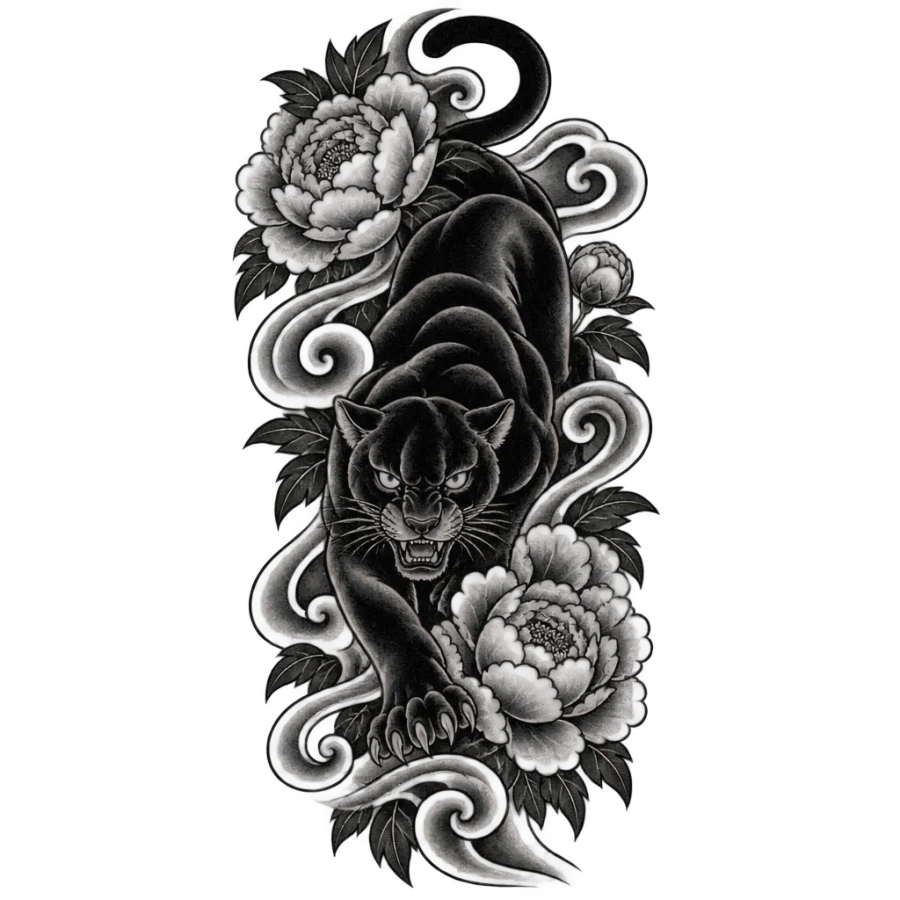
A panther stalking through peonies and wind, Japanese irezumi column
Use this prompt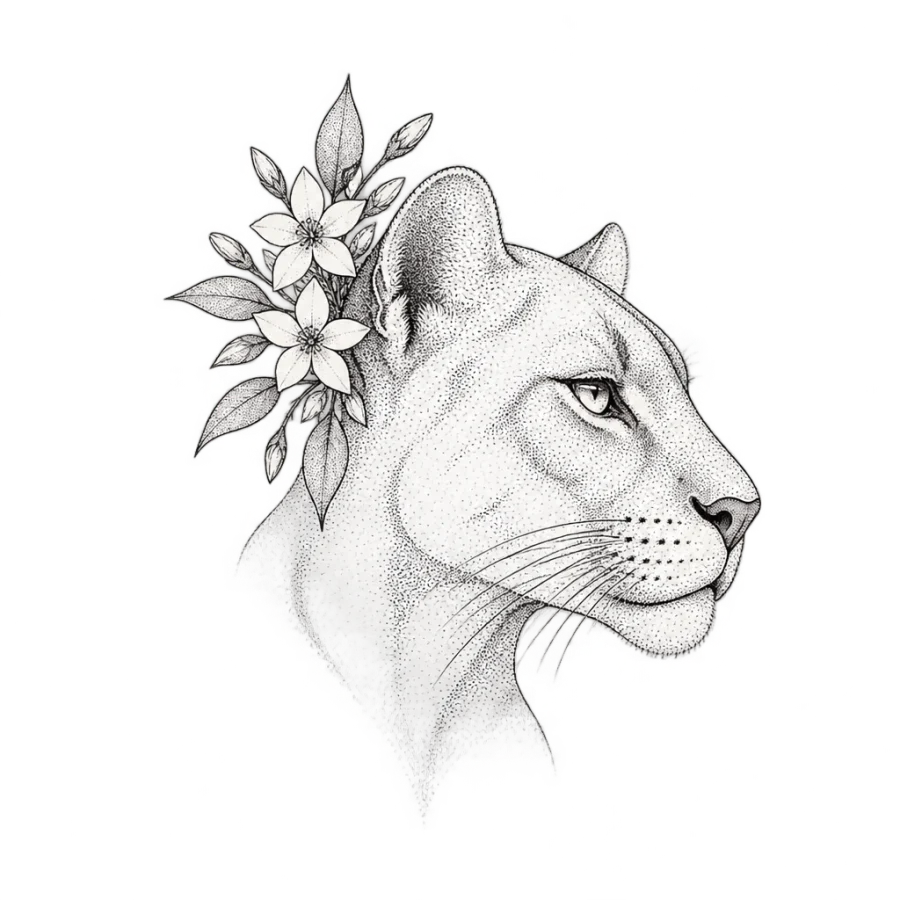
A panther head in profile with jasmine behind the ear, fine line
Use this prompt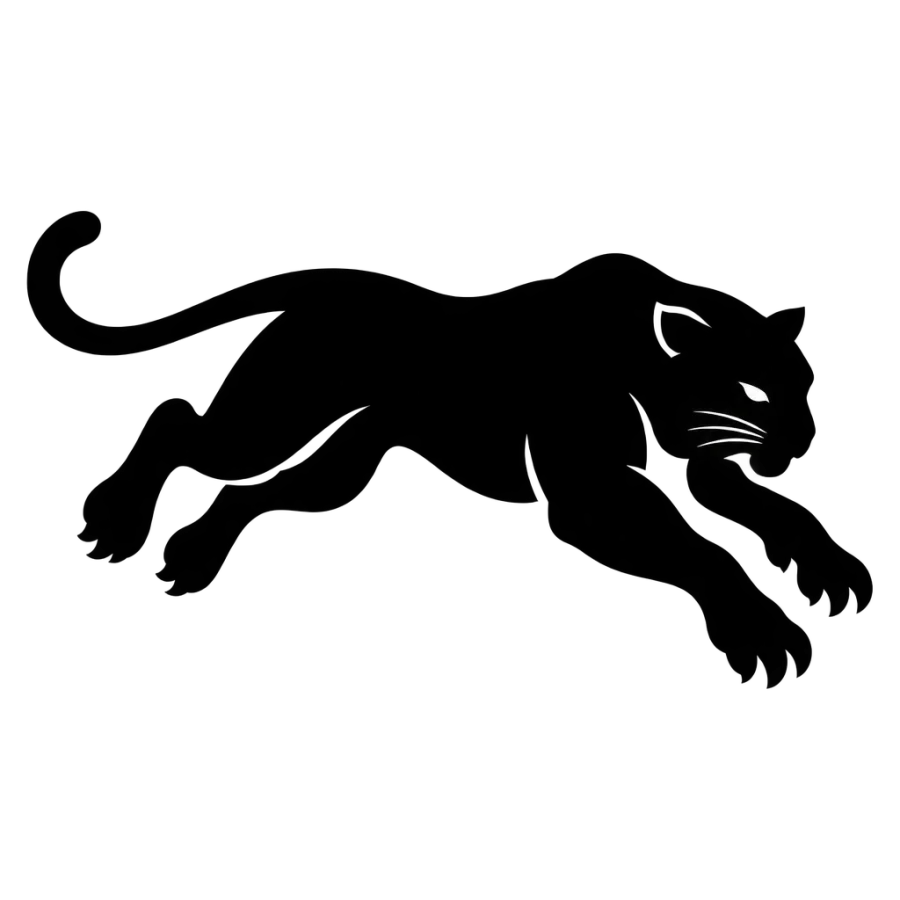
Leaping panther as a solid black silhouette with negative space eye
Use this prompt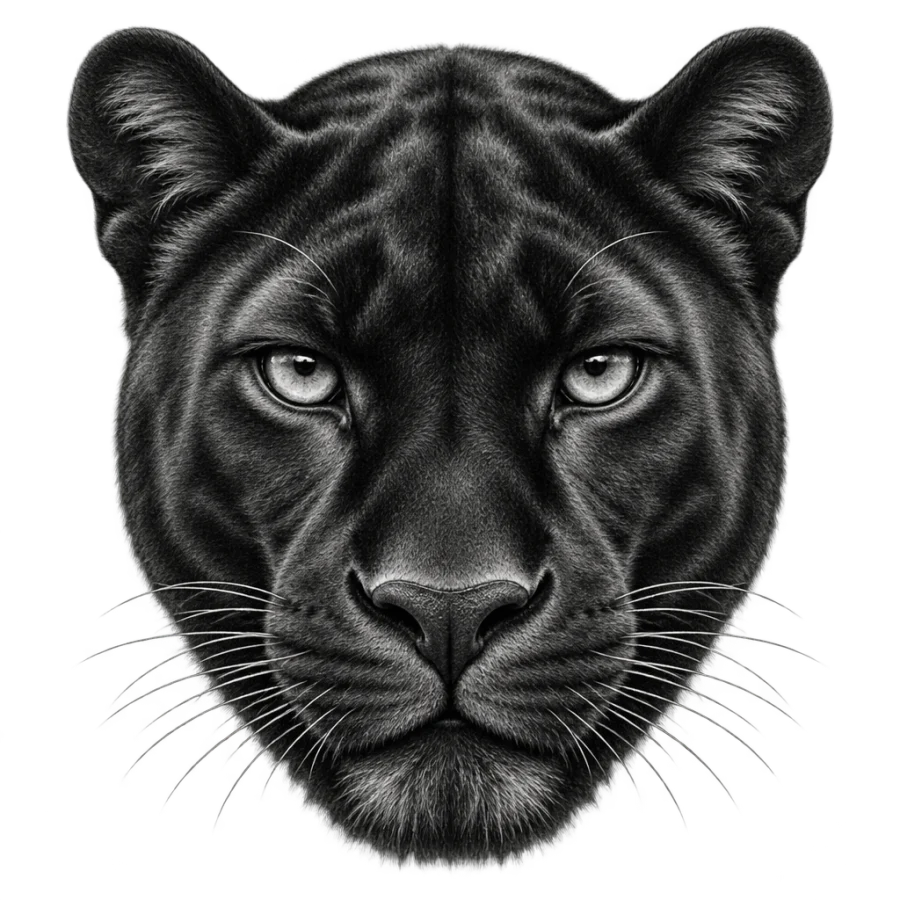
Close up panther face front on, black and grey realism, soft fur
Use this prompt
Faceted panther head in a circle with radiating geometric rays
Use this prompt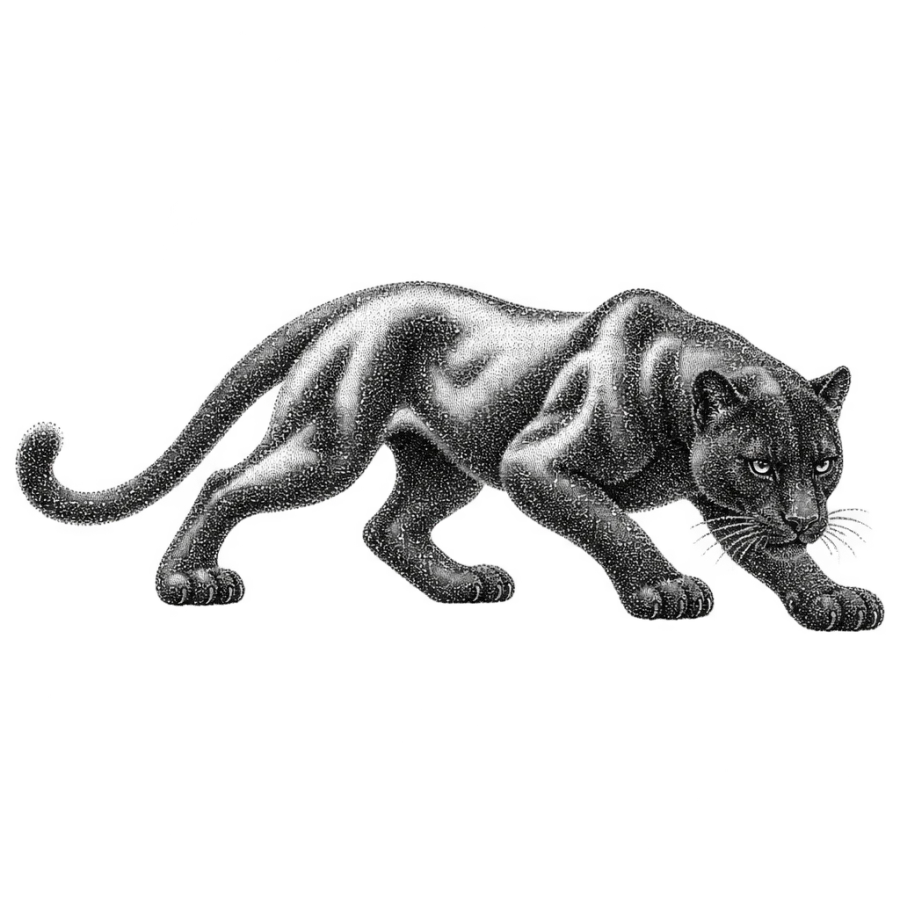
A panther prowling low, dotwork stippling only, no outlines
Use this prompt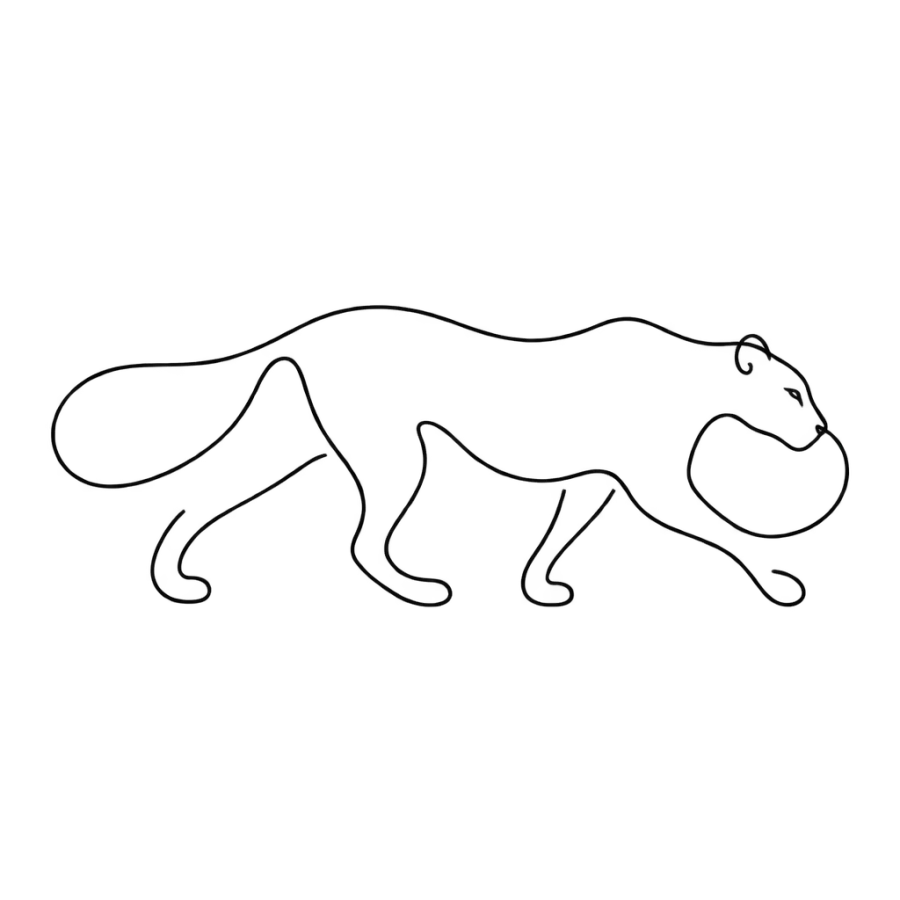
A walking panther in one continuous line, tail looping to the nose
Use this prompt
A panther head in a lace medallion with a draped chain and jewel
Use this prompt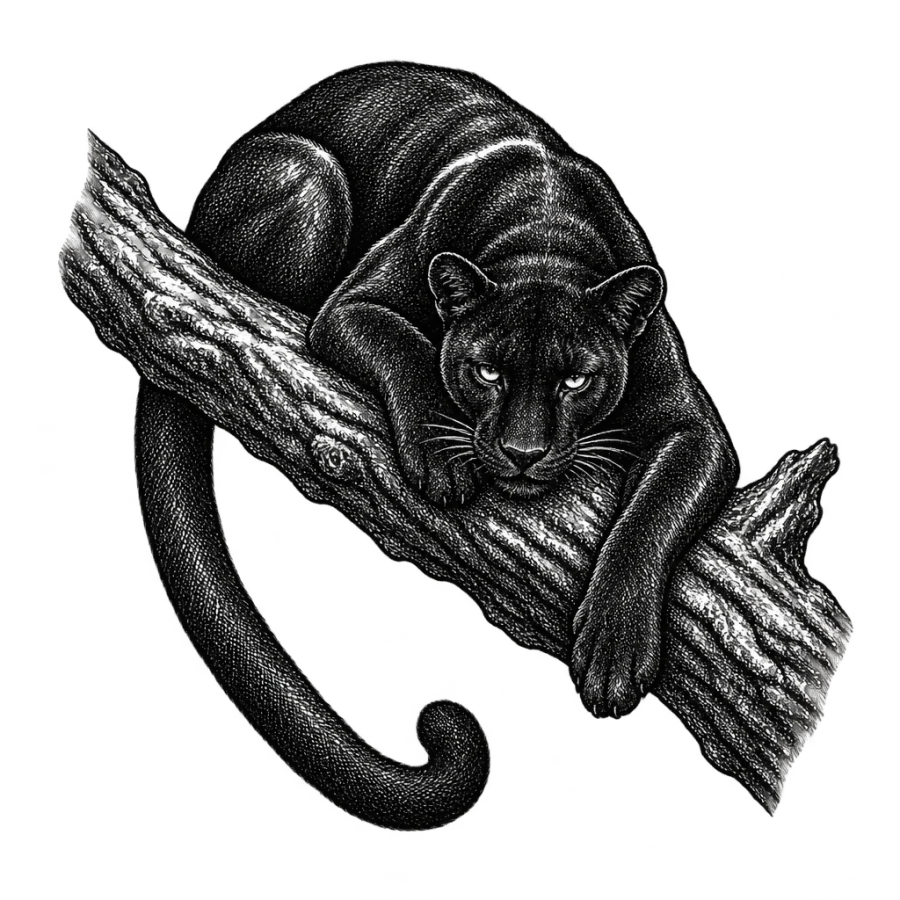
A panther resting on a branch, engraved cross hatching, old book plate
Use this prompt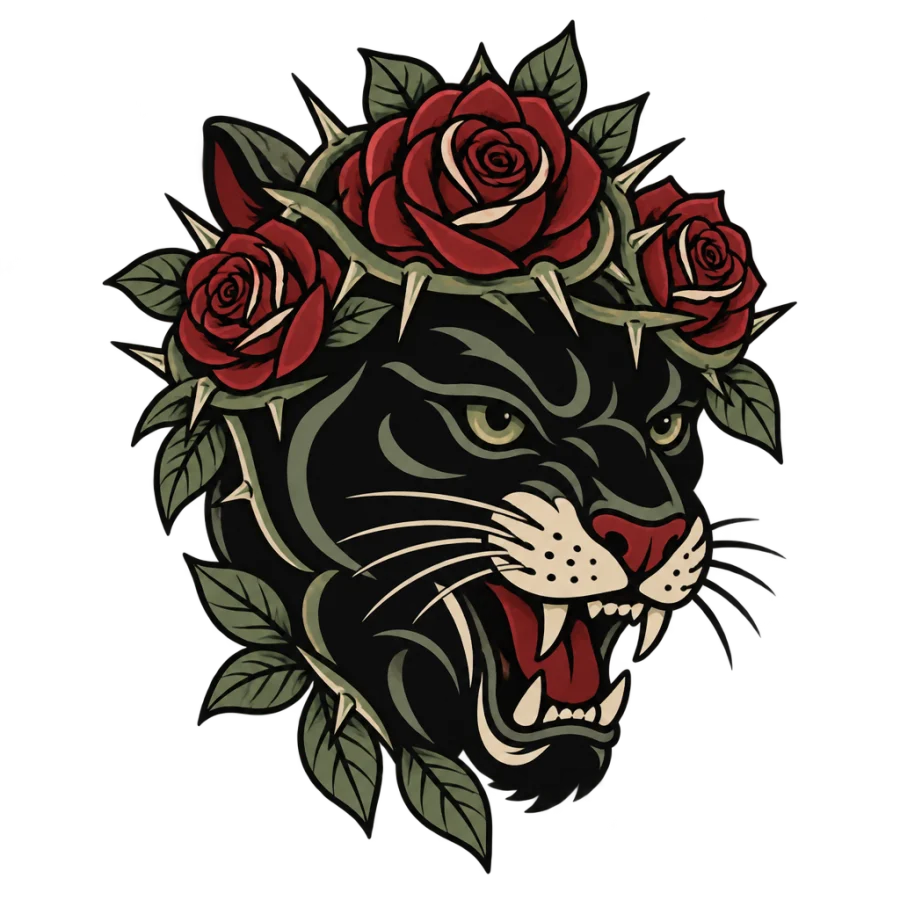
A panther head crowned with roses and thorns, neo traditional
Use this prompt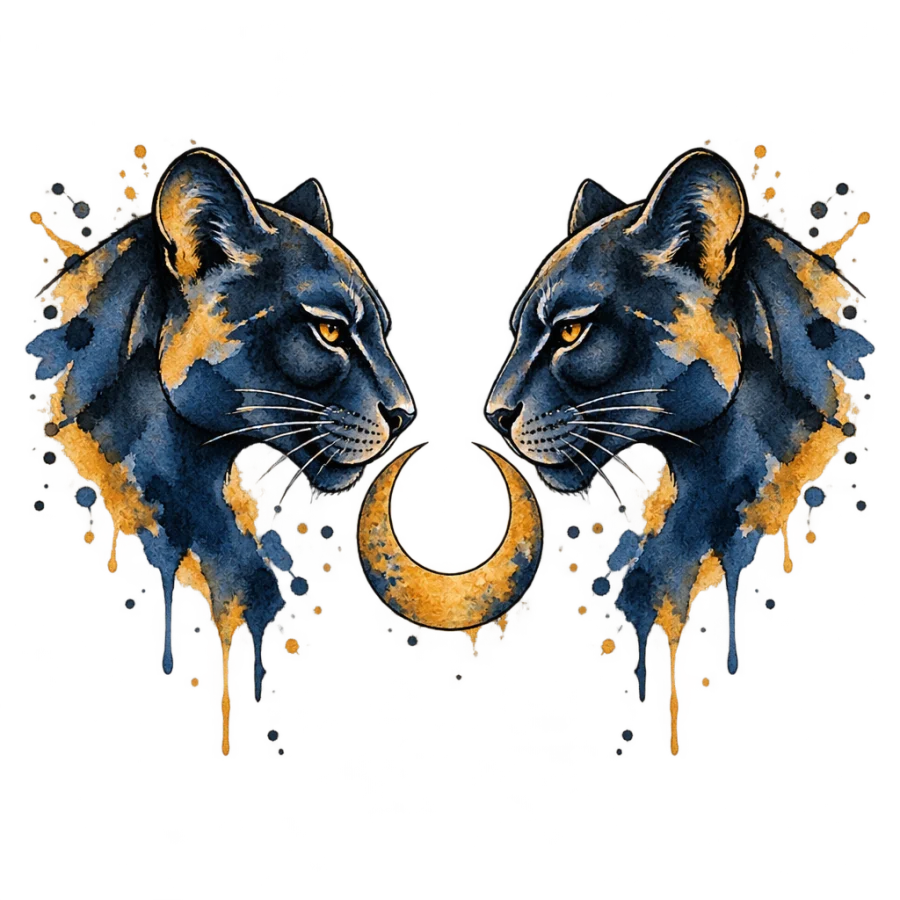
Two mirrored panther heads facing a crescent moon, watercolour washes
Use this promptDescribe an idea of your own and get four designs back in about 20 seconds.
Open the generator
Questions people ask
What does a panther tattoo mean?
Controlled aggression, most often, and in traditional flash it was a strength piece worn heavily by servicemen in the 1940s and 1950s. In the United States it also carries an association with the Black Panther Party. Decide which reading you want, because other people will apply their own.
Why are panther tattoos used as cover ups?
Because the traditional design is already most of the way to a solid black fill, and a cover up works by putting darker ink over lighter ink. Expect to need 1.5 to 2 times the area of the old tattoo, and expect old dense black to show as a faint texture in raking light.
How big does a crawling panther tattoo need to be?
Around 15 cm long for the traditional version, because the white gaps that describe the muscle need at least 2 mm of clear skin each. Below 10 cm they close during healing. A face on panther head works down to about 8 cm, since it is one black mass with the eyes and teeth cut out.
Does a solid black panther tattoo hurt more?
The session is longer and the area gets worked repeatedly, so it feels worse by hour three than an outline piece ever does. Swelling lasts two or three days and the scabbing comes off in sheets. Artists commonly split fills over 15 cm into two sessions, which helps the healing as much as the pain.
Can I bring an AI panther design to a tattoo artist?
Yes, as a reference. Generate it, download the stencil, then take it to a licensed artist who will set the pose so the panther crawls down the limb, open up the white gaps so they survive, and plan the fill across sessions. A generator cannot see the tattoo it is covering.