Dragonfly tattoo meaning, ideas and designs
A dragonfly tattoo works when the wings are simplified on purpose, because real wing venation is a net of several hundred cells per wing.
- Pain level4 / 10 on the forearm
- Healing2 to 3 weeks on the surface
- Typical size6 to 14 cm (2 to 6 in)
- Studio cost$150 to $600
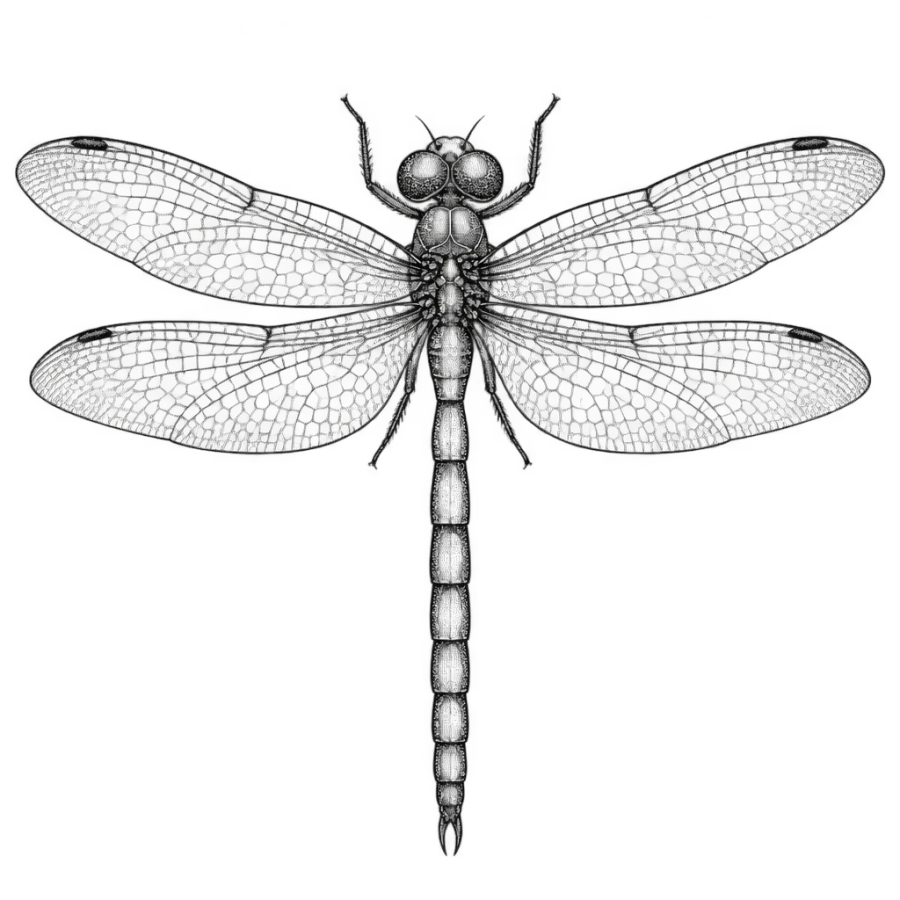
A dragonfly has four wings that move independently, a long segmented abdomen and a pair of compound eyes that take up most of its head. Each wing is a lattice of small cells. Copy that lattice honestly at 6 cm and you get two grey rectangles. Every dragonfly tattoo that works has made a decision about how many cells to keep.
The body is easier and more interesting than people expect. Ten visible segments along the abdomen give the artist a natural rhythm, which is why dragonflies suit an ornamental treatment where the body becomes a column of repeating shapes. The eyes can be left as two clean domes or stippled, and stippling them is what makes the insect look alive.
Where the dragonfly meaning comes from
The change reading is grounded in biology rather than folklore. A dragonfly nymph lives underwater for anything from a few months to several years depending on species, hunting with an extendable jaw, then crawls up a reed, splits its exoskeleton and leaves the empty shell behind. The adult flies for a handful of weeks. People who have come out of a long bad stretch tend to find that sequence useful.
The Japanese line is older and better documented. Tombo appears on samurai equipment and family crests because the insect flies forward and does not retreat, which made it a sign of victory, and classical poetry calls the country Akitsushima, the dragonfly island. European folklore went the other way and gave the animal names like devil's darning needle, which nobody tattoos on purpose.
Readings people bring to it
- Change, from the years underwater and the short flying life
- Victory and not retreating, from Japanese armor and family crests
- A memorial, usually tied to seeing one at a specific moment
- Water, for people who grew up beside a lake or a river
How much wing detail to keep
The wings are the whole decision. A real wing has hundreds of cells and a real tattoo can hold somewhere between eight and about forty of them depending on size, so the artist picks which veins carry the shape and drops the rest. Keeping the main longitudinal veins and the leading edge gives you something that still reads as a dragonfly wing. Keeping everything gives you a grey panel in six years.
| Wing treatment | Smallest size | How it looks at ten years | Best style |
|---|---|---|---|
| Open outline, no interior veins | 4 cm | Still clean, slightly thicker | Minimalist, fine line |
| Eight to twelve large cells | 6 cm | Cells soften but stay separate | Fine line, dotwork |
| Twenty to forty cells | 10 cm | Edges merge near the wing base | Neo traditional |
| Full venation in grey wash | 14 cm | Reads as textured grey, detail gone | Black and grey realism |
| Solid wings with veins cut out | 7 cm | Holds almost unchanged | Blackwork |
Sizing, placement and the shape it wants
A dragonfly is a cross: a long vertical body with two pairs of wings set near the top. That shape goes two ways. Oriented head up, it is a vertical piece that fits the spine, the back of the neck, the inside of the forearm along the bone and the outer ankle. Turned sideways it is wide and low, which suits the sternum, the top of the foot and the back of the shoulder.
Below about 4 cm the wings have to be empty outlines and the abdomen segments drop to three or four marks. At 6 to 8 cm you can keep eye stippling and a dozen wing cells, which is where most people land. A realistic dragonfly resting on a leaf with full venation needs 12 to 14 cm, and at that size the wings overlap the body and the artist has to decide which lines win.
What fails first on a small dragonfly
- Wing cells closer than 2 mm, which merge into a solid panel
- The thin stalk between thorax and abdomen, which thickens and loses the waist
- Hairline legs, which usually vanish entirely during healing
- Light grey wash inside the wings, which can drop out in three to five years
Styles, cost and the versions people regret
Fine line with a little dotwork is the most common and it suits the subject, as long as the piece is above 6 cm and the artist leaves the wings mostly open. Blackwork solves the longevity problem by filling the wings and cutting the veins out as bare skin. Japanese style gives you a bold outline and flat color on the body, and it holds for decades. Watercolor dragonflies are popular and they look worst at year eight, because the washes sit outside the line and spread.
Expect $120 to $250 for a 6 cm fine line dragonfly, and $350 to $600 for a 12 cm piece with shading or color. The regret is almost always size. A 3 cm dragonfly on the inner wrist with full venation drawn in is a tattoo with a five year life, and the fix is either a cover up or accepting that it has become a small dark insect shape.
12 dragonfly tattoo designs, with the prompt behind each one
Every design below came out of AI Tattoo Lab. Tap one to load its prompt into the generator, then change a word and make it yours.
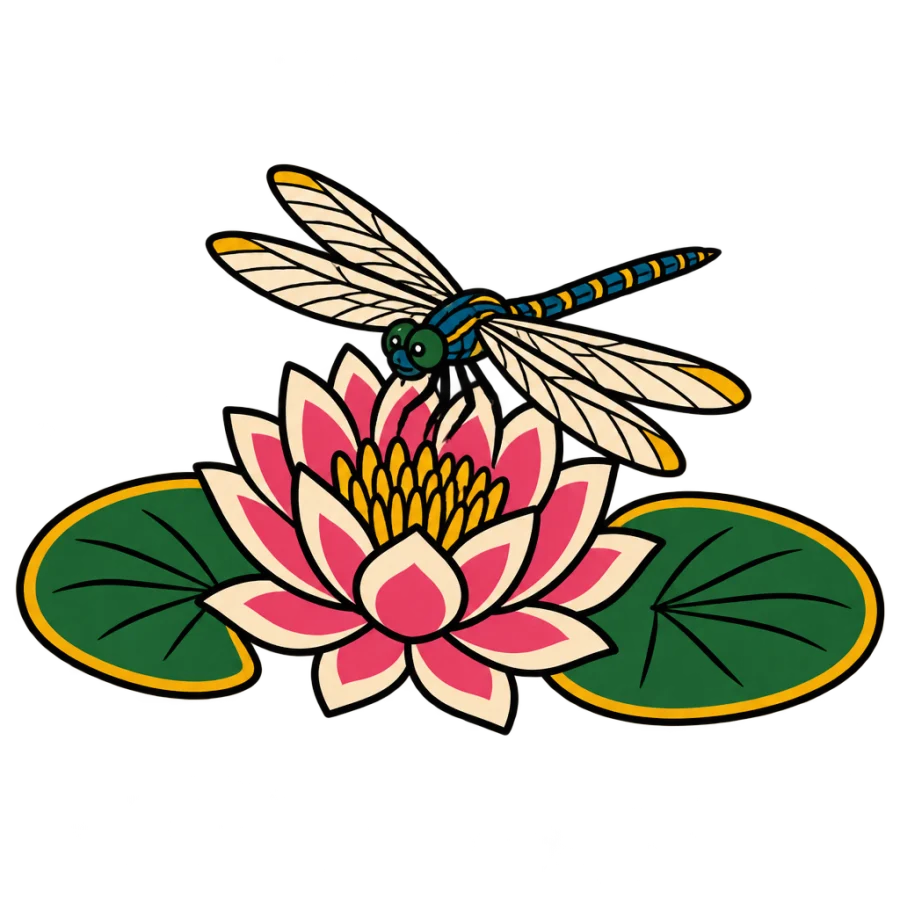
A dragonfly on a water lily, American traditional, bold lines, flat colour
Use this prompt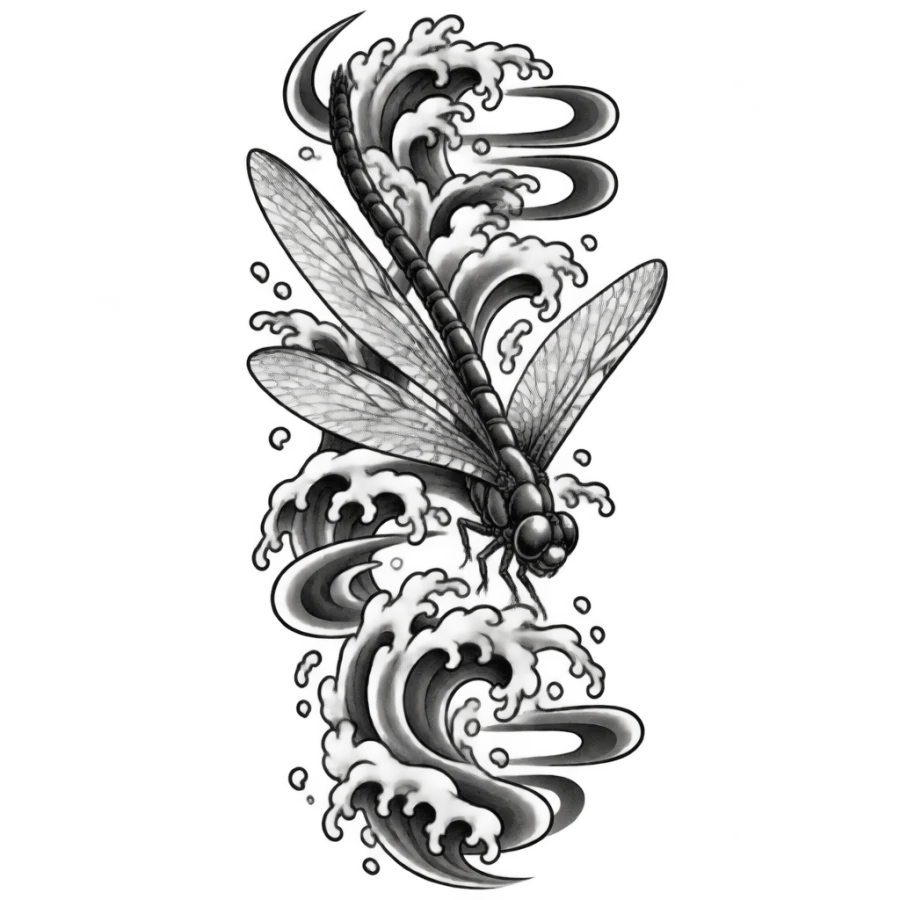
A dragonfly diving through water splashes, Japanese style, grey wash
Use this prompt
A dragonfly silhouette in solid black with negative space wing veins
Use this prompt
A geometric dragonfly made of triangles and circles, thin even lines
Use this prompt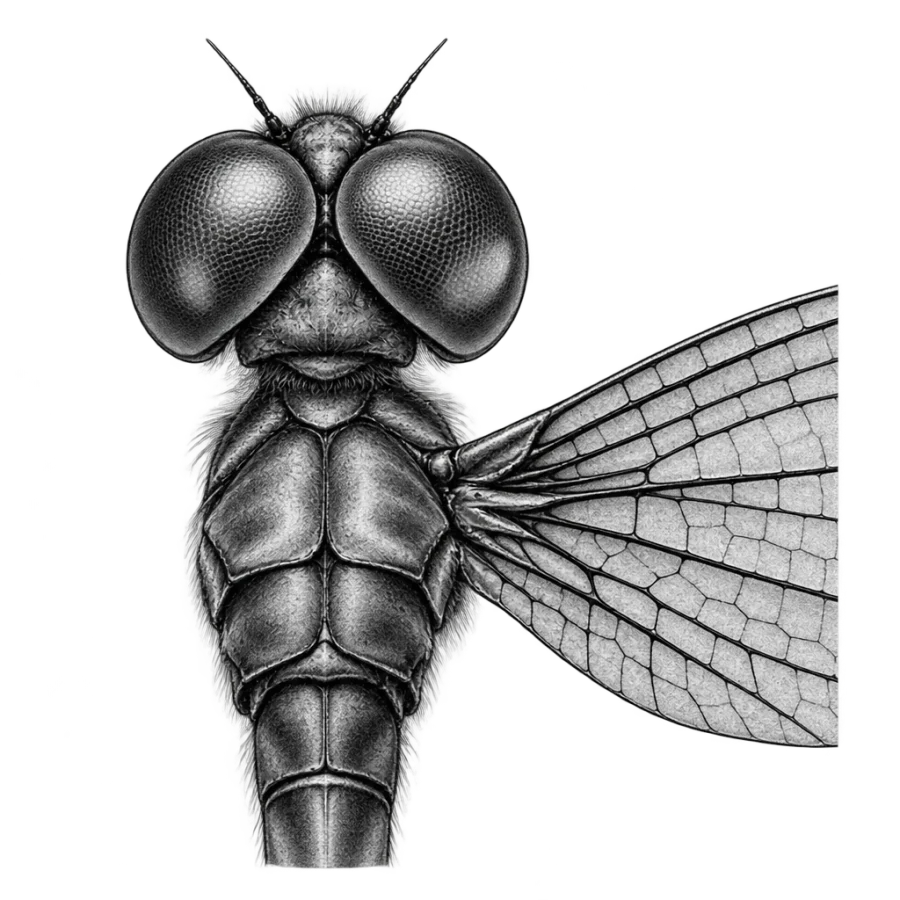
Close up dragonfly head and wing base, black and grey realism
Use this prompt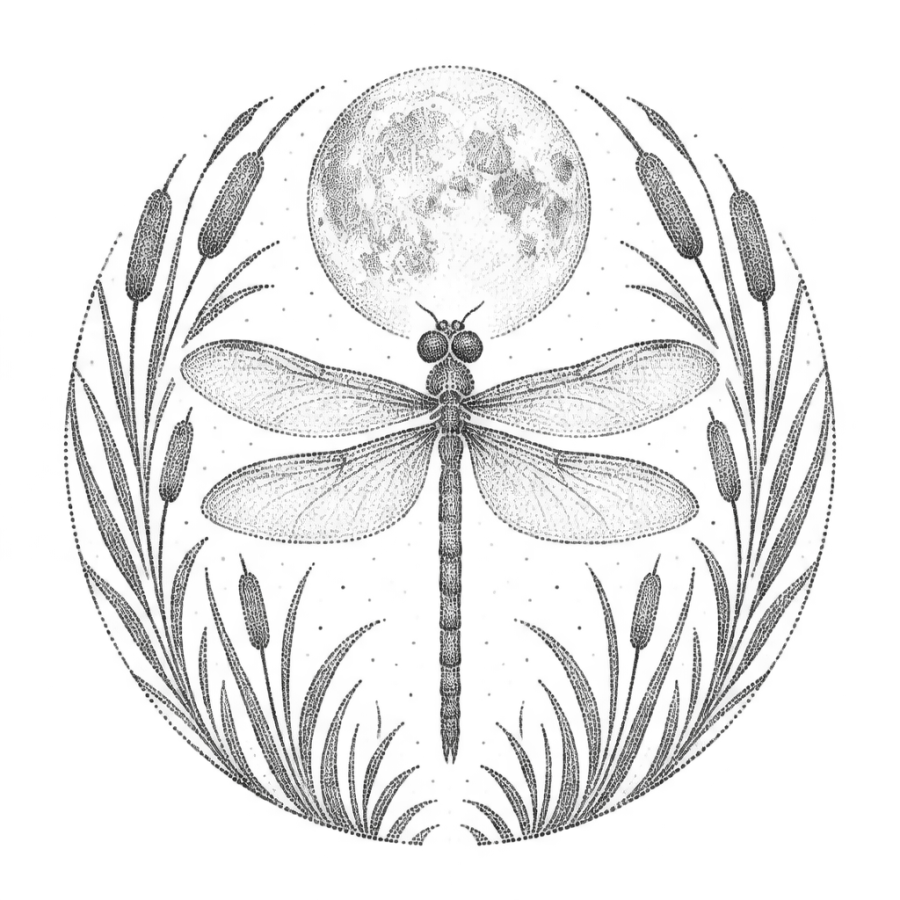
A dragonfly in a round moon and reed medallion, dotwork only
Use this prompt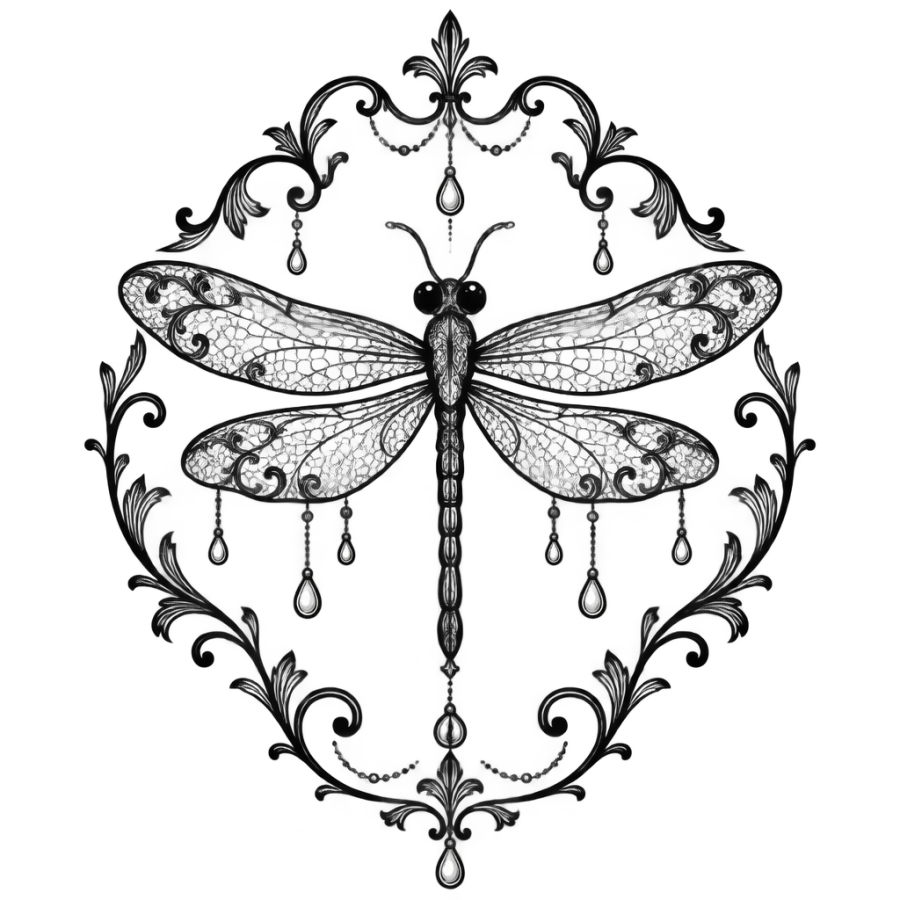
An ornamental dragonfly with lace wings and small pearl drops
Use this prompt
A dragonfly in one continuous line, minimal, side view
Use this prompt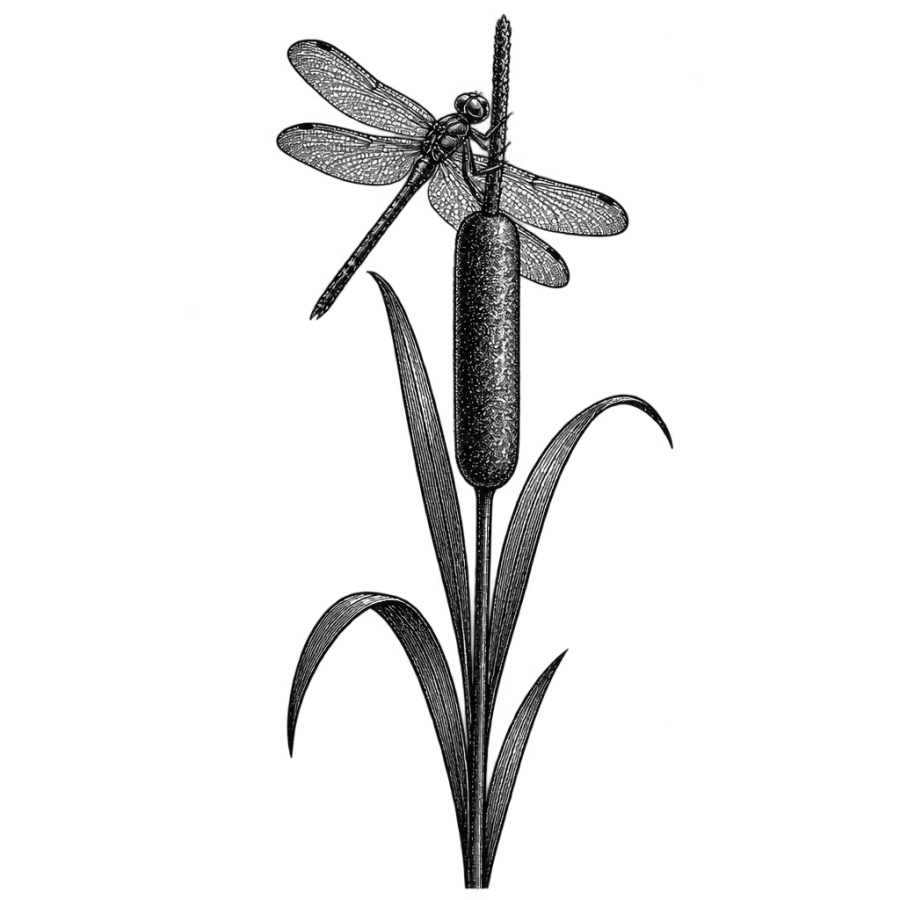
A dragonfly on a cattail reed, antique engraving with cross hatching
Use this prompt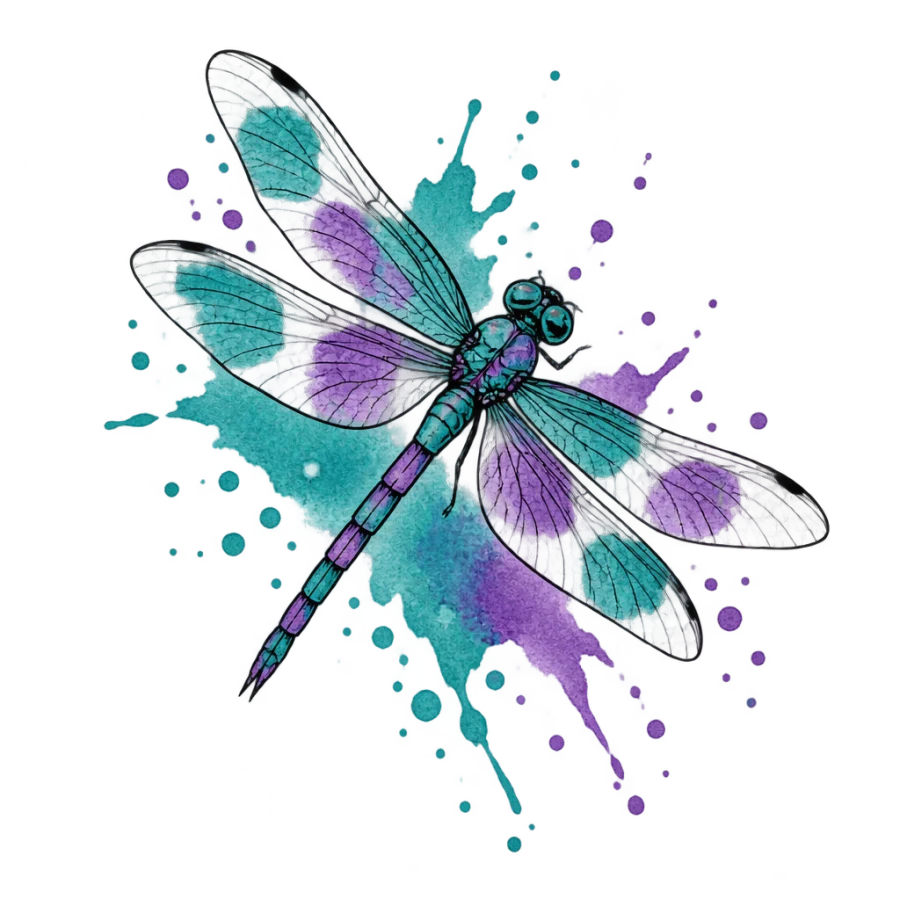
A dragonfly in flight with teal and violet watercolour washes
Use this prompt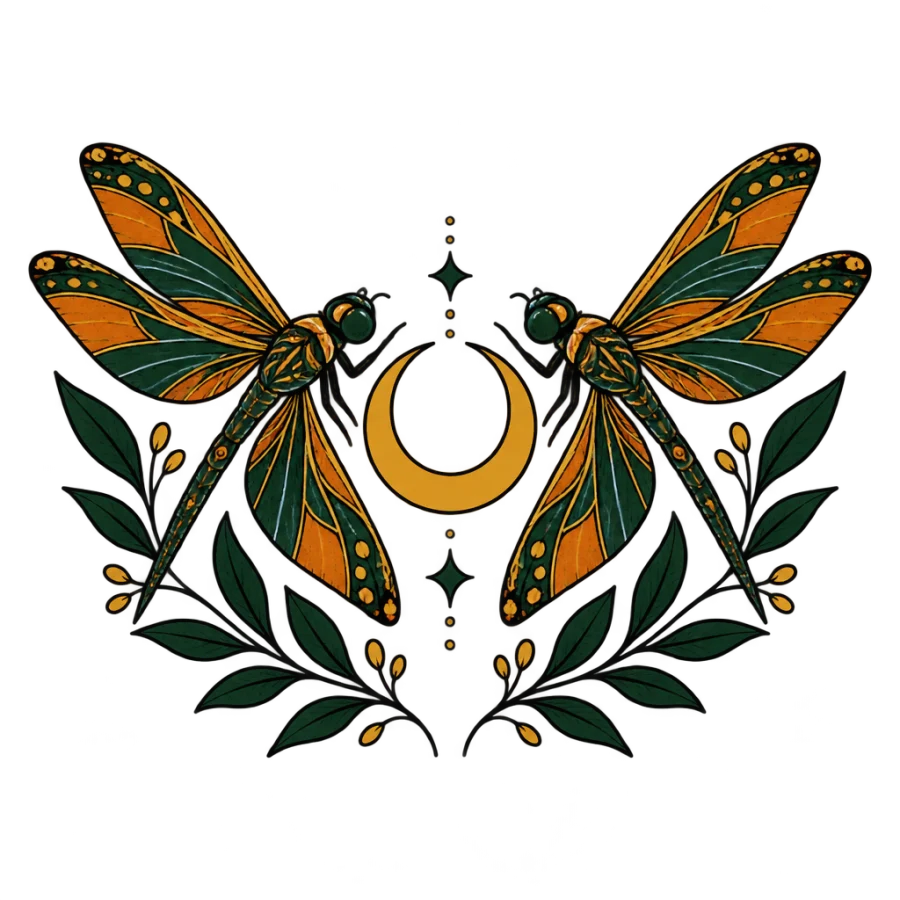
Two mirrored dragonflies either side of a crescent moon, neo traditional
Use this promptDescribe an idea of your own and get four designs back in about 20 seconds.
Open the generator
Questions people ask
What does a dragonfly tattoo mean?
Change, most often, and the reading comes from the insect's life: years underwater as a nymph, then a few weeks in the air. Japanese tradition adds victory and not retreating, which is why the dragonfly appears on samurai armor. Many people also choose one as a quiet memorial for someone.
How small can a dragonfly tattoo be?
About 4 cm if the wings stay as empty outlines and the abdomen is simplified to three or four segments. At 6 to 8 cm you can keep a dozen wing cells and stippled eyes. Full wing venation needs 12 to 14 cm, and anything smaller turns the wings into grey panels.
Where do dragonfly tattoos look best?
Head up, the shape is vertical, so the spine, the back of the neck, the inner forearm and the outer ankle all fit it. Turned sideways it is wide and low, which suits the sternum, the top of the foot and the back of the shoulder. Avoid the inner wrist at small sizes.
Do dragonfly tattoos age well?
The simplified ones do. Wing cells drawn closer than 2 mm merge, hairline legs disappear, and light grey inside the wings can fade out in three to five years. Blackwork and bold Japanese versions hold almost unchanged. Daily sunscreen once healed makes more difference than the style you pick.
Can I bring an AI dragonfly design to a tattoo artist?
Yes, as a reference. Generate it, download the stencil, and take it to a licensed artist who will cut the wing venation down to what skin can hold, thicken the legs, and set the angle so the body follows your forearm or spine. A generator draws more detail than ink keeps.