Octopus tattoo ideas, meaning and designs
An octopus tattoo is really eight decisions about where the arms go, which is why the placement has to come before the design.
- Pain level6 / 10 on the inner bicep
- Healing2 to 3 weeks on the surface
- Typical size15 to 40 cm (6 to 16 in)
- Studio cost$400 to $2,500
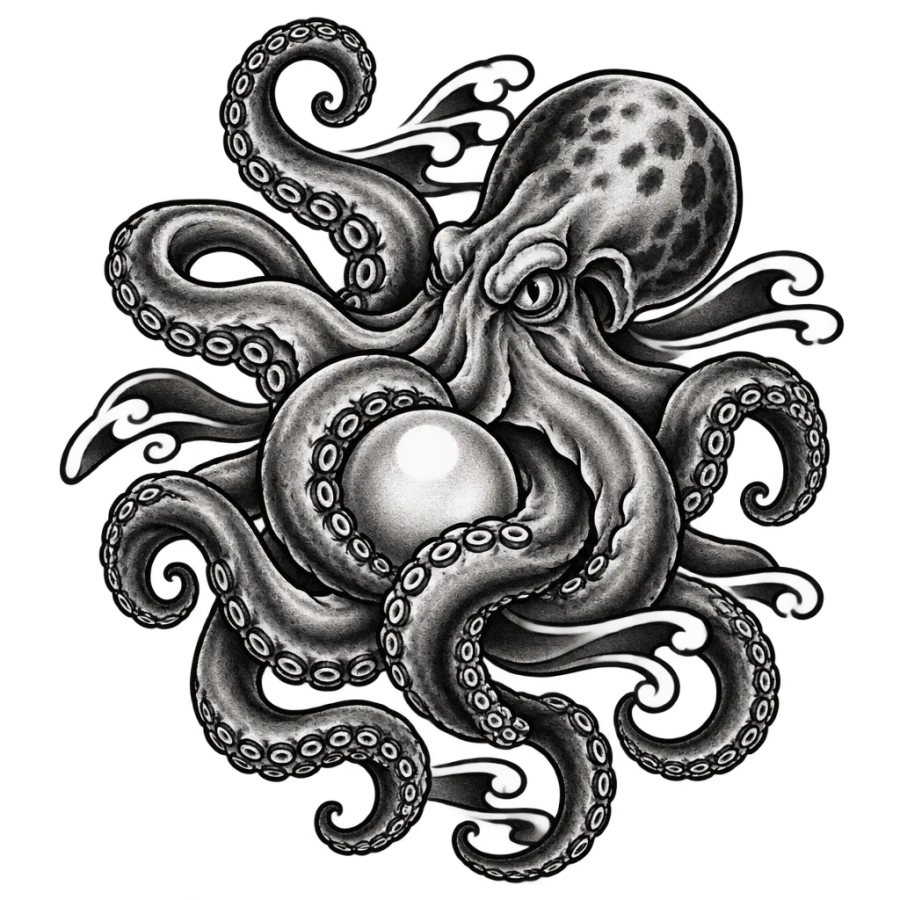
The body of an octopus is a soft bulb, the mantle, with eight arms coming off a ring beneath it. That is a shape with no fixed outline, which makes it unusually good on a human body: the arms can be routed around a shoulder, down a bicep or along a rib line, and the whole piece still looks like the animal.
It also means a flat octopus drawn as a symmetrical circle and dropped in the middle of a back looks like a logo. The design wants to wrap something. Decide which muscle or joint the arms are going to follow, then let the artist build the mantle to fit whatever space is left.
Let the placement decide the arms
The arms are the design. Put the mantle on the point of the shoulder and the arms fall naturally down the bicep, back over the shoulder blade and forward across the collarbone, following muscles that already curve that way. Put the mantle high on the outer thigh and the arms run toward the knee and around the back of the leg. Both work because the animal is wrapping something, which is what it does.
The forearm version has a catch worth knowing. A forearm rotates, so a design that spirals it reads from two different angles depending on what your hand is doing, and the artist has to pick which angle is the good one. Most will set the mantle and the eye to face a viewer when your arm hangs at your side. The spots to avoid are the flat and stable ones: the center of the upper back and the middle of the chest give the arms nothing to curve around.
| Spot | Where the mantle goes | Where the arms run | Size |
|---|---|---|---|
| Shoulder cap | On the deltoid | Down the bicep, back over the shoulder blade | 25 to 35 cm |
| Outer thigh | High on the outer thigh | Toward the knee and around the back | 30 to 40 cm |
| Sternum and ribs | Centered on the sternum | Out along the ribs under each pectoral | 25 to 35 cm |
| Back of the calf | Just below the knee | Down to the ankle, one arm forward | 20 to 30 cm |
| Forearm | Near the elbow | Spiralling the forearm toward the wrist | 18 to 25 cm |
Suckers, and the detail that decides everything
Suckers are what makes an octopus look like an octopus, and they are the reason this subject has a size floor. Most common species carry two rows of suckers along each arm. Drawn as individual circles, each one needs roughly 3 mm to stay a circle, so an arm 2 mm wide at the tip cannot have suckers on it at all. Artists resolve that by drawing suckers in full near the mantle and letting them become a dotted line as the arm tapers.
Below about 15 cm overall, ask for the suckers to be implied rather than drawn: a row of dots on the inside curve of each arm, with the outer edge left clean. It reads correctly and it survives. The eye is the other detail that carries the piece, and an octopus pupil is a horizontal slot rather than a round dot, which is a small thing that makes an enormous difference to how alive the animal looks.
Details that decide how it ages
- Suckers at 3 mm or more near the mantle, tapering to dots along the arm
- A horizontal slot pupil rather than a round one
- Arms separated by real black where they cross, so they do not merge into a mass
- Skin texture suggested with a few bumps rather than stippled all over
- Water drawn as committed black shapes, not fine spray that fades to nothing
Styles, and how each handles eight arms
Japanese style is the natural fit, because irezumi was built to run a long flexible subject around a limb, and its wave and wind backgrounds solve the empty space the arms leave behind. Bold outline, flat grey or one color, heavy black water. It holds for decades. Blackwork and dotwork go the other way and reduce the animal to silhouette and stipple, which suits a smaller piece and ages almost without change.
Black and grey realism gives you the texture and the eye, and it needs 25 cm plus an artist who can keep eight overlapping arms from reading as a knot. Geometric and ornamental versions use the eightfold radial symmetry deliberately, usually as a mandala with the mantle at the center, and that is the one version that works flat on a back or a sternum. Color realism is expensive, slow, and the first to fade.
Cost, sessions and the regrets
An 18 cm blackwork octopus on a forearm is usually $350 to $600 in one sitting. A 30 cm Japanese shoulder and bicep piece runs $900 to $1,800 across two or three sessions. A realistic thigh piece with water is $1,500 to $3,000. Hourly rates of $150 to $250 are normal, and the arms take longer than people expect, because each one is a separate drawing problem.
The regret people report most is a small octopus with fully drawn suckers, which merges into a dark blob within five years because the suckers were never large enough to stay separate. The second is an octopus placed flat on a stable surface where the arms had nothing to wrap, which looks static forever. The third is a kraken and ship composition crammed into 15 cm, where the ship ends up smaller than a thumbnail and disappears.
12 octopus tattoo designs, with the prompt behind each one
Every design below came out of AI Tattoo Lab. Tap one to load its prompt into the generator, then change a word and make it yours.
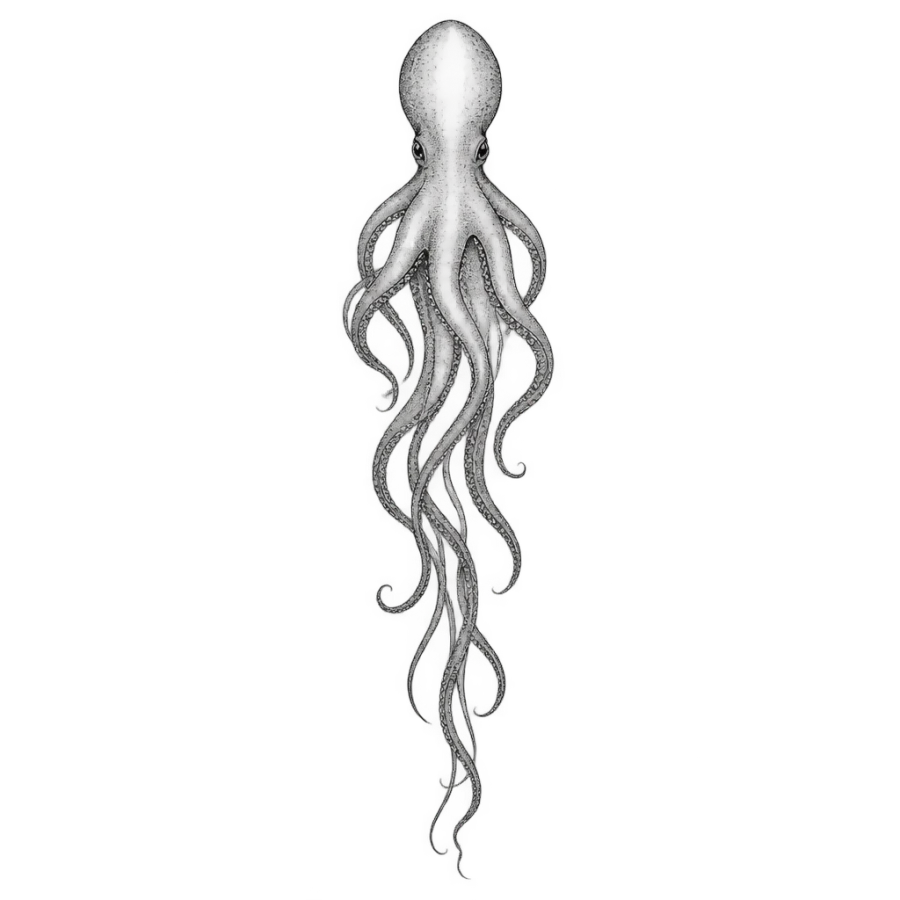
A slender octopus drifting down, fine line, long trailing tentacles
Use this prompt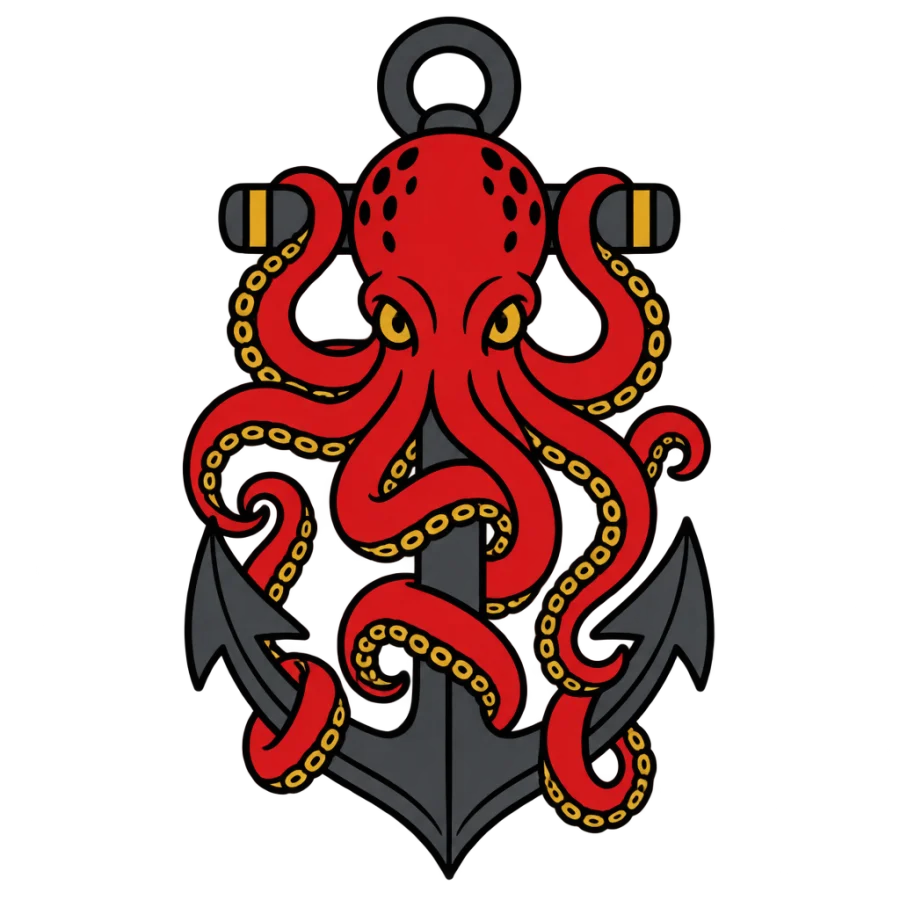
An octopus wrapped around a ship anchor, bold traditional flash
Use this prompt
Solid black octopus silhouette with suckers cut out as negative space
Use this prompt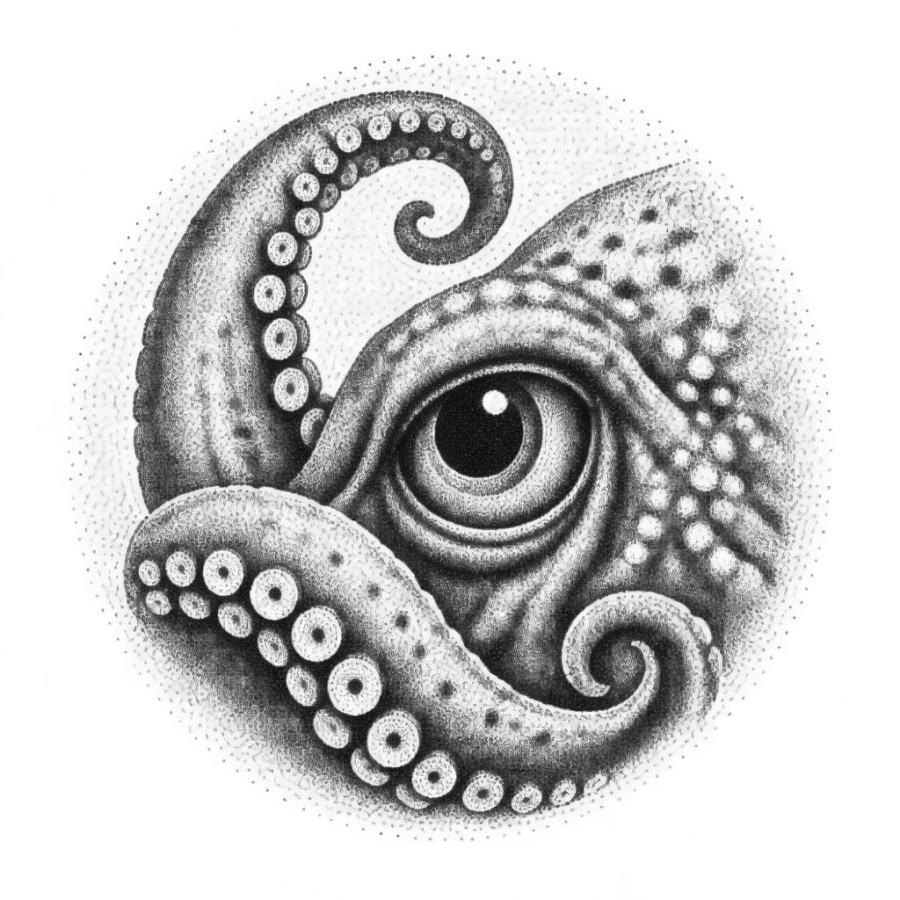
Close up octopus eye and head, dotwork stippling, round vignette
Use this prompt
Geometric octopus inside a hexagon, symmetrical straight line tentacles
Use this prompt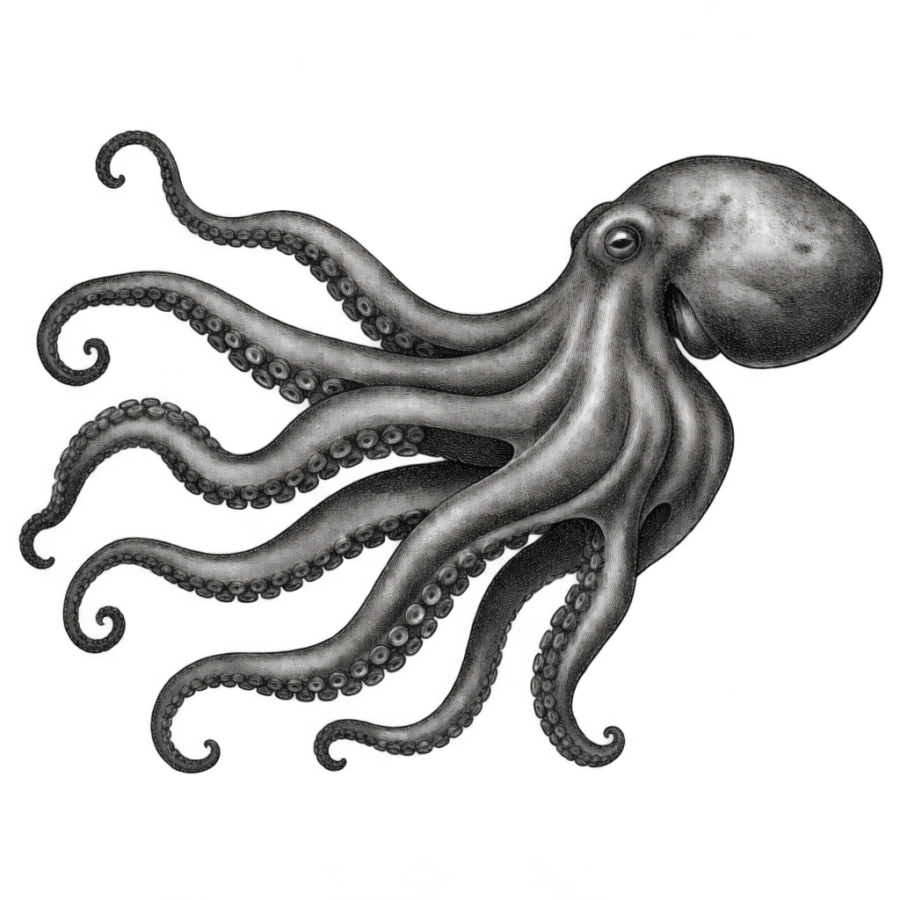
Octopus in profile, vintage engraving with cross hatching, specimen plate
Use this prompt
Octopus drawn in one continuous line, wide and minimal, no shading
Use this prompt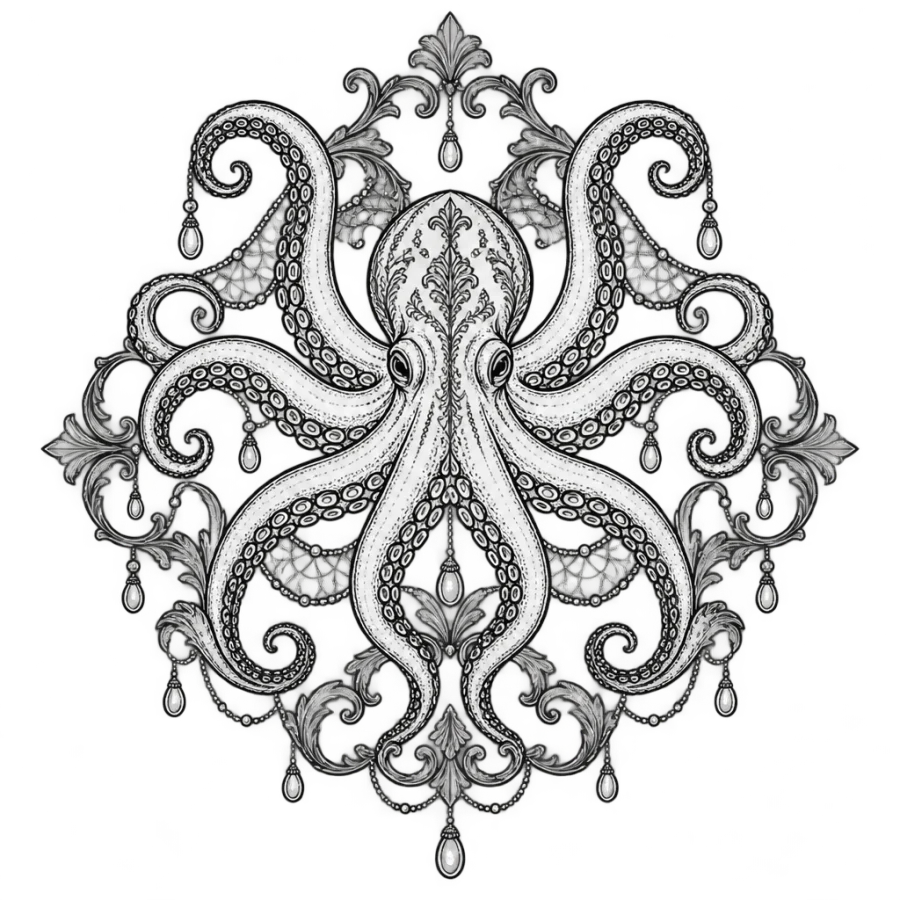
Ornamental octopus medallion with lace scrollwork and hanging pearls
Use this prompt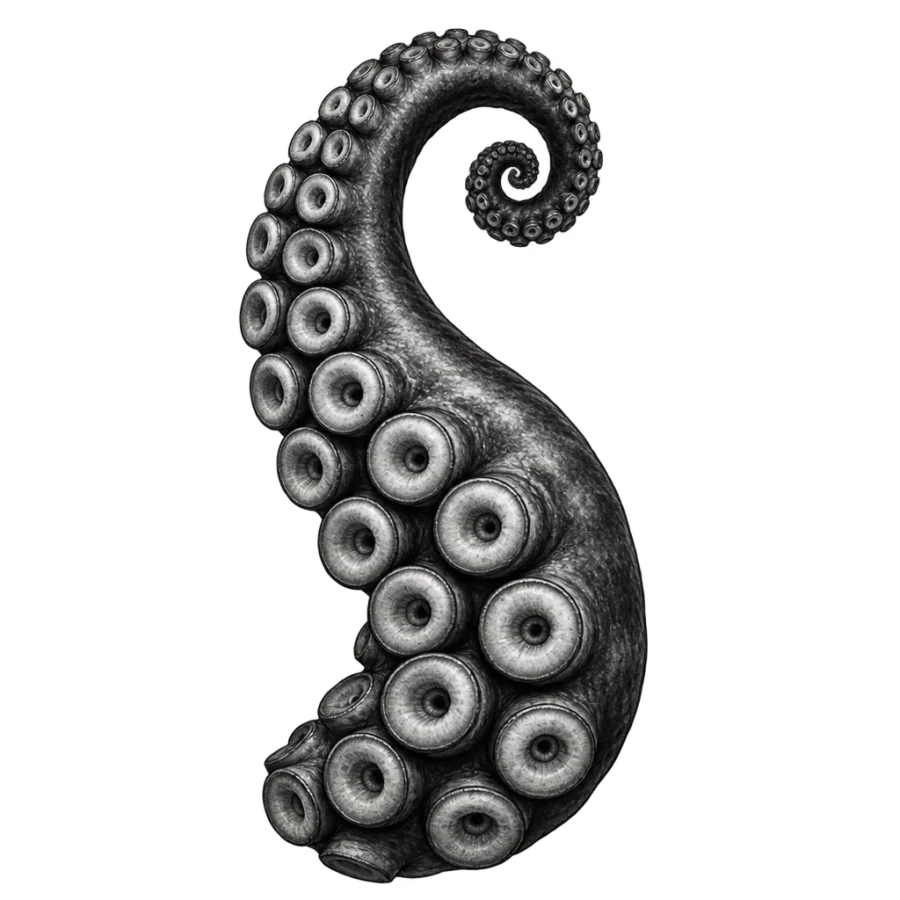
A single octopus tentacle curling up, black and grey realism, detailed suckers
Use this prompt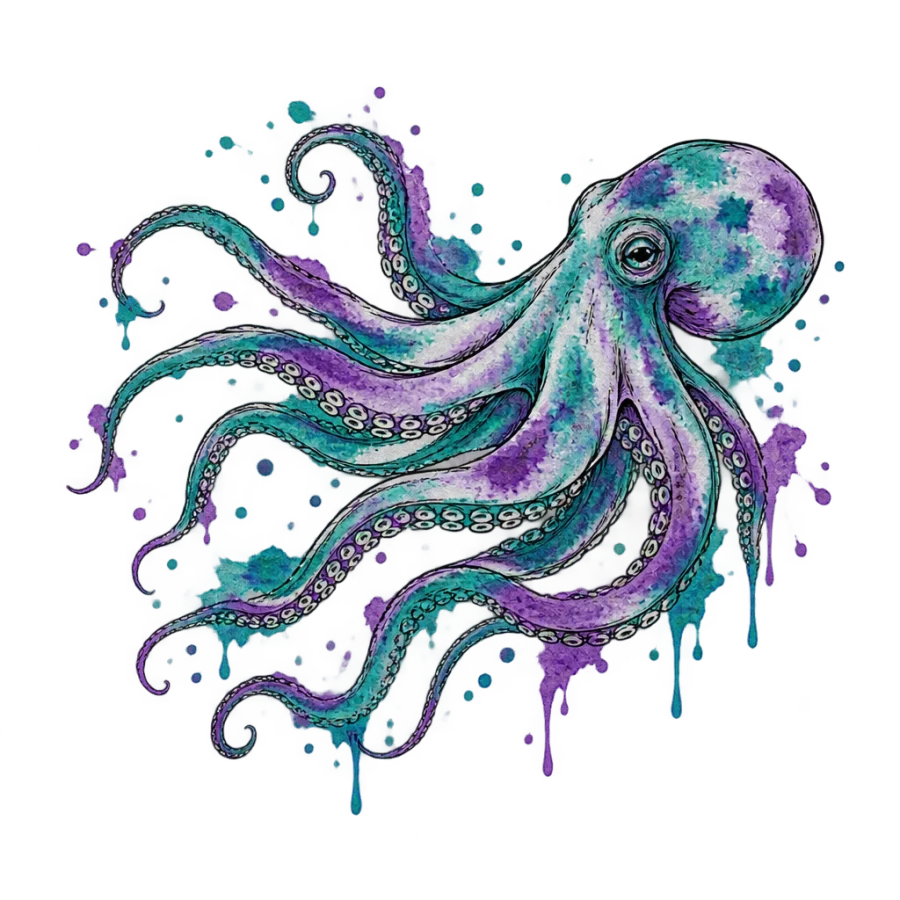
An octopus swimming with loose teal and violet watercolour washes
Use this prompt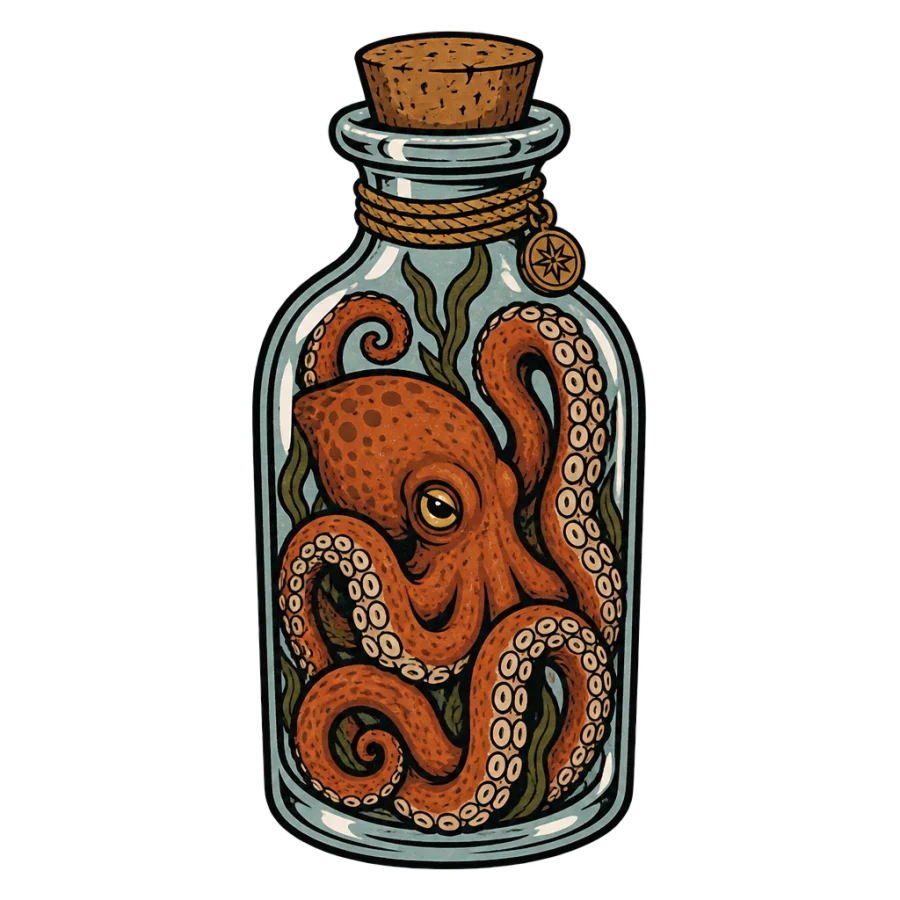
A small octopus curled inside a corked glass bottle, neo traditional
Use this promptDescribe an idea of your own and get four designs back in about 20 seconds.
Open the generator
Questions people ask
What does an octopus tattoo mean?
Adaptability and intelligence, from the animal itself: no bones, through gaps barely wider than its eye, instant color changes, and the ability to regrow an arm. The kraken version comes from maritime tattooing and Scandinavian sea accounts, which is where the ship held in tentacles design started.
Where does an octopus tattoo look best?
Anywhere the arms can wrap something. The shoulder cap is the best fit, with the mantle on the deltoid and the arms running down the bicep and over the shoulder blade. The outer thigh, the sternum and ribs, the back of the calf and a spiralling forearm all work. Flat stable areas do not.
How big does an octopus tattoo need to be?
About 15 cm before suckers can be drawn as suckers, since each one needs roughly 3 mm to stay a circle. A shoulder or thigh piece is 25 to 40 cm. Below 15 cm, ask for the suckers to be implied as a row of dots on the inside of each arm.
Do octopus tattoos age well?
The bold ones do. Japanese and blackwork versions barely move, because the arms are separated by real black and the suckers are either drawn large or implied. Small pieces with fully drawn suckers merge into a dark mass within about five years. Arms that cross without black between them blur together first.
How much does an octopus tattoo cost?
Roughly $350 to $600 for an 18 cm blackwork forearm piece in one sitting, $900 to $1,800 for a 30 cm Japanese shoulder and bicep across two or three sessions, and $1,500 to $3,000 for a realistic thigh piece with water. Hourly rates of $150 to $250 are normal.