Demon tattoo ideas, meaning and designs
Most demon tattoo requests are one of four things: a Japanese oni, a hannya mask, a gargoyle, or the devil as European engravers drew him.
- Pain level6 / 10 on the outer thigh
- Healing3 weeks on top
- Typical size15 to 40 cm (6 to 16 in)
- Studio cost$500 to $2,500
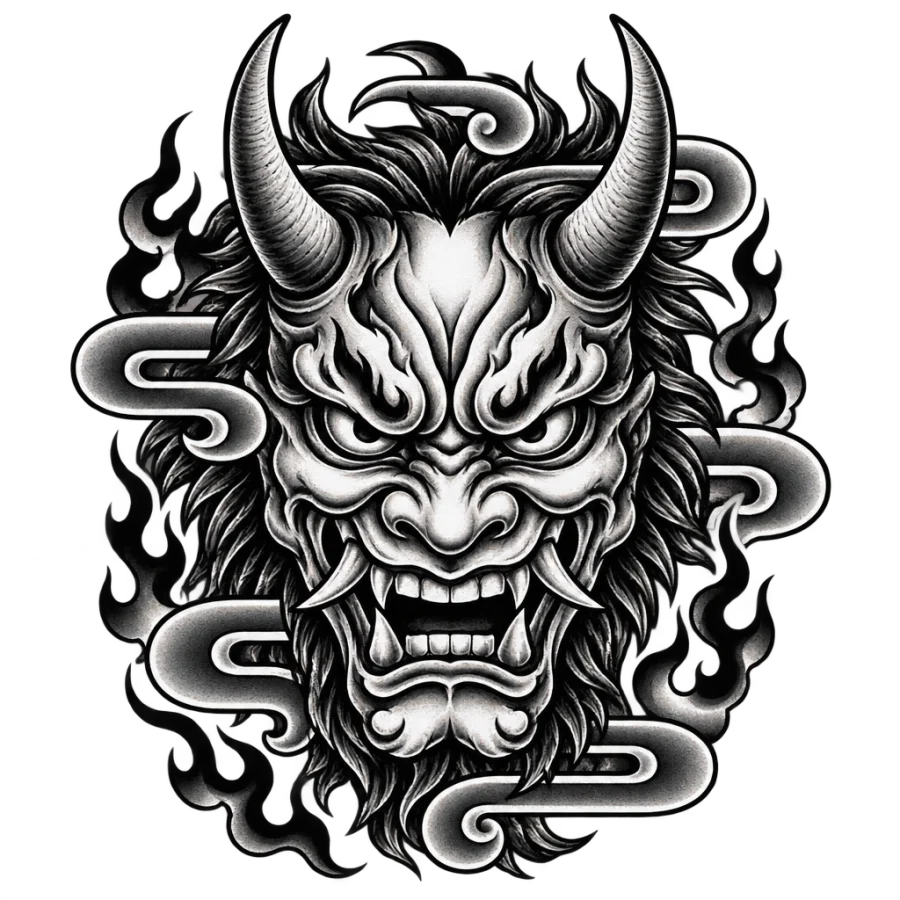
Each of those comes from a tradition with rules, and following them is what separates a demon tattoo from a horror poster. An oni has ox horns, a wide mouth with fangs, skin that is usually red or blue, and often an iron club. A hannya is a theatre mask with a specific expression. A gargoyle is architectural stone. The engraved devil is line work borrowed from woodcut and copperplate.
The common reading is protective. Wearing something frightening to keep worse things off you is an old idea, and it shows up in Japanese tattooing, in European church carving and in sailors' tattoos alike. Artists in this area tend to be specialists, so look for a portfolio with healed masks in it instead of fresh photos.
Oni and hannya are not the same mask
An oni is a creature. A hannya is a mask worn by an actor playing a woman whose jealousy has changed her, and noh has a progression of masks that gets further from human, with the hannya partway along it. That history is why the hannya has horns and gold teeth but also brows and cheeks that still read as a face in pain.
Drawing them differs accordingly. An oni gets a bulbous nose, a wide jaw and solid colour skin, and it can be shown from any angle. A hannya is a mask, so the plane of the face stays flat and the artist has to keep it reading as carved wood instead of flesh, usually by keeping the edge of the mask visible and the interior shading simple.
| Subject | Where it comes from | Size and sessions |
|---|---|---|
| Oni | Japanese folklore, ox horns, tiger skin, iron club | 25 to 40 cm, two to four sessions |
| Hannya mask | Noh theatre, a woman changed by jealousy and grief | 15 to 25 cm, one or two sessions |
| Gargoyle | Gothic church stonework, a carved waterspout | 15 to 30 cm, one or two sessions |
| Engraved devil | European woodcut and copperplate printing | 12 to 25 cm, one or two sessions |
Gargoyles, grotesques and the engraved devil
A gargoyle is a waterspout. The word belongs to the carvings that throw rainwater clear of a wall, which is why real ones stick out horizontally with an open mouth, and the purely decorative ones are called grotesques. A gargoyle crouched on a ledge with its head turned and its mouth open is the recognisable one, and the stone texture is what makes it work: flat planes, chisel marks, moss in the recesses, no skin shine.
The engraved devil is a different skill. Old European prints built everything from parallel lines and cross hatching at fixed angles, with no grey wash at all, and that translates well because every line is thick enough to survive. Ask to see healed engraving style work before you book, since hatching drawn too tight fills in and the whole image goes flat grey.
Sizes, placement and sessions
These are detailed faces, and faces need area. A hannya under about 15 cm loses the brow furrow and the teeth, which are the two things carrying the expression. An oni with a background of wind bars and waves is a panel piece, so it belongs on the outer thigh, the upper arm into the shoulder, the ribs or the back, and it means several sessions of three to four hours.
Decisions that make a demon piece hold up
- Keep the whites of the eyes as bare skin, since white ink goes yellow and grey and the eyes are where people look first
- Ask for solid black in the hair and the mouth interior instead of dark grey wash
- Leave 3 mm of clear skin between a horn and the hairline so the two do not merge
- Put the piece where it can be covered, because a visible demon tattoo gets a reaction you may not want at work
- Build the background in a later session, once the face has healed and you can see the contrast you actually have
What a studio will and will not tattoo
Reputable studios draw demons all day and still turn work down. Hate symbols get refused everywhere, including ones disguised inside a larger design, and most artists will say no to anything depicting violence against an identifiable person. Gore for its own sake is a personal call, and plenty of artists simply do not do it.
The classic iconography is where the good work is anyway. Oni masks, hannya, gargoyles and engraved devils have centuries of drawing behind them, which means there is a right way to build the face and a tradition of composition to borrow from. Bring reference from that tradition and most artists will be glad to see it.
12 demon tattoo designs, with the prompt behind each one
Every design below came out of AI Tattoo Lab. Tap one to load its prompt into the generator, then change a word and make it yours.
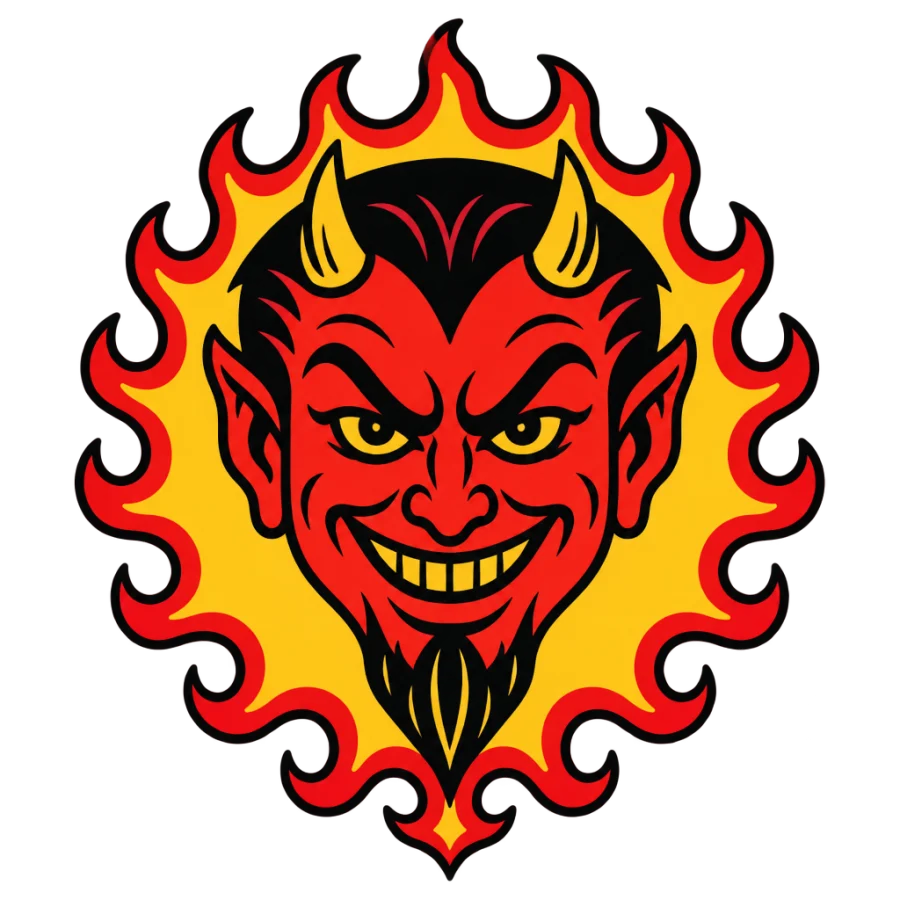
A grinning devil head with horns inside a ring of flames
Use this prompt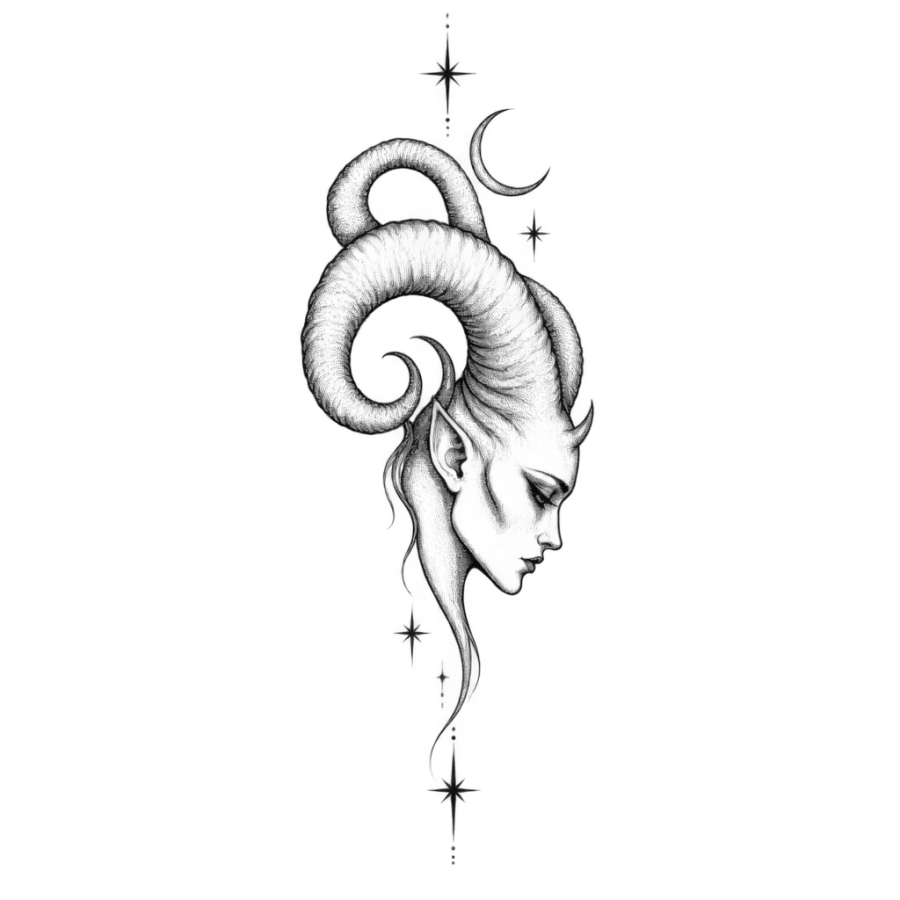
A demon in profile with curling ram horns, stars, fine line
Use this prompt
A solid black demon head with eyes and smoke in negative space
Use this prompt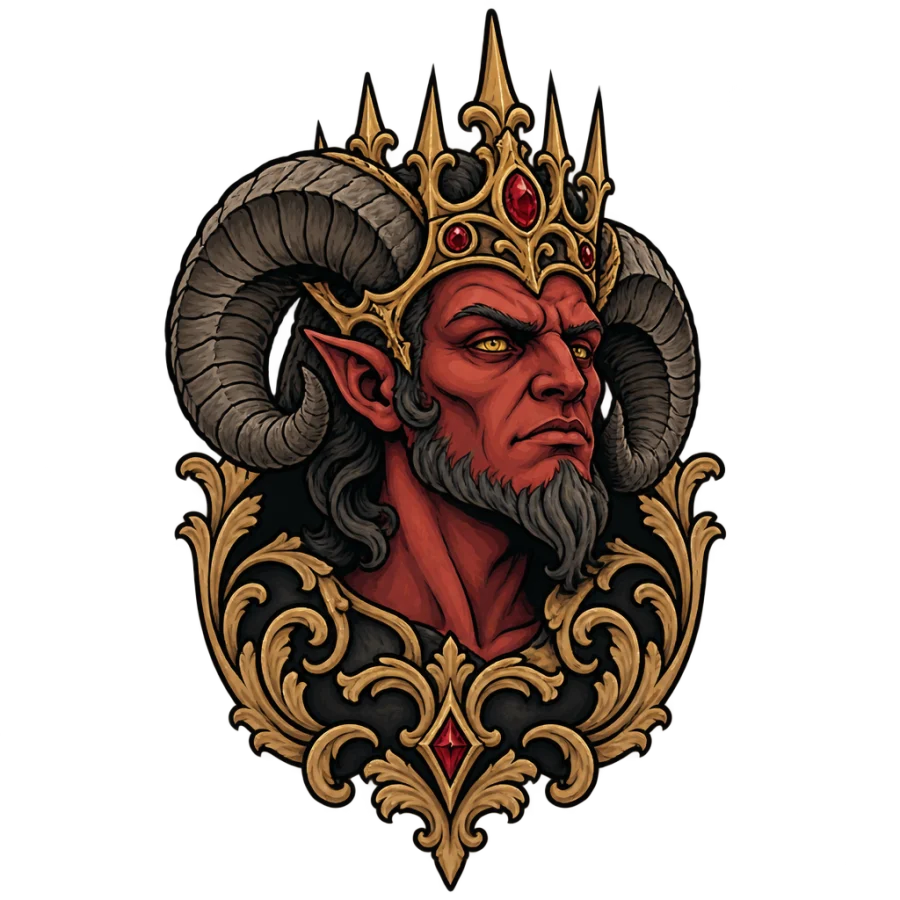
A crowned demon bust with ram horns and ornate collar, neo traditional
Use this prompt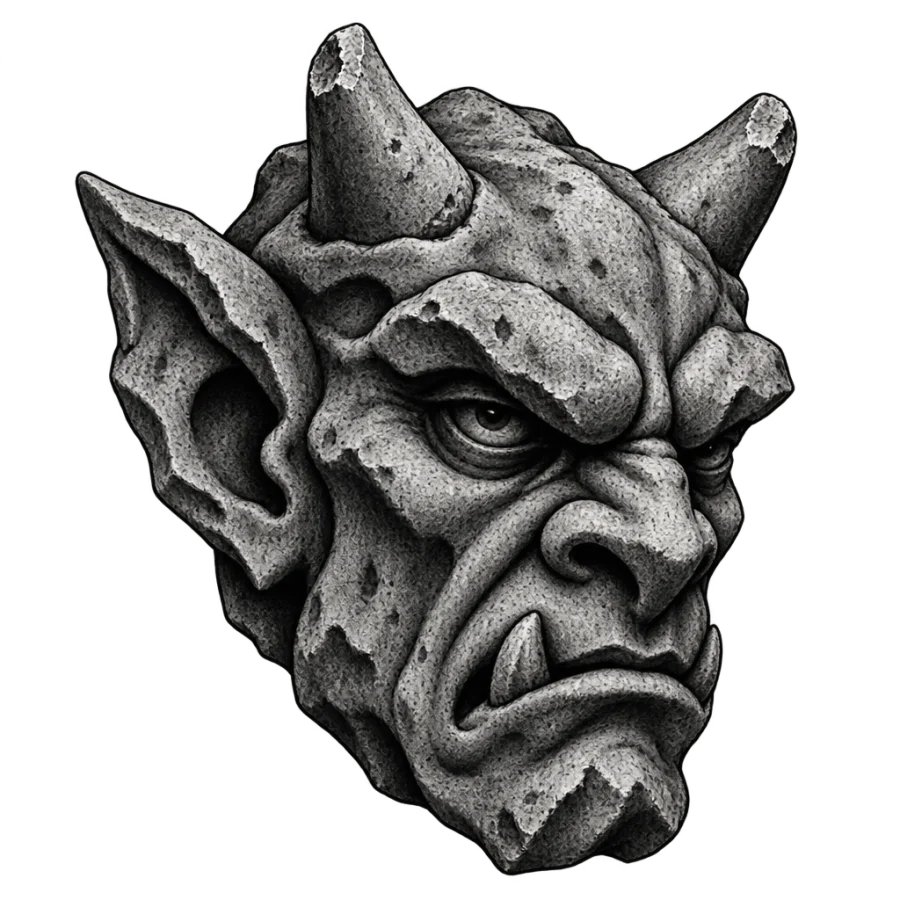
A weathered stone gargoyle face close up, black and grey realism
Use this prompt
A horned demon skull made of geometry over sacred geometry circles
Use this prompt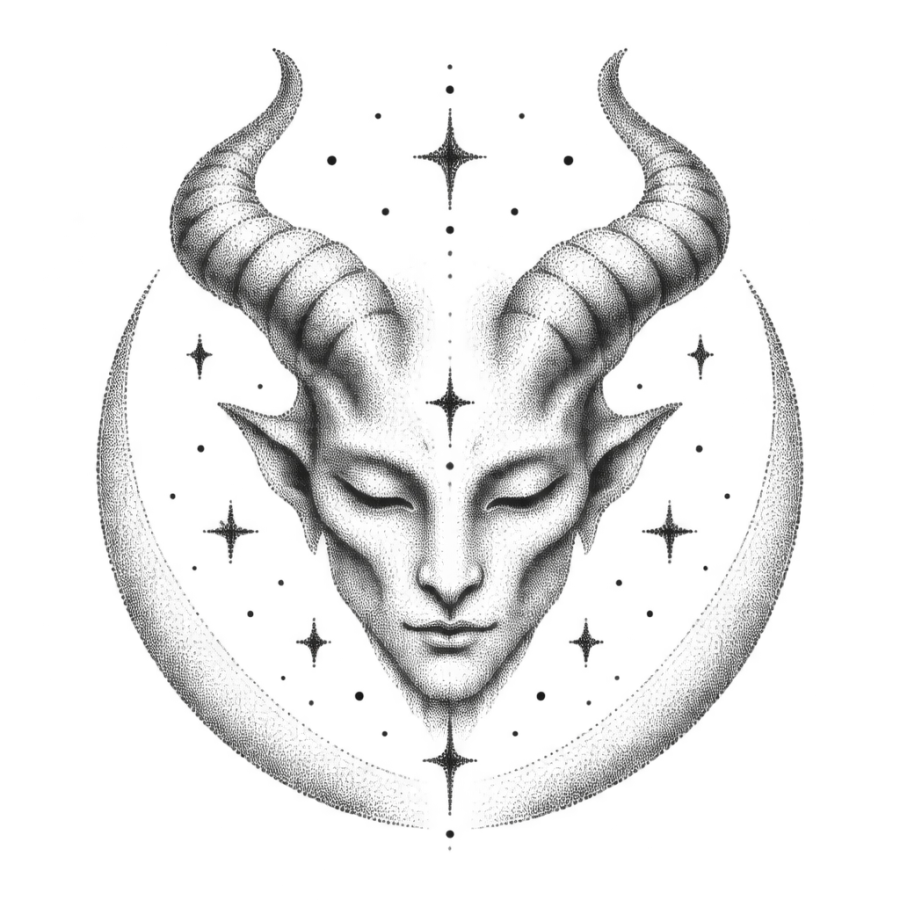
A horned demon head inside a crescent moon, dotwork stippling
Use this prompt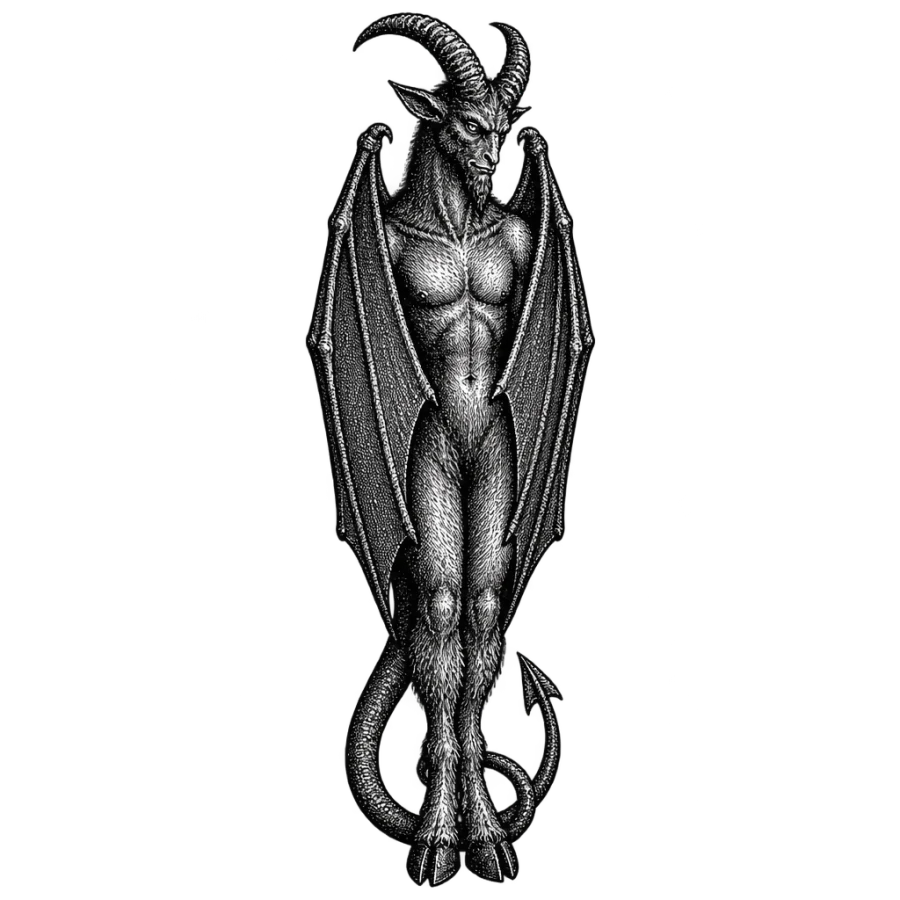
A standing winged demon with folded bat wings, old grimoire engraving
Use this prompt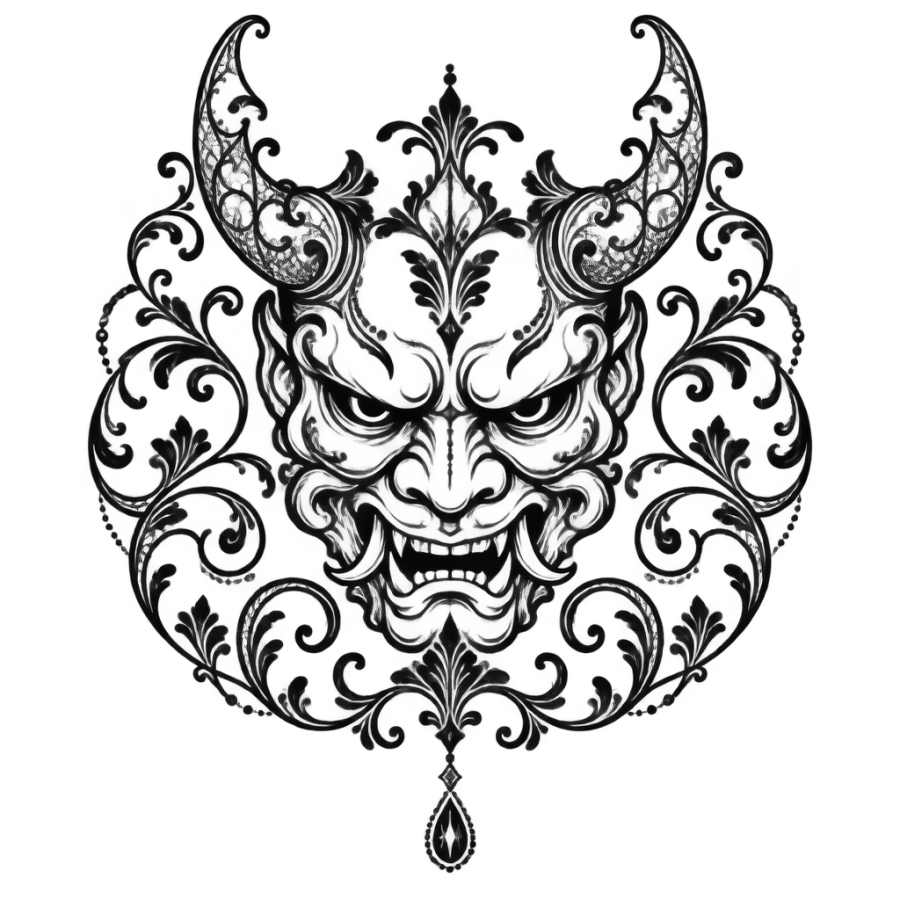
A demon mask with horns turning into lace filigree and a jewel
Use this prompt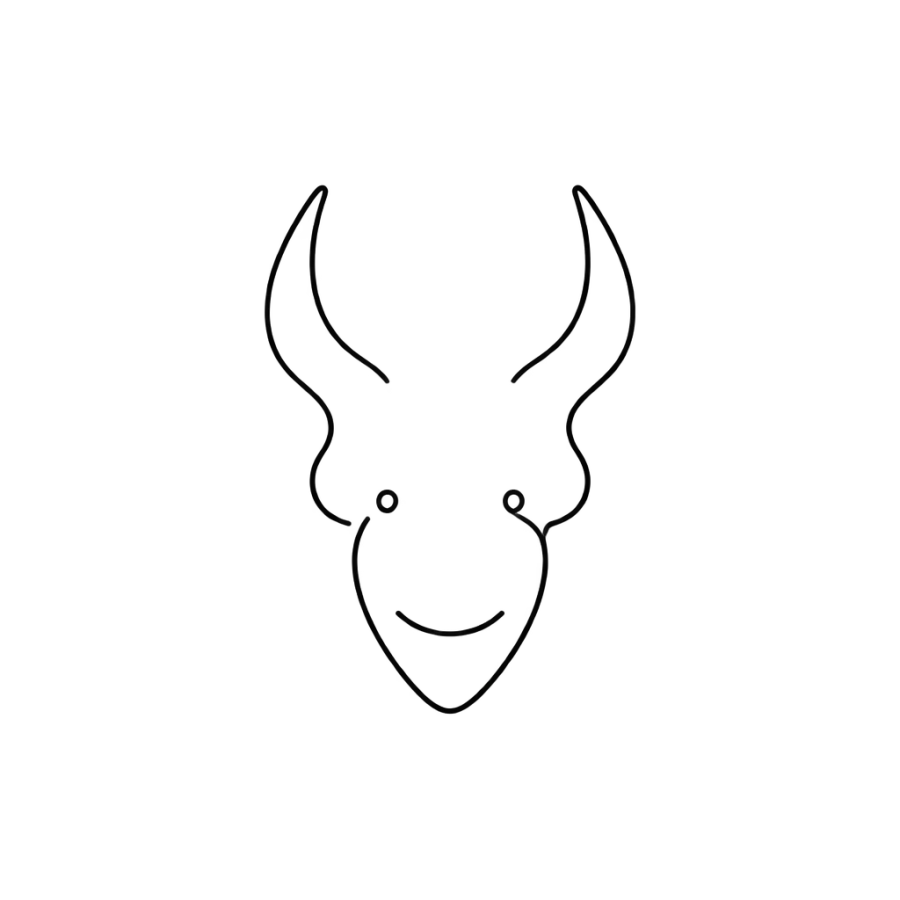
A tiny demon face drawn in one single unbroken line
Use this prompt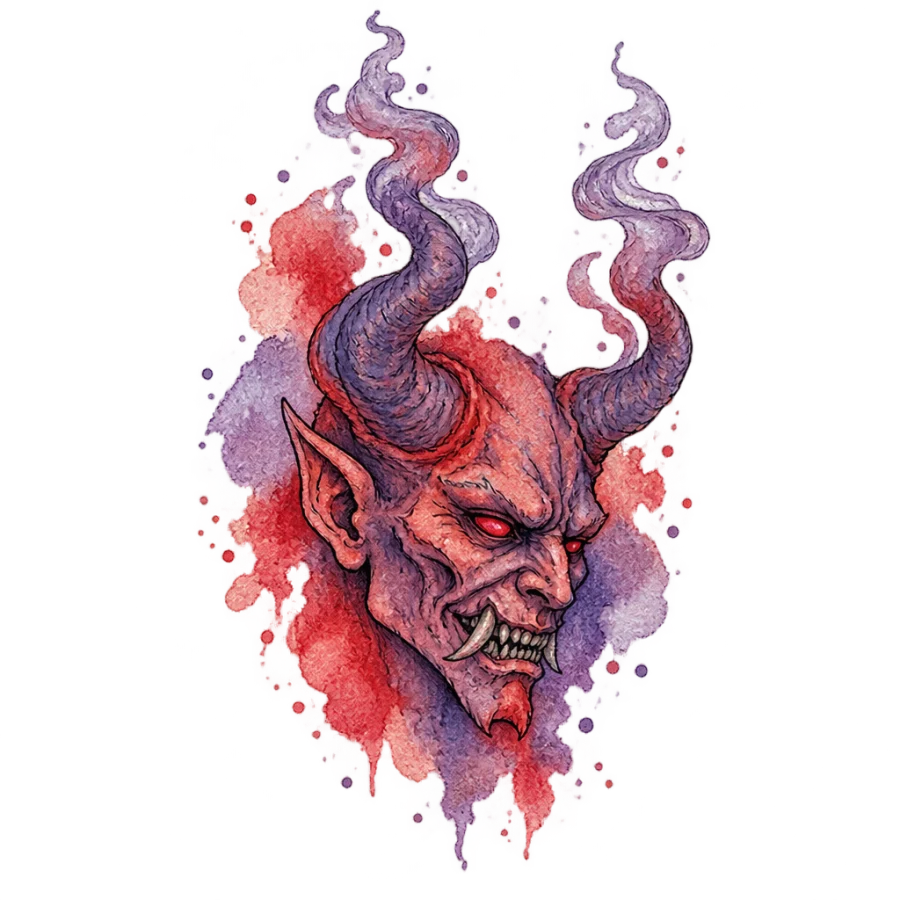
A demon head with smoking horns over loose watercolor washes
Use this promptDescribe an idea of your own and get four designs back in about 20 seconds.
Open the generator
Questions people ask
What does a demon tattoo mean?
Most often protection through intimidation, the same logic behind grotesque faces on church roofs and shrine gates. Many wearers mean their own anger or a period they survived. A hannya mask carries grief as well as rage, since it comes from noh theatre and shows a woman changed by jealousy.
What is the difference between an oni and a hannya mask?
An oni is a creature from Japanese folklore, drawn with ox horns, a wide fanged mouth and usually red or blue skin, often carrying an iron club. A hannya is a theatre mask from noh, worn by an actor playing a woman transformed by jealousy and grief, so it stays flat like carved wood and keeps a human brow.
How big does a hannya mask tattoo need to be?
About 15 cm as a floor, and 20 to 25 cm if you want the brow furrow, the teeth and the horn texture to all read. The expression lives in the brow and the mouth, and both are small relative to the mask. Below 12 cm, ask for a simplified blackwork version instead.
Why do oni have horns and tiger skin?
The old folk explanation is directional. The northeast was treated as the unlucky direction, called the kimon or demon gate, and on the old zodiac compass that point falls between the ox and the tiger. So oni got ox horns and a tiger skin loincloth, and the combination stuck in art and theatre.
Will a tattoo artist refuse a demon design?
Classic iconography is routine work for most studios. Hate symbols get refused everywhere, including hidden inside a larger piece, and many artists decline images of violence against an identifiable person or heavy gore. Bring reference from the tradition you want and the conversation is usually straightforward.