Anchor tattoo ideas, meaning and designs
The anchor is one of the oldest sailor tattoos, and it still works for the same reason it did in 1900: a heavy shape that stays readable.
- Pain level4 / 10 on the forearm
- Healing2 to 3 weeks on top
- Typical size6 to 15 cm (2 to 6 in)
- Studio cost$150 to $450
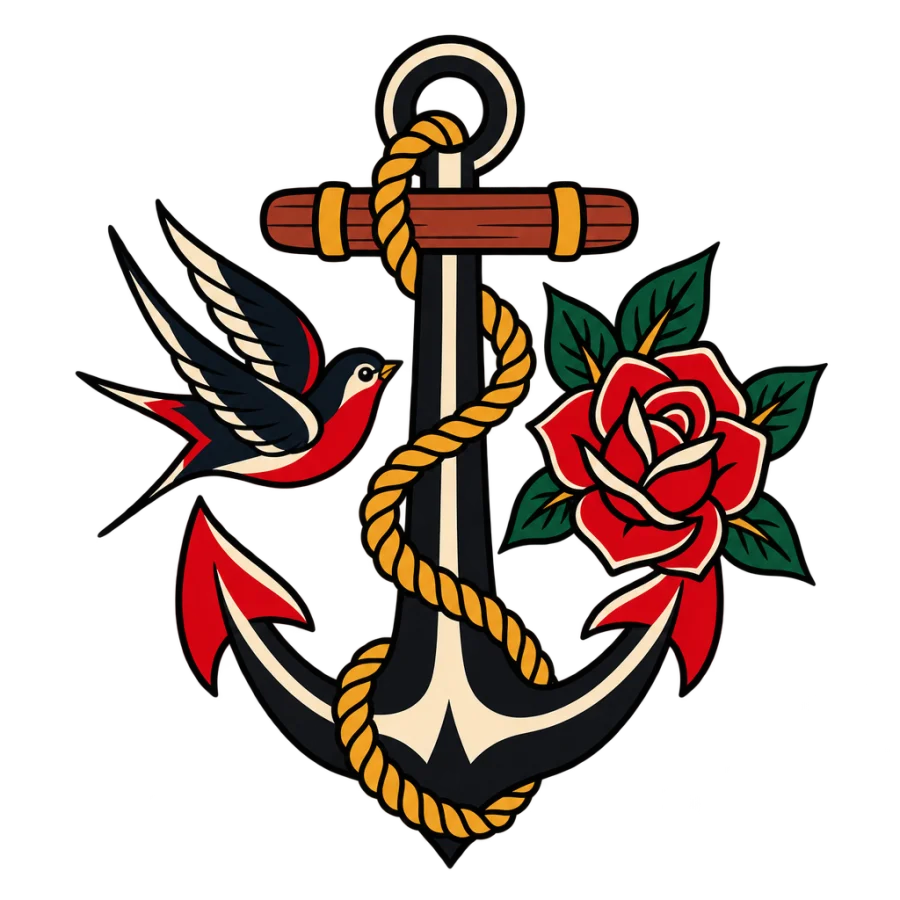
Sailors wore anchors long before tattoo shops had electricity. In the British and American merchant fleets an anchor usually meant the wearer had crossed the Atlantic, the same way a swallow marked five thousand miles at sea. The design survived because it suits skin. A heavy vertical shank, two curved arms, and a rope that gives the artist somewhere to put solid black.
Most people getting one now have never worked a deck. The anchor has drifted into a general symbol of holding steady, which is a fair reading, though the sailor version is still the one that tattoos best. Ask for the old admiralty pattern with the crossbar near the top. It reads from across a room faster than a modern boat anchor does.
What an anchor needs to look like an anchor
The traditional shape is an admiralty anchor: a ring at the top, a straight shank, a stock crossing it just below the ring, and two arms curving up to broad flukes at the bottom. Drop the stock and most people see a fish hook instead. Keep the flukes wide rather than needle sharp, because thin points are the first thing to soften as the ink settles into the skin.
Rope is the other half of the drawing. A rope wrapped around the shank gives the piece rhythm and stops the anchor reading as a flat silhouette. Chain does the same job with fewer, larger shapes, which is safer at small sizes. A banner across the middle is standard flash.
Parts worth getting right
- The stock, that crossbar near the top, is what makes the shape recognizable
- Broad flukes instead of sharp points, so the tips survive ten years
- Rope laid in even coils, since random loops read as a tangle
- A banner sized for the word first, before you choose the word
Styles that suit an anchor
American traditional is the home style. A 3 to 5 mm black outline, solid black in the flukes, a red or gold banner, and a bit of white in the rope. Sailor Jerry flash sheets from the 1940s are full of anchors and most shops still keep a version on the wall. Built for this exact job, it holds its shape for decades with almost no fading of the drawing itself.
Fine line and minimalist anchors work if you accept fewer parts. Draw the silhouette, skip the rope or cut it to two coils, keep the line around 0.35 mm and the piece at least 6 cm tall. Blackwork fills the shank as a solid column with the rope left as bare skin. Black and grey realism can render rusted iron and barnacles, but that wants 15 cm or more and plenty of mid grey to stay legible.
Size and placement that fit the shape
An anchor is tall and narrow, roughly two to one, so it wants a long area. The inner forearm is the most common spot and takes a 10 to 15 cm anchor comfortably. The outer calf takes the same. A 5 cm anchor on the wrist or ankle can work, but only stripped down: no rope, no banner, no shading inside the flukes.
Below about 4 cm the ring and the stock merge into one blob, and the gap between the two arms slowly fills with ink over the years. If you want it small, make the whole thing a line drawing with at least 1.5 mm of clear skin between any two lines. On the chest, artists often tilt the anchor a few degrees off vertical so it stops competing with the center line of the body.
Sizes that hold up
- Wrist or ankle, 4 to 6 cm, silhouette only
- Inner forearm, 9 to 15 cm, rope and a short banner
- Calf or outer thigh, 12 to 20 cm, full traditional with color
- Chest or back, 20 cm and up, room for waves or a ship behind it
How it ages, and what people change later
Traditional anchors age well because the style was worked out by people watching old tattoos. Heavy outlines spread slightly and still read fine at twenty years. What fails is the detail added on top: hatched rust texture, tiny barnacles, thin white highlights along the rope. White over black usually greys out within two or three years.
The banner causes the most regret. A partner's name across an anchor is a wide band of black to cover later, and the lettering dates the piece faster than the anchor ever will. Lyrics have the same problem. A place name or a date sits better a decade on than a full sentence.
Variations people ask for
- Anchor and rose together, the traditional pairing for someone waiting at home
- Anchor with a compass for travel, 12 cm or more to keep both readable
- HOLD FAST across the knuckles, one letter per finger, from sailors who needed grip on wet rigging
- An anchor with a swallow above it, a full sailor set in one small piece
15 anchor tattoo designs, with the prompt behind each one
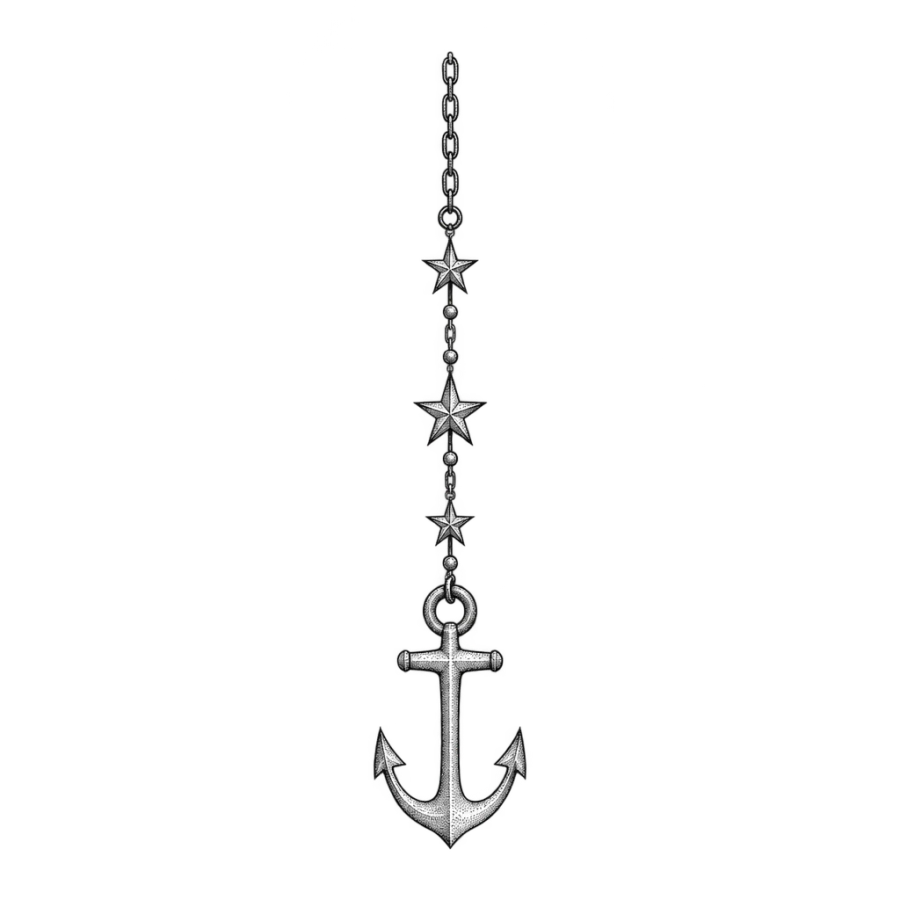
Every design below came out of AI Tattoo Lab. Tap one to load its prompt into the generator, then change a word and make it yours.
Anchor tattoo design
Use this prompt
Anchor tattoo design
Use this prompt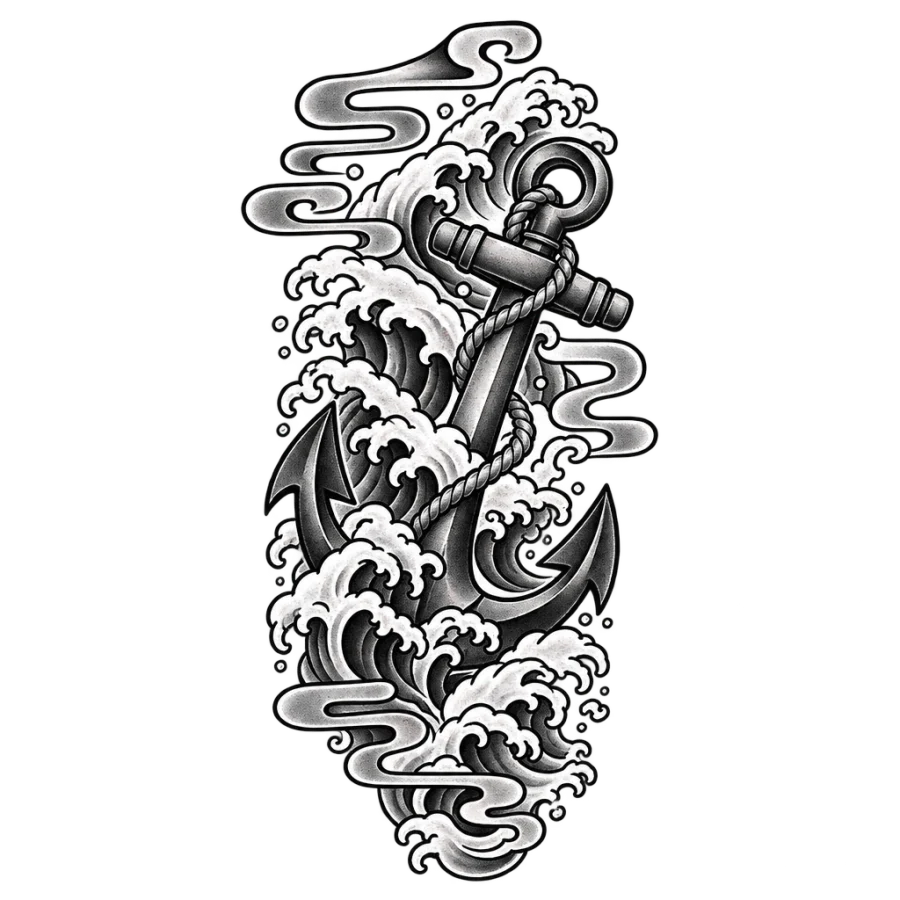
Anchor tattoo design
Use this prompt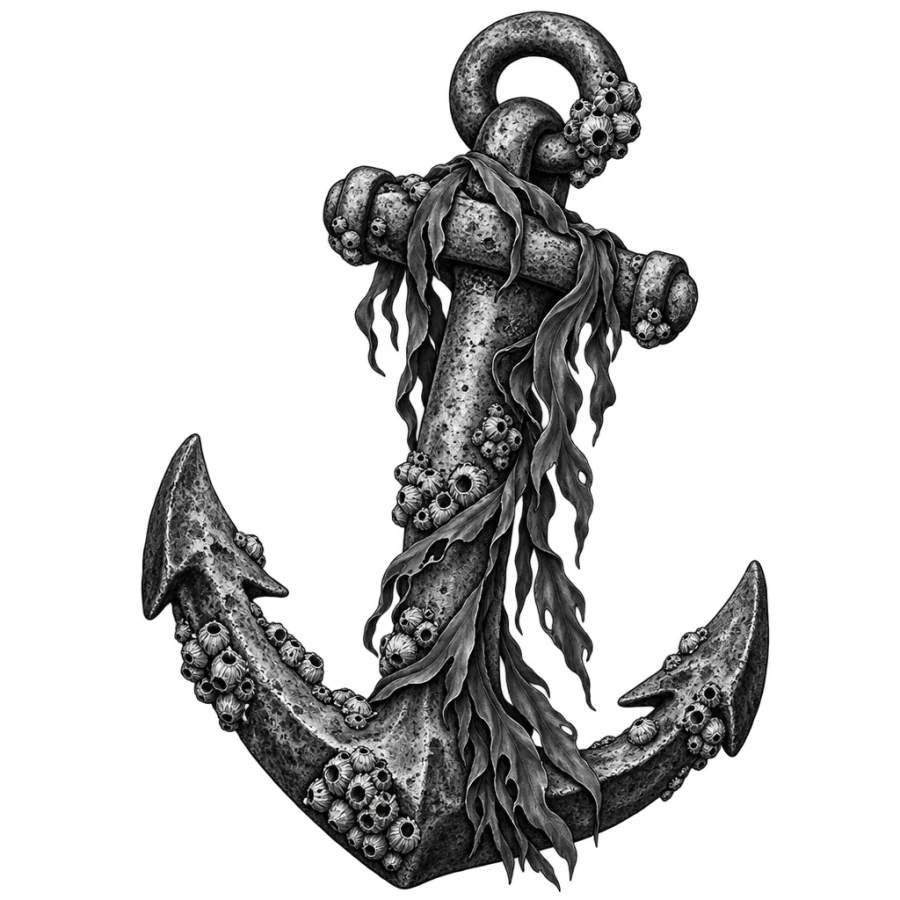
Anchor tattoo design
Use this prompt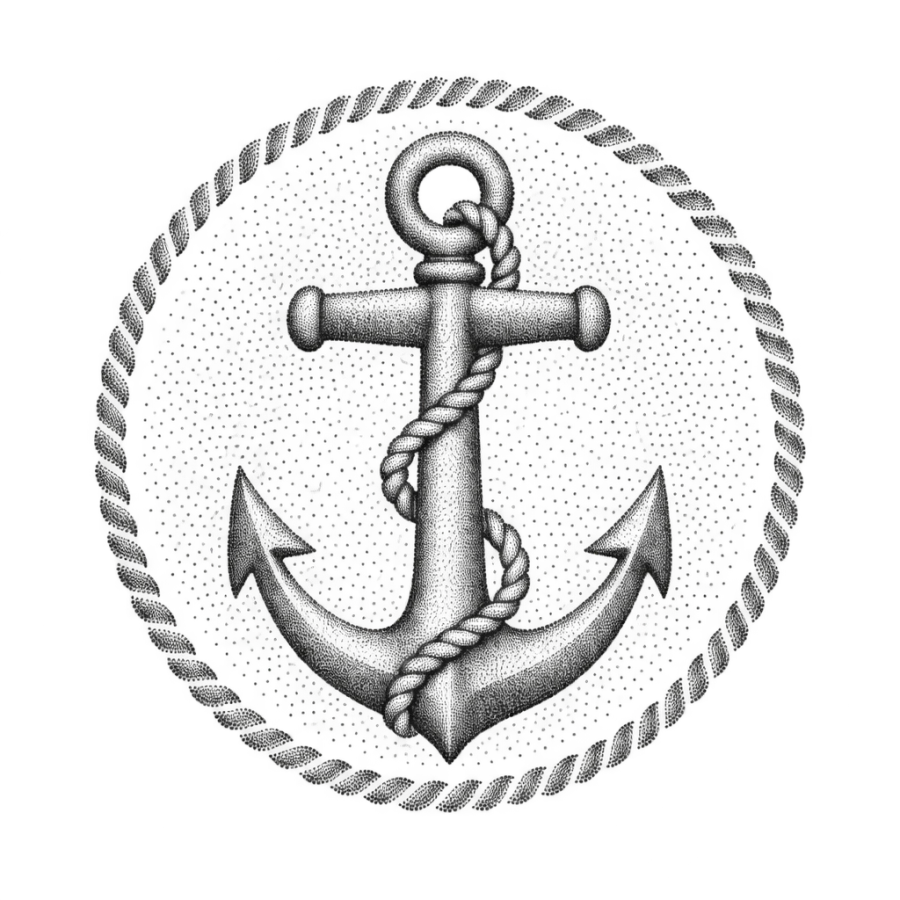
Anchor tattoo design
Use this prompt
Anchor tattoo design
Use this prompt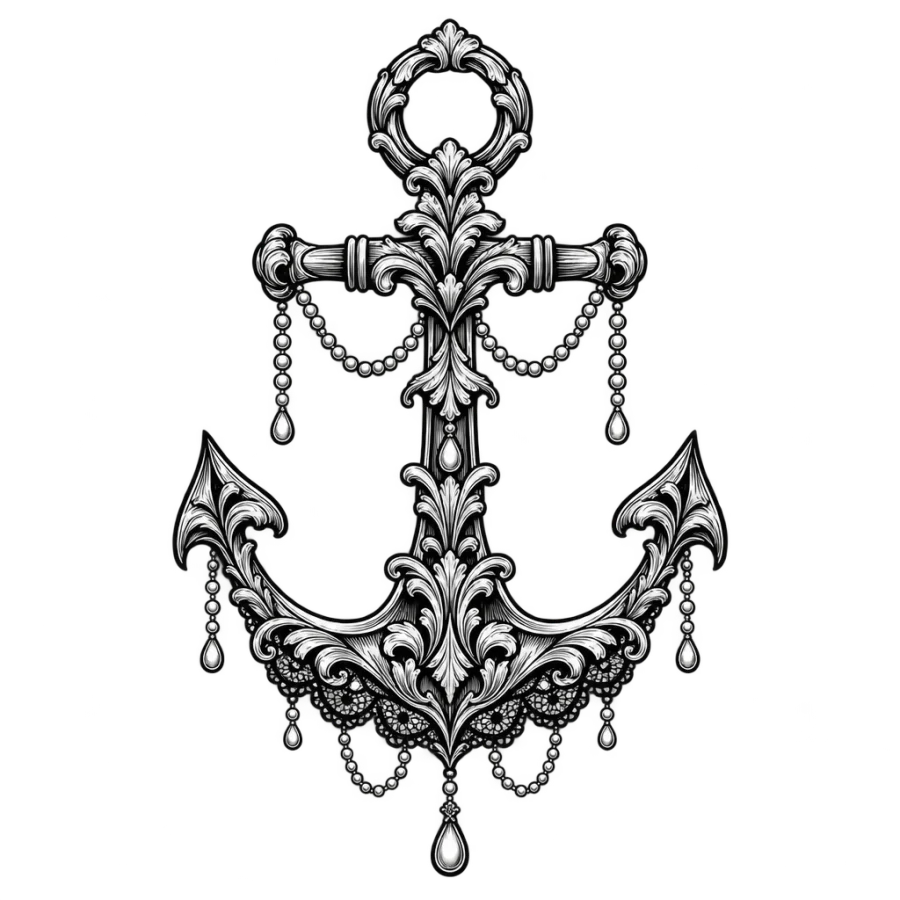
Anchor tattoo design
Use this prompt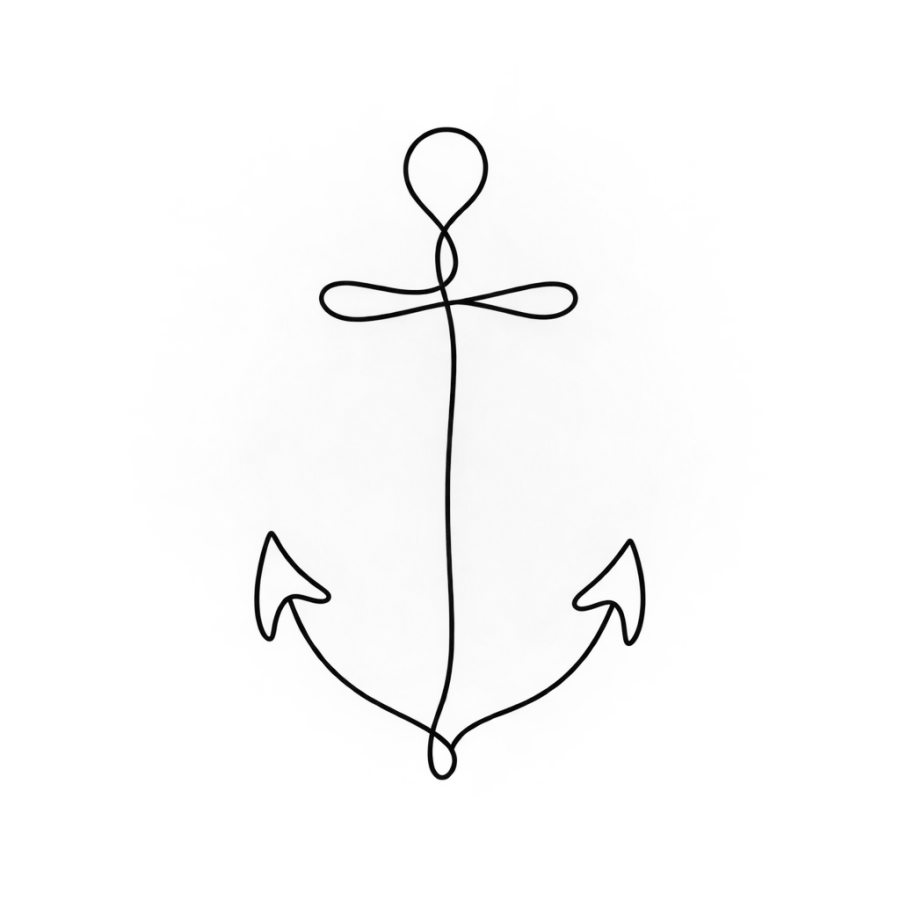
Anchor tattoo design
Use this prompt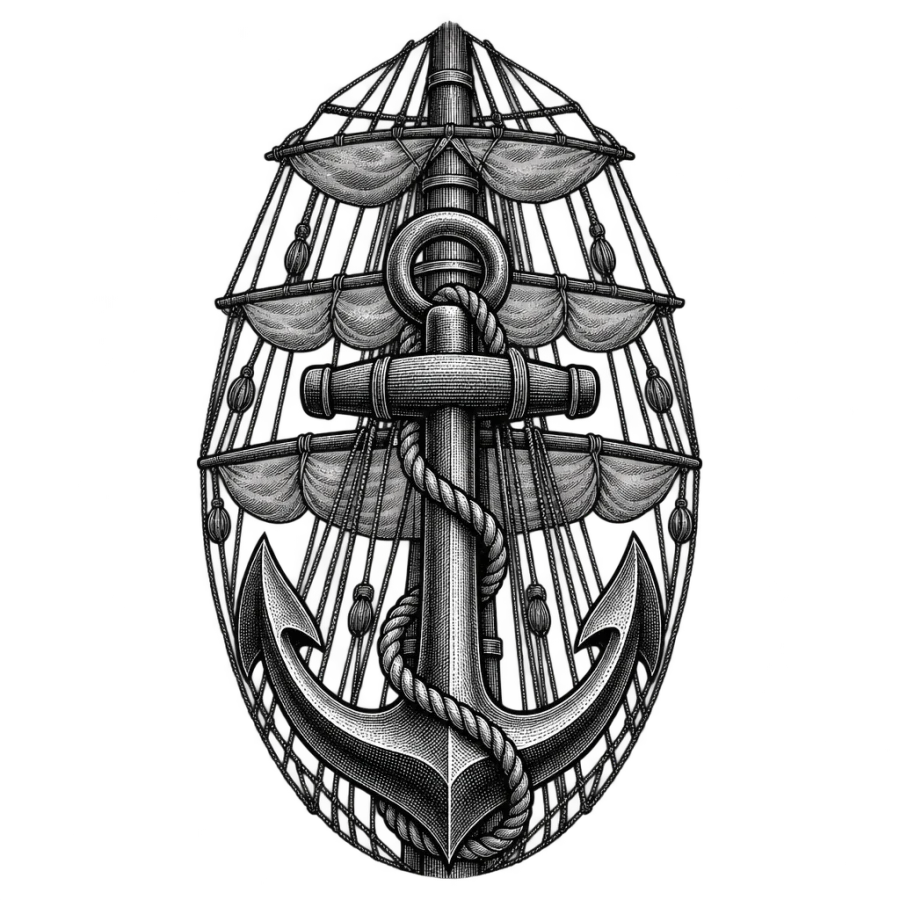
Anchor tattoo design
Use this prompt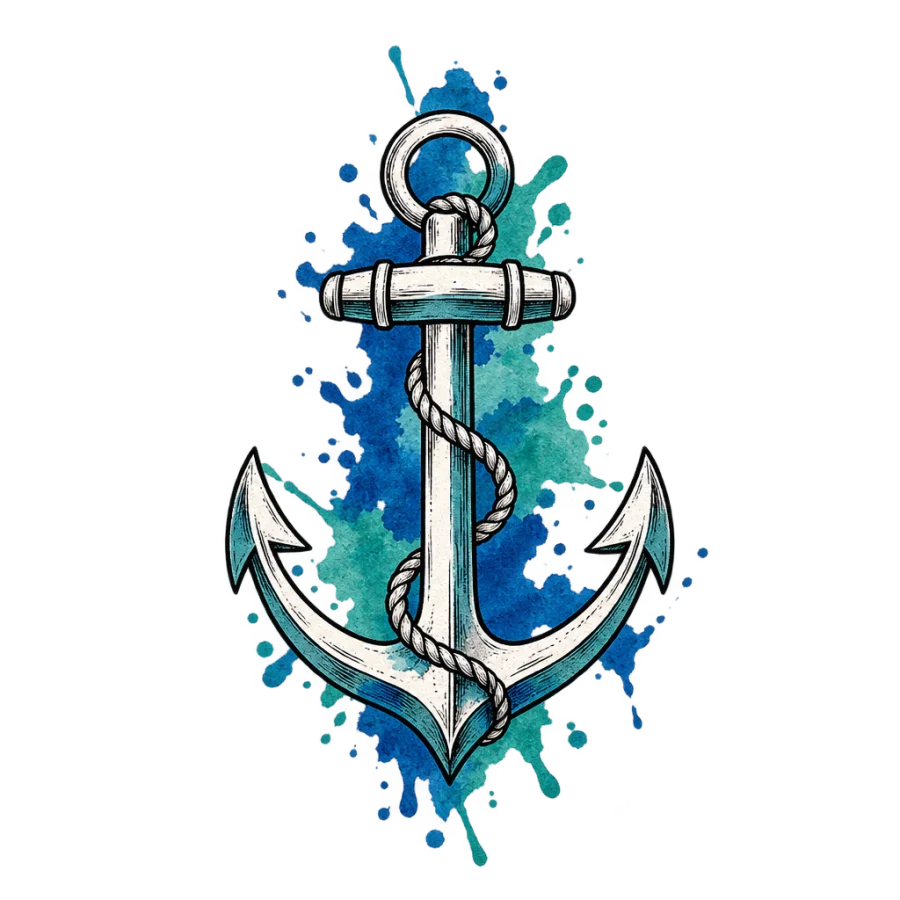
Anchor tattoo design
Use this prompt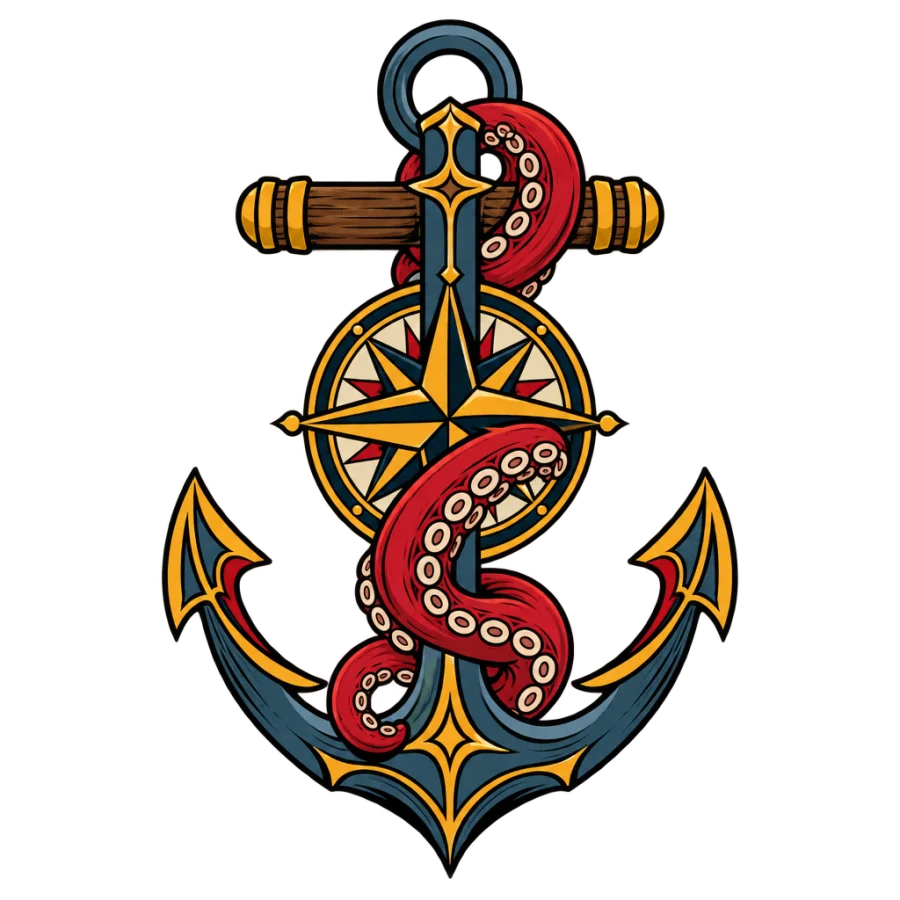
Anchor tattoo design
Use this prompt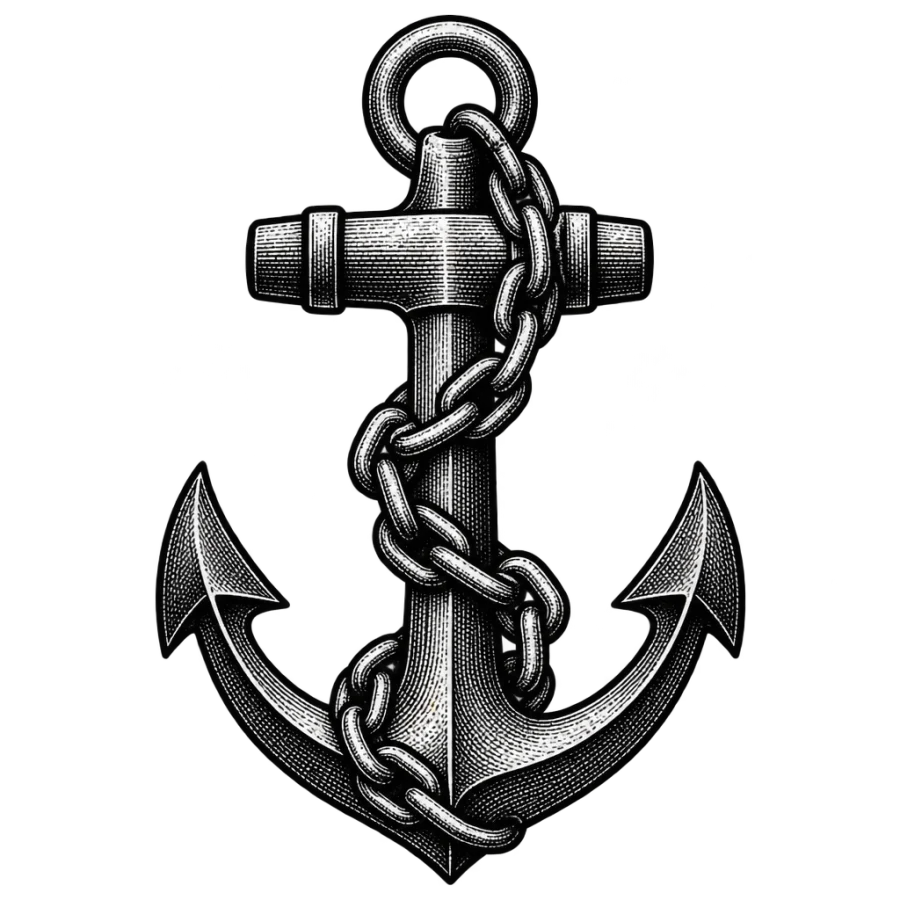
Admiralty anchor with coiled chain, antique engraving hatching
Use this prompt
Anchor and waves cut out of a solid black circle
Use this prompt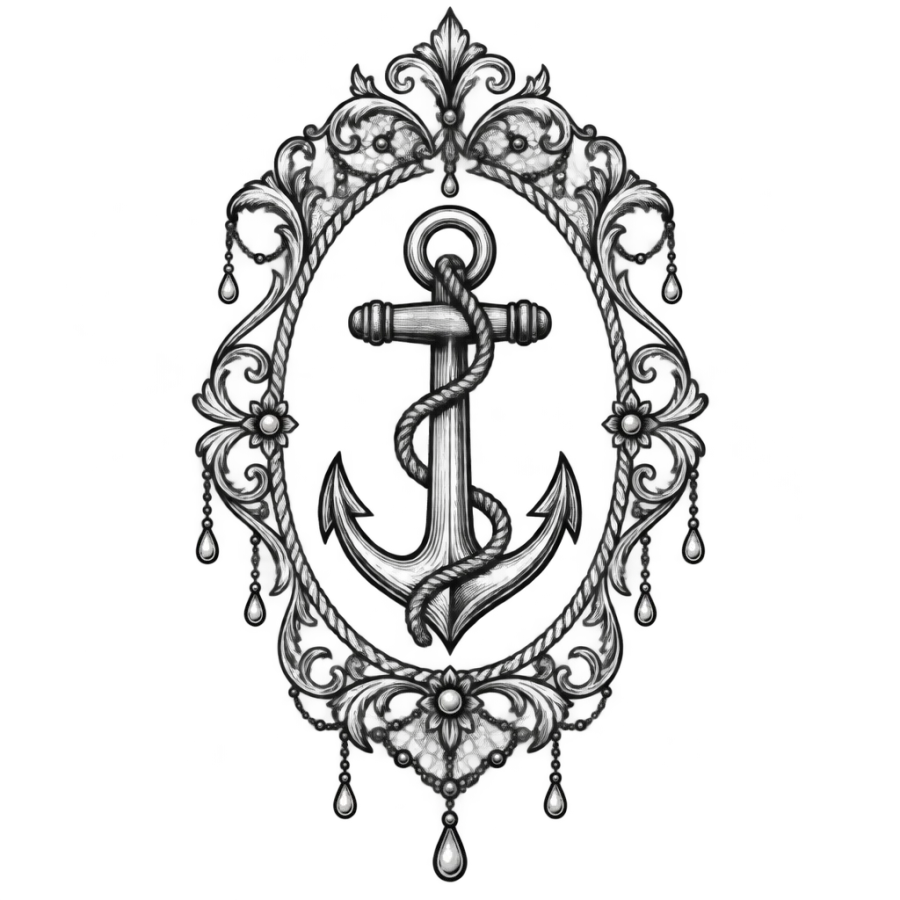
Anchor inside a lace filigree frame with hanging pearls
Use this promptDescribe an idea of your own and get four designs back in about 20 seconds.
Open the generator
Questions people ask
What does an anchor tattoo mean?
It means staying steady, held in place by something or someone. At sea the meaning was literal and earned: British and American sailors got an anchor after crossing the Atlantic. Early Christians used the same shape as a sign of hope. Most people today pick it for a person, a place or a hard period they came through.
How big should an anchor tattoo be?
Six centimeters is about the floor for anything with rope on it, and 10 to 15 cm on the inner forearm gives you room for a banner. Under 4 cm the ring, stock and arms start closing up as the ink settles, so keep small versions to a plain silhouette with wide gaps between lines.
What does an anchor tattoo cost?
A small blackwork or fine line anchor runs about $150 to $250 in most studios, usually a shop minimum plus a little. A full traditional anchor with rope, banner and color on the forearm is typically $300 to $450 and takes two to three hours. Large chest or back pieces are quoted by the hour.
Where do anchor tattoos look best?
Long narrow areas suit the shape: inner forearm, outer calf, the side of the upper arm, or down the spine. The forearm is the most popular because the anchor fits the limb without wrapping. On the chest most artists tilt it slightly so the shank does not line up exactly with the sternum.
Do anchor tattoos age well?
The traditional version ages better than almost anything else. Bold outlines and flat black stay legible for twenty years and longer. Fine detail is what goes: rust hatching, small barnacles, white highlights in the rope, and any lettering under about 6 mm tall. Ask your artist to simplify anything they say will close up.