Moth tattoo meaning, ideas and designs
A moth tattoo has the same symmetry as a butterfly and a much harder pattern problem, because moth wings are low contrast by design.
- Pain level7 / 10 on the sternum
- Healing2 to 3 weeks on the surface
- Typical size7 to 16 cm (3 to 6 in)
- Studio cost$200 to $800
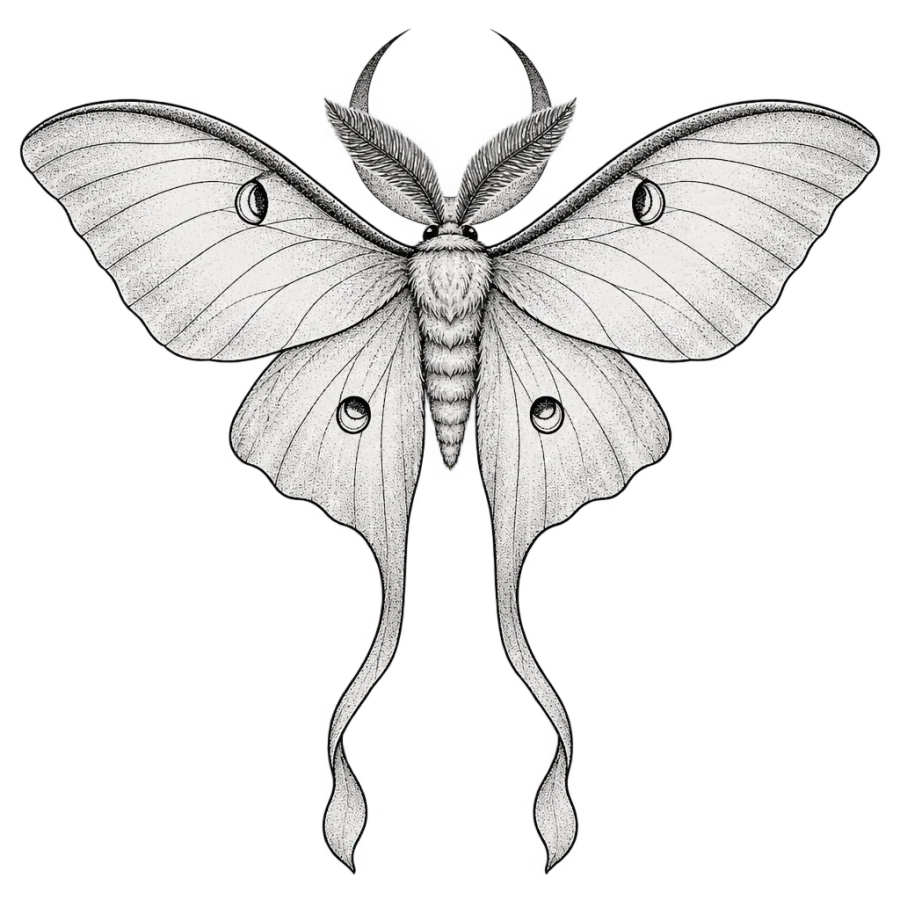
Two species account for most moth tattoos. The luna moth, pale green with long twisting tails on the hindwings and one clear eyespot on each wing. And the death's head hawkmoth, which carries a skull shaped marking on its thorax. The rest are generic moths, and a generic moth is the one request that almost always lands badly.
The reason is contrast. A butterfly has bright panels with hard black veins between them, so it reads at 4 cm. A moth has soft banding in close tones, which is exactly the kind of detail skin loses. Every moth tattoo that works has decided which two or three pattern elements to keep and thrown the rest away.
Luna, death's head, or something else
A luna moth is the easiest to tattoo well. The silhouette does the work: broad pale wings with two long tails trailing off the hindwings, which gives you a vertical shape with a natural drop. The pattern is minimal, one transparent eyespot per wing and a thin reddish leading edge, so there is almost nothing to lose as the piece softens. Fine line and dotwork both handle it.
A death's head hawkmoth is the opposite. The thing people want, the skull on the thorax, is about 1 to 1.5 cm wide on a live moth and sits just behind the head, built from soft pale and dark markings rather than from lines. To make it read as a skull in ink you need the thorax at roughly 2 cm, which puts the whole moth at 12 to 14 cm across. Smaller than that, ask the artist to stylize the skull instead of copying it.
| Size across the wings | What survives | What to drop |
|---|---|---|
| 4 to 5 cm | Outline, two eyespots, body as one shape | All banding, all scale texture |
| 6 to 8 cm | Outline, eyespots, one cross band per wing | Fine banding, thorax fur texture |
| 10 to 12 cm | Scalloped wing edge, two or three bands, antennae combs | Scale by scale texture |
| 12 to 14 cm | A readable death's head skull on the thorax | Very little, this is the floor for it |
| 16 cm and up | Soft grey banding and real scale texture | Nothing, realism works here |
The moth against the butterfly
The differences are worth knowing, because they are what make the tattoo look like a moth. A moth has feathery or comb like antennae rather than the butterfly's thin club tipped pair, a thicker furred thorax, and it rests with wings spread flat or tented over its back instead of folded upright. Draw a moth with smooth club antennae and it reads as a dull butterfly, which is the most common mistake on this subject.
At tattoo scale the antennae are the clearest signal, so they are worth over drawing slightly. A comb antenna built from eight or ten short strokes each side holds up where a feathered one drawn with twenty hairlines does not. The furred thorax is the other signal, and under 4 cm it should be three or four directional strokes rather than texture, because texture at that size heals as a solid blob.
What tells a viewer it is a moth
- Comb or feather antennae, at full line weight, eight to ten strokes a side
- A thick thorax suggested with a few directional strokes, not stippled fur
- Wings spread flat or tented, never folded upright over the back
- A scalloped or notched outer wing edge instead of a smooth curve
- Low contrast banding, so the design leans on shape rather than color
Placement, and how the shape wants to sit
Wings spread is a wide symmetrical shape, which puts the sternum first, then the center of the upper back, the back of the neck, and across the top of the forearm. A symmetrical subject on a symmetrical spot is the cleanest version of this tattoo, and the sternum is where most of the good ones are. A moth across the back of the hand works at 7 cm and will blur faster than anywhere else on this list.
A luna moth's tails change the geometry. They hang, so the piece becomes a vertical drop of 12 to 20 cm, which suits the spine, the inner forearm along the bone, the back of the calf and the side of the ribs. Hang the tails downward if you are placing it on a limb, because a moth with its tails pointing up looks like it is falling.
Styles, cost and the regrets
Fine line with dotwork is the default and it works above 7 cm. Blackwork holds longest, with the wings filled solid and the pattern cut out as bare skin, which is the honest answer for anyone who wants a moth to look the same in thirty years. Ornamental treatments use the moth's natural symmetry and hang mandala work or jewel chains off the wings. Color realism on a luna moth is beautiful, and pale green is a weak pigment, so plan for it to go soft.
A 7 cm fine line moth is usually $150 to $300. A 14 cm sternum piece with a death's head and shading is $400 to $800 in one long sitting. What people regret is a 4 cm moth with full banding, which becomes a grey smudge with antennae in about five years, and a generic moth that was never any particular species, because there is nothing to fix once it softens.
12 moth tattoo designs, with the prompt behind each one
Every design below came out of AI Tattoo Lab. Tap one to load its prompt into the generator, then change a word and make it yours.
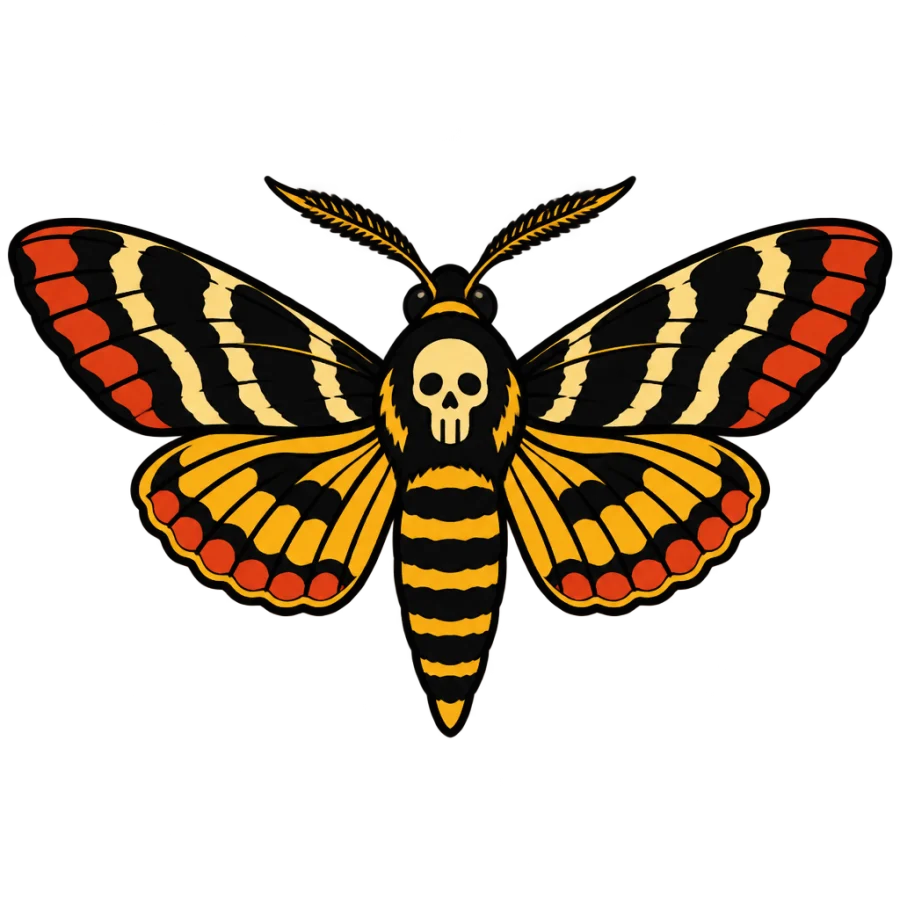
A death's head hawkmoth, American traditional, bold outlines and flat color
Use this prompt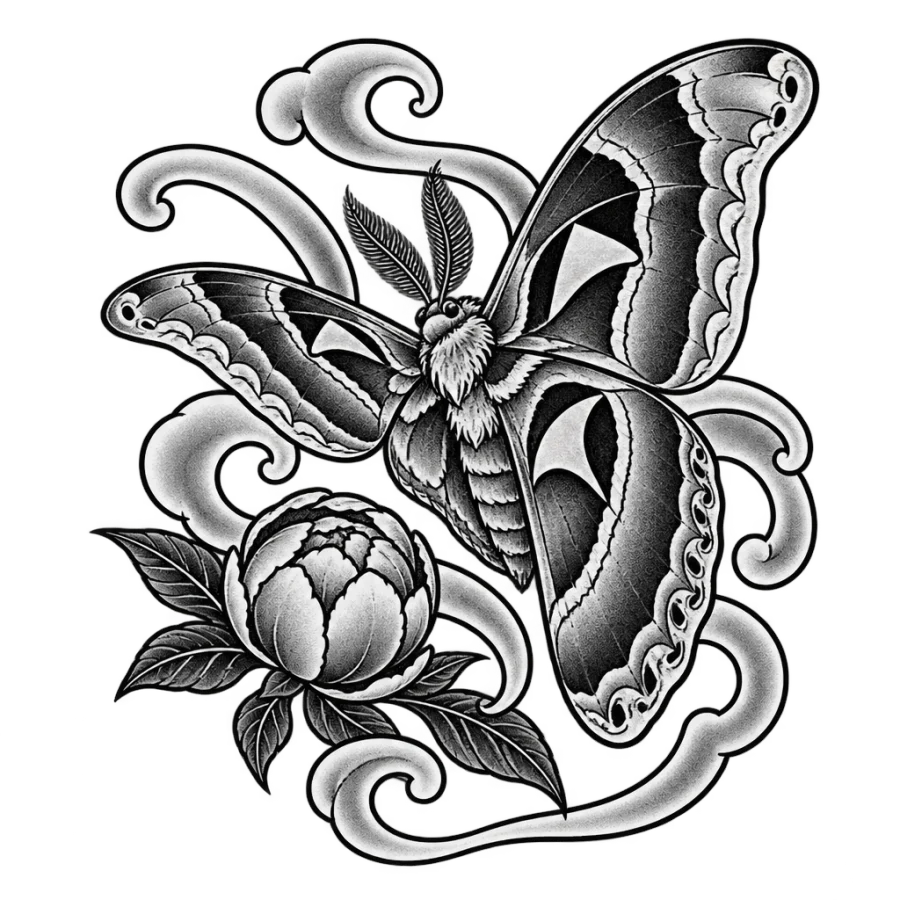
An atlas moth with wind bars and a peony bud, Japanese style
Use this prompt
A solid black moth silhouette with a crescent moon cut out of the wings
Use this prompt
A geometric moth made of straight lines inside a hexagon frame
Use this prompt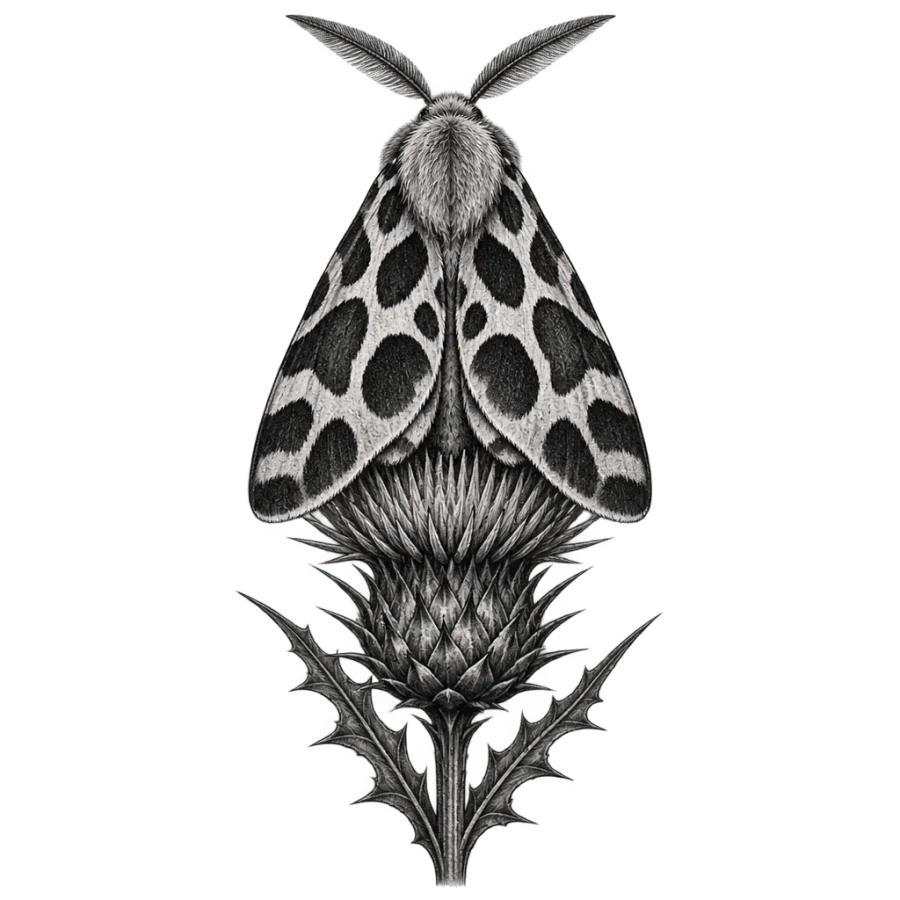
A tiger moth resting on a thistle, black and grey realism, close up
Use this prompt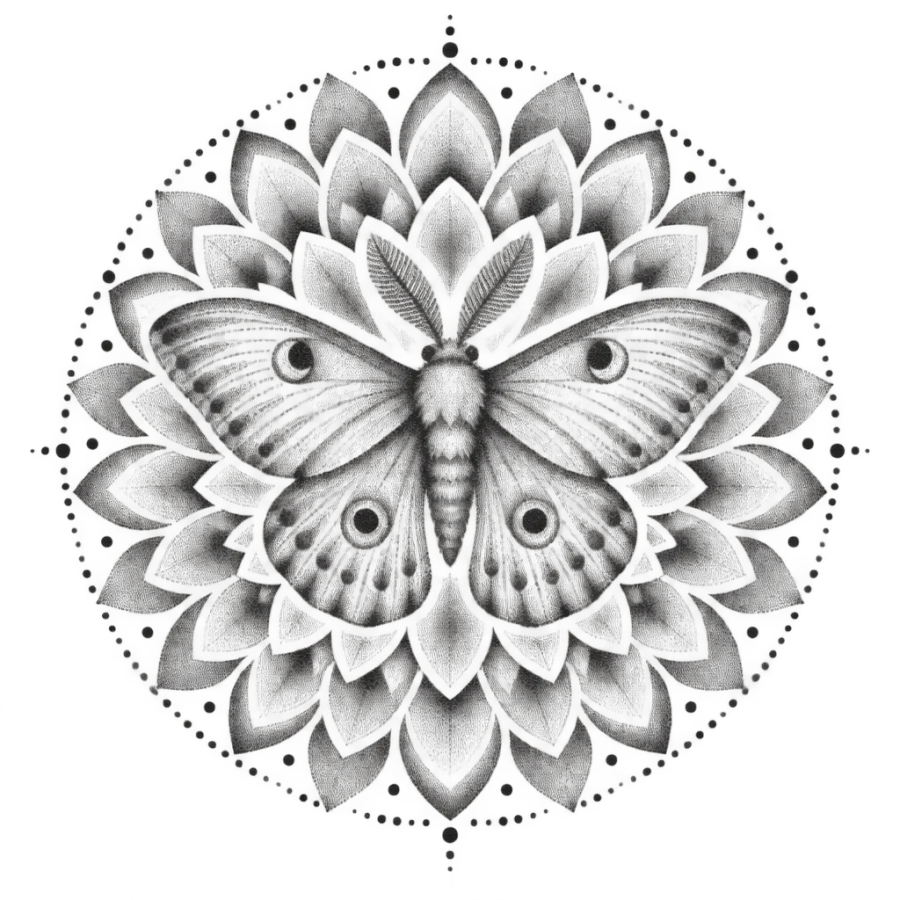
A moth mandala medallion in dotwork stippling, no outlines
Use this prompt
Two moths facing each other above an ornamental lace panel
Use this prompt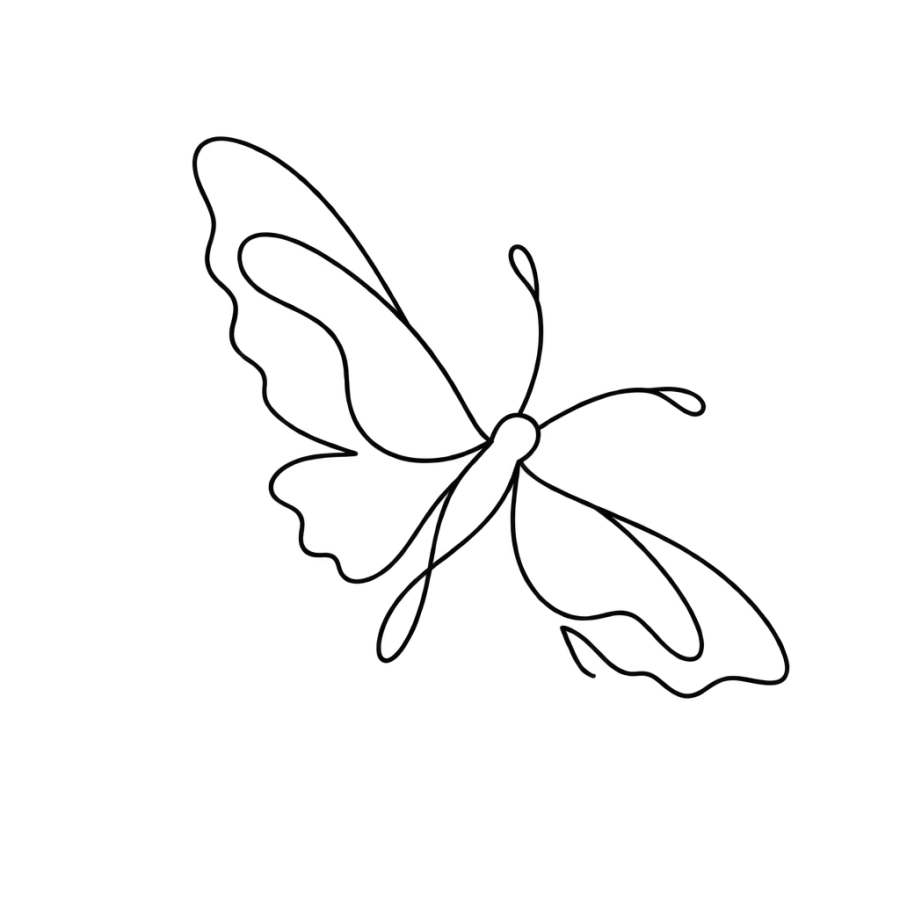
A moth in flight drawn in one continuous line, very simple
Use this prompt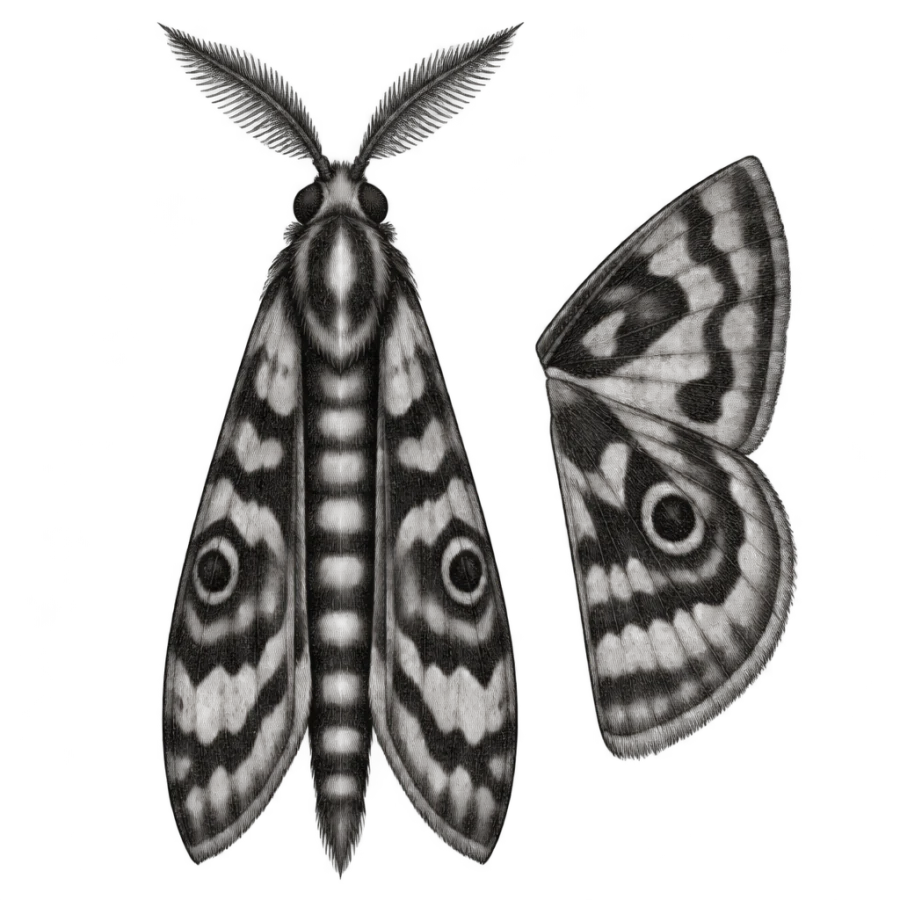
A moth specimen plate with a wing study, antique engraving style
Use this prompt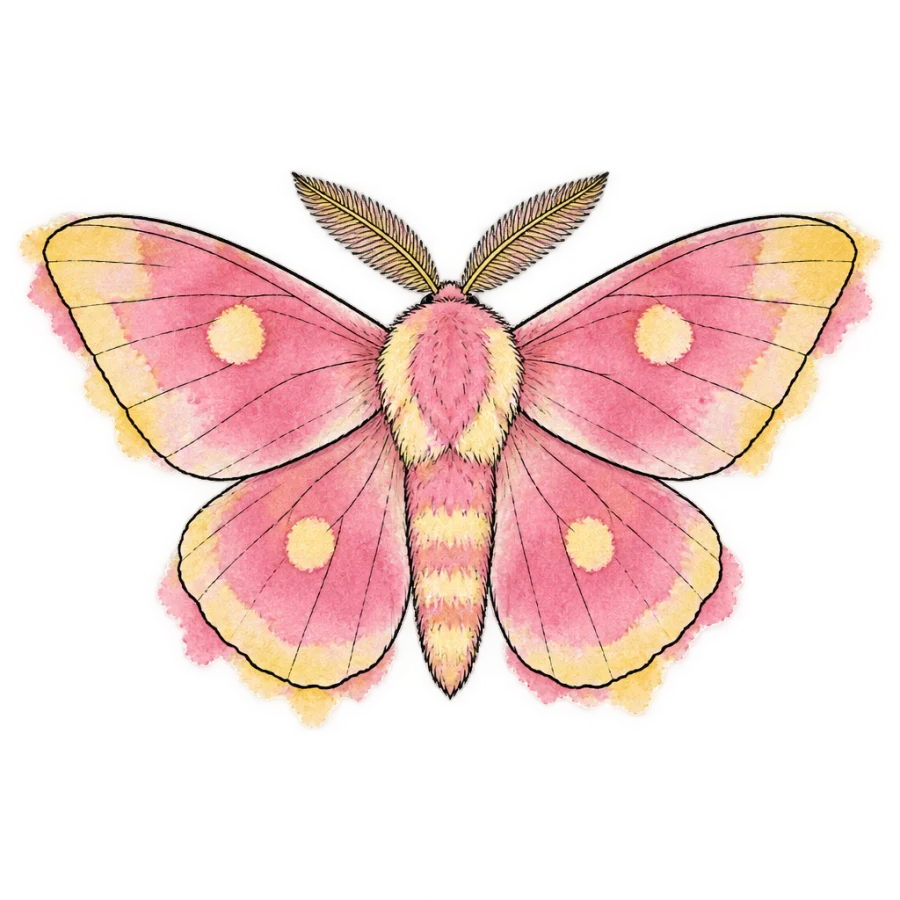
A rosy maple moth in watercolor pink and yellow over thin black lines
Use this prompt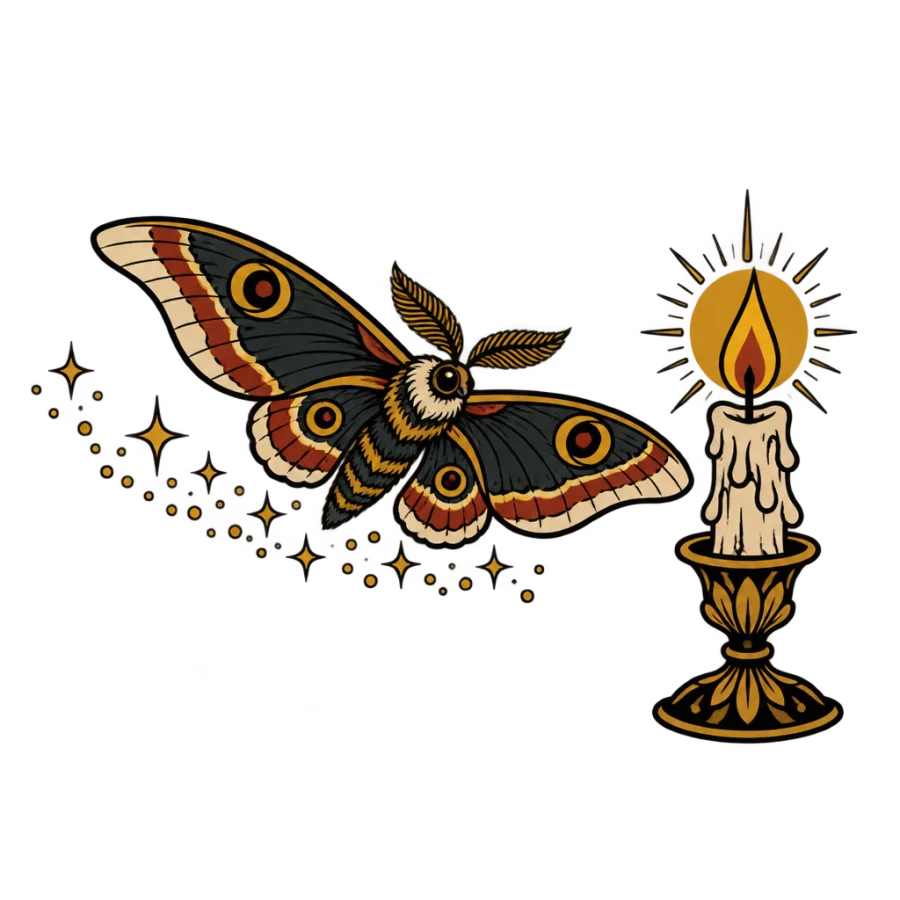
A moth flying toward a candle flame, neo traditional, wide band
Use this promptDescribe an idea of your own and get four designs back in about 20 seconds.
Open the generator
Questions people ask
What does a moth tattoo mean?
Being drawn toward something without being able to explain it, and transformation without the cheerfulness a butterfly brings. A luna moth adds a short life, since the adult cannot eat and lives about a week. Death readings belong to particular species, like the death's head hawkmoth and the black witch moth.
What is the difference between a moth and a butterfly tattoo?
Shape and contrast. A moth has comb or feather antennae, a thick furred thorax, and it rests with wings flat or tented rather than folded upright. Moth patterns are low contrast, so they blur sooner than a butterfly's hard black veins and bright panels. The antennae are the clearest signal at tattoo scale.
How small can a moth tattoo be?
About 4 to 5 cm if you keep only the outline, the eyespots and a single body shape. At 6 to 8 cm you can hold one cross band per wing. A readable death's head skull needs the thorax at roughly 2 cm, which means the whole moth has to be 12 to 14 cm across.
Where do moth tattoos look best?
The sternum, because the spread wings are wide and symmetrical and so is that spot. The upper back, the back of the neck and across the top of the forearm all work. A luna moth with trailing tails becomes a vertical piece, which suits the spine, the inner forearm and the back of the calf.
Do moth tattoos age well?
Blackwork ones do, almost unchanged. Fine line moths above 7 cm hold their shape and lose their banding, which is usually acceptable. Pale green on a luna moth softens early because light greens are weak pigments. Small moths with full banding are the ones that turn into a grey smudge.