Lotus tattoo ideas, meaning and designs
The lotus roots in mud, grows up through dark water and opens clean above it, and that sequence is the reason almost everyone picks it.
- Pain level7 / 10 on the sternum
- Healing2 to 3 weeks on top
- Typical size5 to 20 cm (2 to 8 in)
- Studio cost$180 to $700
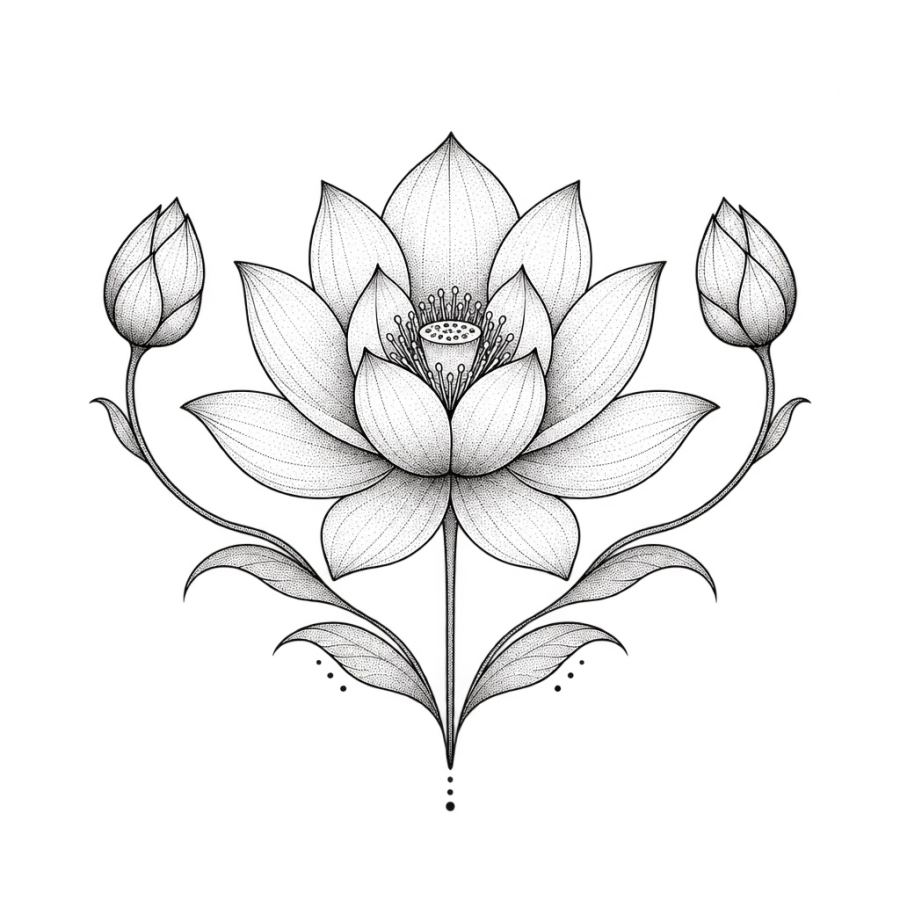
Nelumbo nucifera grows in ponds and slow rivers across South and East Asia, anchored in silt with its flower held clear of the surface on a long stem. Buddhist and Hindu writing uses that literally: the flower is unstained by the water it came out of. Thrones for deities are drawn as open lotuses for the same reason, and Egyptian art used the blue water lily much the same way.
Most people getting one now are marking the same idea in their own life, usually recovery, a period of depression they came through, or leaving something behind. It is one of the few tattoo symbols where the popular meaning and the traditional meaning genuinely line up.
The two ways a lotus gets drawn
A front facing lotus is symmetrical: a center seed head with petal rows opening outward, usually eight petals in the inner ring and more behind. That version reads as a symbol and suits the center line of the body. A side view lotus on a stem, often with a lily pad and a second bud, reads as a plant and suits a forearm or a calf where you have length to work with.
Petal counts carry meaning in Buddhist and Hindu imagery. Eight petals is the most common formal count. The thousand petalled lotus is the crown chakra, drawn as concentric rings. Nobody counts petals on a tattoo, but if the number matters to you, say so, because an artist drawing freehand will not guess it.
Decisions to make first
- Front facing and symmetrical, or side view on a stem with a pad
- Petal count, if the number carries meaning for you
- Whether the center is an open seed head or left as plain skin
- Whether an unalome, a mandala or a moon phase sits with it
Symmetry is harder than it looks
A front facing lotus on the sternum, the spine or the back of the neck is going to be judged on whether it looks even, and skin is not a flat page. Artists usually print a stencil, apply it, then have you stand upright and look in a mirror before anything else happens. Check it while standing, not while leaning on the chair, because posture shifts the center line.
On the sternum in particular, breast tissue and rib movement change the shape of the area. Many artists compress the height of a sternum lotus slightly so it still reads as circular once you are standing. Ask whether they are adjusting for that. The difference between a lotus that looks right and one that looks tilted is usually two or three millimeters at the stencil stage.
Styles, and what survives at small sizes
Fine line and minimalist lotuses are the most common request. At 5 to 7 cm a plain outline lotus with eight petals holds up well, provided each petal line stays at least 1.5 mm from its neighbour. Dotwork lotuses need more room, around 8 to 10 cm, because a stipple gradient laid too tight packs into flat grey as the ink spreads over ten years.
Ornamental and mandala lotuses run 12 to 20 cm and put repeated line work in rings around the flower. They look dense when fresh, and that density is the risk. Ask the artist to leave more skin between elements than the drawing seems to need. Watercolor lotuses are popular and fade fastest, since there is little black holding the shape together.
Minimum sizes
- Outline lotus, 5 cm, with 1.5 mm of clear skin between petal lines
- Dotwork lotus with gradient, 8 to 10 cm
- Ornamental or mandala lotus, 12 cm and up
- Realistic lotus with water and reflection, 15 cm and up
Unalome, placement and respect
The unalome, that spiral rising into a straight line with dots at the top, comes from Thai Buddhist sak yant practice. Pairing it with a lotus has become standard in Western shops. In Thailand there are real conventions about sacred imagery on the body, and keeping religious designs above the waist rather than on the legs or feet is the most consistent one. Several temples have said the same about Buddha images.
For placement, the sternum, spine and back of the neck suit the symmetrical version because the body already has a center line there. The forearm and the outer thigh suit the stemmed version. The sternum is among the sharper spots on the body, around 7 out of 10, and a 15 cm ornamental piece there is usually a two to three hour sit.
Combinations people ask for
- Lotus with an unalome rising from the center, on the spine or forearm
- Lotus with moon phases arched above it, a common sternum layout
- Lotus and elephant together, drawing on Hindu and Buddhist imagery
- Lotus opening from dark water with the roots visible below the line
- A plain outline lotus at 5 cm behind the ear or on the inner wrist
15 lotus tattoo designs, with the prompt behind each one
Every design below came out of AI Tattoo Lab. Tap one to load its prompt into the generator, then change a word and make it yours.
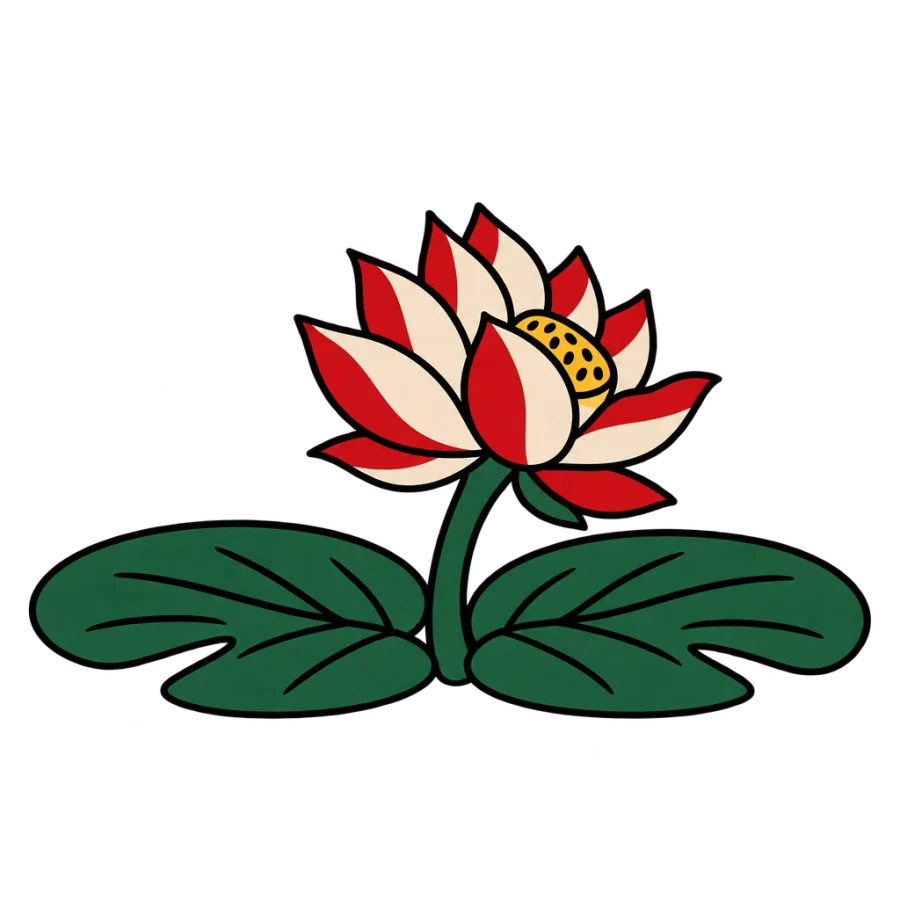
A lotus from the side with two lily pads, bold traditional flash
Use this prompt
A solid black lotus silhouette with thin negative space petal veins
Use this prompt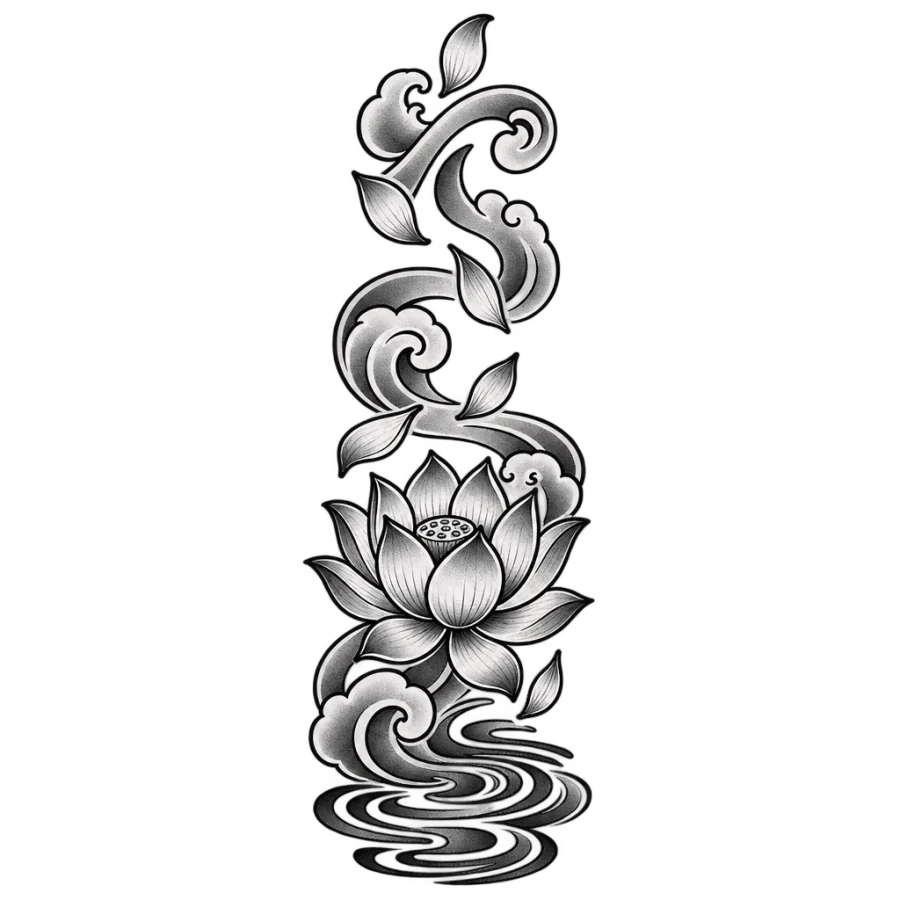
A lotus rising from water with wind bars, Japanese style, grey wash
Use this prompt
A geometric lotus inside a hexagon, straight lines and perfect symmetry
Use this prompt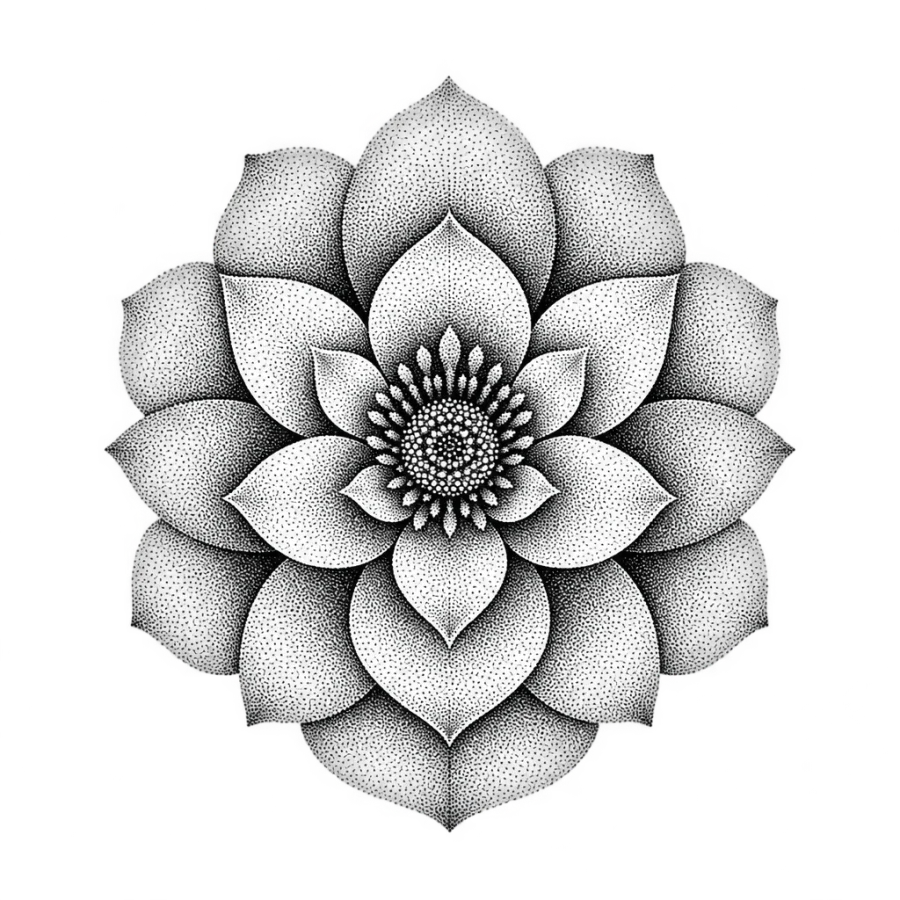
A lotus from above, shaded only in stippled dots, no outlines
Use this prompt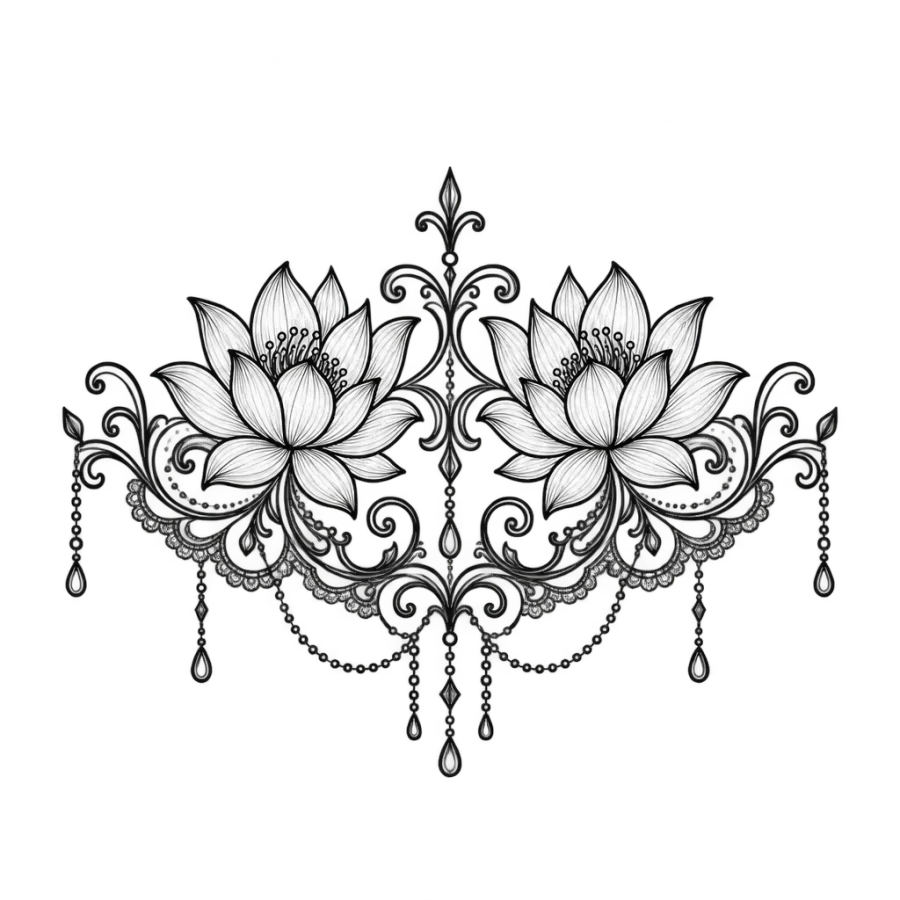
Two mirrored lotus flowers joined by filigree scrolls and pearl strands
Use this prompt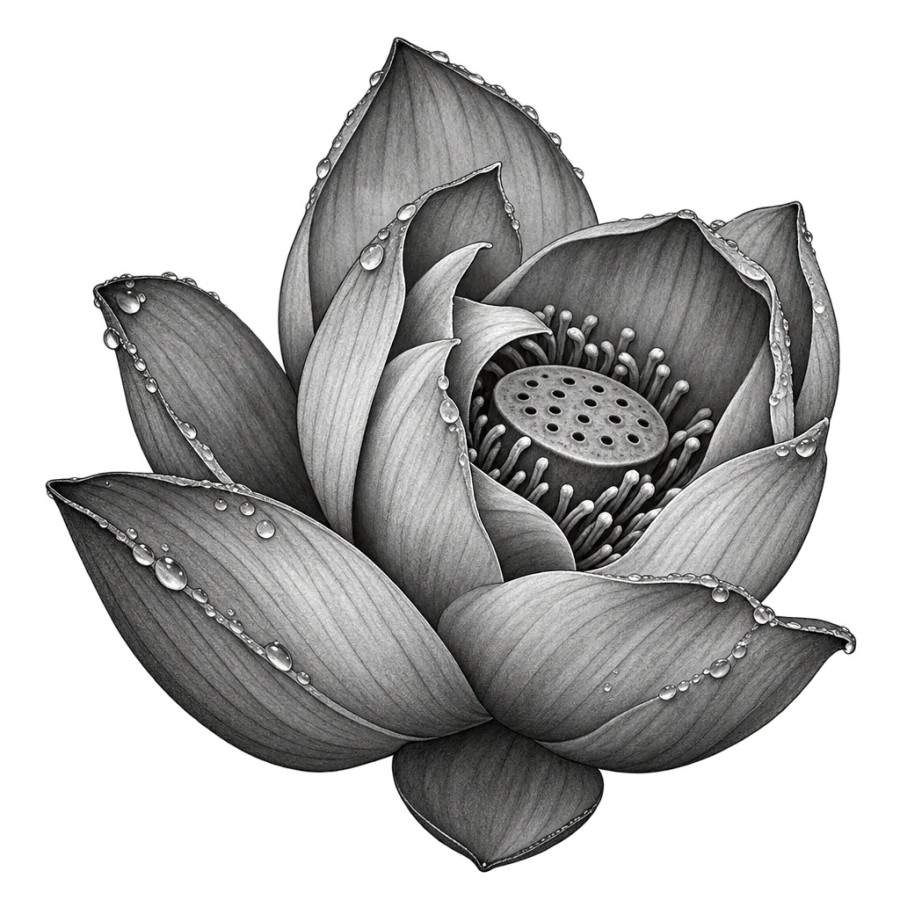
A half open lotus close up with the seed pod, black and grey realism
Use this prompt
A lotus drawn in one continuous line that never lifts, minimal
Use this prompt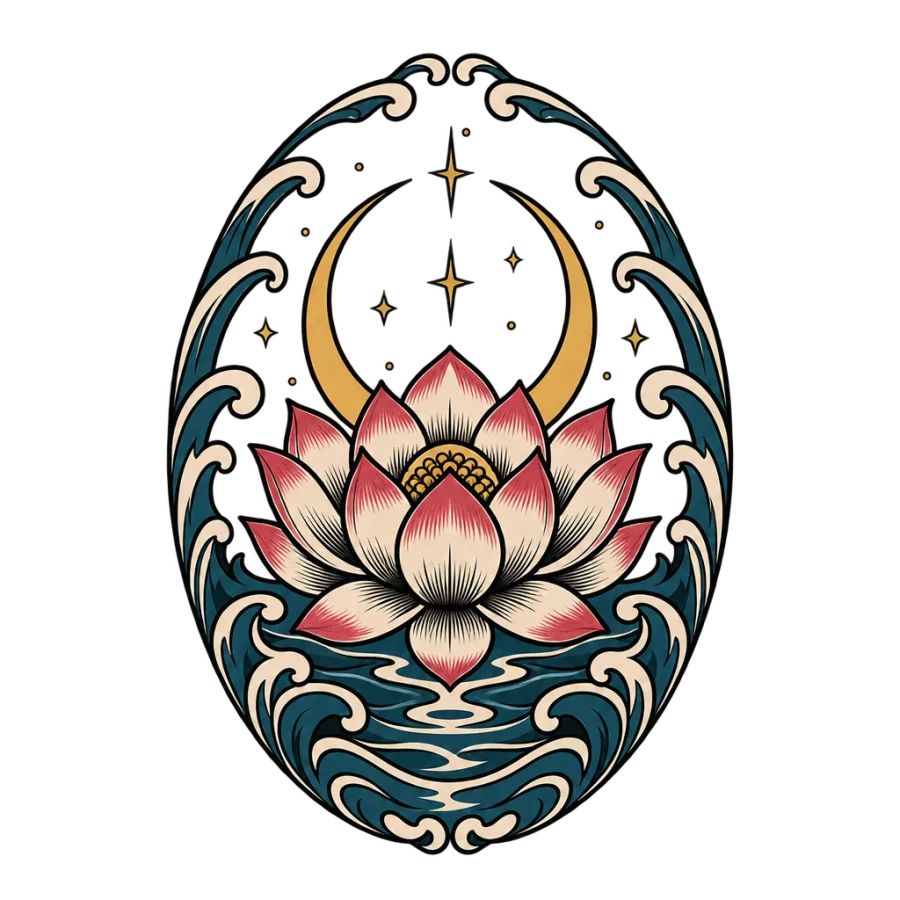
A lotus in front of a crescent moon and stars, neo traditional
Use this prompt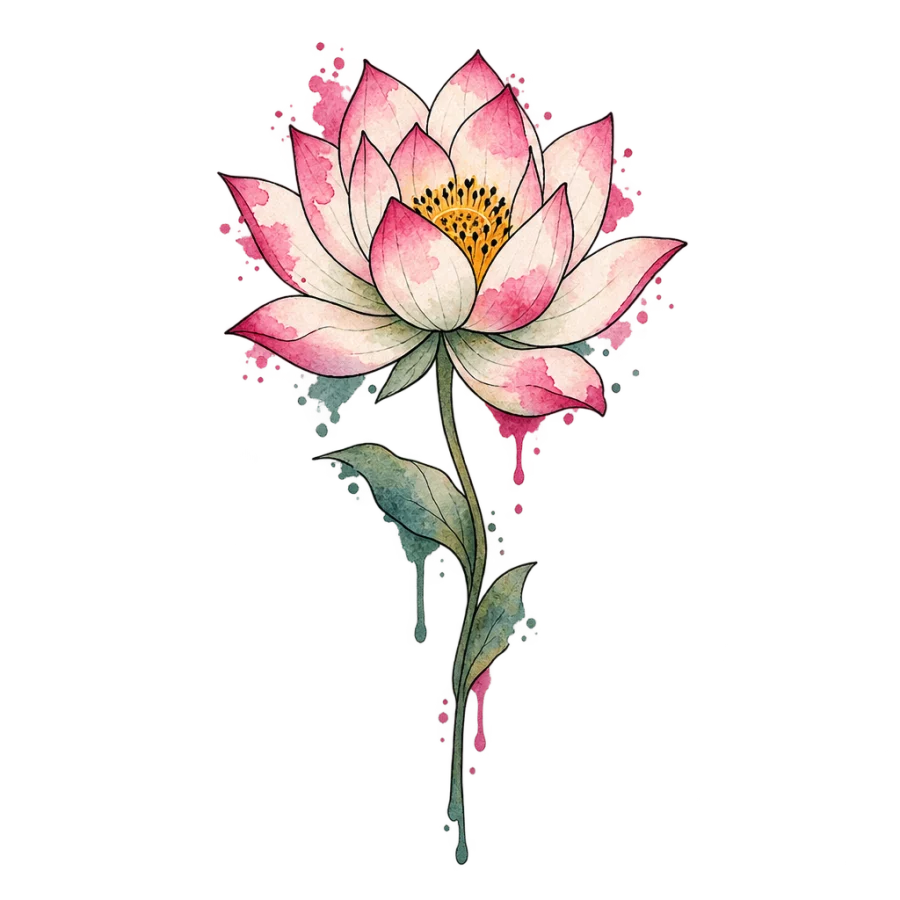
A lotus with watercolor washes bleeding past the petals and dripping
Use this prompt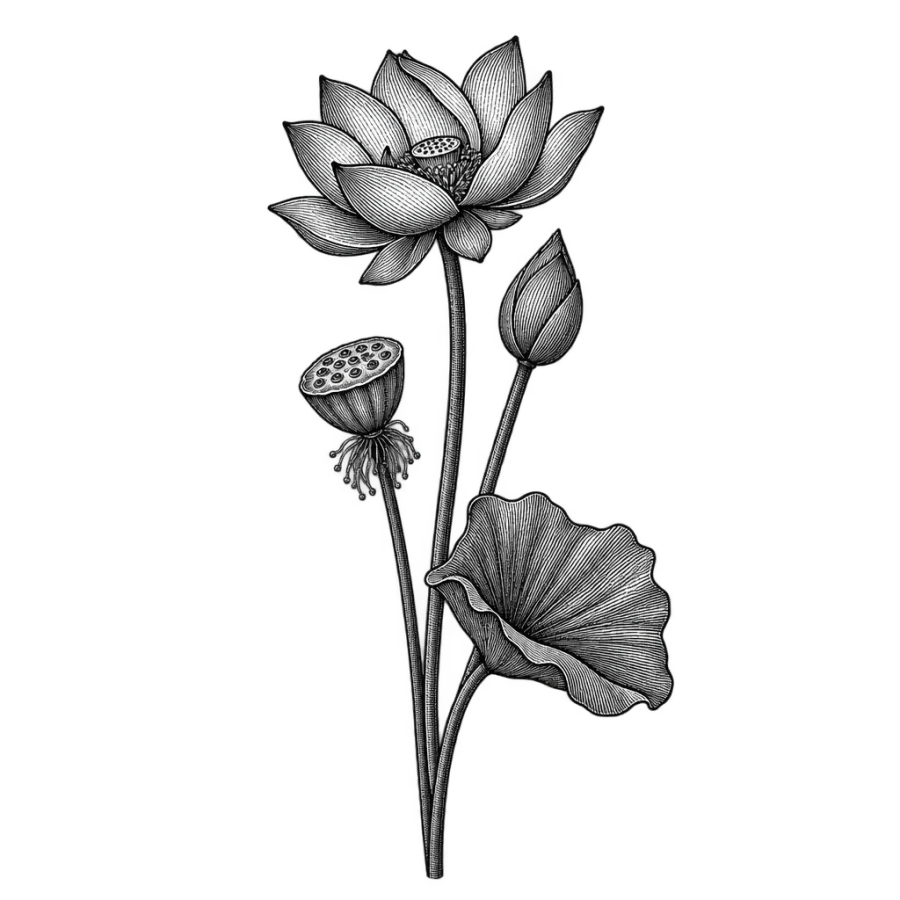
A lotus botanical plate with a bud and seed pod, engraved hatching
Use this prompt
A lotus in heavy solid black with white gaps between the petals
Use this prompt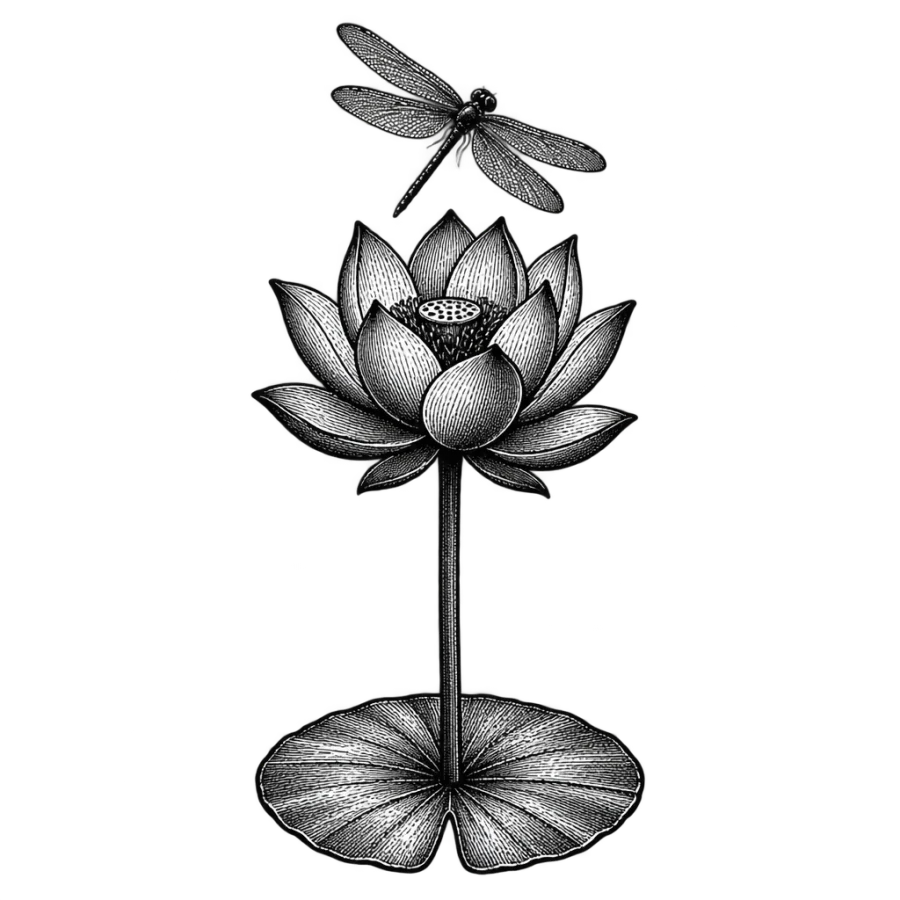
A lotus with a lily pad and a dragonfly, woodcut engraving style
Use this prompt
A lotus inside an ornate arch frame with hanging beads and tassels
Use this promptDescribe an idea of your own and get four designs back in about 20 seconds.
Open the generator
Questions people ask
What does a lotus tattoo mean?
Coming through something clean. The flower roots in mud and opens above the water, and Buddhist and Hindu writing uses that as a picture of a mind unmarked by its surroundings. Most people today get one for recovery from addiction, illness or a long depression. Color adds meaning in Buddhist imagery, with white for purity and blue for wisdom.
How small can a lotus tattoo be?
A plain outline lotus works at about 5 cm as long as there is 1.5 mm of clear skin between petal lines. Dotwork versions need 8 to 10 cm because tightly packed stipple fills into grey over time. Ornamental or mandala lotuses want 12 cm and up to keep their ring detail separate.
What does the unalome with a lotus mean?
The unalome is a Thai Buddhist mark from sak yant tattooing. The spiral is a wandering path, the straight line is a settled one, and the dots at the top are the end of it. Pairing it with a lotus is a Western convention rather than a traditional one, though it is now extremely common.
Where is the best place for a lotus tattoo?
Symmetrical lotuses suit the sternum, spine and back of the neck because the body already has a center line there. Stemmed side view lotuses suit the forearm, calf or outer thigh. Keep religious versions above the waist if the Buddhist context matters to you, since that convention is taken seriously in Thailand.
Does a sternum lotus tattoo hurt?
Yes, around 7 out of 10 for most people. The needle is working over bone with very little padding and the area moves with every breath. A 15 cm ornamental lotus there usually takes two to three hours. Eating beforehand and asking for short breaks makes a real difference.