Turtle tattoo ideas, meaning and designs
A turtle tattoo is really a shell design, since the plates on the back give an artist a natural grid that almost no other animal provides.
- A green sea turtle has four pairs of plates along each side of the shell, a loggerhead has five.
- A hawksbill has overlapping plates, a serrated back edge and a narrow pointed beak.
- Female sea turtles return to nest on the coast where they hatched.
- Honu is the Hawaiian name for the green sea turtle.
- Pain level4 / 10 on the shoulder
- Healing2 to 3 weeks on the surface
- Typical size8 to 25 cm (3 to 10 in)
- Studio cost$200 to $900
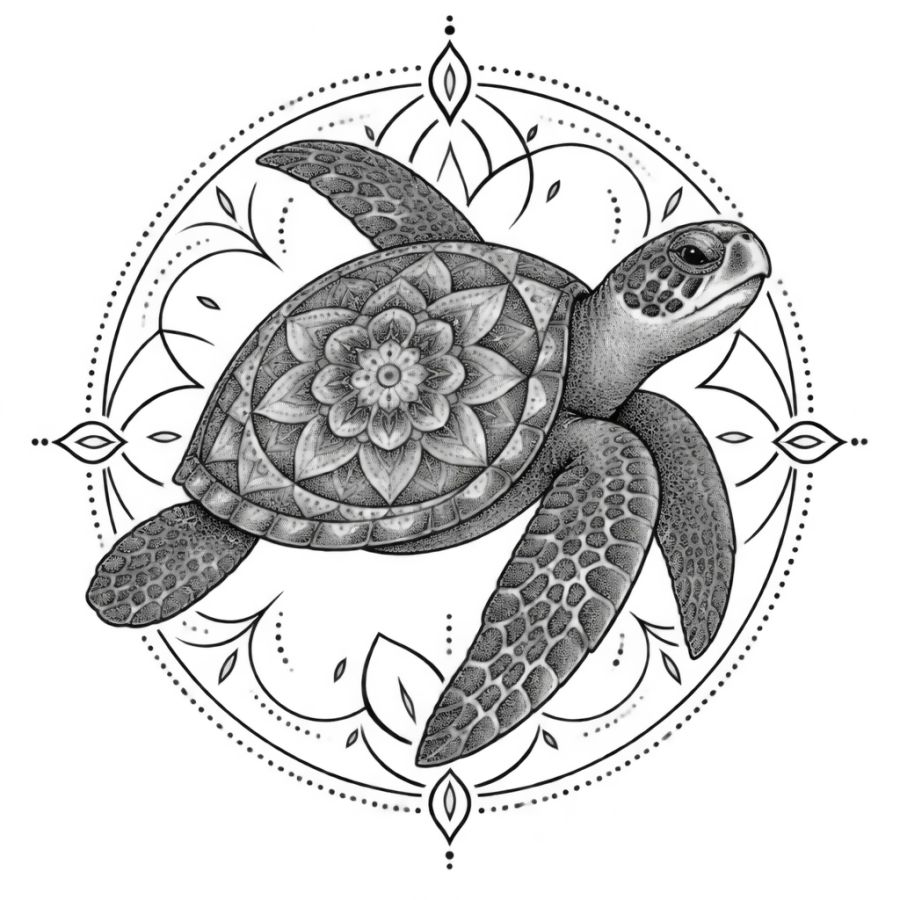
The shell is divided into plates called scutes, and their arrangement names the species. A green sea turtle has four pairs of plates along each side, a loggerhead has five, and a hawksbill has overlapping plates with a serrated back edge and a narrow pointed beak. Those differences look small on paper and obvious on skin, and getting one right is the gap between your turtle and a clip art turtle.
The grid is also why turtles take pattern so well. Mandala work, geometric fill, ornamental linework and Polynesian style all sit inside the scutes without the artist inventing a structure. That makes the turtle one of the most heavily patterned subjects in tattooing, and it is also why a badly planned one turns into a dark oval.
Where the turtle meaning comes from
The long life reading is literal. Sea turtles take twenty to thirty years to reach breeding age and can live well beyond fifty, so a turtle is a reasonable thing to get for a grandparent or a long anniversary. The return reading is literal too: females come back to nest near where they hatched, and people use that for moving home, for leaving and coming back, and for a parent.
The Hawaiian honu is a specific animal with a specific place in Hawaiian life, not a drawing style. Honu appear in petroglyphs, and some families hold the green sea turtle as an aumakua, a guardian ancestor. If that is what you want, say honu rather than turtle, and look for an artist with roots in the work.
Polynesian patterning and who should draw it
Filling a turtle with Polynesian pattern is the most requested version of this tattoo and the one that most deserves a conversation first. Tatau in Samoa, and the related traditions in Hawaii, Tahiti, the Marquesas and Aotearoa, are systems with meaning: particular motifs carry family, rank and place, and in Samoa the pe'a and the malu are conferred rather than bought. A shell filled with pattern copied from an image search is decorative to you and wrong to anyone who can read it.
The practical answer is to find an artist who works inside one of those traditions and let them design it. They will choose motifs appropriate for someone with your background, and they will tell you if what you asked for is not yours to wear. If no such artist is available to you, a geometric or ornamental shell with no borrowed motifs is an honest alternative that still uses the scute grid.
Fill options for the shell
- Polynesian or Hawaiian motifs, designed by an artist who works in that tradition
- Mandala, with a radial pattern centered on the middle row of plates
- Geometric, each plate given a different line direction or dot density
- Realism, with growth rings and algae drawn in black and grey wash
- Blackwork, plates filled solid with the dividing lines left as negative space
Sizing, and the fill that closes up
Pattern inside a 5 cm shell closes up. Each plate is then about a centimeter across, and any fill made of lines under two millimeters apart merges into solid grey within ten years. If you want a small turtle, ask for the plate outlines and nothing inside them. That looks sparse on the stencil and correct on skin at year fifteen, which is the trade most people would take if anyone explained it first.
| Size | What survives |
|---|---|
| 5 cm (2 in) | Shell outline and plate divisions only, no fill |
| 8 to 10 cm (3 to 4 in) | Simple fill in each plate, four flippers with clean edges |
| 15 to 18 cm (6 to 7 in) | Dense pattern, head detail, scale texture on the flippers |
| 20 to 30 cm (8 to 12 in) | Realism, water behind it, growth rings inside each plate |
Placement, aging and the usual variations
A swimming turtle is a broad oval set on a diagonal, so it wants a flat area with room in two directions: the shoulder blade, the outer shoulder, the outer thigh, the upper back, the calf. Small turtles go on the ankle, the wrist and the back of the arm, and the ankle is the one to think twice about, because shoes and socks abrade it daily.
What ages worst is the flipper edge. Sea turtle flippers have a fine serrated trailing edge and a claw at the leading edge, and both get drawn too fine. What ages best is a shell with real black in it, because the plate divisions stay readable long after the fill softens. The variations people ask for are a mother turtle with hatchlings, a turtle with a compass, a honu with ocean pattern in the shell, and two turtles facing each other for a couple.
12 turtle tattoo designs, with the prompt behind each one
Every design below came out of AI Tattoo Lab. Tap one to load its prompt into the generator, then change a word and make it yours.
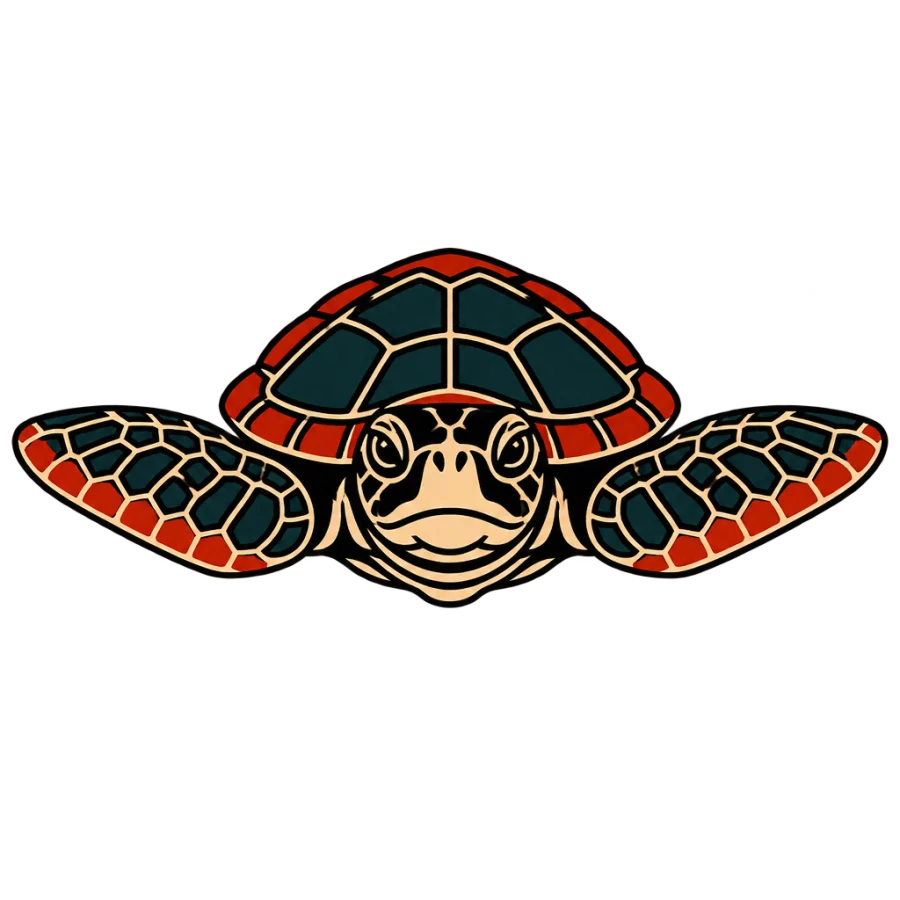
Sea turtle head on with bold shell plates, traditional flash
Use this prompt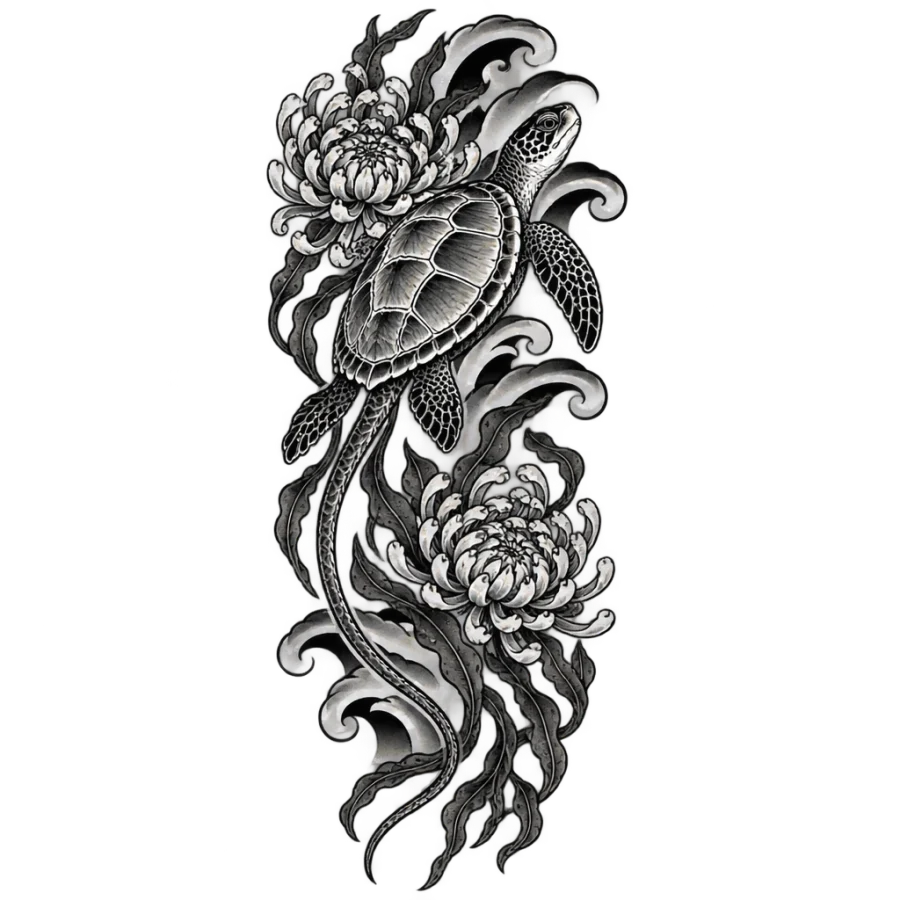
Japanese long tailed turtle with seaweed and chrysanthemums, tall design
Use this prompt
Turtle from above, solid black with shell pattern in negative space
Use this prompt
Turtle shell made of hexagons, geometric and symmetrical
Use this prompt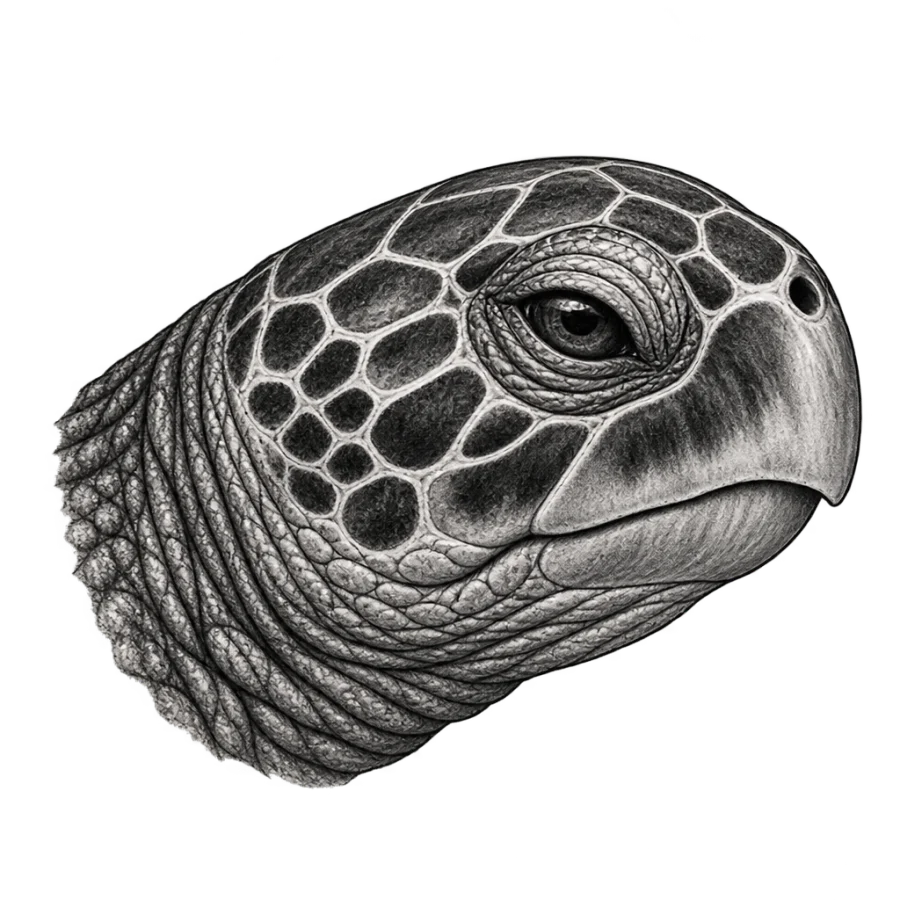
Close up of an old turtle head in profile, black and grey
Use this prompt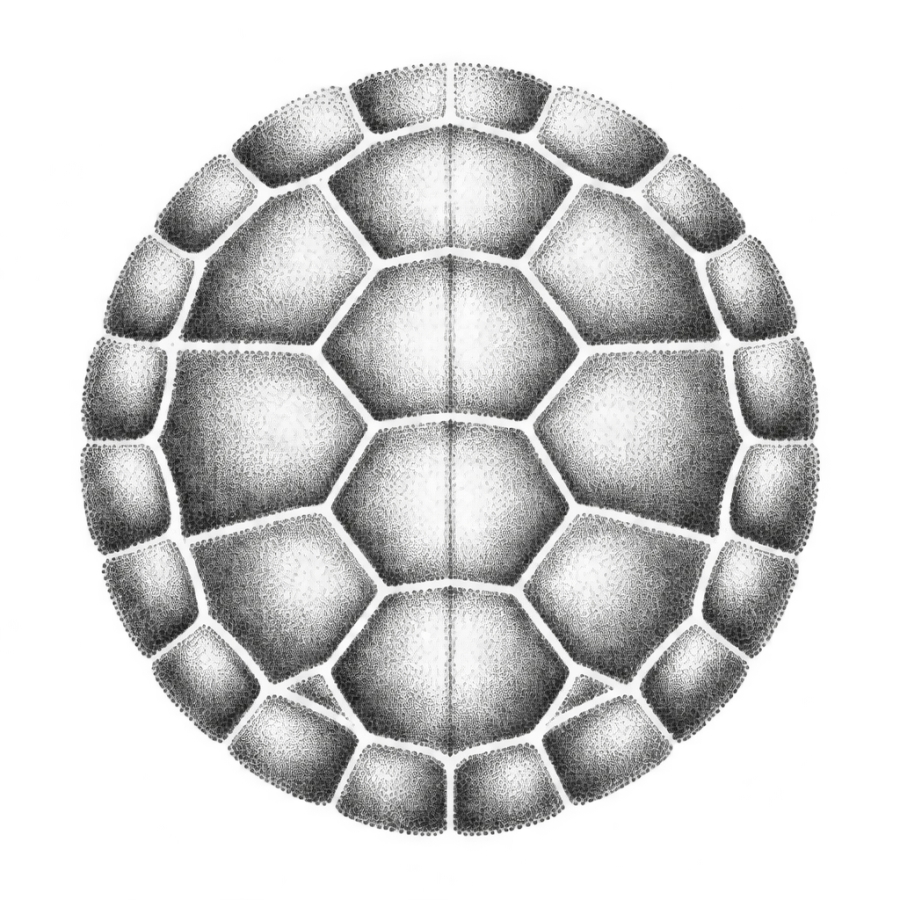
Turtle shell from above drawn only in stippled dots
Use this prompt
Baby turtle crawling, drawn in one continuous line
Use this prompt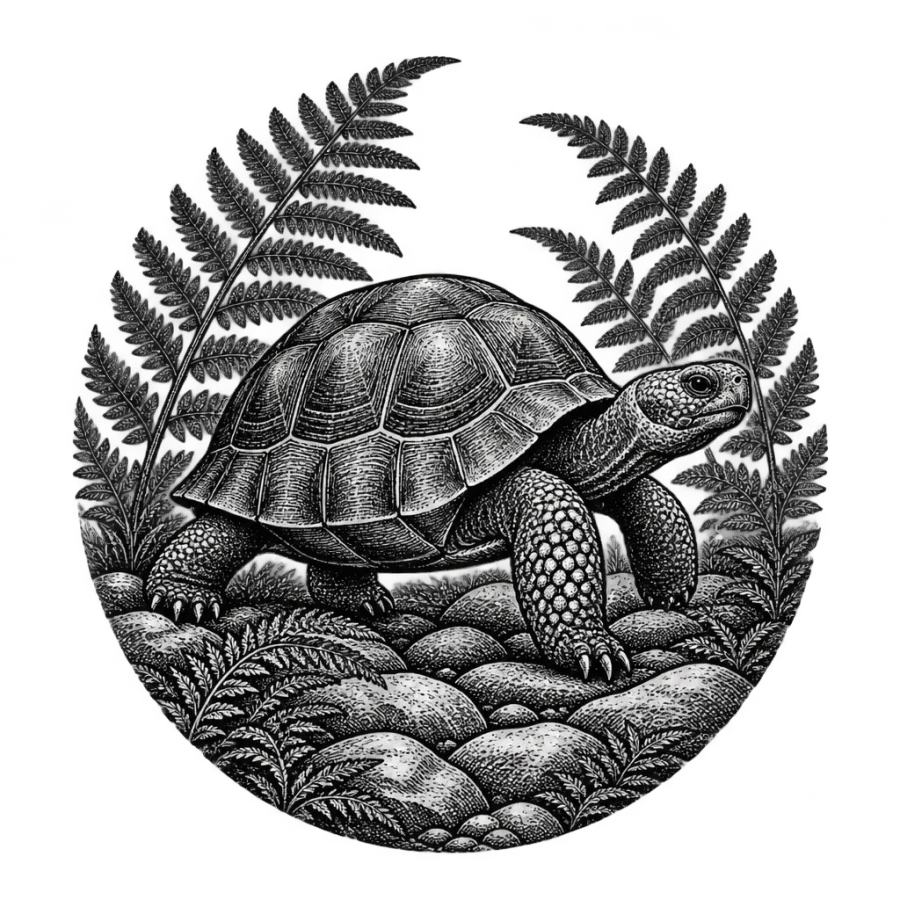
Tortoise walking among ferns, old engraving style with hatching
Use this prompt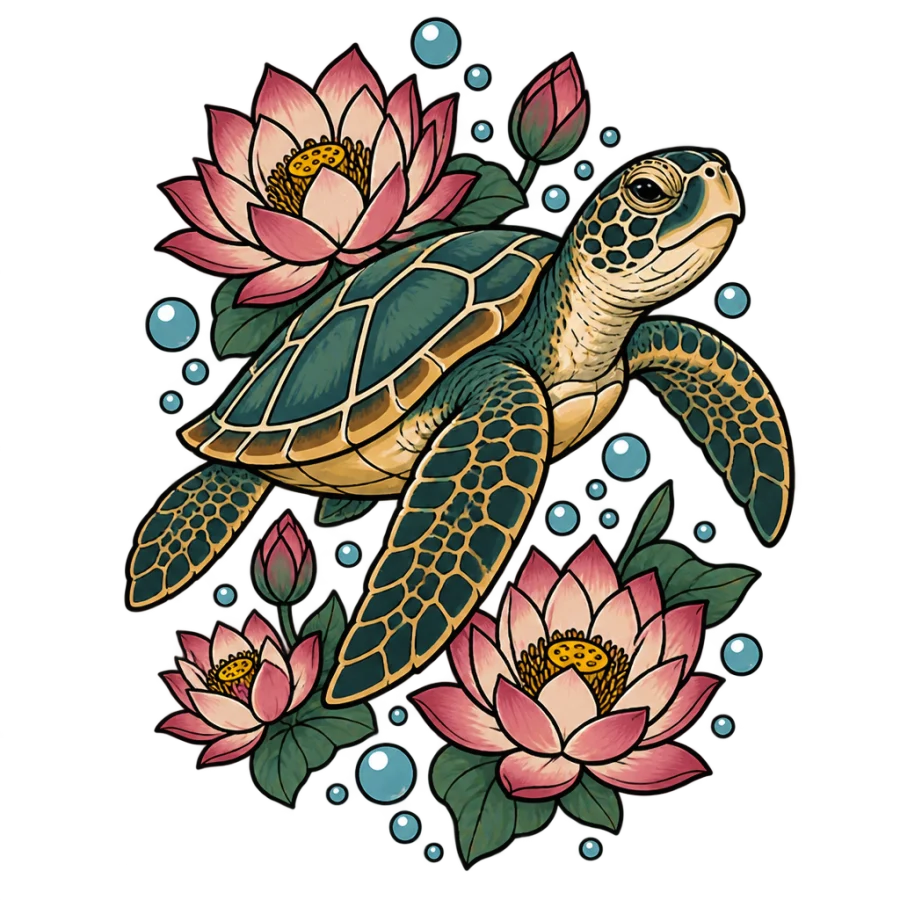
Sea turtle swimming through lotus flowers and bubbles, soft colour
Use this prompt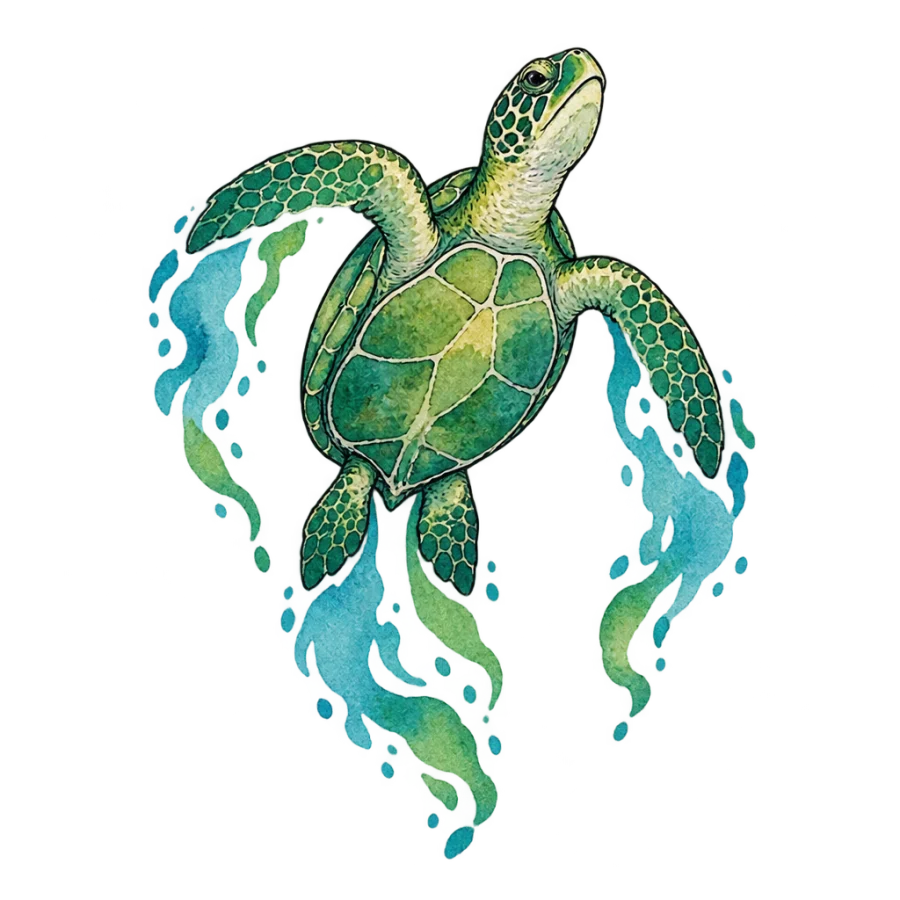
Green sea turtle rising with watercolour washes behind it
Use this prompt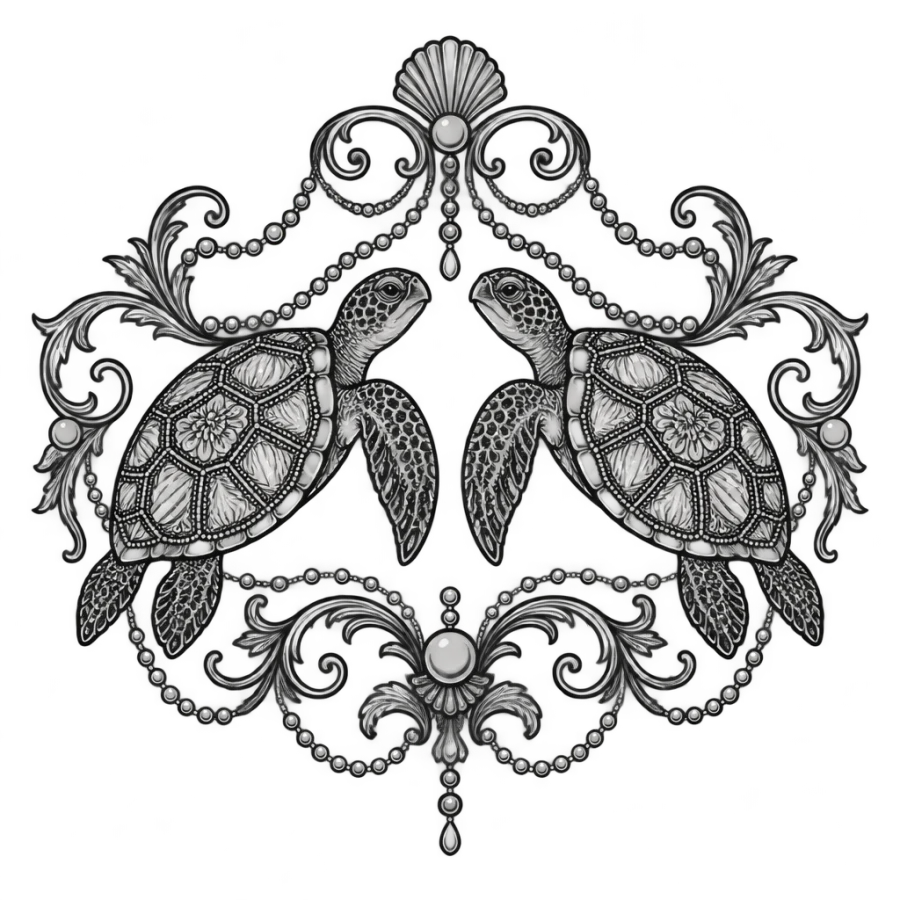
Two mirrored sea turtles inside ornamental lace scrollwork
Use this promptDescribe an idea of your own and get four designs back in about 20 seconds.
Open the generator
Questions people ask
What does a turtle tattoo mean?
Long life and patience, mostly, and both are literal: sea turtles take decades to mature and can live past fifty. Because females return to nest where they hatched, turtles also get chosen for family and for coming home. In Hawaii the green sea turtle, the honu, is a guardian ancestor for some families.
Is it okay to get a Polynesian turtle tattoo?
Polynesian tattooing is a living tradition where motifs carry family, rank and place, and in Samoa the pe'a and malu are conferred rather than bought. The right person to answer for your situation is an artist who works inside that tradition. If you cannot reach one, a geometric or ornamental shell avoids borrowing motifs that are not yours.
How small can a turtle tattoo be?
About 5 cm, with the shell outline and plate divisions and nothing inside them. At 8 to 10 cm you can put simple fill in each plate. Dense pattern needs 15 cm or more, because plate fill with lines closer than two millimeters apart merges into grey over ten years.
What is a honu tattoo?
Honu is the Hawaiian word for the green sea turtle. A honu tattoo is that specific animal, often drawn with Hawaiian or Polynesian pattern in the shell. For some Hawaiian families the honu is an aumakua, a guardian ancestor, so the design carries weight beyond the shape of the animal.
Can I bring an AI turtle design to a tattoo artist?
Yes, as a reference. Generate it, download the stencil, then take it to a licensed artist who will open up the shell fill so it does not close over, correct the scute count to a real species, and set the diagonal to fit your shoulder or thigh. For Polynesian pattern, ask an artist who works in that tradition to design it.