Music note tattoo ideas and designs
The single music note tattoo at 2 cm is one of the most commonly regretted tattoos, and the fix is to tattoo real music instead of a symbol for it.
- Pain level4 / 10 inner forearm
- Healing2 to 3 weeks on top
- Typical size10 to 16 cm for one bar
- Studio cost$120 to $450
Two things go wrong with the single note. It is generic, so it says you like music without saying anything about you, and after a few years you have a small black mark on your wrist that could be anything. And it closes up. The note head is solid, the stem is thin and the flag hooks back towards the stem, so at 2 cm the gap between them fills in and the whole thing heals into a comma.
Everything below holds up against both problems. A real bar of the melody you care about, a clef you have a reason to wear, a waveform of a specific recording, a lyric in lettering. All of them need more room than a note, and all of them need someone who reads music to check the stencil before the needle.
Why the single eighth note is a common regret
Ask an artist which small tattoos get covered or lasered most often and a lone note is on the list with the infinity symbol and the generic star. The reason is not fashion. A note is a unit of notation with no meaning on its own, the way a single letter has none.
The technical half is worse. An eighth note is a filled oval, a stem and a flag, and the flag hooks back towards the stem with a gap of roughly one stem width between them. Scale the whole thing to 2 cm and that gap is under half a millimetre. Ink spreads sideways in skin over years, so the gap closes and you are left with a dark hook.
What gets drawn wrong on a music tattoo
Most of these come from an artist copying a decorative image instead of real notation. Almost all of them are invisible to the person getting the tattoo and obvious to every musician who sees it afterwards.
The errors musicians spot first
- Notes sitting on or above the middle line of the staff take stems down on the left of the head, and notes below it take stems up on the right
- One beam across a group of notes means eighths, two means sixteenths and three means thirty seconds, so an extra beam changes the rhythm
- The treble clef spiral has to curl around the second line from the bottom, and the two dots of the bass clef sit above and below the fourth line
- A mirrored stencil flips the clef and makes the music read right to left
- A time signature is two numbers stacked, never a fraction with a slash through it
- Key signature accidentals run in a fixed order, sharps F C G D A E B and flats the other way
Five versions that are worth the skin
The sizes below are the point where the staff stops blurring. Five staff lines spaced 3 mm apart give you a 12 mm staff, and that holds. At 1.5 mm spacing the lines merge into a grey band within about five years, especially on the inner wrist where the skin is thin.
| Idea | Width it needs | What to watch |
|---|---|---|
| One bar of the actual melody, with clef and time signature | 10 to 16 cm | Take the notation from the score, not from a picture |
| A clef you have a reason to wear, bass or treble | 4 to 7 cm | Draw it over a short section of staff so it sits correctly |
| Waveform of a specific recording, a few seconds long | 10 to 20 cm | Vary the bar heights from the real audio file |
| A lyric in lettering, one line | 8 to 15 cm | Check the spelling and the line break twice |
| An instrument outline, your guitar or a grandfather's trumpet | 8 to 14 cm | Work from a photo of the actual instrument |
Have a musician proofread the stencil
This takes ten minutes and prevents the only mistake on this page that a touch up cannot fix. Send a photo of the stencil, placed on your skin, to someone who reads music. Ask them to check the clef and where its spiral or dots sit, the key signature, the stem directions, the beam counts and that nothing is mirrored. Do it in the studio, before the needle.
12 music note tattoo designs, with the prompt behind each one
Every design below came out of AI Tattoo Lab. Tap one to load its prompt into the generator, then change a word and make it yours.
Thin curving stave with three small notes, fine line
Use this prompt
Solid black eighth note with a thin crack of bare skin
Use this prompt
Treble clef curving into a breaking wave, Japanese style
Use this prompt
Quarter note ringed by stippled sound waves, dotwork only
Use this prompt
Geometric eighth note with a faceted head inside a hexagon
Use this prompt
Beamed sixteenth notes above a scrolling sheet music ribbon, engraved
Use this prompt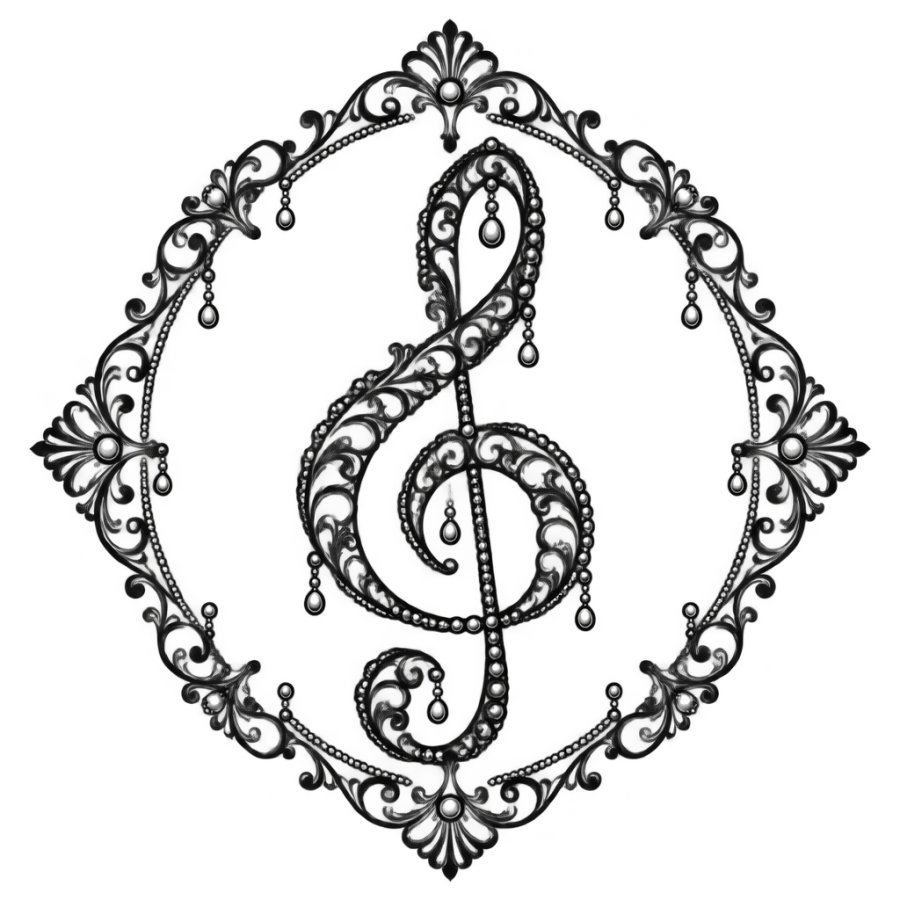
Treble clef made of lace filigree curls and pearl drops
Use this prompt
One continuous line looping into a heart and a music note
Use this prompt
Quarter note standing on piano keys, black and grey realism
Use this prompt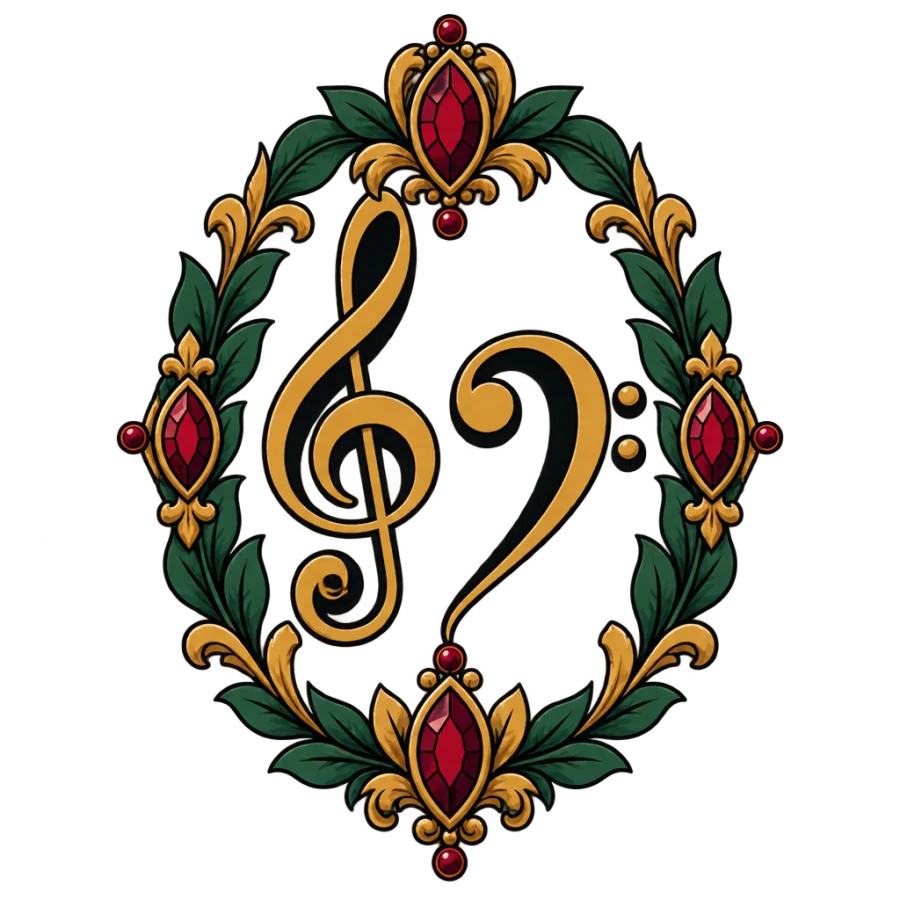
Treble and bass clef mirrored in an ornate oval frame
Use this prompt
Five small music notes rising in loose watercolour washes
Use this promptDescribe an idea of your own and get four designs back in about 20 seconds.
Open the generator
Questions people ask
Is a music note tattoo a bad idea?
A single small note often is. It is generic, and at 2 cm the gap between the flag and the stem closes up within a few years and leaves a dark hook. A real bar of the melody, a waveform of a recording you love or a lyric in lettering says something specific and holds its shape.
How big does a bar of sheet music need to be?
About 10 to 16 cm wide. The number that matters is the staff line spacing: 3 mm between the five lines stays readable, and 1.5 mm spacing merges into a grey band in roughly five years. Thin skin on the inner wrist blurs fastest, so go wider there or move the piece.
What do tattoo artists get wrong about musical notation?
Stem direction, beam count and clef placement, mostly because the artist is copying a decorative image instead of a score. Notes on or above the middle line take stems down on the left, one beam means eighth notes, and the treble clef spiral curls around the second line from the bottom. A mirrored stencil reverses all of it.
Do soundwave tattoos actually play?
The shape is a drawing of a recording and works as a design on its own. Apps that scan a tattoo and play the audio rely on a company staying in business and on a subscription, so plan for the tattoo to outlive the service. Ask the artist to render the peaks from the real audio file.
Where should a music tattoo go?
A bar of music is wide and horizontal, so the inner forearm, the collarbone, the ribs under the arm and across the upper back all suit it. Avoid the inner wrist and the side of a finger for anything with staff lines, since skin that thin spreads horizontal lines together faster than anywhere else.