Tiger tattoo ideas, meaning and designs
A tiger tattoo is carried by its black stripes, since the orange around them is the least stable color anyone will put in your skin.
- Pain level5 / 10 on the outer thigh
- Healing2 to 3 weeks on the surface
- Typical size15 to 40 cm (6 to 16 in)
- Studio cost$400 to $2,500
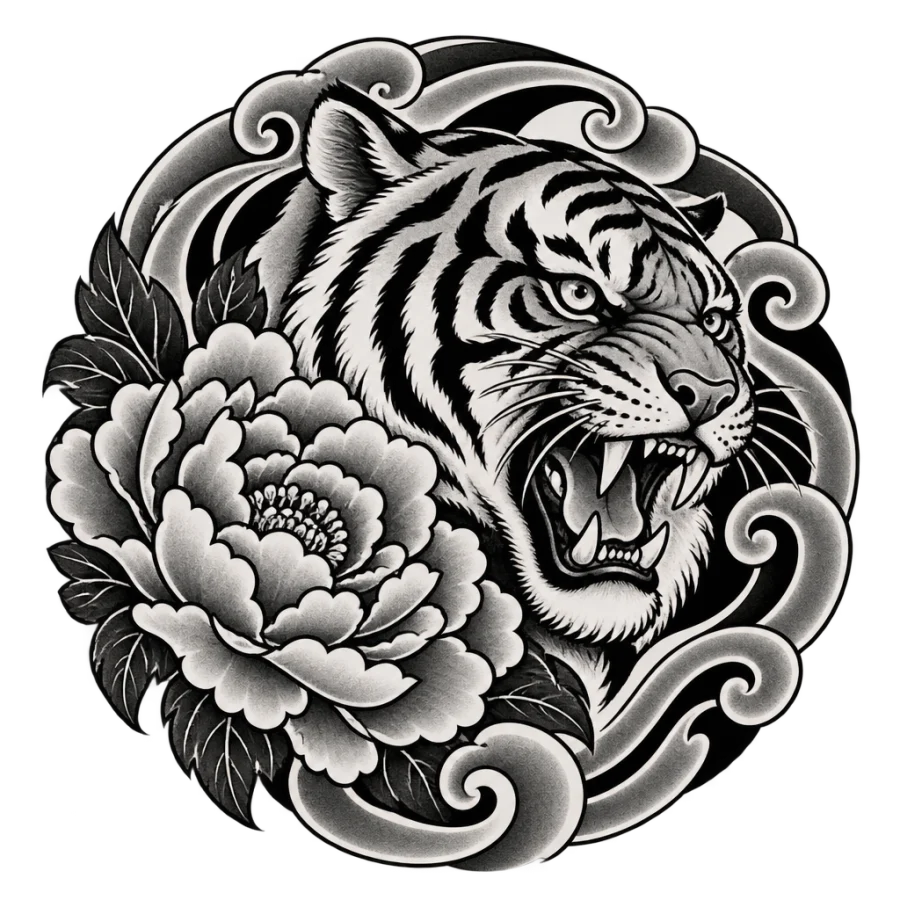
Stripes are the subject. Every tiger has a pattern no other tiger has, and the stripes sit in the skin as well as the fur, so a shaved tiger is still striped. For a tattoo that means the black does the drawing and the orange is only a fill. Artists who work this subject often build the stripe pattern first and color it afterwards.
The second thing to settle is whether you want a face or an animal. A head on portrait is a different job from a full body tiger walking or crouched, and the two sizes are nowhere near each other. A portrait needs the eyes, the nose leather and the whisker pads to all land, which puts a floor under it that a full body silhouette does not have.
Where the tiger meaning comes from
The tiger's place in Chinese and Japanese art is the part with real history behind it. Chinese tradition calls the tiger the king of the beasts and sets it against the dragon, the two of them representing forces that check each other. Japanese tattooing took that pairing and kept it: a tiger on one side of the back or chest, a dragon on the other, the tiger associated with wind and the dragon with rain.
The bamboo is not decoration. Tigers were described as living in bamboo groves, and vertical bamboo stalks give the artist a background that works against a horizontal animal. The Chinese zodiac brings a different group of people to the same subject, usually wanting the birth year rather than the mythology. Western tiger tattoos mostly skip all of this and mean courage.
Compositions with actual tradition behind them
- Tiger and dragon on opposite sides of the body, as balanced opposing forces
- Tiger among bamboo, the standard Japanese pairing
- A crawling tiger running down the arm, the classic Japanese sleeve layout
- Zodiac tiger with a year, for people born in a tiger year
Japanese, realistic and traditional, and what each costs you
Japanese style is the one that lasts. The outline is pulled heavy, the stripes are solid black, the orange is laid flat in one or two values, and the background wind bars carry the composition. At twenty years the orange has gone warm and dull and the tattoo still reads as a tiger from across the street, because the black never stopped doing the work.
Black and grey realism gives you a face you can recognize and no color to lose, which makes it the safest realistic option. Color realism on a tiger is the most expensive thing on this page and the most fragile, since the image depends on the orange staying saturated. If you want one, plan for a touch up at year five and ask the artist to keep the darkest shadows genuinely black.
| Version | Size | Sessions | How it holds up |
|---|---|---|---|
| Japanese crawling tiger, half sleeve | 30 to 40 cm | 2 to 4 | Very well, the black carries it |
| Black and grey portrait head | 15 to 20 cm | 1 to 2 | Well, no color to fade |
| Color realistic portrait | 20 to 25 cm | 2 to 3 | Wants a touch up by year five |
| American traditional tiger head | 10 to 15 cm | 1 | Very well |
| Fine line tiger outline | 8 to 12 cm | 1 | Poorly below 10 cm |
Size, placement and the body shape it needs
A walking or crawling tiger is a long horizontal animal, which is awkward on a human. The Japanese solution is to turn it diagonally and let it crawl down a limb, which is why the classic layout runs from the shoulder to the elbow or down the outside of the thigh. A tiger laid flat across the upper back works too, because the back is wide enough to take the length without squashing it.
A portrait is roughly square and needs 15 cm before the eyes hold, 20 cm if you want individual whiskers and the texture inside the ear. Below 12 cm the muzzle merges and the eyes lose their shape, which is the most common disappointment on this subject. A tiger head at 8 cm has to be drawn as a flat traditional design with four or five stripe shapes, not as a shrunken photograph.
What goes wrong, and what to ask for
Three things break tiger tattoos. Stripes drawn as thin outlines instead of solid black, which fill in and turn the animal muddy. Eyes with a light grey iris and a tiny white dot, which fade until the tiger looks blind. And a portrait put somewhere that moves, like the inner bicep or the stomach, where the face distorts whenever you do.
What to ask for is the opposite of all that. Solid black stripes with hard edges. A genuinely dark pupil and a dark rim around the iris. A placement on a flat, stable, low friction area, and a size with 3 cm of headroom over the minimum. Then a healed photo of a tiger the artist did at least three years ago, because this subject exposes an artist's weak spots faster than most.
12 tiger tattoo designs, with the prompt behind each one
Every design below came out of AI Tattoo Lab. Tap one to load its prompt into the generator, then change a word and make it yours.
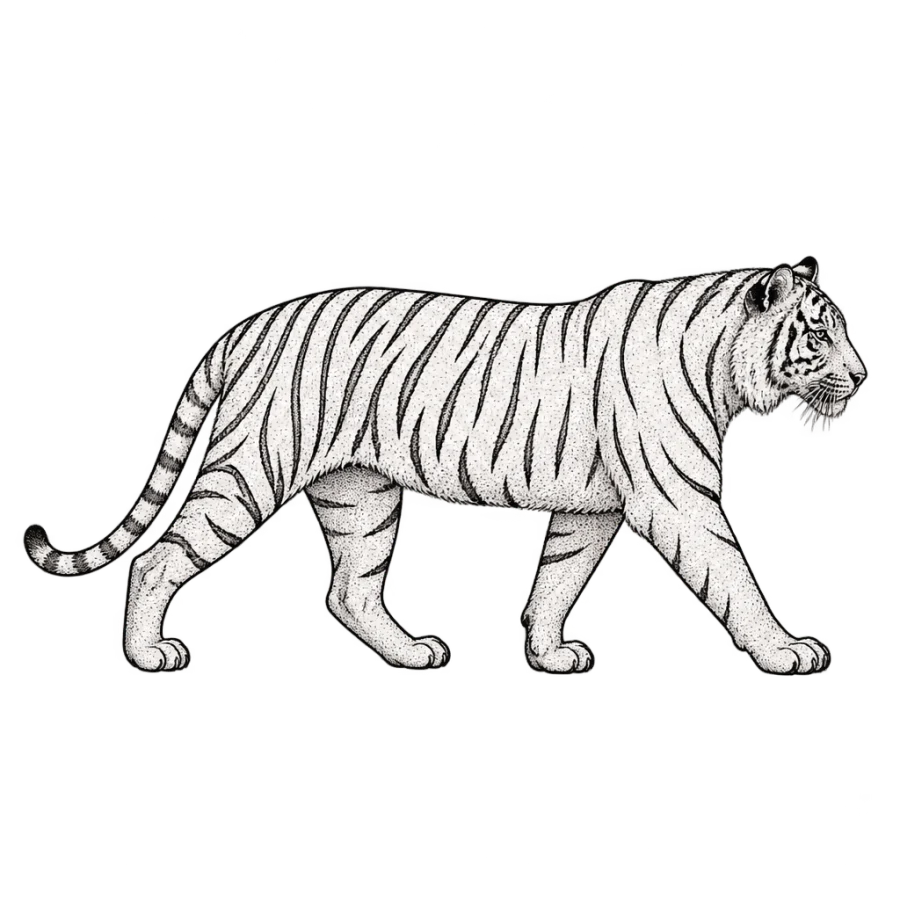
A tiger walking in profile, fine line, thin stripes, barely any shading
Use this prompt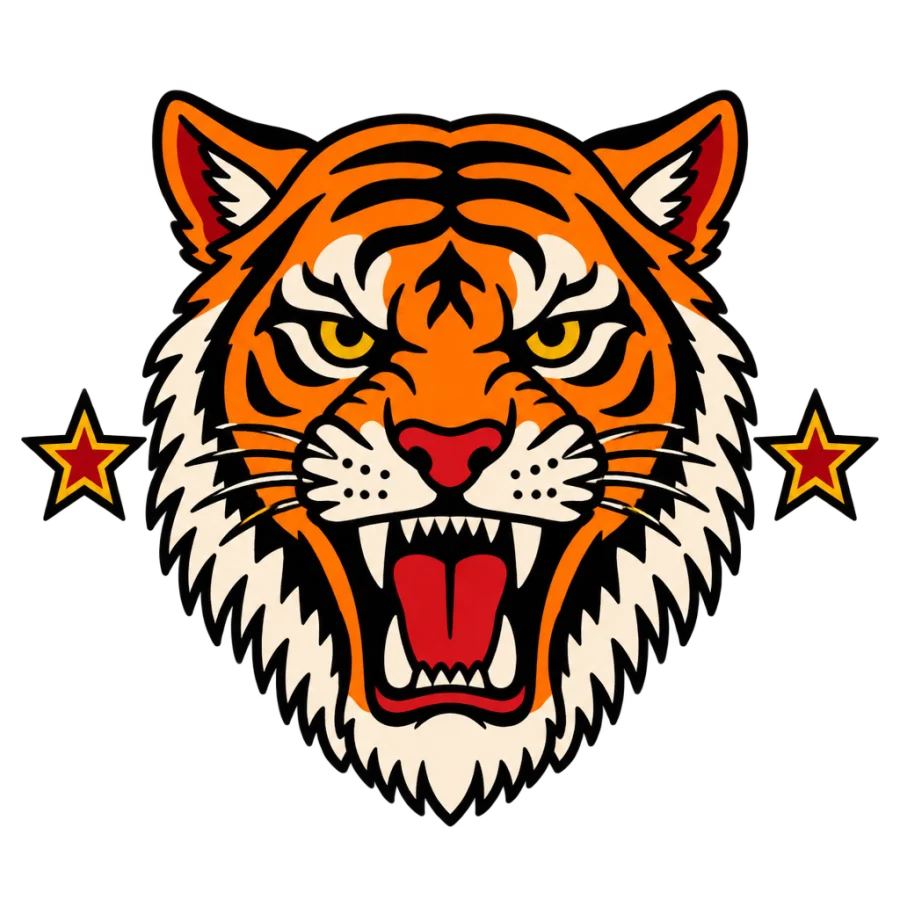
Tiger head facing forward with bared teeth, old school traditional flash
Use this prompt
Leaping tiger silhouette in solid black with stripes cut out
Use this prompt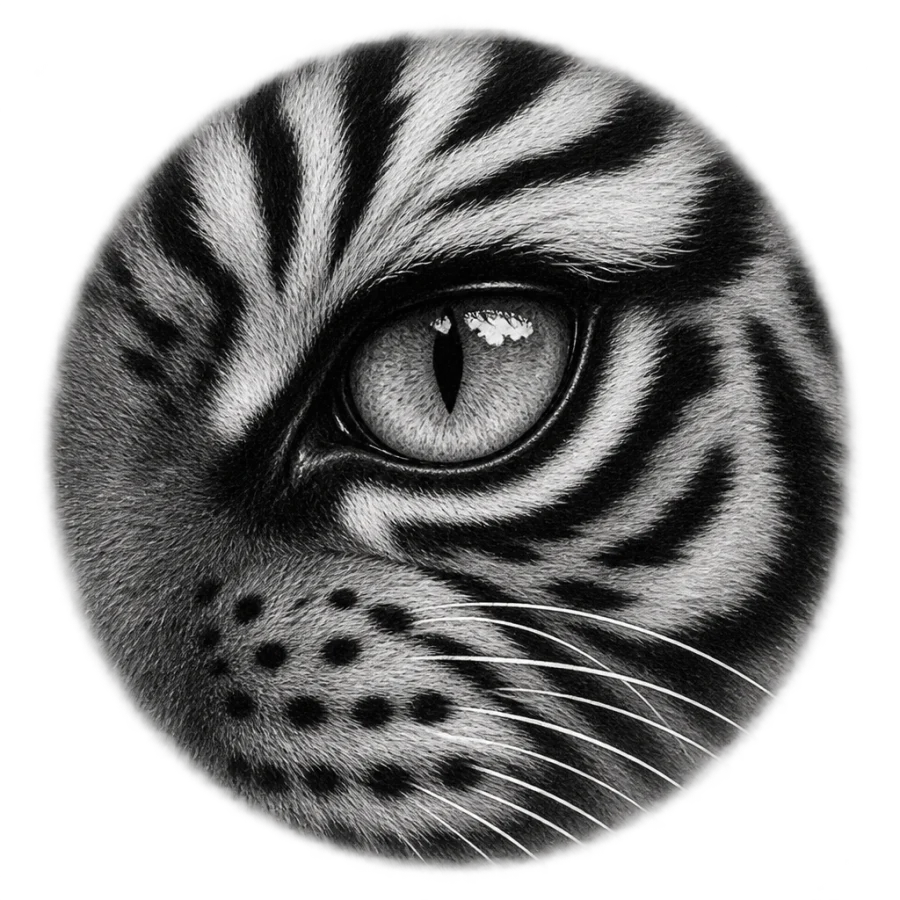
Close up of a tiger eye in black and grey realism, soft shading
Use this prompt
Geometric tiger head made of triangles and thin lines, symmetrical
Use this prompt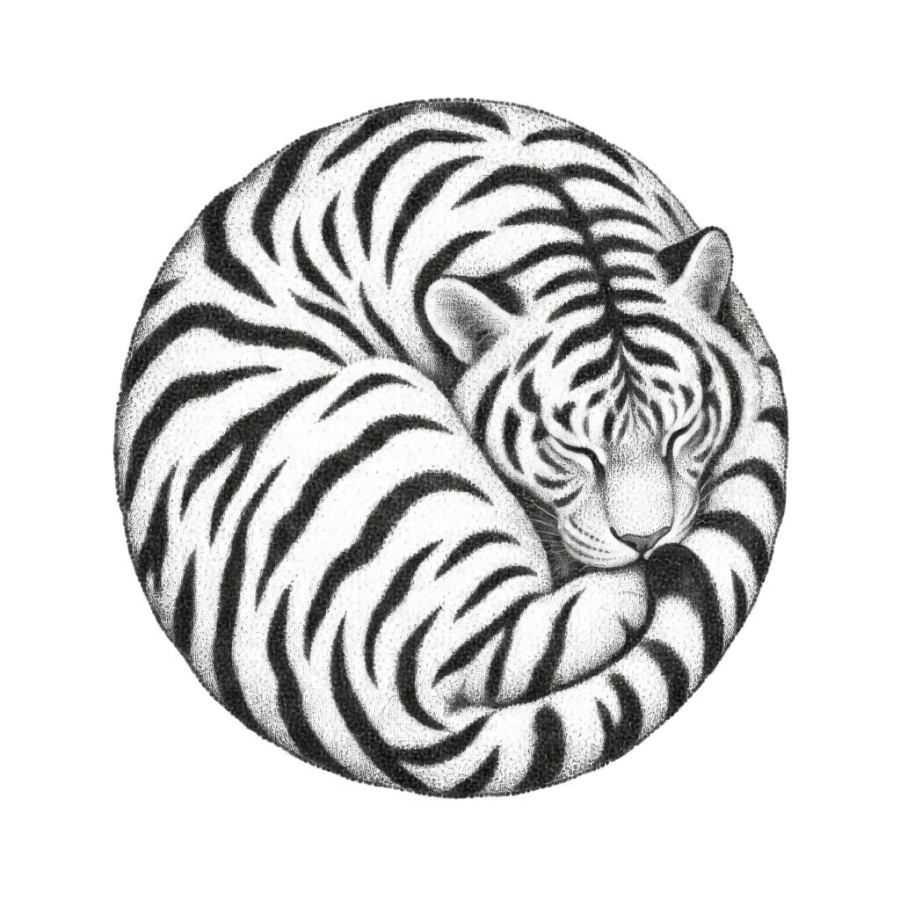
Tiger curled asleep seen from above, dotwork stippling only
Use this prompt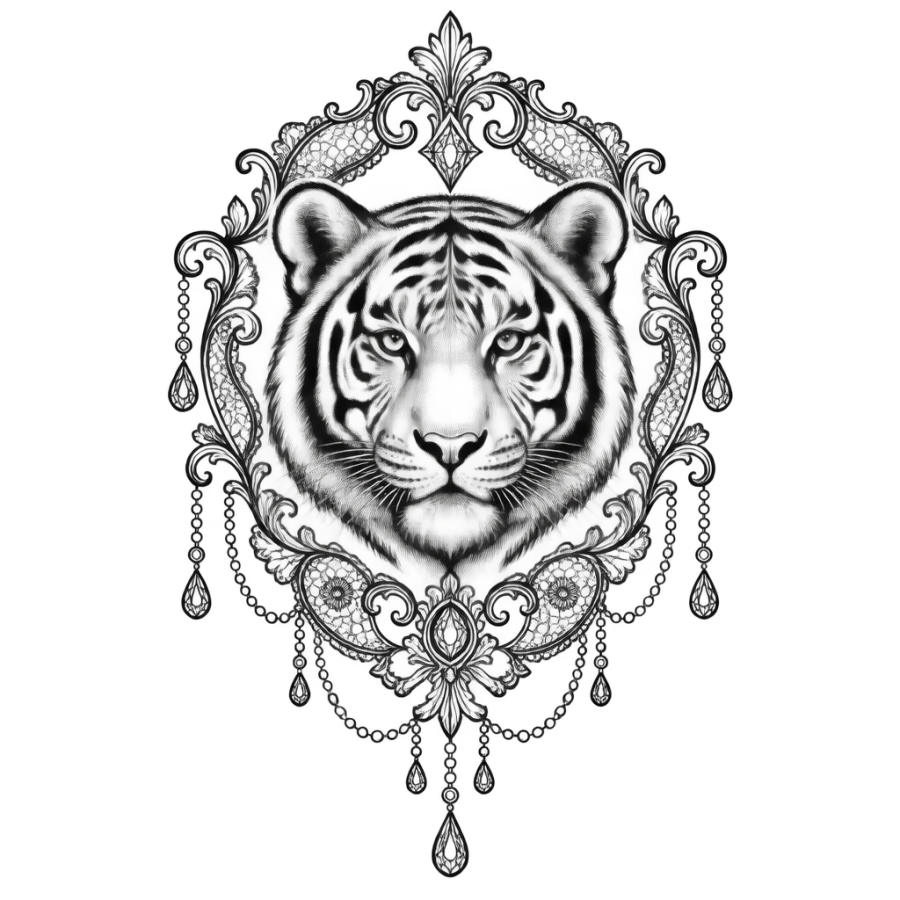
Tiger head in an ornamental lace frame with hanging pearls
Use this prompt
A resting tiger drawn in one continuous line, very minimal
Use this prompt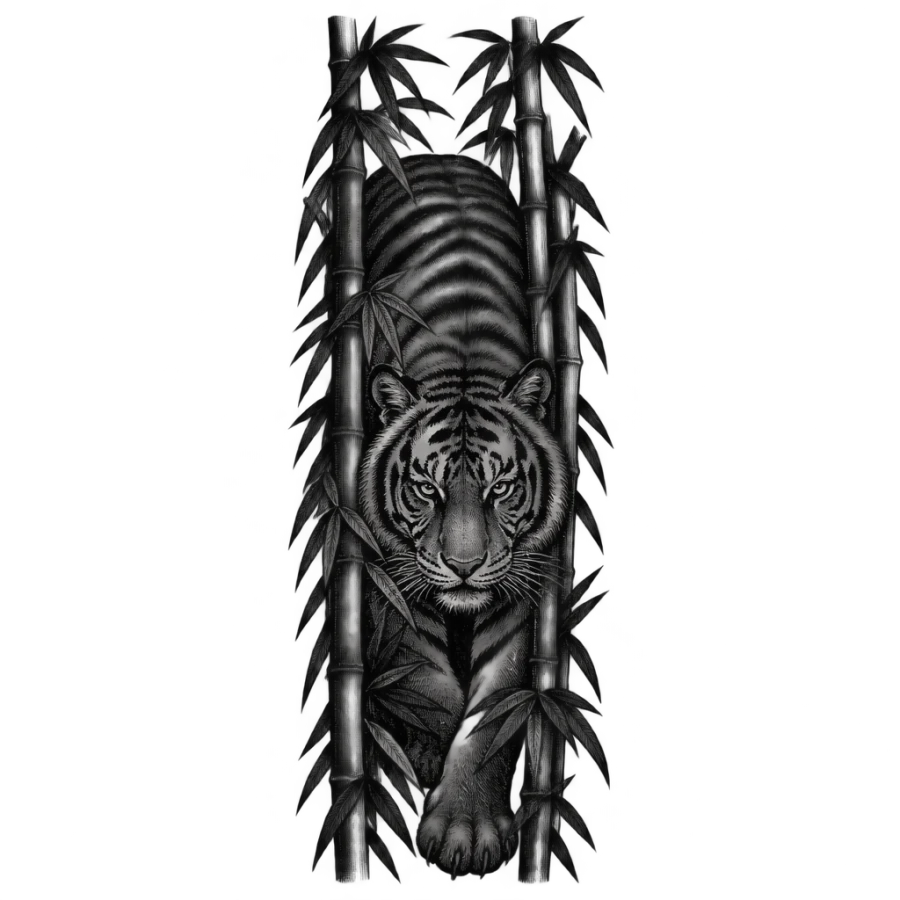
Tiger stalking through bamboo, old engraving style with cross hatching
Use this prompt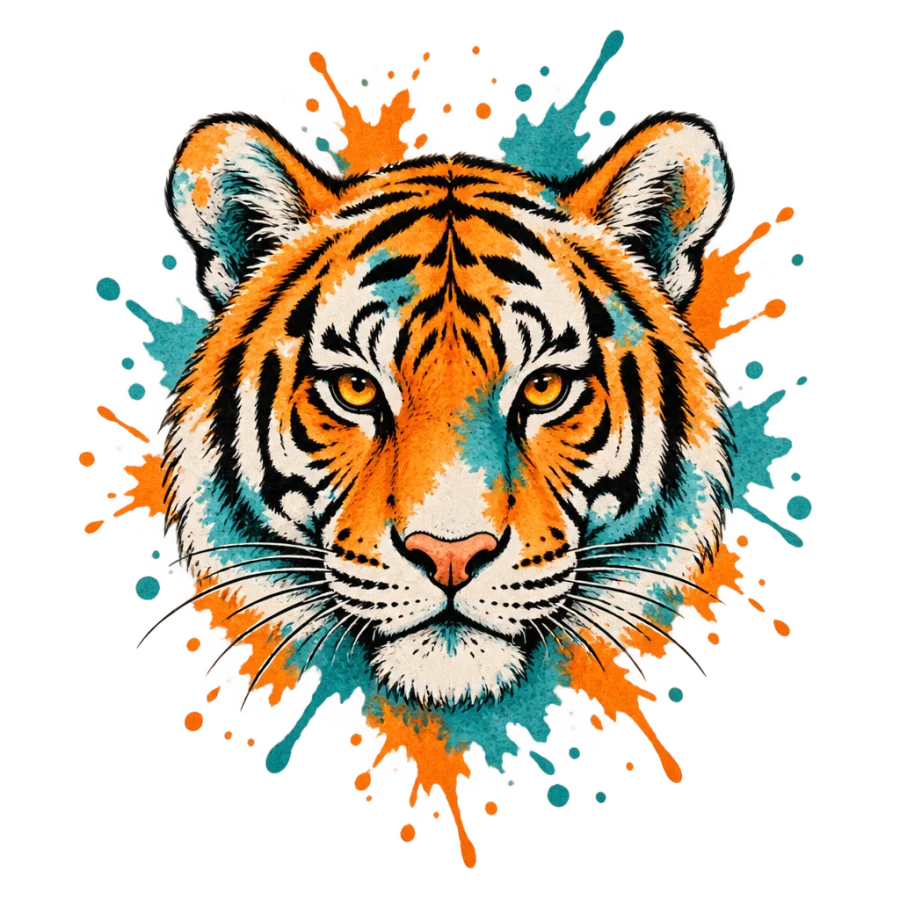
Tiger head with watercolor splashes in orange and teal
Use this prompt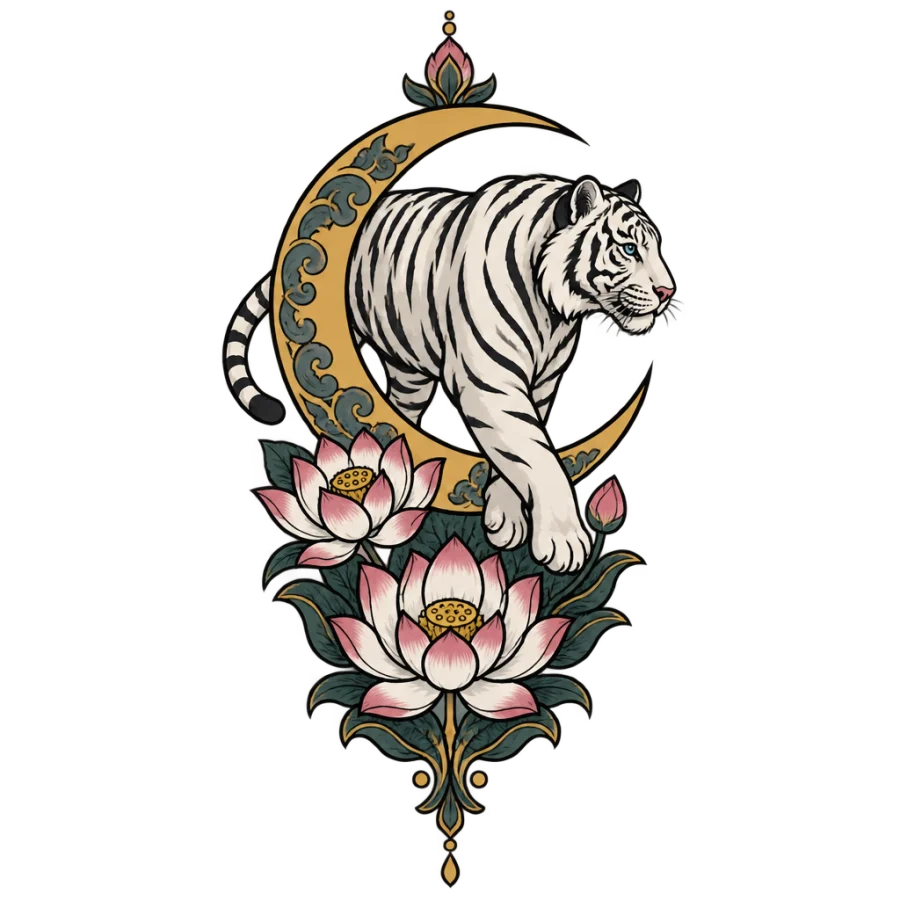
White tiger walking through a crescent moon with lotus flowers
Use this promptDescribe an idea of your own and get four designs back in about 20 seconds.
Open the generator
Questions people ask
What does a tiger tattoo mean?
Strength and a readiness to be dangerous. Chinese tradition calls the tiger the king of the beasts and pairs it with the dragon as balanced opposing forces, which Japanese tattooing still uses. The tiger is also a Chinese zodiac sign, so some people wear it for a birth year rather than the symbolism.
How big does a tiger tattoo need to be?
A portrait needs 15 cm before the eyes and muzzle hold, and 20 cm if you want whiskers and ear texture. A full crawling tiger wants 30 to 40 cm so it can run down an arm or a thigh. At 8 to 10 cm, use a flat traditional design with four or five stripe shapes.
Do tiger tattoos fade badly?
The orange does. Orange and yellow are the least stable pigments and a tiger is mostly orange, so a color piece shifts noticeably within ten years and often wants a touch up at year five. Japanese and black and grey versions hold far better, because the solid black stripes carry the drawing.
Where do tiger tattoos look best?
A full body tiger needs length, so it goes diagonally down an arm from shoulder to elbow, down the outer thigh, or flat across the upper back. A portrait is roughly square and suits the outer thigh, the chest or the shoulder blade. Keep faces off the inner bicep and the stomach.
How much does a tiger tattoo cost?
Around $250 to $450 for a 12 cm traditional tiger head in one sitting, $700 to $1,400 for a black and grey portrait, and $1,500 to $3,000 for a Japanese half sleeve across several sessions. Hourly rates of $150 to $250 are normal, and color work takes longer than grey.