Aztec tattoo ideas and Mexica designs
Aztec tattoos translate Mexica stone carving into heavy black relief on skin, and the imagery belongs to a culture with living descendants.
- Pain level6 / 10, dense black work
- Healing2 to 3 weeks surface
- Typical size20 to 40 cm (8 to 16 in)
- Studio cost$700 to $2,500
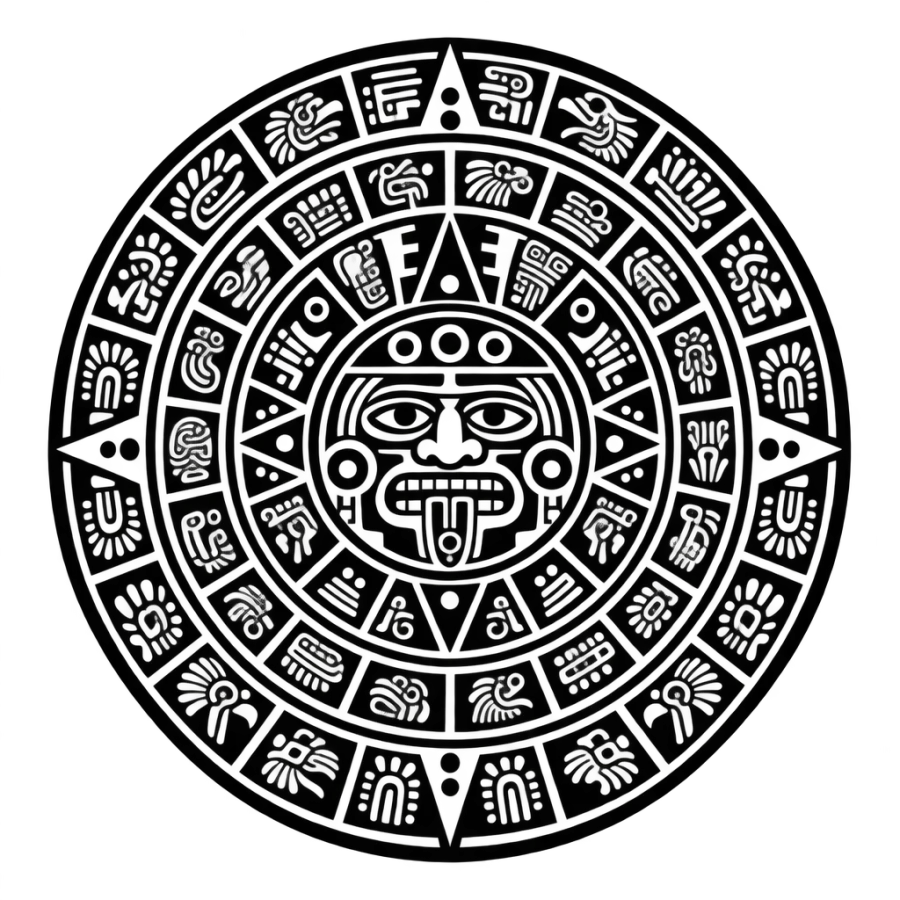
The source material is Mexica art: carved basalt monuments, temple reliefs and the painted codices that survived the Spanish conquest. The visual language is blocky, dense and deeply geometric, built from stepped frets, stylised animal heads and figures in strict profile. It translates well to skin because relief carving and heavy black linework work the same way.
Mexica culture did not end in 1521. Nahua communities live in central Mexico today, the language is still spoken, and this imagery carries religious and historical weight for Mexican and Chicano people who claim it as heritage. That is the context anyone getting one of these pieces is stepping into.
The sun stone, and what it actually is
The circular monument everyone calls the Aztec calendar is the Piedra del Sol, a carved basalt disc found in Mexico City in 1790, roughly 3.6 meters across. It is a cosmological monument showing the face at the center surrounded by the four previous world ages and the twenty day signs. It is not a working calendar you could read a date from.
The Mexica did keep two calendars, the 260 day tonalpohualli and the 365 day xiuhpohualli, and the day signs on the stone come from the first of those. If you want the disc as a tattoo, knowing what the rings are makes the difference between a faithful piece and a decorative circle of shapes.
Figures, glyphs and getting them right
The recurring subjects are Quetzalcoatl the feathered serpent, Huitzilopochtli, Tlaloc with his goggle eyes and fanged mouth, eagle warriors and jaguar warriors in full headdress, and the day sign glyphs. Each of these has a documented form in the codices, and an artist working from the real sources produces something noticeably different from an invented approximation.
Glyphs are where generated designs fall down. A day sign has a specific shape and name, and a pattern that looks like a glyph but is not one means nothing at all. If you want a glyph on your body, find the actual sign, learn what it is, and check that the design you have matches it rather than resembling it.
How to approach the imagery with care
- Learn what the specific figure or glyph is before you commit to it
- Work with an artist who knows the iconography, ideally a Mexican or Chicano artist
- Treat a generated pattern as decorative rather than as an authentic glyph
- Skip anything presented as a secret or sacred sign with no source behind it
- Be clear with yourself about whether this is heritage or aesthetics, and say so honestly
What a generated design can honestly be
An AI design can give you a composition in this visual language: the proportions, the stepped borders, the density of black, a figure in profile with the right kind of headdress. That is useful as a starting point for a conversation with a tattooer. It does not carry the meaning of an authentic glyph, and no generator can grant that.
Say so when you take it to an artist. The ones who work in this style regularly will redraw large parts of it against real sources, and the result is better for it. Presenting a generated pattern as a traditional Mexica design, to a tattooer or to anyone who asks about it later, is the thing to avoid.
How the style is tattooed, and what it costs
Aztec work is heavy black with sharp geometric edges, built with large liners and packed with magnums, usually with grey shading inside the shapes to suggest carved stone. Some artists work it as pure blackwork, others add a stone texture with fine stippling. The style needs firm, deliberate lines, and wobble shows badly against all that straight geometry.
Density is the planning problem. Codex style detail crammed into a small piece closes up within a decade, so a sun stone wants 20 cm or more and a warrior portrait wants real space. A half sleeve of Aztec work runs twelve to twenty hours and costs $1,500 to $3,500. A single 15 cm piece is four to six hours at $500 to $1,000.
15 Aztec tattoo designs, with the prompt behind each one
Every design below came out of AI Tattoo Lab. Tap one to load its prompt into the generator, then change a word and make it yours.
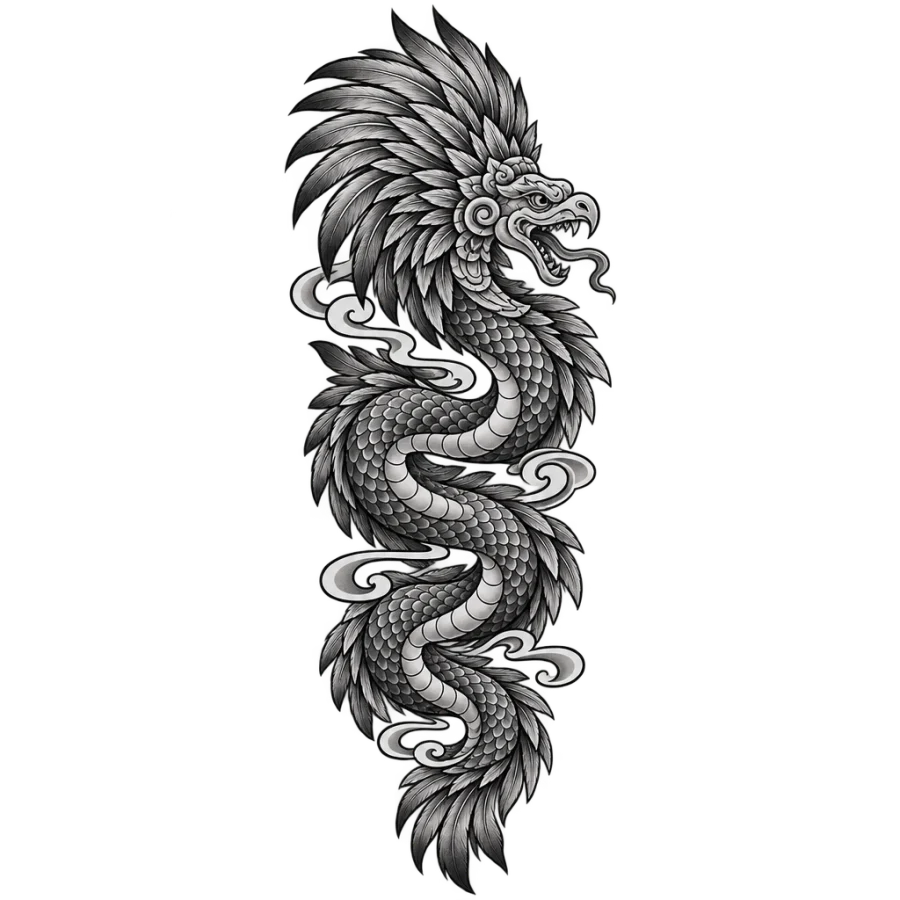
Quetzalcoatl feathered serpent coiling down a tall column, irezumi grey wash
Use this prompt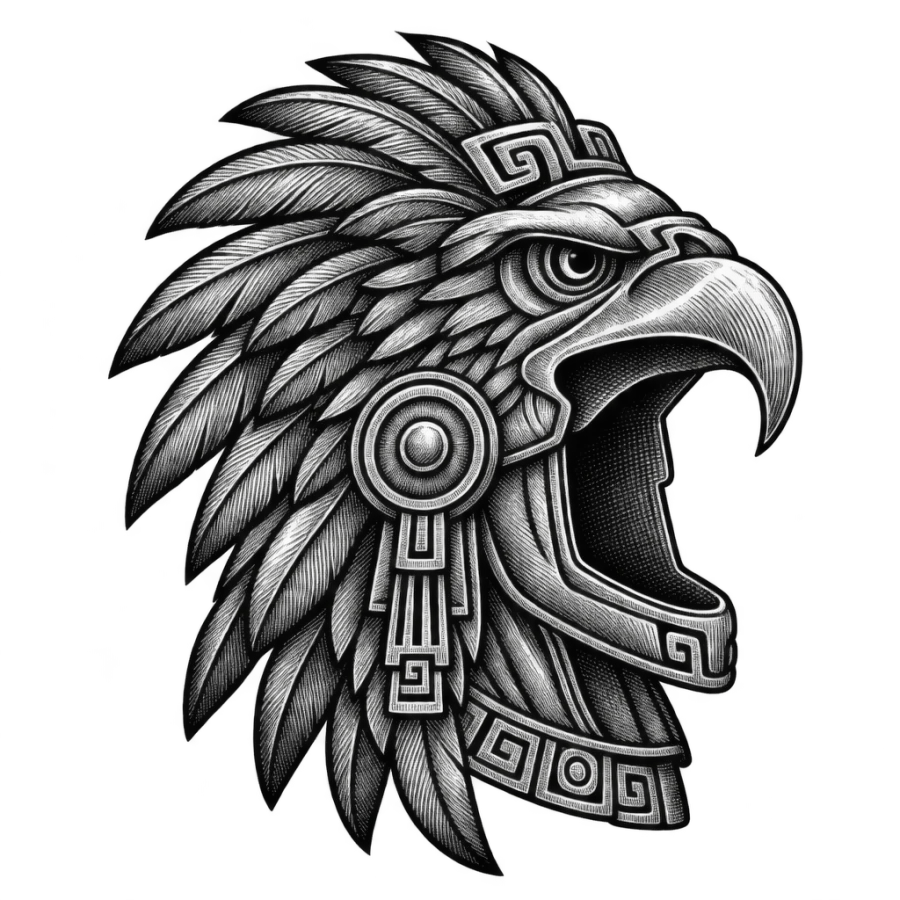
Aztec eagle warrior helmet in three quarter view, woodcut engraving hatching
Use this prompt
Aztec step fret greca armband, clean geometric lines, lots of open space
Use this prompt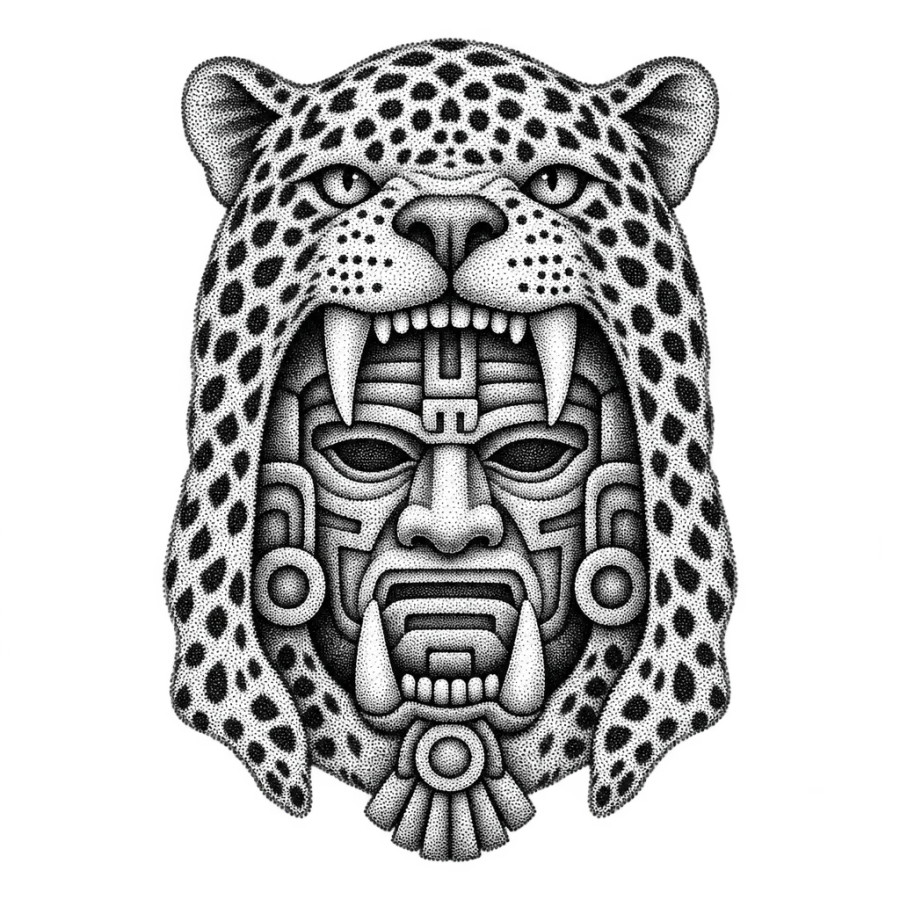
Aztec jaguar warrior mask facing forward, built entirely from stippled dots
Use this prompt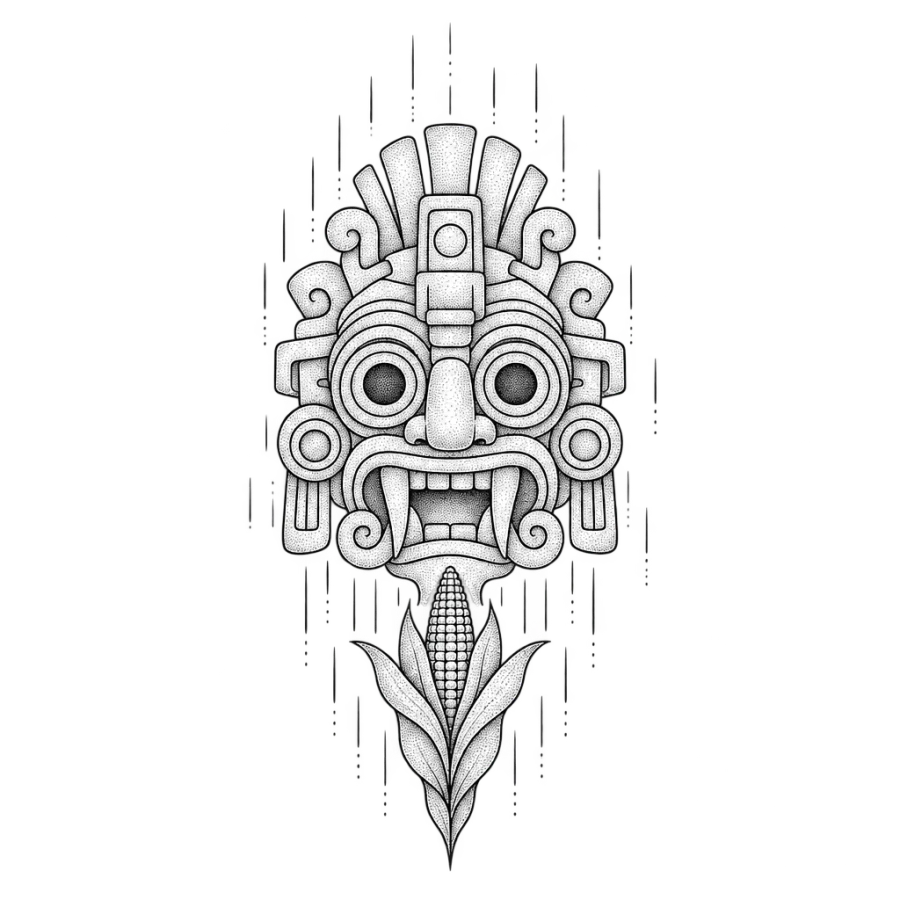
Tlaloc rain god mask with falling rain and a maize leaf, fine line
Use this prompt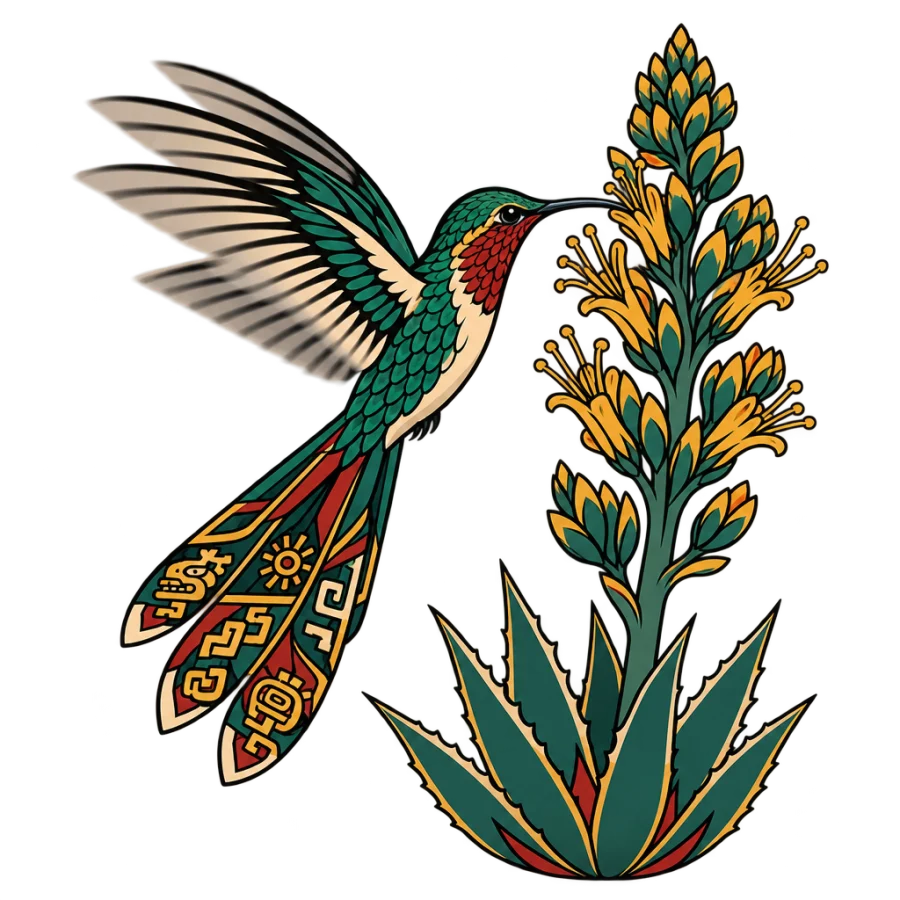
Hummingbird and agave bloom with Aztec glyphs in the tail, neo traditional color
Use this prompt
Aztec Ollin movement glyph cut white out of a heavy solid black circle
Use this prompt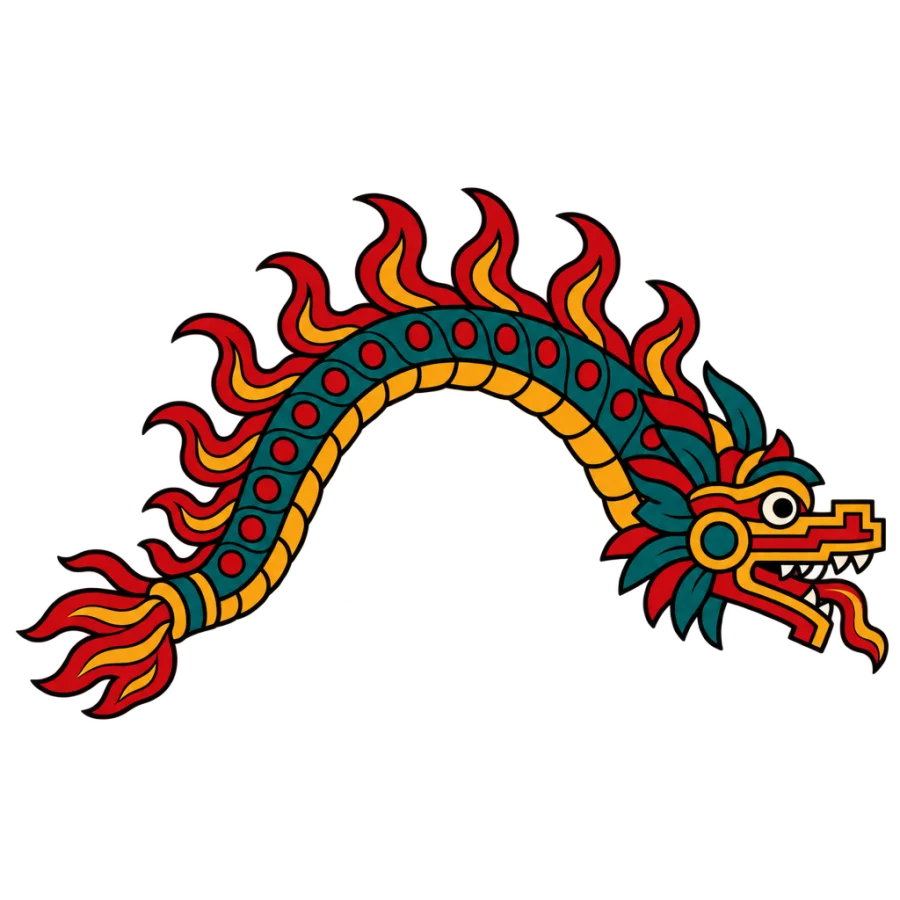
Aztec fire serpent arching in a wide band with flames, traditional bold color
Use this prompt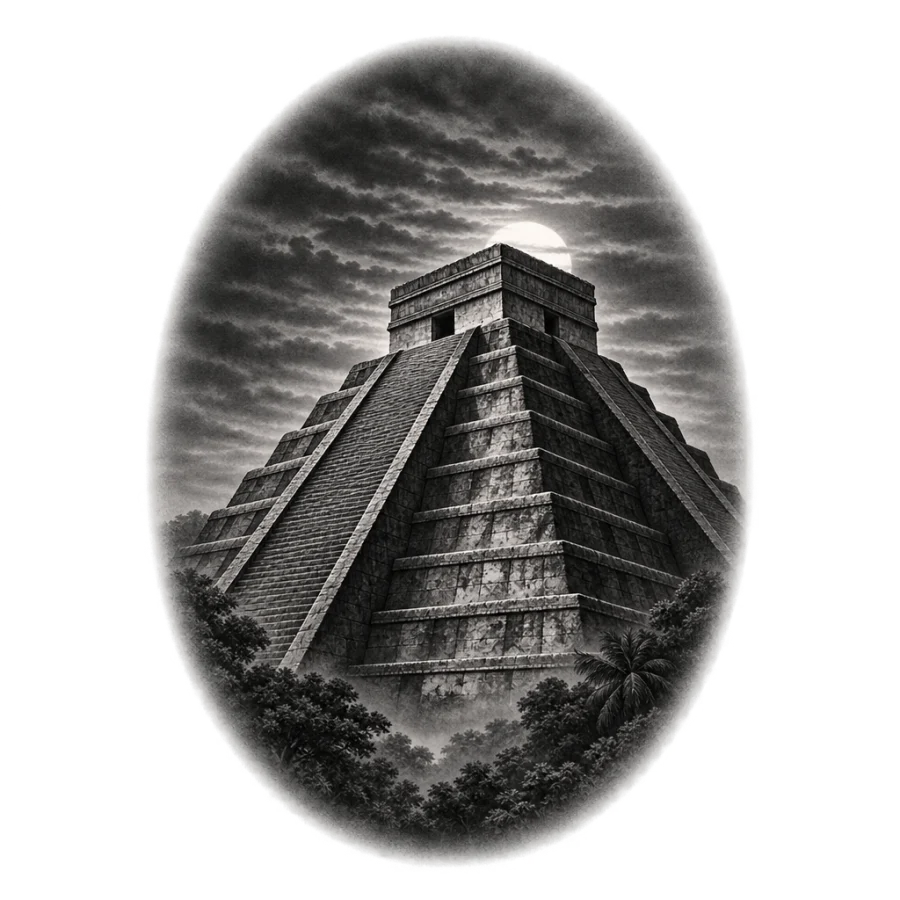
Stepped Aztec pyramid at dusk in a soft oval vignette, black and grey realism
Use this prompt
A resplendent quetzal in profile with long tail streamers, single continuous line
Use this prompt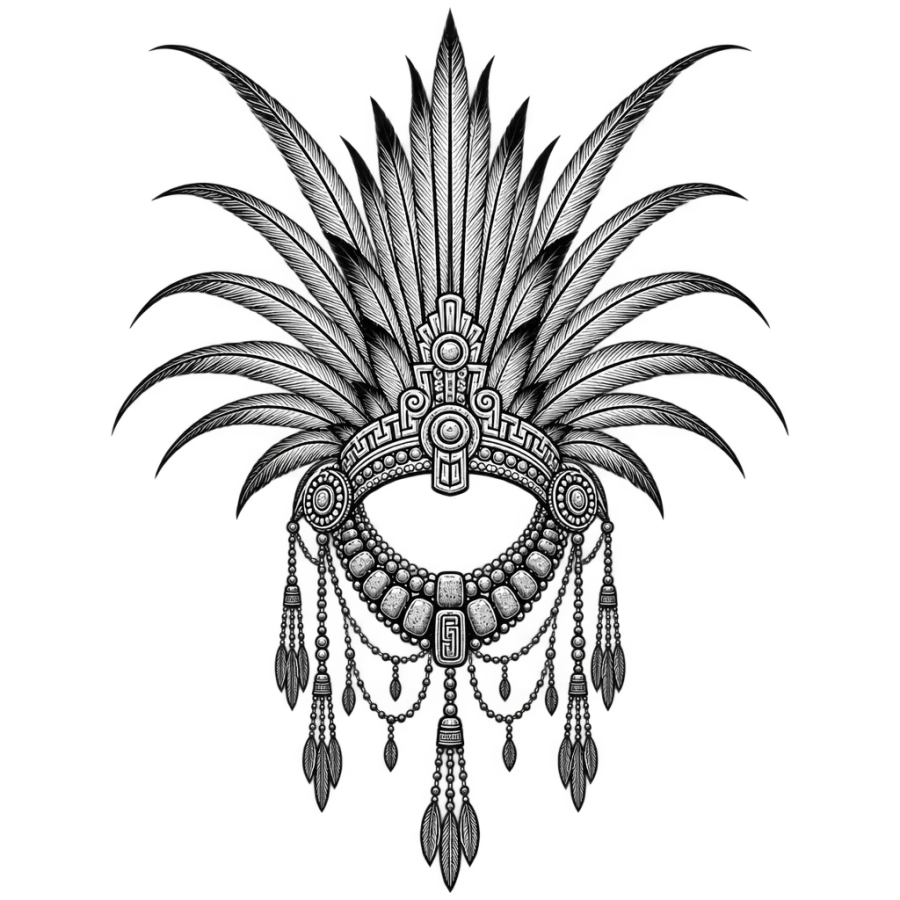
Aztec plume headdress over a jade bead collar with chain tassels, ornamental filigree
Use this prompt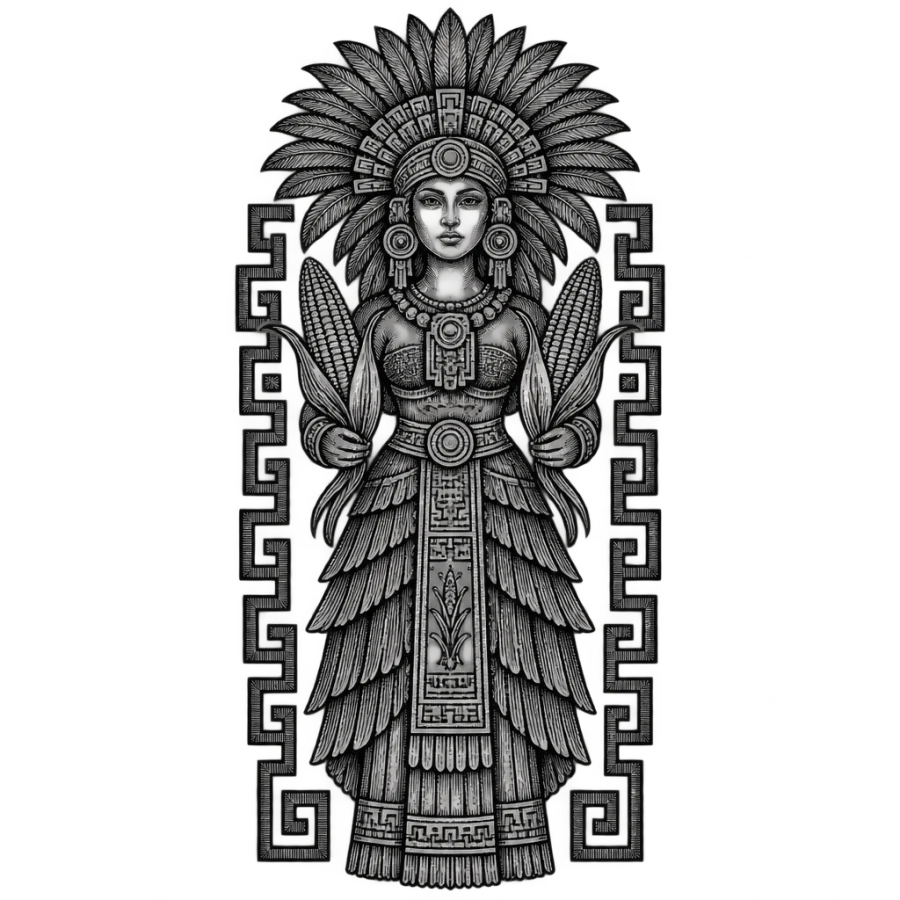
An Aztec maize goddess with maize cobs and a feather headdress
Use this prompt
Two mirrored Aztec serpent heads around a stepped altar glyph
Use this prompt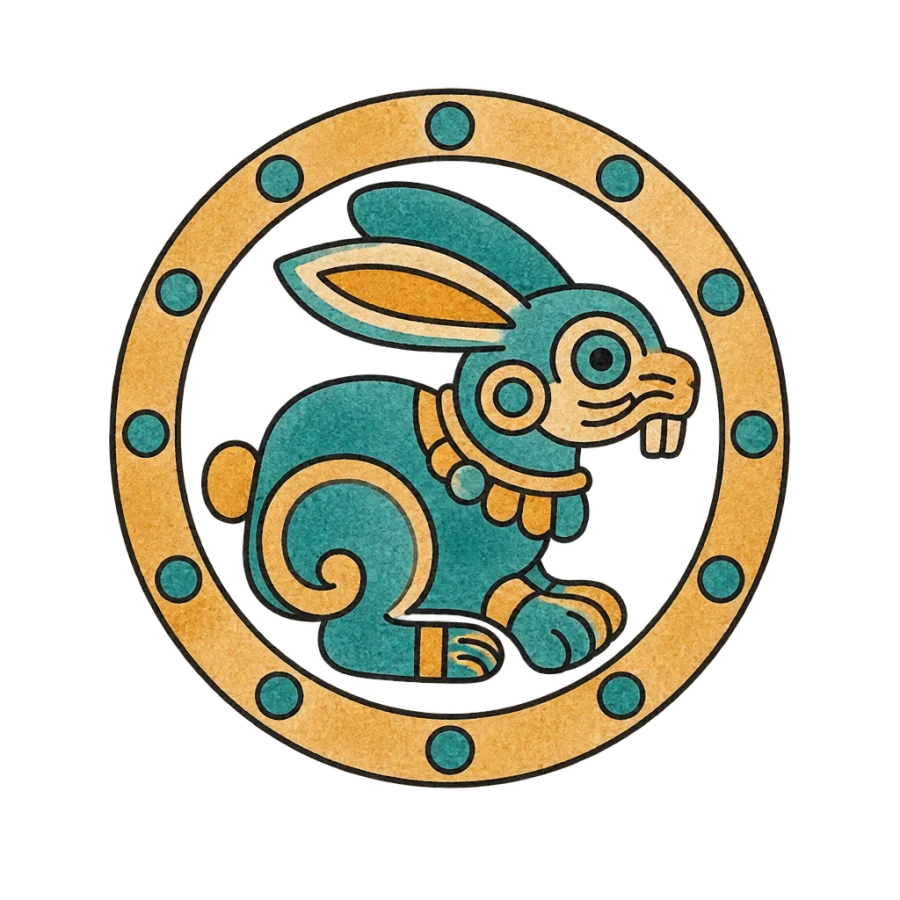
The Aztec rabbit day glyph in a round cartouche, watercolor washes
Use this promptDescribe an idea of your own and get four designs back in about 20 seconds.
Open the generator
Questions people ask
Is the Aztec calendar tattoo actually a calendar?
No. The Piedra del Sol is a cosmological monument carved in basalt, showing a central face surrounded by the four previous world ages and the twenty day signs. The Mexica did keep two calendars, the 260 day tonalpohualli and the 365 day xiuhpohualli, and the day signs come from the first.
Is it disrespectful to get an Aztec tattoo?
It depends how you go about it. This imagery carries religious and historical weight for Nahua communities and for Mexican and Chicano people who claim it as heritage. Learning what the figure or glyph actually is, and working with an artist who knows the sources, is the difference between respect and costume.
Can I get my name in Aztec glyphs?
Not in the way you can with an alphabet. Nahuatl writing combines logograms and phonetic elements and does not map onto English letters. Name glyphs existed and were built individually by scribes. Anything sold as your name in Aztec symbols is almost certainly invented, so treat it as decoration.
How big does an Aztec tattoo need to be?
A sun stone wants 20 cm or more, because the day sign ring is dense and closes up when shrunk. A warrior portrait needs similar space for the headdress detail. Codex style geometry crammed small turns into a black mass within ten years, so simplify rather than reduce.
How much does an Aztec sleeve cost?
A half sleeve of Aztec work takes twelve to twenty hours and runs $1,500 to $3,500. A full sleeve reaches $3,500 to $7,000 across several sittings. A single 15 cm piece such as a warrior head or a serpent is four to six hours and $500 to $1,000.