Fox tattoo ideas, meaning and designs
A fox tattoo reads as a fox because of five markings, and without them you get an animal most people will call a dog.
- Pain level5 / 10 on the outer thigh
- Healing2 to 3 weeks on top
- Typical size8 to 20 cm (3 to 8 in)
- Studio cost$200 to $900
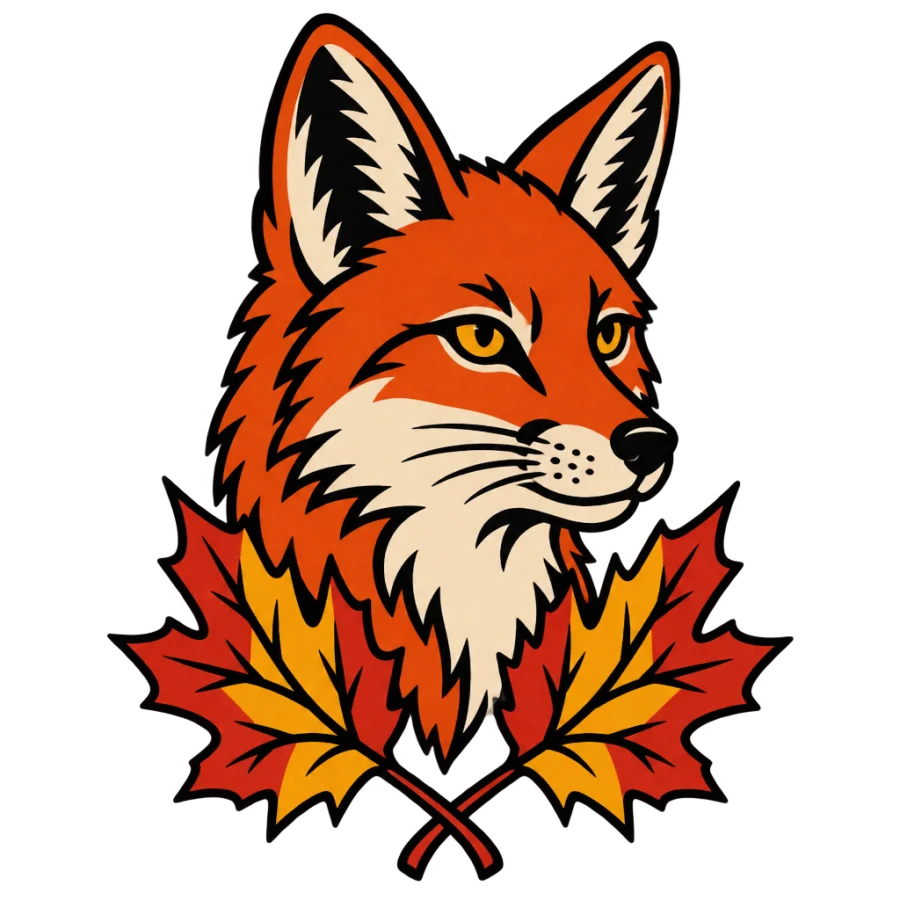
The red fox has a narrow muzzle, a white chin and throat, dark stockings on the legs, black backs to the ears and a white tip on the tail. Leave two of those out and the drawing slides towards a corgi or a cat. Artists who draw a lot of wildlife build the face from those marks first and only then decide how much shading the piece gets.
After that the choice is which fox. A Japanese kitsune is a spirit with a long muzzle, several tails and a flame or a shrine behind it. A European fox is a trickster with a sly expression, usually drawn in neo traditional with heavy outlines. A geometric fox head is a third thing entirely and has its own failure mode.
The kitsune and the trickster fox are two different tattoos
A kitsune belongs to Japanese tattooing and comes with its own grammar. The fox is drawn with a long tapered muzzle, often white or pale, and the number of tails matters, since folklore treats tails as age and power. Nine is the top of that scale. Around it an artist will usually put wind bars, maple leaves or a torii gate, and the piece is designed to fill a panel instead of floating.
The European fox is a character. Reynard, in the medieval story cycle, cheats the wolf and the bear and gets away with it, and that is the fox most people mean by clever. Drawn in neo traditional he gets a narrowed eye, a bold outline and flat colour, and he suits a smaller area than a kitsune does because he needs no background.
The markings that make it a fox
Value contrast carries this in black and grey, and flat shape carries it in traditional work. Either way the white chin has to stay as clean skin or near white, because that is the single mark separating a fox face from every other canid. The ear backs go darkest, the tail tip goes lightest, and the dark line from the inner eye down the muzzle gives the face its narrow look.
Five marks to ask for by name
- A white chin and throat kept as unshaded skin, never grey wash
- Black backs to both ears, solid, with the ear edge drawn thicker than the reference photo
- Dark stockings on all four legs, which keeps a running fox from reading as a cat
- A white tail tip, on a tail about as long as the body and fluffed to twice the leg width
- A thin dark line from the inner corner of each eye towards the muzzle
Sizes, styles and sessions
A fox head is the cheapest way in and the most commonly regretted when it goes small, because the muzzle and the ear tips carry all the information. Below about 6 cm the face loses its taper and the ears round off. A full body fox needs more room than people expect, since the tail takes almost half the length of the composition.
| Design | Size | Sessions and rough cost |
|---|---|---|
| Fox head, black and grey | 7 to 10 cm | One session, $200 to $400 |
| Curled sleeping fox | 8 to 12 cm | One session, $250 to $500 |
| Full body running fox | 14 to 22 cm | One long session, $400 to $800 |
| Geometric fox head | 8 to 14 cm | One session, $250 to $500 |
| Kitsune with background | 25 to 40 cm | Two or three sessions, $900 to $2,500 |
Orange ink, placement and ten years out
Orange and yellow are the least stable pigments in common use, and fox fur is mostly orange, so a full colour fox fades faster than almost any other animal tattoo. Two ways round it. Build the fur in black and grey and leave the orange as a thin glaze over the back and tail only, or go fully traditional with a strong black outline that still holds the shape once the colour has gone soft.
For placement, a head suits the outer forearm, the back of the upper arm and the calf. A full body fox wants a longer panel: the outer thigh, the ribs or the outer calf. Daily sunscreen once healed does more for an orange tattoo than any aftercare product, and most people with a colour fox book a touch up somewhere around year eight.
12 fox tattoo designs, with the prompt behind each one
Every design below came out of AI Tattoo Lab. Tap one to load its prompt into the generator, then change a word and make it yours.
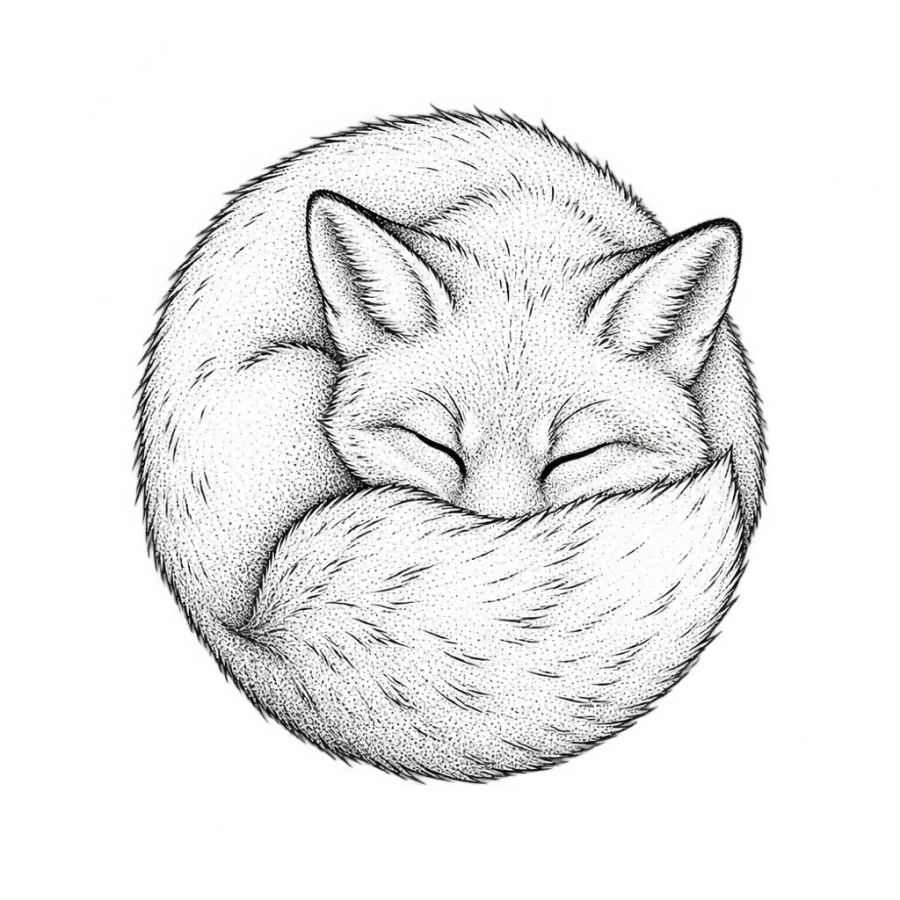
A fox curled asleep with its tail over its nose, fine line
Use this prompt
A running fox as a solid black silhouette stretched out low
Use this prompt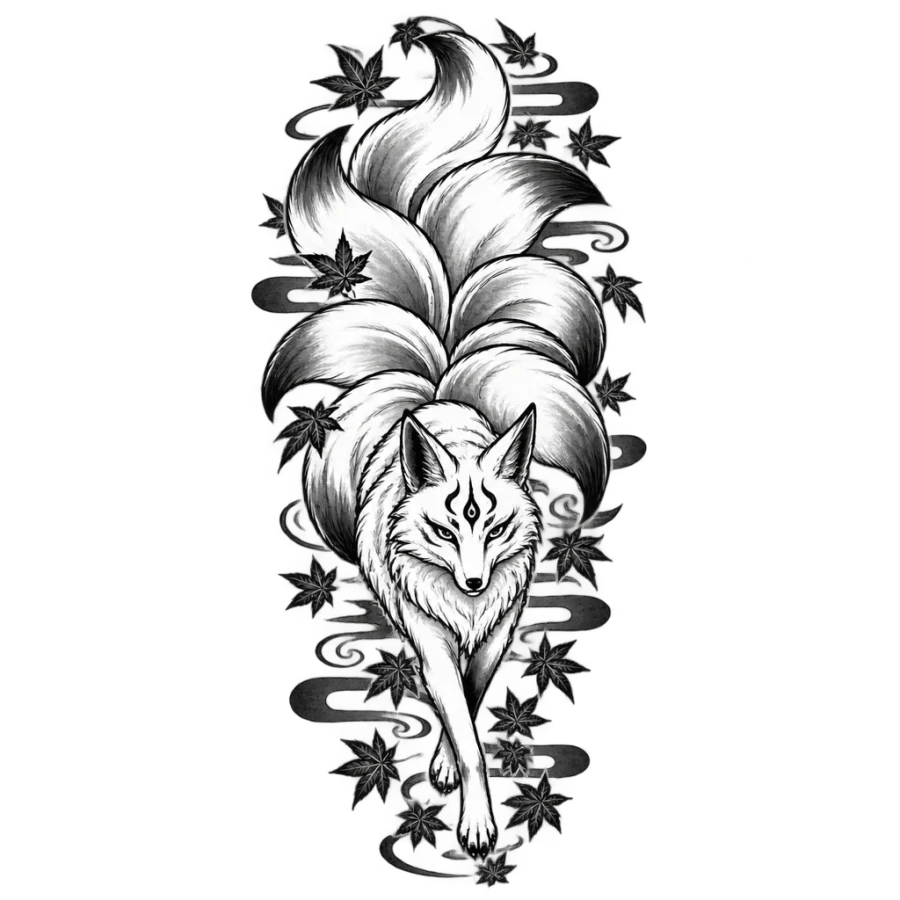
A kitsune fox with many tails walking through falling maple leaves
Use this prompt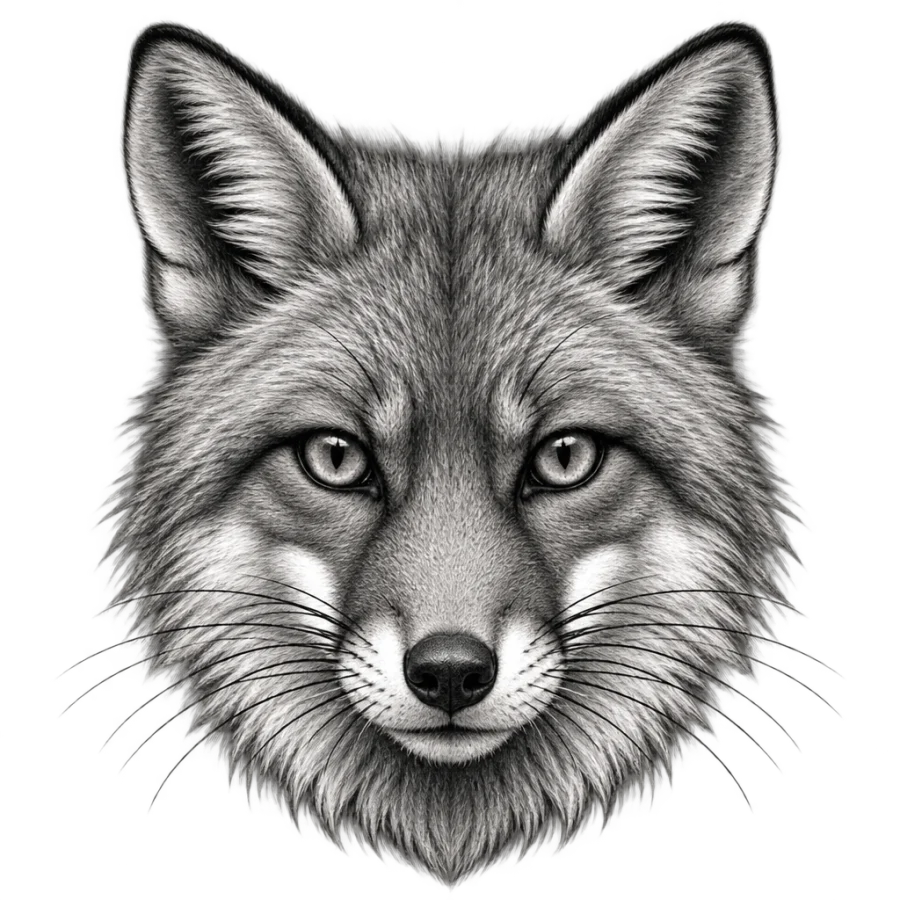
Close up fox face looking straight ahead, black and grey realism
Use this prompt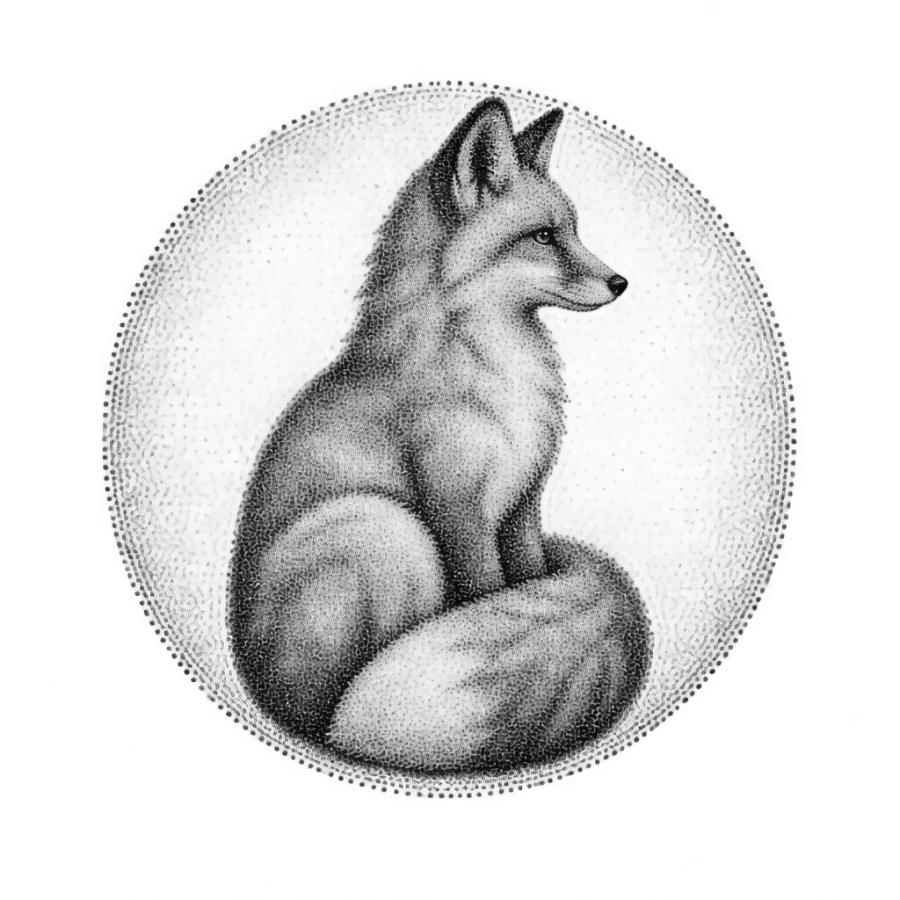
A sitting fox with tail around its paws, dotwork stippling only
Use this prompt
A geometric fox head made of triangles inside a thin circle
Use this prompt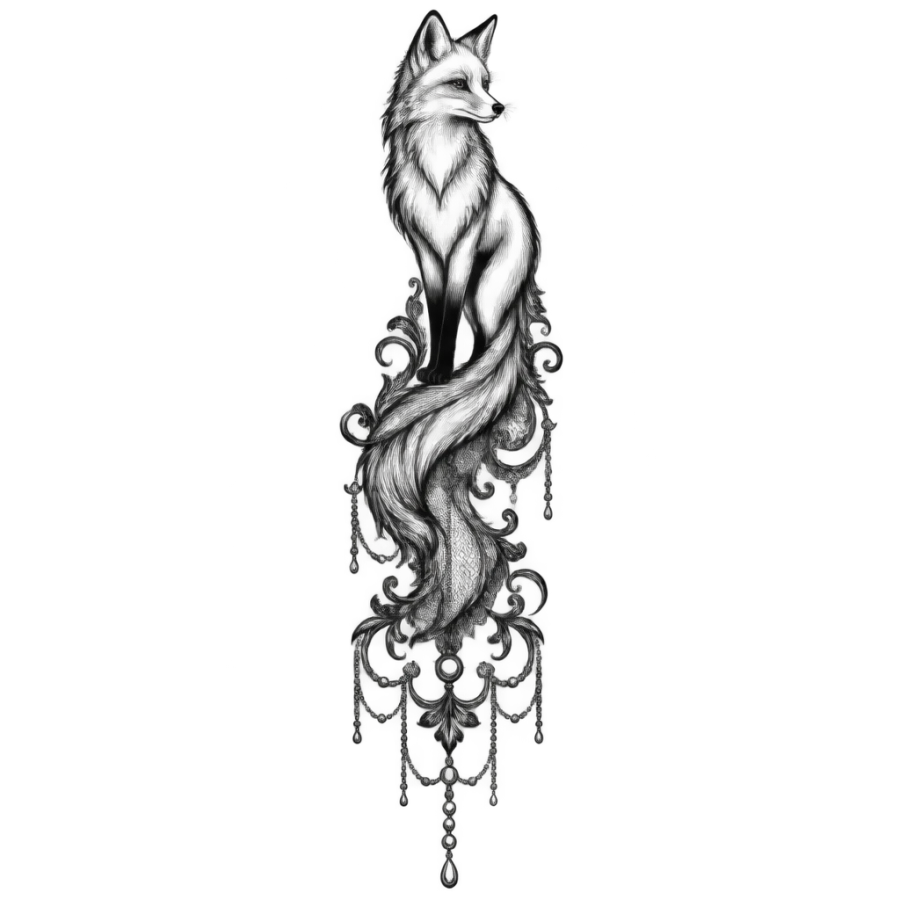
A standing fox with an ornamental lace tail and hanging pearls
Use this prompt
A walking fox drawn in one continuous single line
Use this prompt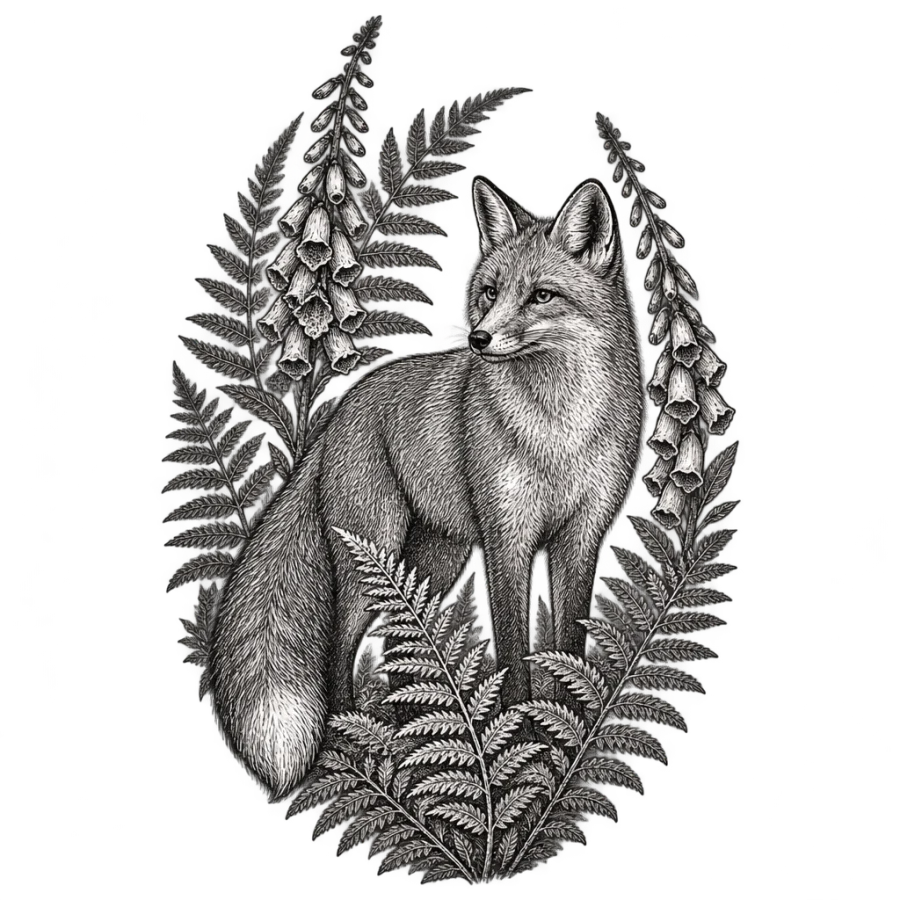
A fox standing among ferns and foxglove, engraved hatching style
Use this prompt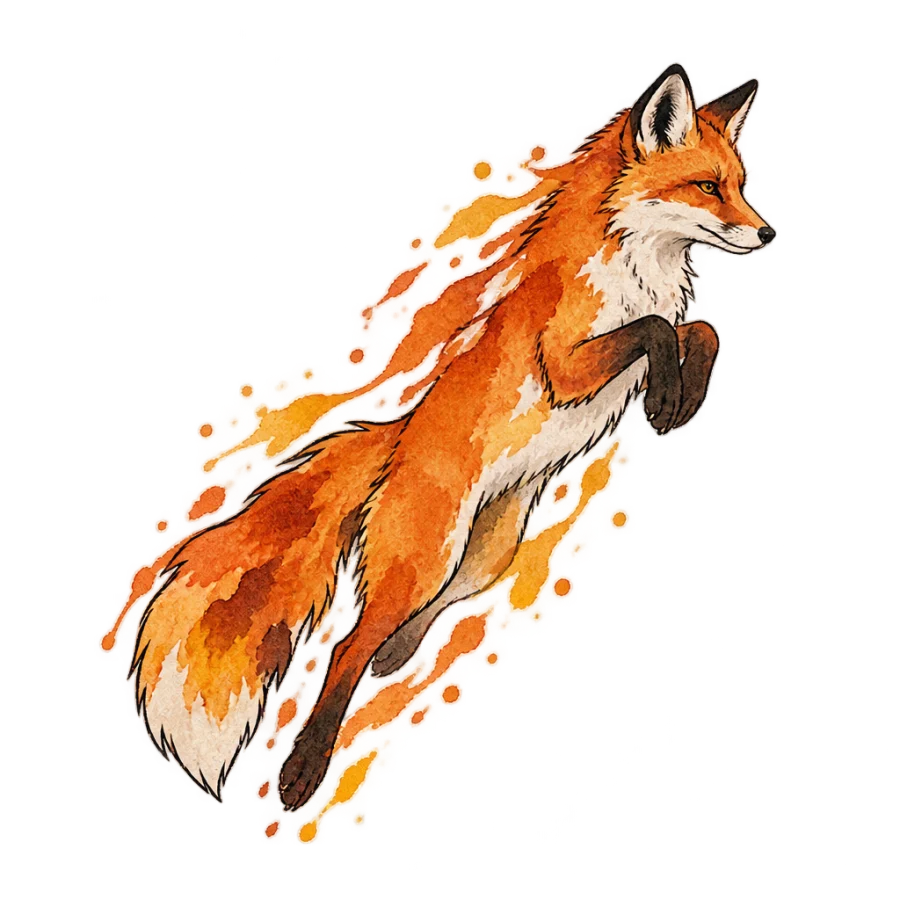
A leaping fox with loose rust orange watercolour washes behind it
Use this prompt
A sleeping fox cut out of a solid black full moon
Use this promptDescribe an idea of your own and get four designs back in about 20 seconds.
Open the generator
Questions people ask
What does a fox tattoo mean?
In Europe and North America it usually means cleverness and independence, from the fox's role in Aesop and in the medieval Reynard stories. In Japan a kitsune is a fox messenger of Inari, a deity of rice and prosperity, and the number of tails stands for the fox's age. Korean gumiho and Chinese huli jing are shapeshifters with a darker reputation.
How many tails should a kitsune tattoo have?
Folklore gives older and more powerful foxes more tails, with nine at the top of the scale, so nine is the common request. One, five and seven all appear. More tails need more space, and a nine tailed fox realistically wants 30 cm or more before the tails stop reading as a single mass.
Why does my fox tattoo look like a dog?
Almost always the markings. Without the white chin, the black ear backs, the dark stockings and the white tail tip, a fox silhouette is just a canid. Ask the artist to keep the chin as unshaded skin and to draw the muzzle narrower and the tail fuller than the reference photo looks.
Do orange fox tattoos fade?
Yes, faster than black or blue. Orange and yellow are the least stable pigments in common use, and sun exposure is the main driver. A black and grey fox with a thin orange glaze holds up better than a fully saturated colour one, and daily SPF 30 on a healed tattoo makes a visible difference by year ten.
How small can a fox tattoo be?
About 6 cm for a head, and even then the ear tips and the muzzle have to be simplified. A full body fox needs 14 cm because the tail takes nearly half the composition. Below 5 cm ask for a silhouette or a simple line fox instead of a shrunken version of a detailed drawing.