Jellyfish tattoo ideas, designs and meaning
A jellyfish tattoo is a translucency problem, because the animal is made almost entirely of edges you can see through and a tattoo is made of ink.
- A jellyfish has no brain, no heart and no bones, and is roughly ninety five percent water.
- Turritopsis dohrnii can reverse from its adult medusa form back to a polyp, which is why it is called the immortal jellyfish.
- The four horseshoe shapes inside a moon jelly are its gonads, visible through the clear bell.
- A lion's mane jellyfish can trail tentacles several meters long.
- Pain level5 / 10 along the spine
- Healing2 to 3 weeks on the surface
- Typical size12 to 30 cm (5 to 12 in)
- Studio cost$250 to $900
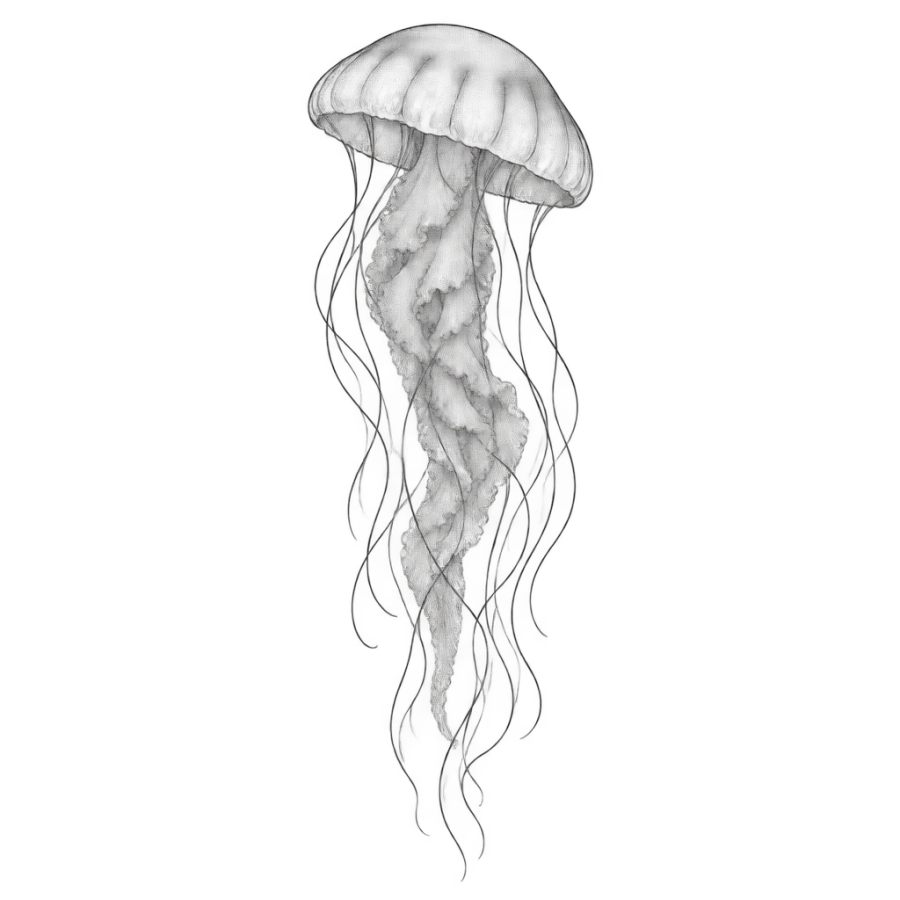
Most jellyfish tattoos fail in the tentacles. The animal trails threads of different lengths that drift and curl, and a drawing with fifteen evenly spaced parallel lines reads as a mop. Three to five strong tentacles at full line weight, each curling differently, with finer ones only suggested behind them, looks far more like the animal and survives a decade.
The bell is the other half. Skin shows through a real jellyfish, so the design has to use your skin: a thin rim of shading at the dome, a few radial lines, and the inside left open. Artists who pack the bell with grey wash lose the whole effect and end up with a mushroom.
What a jellyfish tattoo usually means
People choose it for drift and for survival, and the two readings sit oddly together. Drift is the romantic one: an animal with no steering, carried by water, chosen by people who have just left a job, a city or a marriage. Survival is the practical one, often after a long illness or a hospital stretch, and the animal earns it by having none of the hardware we assume is required to be alive.
A smaller group gets jellyfish for a place. Moon jellies in a particular bay, the sea nettles at an aquarium someone visited as a child, a dive site. Those are usually better tattoos, because there is a species to draw instead of a generic bell.
Pick the species, then the style
The moon jelly is the one most people picture and the hardest to tattoo, because it is almost entirely clear and its tentacles are too short to give you a composition. A sea nettle gives you long trailing oral arms that can run down a spine or a calf, and its bell has enough tone to shade. The styles that handle translucency are dotwork, fine line with open interiors, and watercolor where the artist lets color sit outside the line.
Black and grey realism is possible and expensive. It wants 20 cm at minimum, and the artist has to build the bell almost entirely out of what they leave blank, so ask to see healed photographs rather than fresh ones before you book.
The four jellyfish people usually want
- Moon jelly, a flat clear bell with four horseshoe shapes inside and a fringe of very short tentacles
- Pacific sea nettle, a golden brown bell with long frilled arms, the easiest of them to draw well
- Lion's mane, a huge ruffled bell with a dense mass of hair fine tentacles, needs 25 cm or more
- Box jelly, a nearly cubic bell with four tentacle bundles at the corners, very graphic and good for blackwork
Size, tentacles and what disappears first
Fine tentacles are the first casualty of healing and the first casualty of time. A line thinner than the artist's standard liner weight either drops out in the first three weeks or spreads into a soft grey hair over ten years. The rule that works is simple: every tentacle you can see should be drawn at full weight with a taper, and anything finer should be implied with a few dots rather than drawn as a line.
| Size | What the design can carry |
|---|---|
| 5 to 7 cm (2 to 3 in) | Bell outline and three or four thick tentacles |
| 12 to 15 cm (5 to 6 in) | Radial lines in the bell, varied tentacle lengths, light stipple |
| 20 to 25 cm (8 to 10 in) | Frilled arms, layered tentacles, a readable translucent bell |
| 30 cm and up (12 in) | Realism, several animals, water texture around them |
Placement, color and the ink questions worth asking
The shape is a dome with a long trail, which fits vertical runs: the spine, the back of the upper arm, the outer calf, the side of the ribs, the back of the thigh. The spine is the most common request and it works, because the bell sits between the shoulder blades and the tentacles follow the vertebrae down. Ribs hurt more and move with every breath, so fine tentacle work there blurs sooner.
Blues, teals and purples are what people want and they are among the less stable pigments, so a jellyfish built on color alone drifts toward grey. In the European Union, restrictions that took effect in January 2022 and January 2023 removed some common blue and green pigments from tattoo ink, so formulations there have changed and your artist can tell you what they now use.
12 jellyfish tattoo designs, with the prompt behind each one
Every design below came out of AI Tattoo Lab. Tap one to load its prompt into the generator, then change a word and make it yours.
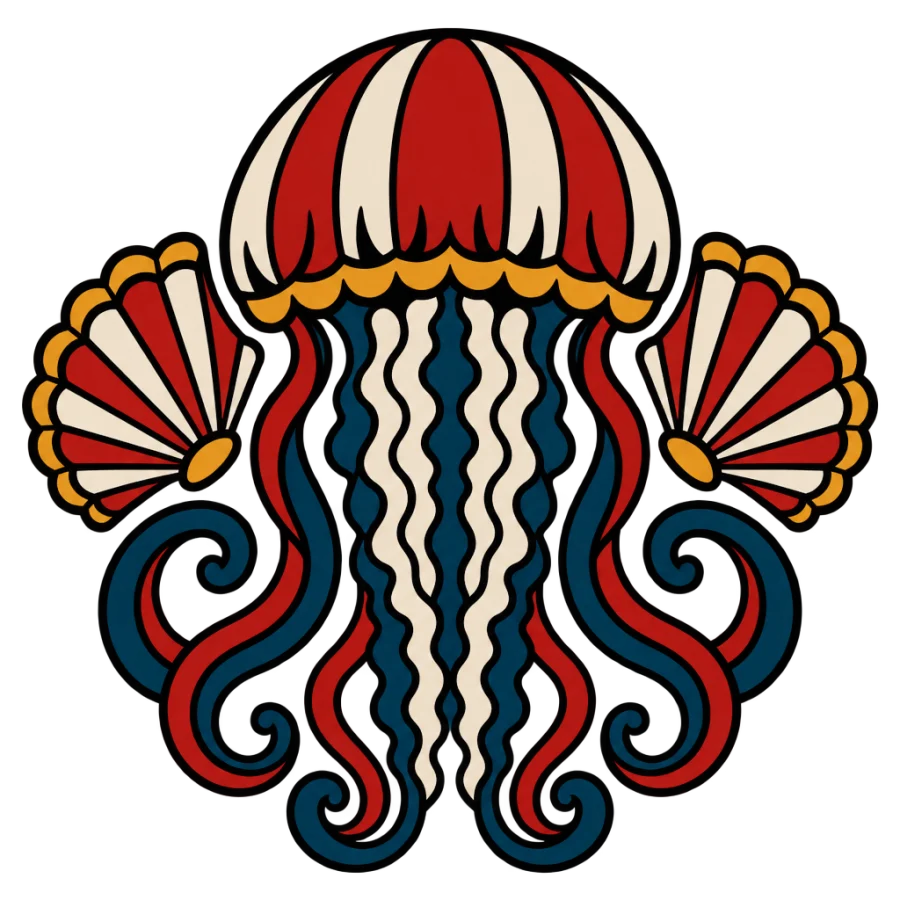
Bold jellyfish with curling tentacles and two shells, traditional flash
Use this prompt
Solid black jellyfish silhouette with white gaps between the tentacles
Use this prompt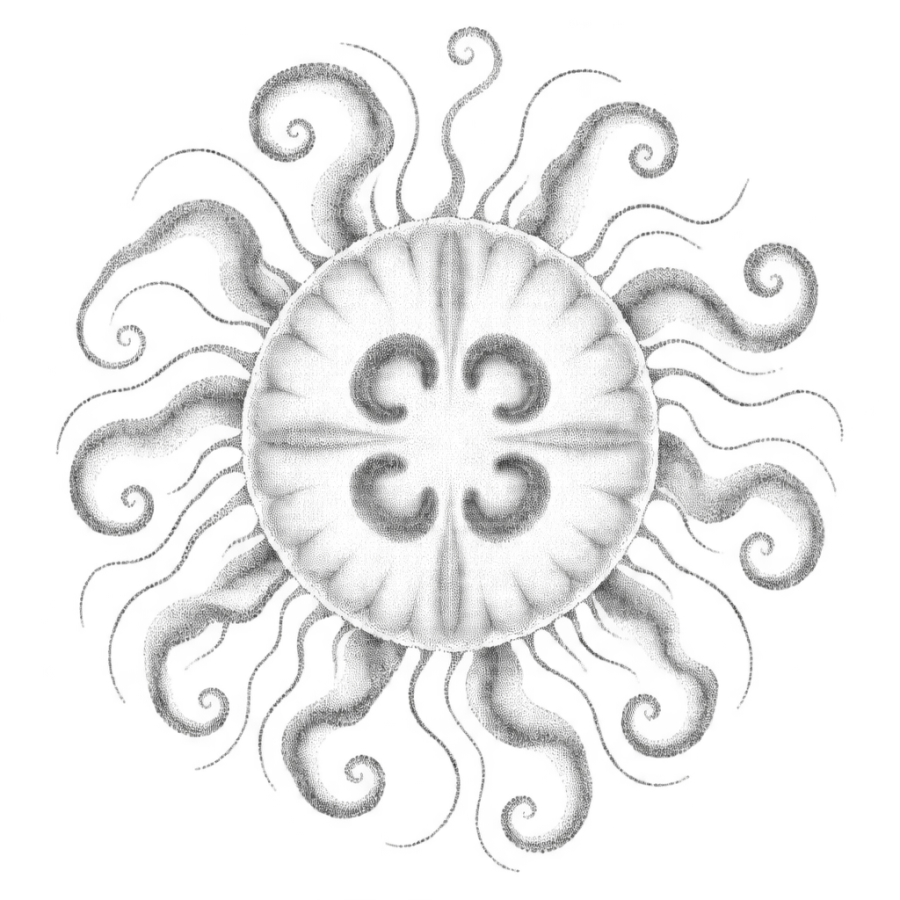
A jellyfish seen from directly below as a circle, dotwork only
Use this prompt
A geometric jellyfish made of arcs and straight ray tentacles
Use this prompt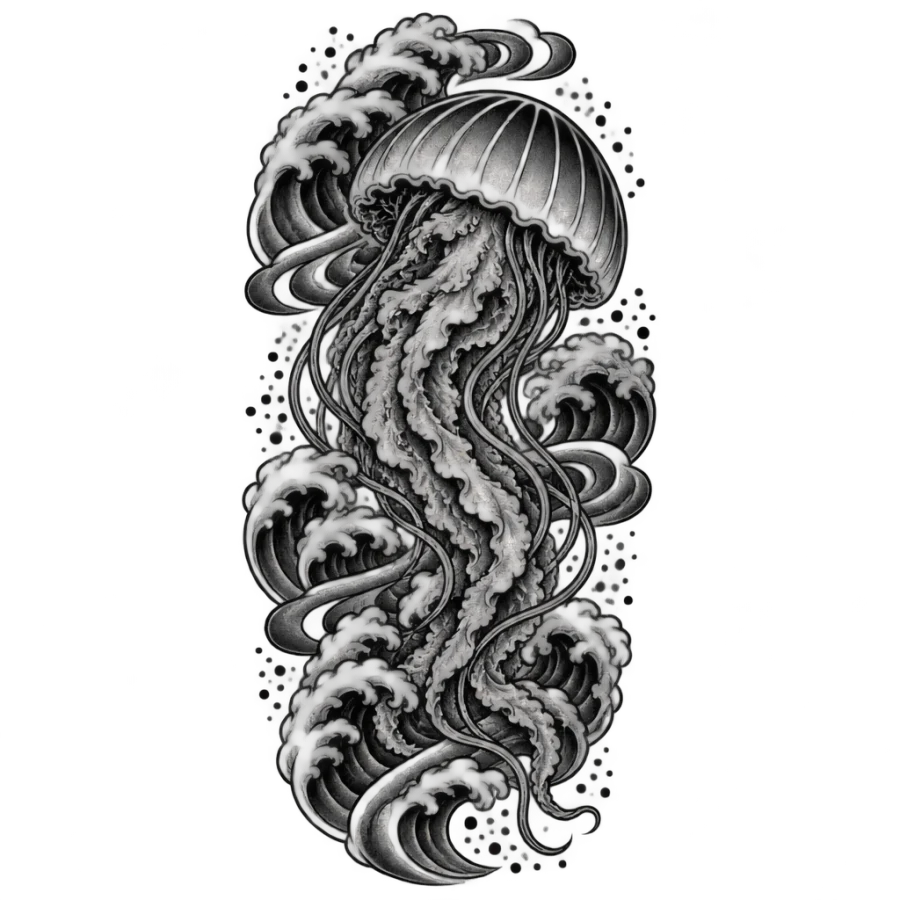
A jellyfish drifting through curling Japanese waves, bold irezumi style
Use this prompt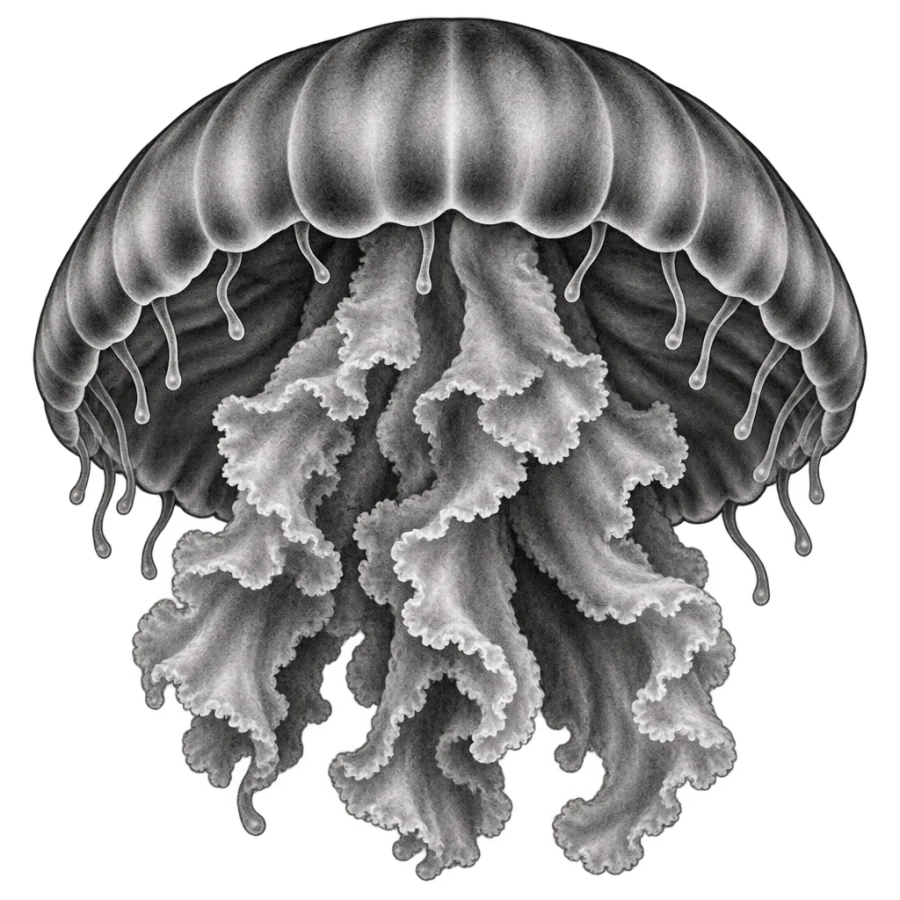
Close up of a jellyfish bell underside, soft black and grey shading
Use this prompt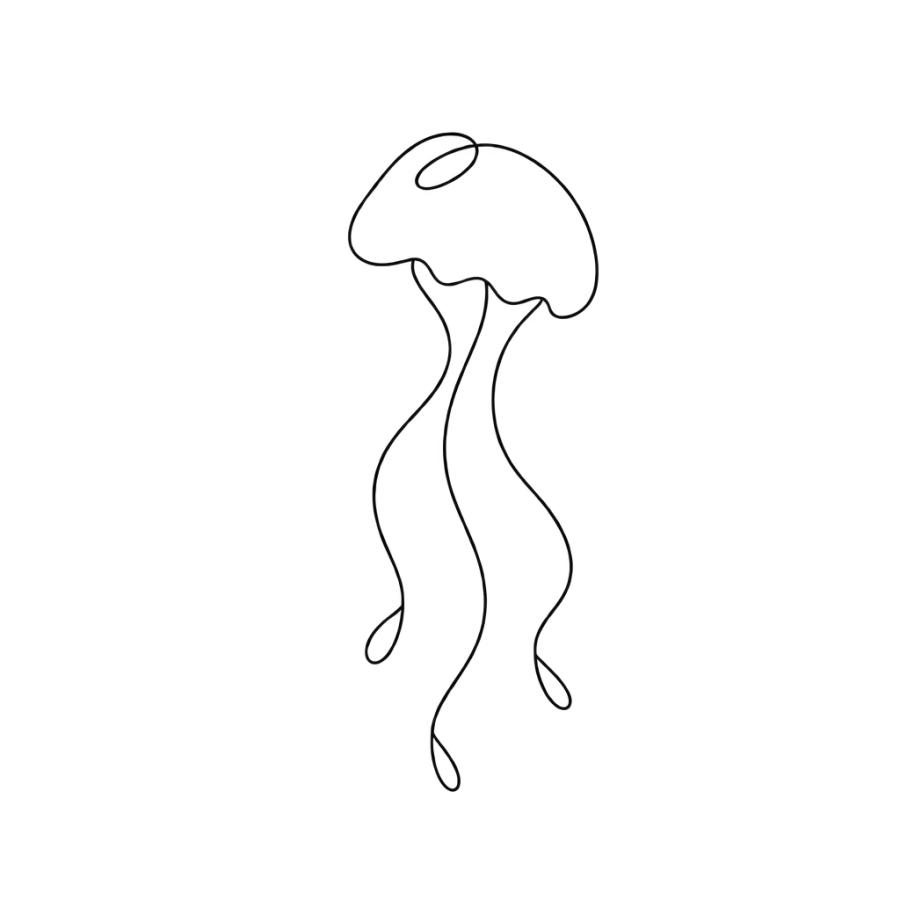
A tiny jellyfish drawn in one continuous unbroken line
Use this prompt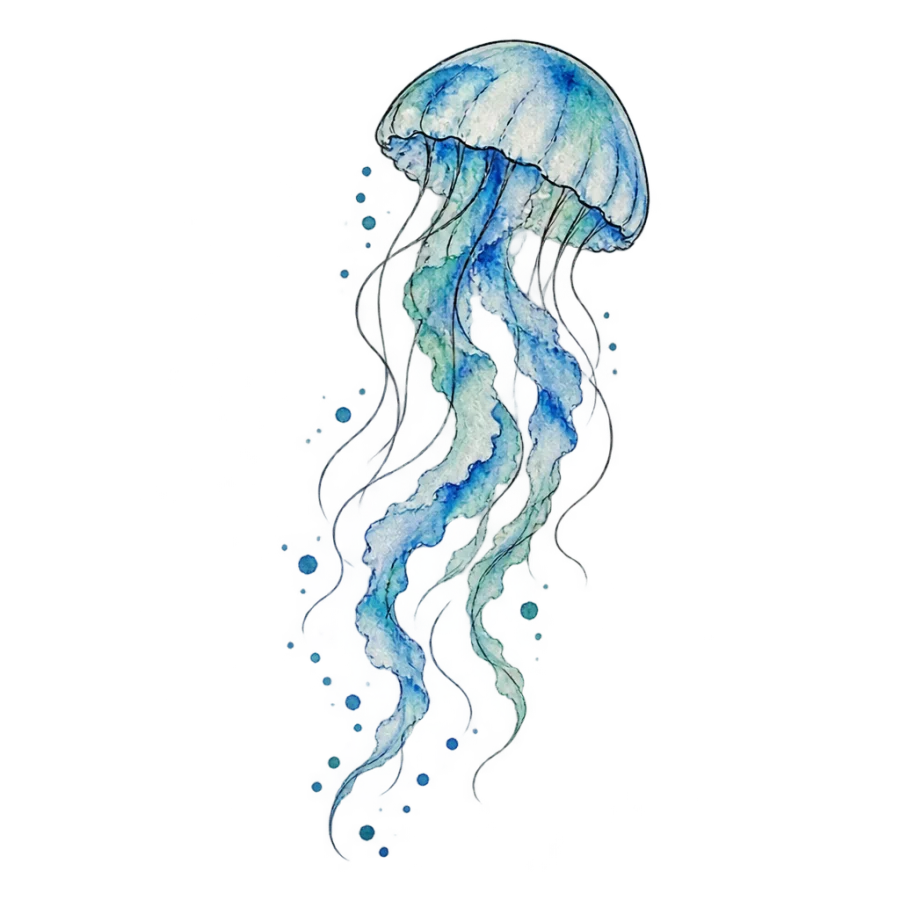
A jellyfish rising in loose watercolor washes with splatter trails
Use this prompt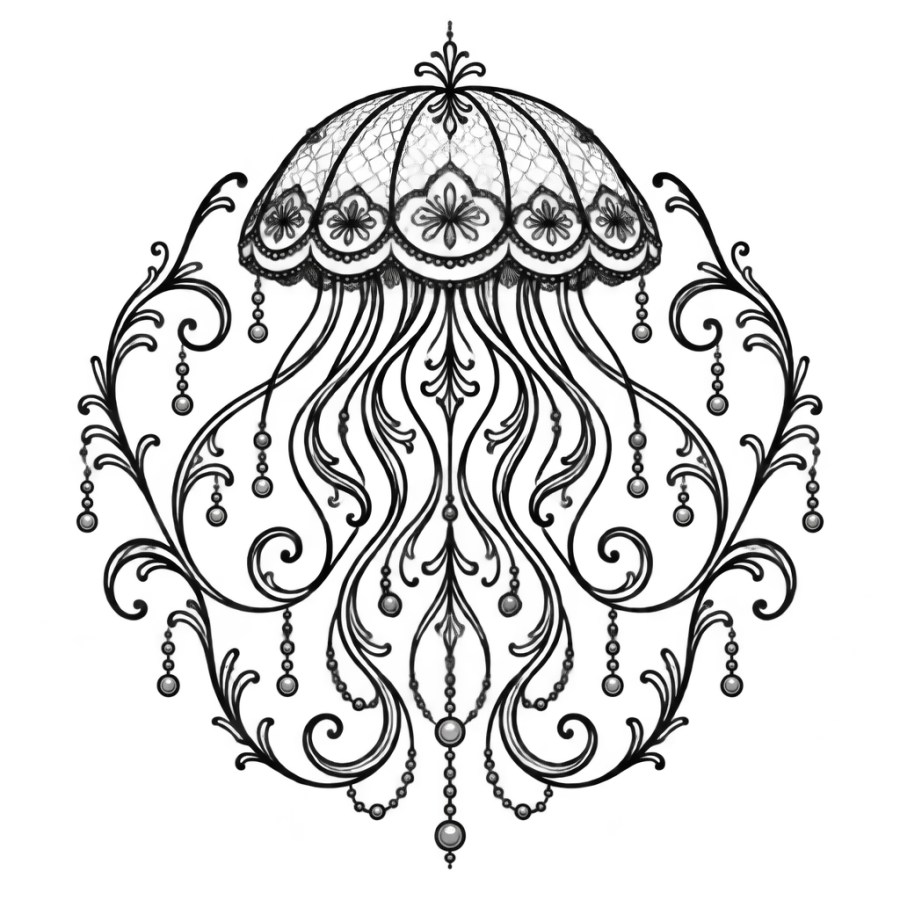
A jellyfish with lace bell and filigree tentacles strung with pearls
Use this prompt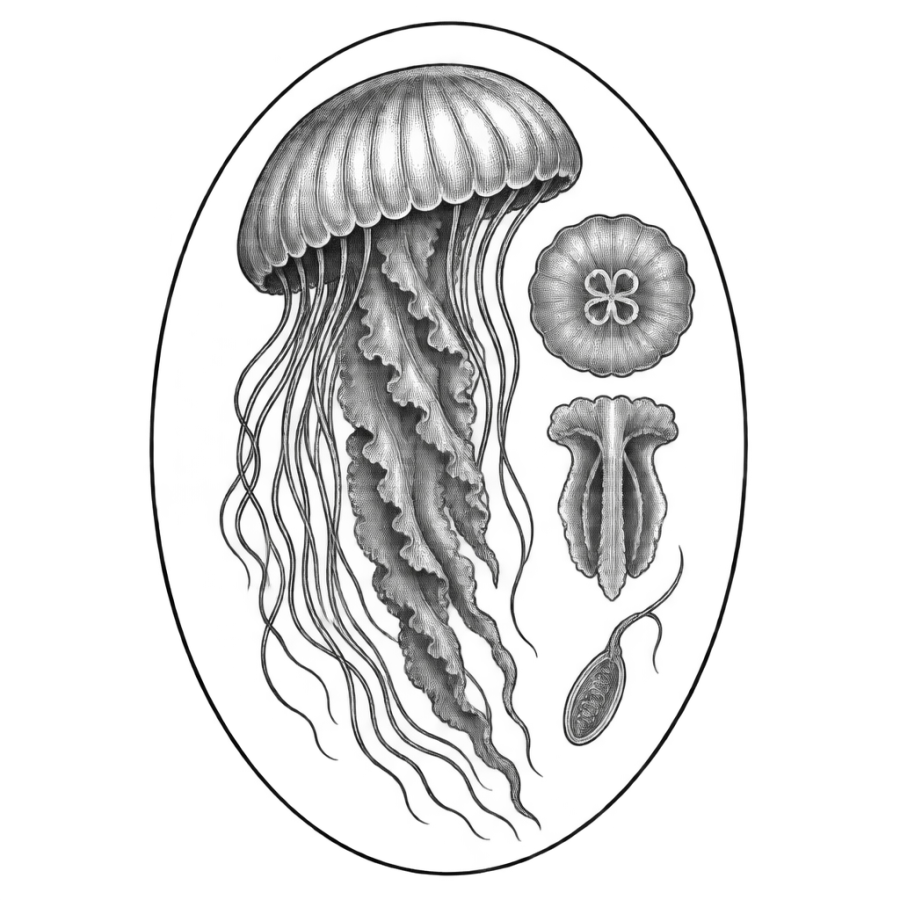
A jellyfish as an old natural history engraving plate with hatching
Use this prompt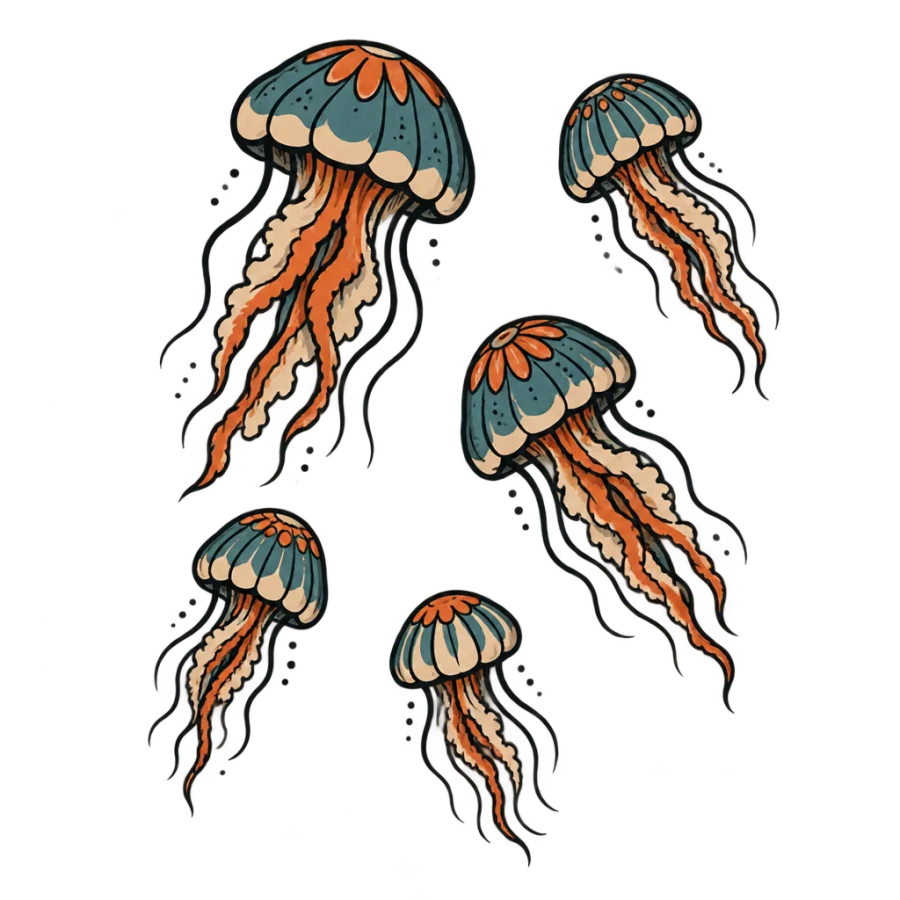
Five small jellyfish drifting at different heights, neo traditional
Use this promptDescribe an idea of your own and get four designs back in about 20 seconds.
Open the generator
Questions people ask
What does a jellyfish tattoo mean?
Usually drift, or survival. There is no old tradition behind it, so the meaning is whatever the wearer brings. The survival reading has a basis in the animal: a jellyfish has no brain, heart or bones and is about ninety five percent water, and one species can revert from its adult form back to a polyp.
How big should a jellyfish tattoo be?
At least 12 cm if you want varied tentacle lengths and any detail inside the bell. Realism wants 20 to 30 cm. A 5 to 7 cm version works only with a plain bell outline and three or four thick tentacles. Fine hair tentacles at small sizes either drop out while healing or blur within ten years.
Where do jellyfish tattoos look best?
Anywhere long and vertical. The spine is the most popular and the most suited, with the bell between the shoulder blades and the tentacles following the vertebrae. The back of the upper arm, the outer calf and the back of the thigh all work. Ribs look good and blur faster because the skin there moves constantly.
Do jellyfish tattoos fade?
The color ones do. Blues, teals and purples hold less well than black, so a jellyfish built only from color loses contrast over ten to fifteen years. Dotwork and blackwork versions hold almost indefinitely. Sunscreen once healed makes the biggest difference, and saturated color beats a pale wash every time.
Can I bring an AI jellyfish design to a tattoo artist?
Yes, as a reference. Generate it, download the stencil, then take it to a licensed artist who will thicken the tentacles so they survive healing, open up the bell so your skin shows through, and lay the shape along your spine or arm properly. A generator cannot judge how fine a line your skin will hold.