Raven tattoo meaning, ideas and designs
A raven tattoo asks an artist to draw a solid black bird without losing the feathers, and that single conflict decides every other choice.
- Pain level5 / 10 on the forearm
- Healing2 to 3 weeks on the surface
- Typical size10 to 30 cm (4 to 12 in)
- Studio cost$250 to $1,200
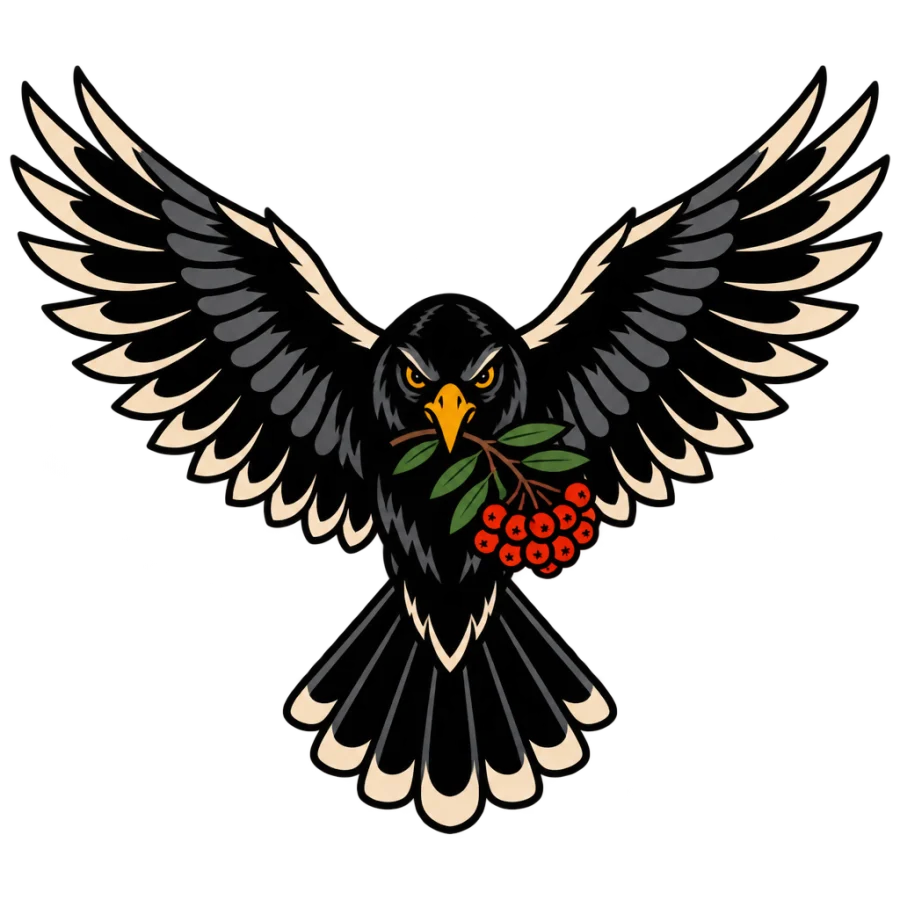
The first thing to get right is which bird. A common raven is large, with a heavy curved bill, shaggy throat feathers and a wedge shaped tail in flight. A crow is slimmer, with a straighter bill and a squared tail. Those details are what a viewer reads, so an artist who is not told which one you want will draw whichever they drew last.
The second thing is the black. A raven filled in solid is a silhouette, and silhouettes are honest and they last. A raven with feather structure needs the gaps between the feather groups to stay open, which means leaving bare skin inside a dark bird. Those gaps are the first thing to close up.
Where the raven meaning comes from
Huginn and Muninn are named in the Poetic Edda and in Snorri's Prose Edda, sitting on Odin's shoulders and flying out each day to bring back what they have seen. Their names translate as thought and memory, and Odin carries raven names of his own. That pairing is why ravens are so often tattooed in twos, one on each shoulder or one on each side of a chest piece.
Poe's poem is the other source and it does most of the modern work. A raven arrives at midnight, perches, and answers every question with the same word. People tattoo it for grief, for a memory that will not go, and for the mood rather than the story. If the poem is your reason, a perching pose with a single word in lettering is the version that reads clearly.
Readings and the design each one points at
- Thought and memory, from Odin's two ravens, usually drawn as a pair
- Grief that will not leave, from Poe, usually a single perching bird
- Battle and the Morrigan, from Irish texts, often with Celtic knotwork
- Intelligence and problem solving, which is a modern reading from the actual bird
Solid black, or feathers
Everything on this page comes back to one choice. A solid black raven is a shape, it reads from across a room, and it will look the same in thirty years. A feathered raven has internal structure, looks alive, and depends on bare skin gaps that are the first casualty of spreading ink. Most artists who do a lot of birds will push you toward solid black at small sizes and feathers above 15 cm, which is sound advice.
If you want feathers, the detail to insist on is spacing. Any two lines inside the bird need at least 2 mm between them, and feather groups should be drawn as groups with real black separating the rows rather than as individual feathers. A grey wash raven is the third option: black only in the primaries and the bill, soft grey through the body. It looks best in the first year and it is the one most likely to want a touch up at year eight.
| Treatment | Smallest size | Reads at distance | Ten year outlook |
|---|---|---|---|
| Solid black silhouette | 4 cm | Yes | Unchanged |
| Silhouette with negative space feather edges | 8 cm | Yes | Edges soften, shape holds |
| Black and grey with feather groups | 15 cm | Partly | Loses the lightest greys |
| Full grey wash realism | 20 cm | No | Likely touch up by year eight |
| Etching style hatched line work | 12 cm | Partly | Darkens overall as lines spread |
Pose, size and placement
A perching raven in three quarter view with the bill in profile is the most legible pose, because the bill and the tail both show. It is a compact upright shape, which suits the outer forearm, the bicep, the back of the calf and the shoulder blade. A flying raven with wings open is wide, so it goes across the sternum, under the collarbones, over a shoulder blade or along the ribs.
A raven's head alone, bill open, works well at 8 to 10 cm on the inner forearm and skips the feather problem entirely. Two ravens facing each other across the sternum or on either side of the spine is the Norse layout, and it needs both birds drawn at the same weight or the pair looks accidental. A row of three small flying ravens down the spine is the other common request, and it works because the shape repeats.
Styles, cost and what goes wrong
Blackwork is the most reliable and the cheapest. Etching style, built from parallel hatching like an old engraving, suits the subject and comes with a known fate: the lines spread, the bird goes darker, and the composition still holds. Viking and Celtic styles bring knotwork, which works well with a pair. Black and grey realism gives you the best looking raven in year one and the most maintenance after that.
A 10 cm blackwork raven is usually $150 to $300. A 20 cm realistic perching raven with feather detail runs $500 to $1,000 in one long sitting. The failures are consistent: hairline feather lines inside a dark body, white ink added to the bill and the eye that yellows within three years, and a bird drawn so generically that nobody can tell whether it is a raven or a crow.
12 raven tattoo designs, with the prompt behind each one
Every design below came out of AI Tattoo Lab. Tap one to load its prompt into the generator, then change a word and make it yours.
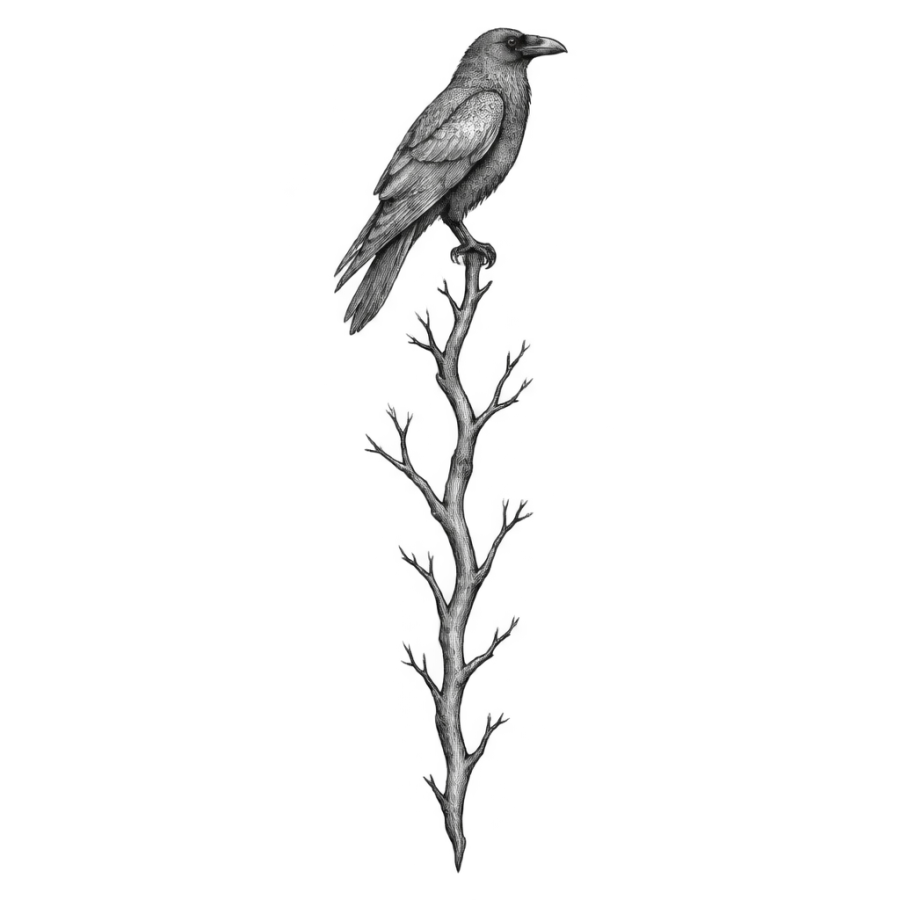
A raven perched on a tall bare branch, fine line, light shading
Use this prompt
A raven standing at rest as a solid black silhouette
Use this prompt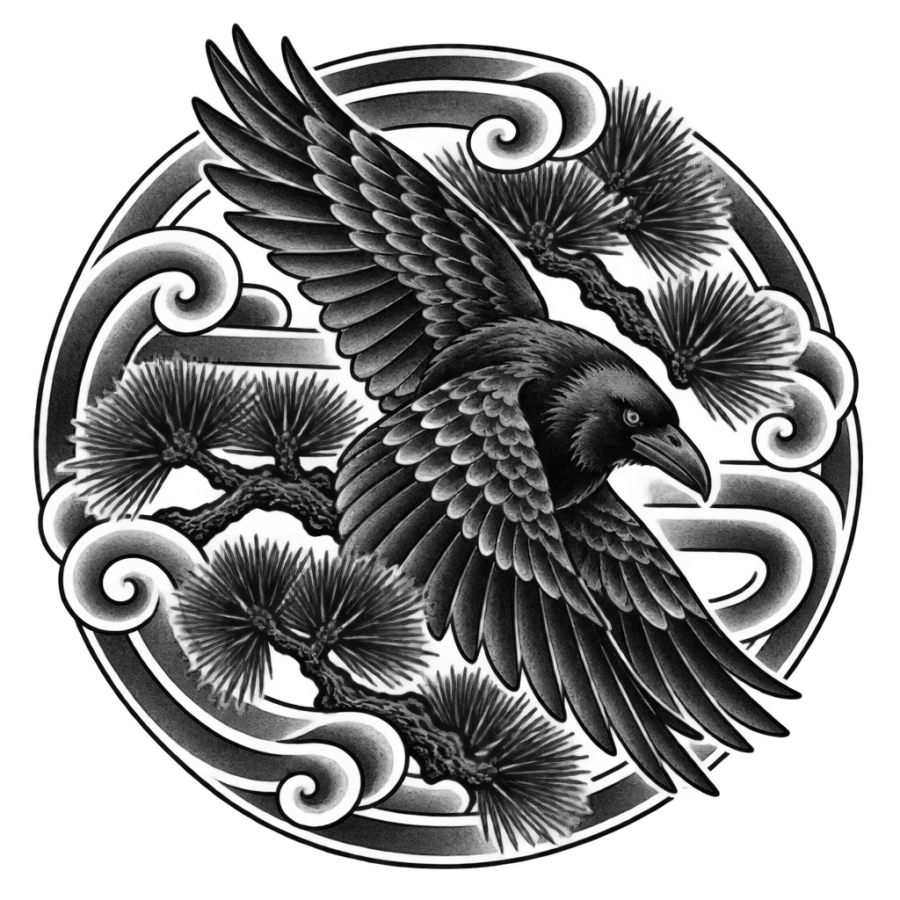
A raven flying through pine branches with Japanese wind bars around it
Use this prompt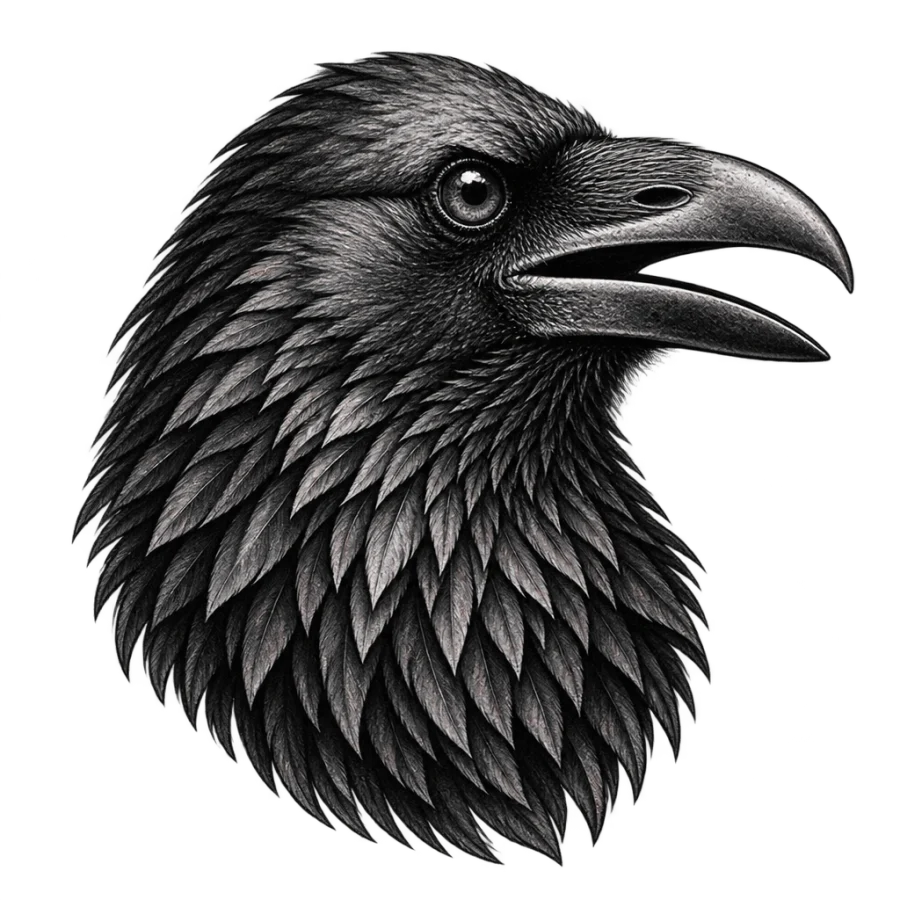
Close up raven head in profile, black and grey realism, soft shading
Use this prompt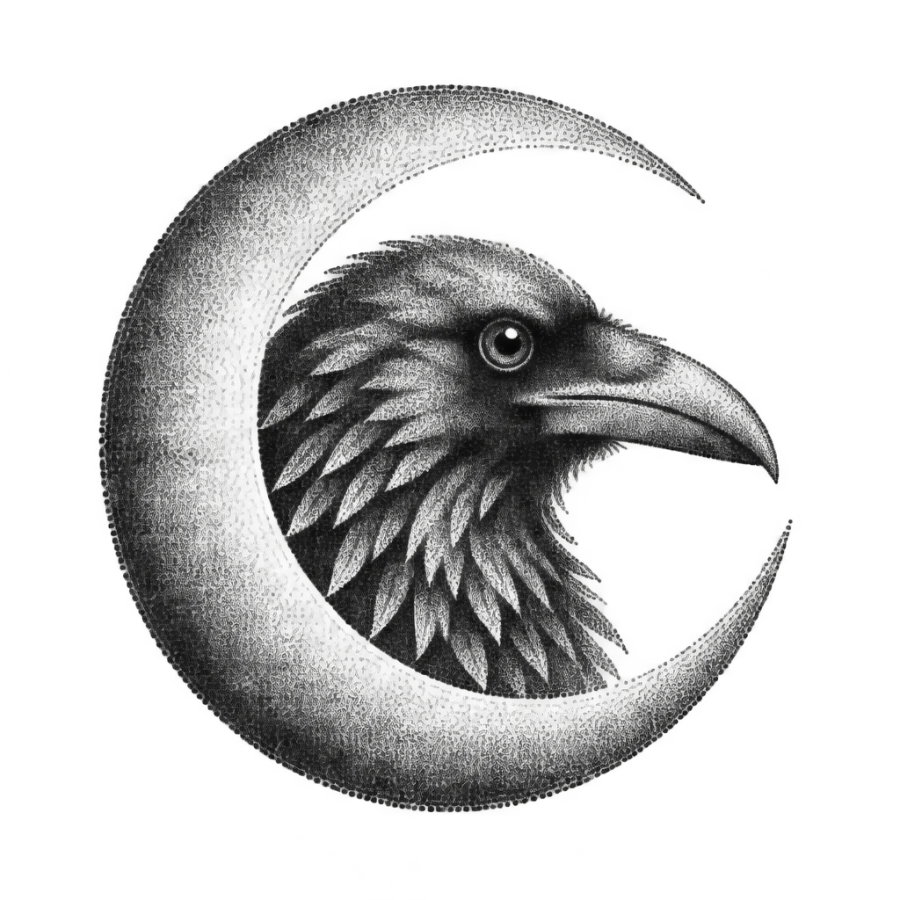
A raven head inside a crescent moon, dotwork stippling, no outlines
Use this prompt
A geometric raven made of angular facets inside a thin hexagon
Use this prompt
Two ravens facing each other with ornamental lace scrollwork tails
Use this prompt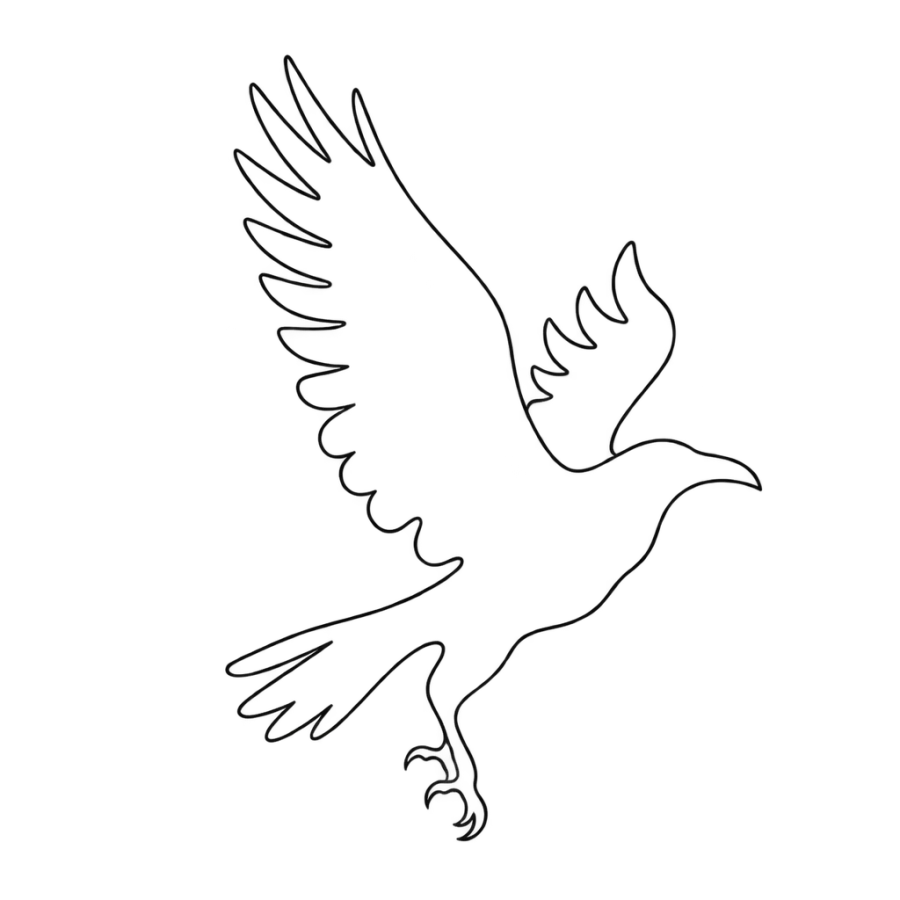
A raven taking off drawn in one continuous single line
Use this prompt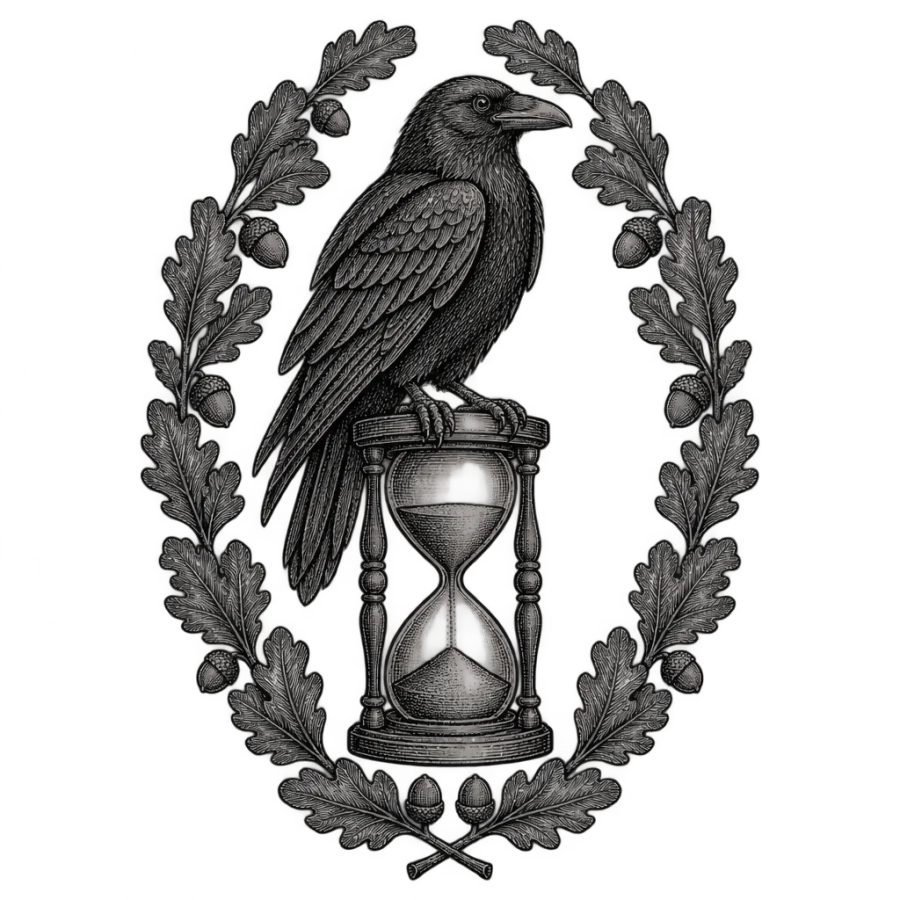
A raven perched on an hourglass framed by oak leaves, engraved hatching
Use this prompt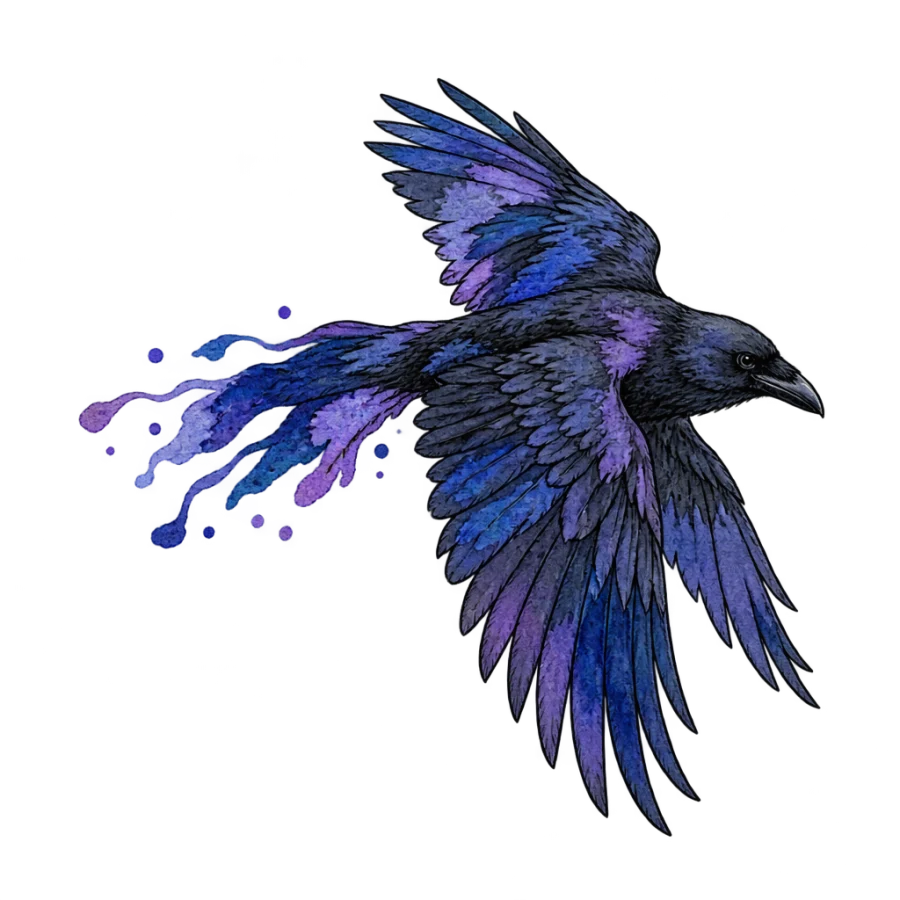
A gliding raven with loose indigo and violet watercolour washes
Use this prompt
A raven cut out of a solid black full moon in negative space
Use this promptDescribe an idea of your own and get four designs back in about 20 seconds.
Open the generator
Questions people ask
What does a raven tattoo mean?
Thought and memory, from Odin's two ravens Huginn and Muninn in the Norse sources, or grief that will not leave, from Poe's poem of 1845. Irish texts link ravens to the Morrigan on battlefields. Plenty of people also choose the bird for its intelligence, which is a modern reading.
What is the difference between a raven and a crow tattoo?
The bill and the tail. A common raven has a heavy bill curved along the top, shaggy throat feathers, and a wedge shaped tail in flight. A crow has a slimmer straight bill and a square tail. Say which one you want, because those two details are what a viewer actually reads.
How small can a raven tattoo be?
About 4 cm as a solid black silhouette, which is the version that holds up best anyway. Negative space feather edges need 8 cm. Real feather groups want 15 cm or more, and grey wash realism needs 20 cm. A raven's head alone works at 8 to 10 cm and avoids the feather problem.
Where do raven tattoos look best?
A perching bird is upright and compact, so the outer forearm, the bicep, the back of the calf and the shoulder blade all suit it. A flying raven is wide and goes across the sternum, under the collarbones or along the ribs. A pair works on either side of the spine or the chest.
Do raven tattoos age well?
Solid black ones barely change. The problem is always the lines inside a dark bird: feather detail drawn closer than 2 mm merges together, and white ink on the bill and the eye turns yellow in about three years. Ask for feather groups with real black between the rows instead of individual feathers.