Samurai tattoo ideas, meaning and designs
A samurai tattoo is a large piece in a specific tradition, so the first decision is which part you want: helmet, mask, or the whole figure.
- Kabuto is the helmet. The crest standing off the front of it is the maedate.
- Menpo is the face armor worn under the helmet, which is the mask most people mean.
- Japanese armor is built from small plates laced together, and the lacing is the first detail to vanish at small sizes.
- A hannya is a Noh theatre mask of a jealous female demon, not part of a samurai's armor.
- Utagawa Kuniyoshi's warrior prints of the late 1820s are the source of much of the Japanese tattoo canon.
- Pain level7 / 10 on the ribs
- Healing3 to 4 weeks per session
- Typical size25 to 60 cm (10 to 24 in)
- Studio cost$900 to $4,000
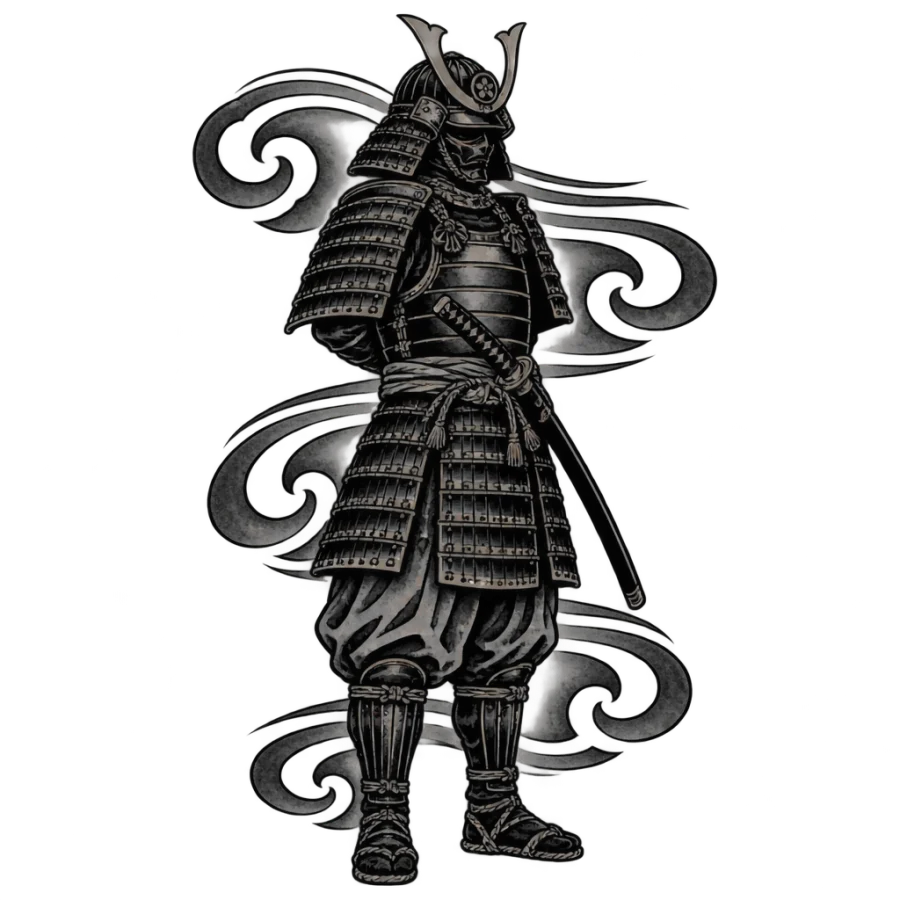
Four different tattoos go by this name. The kabuto, the helmet alone with its crest standing off the front. The menpo, the face armor, usually drawn as a mask with a moustache and a grimace. The full armored figure, standing or mid cut. And the hannya, which is a Noh demon mask rather than armor at all, and gets requested alongside the others often enough to belong in the conversation.
All four are Japanese traditional subjects, and that is the real constraint. Irezumi has its own rules about outline weight, background, how a figure is framed by wind bars and water, and where a piece stops on the body. An artist who draws Japanese work every week will put something on your arm that sits there properly. An artist who does not will hand you a very good drawing that looks pasted on.
Pick the piece before anything else
The helmet alone is the most forgiving. A kabuto is a hard shape with a strong silhouette: the bowl, the neck guard flaring out, the crest standing up off the brow. Put a skull inside it or leave it empty and it still holds together down to about 12 cm, which is why it ends up on forearms more often than any other version.
The mask comes next. A menpo at 10 to 16 cm works on a forearm or an outer calf if the artist keeps the moustache as solid black shapes instead of individual hairs. The full figure is the demanding one. Armor is hundreds of small laced plates, and below roughly 25 cm those plates turn into grey texture and the figure loses the one thing that identifies it.
The four pieces and what each one needs
- Kabuto helmet alone, 12 to 20 cm, fits a forearm or an outer calf
- Menpo mask, 10 to 16 cm, with the facial hair kept as solid shapes
- Full armored figure, 25 cm and up, realistically a half sleeve, a thigh or a back panel
- Hannya mask, 10 to 18 cm, with clear space between the horns and the teeth
Why irezumi training changes the result
Japanese tattooing frames a figure instead of floating it on bare skin. The samurai sits inside a field of background: wind bars, finger waves, clouds, and seasonal filler such as cherry blossom for spring or maple for autumn. That background does two jobs. It fills the arm so the piece reads as one object from a distance, and it hides the joins where a sleeve wraps around and meets itself.
The technical side matters as much. Japanese outlines are bold and weighted, often 9RL to 14RL, heavier on the shadow side of a shape. Black is graded in long smooth passes with large mags so the tone runs from solid to open skin without a visible step. Those are habits built over years, which is why an artist who mostly does photorealism will shade a samurai beautifully and then have nowhere to put it.
| Piece | Sittings | Hours total | Typical cost |
|---|---|---|---|
| Kabuto helmet, black and grey | 1 | 3 to 4 | $350 to $700 |
| Menpo mask with background | 1 to 2 | 4 to 7 | $500 to $1,200 |
| Half sleeve, full figure | 3 to 5 | 12 to 20 | $1,500 to $3,500 |
| Full back panel | 6 to 10 | 30 to 50 | $3,500 to $8,000 |
Size, placement and the detail that closes up
The armor lacing is the test. Each plate row is separated by a cord, and the artist needs at least 1.5 mm between those lines for them to survive ten years. A chest plate drawn 8 cm wide with twelve plate rows gives you under 1 mm per gap, so the honest answer is a bigger piece or fewer rows drawn on purpose rather than a faithful copy that turns to mud.
Placement follows the shape of the piece. A standing figure is tall and narrow and suits the outer thigh, the calf, the spine or a sleeve panel. A helmet or a mask is roughly square and suits the forearm, the shoulder or the chest. A figure mid cut is wide and diagonal, so it wants the back or the ribs, and the ribs will hurt more than anything else you have sat through.
Where the detail goes first
- Armor lacing between plate rows, which merges below about 1.5 mm of spacing
- The silk cords and tassels on the helmet, which turn into grey fuzz
- Individual hairs in a moustache or a horsehair crest
- Background clouds drawn too close to the figure's outline
Variations people ask for, and how it ages
Common requests are a samurai facing a dragon or a tiger, a helmet with a skull inside it, a masked figure holding a severed head, which is the namakubi motif and an established part of the Japanese canon, and a kneeling figure in the moment before seppuku. Any Japanese specialist will have drawn all of those before and will have opinions about where each one sits.
Japanese work ages better than most because of how it is built. Heavy outlines hold their shape, large graded black areas stay readable as they soften, and the background gives the eye something to read once the small detail has gone. What fades is the color accent work, red lacing and gold on the crest in particular, and most artists expect a color refresh somewhere around the fifteen year mark.
12 samurai tattoo designs, with the prompt behind each one
Every design below came out of AI Tattoo Lab. Tap one to load its prompt into the generator, then change a word and make it yours.
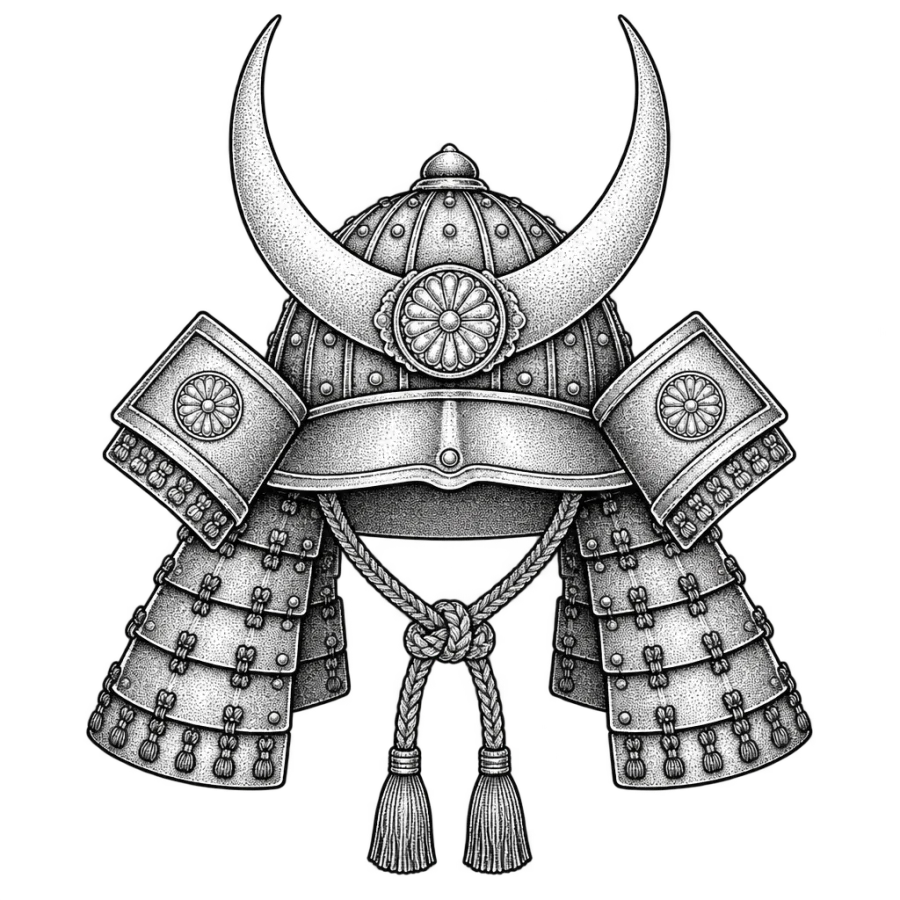
Samurai kabuto helmet with a crescent crest, fine line, front on
Use this prompt
Black samurai silhouette with a full moon cut out behind him
Use this prompt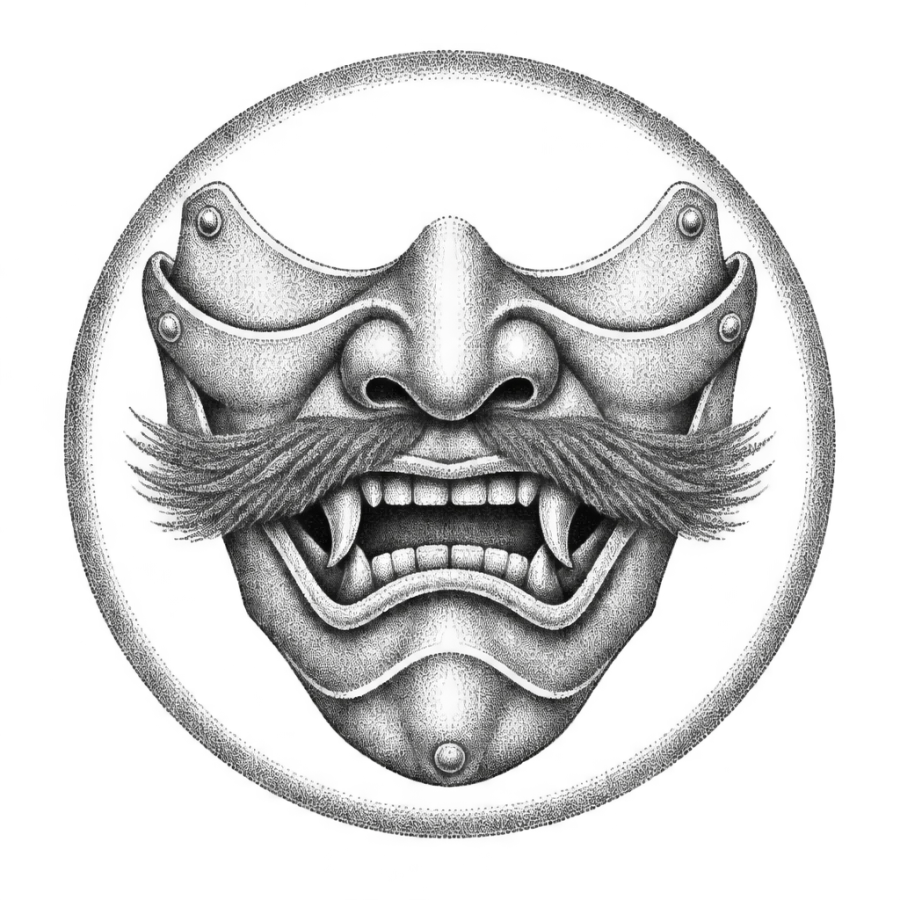
Samurai menpo face mask front on, dotwork stippling, round medallion
Use this prompt
Samurai helmet as geometric line art inside a perfect circle
Use this prompt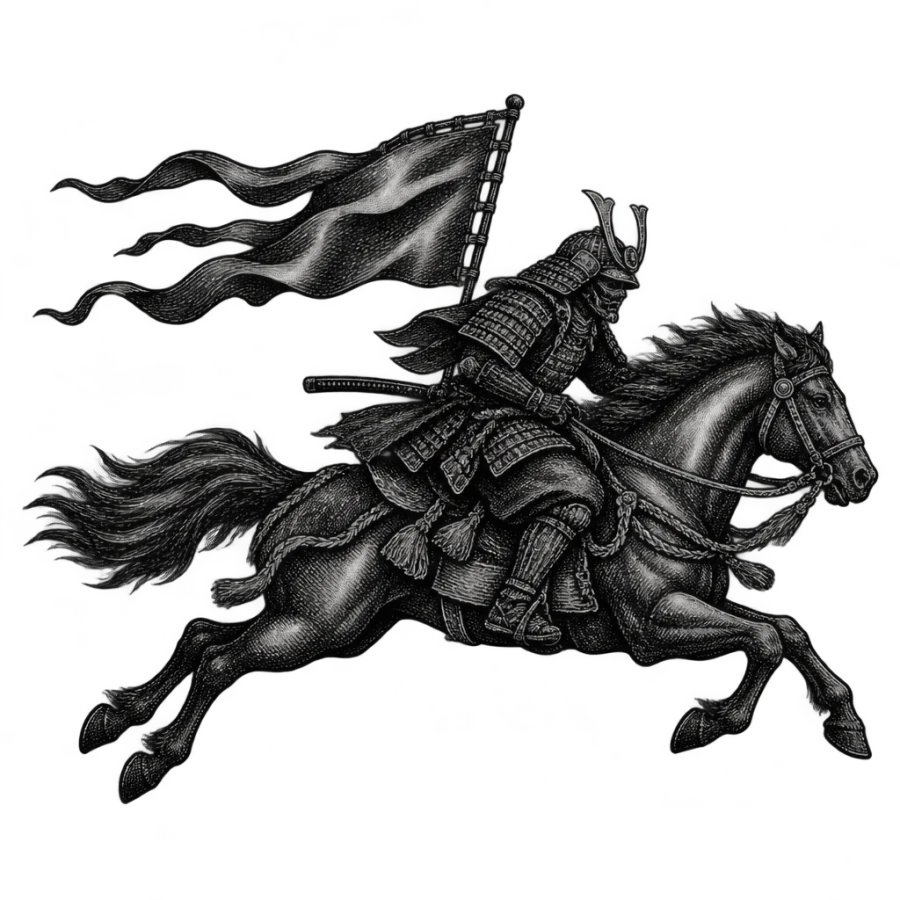
Mounted samurai galloping with a banner streaming, woodcut hatching
Use this prompt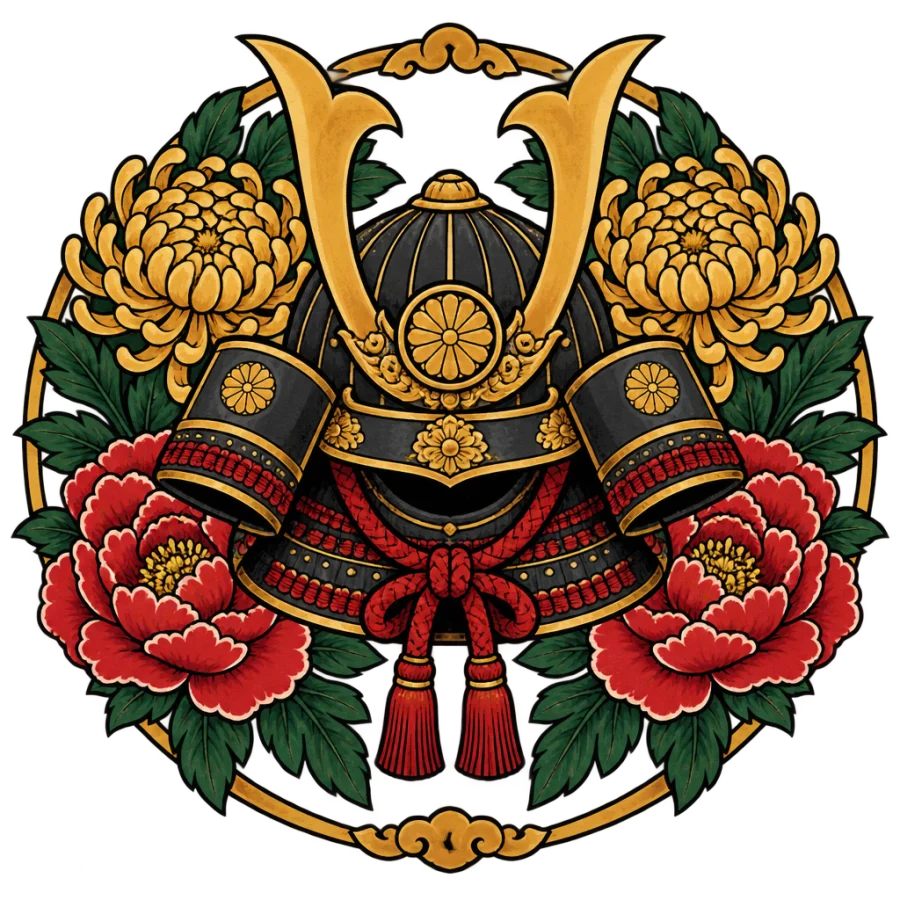
Samurai helmet ringed with chrysanthemums and peonies, neo traditional color
Use this prompt
Samurai helmet profile in one continuous single line, minimal
Use this prompt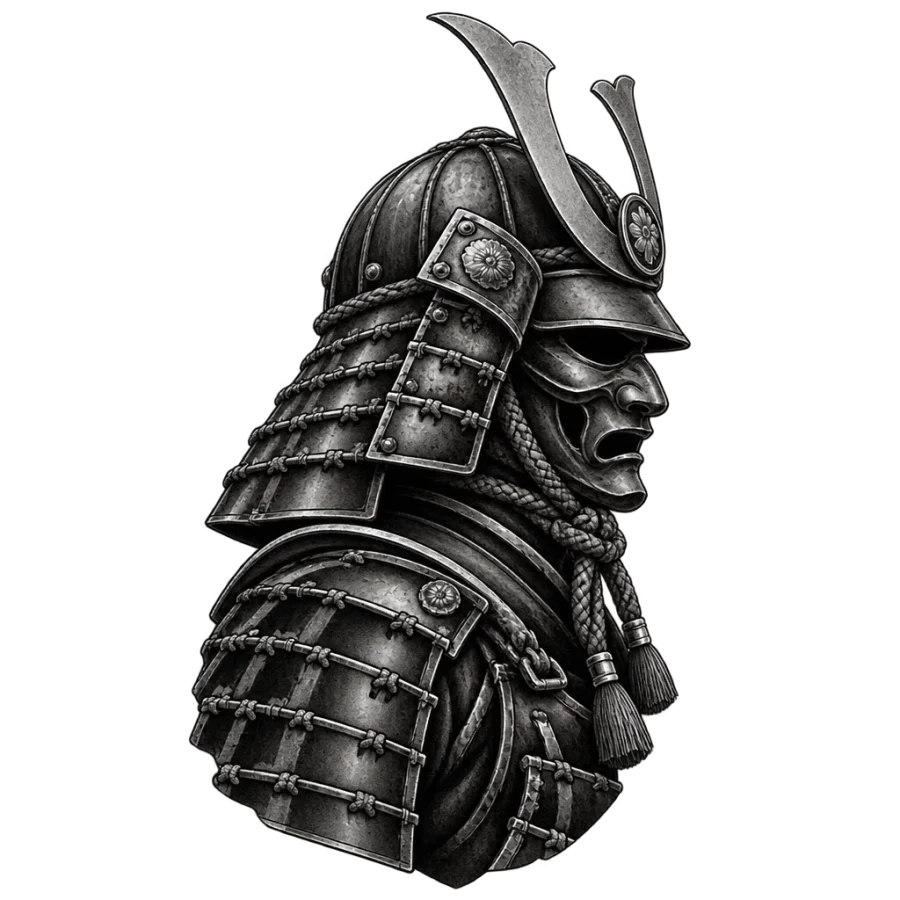
Armoured samurai in profile, black and grey realism, soft grey shading
Use this prompt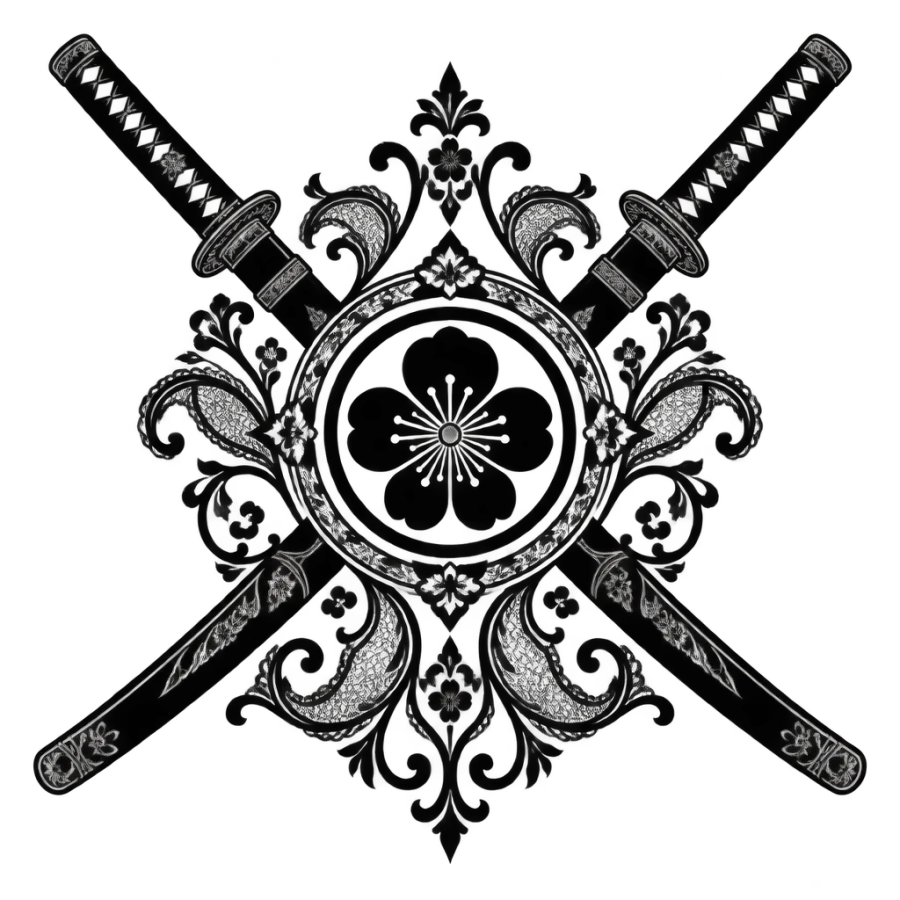
Two crossed katana behind a round crest with filigree scrollwork
Use this prompt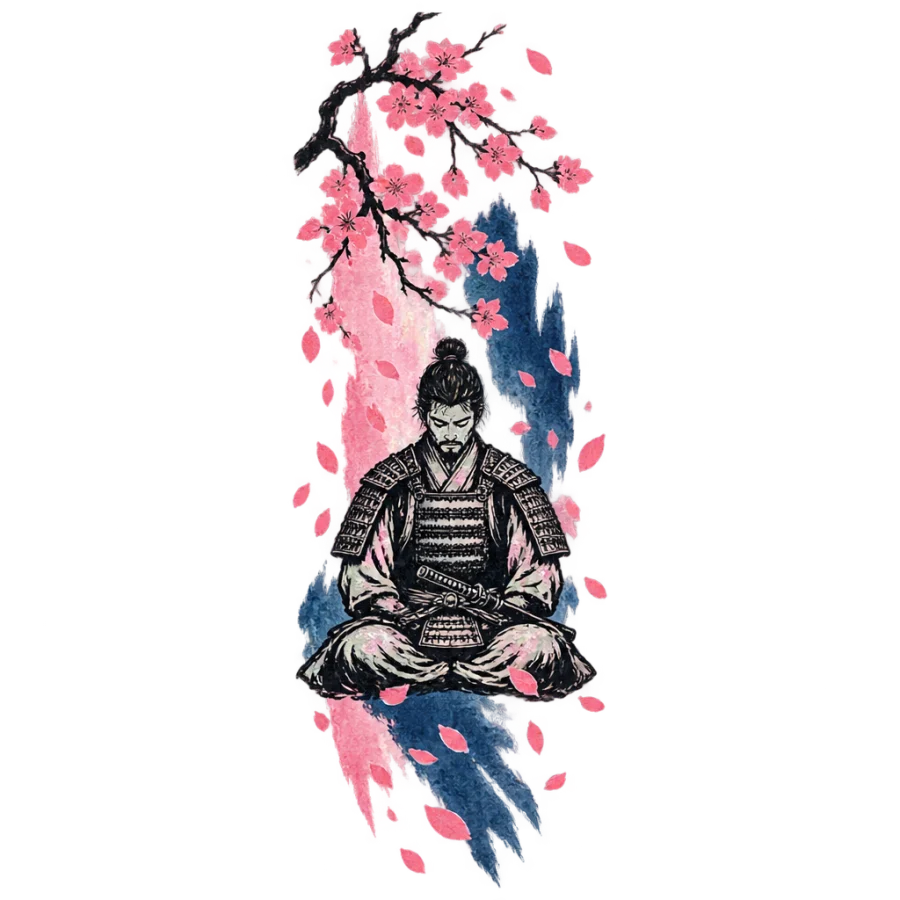
Samurai meditating under falling cherry blossoms, loose pink and indigo washes
Use this prompt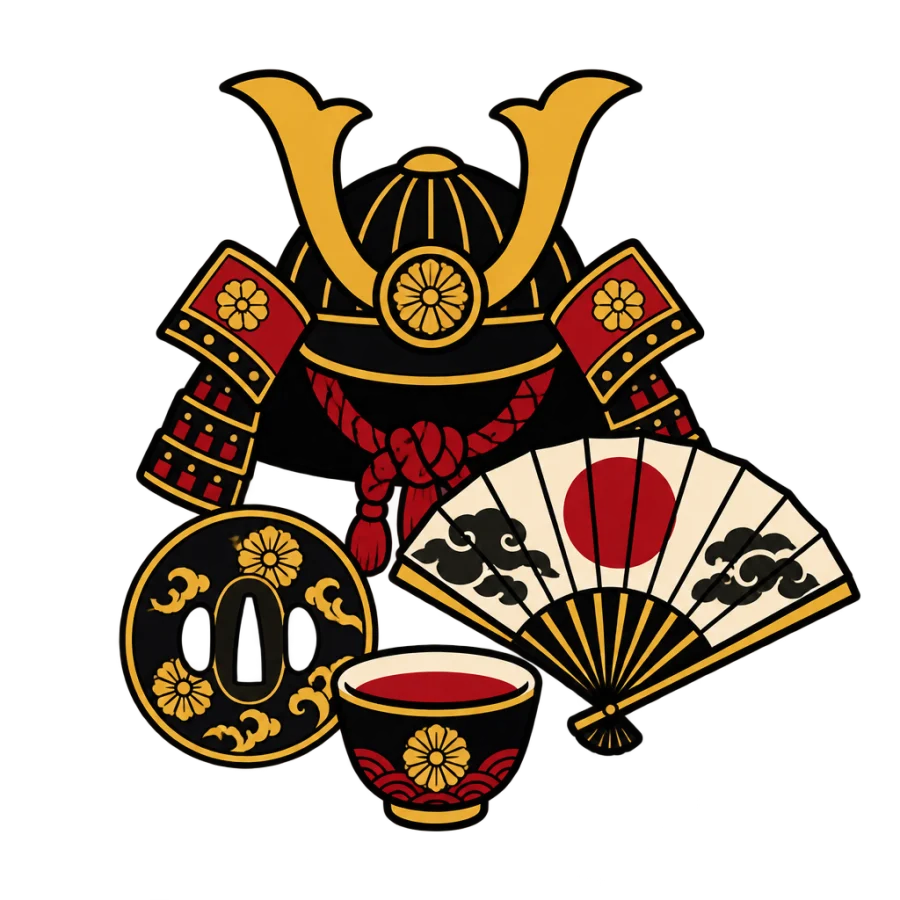
Samurai helmet, war fan, sword guard and sake cup grouped together
Use this promptDescribe an idea of your own and get four designs back in about 20 seconds.
Open the generator
Questions people ask
What does a samurai tattoo mean?
Discipline, loyalty and facing death without flinching, which is the reading the imagery carries in Japanese tattooing. The pictures come from woodblock prints, particularly Utagawa Kuniyoshi's warrior series of the late 1820s. If a specific historical figure matters to you, name him early, because the armor and the crest change.
How big does a samurai tattoo need to be?
A full armored figure wants 25 cm minimum, because the plate lacing needs 1.5 mm between lines to survive. That realistically means a half sleeve, a thigh or a back panel. A helmet alone works from about 12 cm and a menpo mask from about 10 cm, both of which fit a forearm.
What is the difference between a samurai mask and a hannya mask tattoo?
A menpo is real face armor, worn under the helmet, usually drawn with a moustache and a snarling mouth. A hannya is a Noh theatre mask of a jealous female demon, with horns, a wide grin and bared teeth. They are often tattooed together, but they are not the same object.
How much does a samurai sleeve cost?
A half sleeve with a full figure and background usually runs 12 to 20 hours over three to five sittings, so roughly $1,500 to $3,500 depending on the city and the artist. A full back panel is 30 to 50 hours. Japanese specialists book months out, so ask about the waiting list too.
Can I bring an AI samurai design to a tattoo artist?
Yes, as a reference, and expect a Japanese specialist to redraw most of it. Generate the composition, download the stencil, then let the artist set the outline weights, simplify the armor lacing to something that will last, and build the background so the piece wraps your arm correctly.