Beginner tattoo stencils that line cleanly
Beginner tattoo stencils are the ones with few lines, wide gaps and no interior detail, whether a beginner is wearing them or tattooing them.
- A 3RL liner is three needles in a round grouping, usually at 0.30 mm gauge.
- Synthetic practice skin is about 1 mm thick and takes a stencil the same way real skin does.
- Most US states require bloodborne pathogen training and a studio licence to tattoo, and the rules differ by state and country.
- A line tattooed at 0.5 mm heals to roughly 1 mm and keeps spreading slowly after that.
- Lines in a first stencil6 to 15
- Minimum gap2 mm at final size
- Outline needle3RL or 5RL
- Size that works5 to 10 cm (2 to 4 in)

Two people search this. Someone choosing a first tattoo who wants a design that cannot go wrong, and someone learning to tattoo who wants something they can line without wobbling. The answer is close enough for both: six to fifteen lines, nothing closer than 2 mm, no fills, and a silhouette that reads from across a room.
AI Tattoo Lab gives you black linework on a transparent background at the size you choose, so the stencil is the output rather than something you trace afterwards. Print two or three copies, because the first one often comes off while the skin is still being cleaned.
What makes simple tattoo stencils work
Fewer lines, further apart. Every line in a stencil has to be laid in one pass, and every gap has to survive ink spreading sideways in the dermis for the next thirty years. A design with two closed shapes and 3 mm between them is forgiving in both directions. A design with forty lines at 0.8 mm spacing is not, even in experienced hands.
Closed shapes also help the person holding the machine. An unbroken contour gives you somewhere to start and somewhere to stop, so the line has two clean ends instead of a feathered tail in the middle of the design. Open ended lines are harder in a second way, because the eye reads an unfinished stroke as a mistake even when the line itself is clean, and there is nothing to fix afterwards.
What a simple stencil avoids
- Parallel lines closer than 2 mm, which merge as the ink spreads
- Faces, hands and text under 1.5 cm, where small errors read as mistakes
- Long sweeping curves across a joint, which need a steady pull you may not have yet
- Shading mapped into the stencil instead of worked in after the line
- Perfect symmetry, because the eye catches a 1 mm offset immediately
Easy tattoo stencils by subject
Subjects differ in how much they forgive. A crescent moon is two arcs and either one is obvious if it wobbles, so it is easy to line and unforgiving to line badly. A traditional snake has more lines but a thick outline, and a thick line hides a shaky pull far better than a thin one does.
| Subject | Lines | Size that works | Outline needle |
|---|---|---|---|
| Heart outline | 1 closed line | 2 to 4 cm | 3RL |
| Crescent moon and stars | 3 to 5 | 3 to 6 cm | 3RL |
| Single arrow | 4 to 6 | 6 to 12 cm | 5RL |
| Two leaf sprig | 8 to 12 | 5 to 8 cm | 3RL |
| Mountain ridge and sun | 6 to 10 | 5 to 9 cm | 5RL |
| Traditional snake | 12 to 18 | 10 to 15 cm | 7RL |
Basic tattoo stencils for practice skin
Synthetic skin takes a stencil the same way a forearm does, so that part of the practice is real. Clean the sheet with soap, dry it, prime it, press the transfer for 30 to 60 seconds and let it dry 10 to 15 minutes. Practice skin does not sweat or bleed, so a stencil sits on it far longer than it will on a person, which is worth knowing before you assume you have plenty of time.
Learning to tattoo happens in an apprenticeship under someone who can watch your hand. Tattooing yourself or a friend at home carries real infection risk and leaves scarring that no amount of later work fixes. Most places also require a licence and bloodborne pathogen training, and the rules differ by state and country, so check what applies where you live.
Where to put a first stencil, and where to wait
Flat, padded, low movement. The outer forearm, the outer calf and the back of the upper arm all give you a surface that does not fight the stencil or the needle, with no bone right under the skin and little flex to distort the line.
Leave these until later
- Hands and fingers, which blur fastest and flex in every direction
- Ribs and sternum, where the surface curves in two directions at once
- Elbow and knee ditches, where the skin folds over itself
- Neck and throat, where a visible mistake is hard to live with
- Feet, which rub inside shoes for the whole heal
12 beginner stencils, with the prompt behind each one
Every design below came out of AI Tattoo Lab. Tap one to load its prompt into the generator, then change a word and make it yours.

Crescent moon with three small stars, stencil outline only
Use this prompt
Simple five petal daisy flower, stencil outline only
Use this prompt
Anchor with a short rope loop, stencil outline only
Use this prompt
Three mountain peaks inside a thin circle, outline only
Use this prompt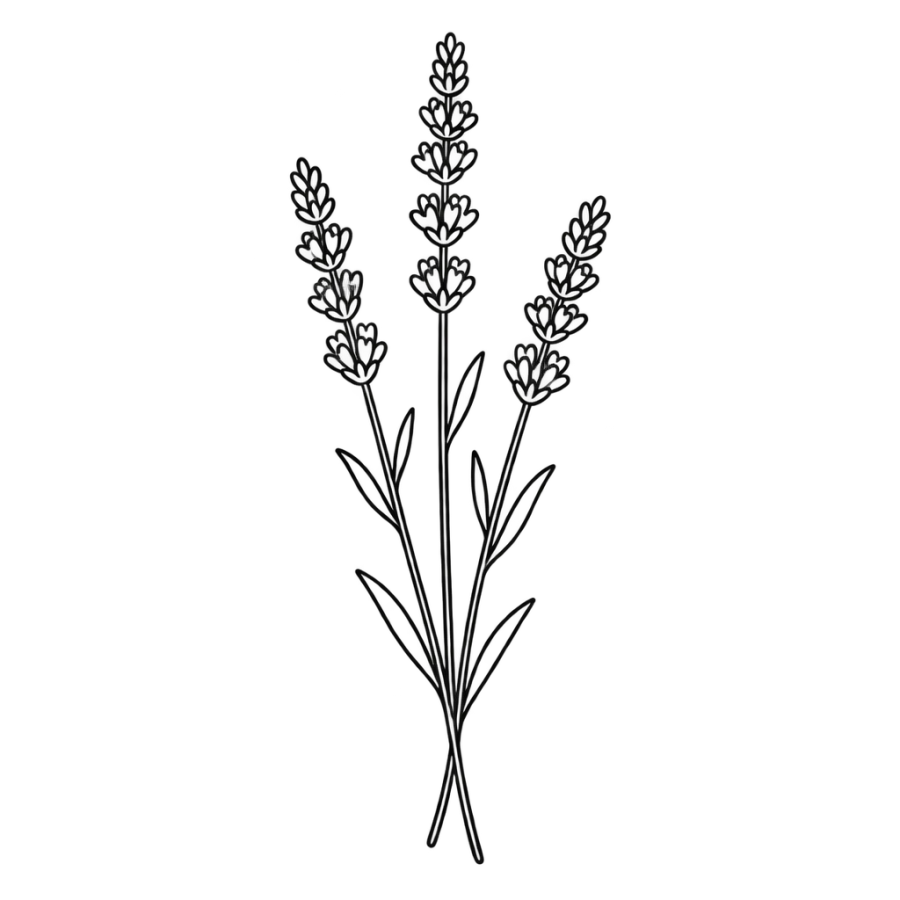
Sprig of lavender with three stems, stencil outline only
Use this prompt
Small cloud with a lightning bolt, stencil outline only
Use this prompt
Two mirrored olive branches meeting at the tips, outline only
Use this prompt
Small sailboat over three wave lines, stencil outline only
Use this prompt
Simple butterfly with plain open wings, stencil outline only
Use this prompt
Simple sun with straight triangular rays, outline only
Use this prompt
Cat sitting in profile with a curled tail, outline only
Use this promptDescribe an idea of your own and get four designs back in about 20 seconds.
Open the generator
Questions people ask
What are the best tattoo stencils for beginners?
Designs with six to fifteen lines, no fills and at least 2 mm between neighbouring lines. A crescent moon, a single leaf sprig, an arrow, a paw print or a traditional anchor all fit. Keep them 5 to 10 cm and put them on a flat padded area like the outer forearm or the calf.
How many lines should a simple tattoo stencil have?
Six to fifteen for a first piece. Below six the design usually reads as unfinished at anything over 4 cm. Above twenty the gaps get tight and the errors stack up. Count the separate strokes before you print, because the count predicts the difficulty better than the subject does.
Can I practise tattooing with a stencil on fake skin?
Yes, and the stencil step works the same way. Clean the sheet, dry it, prime it, press for 30 to 60 seconds and let it dry 10 to 15 minutes. Fake skin holds a stencil longer than a person does because it does not sweat, so do not build your timing habits on it.
What size should a beginner stencil be?
5 to 10 cm, or 2 to 4 inches. Smaller than 4 cm and the needle cannot hold interior detail, so there is no room for error. Larger than 12 cm and you are pulling long lines that need a practised hand. Print it, hold it against the placement, then decide.
Is it safe to tattoo yourself with a printed stencil?
No. Home tattooing carries infection risk, including hepatitis and bacterial infection, and the scarring it leaves is hard for anyone to cover later. Public health bodies and most state licensing boards point people to licensed studios. Use the stencil to settle on a design, then take it to an artist.