Dotwork tattoo ideas and stipple designs
Dotwork builds every shadow from individual points, so tone comes from how close the dots sit rather than from how much ink is in the skin.
- Pain level5 / 10, repetitive tapping
- Healing2 to 3 weeks, light peel
- Typical size8 to 25 cm (3 to 10 in)
- Studio cost$400 to $1,800

Dotwork borrows directly from engraving and pointillism. Instead of laying a smooth grey wash, the artist places thousands of separate dots and controls the darkness by spacing them tighter or looser. Up close you can see the texture. From two meters away it reads as a soft, slightly grainy gradient that no magnum can imitate.
It is slow. A palm sized area of dense stipple can take two to three hours, which is why dotwork pieces usually cost more per square centimeter than almost anything else. What you get in exchange is a surface quality with real depth and a shading approach that tends to hold up gracefully as it ages.
How stippling is actually applied
Most dotwork is machine made, not hand poked. Artists use a 3RL or 5RL and tap the needle in and out at a controlled rhythm, often with a shorter stroke machine so each dot lands cleanly without dragging. Some use a 7RS or 9RS round shader for larger dots in background areas, switching to a 1RL only for the finest transitions at an edge.
The skill is in rhythm and pressure. Every dot needs the same depth, or the darker ones bleed into blobs while the lighter ones drop out during healing. Hand poked dotwork, done with a needle on a rod, produces slightly softer dots and is still used by artists who prefer the pace and the control it gives.
How a dotwork gradient is built
- Darkest areas: dots almost touching, close to solid black
- Mid tones: even spacing at roughly one dot diameter apart
- Light tones: scattered dots with wide, irregular gaps
- Edges faded by reducing density, never by reducing depth
- Bare skin left as the brightest value in the whole piece
What dotwork is good at
It suits ornamental panels, mandalas, sacred geometry, moths and insects, moons and planets, anatomical illustration and anything with an etched, printed look. Combined with fine line it gives a botanical piece volume without turning it into a painting. Combined with blackwork it softens the edge where solid black meets bare skin.
It is a poor match for photographic realism and for large areas that need genuinely flat, uninterrupted black. Stipple that tries to be a smooth grey wash just looks like unfinished shading, and stipple packed to full density across 15 cm takes far longer than simply packing it solid would.
How dotwork ages over the years
Dots spread like every other mark in skin, so a stipple gradient gets slightly darker and smoother with time rather than lighter. At 10 to 15 years the individual dots in the dense areas have usually merged into continuous tone, while the sparse areas still read as visible dots. Most people find this aging flattering.
The risk is in over dense work. If dots were already nearly touching at healing, they merge into a solid grey patch and the gradient disappears. A skilled artist leaves more air than looks right on day one, knowing the piece will close up. That intentional lightness is a sign of experience, not of an unfinished tattoo.
Time, placement and cost
Dotwork sits well anywhere with stable skin and room for a pattern: outer arm, forearm, spine, thigh, sternum and upper back. It survives on ribs and sternum better than fine line because a dot has more margin for error than a hairline. Hands and fingers remain a bad idea, since dots there drop out unevenly during healing.
Budget by time rather than by size. Typical rates of $150 to $250 an hour apply, but the same design takes roughly twice as long in stipple as it would in grey wash. A 15 cm dotwork mandala often runs five to eight hours and $750 to $1,800. Many artists prefer a flat day rate for large stipple projects.
15 dotwork tattoo designs, with the prompt behind each one
Every design below came out of AI Tattoo Lab. Tap one to load its prompt into the generator, then change a word and make it yours.
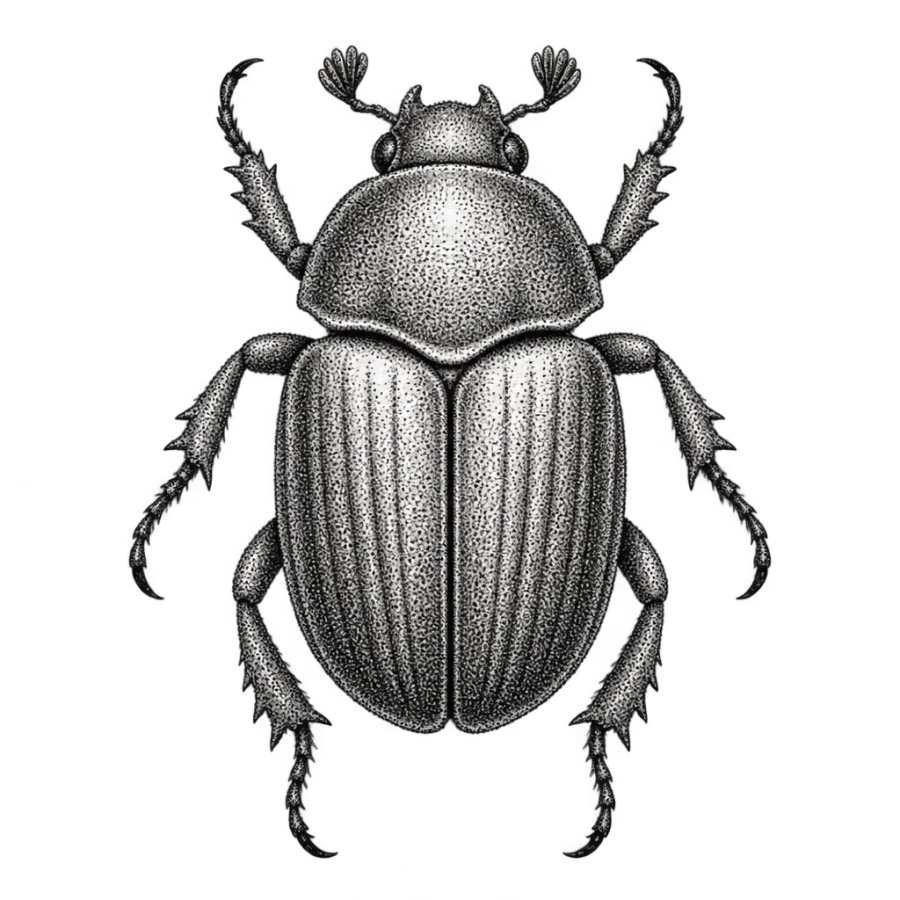
A scarab beetle seen from above with detailed wing cases, dotwork stippling only
Use this prompt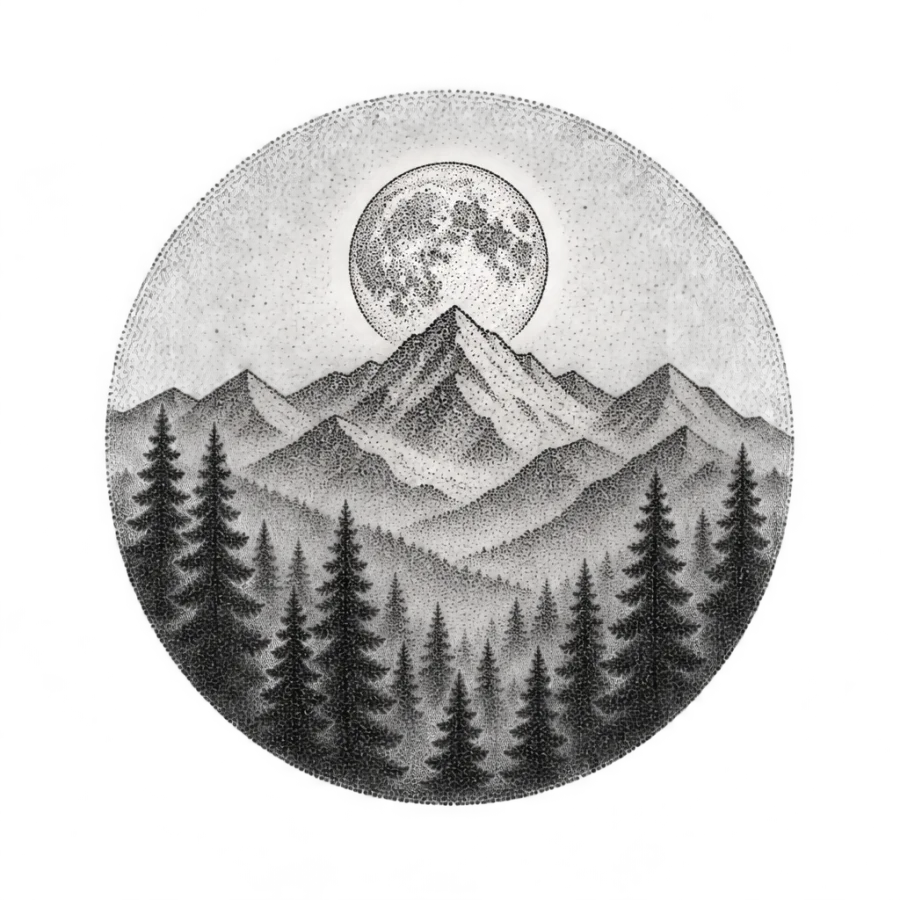
A round medallion with a pine forest and mountains under a rising moon, fine dotwork
Use this prompt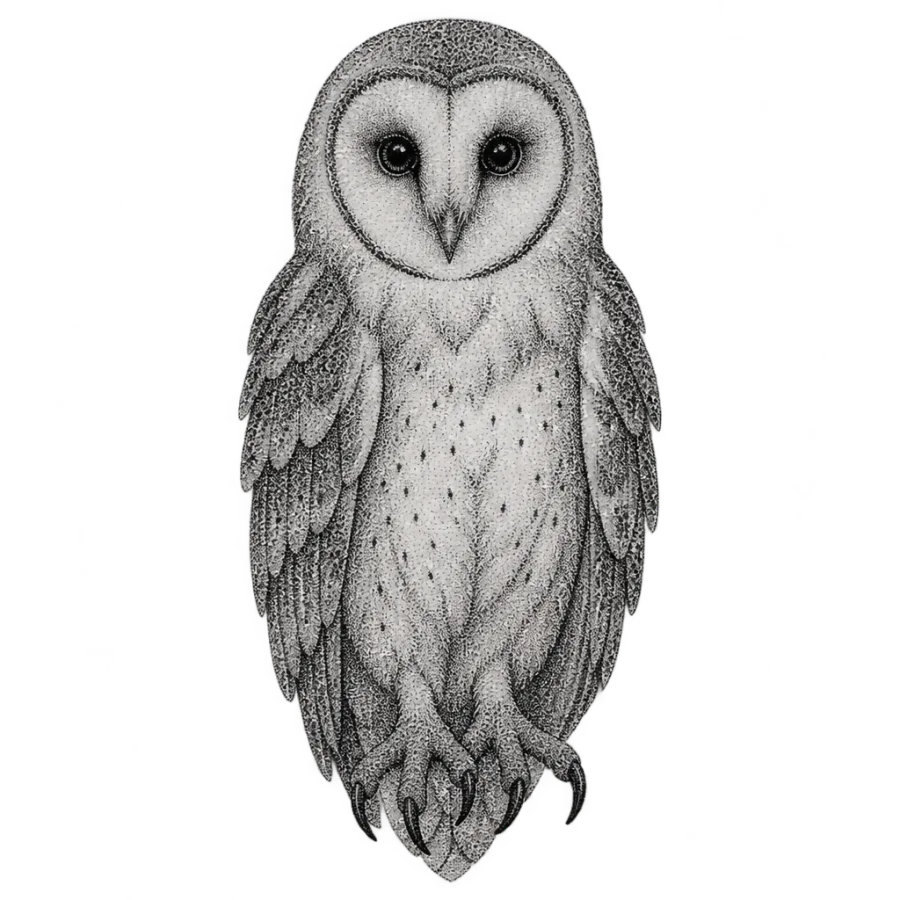
A barn owl facing forward with a feathered chest, dotwork with stippled shading
Use this prompt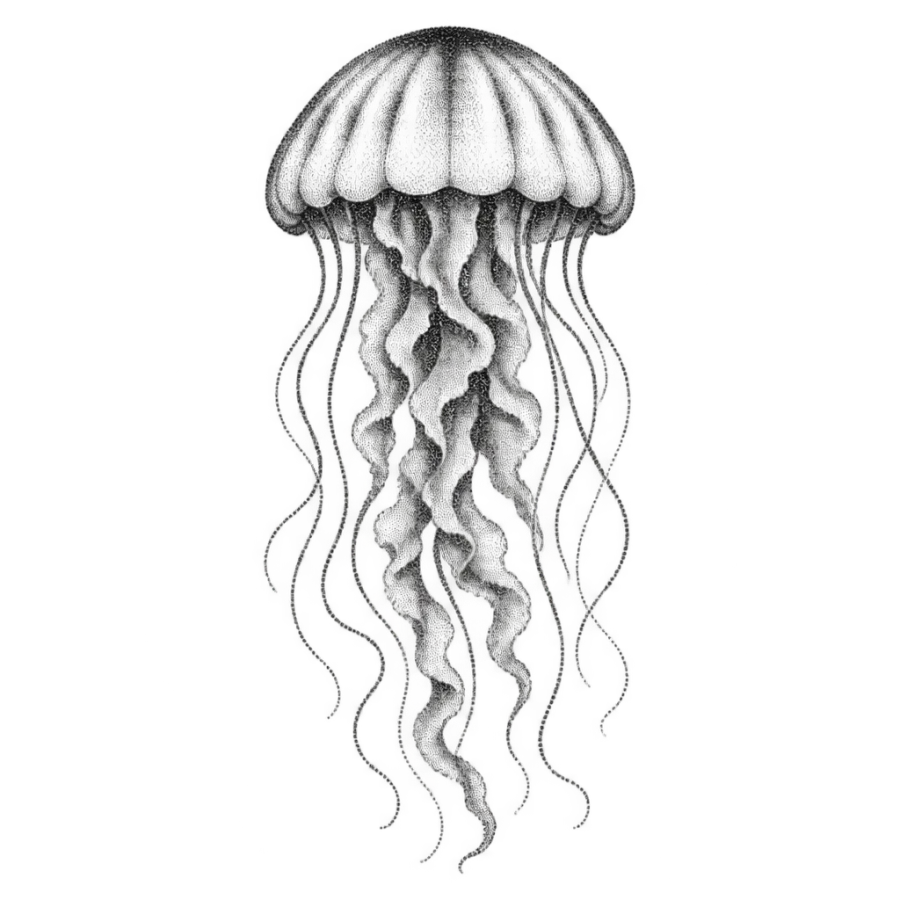
A jellyfish with long trailing tentacles, stippled dots only, no lines
Use this prompt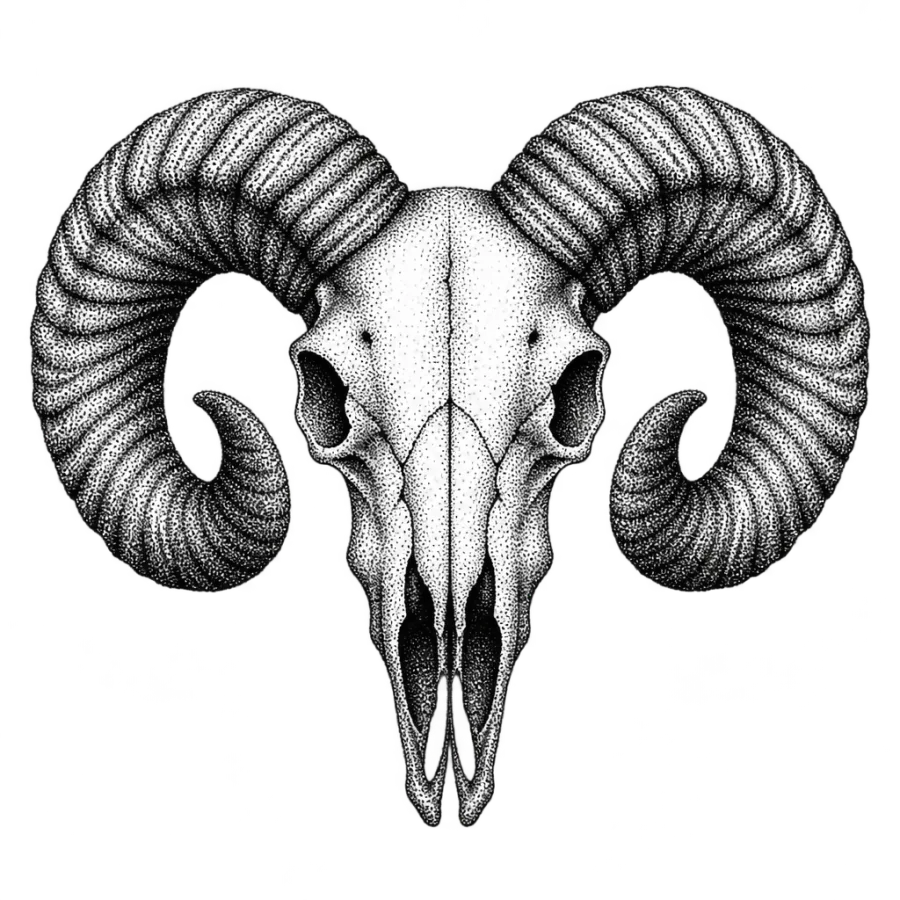
A ram skull with big curled horns, stippled dotwork shading
Use this prompt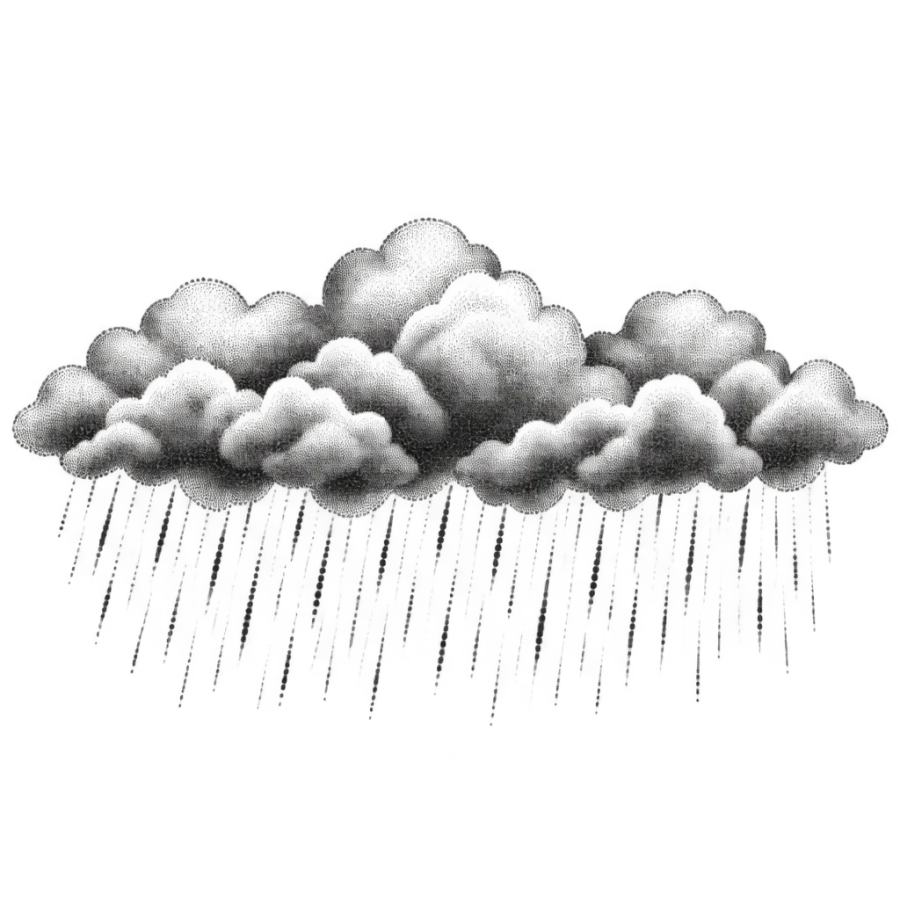
A wide band of storm clouds with falling rain, stippled dots only
Use this prompt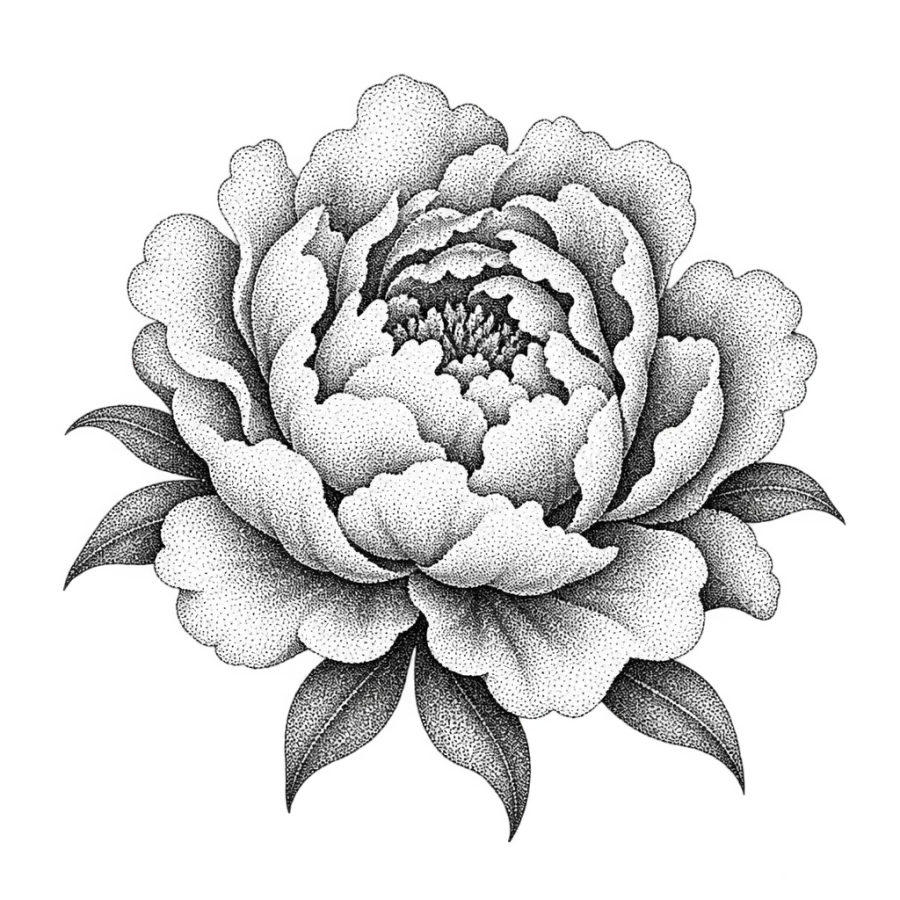
A peony in full bloom with layered petals, stippled dotwork shading
Use this prompt
A dense stippled triangle holding a crescent moon and stars in negative space
Use this prompt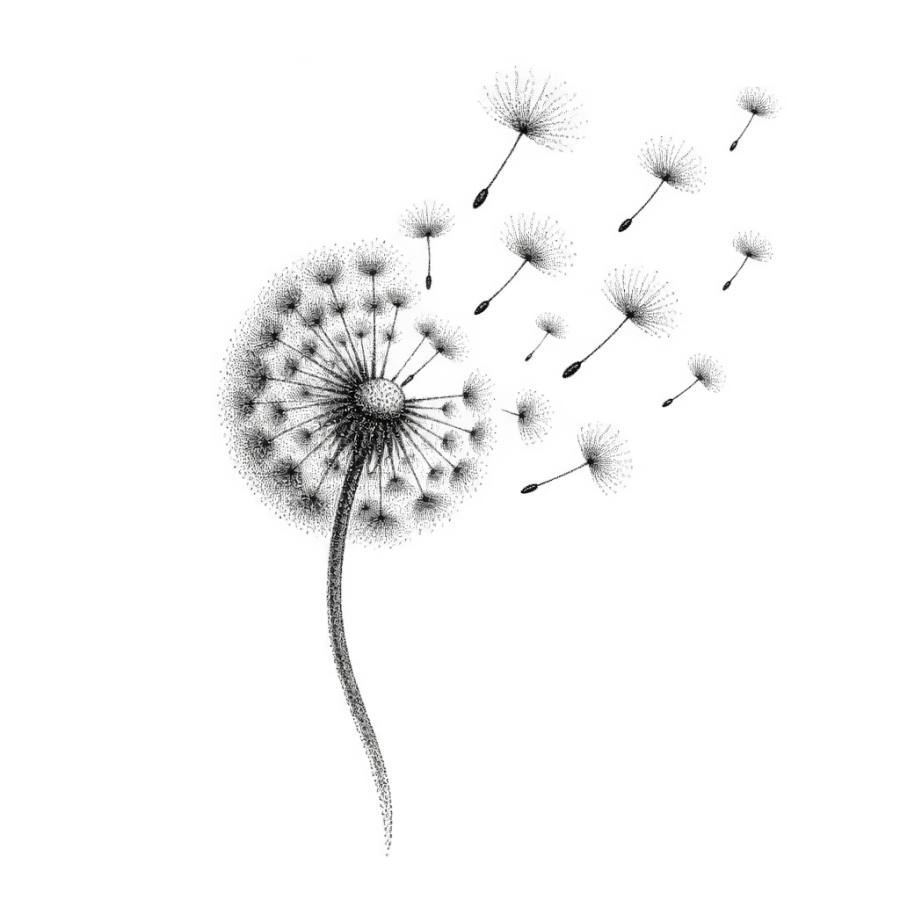
A dandelion clock with seeds drifting away, airy stippled dots
Use this prompt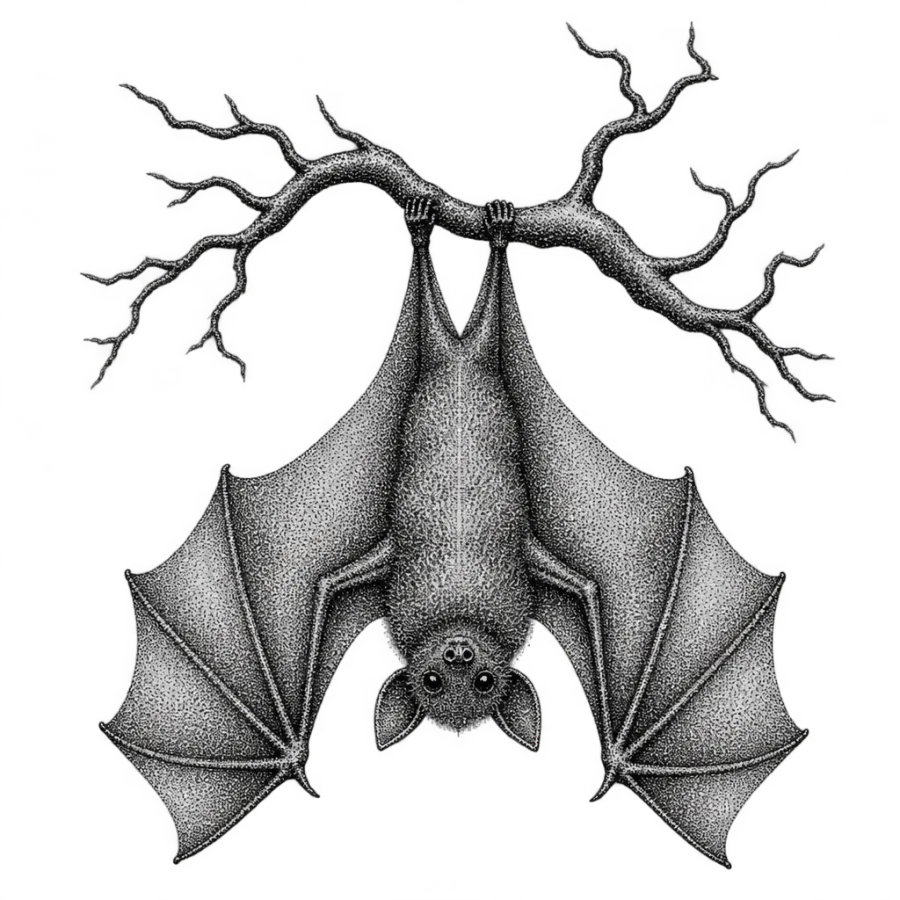
A bat with spread wings hanging under a bare branch, stippled dots
Use this prompt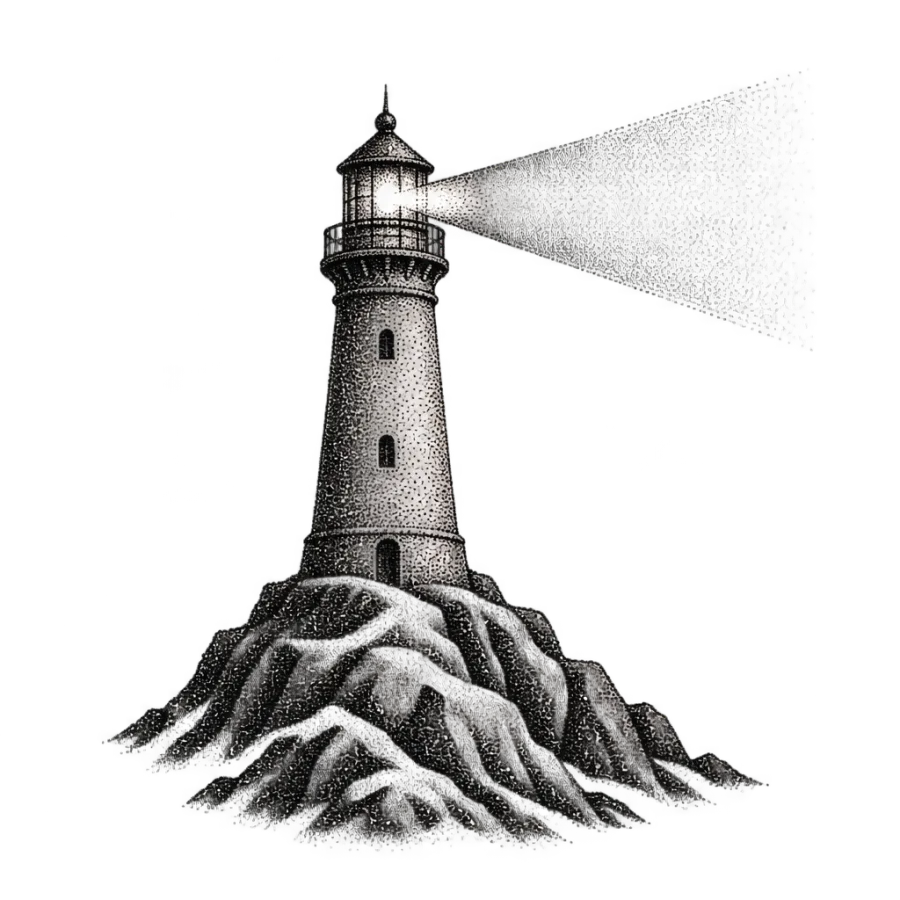
A lighthouse on rocks casting a wide beam, stippled dotwork shading
Use this prompt
A honeybee cut out of a densely stippled black circle
Use this prompt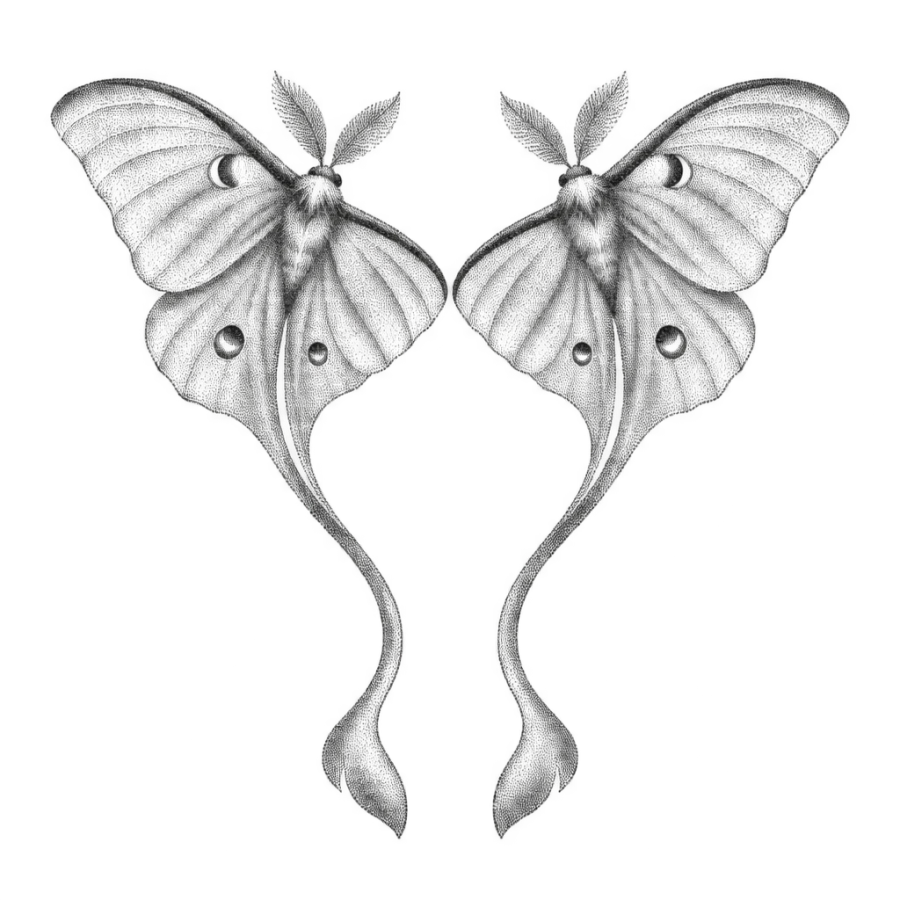
Two mirrored luna moths meeting wing tip to wing tip, stippled
Use this prompt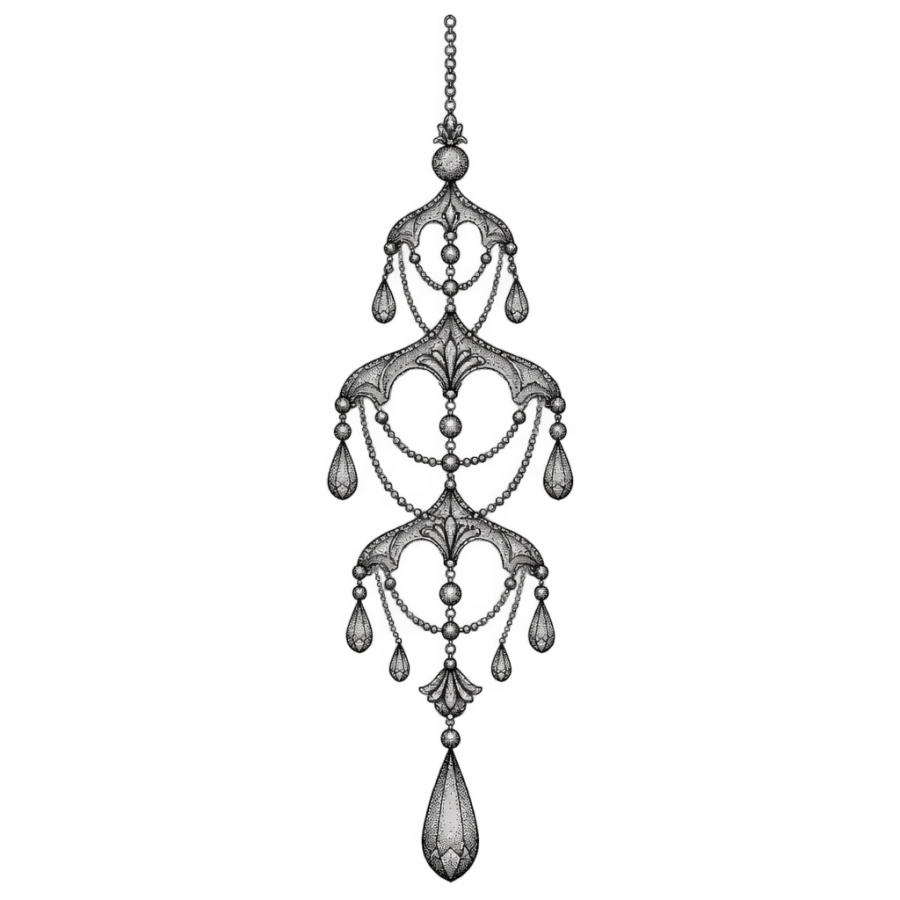
An ornamental chandelier drop with beads and a teardrop, stippled
Use this promptDescribe an idea of your own and get four designs back in about 20 seconds.
Open the generator
Questions people ask
Why is dotwork more expensive than normal shading?
Because it takes far longer. Placing dots one at a time covers a fraction of the area a magnum covers per hour, so the same design can take twice the time in stipple. Pricing is by the hour, so the cost difference is simply the clock rather than a premium for the style.
Does dotwork hurt more than grey wash shading?
Most people describe it as less intense but longer. The repeated tapping feels like a persistent prickle rather than the hot scraping of packed shading, but sessions run longer to cover the same area. On bony areas like the sternum and spine, the tapping can become uncomfortable over several hours.
Does dotwork fade or blur over time?
It blurs more than it fades. Dots spread slightly, so dense areas merge into smooth tone over 10 to 15 years while sparse areas stay visibly dotted. Good artists build in extra spacing knowing this will happen, which is why fresh dotwork often looks lighter than you expected.
Is dotwork the same as stick and poke?
No. Stick and poke describes hand poked application, which may or may not use stippling. Dotwork describes the visual technique of building tone from separate dots, and most professional dotwork is done with a machine. The two overlap often but they are not the same thing.
Can dotwork be combined with other styles?
Yes, and it usually is. Dotwork shading under fine line botanicals adds volume without heavy black, and it softens the boundary in blackwork and ornamental pieces. It sits poorly next to photographic realism, where the visible dot texture fights the smooth gradients realism depends on.