Clock tattoo ideas, meaning and designs
Nearly every clock tattoo has its hands set to a specific minute, usually the time a child was born, and that decision outranks every other one.
- Pain level5 / 10 on the upper arm
- Healing3 to 4 weeks on top
- Typical size10 to 25 cm (4 to 10 in)
- Studio cost$300 to $1,000
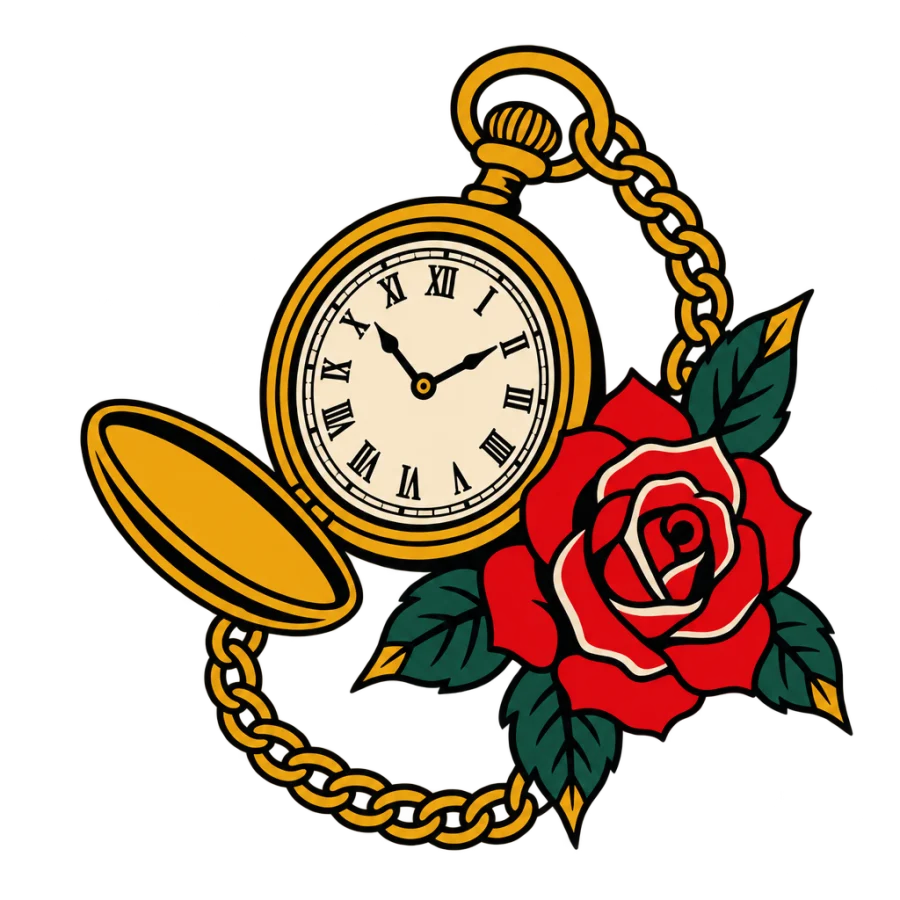
The clock arrived in tattooing through the pocket watch, which shops were drawing on flash sheets long before anyone needed a phone to tell the time. A pocket watch on a chain is an easy object to compose: a round face, a hinged lid, a chain that can run wherever the artist wants it to go on the body.
What changed is why people get one. The modern clock tattoo is usually a record. Hands set to 4:12 because that is when a daughter was born, or to the minute a parent died. Because the time is the content, everything else in the design exists to keep those two hands and that dial legible for the next thirty years.
Setting the hands so the time is readable
Check the time twice before the stencil goes on, then check it once more against the birth certificate or the hospital note. Artists see this go wrong more often than you would think, usually because someone remembered the time as 7:05 when the record says 7:50. Photograph the stencil and look at it away from the chair.
The hands need a visible difference in length and weight. A minute hand should be roughly a third longer than the hour hand and slightly thinner. If both hands are drawn the same, the time becomes ambiguous the moment the lines spread, which they will. Ask for a hard black at the center boss where the hands meet, since that point anchors the whole face.
Before the needle starts
- Confirm the time against a written record, not memory
- Minute hand about a third longer than the hour hand
- A solid dark center where both hands pivot
- Photograph the stencil and check it from a meter away
Numerals, and the size they need
Roman numerals are the usual choice and they are the part most likely to fail. Each numeral needs to be at least 5 mm tall for the strokes to stay separate, which puts a twelve numeral dial at about 10 to 12 cm across as a working minimum. At 7 cm the VIII and the XII turn into small dark bars within five years.
One detail worth knowing: most traditional clock dials use IIII rather than IV for four. It has been the convention in clockmaking for centuries, partly for visual balance against the VIII opposite it. Artists drawing from a photograph will copy whichever the reference shows. If you have a preference, say so, because both are correct and people do notice.
Minimum sizes for a legible dial
- Roman numeral dial, 10 to 12 cm across, numerals at least 5 mm tall
- Plain marker dial with no numerals, 7 cm and up
- Pocket watch with an engraved case, 15 cm and up
- Realistic watch with exposed gears, 18 to 25 cm
Styles and what each one costs you
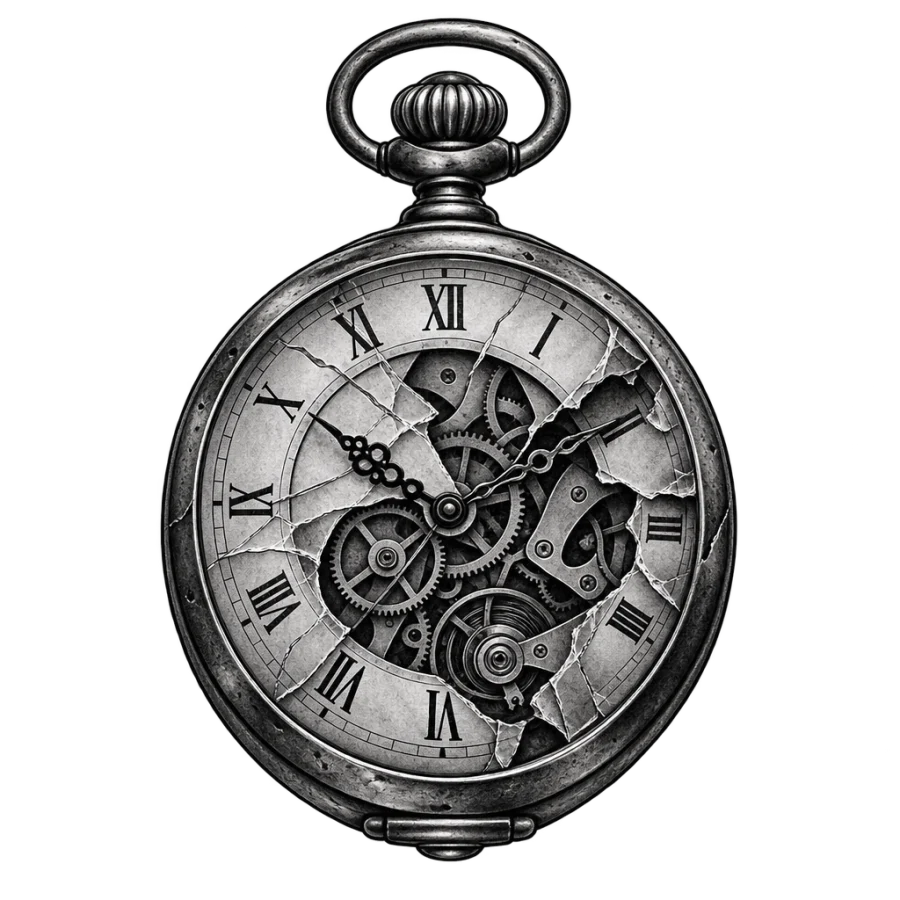
Black and grey realism gives you the polished metal, the reflections in the glass and the chain links, and it needs the most room. A realistic pocket watch on the forearm usually runs 15 to 20 cm and four to six hours. Neo traditional simplifies the case into blocked shapes with a heavy outline, works at 12 cm, and holds its structure far longer.
Fine line clocks are popular for a birth time on an inner arm. They work at 8 to 10 cm if the dial has plain markers instead of numerals. American traditional pocket watches exist too, drawn flat with a bold outline and a plain face, and they will outlast everything else here by a decade or two.
Placement, aging and what to leave out
A clock face is a circle, so it suits round or broad areas. The outer upper arm and the shoulder cap take a 12 to 15 cm dial without distortion. The inner forearm works for anything up to about 12 cm. The chest suits a pocket watch with the chain running toward the shoulder, and the sternum suits a face centered on the body's midline.
The main regret is crowding. Between roughly 2010 and 2018 the standard sleeve filler was a clock with a rose, a skull and a compass all at once, and those pieces now read as being from that period. A clock with one other element, or none, stays cleaner and leaves the dial where the eye goes first. Engraved case detail is also the first thing to fill in.
Versions people ask for
- Pocket watch with the hands set to a birth time and a name on the case
- Two watch faces side by side for two children, with a shared chain
- A clock face with no hands, for something outside time
- Melting clock in the Dali manner, usually 15 cm or more
- A dial worked into a compass rose for travel and timing together
15 clock tattoo designs, with the prompt behind each one
Every design below came out of AI Tattoo Lab. Tap one to load its prompt into the generator, then change a word and make it yours.
Clock tattoo design
Use this prompt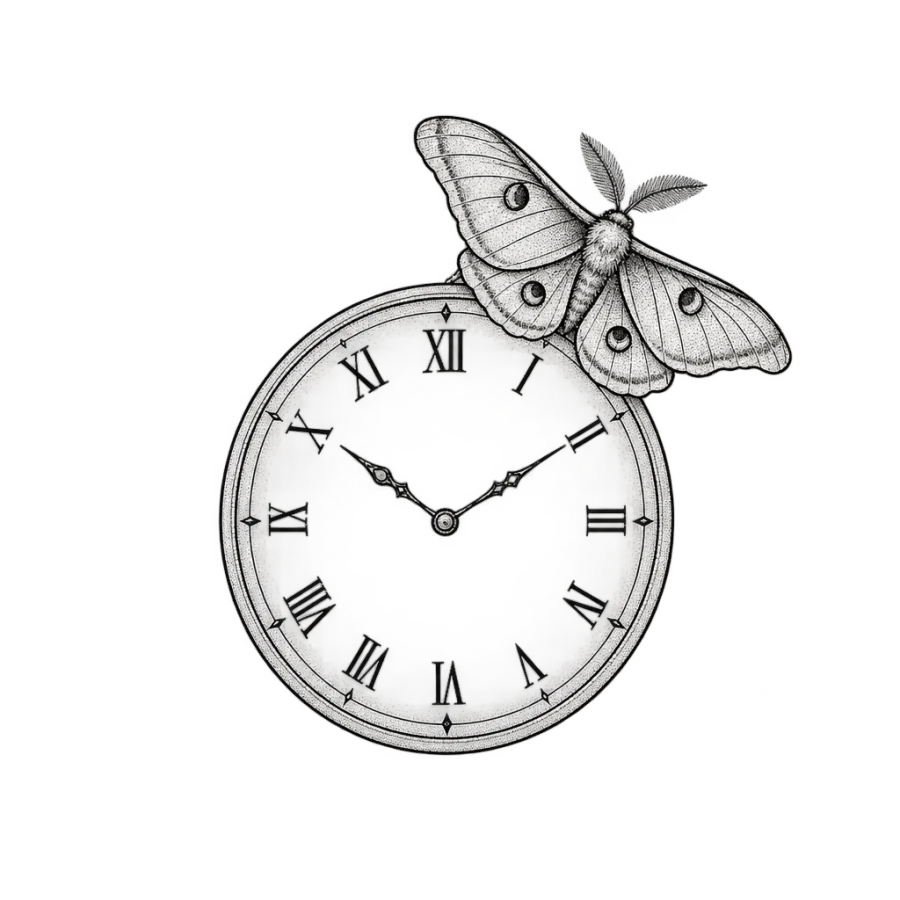
Clock tattoo design
Use this prompt
Clock tattoo design
Use this prompt
Clock tattoo design
Use this prompt
Clock tattoo design
Use this prompt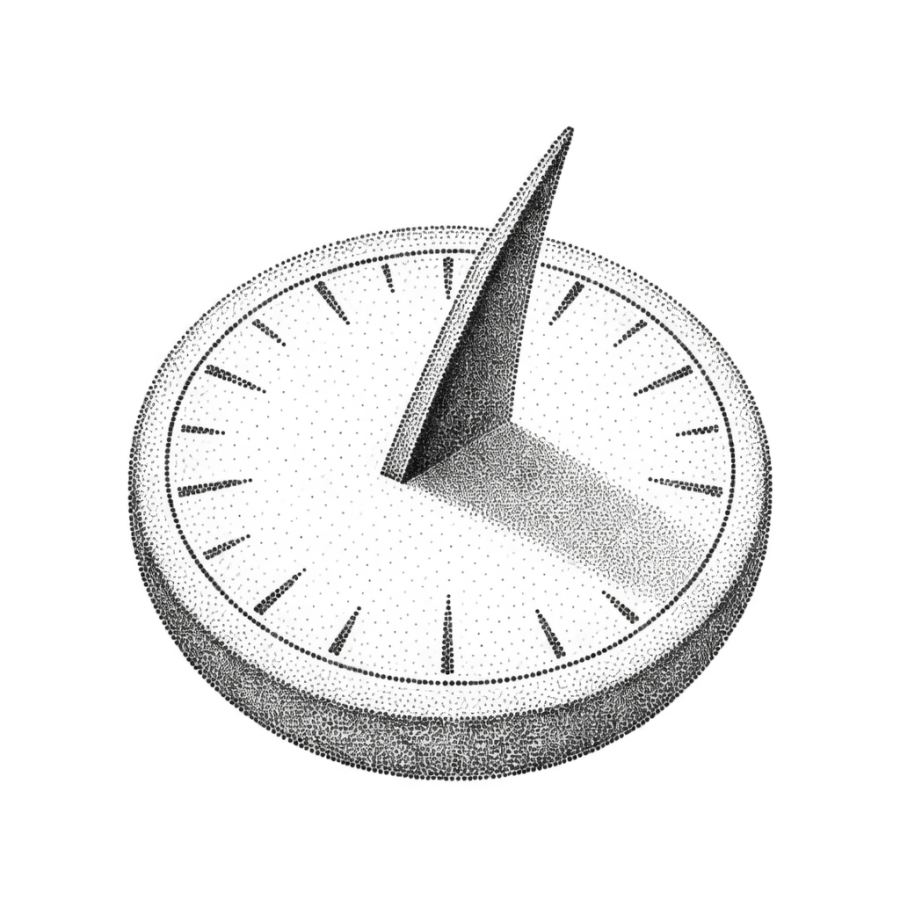
Clock tattoo design
Use this prompt
Clock tattoo design
Use this prompt
Clock tattoo design
Use this prompt
Clock tattoo design
Use this prompt
Clock tattoo design
Use this prompt
Clock tattoo design
Use this prompt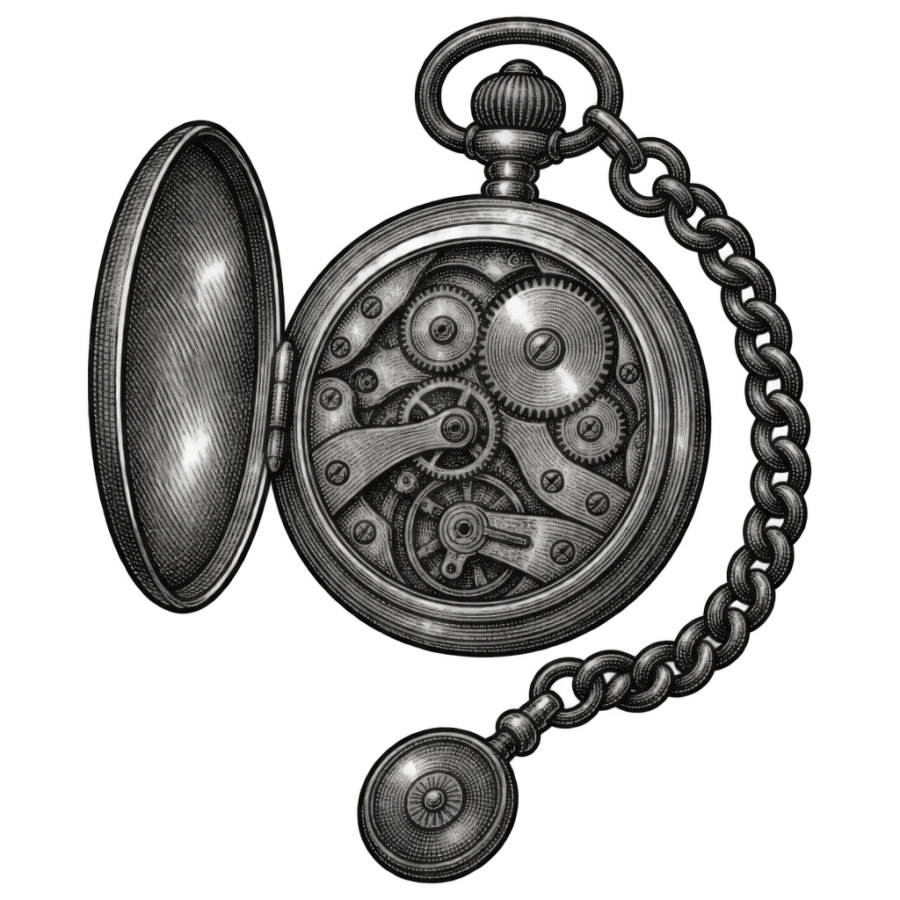
Open pocket watch with exposed gears and a chain, engraved style
Use this prompt
Clock face with hands and roman numerals cut out of solid black
Use this prompt
Mantel clock with butterflies drifting out of it, watercolour washes
Use this promptDescribe an idea of your own and get four designs back in about 20 seconds.
Open the generator
Questions people ask
What does a clock tattoo mean?
Usually one specific moment. Most clock tattoos have the hands set to a birth time, and some mark a death or a turning point. A clock without hands means the opposite, something outside time. Behind all of it sits the older reminder that time passes whether you are watching or not.
How big does a clock tattoo need to be?
A dial with roman numerals needs about 10 to 12 cm across, because each numeral should be at least 5 mm tall to stay legible. A plain marker dial works from 7 cm. Realistic pocket watches with engraved cases and gears want 15 to 25 cm to hold their detail.
Why do clock tattoos use IIII instead of IV?
Because most real clock dials do. Clockmakers have used IIII for four for centuries, partly for visual balance against the VIII sitting opposite. Both forms are correct. Tell your artist which you want, since they will otherwise copy whichever the reference photograph happens to show.
How much does a clock tattoo cost?
A fine line dial of 10 cm is usually $250 to $400. A neo traditional pocket watch runs about $450 to $700. A realistic pocket watch of 18 cm with chain and gears takes four to six hours and commonly lands between $700 and $1,000 depending on the artist.
Do clock tattoos age well?
The dial and the hands hold up if they were sized properly. What goes first is engraved case detail, tiny gear teeth and any numeral under 5 mm tall, all of which close up within about five years. Ask your artist to simplify anything they think will fill in.