Celtic tattoo ideas and knotwork designs
Celtic tattoos are built from interlaced knotwork and spirals, and the difference between a good one and a bad one is whether the weave actually works.
- Pain level5 / 10, heavy black
- Healing2 to 3 weeks surface
- Typical size12 to 30 cm (5 to 12 in)
- Studio cost$300 to $1,500

The designs come from insular art: the illuminated manuscripts, carved high crosses and metalwork made in Ireland, Scotland and northern England between roughly the sixth and tenth centuries. The Book of Kells and the Ardagh Chalice are the sources most artists draw from. Spirals, triskeles and knotwork fill the panels, drawn with a precision that still sets the standard.
Most of what gets called Celtic tattooing is a revival rather than a continuous tradition. Interest in the designs came back through the nineteenth and twentieth centuries, and the tattoo version was built from that revival. There is no evidence that ancient Celtic peoples tattooed these knots on themselves.
Why the weave has to be drawn correctly
A knot works because every strand alternates over and under, continuously, with no break in the rule. Get one crossing wrong and the eye sees it immediately, even if the person looking cannot say what is off. Designs pulled from a quick search often break the alternation somewhere, and a generated design needs checking for the same reason before the stencil goes on.
Good knotwork is also a single continuous strand, or a small number of strands that each close on themselves. Ask your artist to trace the path with a finger. If a strand starts nowhere and ends nowhere, the design is decoration that looks like a knot rather than an actual knot, and it will bother you every time you notice it.
Line weight, spacing and how it ages
Celtic work lives or dies on the gap between strands. The strand itself wants to be 3 mm wide or more, and the negative space between crossings wants to be at least as wide as the strand. Anything tighter closes up as the ink spreads, and a knot with no visible gaps reads as a black blob rather than as a weave.
That sets a minimum size. A knotwork band under about 4 cm wide struggles, and a detailed panel wants 15 cm or more. Tattooed at the right scale in solid black, Celtic work ages better than almost any style, because there is no fine detail or shading to lose. Twenty year old knotwork often looks close to new.
What makes knotwork last
- Strands 3 mm wide or wider, with gaps at least as wide
- Solid black rather than outlines waiting to be filled
- A design checked so every crossing alternates correctly
- A placement with a flat enough plane to keep the panel square
- Simplifying the pattern rather than shrinking it for a small spot
Meanings, invented and real
A lot of the meanings attached to specific knots online were invented in the last few decades by people selling jewelry. The medieval sources do not assign a meaning to each interlace pattern, and an artist who tells you a particular knot means eternal love is repeating marketing rather than history.
Some symbols do have documented history. The triquetra appears in insular manuscripts and was later used for the Christian Trinity. The Celtic cross is a real medieval Irish and Scottish form, standing crosses with a ring around the intersection. The claddagh is genuinely Irish but dates to the 1700s in Galway, not to antiquity.
Placement, cost and one symbol to think about
Knotwork suits flat and cylindrical areas: the outer forearm, the upper arm, the calf, the shoulder blade and a band around the bicep. Circular knot designs fit the shoulder cap and the point of the elbow. A knot panel across a curved surface distorts, so the artist draws the curve in rather than printing a flat stencil.
A 15 cm knot panel takes three to five hours and costs $300 to $700. A full back or sleeve of interlace runs $2,000 to $5,000. One thing worth knowing: the ringed cross with equal arms, sometimes called the sun cross, has been adopted as a white supremacist symbol, so many artists steer toward the taller Irish high cross form instead.
15 Celtic tattoo designs, with the prompt behind each one
Every design below came out of AI Tattoo Lab. Tap one to load its prompt into the generator, then change a word and make it yours.

A three cornered Celtic knot woven through a plain circle
Use this prompt
A round medallion of one endless Celtic knot weaving through itself
Use this prompt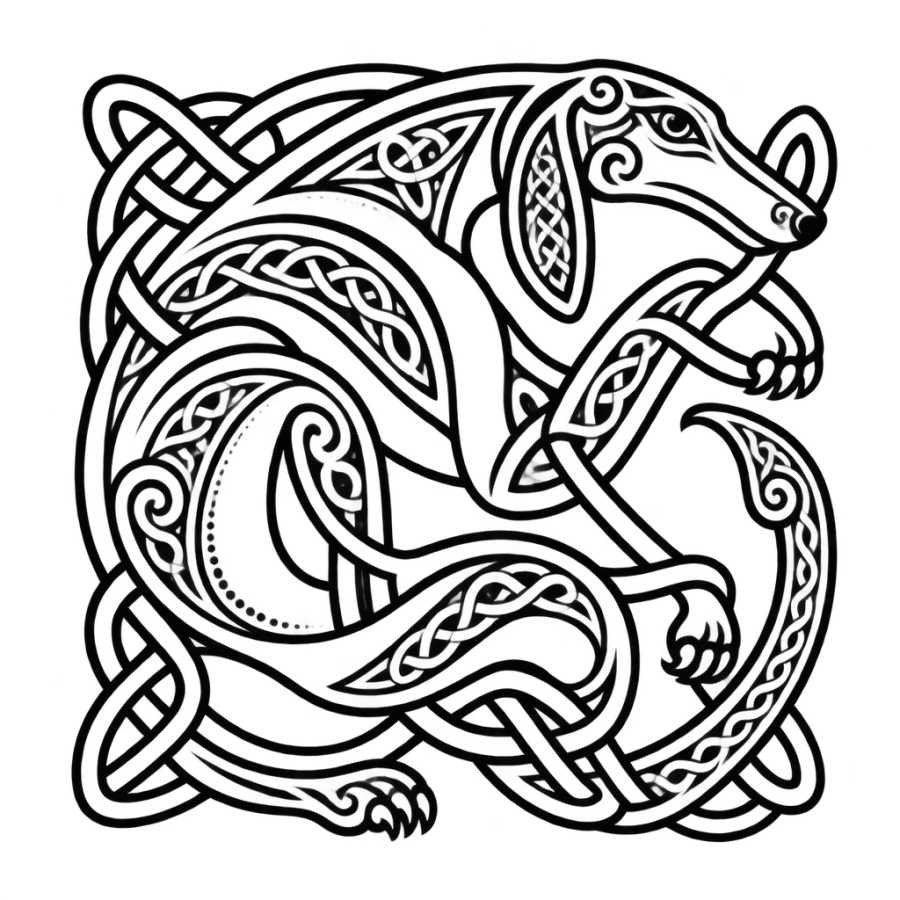
A hound curled into a square with its limbs woven into knotwork
Use this prompt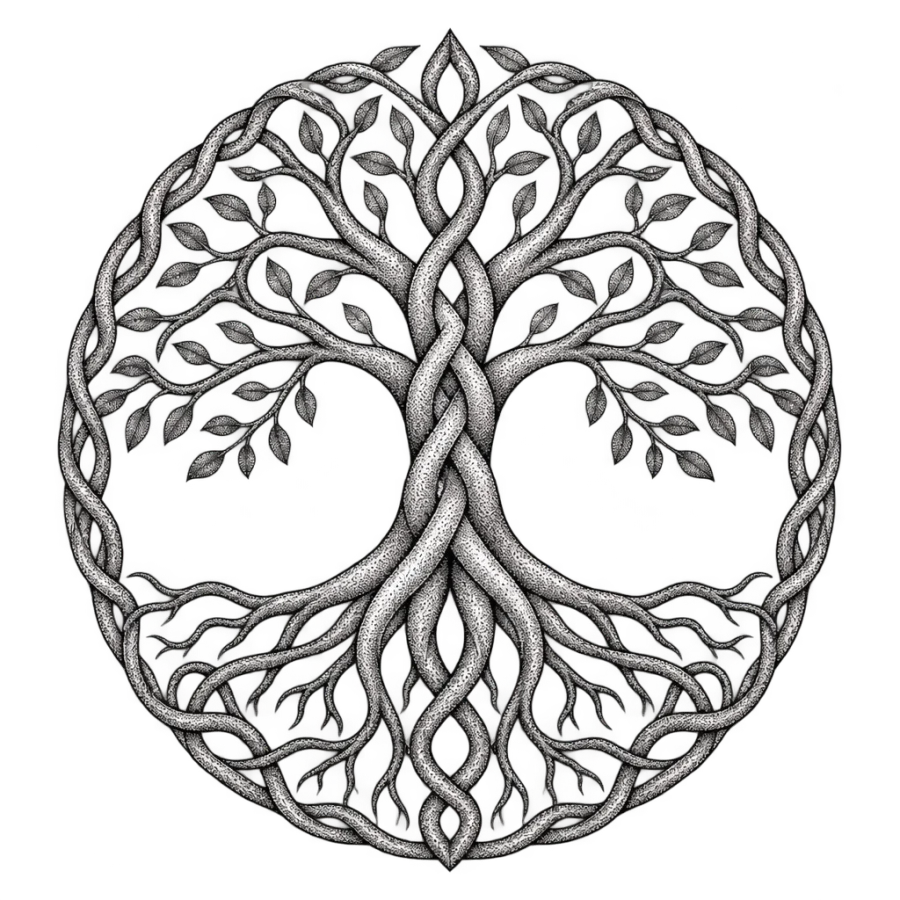
A tree of life with branches and roots meeting in a circle, stippled
Use this prompt
Three linked spirals cut out of a solid black circle
Use this prompt
A wide Celtic knotwork band with a beast head at each end
Use this prompt
A square Dara knot of four interwoven oak roots, symmetrical
Use this prompt
A stag whose antlers branch into Celtic knotwork, bold silhouette
Use this prompt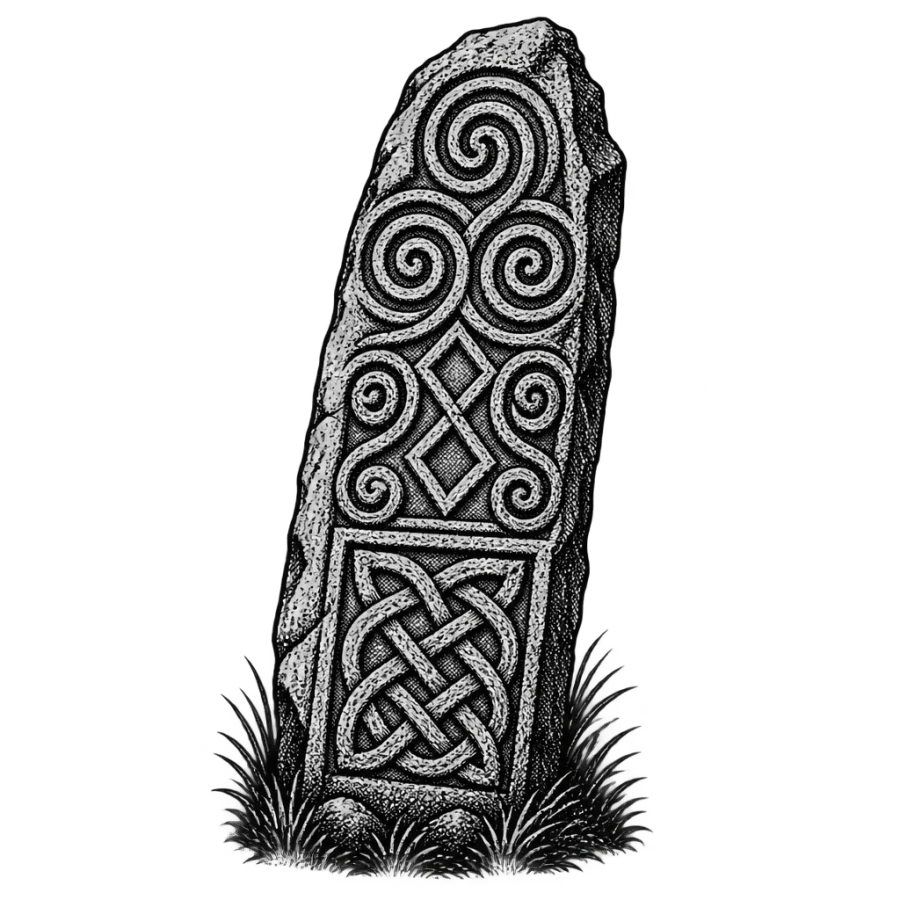
A standing stone carved with spirals and a knot panel, engraved
Use this prompt
A small Celtic loop knot drawn in one thin unbroken line
Use this prompt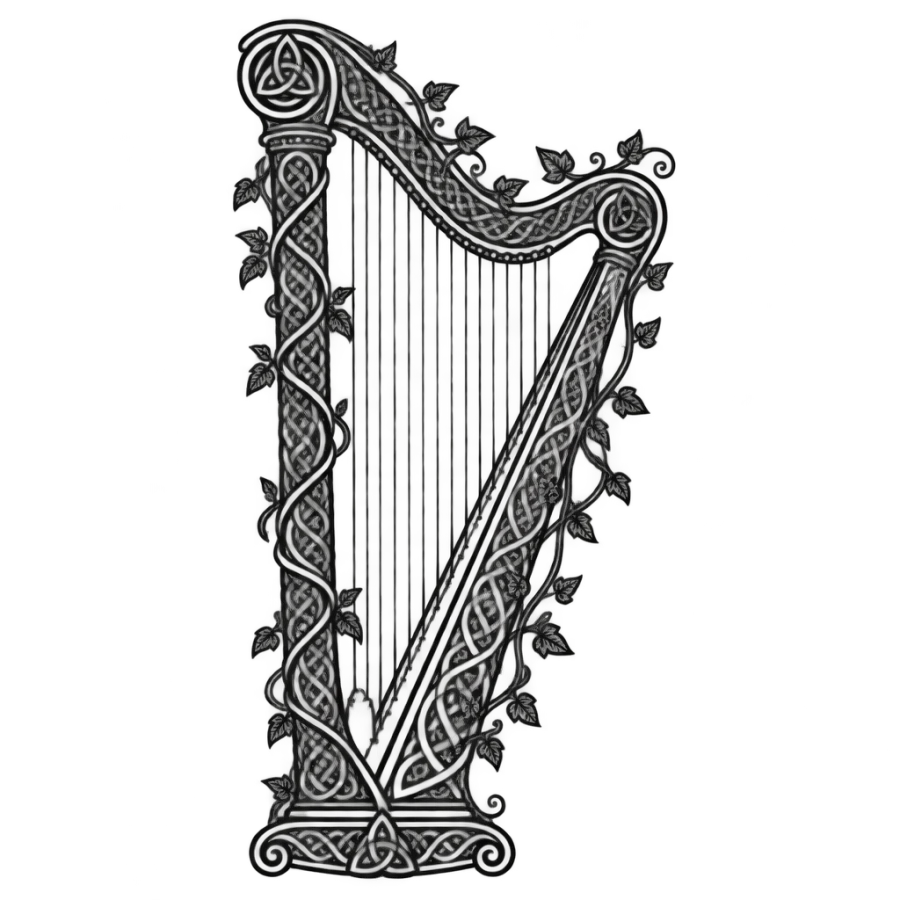
A Celtic harp wreathed in knotwork vines and small leaves
Use this prompt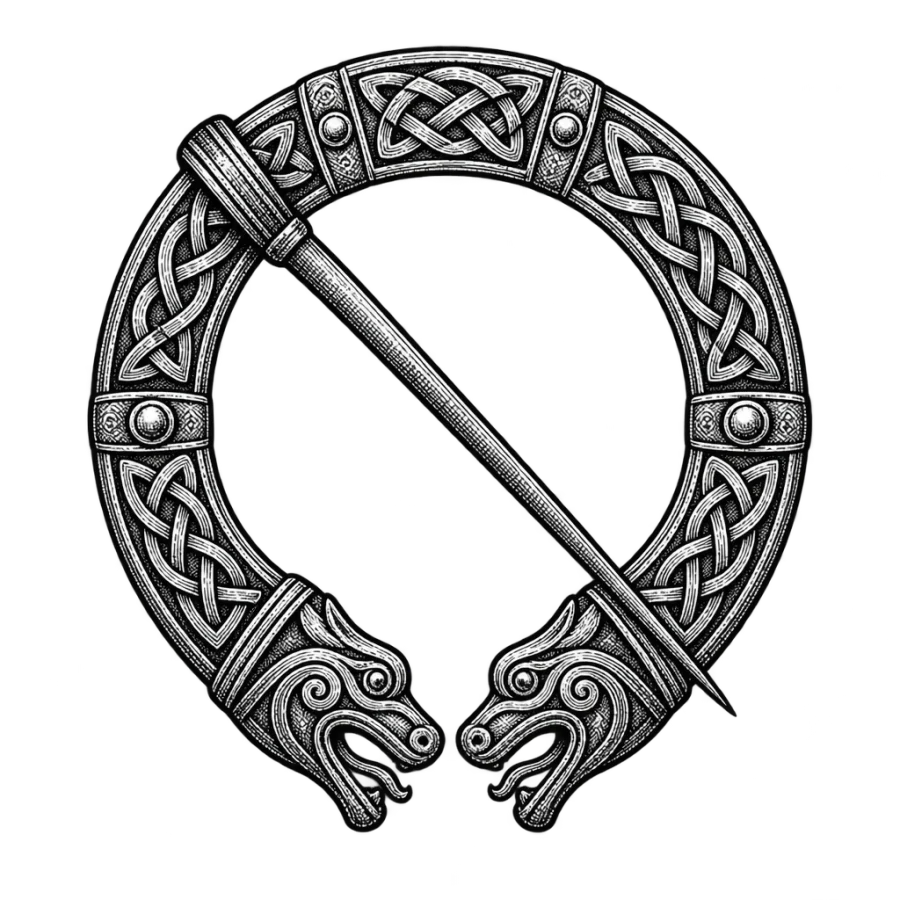
Celtic ring brooch with knotwork panels and beast heads, engraved hatching
Use this prompt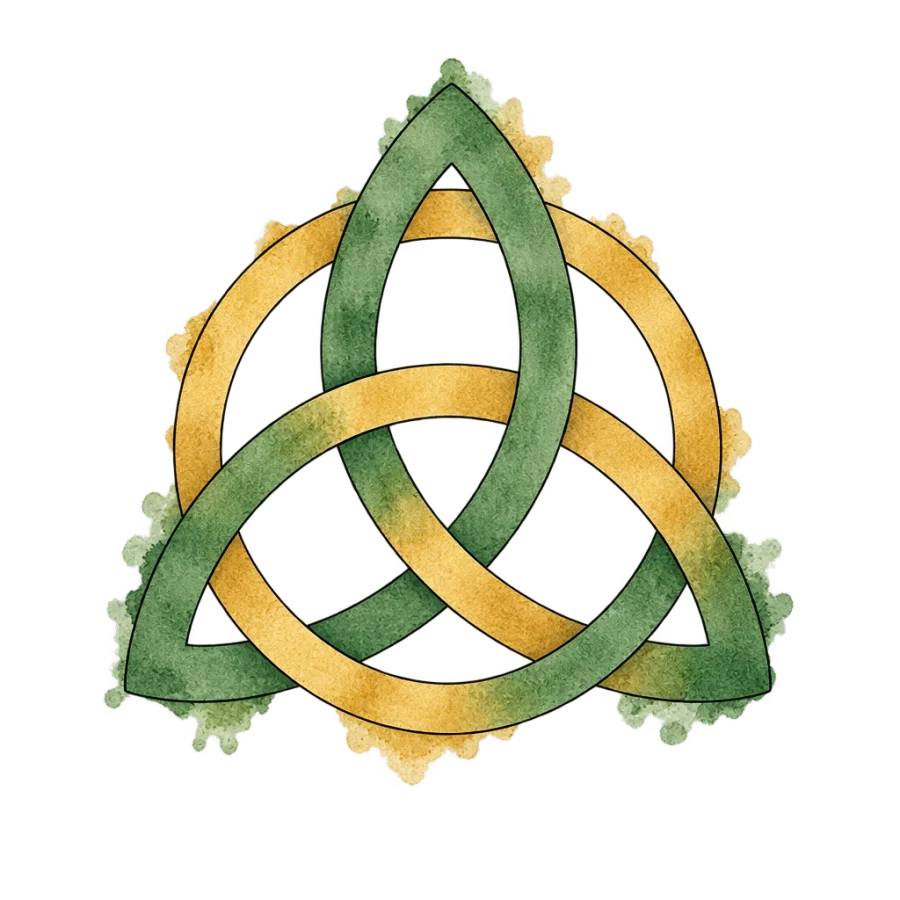
Celtic trinity knot in loose green and gold watercolour washes
Use this prompt
Celtic spiral labyrinth disc in dotwork stippling, no outlines
Use this promptDescribe an idea of your own and get four designs back in about 20 seconds.
Open the generator
Questions people ask
Did ancient Celts have knotwork tattoos?
There is no evidence for it. The knotwork we recognize comes from insular art of roughly the sixth to tenth centuries, found in manuscripts, metalwork and carved stone crosses. Modern Celtic tattooing was built from a nineteenth and twentieth century revival of those designs rather than from a continuous practice.
What does a Celtic knot mean?
Most of the specific meanings circulated online were invented recently, largely to sell jewelry, and the medieval sources assign no meaning to individual interlace patterns. The triquetra has documented later use for the Christian Trinity. Beyond a handful of cases like that, treat knot meanings as modern invention.
How big does a Celtic knot tattoo need to be?
Big enough that the strands are at least 3 mm wide with gaps at least as wide between them. That means about 4 cm minimum for a simple band and 15 cm or more for a detailed panel. Tighter than that and the gaps close as the ink spreads, leaving a black mass.
Do Celtic tattoos age well?
Very well, when the spacing is right. There is no fine detail or shading to lose, so solid black interlace at a sensible scale can look close to new after twenty years. The failure case is always a design drawn too small or too tight, which fills in rather than fading.
Is the Celtic cross a problematic symbol?
One version is. The ringed cross with equal length arms, sometimes called the sun cross, has been adopted as a white supremacist symbol and is listed as such by hate symbol databases. The taller Irish high cross form, with a long lower arm and knotwork panels, does not carry that reading.