Grim reaper tattoo meaning, ideas and designs
A grim reaper tattoo is one of the few subjects where almost all the work happens in solid black and the negative space around it.
- Pain level5 / 10 on the outer calf
- Healing2 to 3 weeks on the surface
- Typical size15 to 35 cm (6 to 14 in)
- Studio cost$350 to $1,800
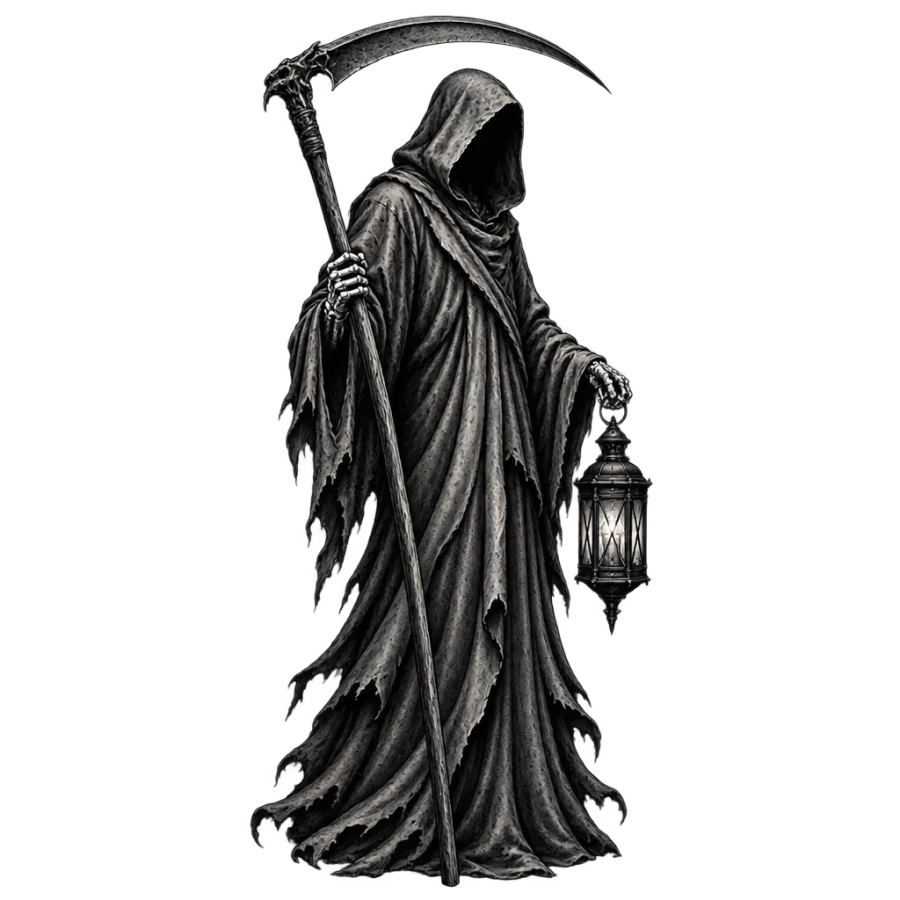
The figure is simple to describe and hard to draw. A hooded robe, a skeletal hand, a scythe, and a skull sitting far enough back in the hood that you only half see it. Everything that makes it work is black: the depth of the hood, the weight of the fabric, the dark that the face sits inside.
That is good news for longevity. Solid black is the most stable thing you can put in skin, so a well drawn reaper at twenty years looks close to how it looked at two, where a grey wash version has lost its mid tones. The scythe also gives you a long diagonal line, which is what lets the composition fit a forearm or a calf.
Where the figure comes from
Death as a walking skeleton appears across late medieval European art, in the danse macabre murals where Death leads people of every rank away in a line, and in the memento mori objects that put a skull on a desk as a reminder. Holbein's Dance of Death woodcuts, cut in the 1520s and published in 1538, are where the figure picks up its props: the scythe, the hourglass, sometimes a bell.
The robe and hood came later and the English name later still. Grim Reaper is a nineteenth century phrase, not a medieval one. None of that makes the tattoo a historical reference, but it does explain why the standard design looks the way it does, and why the hourglass turns up beside it so often.
Compositions, and what each one says
The hooded bust is the most tattooed version, a head and shoulders with the hood framing an empty dark space. It is also the most economical, because it works at 10 to 12 cm and fits a forearm or a calf without much planning. The full standing figure with the scythe is the one that needs real estate, usually 25 cm or more, and it is also the one that looks like something from a distance.
The props change the reading more than the style does. An hourglass makes it about time, and people choose that after a diagnosis or an accident. A rose makes it a memorial, and the rose is often tattooed in color while the figure stays grey, which separates the two cleanly. A stopped clock lets you put a date in without lettering.
| Variant | What it shows | Usual size | What people mean by it |
|---|---|---|---|
| Hooded bust | Head and shoulders, face in shadow | 10 to 15 cm | Mortality, kept plain |
| Full figure with scythe | Standing or walking, long diagonal blade | 25 to 35 cm | The classic memento mori |
| Reaper with an hourglass | Sand running, sometimes cracked glass | 15 to 25 cm | Time, a deadline, a near miss |
| Reaper with a rose | A flower held, or growing from the robe | 15 to 20 cm | A death remembered, or grief |
| Reaper and a clock face | Hands stopped at a particular time | 18 to 25 cm | A specific date or hour |
Drawing the hood, and the detail that fails
The hood is the engineering problem. Most artists leave it solid black with a faint brow ridge, the top of a cheekbone and a suggestion of teeth lifted out, and that choice is why some reapers look deep and others look like a skull wearing a scarf. Ask for the inside of the hood to be genuinely black rather than dark grey, because dark grey lightens over a decade and the hood loses its depth with it.
Robe folds are the other failure. Fabric drawn with dozens of thin parallel grey lines turns into a flat sheet in about eight years. The fix is fewer folds, each carried by a real black shadow and a clean break. The scythe blade wants a hard bright edge left as bare skin rather than filled with white ink, since white ink yellows and sinks on most people within three years.
What to ask the artist for
- Solid black inside the hood, not a grey wash
- Six or eight robe folds with black shadows instead of twenty thin lines
- The bright edge of the scythe left as bare skin, with no white ink
- Bone drawn with a heavy outline so the hand survives at small sizes
- A healed photo of a reaper they tattooed at least three years ago
Placement, cost and aging
The full figure is tall and narrow, which matches the outer forearm, the back of the calf, the outside of the thigh and the spine. The scythe handle can run along the limb with the blade cutting across the top, and that layout uses a forearm well. A hooded bust fits the inner forearm, the shoulder blade, the chest or the bicep. The ribs take a standing figure if you accept that it bends when you lean.
A 12 cm hooded bust in black and grey is usually $250 to $450 in one sitting. A 30 cm full figure with a scythe and a background runs $800 to $1,800 across one long session or two. Reapers age better than most heavily shaded subjects because so much of the image is committed black, and they age badly in exactly one way: a hood built from grey turns the face you were never quite seeing into a face you cannot see at all.
12 grim reaper tattoo designs, with the prompt behind each one
Every design below came out of AI Tattoo Lab. Tap one to load its prompt into the generator, then change a word and make it yours.
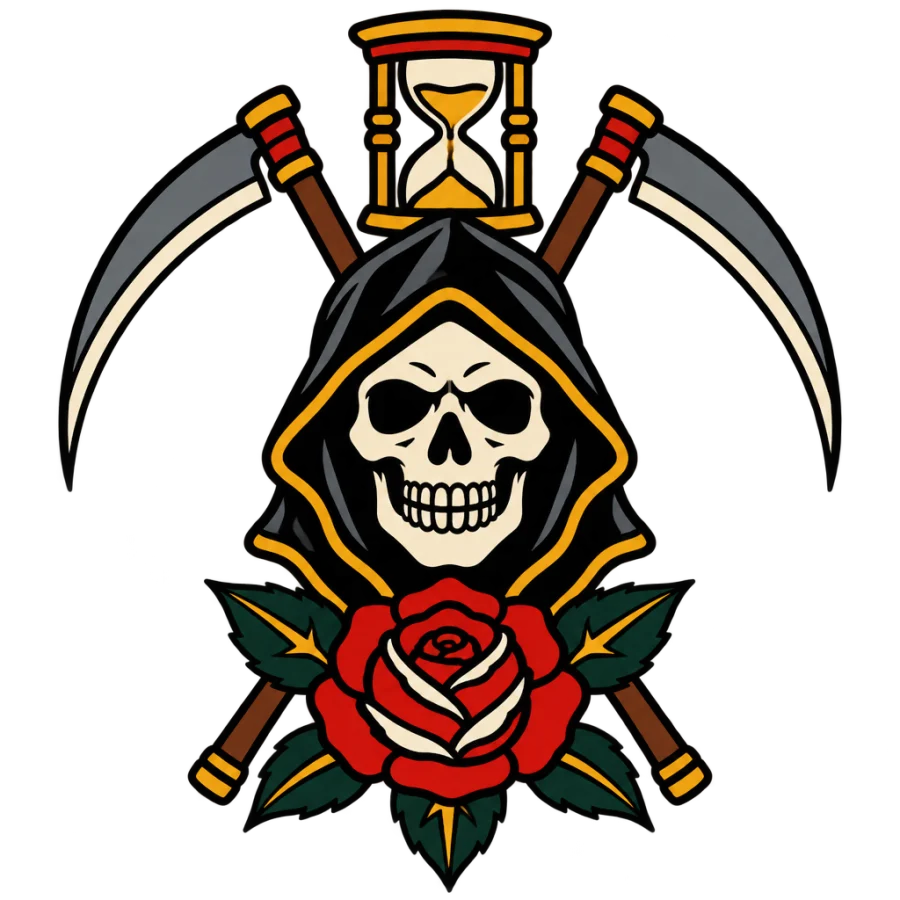
Reaper skull with crossed scythes and a rose, traditional bold color
Use this prompt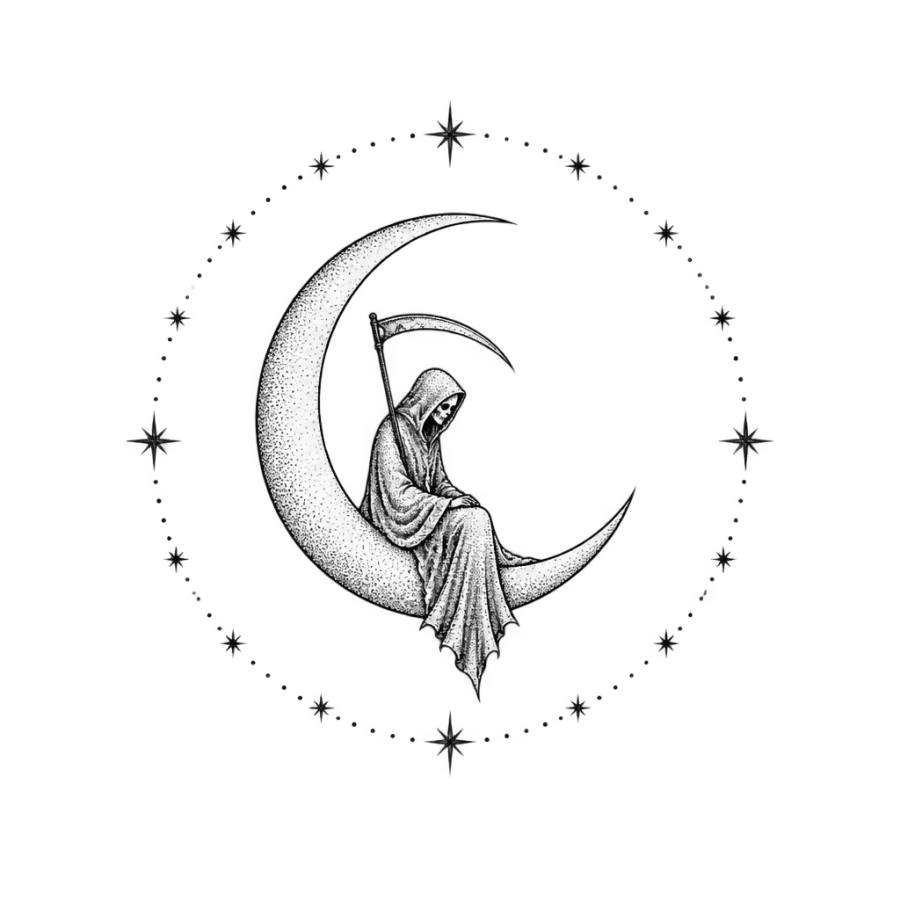
Tiny reaper sitting on a crescent moon in a star circle, fine line
Use this prompt
Reaper silhouette in negative space inside a solid black circle
Use this prompt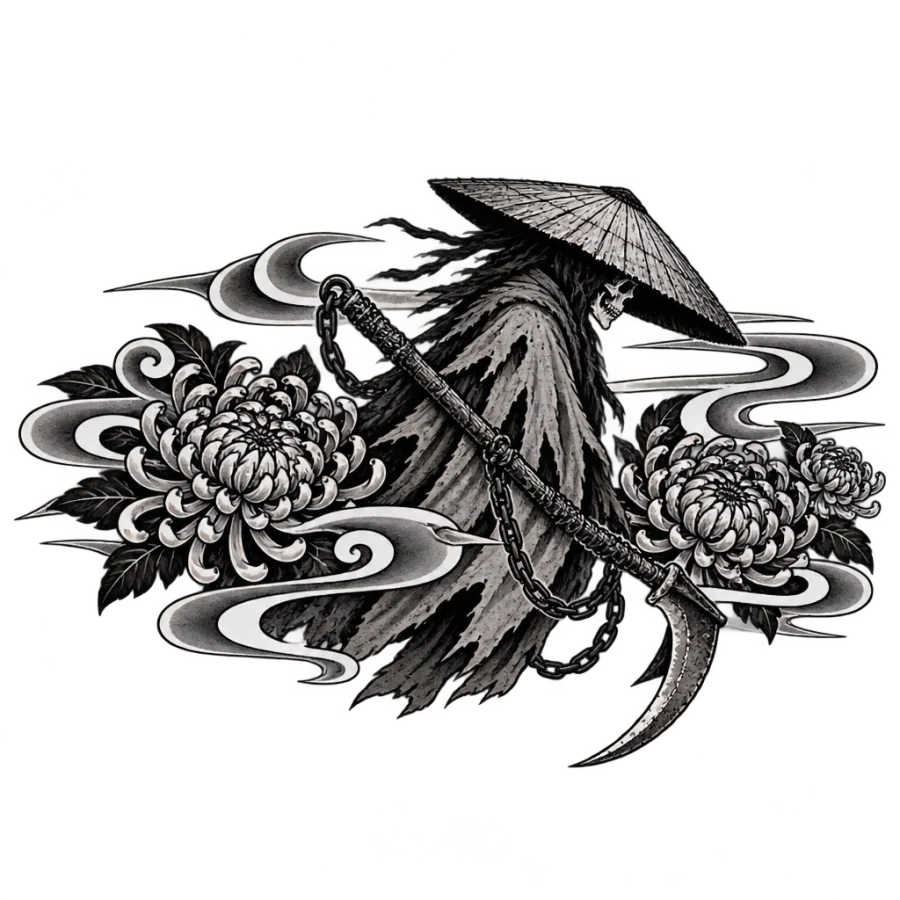
Japanese shinigami with straw hat and chained sickle, irezumi band
Use this prompt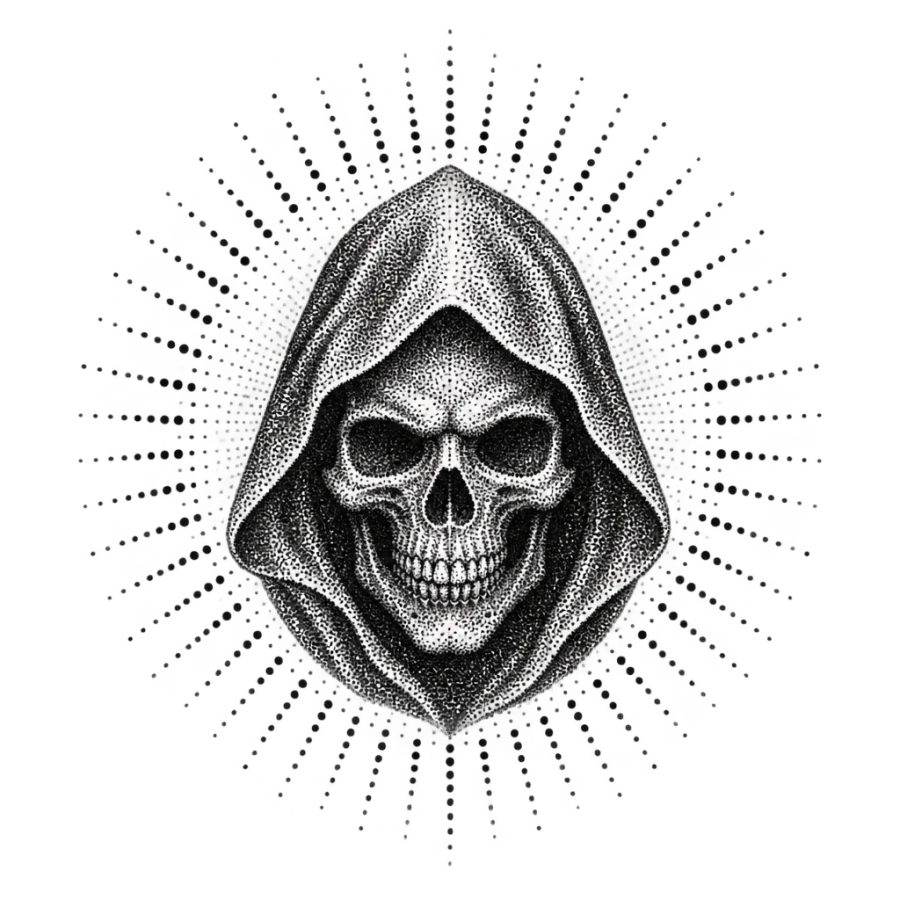
Hooded reaper skull in a dotwork sunburst, stippling only
Use this prompt
Two mirrored geometric reapers either side of a triangle hourglass
Use this prompt
Reaper in a lace robe standing under an ornamental filigree arch
Use this prompt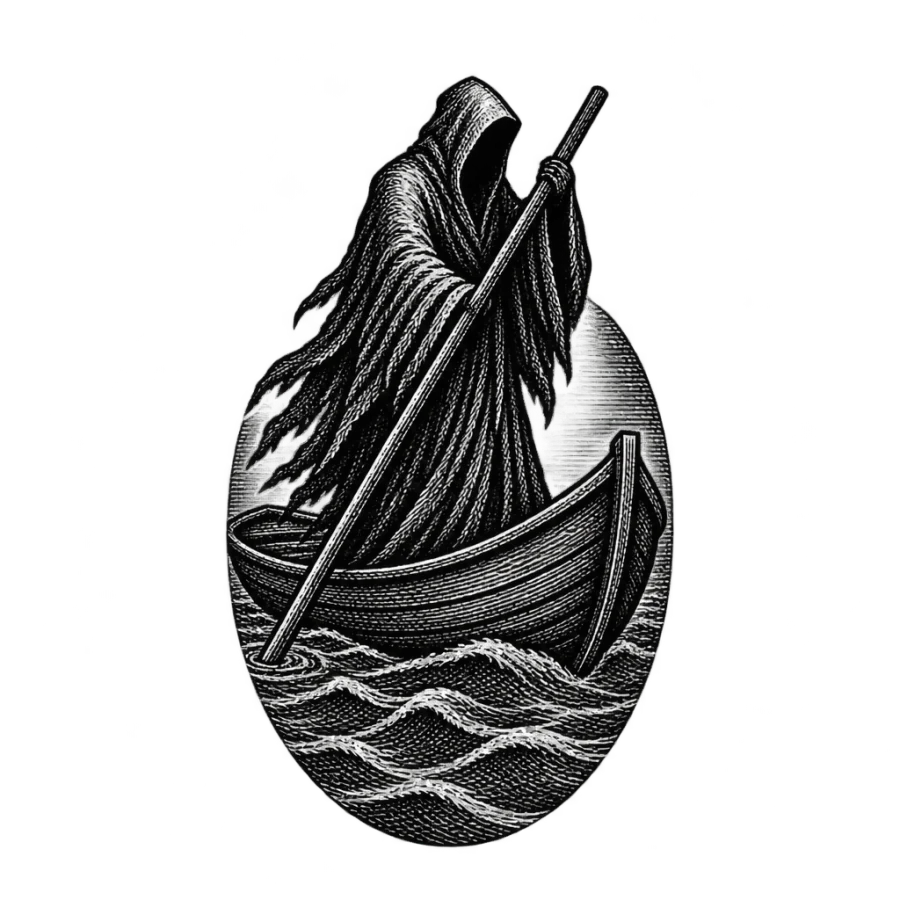
Reaper ferryman poling a boat across a river, woodcut hatching
Use this prompt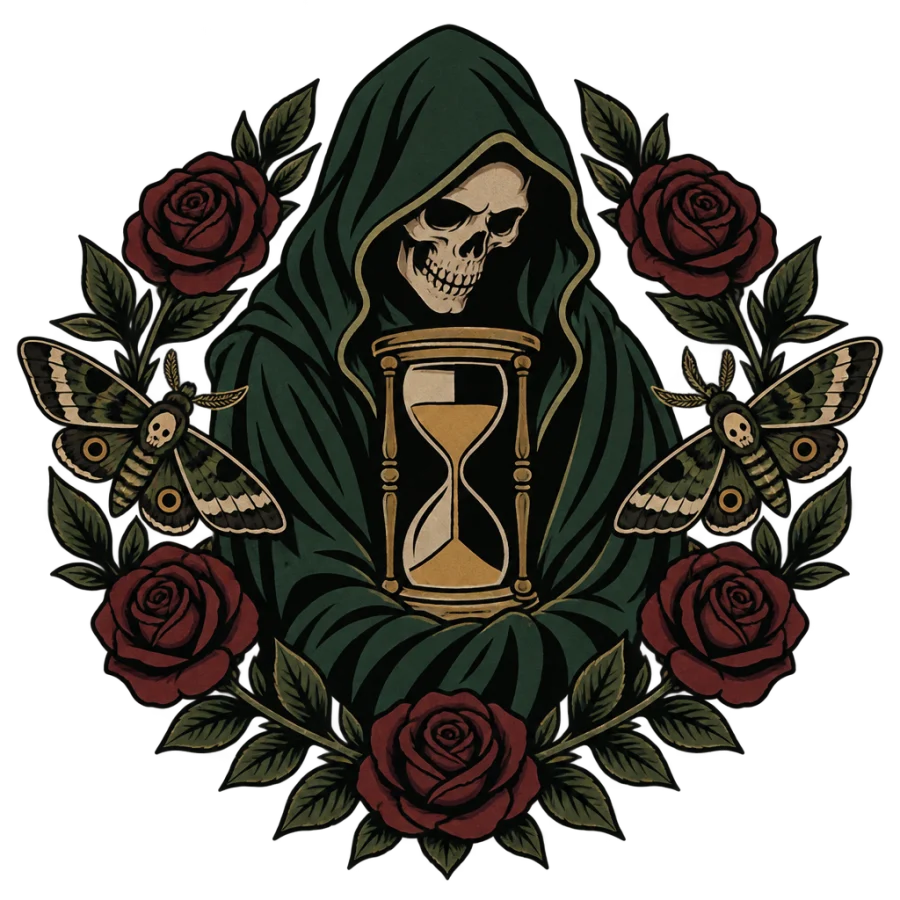
Reaper holding an hourglass in a wreath of dark roses and moths
Use this prompt
Hooded reaper leaning on a scythe in one continuous line
Use this prompt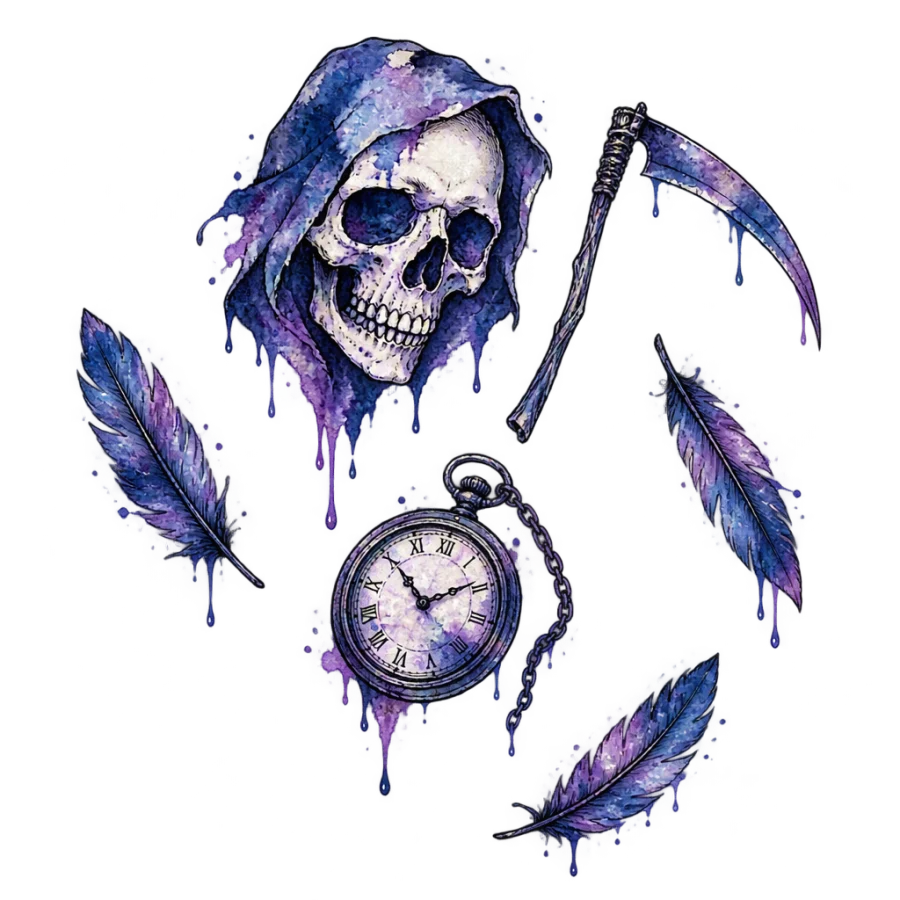
Reaper skull, scythe and pocket watch with loose watercolor washes
Use this promptDescribe an idea of your own and get four designs back in about 20 seconds.
Open the generator
Questions people ask
What does a grim reaper tattoo mean?
Usually an acceptance of dying rather than a threat. People choose it after a death, an illness or a close call, and the props steer the meaning: an hourglass makes it about time, a rose makes it a memorial, a stopped clock lets you mark a date without any lettering.
Where does the grim reaper image come from?
Late medieval European art, after the plague years of the fourteenth century, through the danse macabre and memento mori traditions. Holbein's Dance of Death woodcuts of the 1520s set the props, including the scythe and the hourglass. The English name Grim Reaper only appears in the nineteenth century.
How big should a grim reaper tattoo be?
A hooded bust holds at 10 to 15 cm, which fits a forearm or a bicep. A full standing figure with a scythe wants 25 to 35 cm so the blade and the robe folds both read. Below 8 cm the skull inside the hood closes up and the figure becomes a dark shape.
Do grim reaper tattoos age well?
Better than most heavily shaded subjects, because so much of the image is solid black and black is the most stable thing in skin. The failure is always the same: a hood built from grey instead of black loses its depth in about ten years, and the face goes with it.
Where should a grim reaper tattoo go?
The full figure is tall and narrow, so the outer forearm, the back of the calf, the outer thigh and the spine all suit it. A hooded bust works on the inner forearm, the chest, the bicep or the shoulder blade. Expect a standing figure on the ribs to bend when you lean.