Snake tattoo ideas, meaning and designs
Snakes fit bodies better than almost any other subject, because a snake is a long flexible line and a limb is a long flexible surface.
- Pain level5 / 10 on the forearm
- Healing2 to 3 weeks on the surface
- Typical size15 to 35 cm (6 to 14 in)
- Studio cost$200 to $1,200
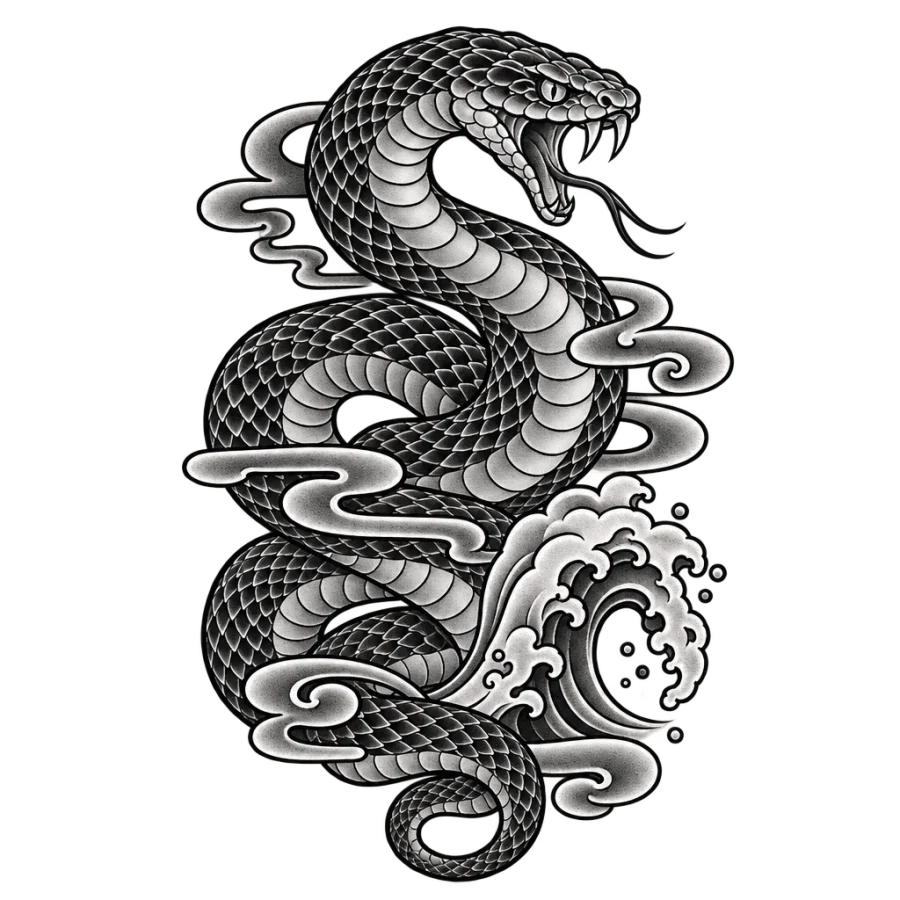
Artists like drawing snakes for a practical reason. A snake can be stretched, coiled, doubled back or threaded behind another element without ever looking wrong, so it solves composition problems that a fixed shape like a skull or a compass creates. That is also why snakes turn up as connective tissue in so many sleeves and back pieces.
The catch is that a coil has to read. Every point where the body crosses itself needs a clear over and under, and the scale rows have to change direction as the body turns. Get that wrong and you have a rope. Most artists draw the body as a continuous tapering tube first, mark the crossings, then add scales last.
The snake designs people actually ask for
A snake wrapped around a forearm or a bicep is the most requested version, and it works because the body can follow the taper of the limb. The ouroboros is the next most common, usually as a closed ring on the upper arm or the thigh. After that come the snake and dagger, the snake through a skull's eye socket, and Medusa as a portrait with the snakes treated as hair.
American traditional snakes are their own thing: a rattlesnake coiled to strike with a forked tongue out, heavy outline, three or four flat colors. That design carries American political baggage through the Gadsden flag, which is worth knowing before you put one on a visible spot. Japanese work uses the snake, or hebi, alongside peonies and waves in exactly the same way it uses the dragon.
How a snake is drawn so the coil reads
The body tapers from just behind the head to the tail, and the taper has to be consistent even where the body disappears behind itself. Belly scutes run as wide horizontal bands on the underside, and dorsal scales are smaller diamond rows that shift angle as the body twists. Artists who draw both get a snake that looks round. Artists who only draw the diamonds get something flat.
Crossings are where it succeeds or fails. At every overlap the artist needs a shadow under the upper section and a slight break in the scale rows of the lower one. In blackwork that means a gap of bare skin. In color it means a darker value. Without it the body reads as two separate ropes that happen to meet.
Details that separate a good snake from a rope
- A consistent taper from the neck to the tail tip
- Belly scutes as wide bands, dorsal scales as smaller diamonds
- A cast shadow under every crossing point
- Scale rows that change angle as the body turns
- A head with a visible jaw line, not a smooth wedge
Size, placement and what it costs
A snake wrapping a forearm from wrist to elbow measures 25 to 35 cm along the body. An armband coil is 15 to 20 cm. The floor for a scaled snake is around 12 cm, because below that the diamond rows merge into texture within a few years. A linework snake with no scales works down to 6 or 7 cm.
The spine suits a vertical snake better than almost any subject, since the body can follow the vertebrae. The sternum takes a coiled snake well. A forearm wrap is typically three to five hours at $150 to $250 an hour. A large Japanese snake with peonies and water on a thigh runs two to three sessions and $1,200 to $2,500.
Ageing, and what people come back to fix
Bold traditional snakes age as well as any tattoo, because the outline carries the shape and the color inside it is flat. Realistic snakes with individually rendered scales are the risk. A 15 cm snake with every scale outlined becomes a grey tube in about a decade, so experienced artists render scales only in the areas closest to the viewer and imply the rest.
The other fix people ask for is direction. A snake drawn head down on a forearm looks right when your arm hangs at your side and upside down in every photograph where you are holding something. Ask the artist to show you the stencil with your arm relaxed and with your hand raised before they commit.
Worth settling before the stencil goes on
- Which way the head points when your arm is relaxed
- Whether the scales are rendered everywhere or only near the viewer
- How the tail resolves, since a tail that fades out looks unfinished
- Whether a rattlesnake carries associations you would rather avoid
- How the piece connects if you extend it into a sleeve later
15 snake tattoo designs, with the prompt behind each one
Every design below came out of AI Tattoo Lab. Tap one to load its prompt into the generator, then change a word and make it yours.
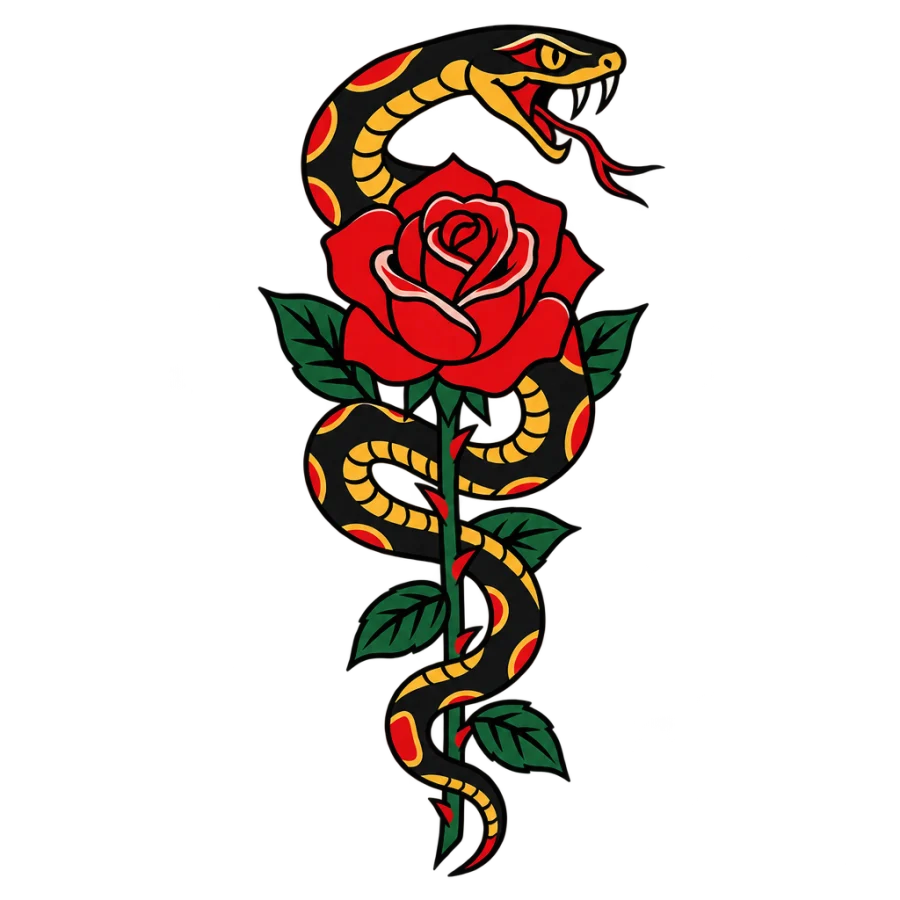
A snake coiled around an open rose with its tongue out
Use this prompt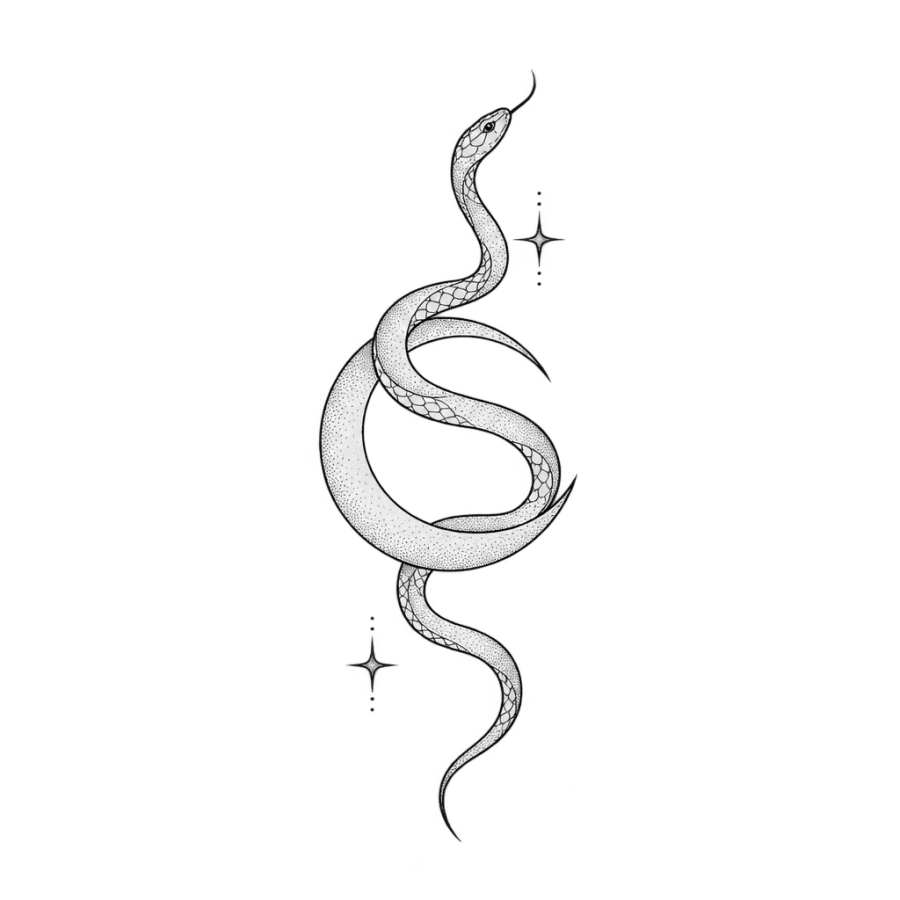
A slender snake winding through a crescent moon with two stars
Use this prompt
An ouroboros snake biting its tail, solid black ring
Use this prompt
A snake built from repeating triangles inside a hexagon, geometric
Use this prompt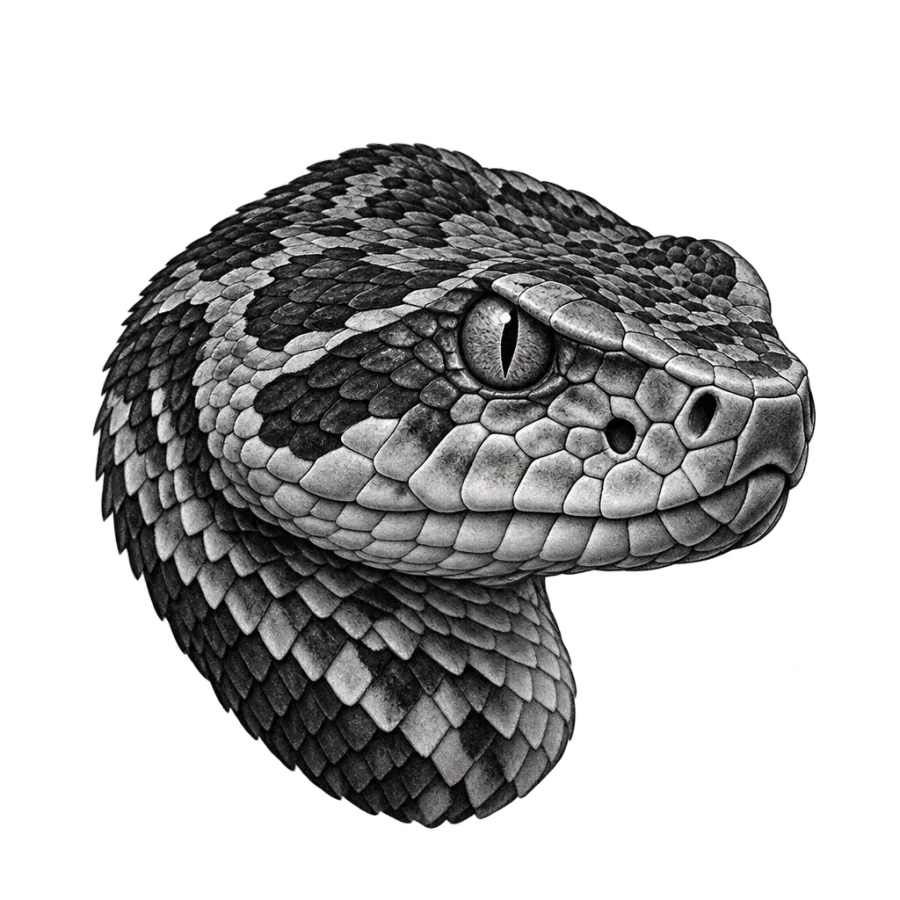
A close crop viper head in three quarter view, detailed scales
Use this prompt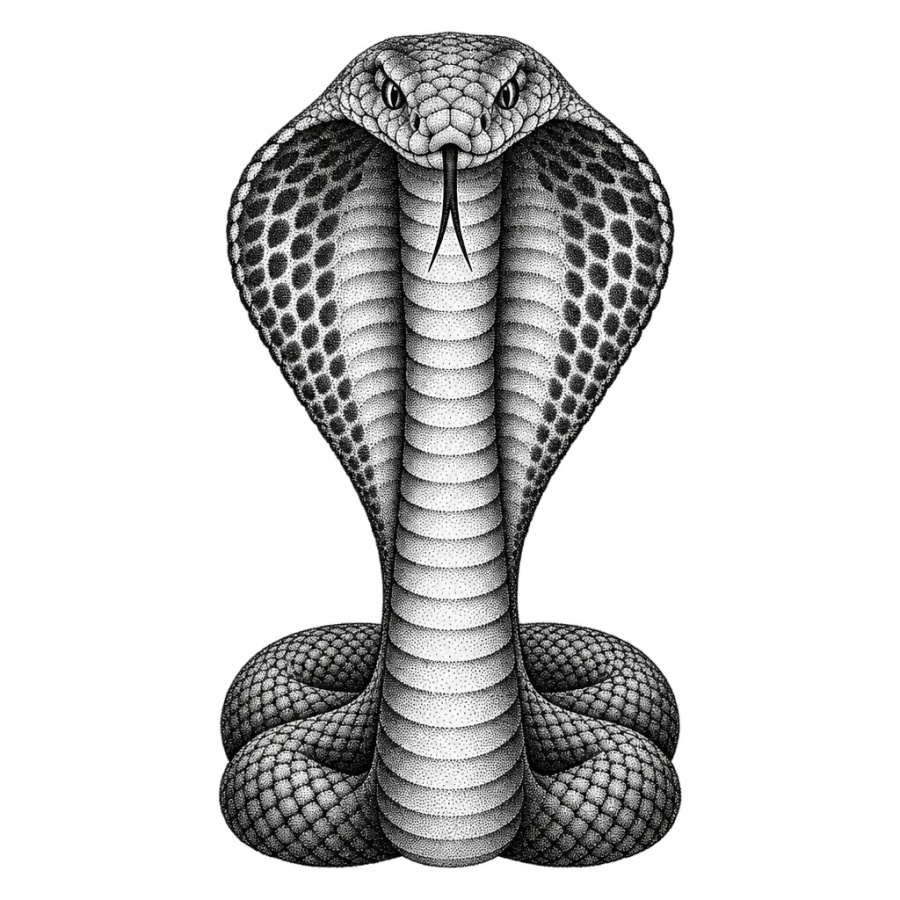
A cobra seen front on with its hood spread wide, stippled
Use this prompt
A small snake drawn in one unbroken line curving into a spiral
Use this prompt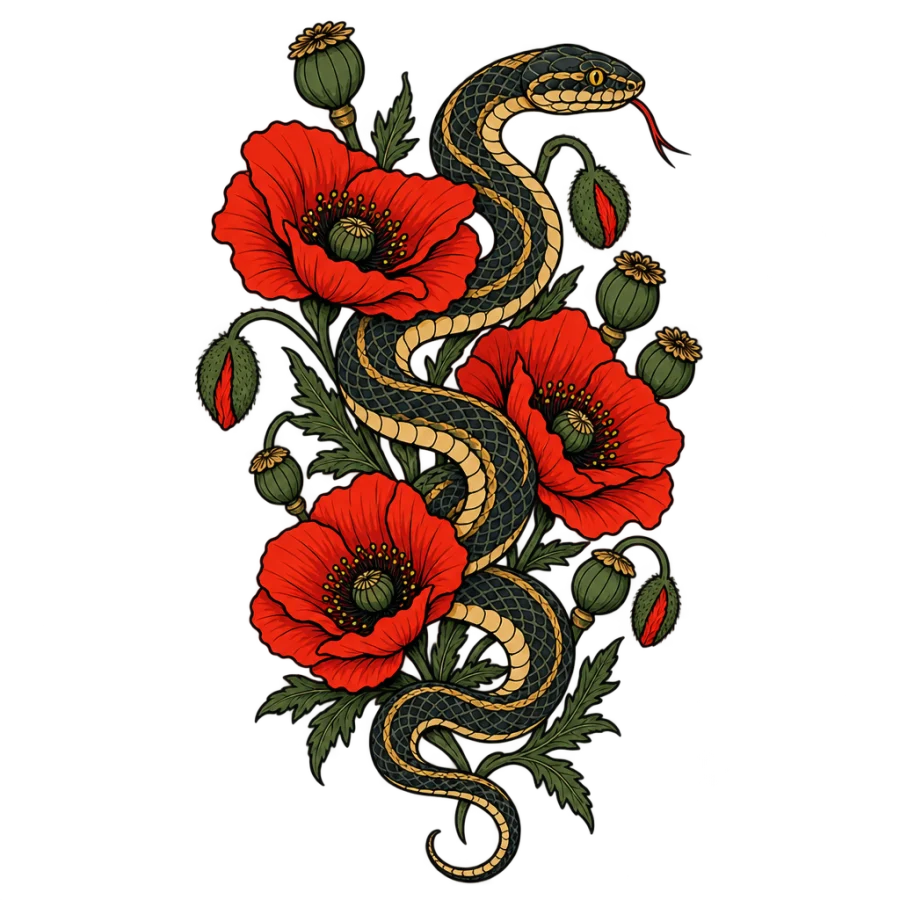
A snake weaving through poppy blooms and seed pods, colour
Use this prompt
A snake curled into a round medallion with lace mandala scales
Use this prompt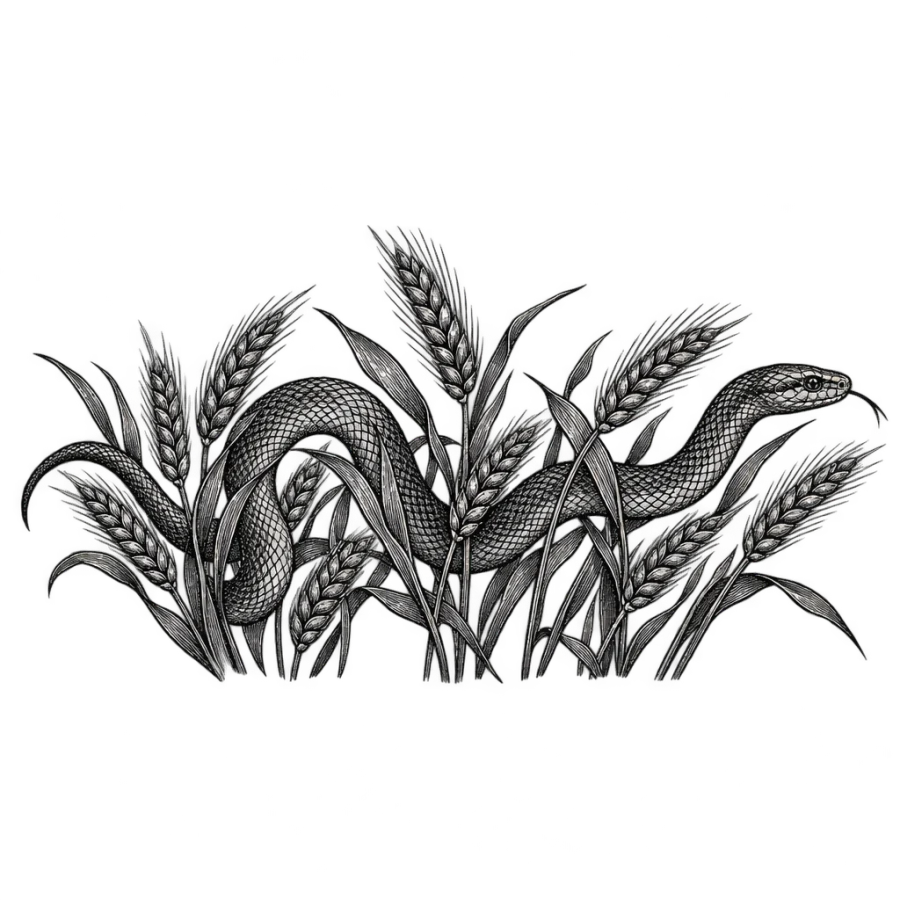
A snake gliding through tall wheat stalks, engraved crosshatch
Use this prompt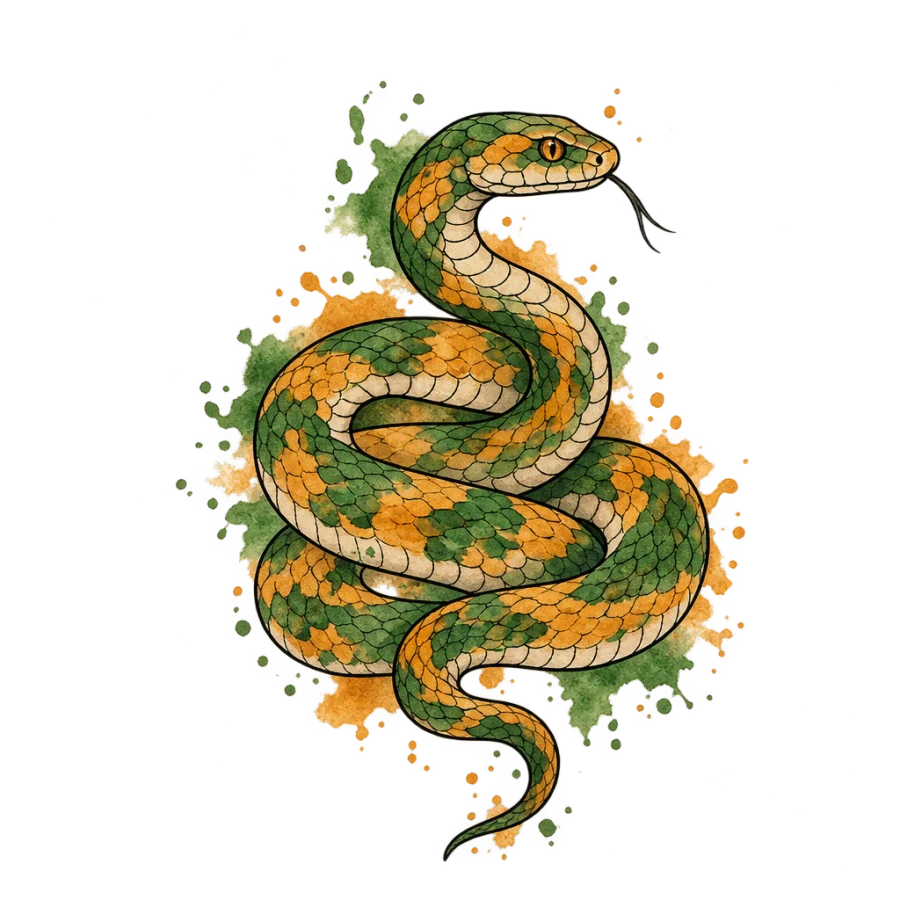
A coiled snake at rest with loose green and amber washes
Use this prompt
Two snakes twined around a winged staff, woodcut engraving style
Use this prompt
Two mirrored snakes facing each other around a single egg
Use this prompt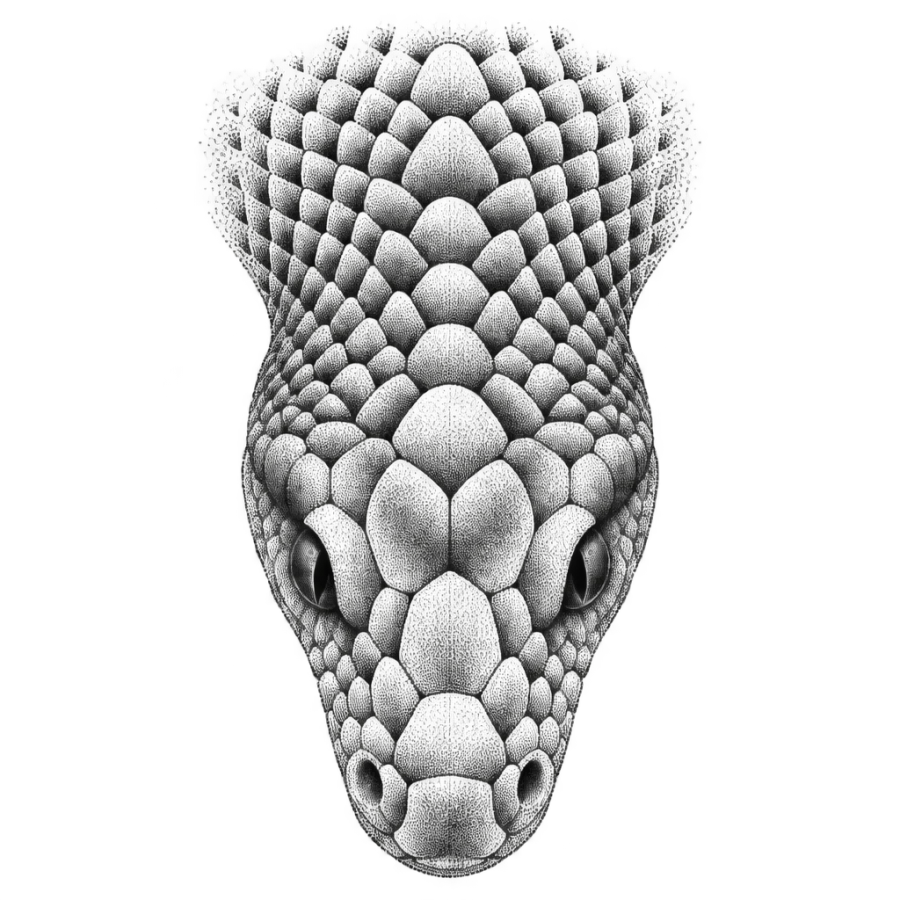
A snake head from above made only of stippled dots, no outline
Use this promptDescribe an idea of your own and get four designs back in about 20 seconds.
Open the generator
Questions people ask
What does a snake tattoo mean?
Renewal, usually, because snakes shed their skin whole. Specific designs narrow it: a snake on a staff is the Greek symbol of medicine, an ouroboros is a figure for cycles taken from Egyptian and later alchemical sources, and Medusa is often chosen by survivors of assault.
How big should a snake tattoo be?
About 12 cm for a snake with rendered scales, since the diamond rows merge below that. A linework snake with no scales holds at 6 or 7 cm. A forearm wrap runs 25 to 35 cm along the body, and an armband coil is usually 15 to 20 cm.
Is a snake tattoo bad luck?
No tradition treats it that way consistently. Japanese folk belief ties snakes to protection and to money, Greek medicine used the snake as a healing symbol, and the Eden story gives it the opposite reputation in Western Christian culture. The reading depends entirely on where you are standing.
Do snake tattoos age well?
Bold traditional and blackwork snakes age very well, because the outline carries the shape. Realistic snakes with every scale outlined blur into a tube within roughly ten years. Ask your artist to render scale detail only in the areas nearest the viewer and suggest the rest.
Which way should the snake's head point?
Look at the stencil with your arm relaxed at your side and again with your hand raised. A head down snake reads correctly hanging and upside down in photos, so most artists on a forearm point the head toward the elbow or place it on the outer side where you see it least distorted.