Moon tattoo ideas, meaning and designs
The most common error in moon tattoos is simple and permanent: the phases run in the wrong order, or the lit side faces the wrong way.
- Pain level3 / 10 on the forearm
- Healing2 weeks on the surface
- Typical size3 to 20 cm (1 to 8 in)
- Studio cost$100 to $700
A row of moon phases is one of the most requested small tattoos and one of the easiest to get wrong. The order is new, waxing crescent, first quarter, waxing gibbous, full, waning gibbous, last quarter, waning crescent. If you live in the northern hemisphere the waxing moon is lit on the right side and the waning moon on the left. South of the equator it is the other way round.
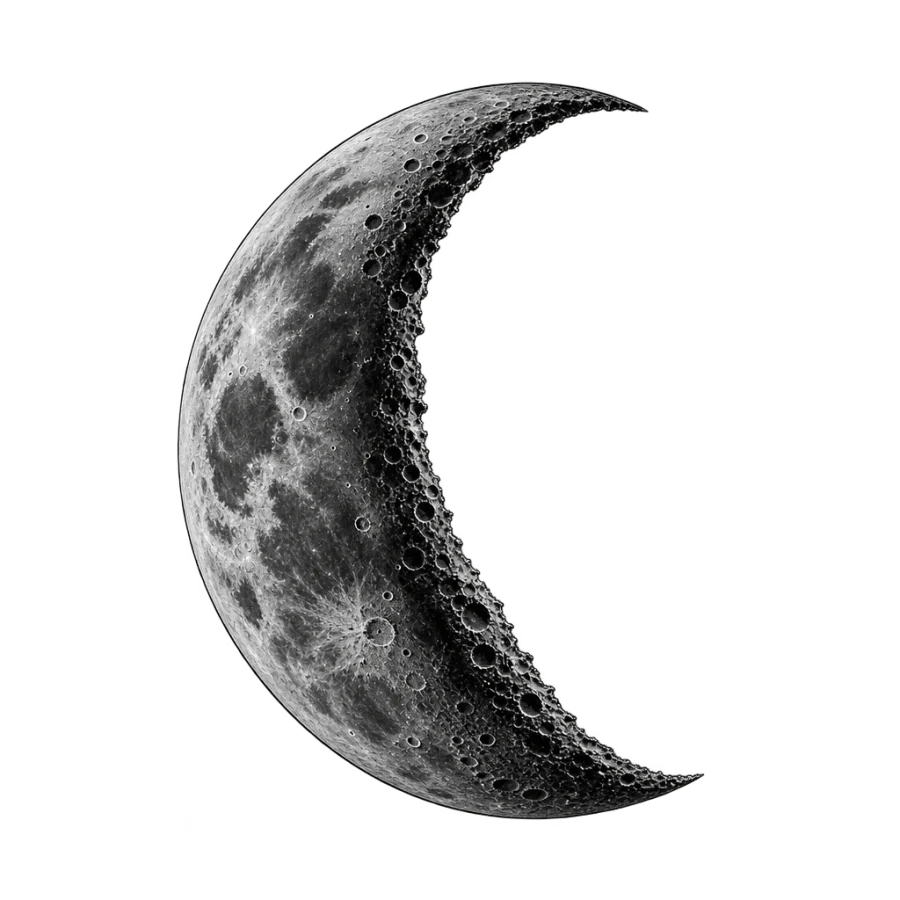
The crescent itself has a shape most people draw incorrectly. The lit edge is a circular arc, but the inner edge, the terminator, is an ellipse, so it is flatter than the outer curve. Draw a crescent from two arcs of the same radius and you get a banana. It is a small correction and it is the difference between a moon and a logo.
Getting a phase row right
Decide how many phases you want before anything else, since eight is the standard set and rows of five or seven force you to drop phases in a way that has to make sense. Then decide the direction of travel. A row read left to right that goes new through full to new again is the usual arrangement, and reversing it is a choice rather than a mistake as long as it is deliberate.
Each moon needs to be at least 1.5 cm across, and 2 cm is better, with a clear gap between them. Tight rows of 8 mm moons on a collarbone look precise for three years and then become a dotted line. A row of eight moons at 2 cm with gaps needs about 25 cm of skin, which is roughly a collarbone or a forearm.
What to check before the stencil goes on
- The eight phases in the right order, with no duplicates
- The lit side correct for the hemisphere you live in
- Each moon at least 1.5 cm across with a visible gap between them
- Gibbous phases clearly different from quarters, not almost full
- The row following a natural line on the body rather than cutting across it
Drawing a full moon that looks like the moon
A realistic full moon is recognizable because of its markings. The large dark plains, the maria, sit in a specific arrangement, with Mare Imbrium and Mare Serenitatis in the upper half and Oceanus Procellarum spreading down the left as we see it. The bright crater Tycho sits near the bottom with rays streaking out from it. Get those roughly right and the moon reads instantly.
Random craters scattered evenly across a circle read as a golf ball. Most artists work from a photograph and simplify, keeping the big shapes and dropping the small craters entirely. Dotwork and whip shading both suit this, though dotwork needs at least 8 cm so the stipple at the edges of the maria has room to stay separate.
Size, placement and style
A plain crescent works at 3 cm and a detailed full moon wants 8 to 12 cm. The crescent shape suits curved areas: behind the ear, the inner wrist, the back of the neck and the shoulder cap. Phase rows want a long straight run, so collarbone, forearm, spine and the line under the chest are the usual choices.
Blackwork moons with solid fill last longest. Dotwork moons are the most popular and the most variable, since a thinly stippled moon can lose its edges over fifteen years. Fine line crescents hold well because the shape is simple. If you want the moon to still be crisp at twenty years, ask for heavier stipple than looks right on the day.
Combinations, and what people change
Moons pair with almost everything, which is why they turn up as a frame around another subject more than as a subject themselves. A crescent holding a botanical, a moth or a small landscape is one of the most requested designs in fine line work. Stars alongside a moon need care, since a crescent and a star sitting together is a specific symbol in its own right.
The change people ask for most often is adding a date, usually a birth. A phase row where one moon matches the phase on a particular night is a good version of this, and it takes thirty seconds to look up. Getting that phase wrong is the sort of thing you will notice every time you look at it.
15 moon tattoo designs, with the prompt behind each one
Every design below came out of AI Tattoo Lab. Tap one to load its prompt into the generator, then change a word and make it yours.
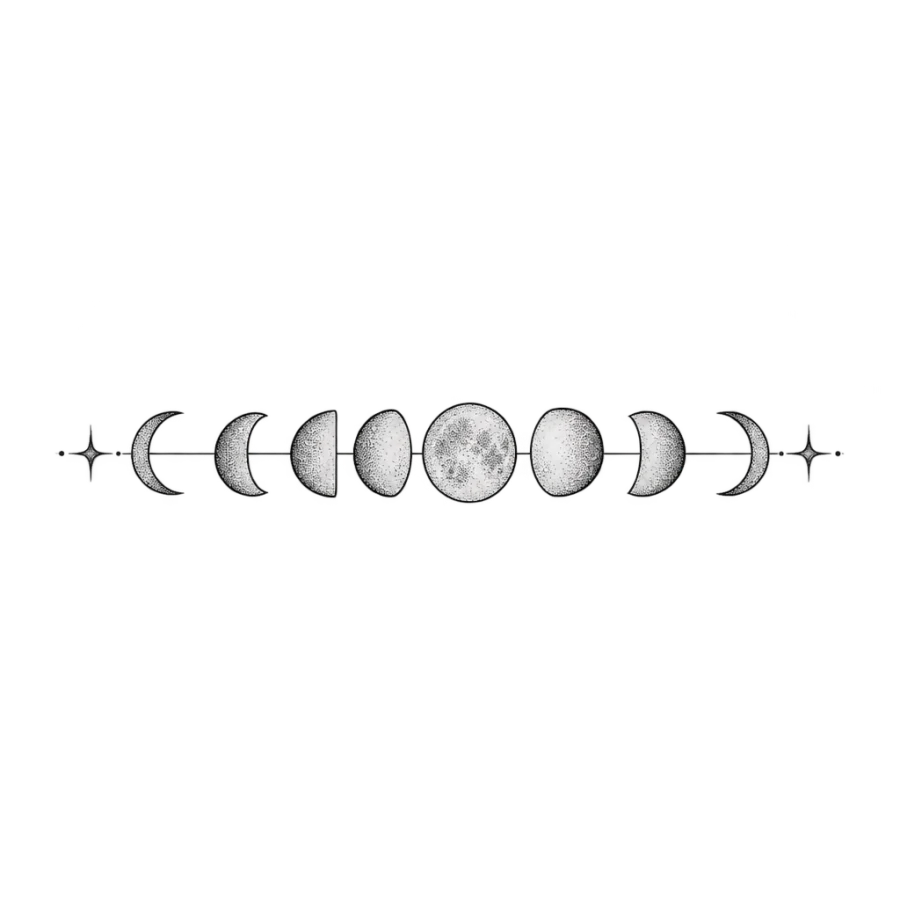
A row of the eight moon phases on a thin line, fine line tattoo
Use this prompt
A solid black full moon with craters left as negative space, blackwork
Use this prompt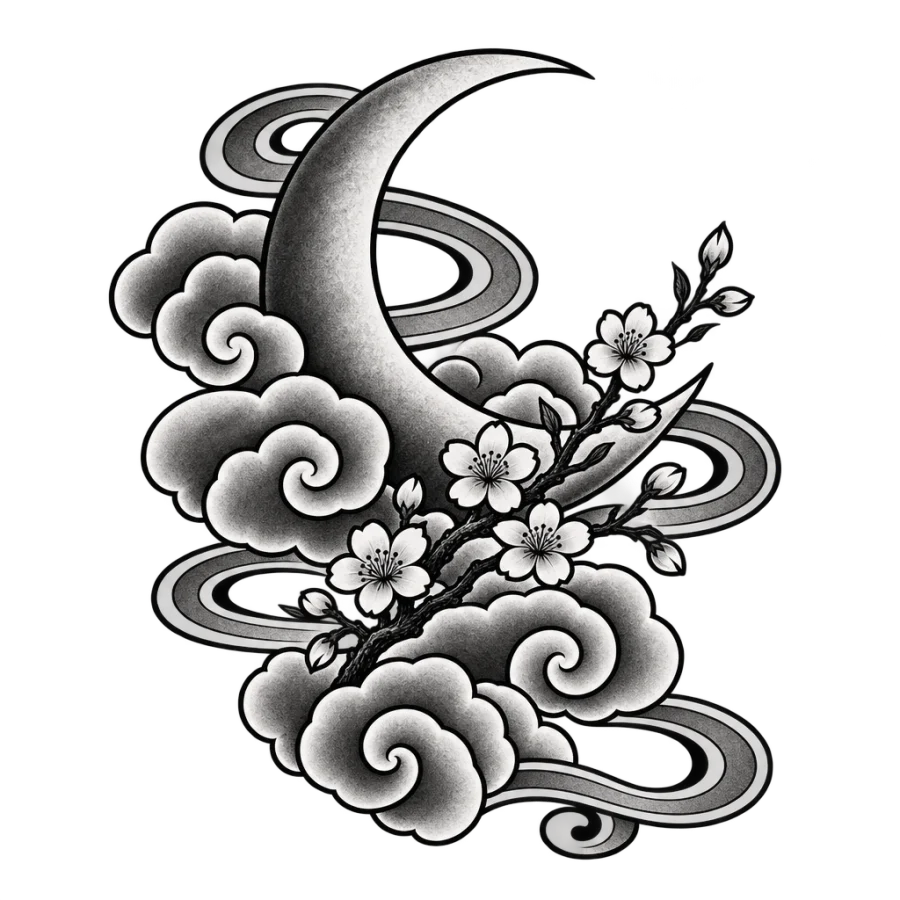
A crescent moon rising through clouds with cherry blossom, Japanese irezumi
Use this prompt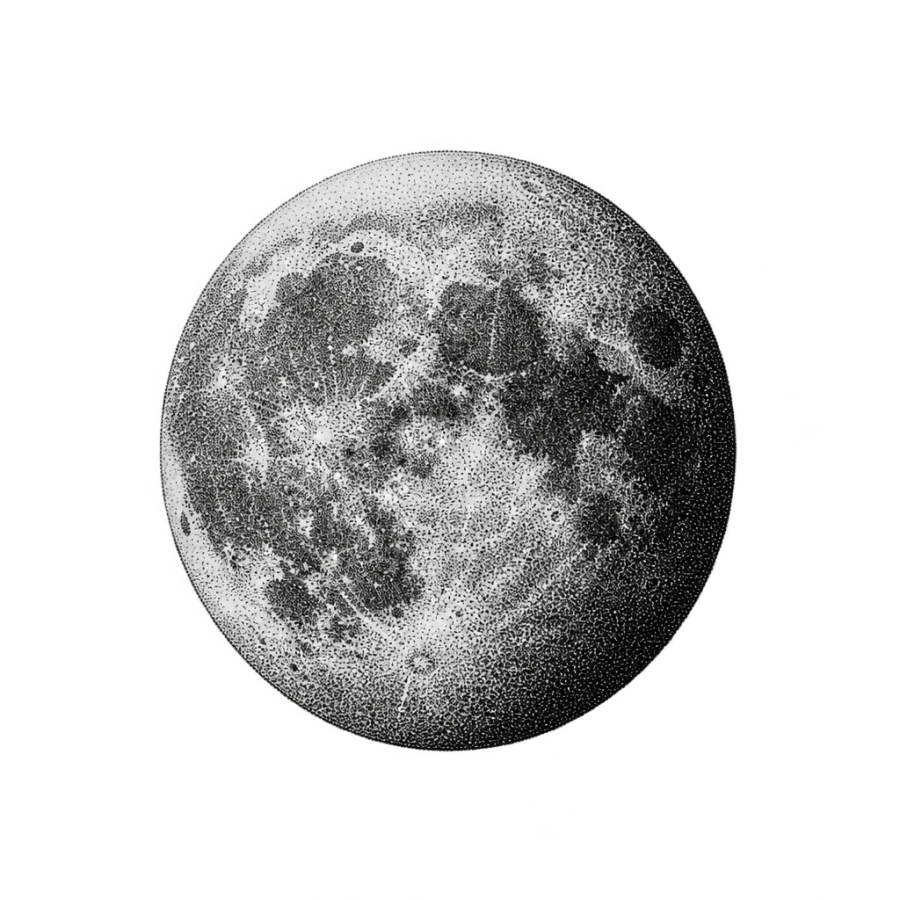
A full moon as a soft graded ball of dots, dotwork stippling only
Use this prompt
A crescent moon from overlapping circles inside a hexagon, geometric line work
Use this prompt
A crescent moon in lace scrollwork with a hanging gem, ornamental filigree
Use this prompt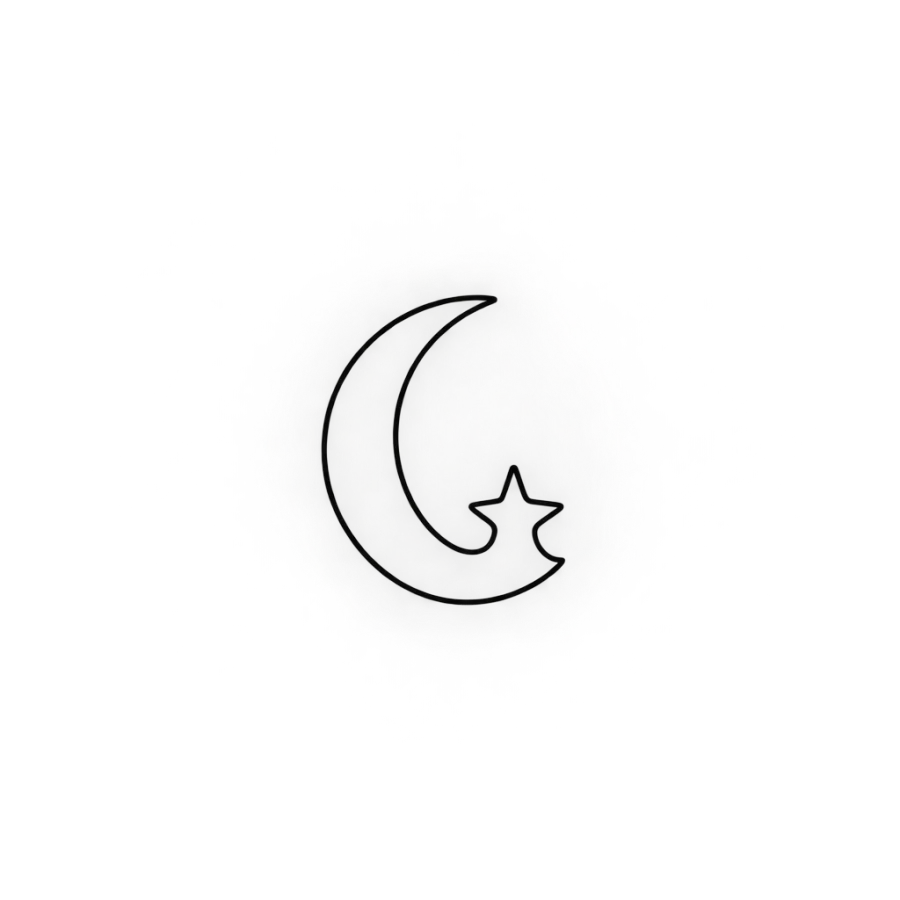
A slim crescent moon with a tiny star in its curve, single line
Use this prompt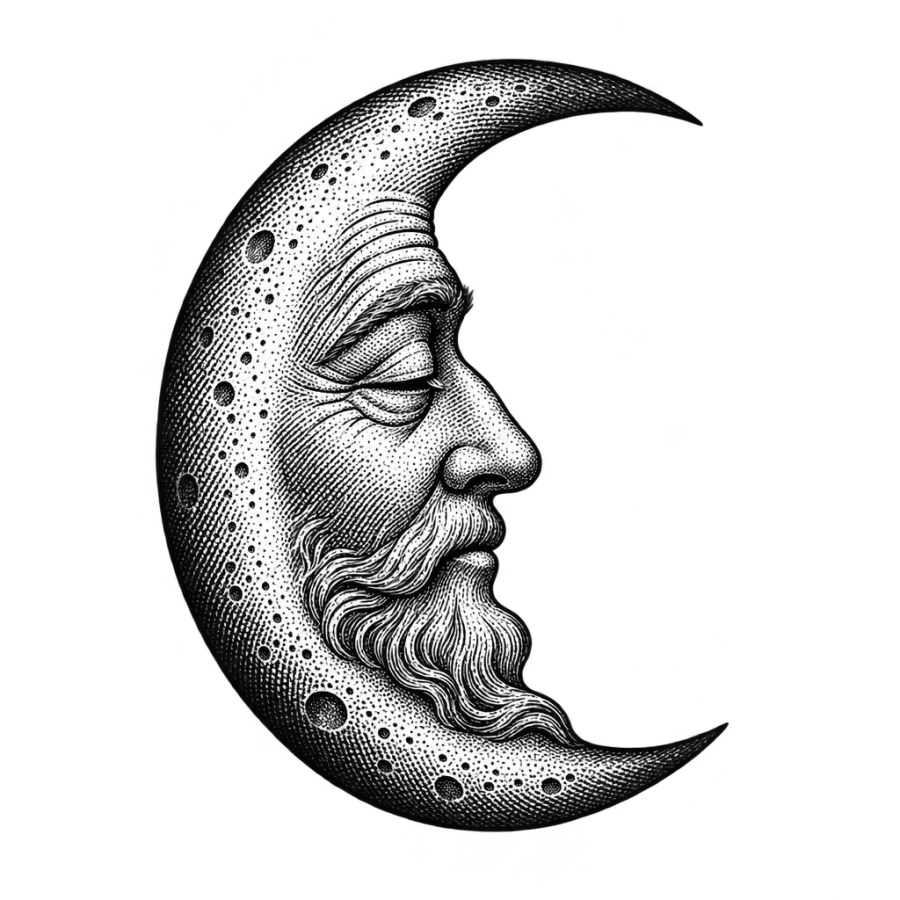
A sleepy man in the moon face inside a crescent, antique engraving
Use this prompt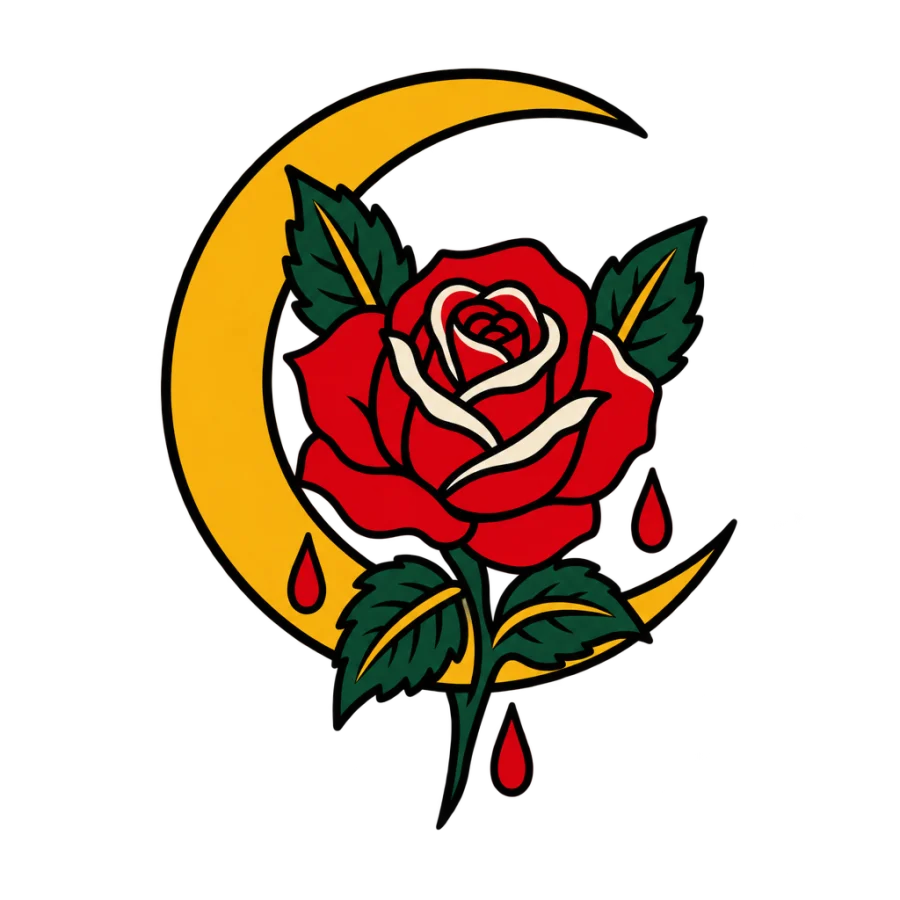
A crescent moon cradling an open rose, American traditional flash
Use this prompt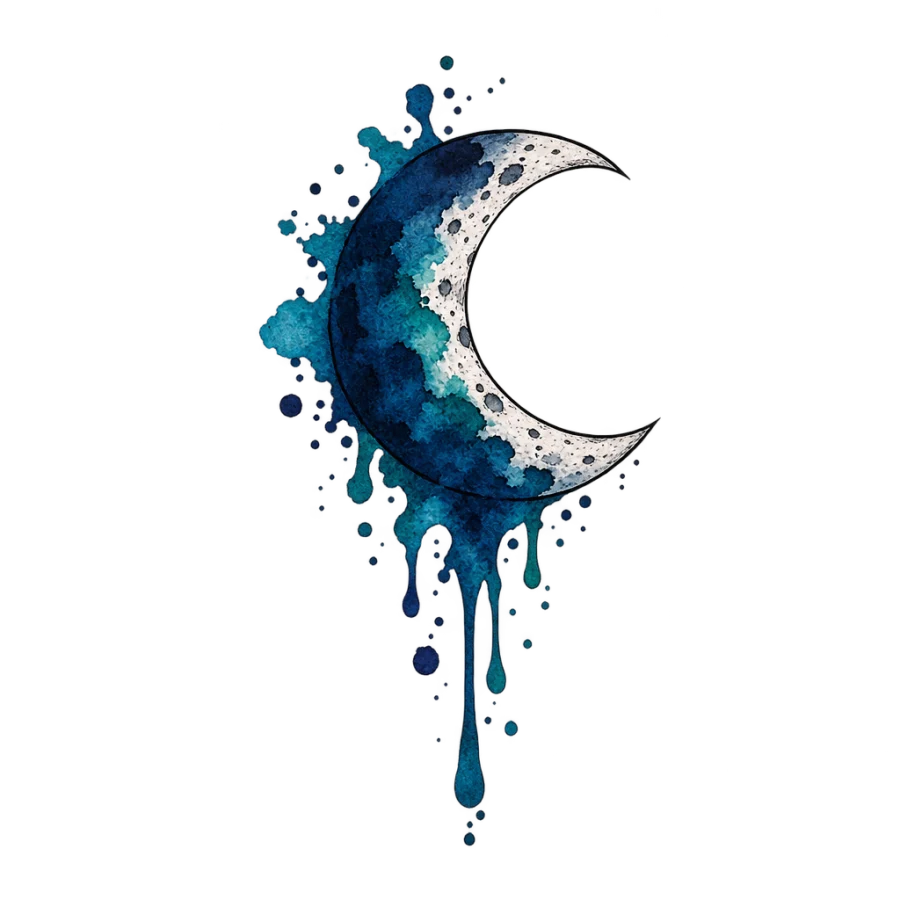
A half moon with indigo and teal washes spilling out, watercolor tattoo
Use this prompt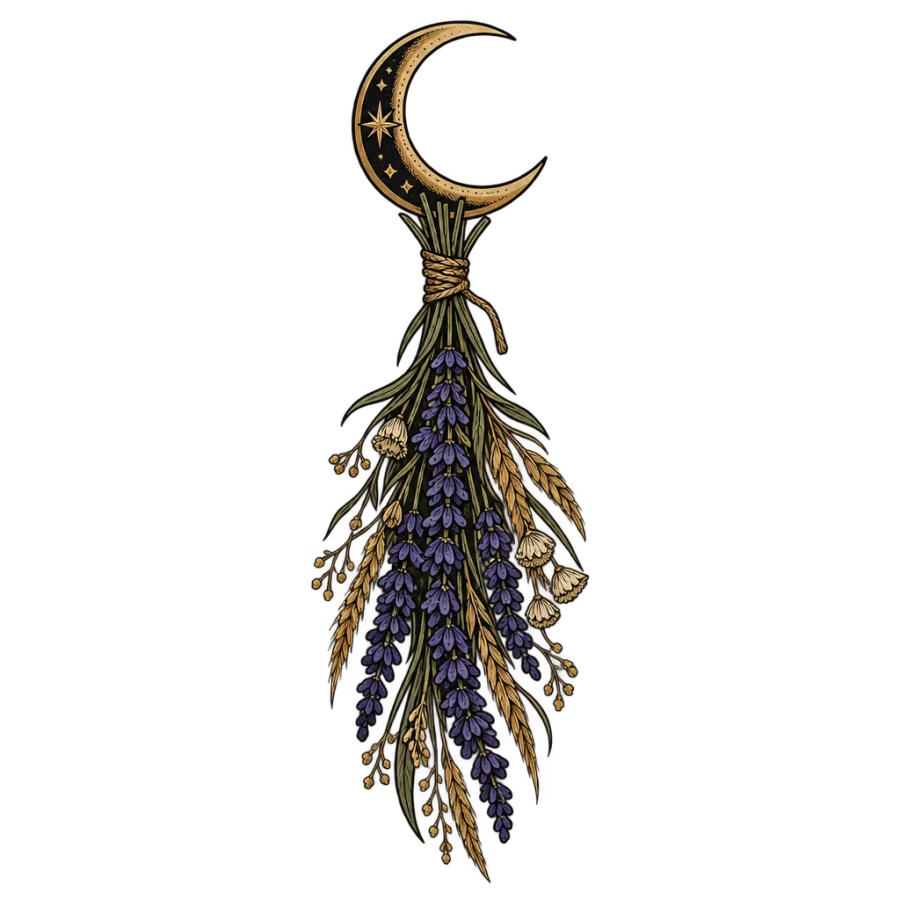
A crescent moon above hanging dried lavender, neo traditional column
Use this prompt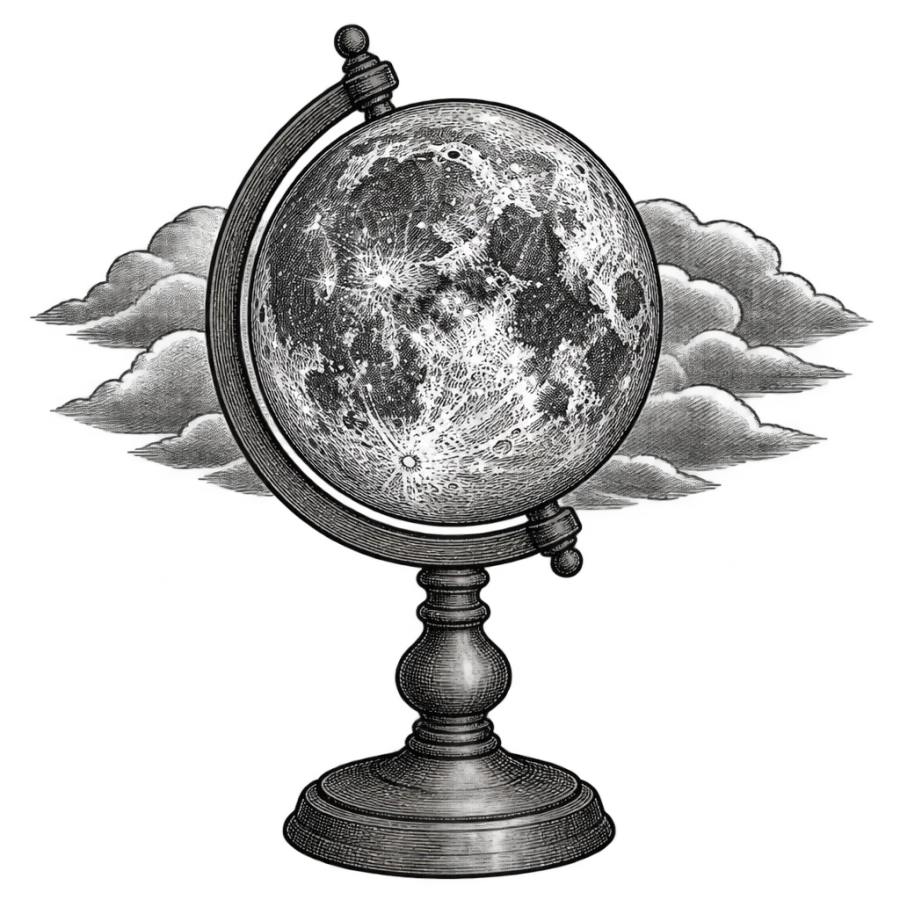
Moon globe on a wooden cradle stand with hatched clouds behind
Use this prompt
Two mirrored crescent moons around an eight pointed star, symmetrical
Use this prompt
Crescent moon with a star hanging from its tip, one continuous line
Use this promptDescribe an idea of your own and get four designs back in about 20 seconds.
Open the generator
Questions people ask
What order do moon phases go in?
New, waxing crescent, first quarter, waxing gibbous, full, waning gibbous, last quarter, waning crescent. In the northern hemisphere the waxing moon is lit on the right and the waning moon on the left, and south of the equator that is reversed. Check both before the stencil goes on.
How big should each moon in a phase row be?
At least 1.5 cm across, and 2 cm is safer, with a clear gap between them. A full row of eight at that size needs roughly 25 cm of skin. Rows of 8 mm moons look precise when fresh and blur into a dotted line within a few years.
What does a moon tattoo mean?
Cycles, usually, and accepting that things come and go on their own schedule. Selene, Luna and Artemis are where most of the association with women comes from. The crescent and star came into Islamic symbolism through the Ottoman Empire.
Why do crescent moon tattoos look flat?
Because both edges were drawn as arcs of the same radius. The lit outer edge is a circular arc, but the inner edge is an ellipse and therefore flatter. Making that one adjustment is what turns a banana shape into something that reads as a moon.
Do dotwork moon tattoos last?
They can, and it depends entirely on dot spacing. Stipple placed close together merges into solid grey over ten to fifteen years, and stipple placed too sparsely fades out at the edges. Ask for healed photographs at five years before booking a large dotwork moon.