Tattoo fading and touch ups: what to expect
Every tattoo fades. How fast depends on where it sits, how much sun it takes, and how the artist built it in the first place.
The short version
- UV light is the single biggest cause of fading. Daily SPF 30 or higher on healed tattoos slows it more than anything else.
- Hands, fingers and feet fade fastest. Inner arm, upper back and thigh fade slowest.
- Most artists offer one free touch up in the first 3 to 6 months for patchy healing, not for fading years later.
- Bold lines and solid black stay legible. Pale washes and hair thin lines soften first.

Fading is not a fault. It is what skin does to any foreign pigment held inside it, continuously, for the rest of your life. A tattoo you get this year will look slightly softer next year and noticeably softer at ten. The question is never whether it fades but whether it still reads clearly when it does, and that is decided by style, placement and sun.
None of this is a reason to avoid delicate work. It is a reason to know what you are signing up for. This guide covers why fading happens, a realistic timeline, which body areas go first, what sunscreen does and does not do, how touch ups work including the etiquette around asking, and when the honest answer is a rework rather than a touch up.
Why tattoos fade
Ink is deposited in the dermis, below the layer of skin that constantly sheds. Your immune system treats those pigment particles as debris and sends macrophages to engulf them. The particles are too large to carry away, so the cells hold them in place, die, and are replaced by new cells that pick the same pigment back up. That slow handover is stable but not perfect, and a small fraction of pigment drains away each cycle.
UV light accelerates it directly by breaking pigment particles into fragments small enough for the body to actually remove. That is why a shoulder that catches summer sun every year looks years older than an inner arm tattooed the same day. Depth matters too. Ink placed too shallow sheds during healing, ink placed too deep spreads and blurs, and only a correct depth in the mid dermis stays sharp.
A realistic fading timeline
The changes below assume a well executed tattoo with ordinary sun exposure and no deliberate care beyond moisturizer. Diligent SPF pushes the whole table several years later. Tanning beds pull it several years earlier. Skin tone matters as well. Fairer skin takes more UV damage for the same hours outdoors, while on deeper skin tones light greys and pale colors read faintly from the start, so they have less room to fade before they disappear.
| Time | What you see | What to do |
|---|---|---|
| Weeks 2 to 4 | Cloudy, dull, slightly patchy | Nothing. This is the healing layer |
| Months 2 to 3 | Sharp and settled, true final look | Start daily SPF from here |
| Year 1 | Essentially unchanged | Moisturize, note any patchy spots |
| Years 3 to 5 | Fine lines soften, pale color lifts | First touch up if fine line work |
| Years 8 to 10 | Lines thicker, contrast lower | Touch up or rework if needed |
| Year 20 | Shapes read, details merged | Bold work still strong, fine work soft |

Which placements fade fastest
Friction and skin turnover decide it. Fingers are worst by a wide margin, because the skin there is thin, it renews quickly, and your hands touch everything all day. Many artists will not tattoo fingers, and those who do usually warn you that a touch up is coming within a year and that it may never look crisp.
Hands, feet, elbows, the outside of the knee and the inner lip follow for the same reasons. Sun exposed areas form a second group: the shoulder, the outer forearm and the calf take far more UV over a lifetime than most people realize. The slowest fading spots are padded, covered and low friction, which means the inner arm, the upper back, the chest and the thigh.
Fastest to slowest
- Fingers and inner lip: months to a year
- Hands, feet, elbows, knees: 2 to 4 years before visible loss
- Shoulder, outer forearm, calf: sun driven, 5 to 8 years
- Ribs, spine, neck: moderate, mostly protected
- Inner arm, upper back, chest, thigh: slowest, a decade or more
Sun and SPF, specifically
Once a tattoo is fully healed, meaning about three months rather than three weeks, sunscreen is the highest value habit you have. Use SPF 30 or higher, broad spectrum, and apply it whenever the area will be uncovered outdoors for more than twenty minutes. Reapply every two hours in real sun. Mineral formulas with zinc oxide sit well on tattooed skin and do not sting.
Do not put sunscreen on a healing tattoo. For the first two to three weeks, cover the area with loose clothing instead. Chemical filters on broken skin cause irritation and can pull ink. Skip tanning beds permanently, since they deliver concentrated UV and will visibly age a tattoo in a couple of seasons. Clothing and shade beat any product.
What ages well, by style
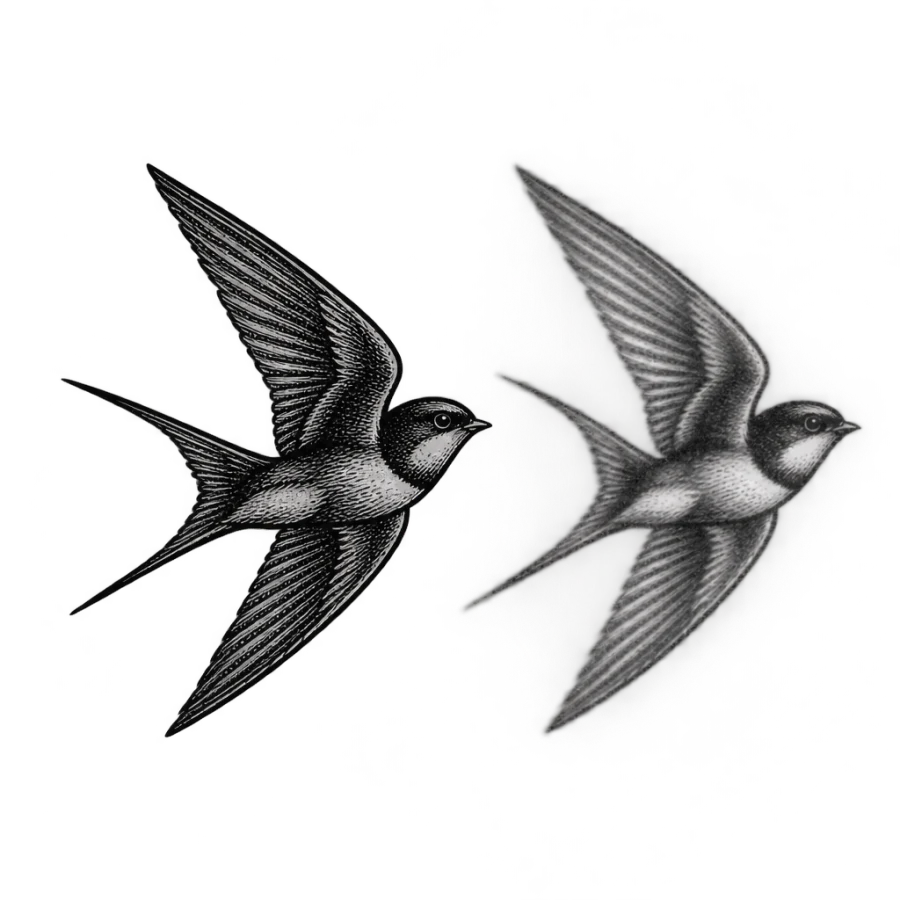
Contrast is what survives, not detail. American traditional, blackwork and Japanese irezumi hold up for decades because heavy outlines and saturated black stay readable even after every line has spread slightly. Ornamental and neo traditional are close behind, since both keep real structure under the decoration. Dotwork sits in the middle: individual dots last well, but light dot fields eventually merge into flat grey.
The styles that need maintenance are the ones built on low contrast or minimal line weight: fine line, minimalist, watercolor and black and grey realism. Fine line is often noticeably soft by year eight. Watercolor without a black anchor can look washed out by year five. None of this makes them wrong choices, it just means budgeting a touch up every five to eight years rather than assuming the piece is finished.

Touch up etiquette and timing
There are two different things people call a touch up. The first is fixing patchy healing: a small area where ink did not take, a line that healed light, a spot that scabbed off. That is normal, it happens to good artists, and most studios fix it free within the first 3 to 6 months. Wait until the tattoo is fully healed at 6 to 8 weeks before judging it, because week three looks bad on everybody.
The second is refreshing a tattoo that has faded over years. That is a paid job. Expect the shop minimum, commonly $80 to $150, or an hourly rate for anything substantial. Go back to the original artist when you can, since they know the piece and can match line weight and ink. Book it as a normal appointment rather than asking for a quick favor, and never blame the artist for ordinary fading.
Two things put artists off. Asking for a free touch up on a piece you did not aftercare properly, picked at, or took to the beach in week two. And showing up unannounced expecting to be squeezed in. Message, describe the issue, attach a clear photo in daylight, and ask what they would like to do.

Slowing it down day to day
Beyond sunscreen, the useful habits are unglamorous. Keep the skin moisturized, since hydrated skin is more translucent and the ink underneath reads brighter. Drink enough water and eat reasonably, because skin quality is systemic. Avoid large weight swings where you can, particularly over the stomach, ribs and inner upper arm where stretching distorts a design rather than fading it.
Skip the products that promise to brighten or restore tattoos. Nothing topical reaches the dermis where the ink is. What works is sun protection, moisture, and not smoking, which measurably degrades skin over time. That is the entire evidence based list. Tattoo balms are fine as moisturizer and nothing more, and they usually cost three times what an unscented lotion costs for the same job.
When a touch up is not the answer
If the lines have spread into each other, adding ink on top makes it worse. Once the internal gaps in a design have closed, more pigment in the same area just creates a darker mass. At that point the options are a rework, where the artist redraws the piece larger with proper spacing, or a cover up.
The same applies to fine line pieces that were too small from the start, and to tattoos that have blown out, where ink placed too deep has bled into a grey halo around the lines. Blowouts cannot be touched up away. They are handled by redesigning around them or by laser. An honest artist will tell you which of these you are facing, and it is worth asking two of them.
Questions people ask
How long before a tattoo starts to fade?
Real fading starts around year three to five for most work, though the tattoo looks dull between weeks two and four during healing, which is different and temporary. Fine lines and pale color soften first. Bold outlines and solid black hold for decades. Sun exposure is the biggest variable and can pull that timeline in by years.
Do tattoo touch ups hurt?
Usually less than the original, because the session is short and covers a small area. Working over scar tissue or heavily reworked skin can feel sharper, and a touch up on a tender spot such as the ribs or ankle still feels like a tattoo. Most touch ups take 20 minutes to an hour.
Is the first touch up free?
At most studios, yes, for patchy healing within the first 3 to 6 months. It is not free if the patchiness came from picking at scabs, sun exposure during healing or swimming too early. Refreshing a piece that has faded over several years is always a paid appointment, usually at the shop minimum of $80 to $150.
Does sunscreen really keep tattoos from fading?
It genuinely helps, more than anything else you can do. UV breaks pigment particles into fragments small enough for your body to clear, so blocking it directly slows the loss. Use broad spectrum SPF 30 or higher on fully healed skin and reapply every two hours outdoors. Never put sunscreen on a tattoo that is still healing.
Can a faded tattoo be made to look new again?
Often, if the structure is intact. An artist can redraw lines and repack black to restore contrast. If the lines have spread into each other and the internal gaps have closed, adding ink makes it muddier instead. Then the choice is a rework at a larger size or a cover up, and a good artist will tell you which.