Elephant tattoo ideas, meaning and designs
An elephant gives an artist two things almost nothing else does: an enormous flat ear to decorate and skin texture that reads as texture even at a distance.
- Pain level5 / 10 on the thigh
- Healing3 to 4 weeks on top
- Typical size10 to 30 cm (4 to 12 in)
- Studio cost$250 to $1,200
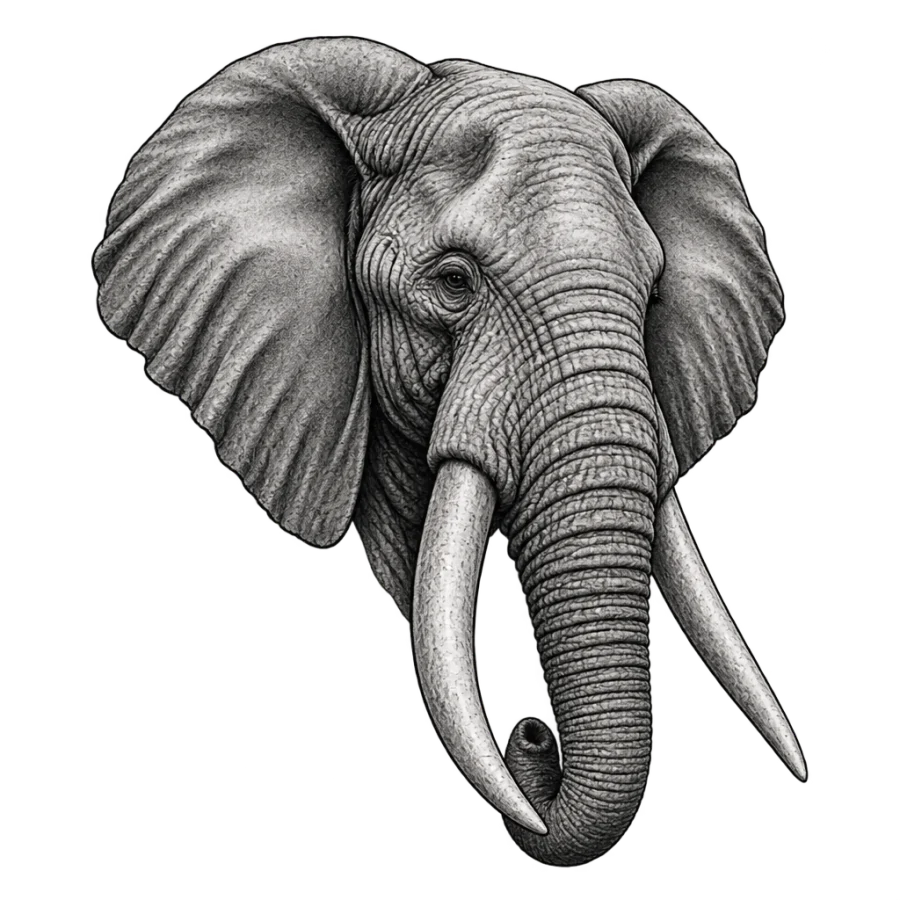
Elephants carry different weight in different places. In Hinduism, Ganesha is the elephant headed god people pray to before starting something, which is why many Ganesha tattoos mark the start of a business or a move. In Buddhist accounts, Queen Maya dreamed of a white elephant before the Buddha was born, and white elephants have been treated as royal property in Thailand and Myanmar for centuries.
Then there is the animal itself. Elephant herds are led by the oldest female, calves stay with their mothers for years, and the species is one of the few that behaves oddly around the bones of its own dead. That behavior is why so many people get an elephant for a mother, a grandmother or a family that stayed together.
Head on or side on changes everything
A front facing elephant is wide: two ears spreading either side of the head, roughly square in proportion. That shape belongs on the chest, the upper back, the shoulder blade or the outer thigh. A side view elephant is long and low, better across the forearm, the ribs or the collarbone. Choosing the view before the style saves a lot of stencil work later.
The ear is the part artists build the design around. Ornamental and mandala work sits naturally inside that flat fan shape, and that is where the decorated elephant came from. If you want the animal rather than the pattern, ask for the wrinkles instead: the deep creases behind the ear and along the trunk are what make an elephant look like an elephant.
Decide these before the stencil
- Front facing for chest, back and thigh, side facing for forearm and ribs
- Ear left plain for a naturalistic animal or filled with pattern for ornamental work
- Trunk position, since a raised trunk adds 20 to 30 percent to the height
- Tusks in or out, because tusks change the read from gentle to imposing
Styles, and what each one asks for
Black and grey realism suits elephants better than most animals because the skin is built from creases that hold tonal separation. It needs room. Under about 14 cm the wrinkle texture merges into flat grey and you lose the one thing that made it convincing. Most realistic elephant heads on a thigh or upper arm sit between 18 and 30 cm and take four to eight hours.
Ornamental and mandala elephants work at smaller sizes because the design is line and dot. Keep the dot spacing generous: dotwork laid tighter than about 1 mm packs into solid grey over ten years. Blackwork silhouettes are the most durable option of all, and a solid elephant at 8 cm will still be sharp when a realistic one at the same size has gone soft.
Ganesha, and where people put it
Ganesha is a deity, and plenty of Hindus have firm views about where a deity image sits on a body. The usual guidance is to keep it above the waist and never on the foot or lower leg, since feet are considered unclean in Indian custom. Artists who do a lot of this work will tell you the same thing. You are free to decide, but decide knowingly.
Drawing wise, Ganesha is a seated figure with four arms, each holding something specific: an axe, a noose, a broken tusk, a bowl of sweets. Those objects are small, so the piece needs 15 cm or more before they are legible. Below that, most artists simplify to the head and crown alone, which reads cleanly at 10 cm.
How elephant tattoos age
The parts that survive are the outer silhouette, the ear edge and any solid black. The parts that fade are fine wrinkle hatching and light grey dust across the back. If your artist works mostly in pale greys, ask for a few genuinely dark anchors, usually the eye, the shadow under the ear and the underside of the trunk, so the animal keeps its form as everything lightens.
The decorated mandala elephant was extremely popular between about 2013 and 2018 and now reads as being from those years. That is fine if you love it. If you would rather the piece stayed neutral, a plain animal, a herd walking in silhouette or a mother with a calf tends not to date the same way.
Versions people ask for
- Mother and calf walking, trunk touching the calf's back, usually 15 to 25 cm
- Ganesha seated with a crown, above the waist, 15 cm and up
- Elephant head front on with the ears filled with ornamental line work
- A herd in solid black silhouette running along the forearm
- Baby elephant with a raised trunk, the most common small piece at 7 to 10 cm
15 elephant tattoo designs, with the prompt behind each one
Every design below came out of AI Tattoo Lab. Tap one to load its prompt into the generator, then change a word and make it yours.
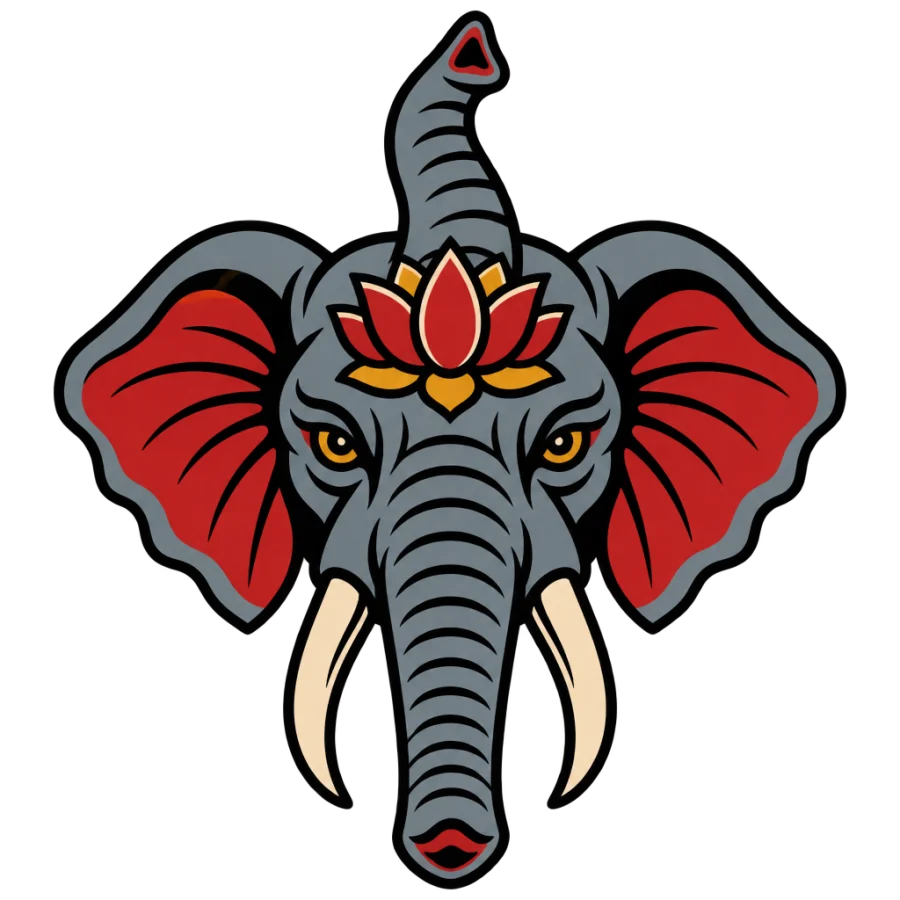
An elephant with a raised trunk and a lotus at its brow, American traditional
Use this prompt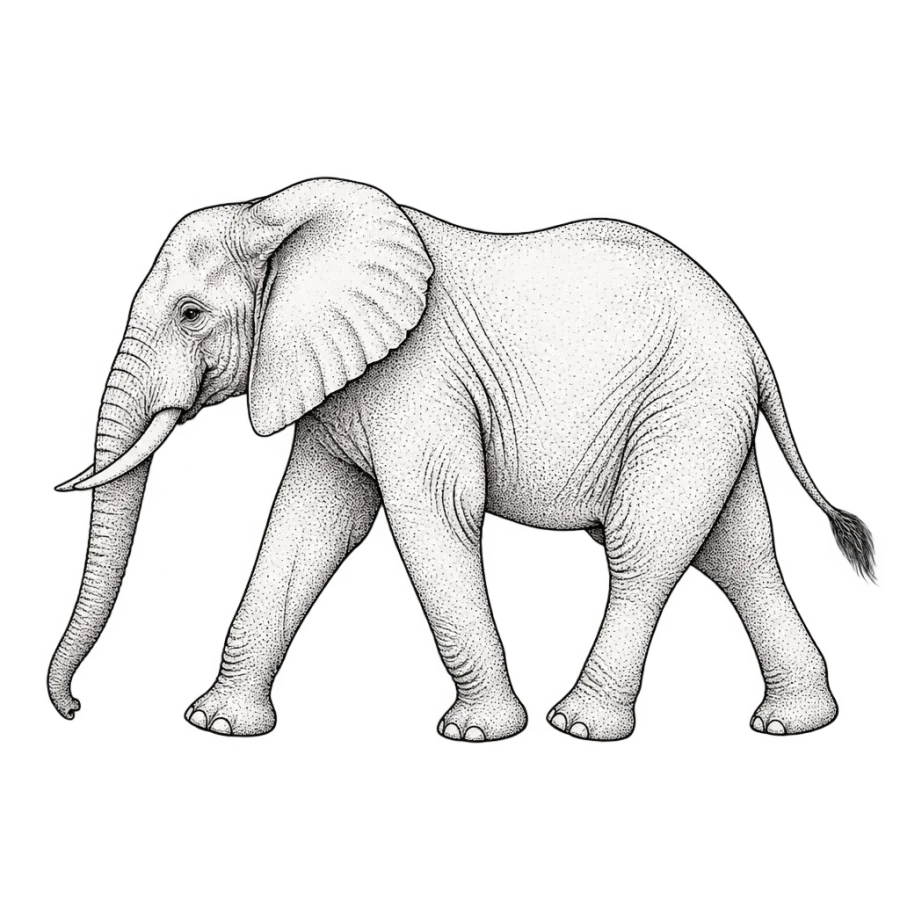
An elephant walking in profile with its trunk swinging low, fine line
Use this prompt
A solid black elephant with tusks left as negative space, blackwork
Use this prompt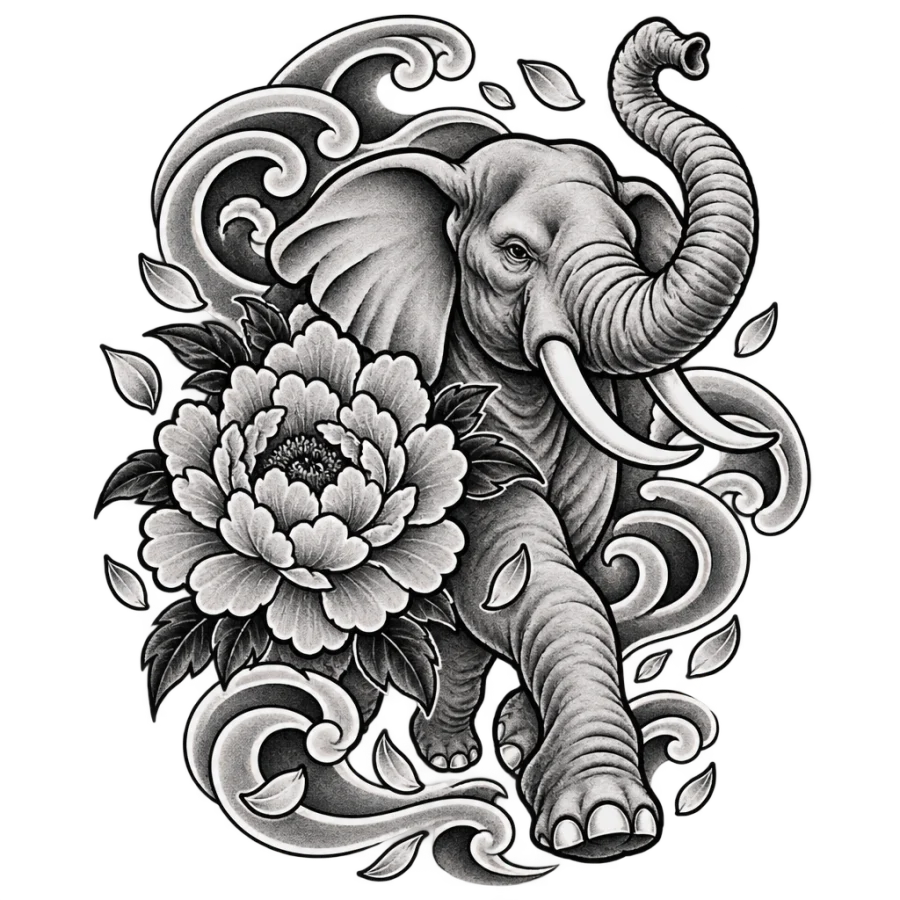
An elephant moving through peony blooms and wind bars, Japanese irezumi
Use this prompt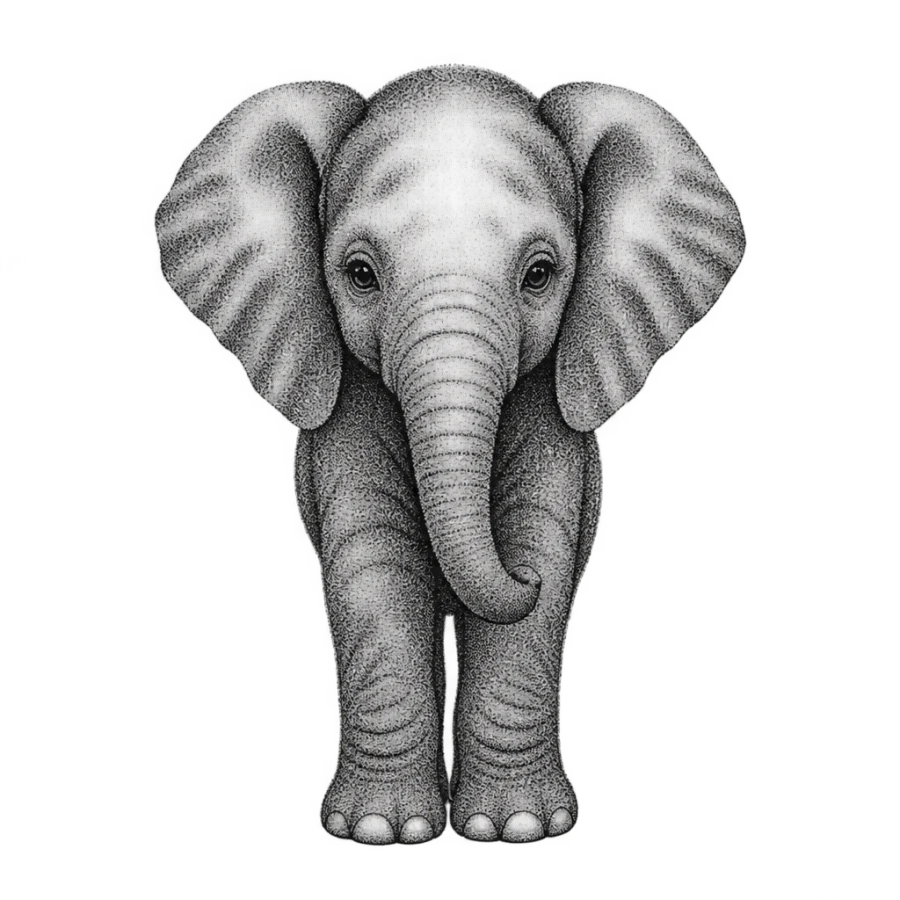
A young elephant calf standing at rest, dotwork stippling only
Use this prompt
An elephant head built from faceted triangles, geometric line work
Use this prompt
A festival elephant head covered in lace scrollwork, ornamental filigree
Use this prompt
A simple elephant with a curled trunk in one continuous line
Use this prompt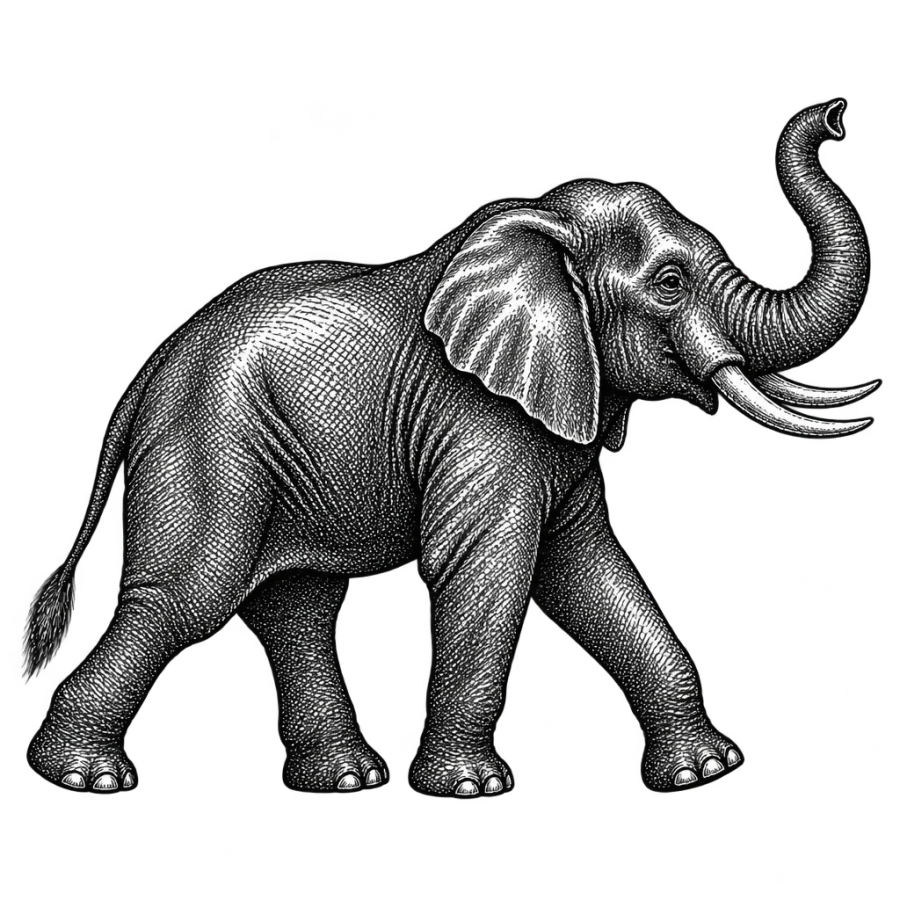
An elephant striding with its trunk lifted, antique engraving style
Use this prompt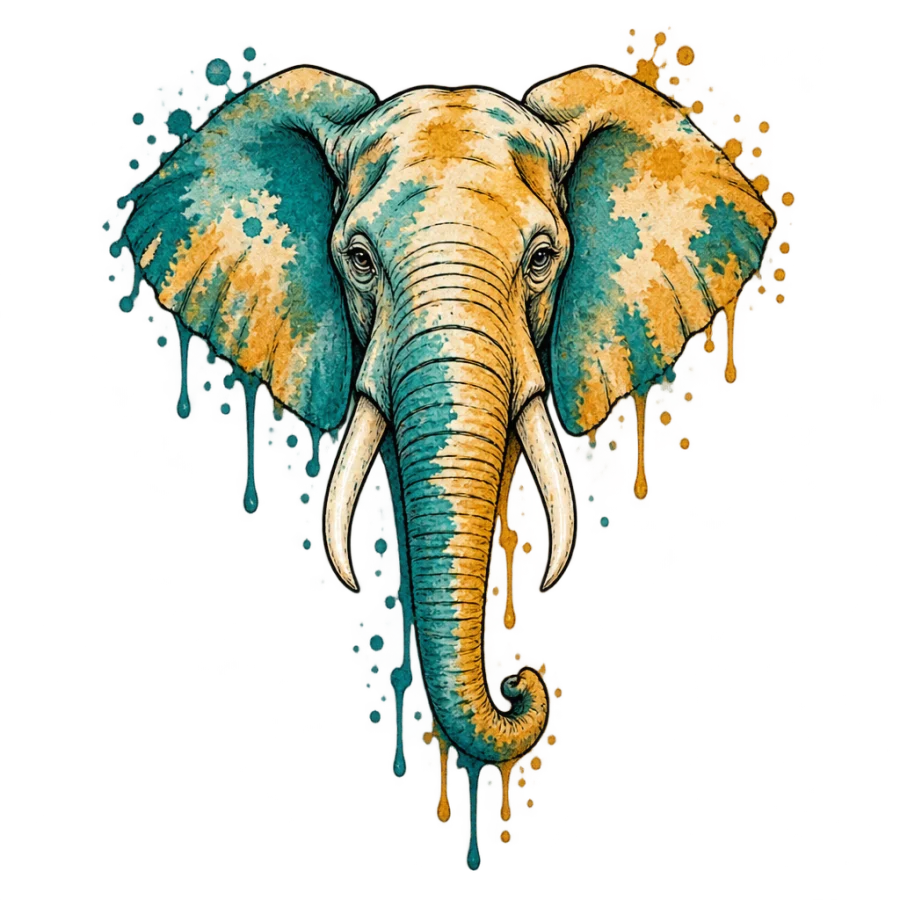
An elephant head with teal and ochre washes running off it, watercolor
Use this prompt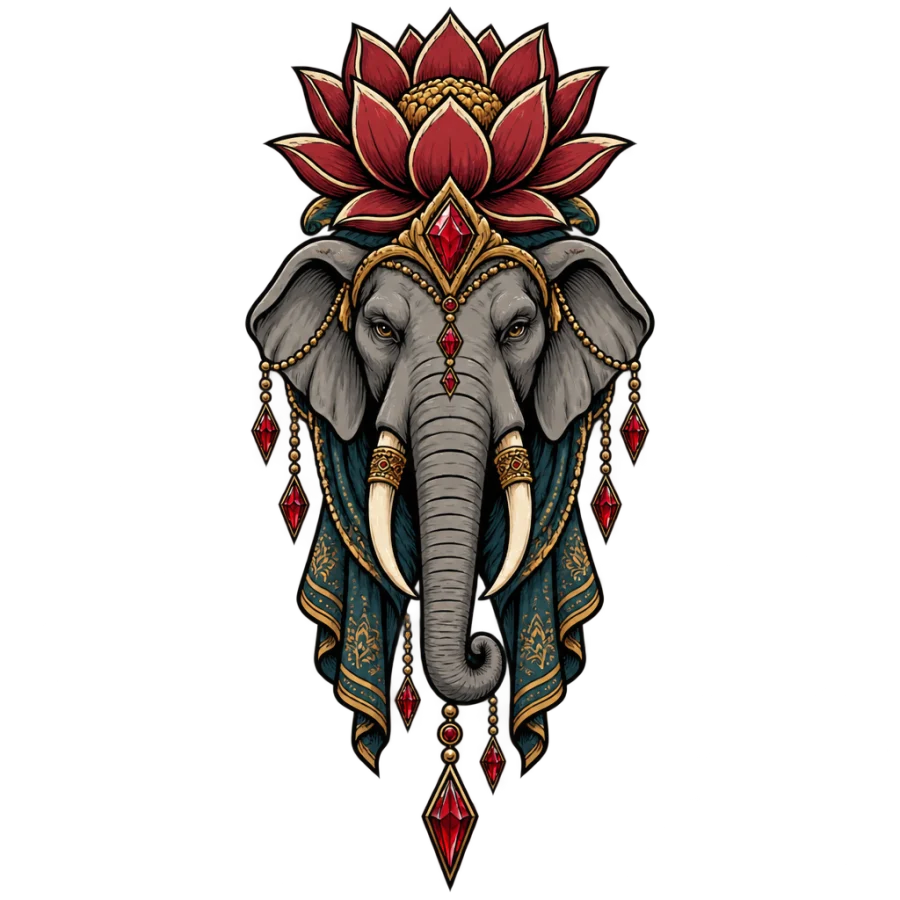
An elephant head under a lotus with draped cloth and gems, neo traditional
Use this prompt
Two mirrored elephants with raised trunks meeting above a lotus
Use this prompt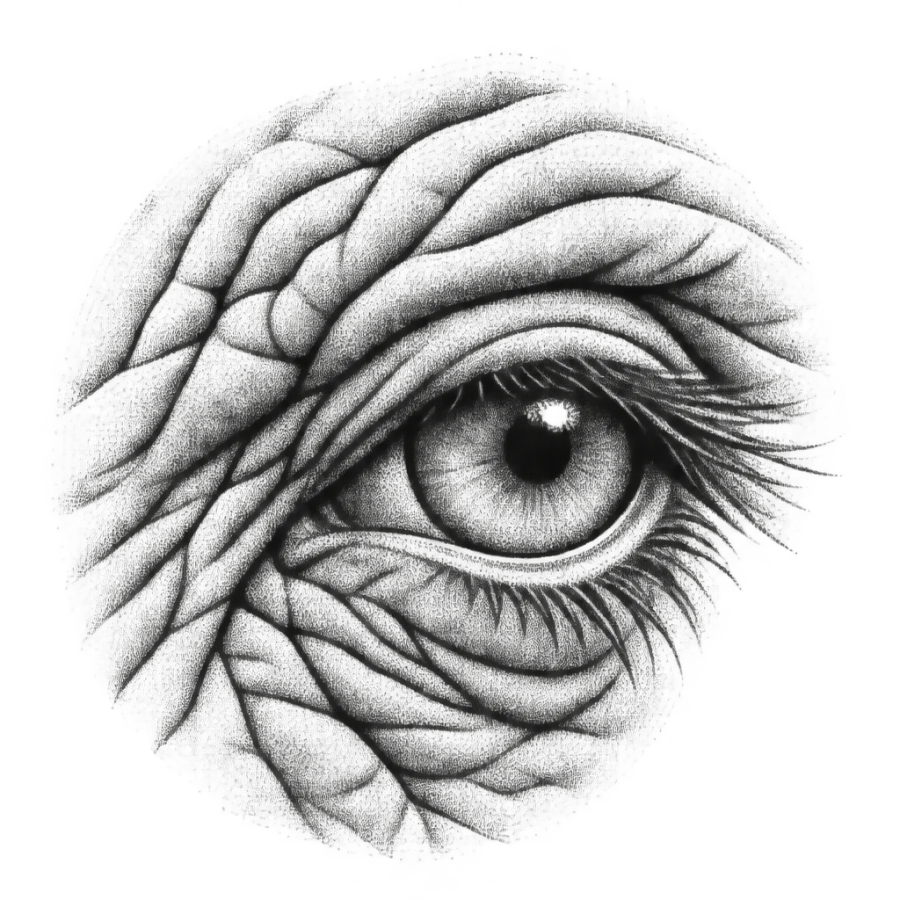
Close crop of an elephant eye and wrinkled brow, stippled dots only
Use this prompt
Elephant and calf walking in solid black with one white gap between them
Use this promptDescribe an idea of your own and get four designs back in about 20 seconds.
Open the generator
Questions people ask
What does an elephant tattoo mean?
Memory, family and quiet strength are the usual answers. The family reading comes from the animal itself, since herds are led by the oldest female and calves stay with their mothers for years. Ganesha adds a specific Hindu meaning as the god who clears obstacles before something new starts.
Does the trunk have to point up?
No. The idea that a raised trunk brings luck and a lowered trunk brings bad luck is a modern Western superstition with no basis in Indian or Thai tradition. A raised trunk does add height to the design, so it changes the shape you need on the body. Choose it for the composition.
How big does an elephant tattoo need to be?
Realistic elephants want 14 cm as a floor and 18 to 30 cm to look right, because the wrinkle texture is what carries the illusion and it merges below that. Ornamental and blackwork versions work from about 8 cm since they are built from line and solid fill rather than tone.
Is it disrespectful to get a Ganesha tattoo?
Opinions differ among Hindus. The most commonly stated rule is that a deity image belongs above the waist and never on the foot or lower leg, because feet are treated as unclean. Many artists who do this work will raise it with you. Knowing the convention lets you make your own call.
How much does an elephant tattoo cost?
A small line drawing elephant of 8 to 10 cm is usually $200 to $350. An ornamental piece on the forearm runs about $400 to $700. A realistic elephant head of 25 cm on the thigh takes four to eight hours and generally lands between $700 and $1,200 depending on the artist's rate.