Skull tattoo ideas, meaning and designs
A skull is a thing you can look up, which means every viewer knows what it should look like even if they could not draw one themselves.
- Pain level5 / 10 on the forearm
- Healing2 to 3 weeks on the surface
- Typical size8 to 20 cm (3 to 8 in)
- Studio cost$200 to $1,200
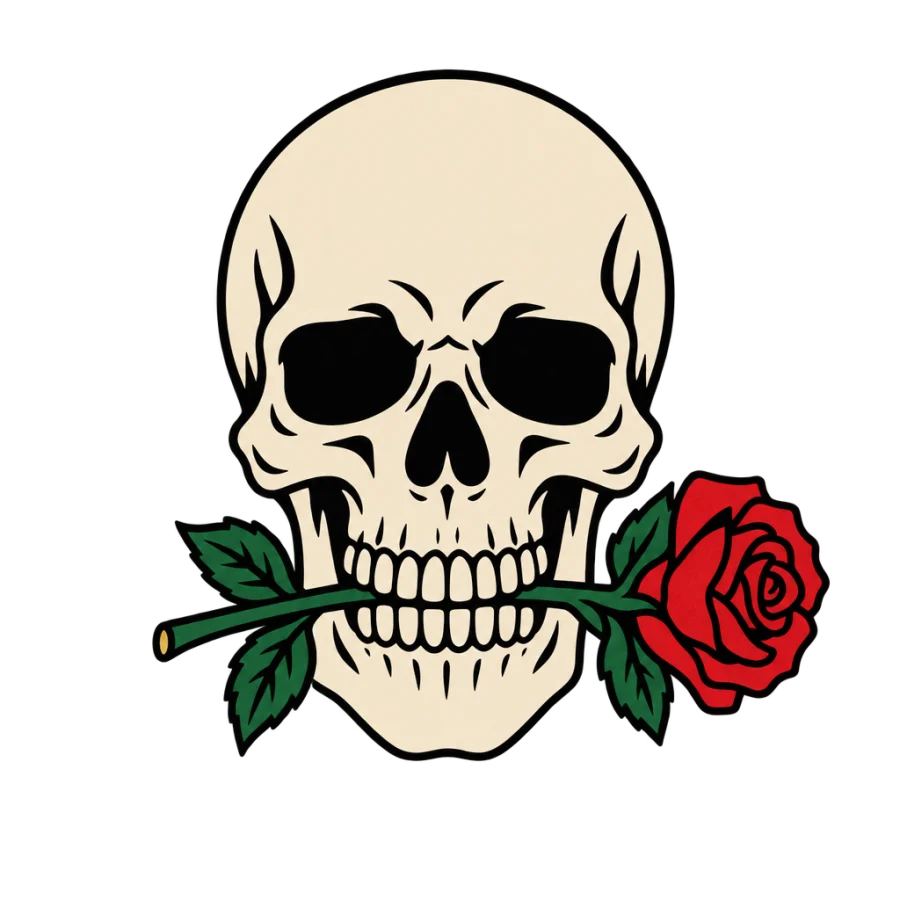
Skulls have been tattooed as long as Western tattooing has existed, first on sailors and soldiers and then on everyone. The reason they endure is that the shape is already high contrast: deep black in the sockets and the nasal opening, bright bone everywhere else. That contrast is exactly what a tattoo needs to still read at thirty years.
The design problem is anatomy. A skull drawn from memory almost always comes out as a smooth egg with two round holes and a row of square teeth. A real skull has a flat plane above the eye socket, a bridge of bone at the cheek with a gap behind it, and a jaw hinge that rises toward the ear. Those three things are what make a skull look like bone rather than a mask.
The bones people draw wrong
Eye sockets are not circles. They are roughly square openings with a rounded lower edge and a small notch in the bone above. The nasal opening is an inverted heart shape with a thin spine of bone at the bottom, and there is no nose bone below it. The cheek is a bridge, the zygomatic arch, with a visible gap of shadow behind it running back toward the ear.
Teeth are the other giveaway. An adult skull has thirty two teeth set in a curve, with the canines longer and the molars wider and flatter. A row of identical squares looks like a grille. Most artists draw fewer teeth than are really there on small pieces, because thirty two at 8 cm turns into a grey band within a few years.
The five details that sell a skull
- Square eye sockets with a notch in the upper rim
- An inverted heart shaped nasal opening with a thin central spine
- A cheek arch with shadow visible behind it
- A jaw hinge that rises toward the ear
- Teeth set in a curve with canines longer than the rest
Styles, and what each one keeps
American traditional flattens the skull into a handful of bold shapes with heavy black in the sockets and almost no internal shading. It holds at 6 cm and it will outlast everything else you own. Chicano black and grey does the opposite, working in soft smooth wash with very fine line, which is beautiful and depends on an artist who knows how light their grey will heal.
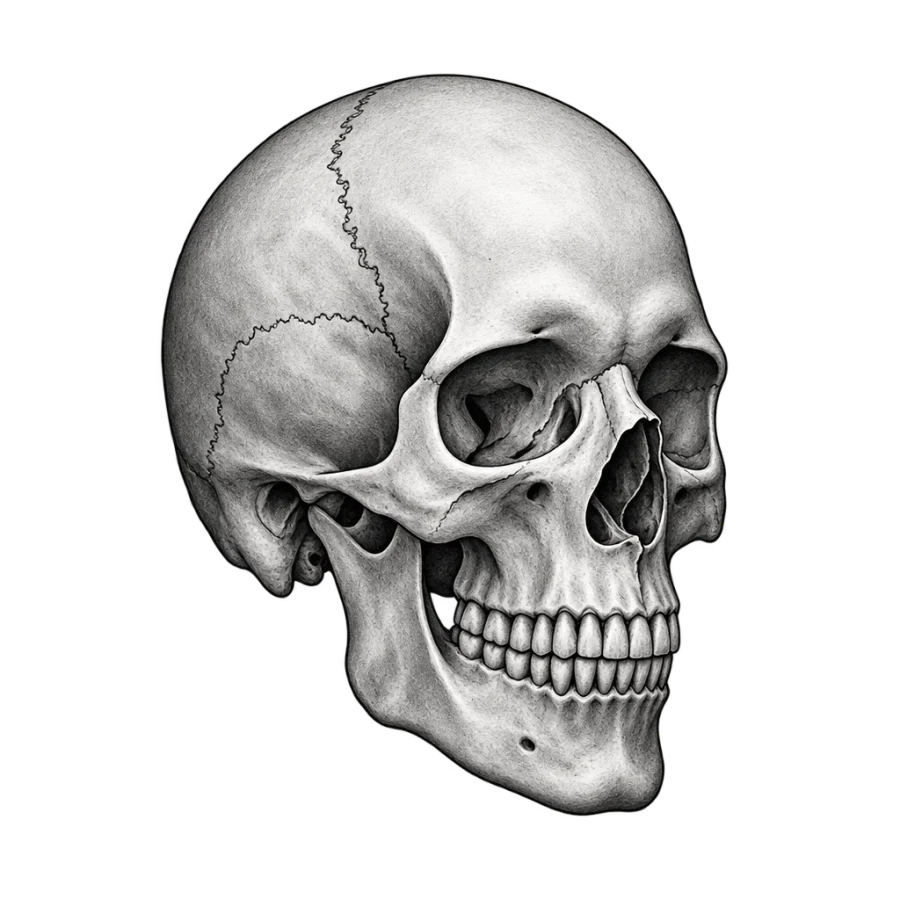
Realism needs room. A photorealistic skull wants 12 to 15 cm so the transitions between bone planes have space. Blackwork and etching treat the skull as line and shadow, which suits knuckles, elbows and other awkward places. Sugar skull designs sit apart, built from symmetrical decorative marks instead of anatomy.
Size, placement and combinations
A skull is roughly oval and slightly taller than it is wide, which fits the forearm, the outer elbow, the sternum, the back of the hand and the front of the thigh. The hand is a popular spot and the least durable, since the skin there sheds quickly and lines spread. Knuckle skulls need to be drawn as almost pure shape, under 3 cm, with three or four internal lines at most.
The skull and rose is the single most tattooed combination in Western flash, which cuts both ways. It ages superbly and it says very little about you on its own. Artists usually suggest changing one variable: a specific flower, a real object from your life, a different skull species, or an unusual angle such as a three quarter view looking down.
Ageing, and a note on sugar skulls
Bold skulls age better than nearly any subject because the design is built from black mass. Realistic skulls lose their subtlety first, particularly the soft transitions across the forehead and cheekbone, so ask for more contrast than looks natural at the time. Small skulls with full tooth counts and cracks are the ones that most often need reworking.
Sugar skulls come from a Mexican tradition in which a decorated skull is made for a specific person who has died and placed on an ofrenda. Many people outside Mexico get them, and opinions within Mexican communities vary from welcome to annoyance. If you want one, tying it to an actual person you are remembering is both more meaningful and better received.
15 skull tattoo designs, with the prompt behind each one
Every design below came out of AI Tattoo Lab. Tap one to load its prompt into the generator, then change a word and make it yours.
Skull tattoo design
Use this prompt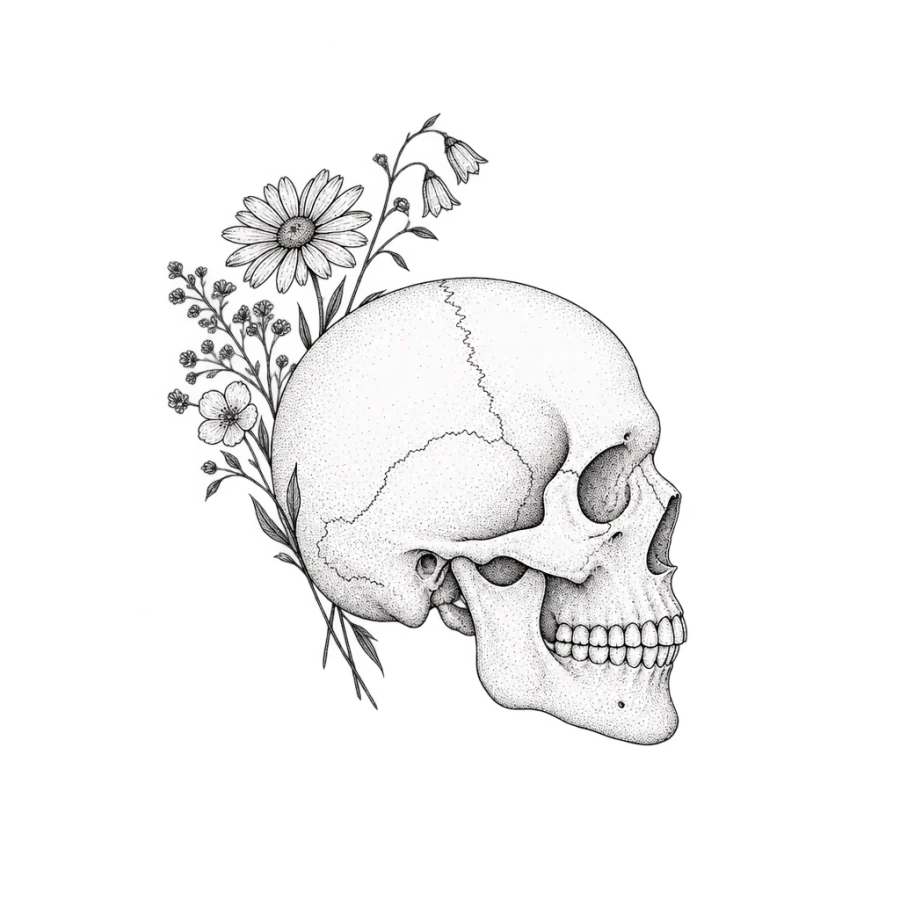
Skull tattoo design
Use this prompt
Skull tattoo design
Use this prompt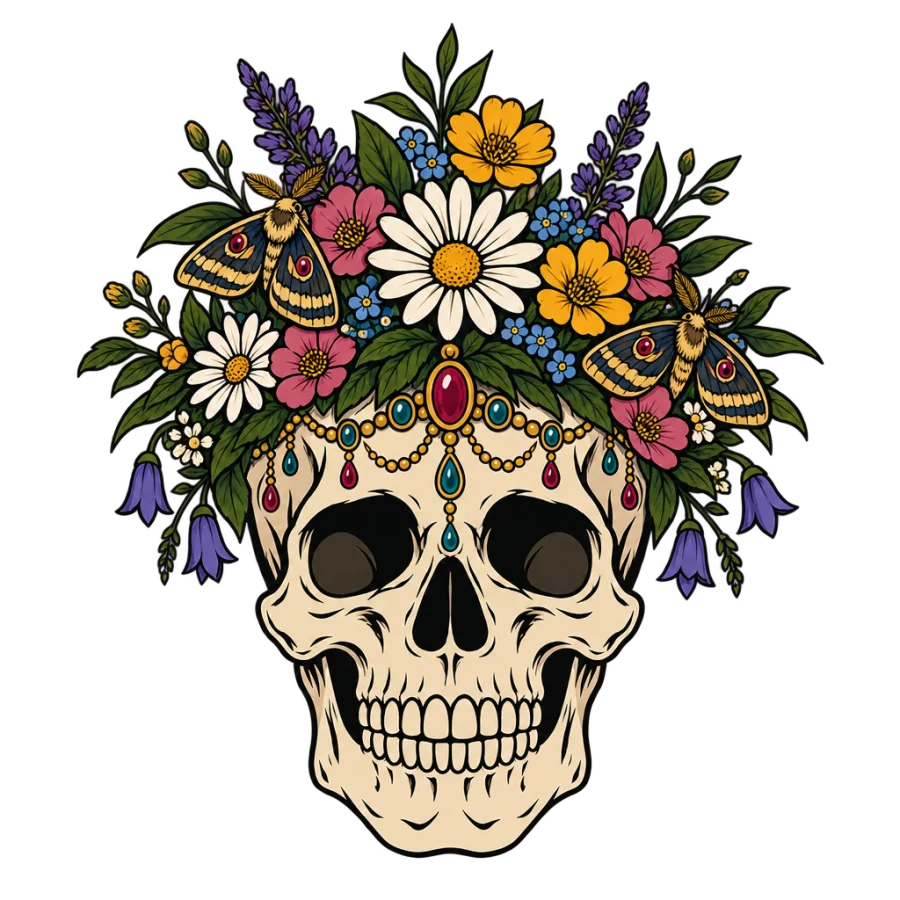
Skull tattoo design
Use this prompt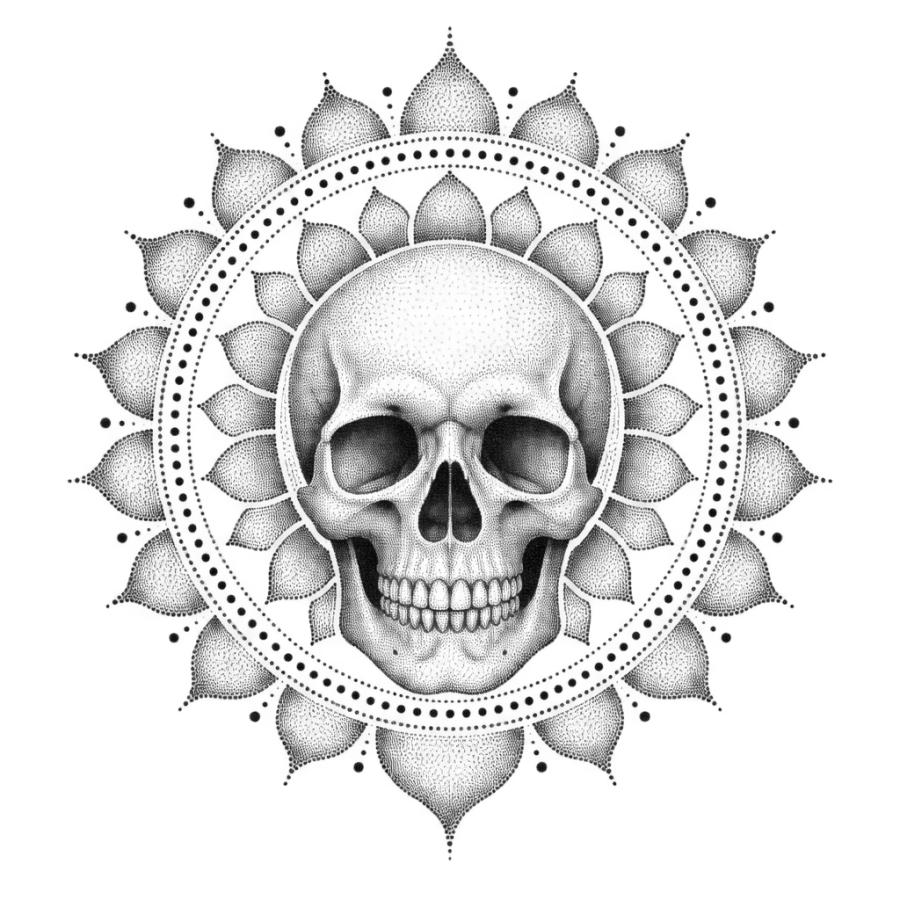
Skull tattoo design
Use this prompt
Skull tattoo design
Use this prompt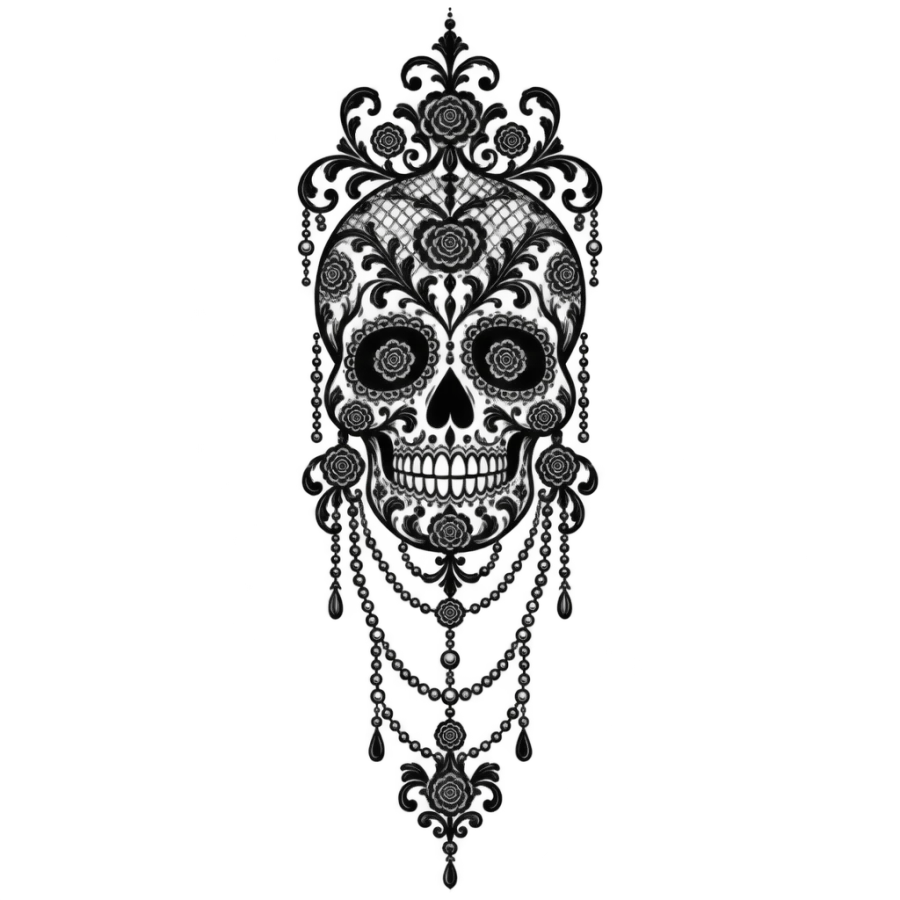
Skull tattoo design
Use this prompt
Skull tattoo design
Use this prompt
Skull tattoo design
Use this prompt
Skull tattoo design
Use this prompt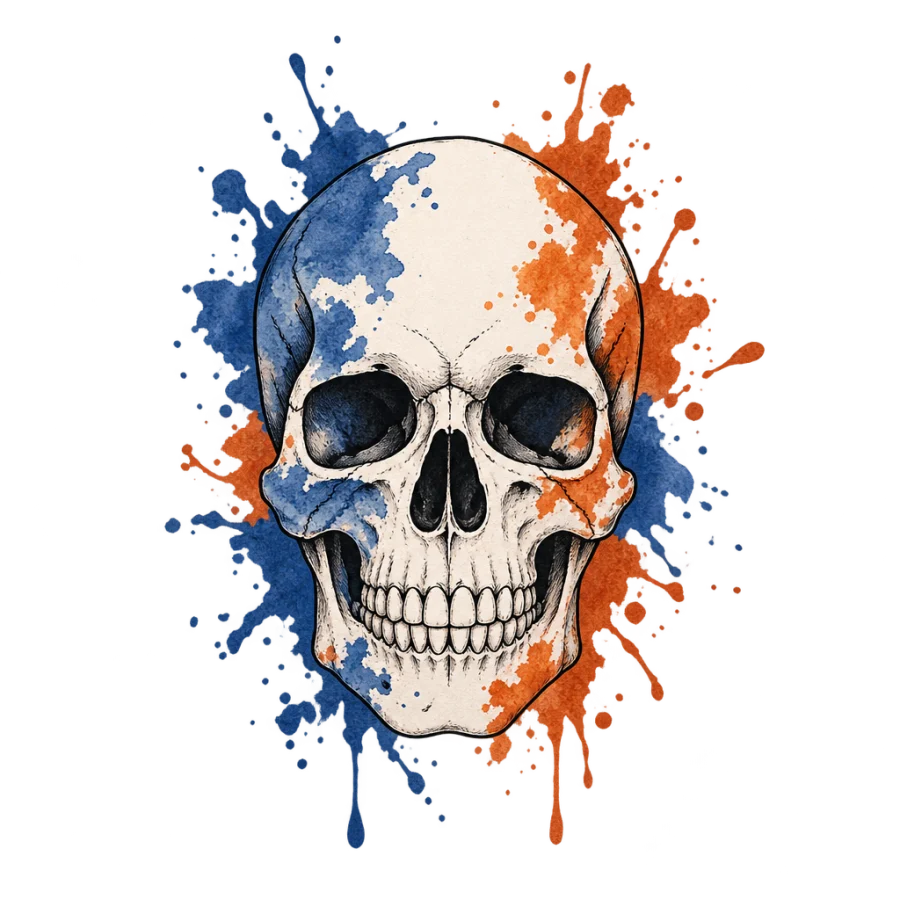
Skull tattoo design
Use this prompt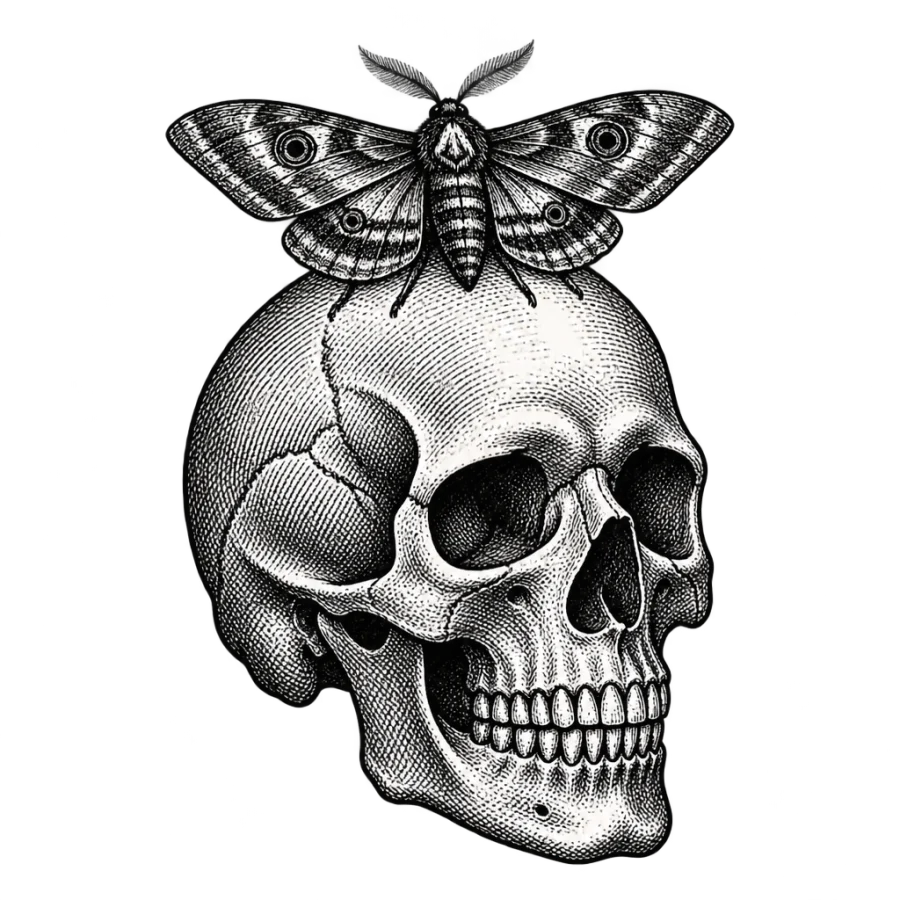
A skull at a three quarter angle with a moth on its crown
Use this prompt
Two mirrored skulls facing a lit candle and a rose
Use this prompt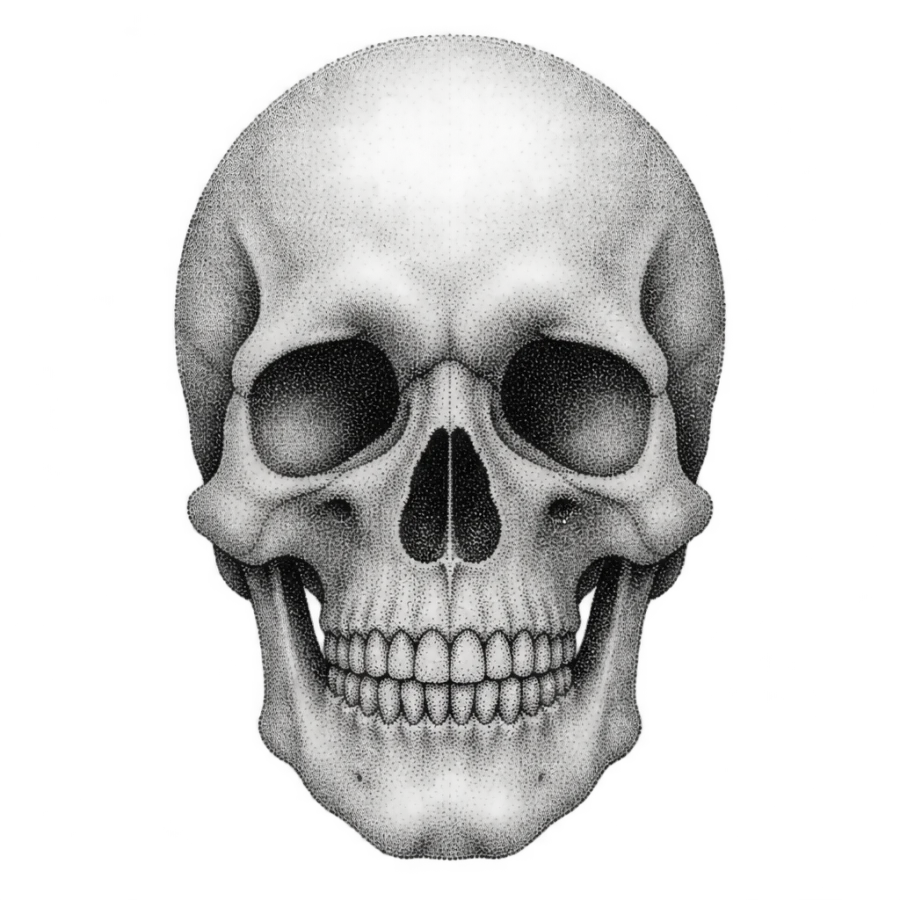
A skull front on in stippled dots only, no outlines
Use this promptDescribe an idea of your own and get four designs back in about 20 seconds.
Open the generator
Questions people ask
What does a skull tattoo mean?
Mortality, most traditionally. European memento mori art and Dutch vanitas painting used skulls as reminders that life ends. Sailors and soldiers wore them closer to defiance. The Mexican calavera belongs to a separate tradition tied to Day of the Dead and to remembering specific people.
How small can a skull tattoo be?
A bold traditional skull holds at about 6 cm. Realism needs 12 to 15 cm so the transitions between bone planes have room. Knuckle sized skulls under 3 cm work only as pure shape with three or four internal lines, and the full tooth count has to go.
What do most artists get wrong on a skull?
Round eye sockets, a triangular nose hole, a flat lower jaw and a row of identical square teeth. Real sockets are squarish with a notch above, the nasal opening is an inverted heart, the jaw hinge rises toward the ear, and teeth sit in a curve with longer canines.
Do skull tattoos age well?
Very well in bold styles, because the design is built from black mass and high contrast. Realistic skulls lose their soft transitions across the forehead and cheek first, so ask for stronger contrast than looks natural on the day. Small detailed skulls are the ones most often reworked.
Is it acceptable to get a sugar skull tattoo?
Views differ. Sugar skulls are made in Mexico for a specific person who has died and placed on an ofrenda, so a decorative one worn by an outsider reads differently than a deliberate memorial. If you want one, tying it to a real person you are remembering is the more respectful route.