Armband tattoo ideas and designs
An armband looks like the simplest tattoo you can get, until you realise it has to travel all the way around a limb that changes width as it goes.
- Pain level5 / 10, 7 on inner arm
- Session time1 to 4 hours
- Typical size2 to 10 cm band width
- Studio cost$200 to $700

An armband is any design that wraps the arm completely: a solid black band, a row of thin lines, a pattern, or a picture that continues around the back where you cannot see it. Most sit on the bicep, some on the forearm just below the elbow, and a few circle the wrist.
The appeal is that a band suits the body without needing a subject. The difficulty is that it is one of the few tattoos with no hidden edge. Every part of the design meets another part, so any error in the wrap shows up as a step, a gap or a line that drifts downhill.
Why wrapping a band is harder than it looks
Your arm is a cone, not a cylinder. It is wider at the top of the bicep than just above the elbow, so a band drawn at a right angle to the ground sits at a different angle to the muscle on each face of the arm. Tattooers have to rotate your arm in stages and redraw as they go, since only about a third of the surface is workable at any moment.
That rotation is where bands go wrong. Each section is stencilled against the one before it, so a small error repeats and grows, and by the time the artist comes back round the band can miss its own starting point by a centimeter. On a solid black band that mismatch reads as a step in the edge and there is nothing to hide it behind.
Where the ends meet, and how to plan the seam
Every band has a seam. Good artists put it on the inner arm, where the two ends meet in the area you and everyone else see least. Freehand drawing directly on the skin beats a printed stencil here, because a flat stencil cannot follow a curve that tapers, and most experienced artists will draw the guide line on you by hand with your arm relaxed at your side.
Ask to see the full wrap before any ink goes in. Stand up, let the arm hang naturally, and look at the line in a mirror from the front and the back. A band that looks level while your arm is held out on a rest can sit visibly crooked once you relax, because the muscle changes shape between those two positions.
Questions worth asking before the needle starts
- Where will the two ends of the band meet
- Will the guide line be drawn freehand or printed as a stencil
- Can I stand up and see the wrap in a mirror before we start
- How many sections will the arm be rotated through
- What happens if the ends do not line up cleanly
Band width, pain and how long it takes
Common widths run from a 2 to 5 mm single line up to a solid block of 5 to 10 cm. A thin single band takes under an hour. A wide solid black band takes three to five hours, because packing black evenly all the way around an arm is slow, physical work and the inner arm section is the tender part.
Pain sits around 5 out of 10 on the outer arm and climbs to 7 on the inner face, where the skin is thin and a nerve runs near the surface. The inner section is also the part that most often needs a second pass. Expect the artist to save it for when they have good light and a fresh grip.
How armbands age, and what suits the shape
Solid black bands age extremely well when they are packed properly. There is no fine detail to lose, so they stay looking the same for decades, softening only at the edges. Patchy black is the failure mode, and it comes from rushing the pass or from an artist without much experience packing large areas. Ask to see healed photographs, not fresh ones.
Thin multiple lines, Polynesian influenced pattern, ornamental repeats and simple geometric shapes all suit the wrap. Anything with a single clear front, like a portrait or a large lettered word, fights the format, because two thirds of it lives round the back. A band on the bicep hides under a t-shirt sleeve. On the forearm it is permanently visible.
15 armband tattoo designs, with the prompt behind each one
Every design below came out of AI Tattoo Lab. Tap one to load its prompt into the generator, then change a word and make it yours.
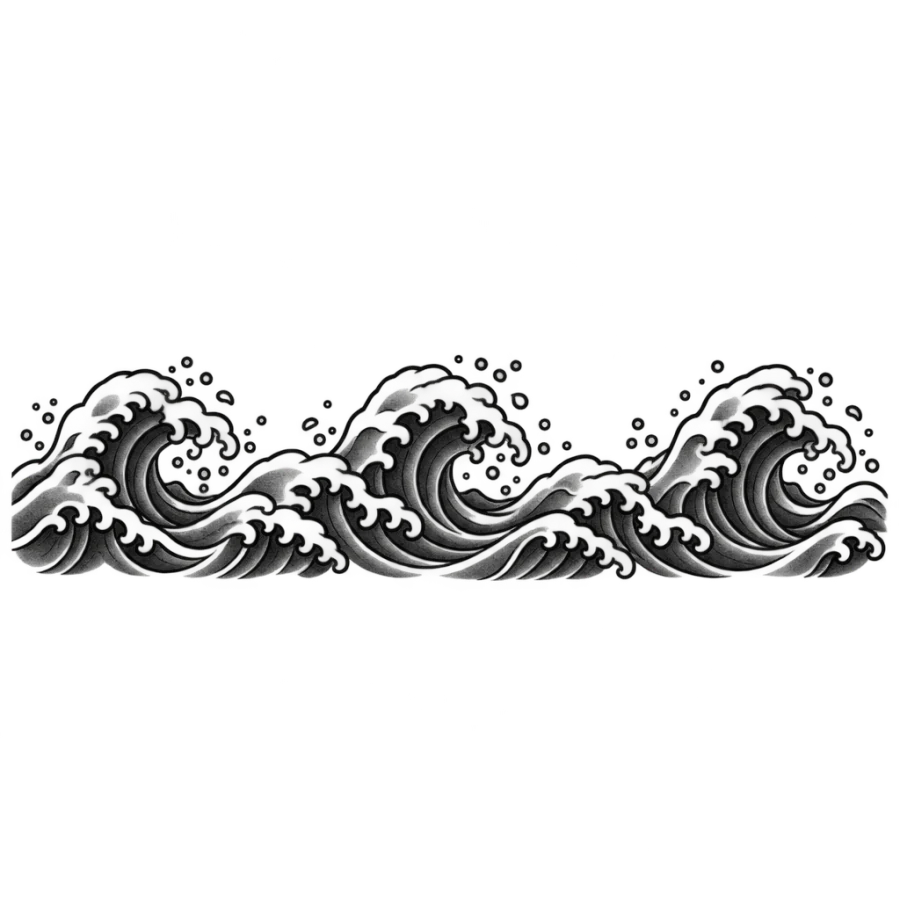
An armband of rolling waves with curling foam, Japanese style
Use this prompt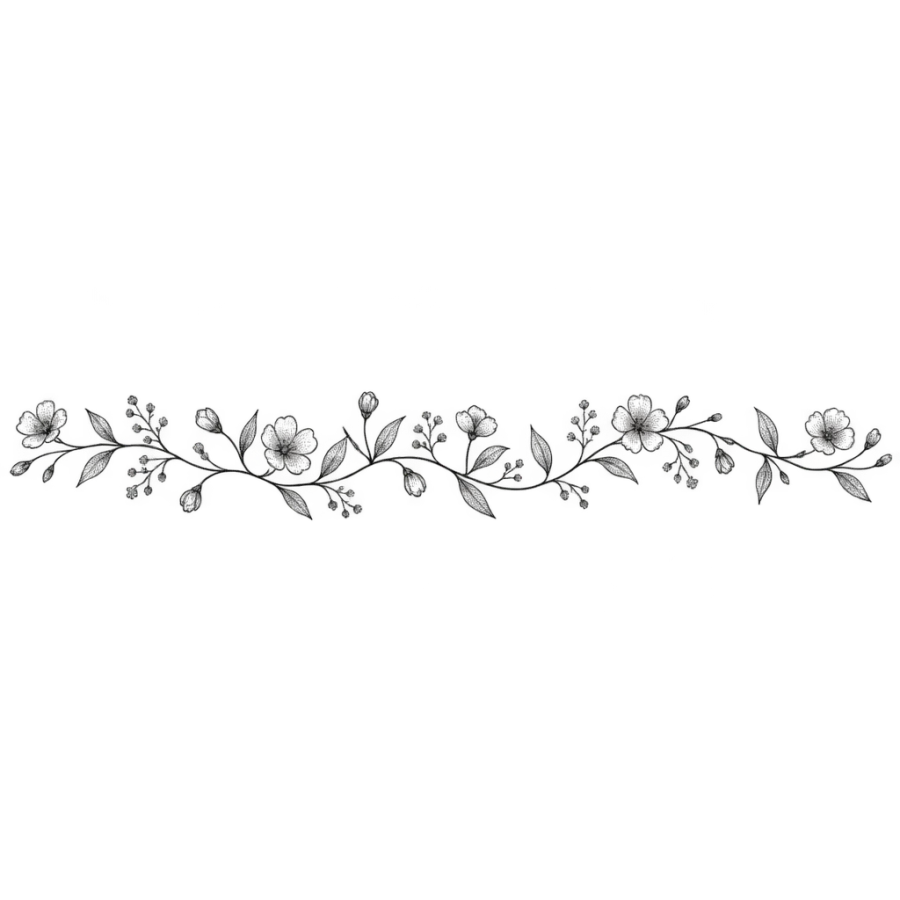
A thin vine armband with tiny wildflowers and buds, fine line
Use this prompt
An armband of nested chevrons and triangles between two thin rails
Use this prompt
A lace armband with filigree scrolls and small pearls hanging down
Use this prompt
An armband of dots fading from dense to sparse, no outlines
Use this prompt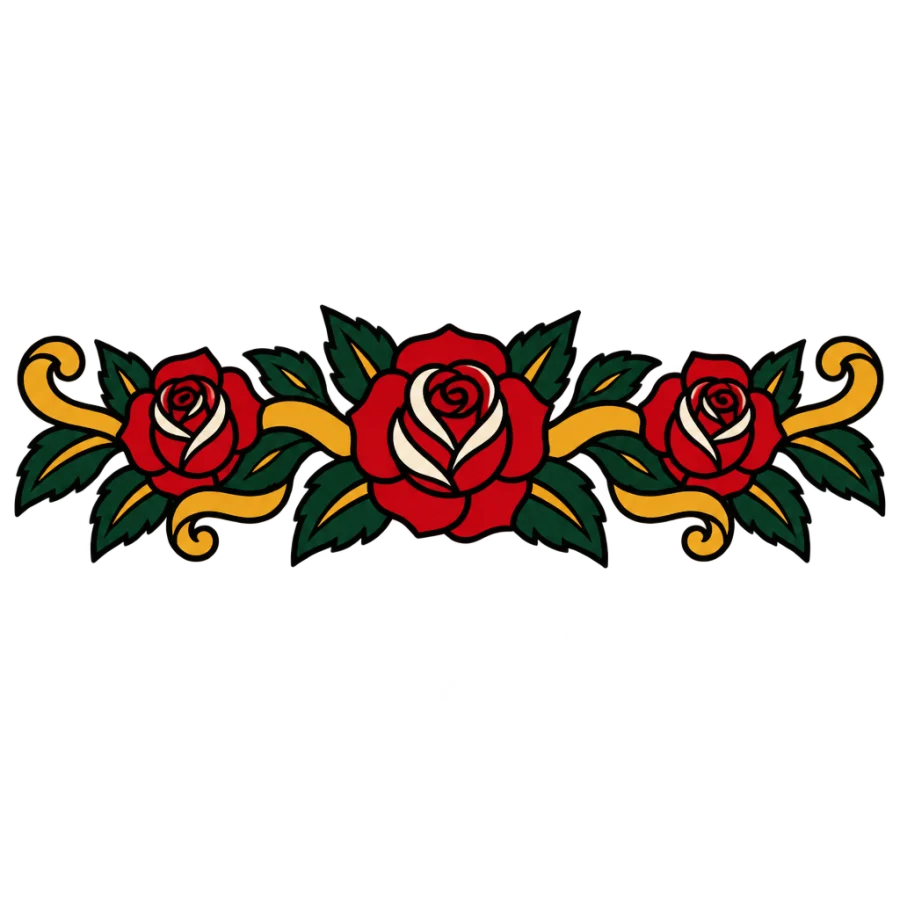
An armband of roses linked by leaves and ribbons, old school color
Use this prompt
A bold black armband with pointed arches and circles left white
Use this prompt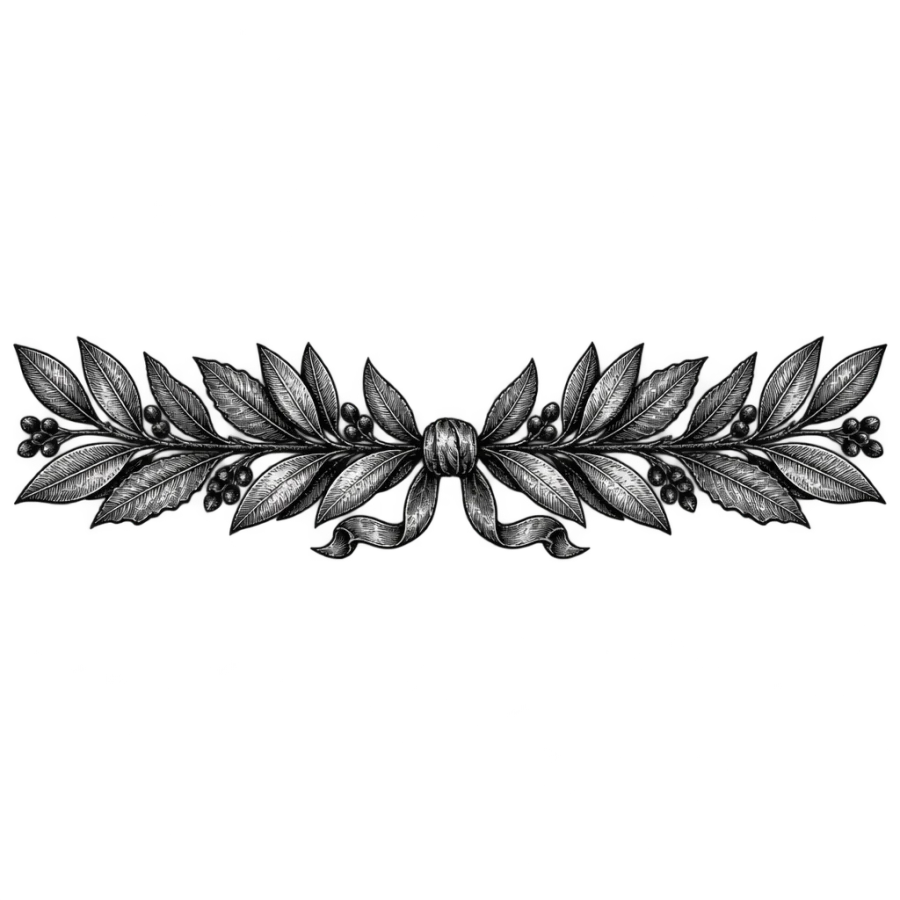
A laurel wreath armband with bay leaves and a knotted ribbon, engraved
Use this prompt
An armband of one thin line rising into a mountain range
Use this prompt
An armband of storm clouds with light breaking through, soft grey shading
Use this prompt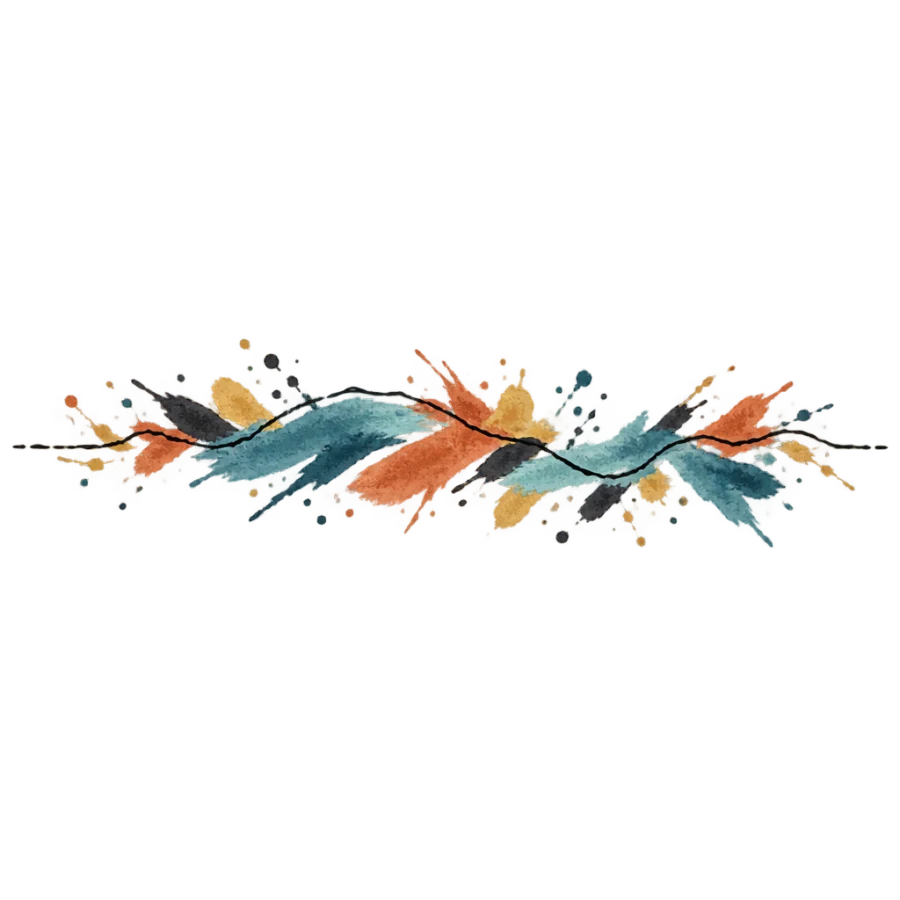
An armband of loose brush strokes with a broken thin outline, watercolor
Use this prompt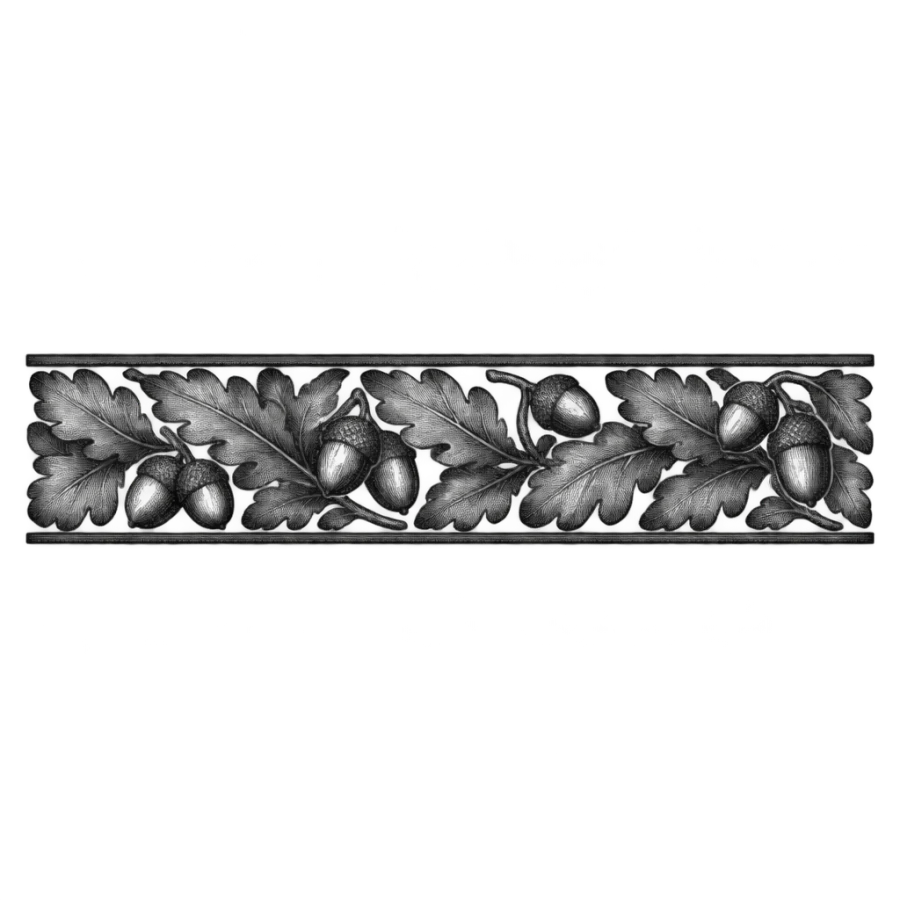
Armband of oak leaves and acorns, woodcut engraving hatching
Use this prompt
Two mirrored serpents meeting at a sun disc, armband strip
Use this prompt
Two solid black armband stripes split by a thin bare gap
Use this promptDescribe an idea of your own and get four designs back in about 20 seconds.
Open the generator
Questions people ask
Why do armband tattoos look crooked?
Because the arm tapers. A band drawn level to the floor sits at a different angle against the muscle on each side of the arm, and the artist has to rotate you through several sections to reach the whole circumference. Small errors compound around the wrap and show up as a step or a drift.
Where do the two ends of an armband meet?
On the inner arm, in almost every case, since that is the surface you and everyone else see least. Ask your artist to confirm the seam position before starting. Stand up and look at the drawn line in a mirror with your arm hanging naturally, rather than held out on an arm rest.
How much does an armband tattoo hurt?
Around 5 out of 10 on the outer arm and about 7 on the inner face, where the skin is thin and a nerve sits near the surface. A thin line band is over in under an hour. A wide solid black band is three to five hours of steady, repetitive work.
How much does a solid black armband cost?
Usually $200 to $700. A single thin band is often a shop minimum job at $100 to $180. A 5 to 10 cm solid black band takes three to five hours and runs $400 to $900, and packing black that evenly is worth paying an experienced artist for.
Do solid black armbands fade or go patchy?
Well packed black holds for decades with only slight softening at the edges. Patchiness comes from an uneven pass during the original session rather than from aging, and it shows up during healing. Ask to see healed photographs of the artist’s black work before booking, since fresh photos hide this.