Mushroom tattoo ideas, meaning and designs
A mushroom tattoo is usually one of three things: a red capped amanita, a botanical illustration, or a cluster growing out of moss.
- Amanita muscaria has a red cap, white warts, white gills and a ring on the stem. It is toxic.
- The white warts are remnants of the universal veil that covered the young mushroom.
- Morel caps are pitted like a honeycomb. Chanterelles have blunt ridges instead of true gills.
- Psilocybe cubensis, the species behind most psychedelic requests, has a tan cap and bruises bluish.
- Gills are the detail that fills in first, so they need at least 1.5 mm between lines.
- Pain level4 / 10 on the forearm
- Healing2 to 3 weeks on the surface
- Typical size4 to 15 cm (1.5 to 6 in)
- Studio cost$100 to $450
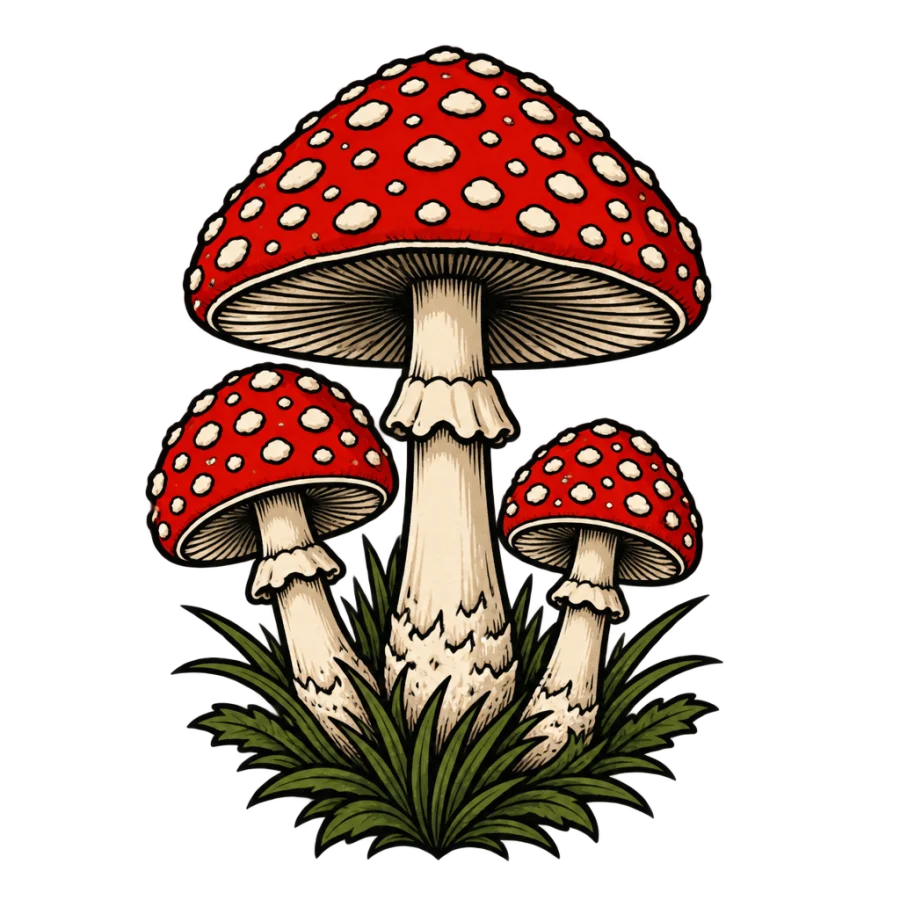
The red cap with white spots is a real species. Amanita muscaria, the fly agaric, with a scarlet cap, white warts left over from the veil that covered it as a button, white gills, a ring around the stem and a swollen base. It is poisonous, it is the mushroom in every illustrated fairy tale, and it is the single most requested mushroom in tattoo shops.
The other two requests are different jobs. Botanical illustration wants a cross section: a cap, a stem split lengthwise, gills fanning out, and a species name in small italic. A cluster in moss wants three or four caps at different heights with a snail and some leaf litter, and that one is a composition problem more than a drawing problem.
What people mean by a mushroom tattoo
Species choice decides most of the drawing, and the species people name is almost always the fly agaric. A dome that flattens with age, warts scattered unevenly instead of in a polite pattern, a stem with a skirt of a ring halfway up and a bulb at the base. Getting the ring and the bulb in is what separates it from a generic toadstool.
After that the requests split. A single botanical specimen with a cross section reads as study and curiosity. A tight cluster of thin capped mushrooms in a swirl of color reads as psychedelic, and most people choosing it know that. A mossy scene with a snail and ferns reads as neither, and it is the version that dates fastest because it belongs to a particular few years of taste.
Species that read clearly at tattoo scale
- Fly agaric, a domed red cap with white warts and a ringed stem, the most requested by a distance
- Morel, a tall pitted cap that still reads as texture at 4 cm
- Chanterelle, a funnel shaped cap with blunt ridges running down the stem
- Turkey tail, concentric banded brackets that suit dotwork better than line
- Psilocybe, a narrow conical cap on a thin stem, usually drawn in clusters
Gills, warts and the parts that fill in
Radiating gills are the first thing to go. They converge toward the stem, so the gap between them is tightest exactly where there are most of them, and once two gills touch the whole underside reads as a dark fan. On a cap under about 5 cm across, do not draw individual gills at all. Draw six or eight suggestion lines at the outer edge and leave the middle open.
The warts on an amanita have the same problem in reverse. Done in white ink they look perfect for two years and then yellow and sink until the cap is just red. Done as negative space, small round patches of untouched skin inside the red, they stay visible for the life of the tattoo. Ask for negative space. Any artist who does a lot of these will suggest it before you do.
| Cap width | Gills | Cap surface |
|---|---|---|
| 3 to 4 cm (1.2 to 1.6 in) | none, solid or open underside | flat color, 3 or 4 warts |
| 5 to 7 cm (2 to 2.8 in) | 6 to 10 edge lines only | 6 to 8 warts, simple shading |
| 8 to 12 cm (3 to 5 in) | full radiating gills at 2 mm apart | warts with cast shadows, texture |
| 15 cm plus (6 in plus) | gills with depth and shadow | full botanical detail |
Styles, and giving a cluster somewhere to grow
Fine line botanical work suits a mushroom better than it suits most subjects, because a cross section is already a line drawing. Keep it at 8 cm or more and insist on real spacing in the gills. Blackwork goes the other way and fills the cap solid with the warts cut out of it, which is the longest lasting version of this tattoo by a wide margin and the one that still reads at twenty years.
A cluster needs a baseline. Three caps at the same height look like a row of nails, so the artist should stagger them, with the tallest about 1.6 times the shortest and the caps overlapping slightly. Mushrooms grow out of something, so give them ground: moss, a log, leaf litter, or a single shaded line under the stems. A cluster floating on bare skin is the most common failure in this subject.
Where it sits, and what to weigh first
A single mushroom is a tall narrow shape and fits the inner forearm, the ankle, the back of the arm or the spine. A cluster is wider than it is tall and suits the outer thigh, the shoulder blade, the calf or the ribs under the arm. A botanical plate with a species name needs a flat area of at least 12 by 8 cm, which in practice means the outer thigh or the upper back.
The practical thought before you book is who sees it. A cluster of thin capped mushrooms reads as a drug reference to a share of the people who look at your arm, and that is worth weighing against your job and your family now, before you find out later. A single botanical specimen with its Latin name reads quite differently, and both options are on the table.
12 mushroom tattoo designs, with the prompt behind each one
Every design below came out of AI Tattoo Lab. Tap one to load its prompt into the generator, then change a word and make it yours.
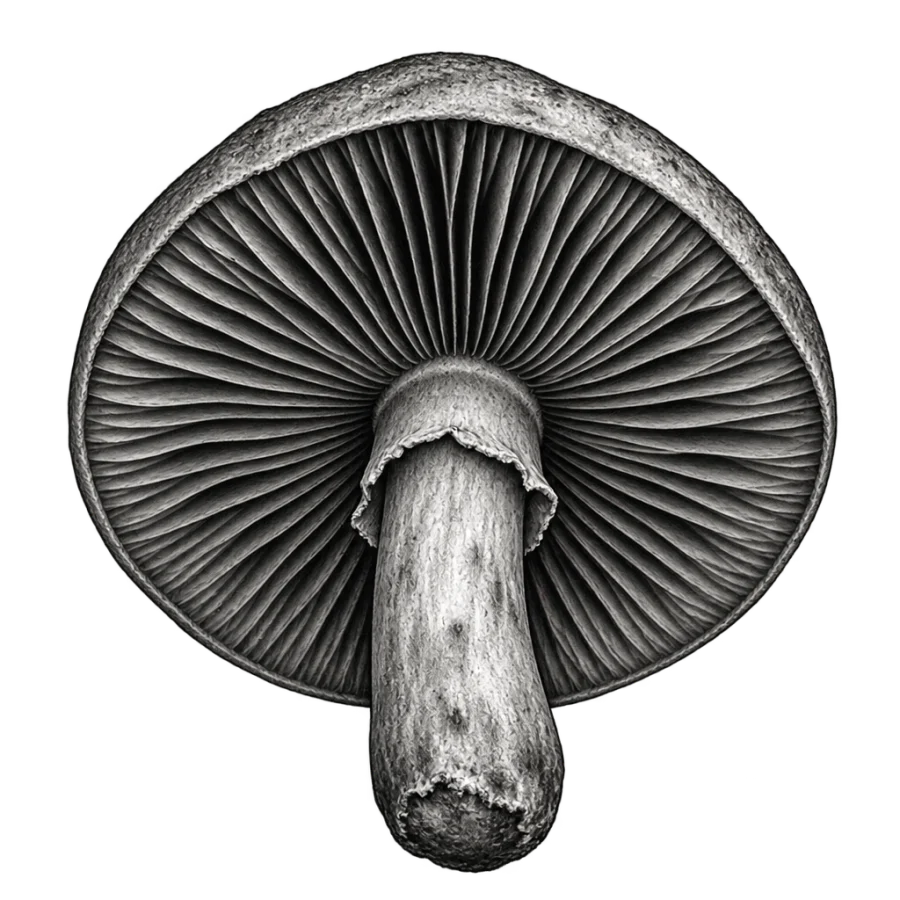
Close up of mushroom gills from below, black and grey realism
Use this prompt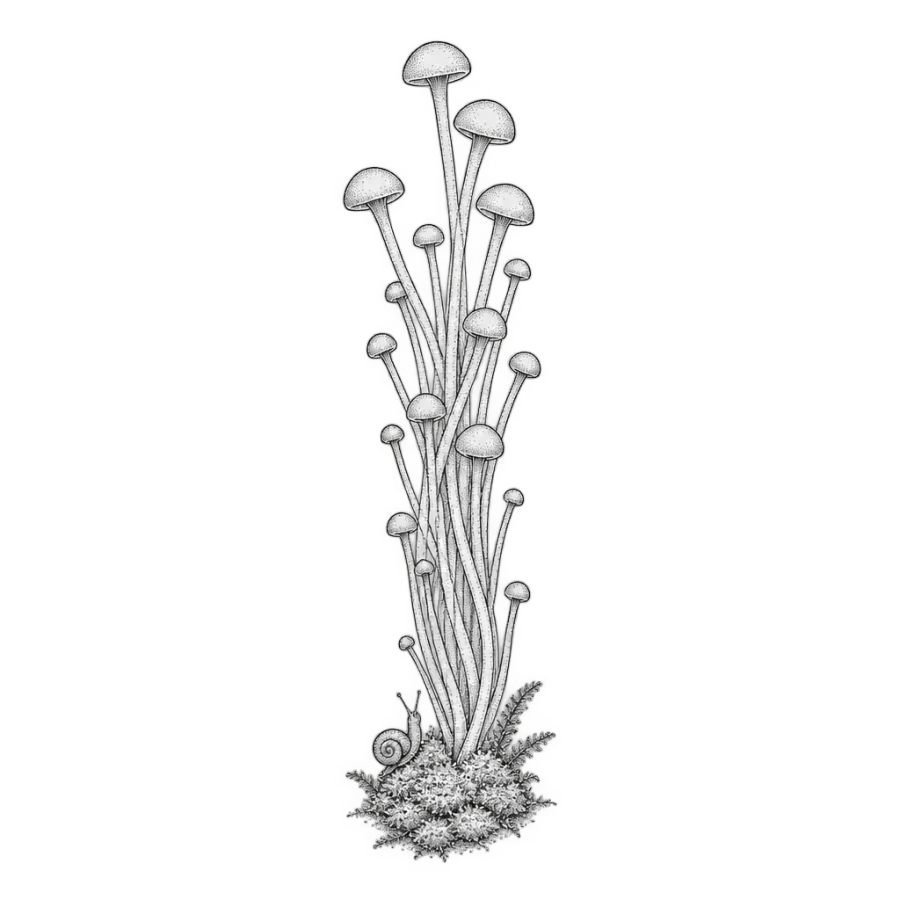
Tall cluster of thin enoki mushrooms with a small snail, fine line
Use this prompt
Mushroom cluster in solid black with spots left as white gaps
Use this prompt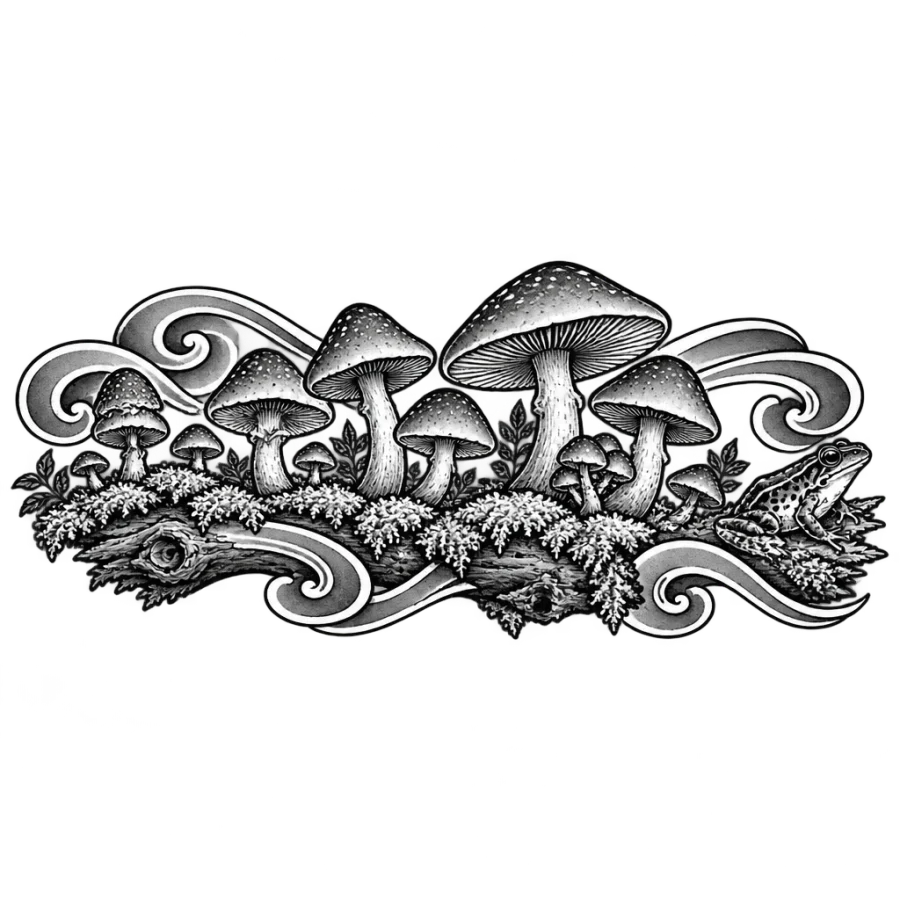
Mushrooms on a mossy log with a frog, Japanese style wide band
Use this prompt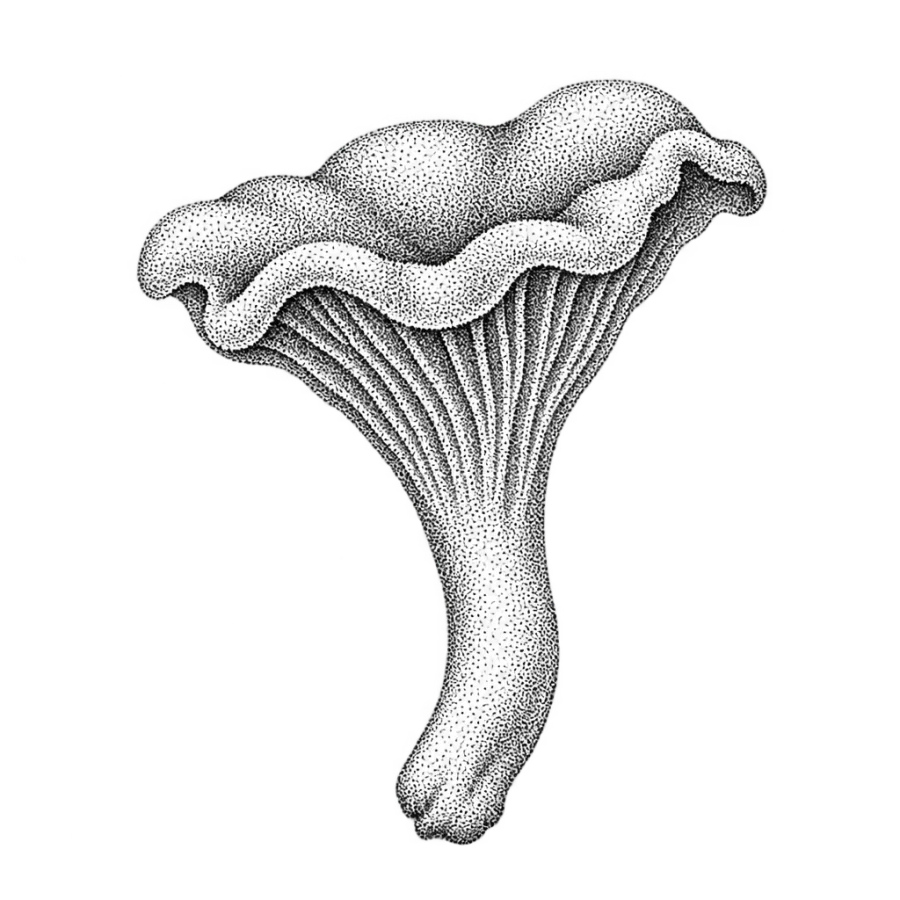
A chanterelle mushroom in profile, stippled dots only, no outline
Use this prompt
Mushroom inside a geometric mandala of rings and rays, symmetrical
Use this prompt
Mushroom with lace frilled gills in an ornate round medallion
Use this prompt
A tiny mushroom drawn in one continuous line, nothing else
Use this prompt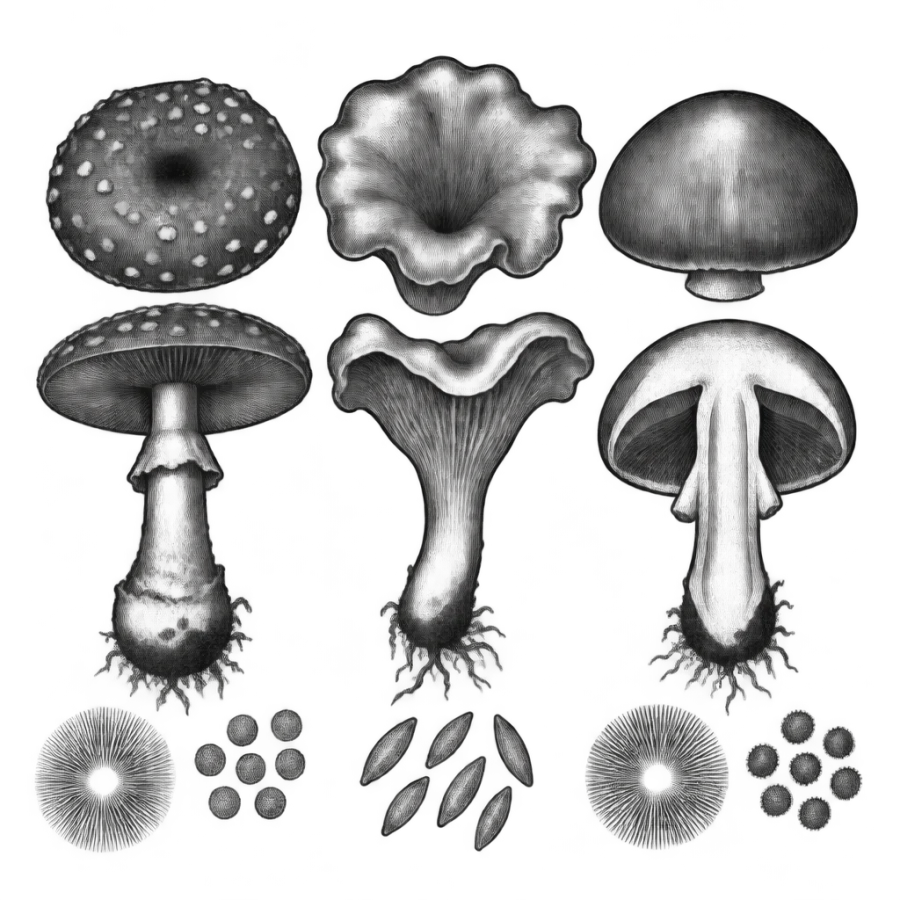
Three mushroom species as an old botanical plate with hatching
Use this prompt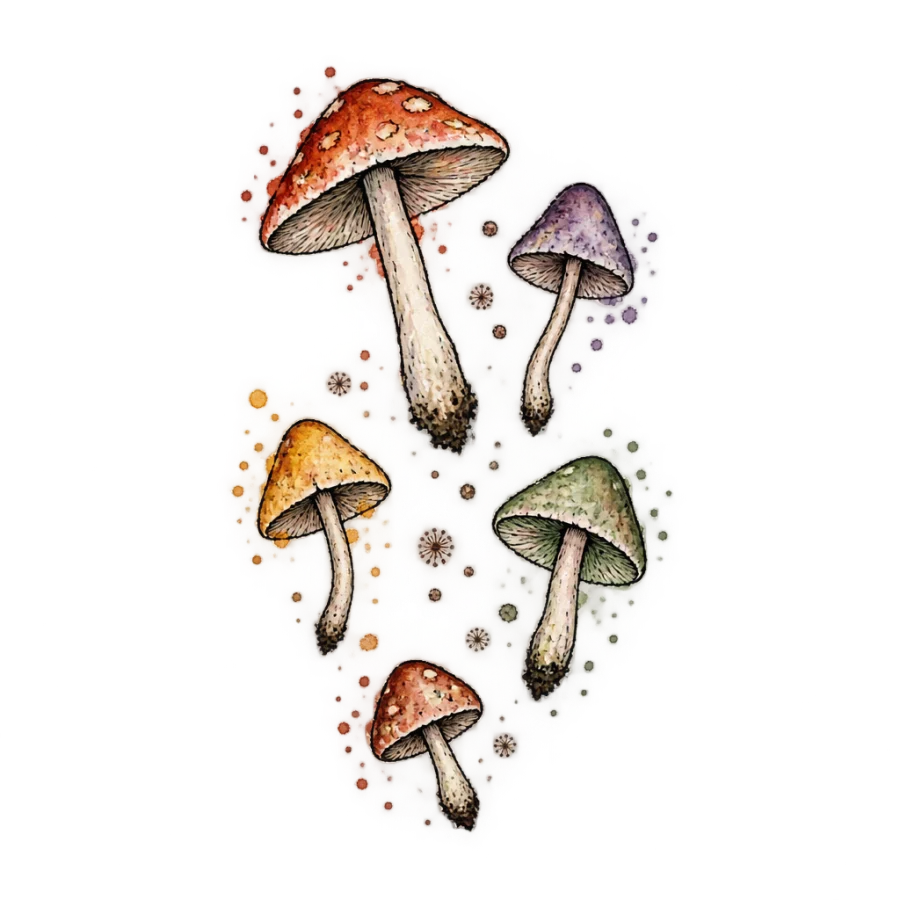
Five little mushrooms scattered with floating spores, watercolor washes
Use this prompt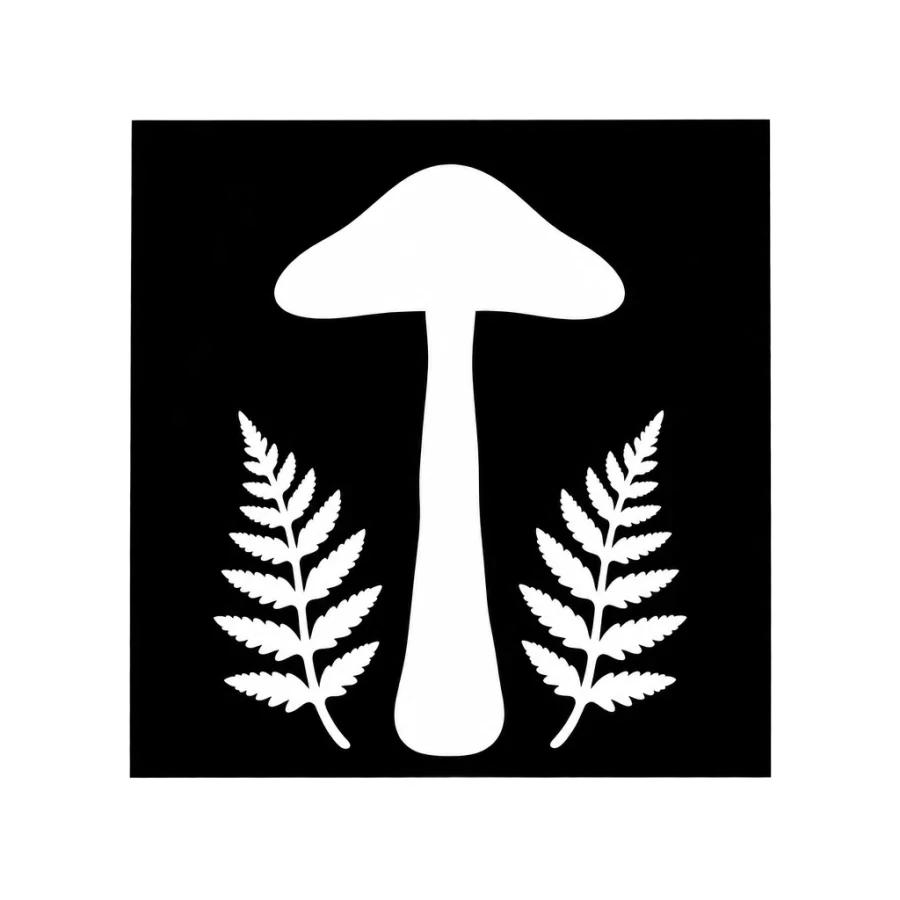
Mushroom and ferns cut out of a solid black square
Use this promptDescribe an idea of your own and get four designs back in about 20 seconds.
Open the generator
Questions people ask
What does a mushroom tattoo mean?
Most often growth out of dark places, or connection, from the fungal networks that run under soil. The fly agaric is usually chosen for how it looks rather than for folklore. A psychedelic reading is also common, and other people will apply it whether you intended it or not.
How small can a mushroom tattoo be?
About 3 cm of cap width, with no individual gills and three or four warts. At 5 to 7 cm you can have six to ten gill lines at the outer edge. Full radiating gills need a cap of 8 cm or more so there is 2 mm between each line after healing.
Which mushroom is the red one with white spots?
Amanita muscaria, the fly agaric. The white spots are warts left from the veil that covered the young mushroom, so they sit unevenly rather than in a pattern. It also has white gills, a ring partway up the stem and a swollen base. It is poisonous.
Do white spots on a mushroom tattoo last?
Not in white ink. White sits high in healed skin, yellows and sinks, and on most people it is noticeably dulled within two or three years. Ask for the warts as negative space instead, small patches of untouched skin left inside the red, which stay visible as long as the red does.
Can I bring an AI mushroom design to a tattoo artist?
Yes, as a reference. Generate it, download the stencil, then take it to a licensed artist who will open the gill spacing, convert any white spots to negative space, and set a cluster on real ground instead of floating it. A generator will happily draw gills 0.4 mm apart.