Music tattoo ideas, meaning and designs
Music tattoos go wrong more often than any other theme for one boring reason: the notation gets copied incorrectly and nobody checks it first.
- Common symbolsNotation, waveform, vinyl
- Typical size5 to 25 cm
- Usual placementsInner arm, ribs, spine
- Studio cost$150 to $700
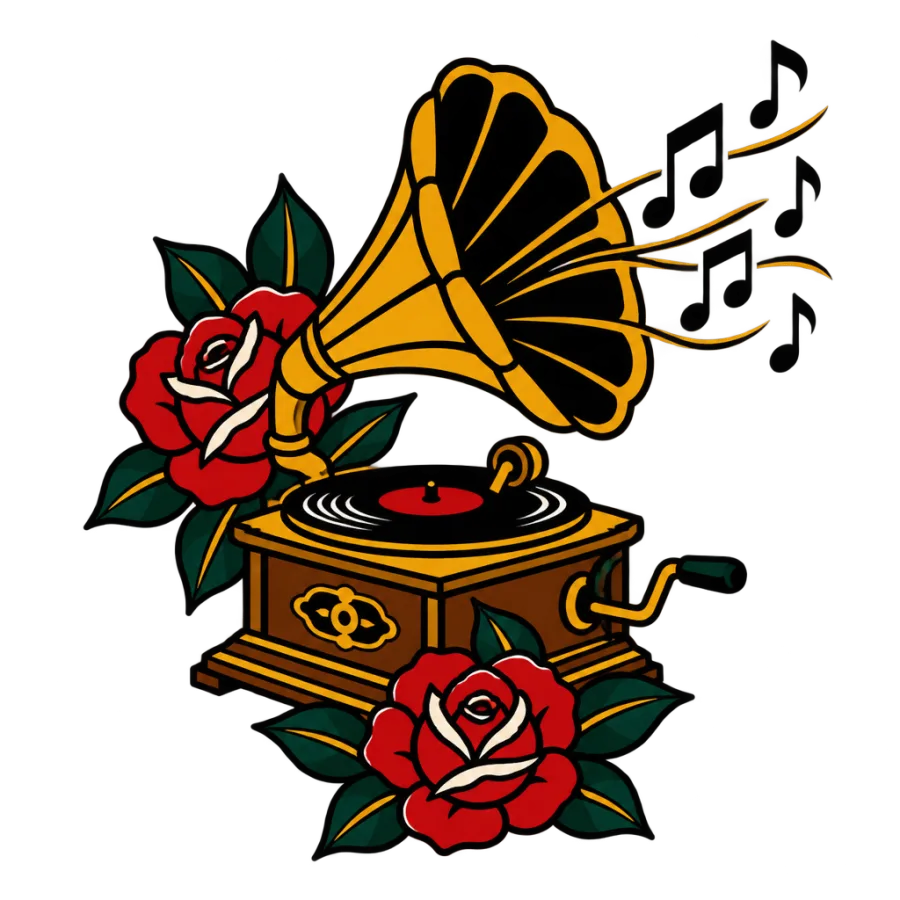
Ask any tattooer who reads music and they will describe the same job: covering or fixing a bar of sheet music with a backwards clef, a missing key signature, or notes that spell out nothing at all. The design is not the problem. The source is. If your piece contains real notation, it needs to be transcribed by someone who can actually read it before it goes anywhere near a stencil.
Past that, this is a rich theme. Instruments make excellent subjects because they have precise shapes that reward good drawing. Handwritten lyrics from a real hand beat lyrics set in a font. And a single bar that means something to you carries more than a treble clef, which is the visual equivalent of writing the word music.
Getting real notation right
If you want a bar of music on your body, have a musician write it out at the correct pitch, in the right clef, with the key signature and time signature included. Photograph it flat. Ask your artist to trace it rather than redraw it from a small screenshot, because a clef drawn from memory is the single most common error in this category and it is obvious to every musician who sees it.
Check direction too. Note stems go up on the left side of the notehead below the middle line and down on the right above it, and flipping a design for a different placement reverses all of it. Mirror images are a real risk on wrists and inner arms, so confirm the orientation on the stencil before the machine starts.
Check these before the stencil
- The clef, drawn correctly and facing the right way
- Key signature and time signature present, not omitted for looks
- Stem directions, which change above and below the middle line
- Lyrics spelled and punctuated as written, checked by two people
- Instrument details: string count, fret markers, valve layout
Waveforms, lyrics and other personal routes
The waveform of a specific recording is a strong idea, a voicemail, a first dance, a child laughing, and it reads as abstract pattern to everyone else. One caution: the versions sold as scannable, where an app plays the audio back from a photo of your skin, depend on a company staying in business and an app staying supported. Several have shut down. Treat the shape as the tattoo and any app as a bonus you may lose.
Handwritten lyrics work better than typeset ones, especially if the handwriting belongs to someone. A short line in a friend's or a parent's hand is a different object from the same words in a script font. Keep it short: long passages shrink the letters, and letters under about 4 mm tall will run together as the ink spreads.
Placements that suit music pieces
The inner arm from elbow to wrist is a natural staff, which is why bars of music sit there so often, and it is also easy to read yourself. The spine takes a vertical run of notation or a single long line beautifully, though it is one of the sharper areas because the skin is thin over vertebrae. Ribs suit flowing compositions and stay private.
Instrument portraits need room. A guitar, cello or saxophone drawn with accurate proportions wants at least 15 cm, usually on the outer arm, thigh or back. Shrinking one to 7 cm loses the details that make it that instrument, and it will blur into a dark shape within a decade.
What dates badly, and what to bring
Band logos and lyrics carry a risk nothing else in tattooing does: the artist keeps living a public life after you commit. People do get band tattoos and love them for decades, but choose with that in mind, and prefer the line that means something to you over the logo that identifies a brand. Trend script, a treble clef with a heartbeat line and the generic music note cluster all read as a specific decade now.
Take these to the appointment
- The notation written out by a musician, photographed flat
- The handwriting sample for any lyrics, at full size
- A high resolution audio file or screenshot for a waveform
- Clear reference photos of the exact instrument, not a generic one
- Your AI Tattoo Lab designs printed, with orientation clearly marked
15 music tattoo designs, with the prompt behind each one
Every design below came out of AI Tattoo Lab. Tap one to load its prompt into the generator, then change a word and make it yours.
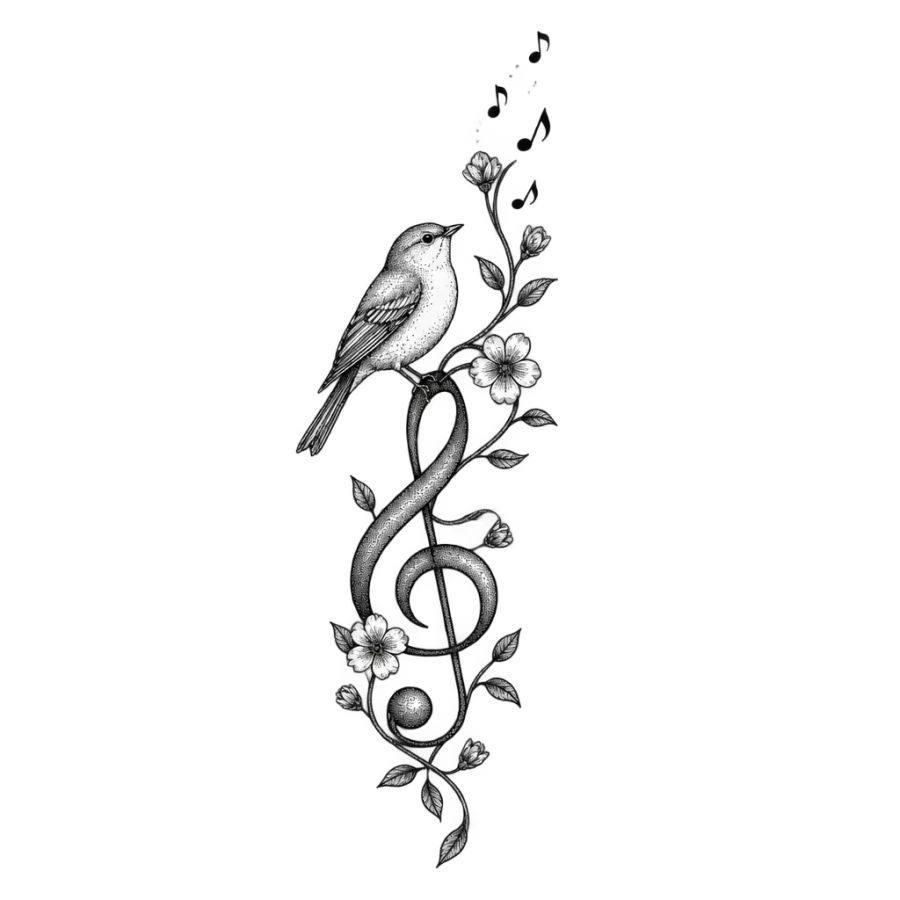
A songbird perched on a treble clef that curls into a flowering vine, fine line
Use this prompt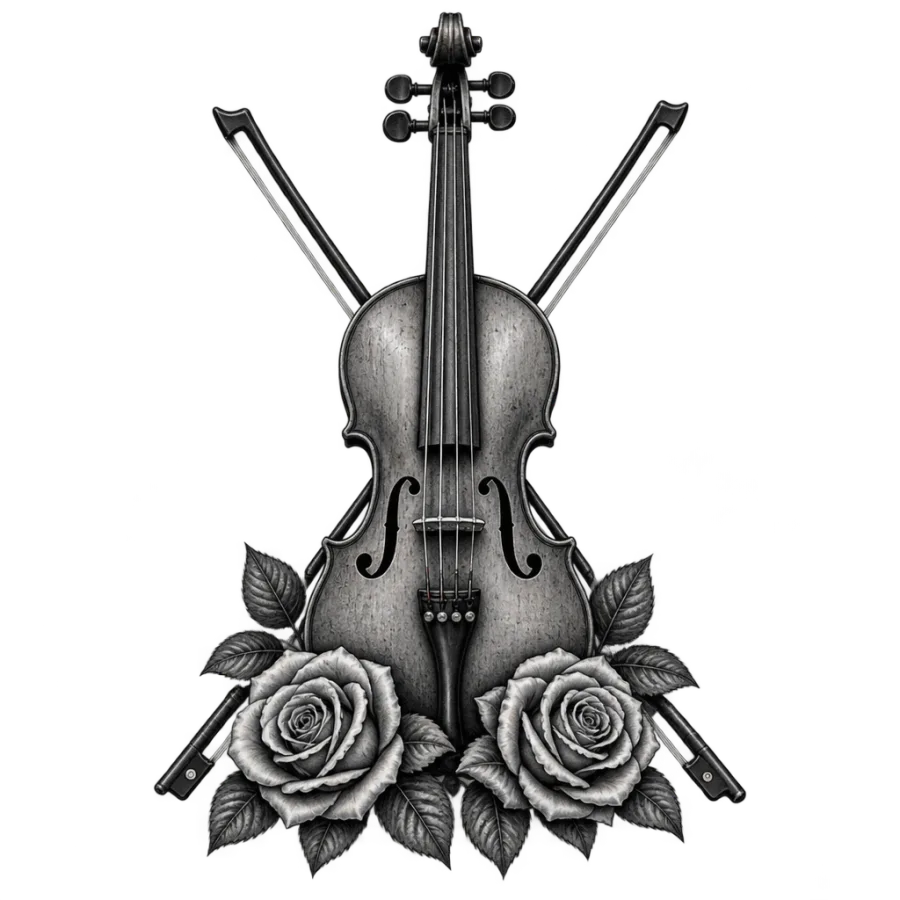
An old violin with its bow crossed behind it and roses below, black and grey realism
Use this prompt
A classical lyre framed by laurel branches and lace scrollwork, ornamental filigree
Use this prompt
A ribbon of piano keys breaking apart into flying swallows, heavy blackwork
Use this prompt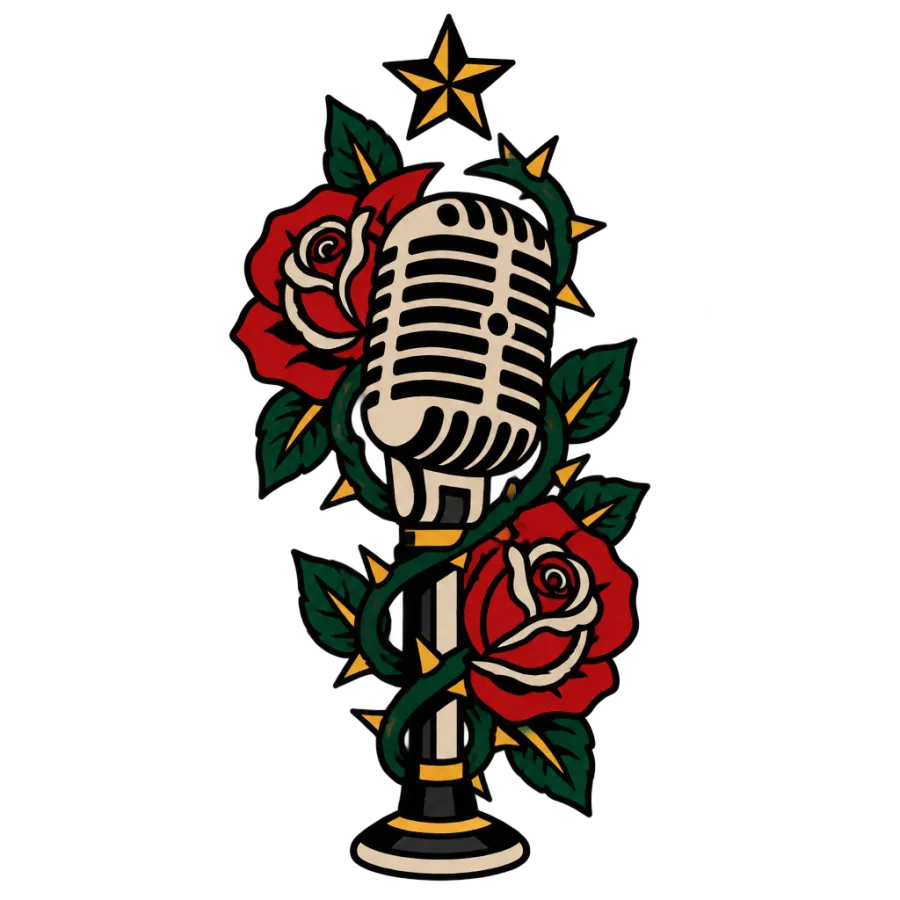
A vintage stage microphone wrapped in thorny roses with a star above
Use this prompt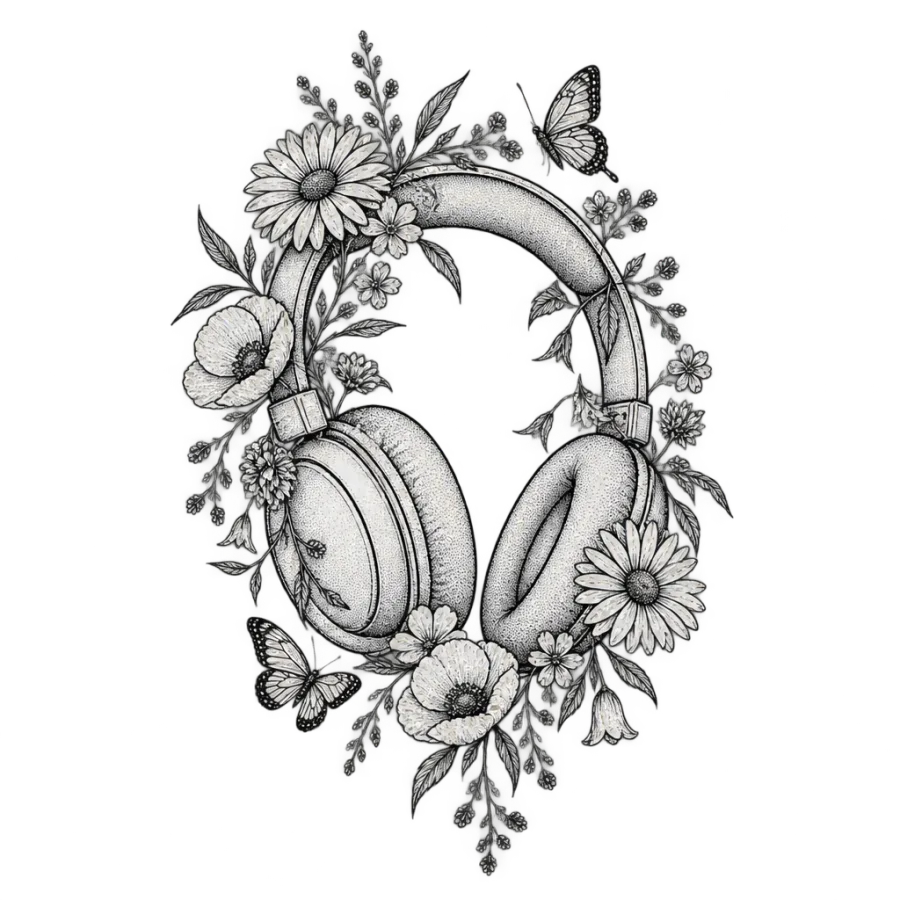
Headphones woven with wildflowers and two small butterflies, delicate single needle
Use this prompt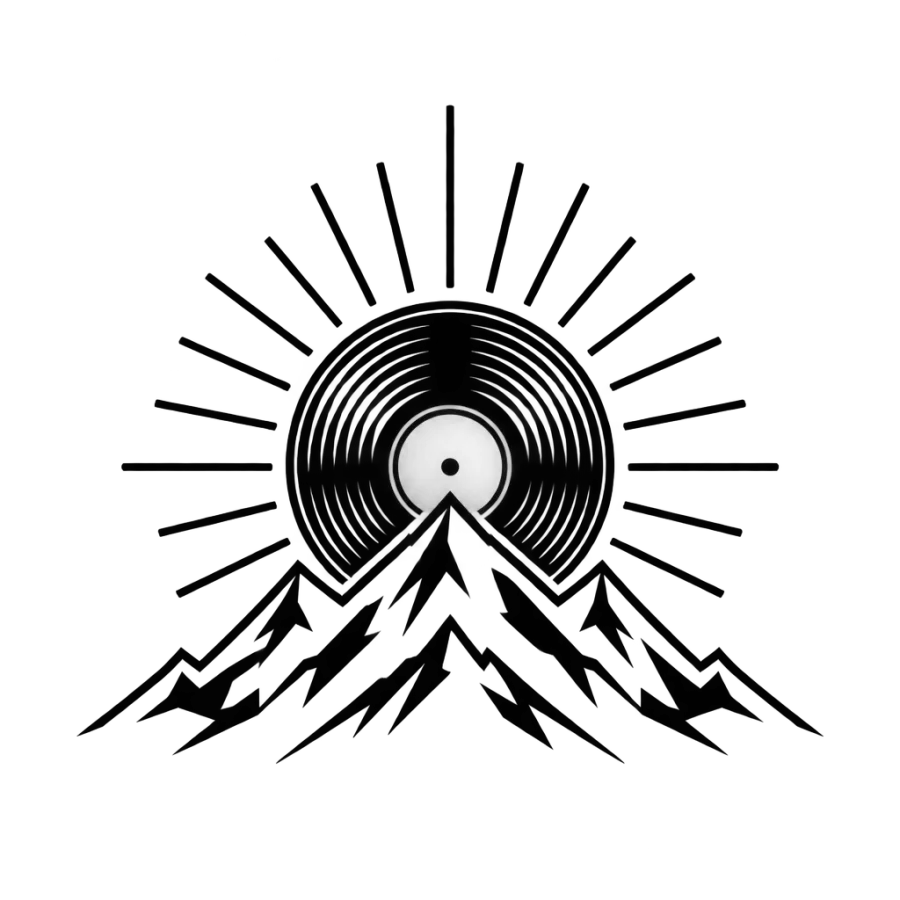
A vinyl record as a rising sun with rays over mountains, geometric
Use this prompt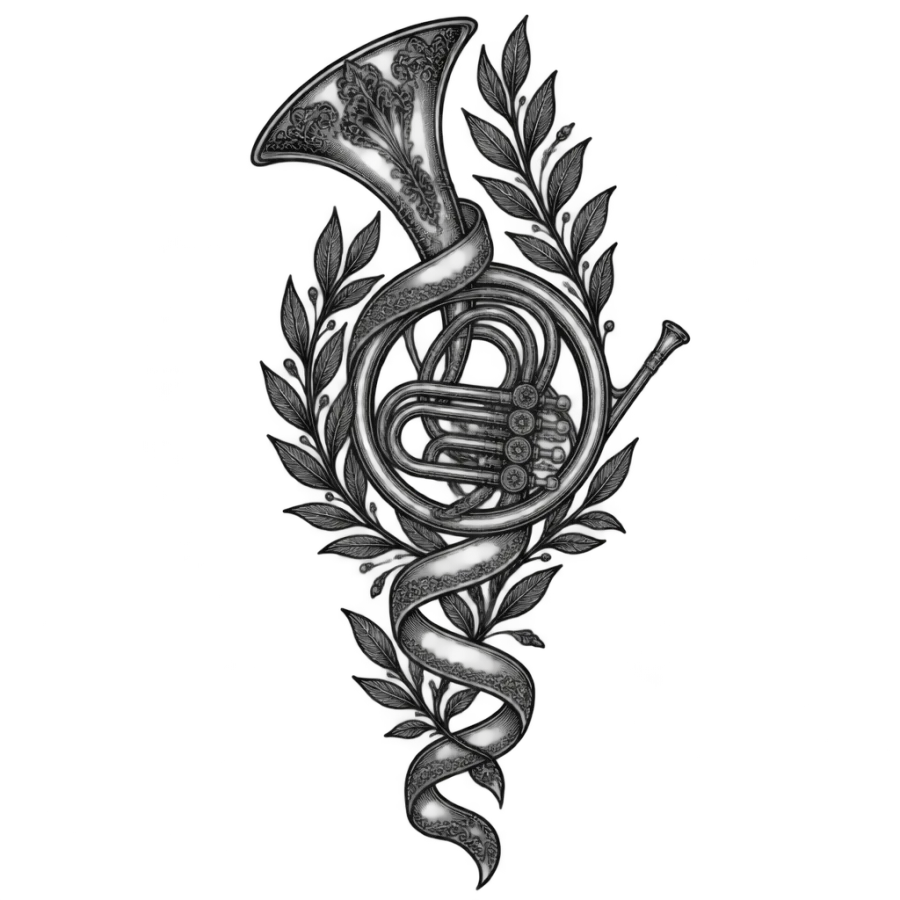
A tall coiled French horn entwined with laurel branches and a ribbon
Use this prompt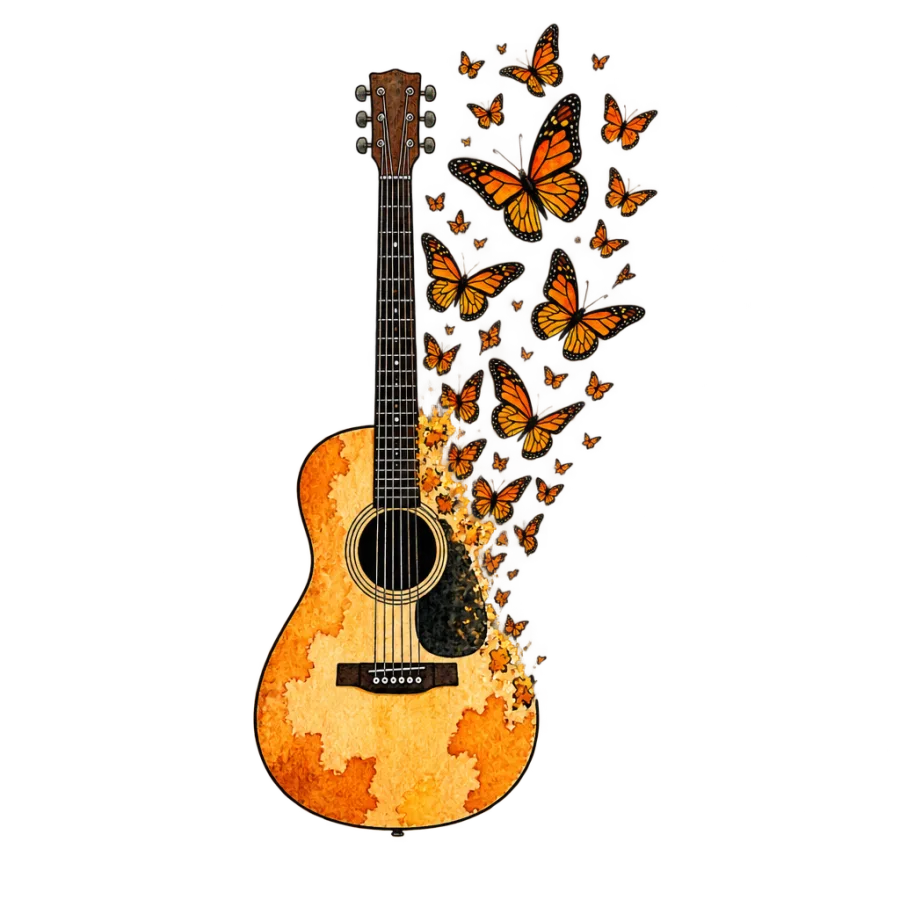
An acoustic guitar dissolving into monarch butterflies, loose watercolor washes
Use this prompt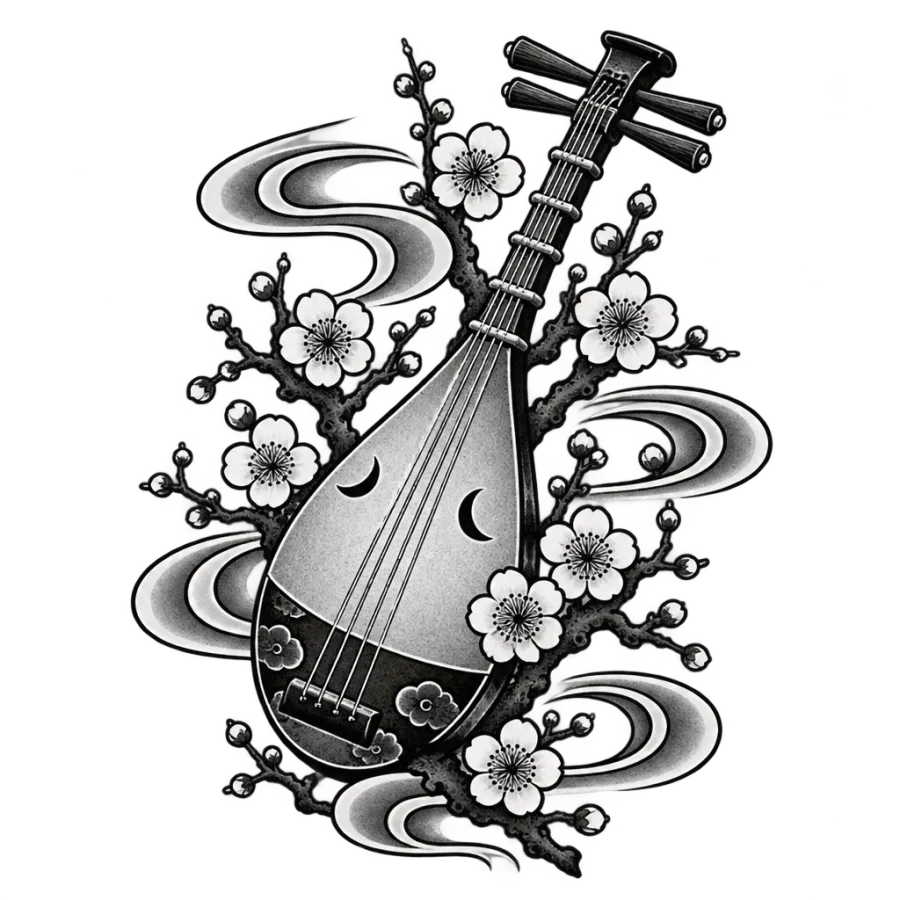
A biwa lute among plum blossom branches with curling wind bars
Use this prompt
A saxophone and a crescent moon drawn in one unbroken line
Use this prompt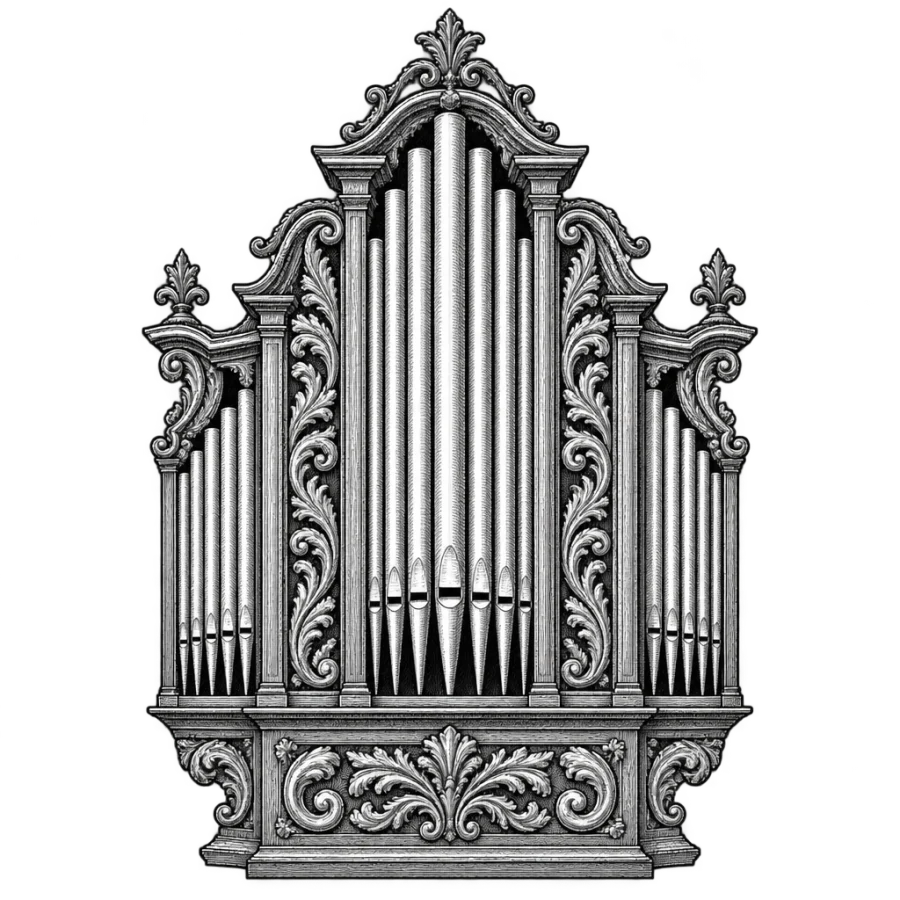
Old pipe organ facade with ranked pipes and carved scrollwork, engraved
Use this prompt
Tuning fork and sound waves cut as negative space in a black panel
Use this prompt
Grand piano from above in solid black with one white gap of keys
Use this promptDescribe an idea of your own and get four designs back in about 20 seconds.
Open the generator
Questions people ask
How do I make sure sheet music tattoos are correct?
Have a musician write the bar out by hand at the right pitch, including the clef, key signature and time signature, then photograph it flat and ask the artist to trace it. Backwards clefs and missing key signatures are the most common errors, and they are obvious to anyone who reads music.
Do soundwave tattoos actually play?
The shape is just a drawing. The scannable versions rely on an app matching a photograph of your skin to a stored audio file, which depends on that company continuing to operate and support the app. Several have closed. Choose a waveform you like the look of and treat playback as optional.
Are lyric tattoos a bad idea?
They are fine if the words matter to you rather than identifying a band or a moment in pop culture. Keep them short, use real handwriting where possible, and avoid trend scripts. Letters under about 4 mm tall will blur together as the ink spreads over ten to fifteen years.
How big does an instrument tattoo need to be?
At least 15 cm for a guitar, cello or saxophone if you want the details that identify it: string count, fret markers, valve layout, the shape of the scroll. Below that the fine internal lines merge and it reads as a dark silhouette after a decade.
How much does a music tattoo cost?
A single bar of notation or a small waveform is often the shop minimum, typically $100 to $180. A forearm length notation piece runs $250 to $450. A detailed black and grey instrument portrait is usually four to eight hours at $120 to $250 an hour.