Tattoo stencil designs that transfer cleanly
Tattoo stencil designs are the line drawing an artist presses onto your skin before the first needle pass, so they can only hold lines a needle can lay.
- Thermal transfer paper has four layers: a white top sheet, a thin tissue, a carbon sheet and a backing.
- The carbon lands on the underside of the white top sheet, so lettering reads the right way round on skin.
- A stencil needs about 1 mm of clear skin between lines at final size, and 2 mm on a hand or a foot.
- A fresh stencil holds for roughly 2 to 6 hours of work before it needs reapplying.
- Transfer paper4 ply thermal or hectograph
- Stencil line weight0.3 to 0.5 mm, one pass
- Print scale100 percent, never fit
- Dry before lining10 to 15 minutes

Most of what people call tattoo stencil designs are finished illustrations. A real stencil is thinner than that. It carries the outline the artist will tattoo and nothing else, in a single closed line of even weight, with enough space between lines that the ink will not run them together as it spreads over the years.
AI Tattoo Lab generates black linework on a transparent background, which is already the format a stencil needs. You can print it at true size or hand it to your artist as a file. They will still redraw and resize it for the curve of your arm, because a design made on a flat page never sits flat on a body.
What separates a stencil from a finished drawing
A stencil is a map for the liner, so everything that is not a line comes out. Grey wash, colour, cross hatching and dot density all get worked in freehand after the outline is down, because the artist judges those against the skin in front of them. What stays is the silhouette, the interior lines you will actually tattoo, and sometimes two or three light marks showing where a shadow will sit.
Weight matters as much as content. One line, closed, even thickness, no sketch marks and no doubled contour. A traced line that wobbled and got traced again leaves two lines about half a millimetre apart, and on skin that reads as a smudge rather than an edge.
Take these out before you print
- Grey wash and any soft gradient, which a liner cannot lay
- Colour, including flat fills, since the stencil only guides the outline
- Sketch and construction lines left over from the drawing stage
- Doubled contours from tracing the same edge twice
- Interior detail smaller than about 1 mm at final size
The transfer, step by step
The order matters more than the products. Shave the area even if you cannot see hair on it, because one fine hair under a stencil lifts the line off the skin. Clean with green soap or an antiseptic wipe, then dry completely. Primer on damp skin slides, and a slid stencil has to be scrubbed off and redone.
Thermal printers are the studio standard, since a printed line is consistent and you can run three copies in a minute. The thin tissue layer comes out of the pack first so the carbon sits directly behind the white sheet. Hand tracing with a ballpoint onto that top sheet still works and is how most apprentices learn, though the line thickness follows your hand pressure. Print two or three copies either way, because plain soap takes a stencil off fast and a long session usually needs a second application.
| Step | What happens | Time |
|---|---|---|
| Shave and clean | Razor over the area, then green soap or an antiseptic wipe, then dry fully | 2 to 3 min |
| Prime the skin | Thin layer of stencil primer or an unscented antiperspirant stick | 30 sec |
| Press the transfer | Carbon side down, smooth from the centre outward, no sliding | 30 to 60 sec |
| Peel | Lift one edge and pull in a single motion | 5 sec |
| Dry | Leave it alone, no touching and no wiping | 10 to 15 min |
What makes a stencil fail on skin
Scale is the most common failure and the easiest to avoid. A design printed through a dialog set to fit to page comes out at roughly 94 percent if the file is A4 and the tray holds Letter paper, so a 10 cm piece quietly becomes 9.4 cm. Measure the printed design with a ruler before anything touches skin.
The rest of the failures are in the drawing. Lines closer than about 1 mm merge as ink spreads in the dermis, so a dense mandala at 5 cm turns into a grey disc in under a decade. Broken lines leave the artist guessing where the edge was meant to go. Interior detail the needle cannot resolve, like a face at 2 cm, lands as a dark blob.
Choosing a stencil design you will still want in ten years
Pick for the silhouette first. Shrink the design to thumbnail size on your phone and look at it. If the shape is unreadable at 1 cm, no amount of interior line will save it at 6 cm, because a healed tattoo loses its interior detail long before it loses its outer shape.
Bring the printed version to a consultation rather than to the chair. An artist who sees the design a week early can redraw it for the width of your forearm, change the line weight, and tell you whether the piece wants to be bigger. Most of them will say bigger.
Stencil subjects that age well
- Single animals with a readable silhouette, like a moth, a snake or a bird in flight
- Botanicals with separated stems and 5 to 9 petals rather than 30
- Traditional subjects drawn with a heavy outline, which spreads slowly
- Geometry built from straight lines and one or two circles
- Short lettering at 1.5 cm cap height or taller
12 stencil designs, with the prompt behind each one
Every design below came out of AI Tattoo Lab. Tap one to load its prompt into the generator, then change a word and make it yours.

Crescent moon with stars and a hanging feather, outline only
Use this prompt
A round compass rose with an eight point star, stencil outline
Use this prompt
A swallow in flight with spread wings, outline only
Use this prompt
A key, a four leaf clover and a paper airplane as outlines
Use this prompt
A lighthouse with waves inside an oval frame, stencil outline
Use this prompt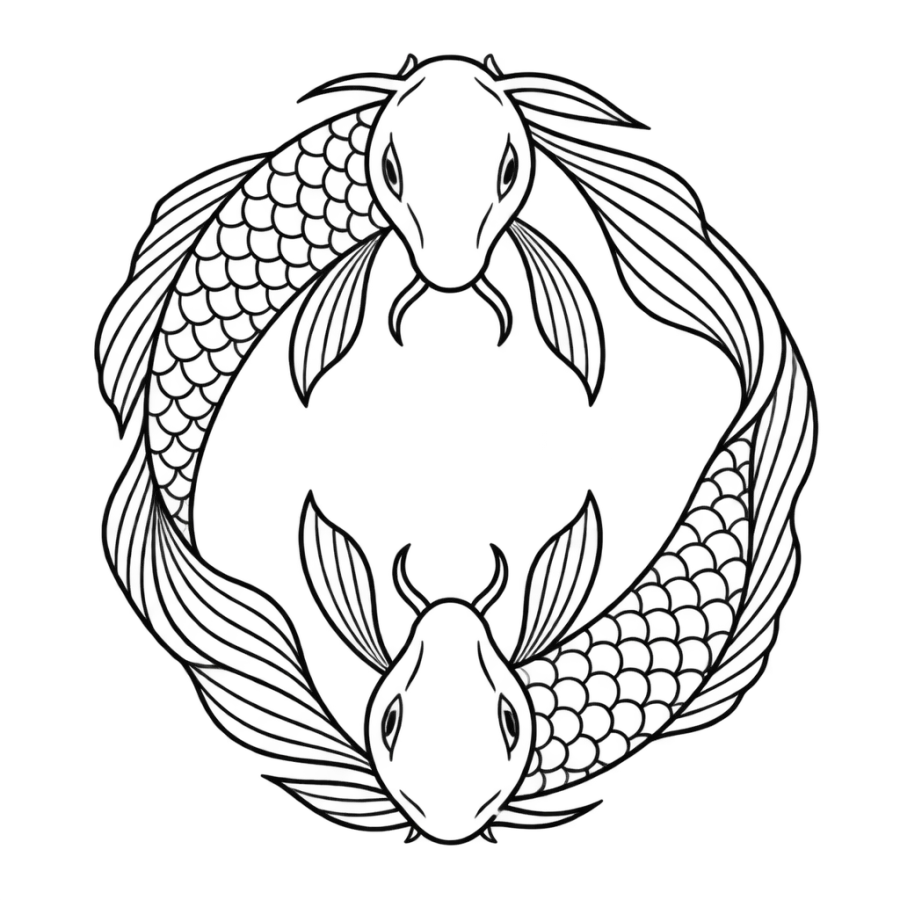
Two koi fish chasing each other in a circle, outline only
Use this prompt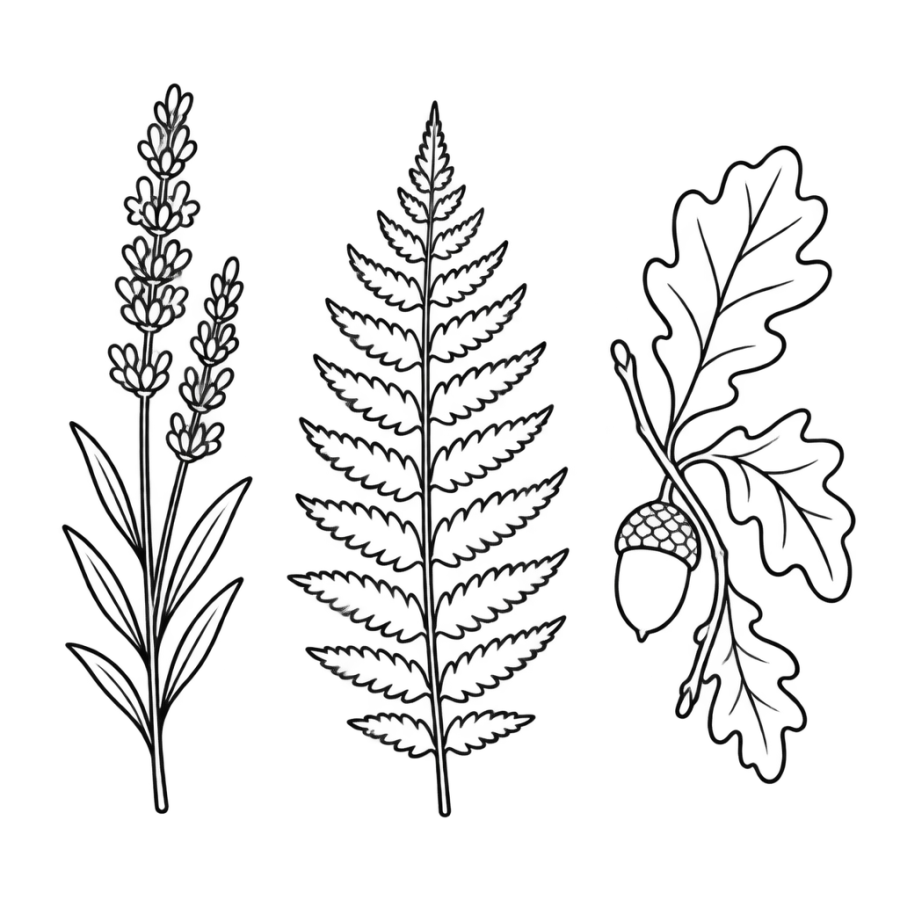
Lavender, a fern frond and an acorn as a botanical outline plate
Use this prompt
Three mountain peaks with pines and a rising sun, outline only
Use this prompt
A butterfly with open wings, pattern as outline only, nothing filled
Use this prompt
An anatomical heart with crossed wheat behind it, outline only
Use this prompt
A three masted sailing ship on two waves, stencil outline
Use this promptDescribe an idea of your own and get four designs back in about 20 seconds.
Open the generator
Questions people ask
What is a tattoo stencil design?
It is the line drawing that gets transferred onto your skin so the artist can follow it. A stencil holds only the outline that will be tattooed, in one even line, with no shading and no colour. The artist adds grey wash, fills and texture freehand once the outline is finished.
Can I use an AI generated design as a tattoo stencil?
Yes, if it is clean linework at the right size. Every design from AI Tattoo Lab comes as black line on a transparent background, which prints straight onto transfer paper. Your artist will still redraw it to fit your body, adjust the line weight, and flag anything the needle cannot hold.
Do I need thermal transfer paper to use a stencil?
For a real tattoo, yes, or your artist supplies it. Thermal paper is four layers and the image ends up on the back of the white top sheet, which is the sheet that touches the skin. A plain paper printout is a reference for the consultation, nothing you can transfer.
How big should a tattoo stencil be?
Match it to the placement, then round up. An inner forearm panel holds 8 to 12 cm of width, a wrist holds 4 to 6 cm, and a sternum piece runs 10 to 18 cm tall. Small stencils lose interior detail first, so most designs read better 20 percent larger than people first ask for.
Will my artist use my stencil or draw their own?
Most redraw it. A good artist takes your design as the brief and rebuilds the line for your anatomy, which is why the same design looks different on two arms. Some will print your file directly if it is already clean, correctly scaled linework, but expect changes and treat them as the point of hiring them.