Small tattoo stencils and what fits at 3 cm
Small tattoo stencils have to lose detail on purpose, because at 3 cm the needle decides what survives and it is less than most people expect.
- A 2 to 3 cm stencil holds about three to six separate lines before the gaps close up.
- Shop minimums in the United States usually run $80 to $150, so a 3 cm piece and a 6 cm piece often cost the same.
- Fingers, feet and the side of the hand fade fastest, and small work there goes first.
- Dot shading holds at small sizes better than grey wash, because each dot stays a separate mark.
- Workable range2 to 7 cm (1 to 3 in)
- Minimum line gap1.5 mm at 3 cm
- Outline needle3RL at 0.30 mm
- First touch up3 to 8 years

Small stencils fail by being faithful. People shrink a design that worked at 10 cm down to 3 cm and keep every line, and the printer holds it, and the stencil holds it, and then the needle lays three lines where the drawing had five. Within a few years those three are one grey mark.
The fix is to redraw. A rose at 3 cm is five petal shapes and a stem. A rose at 10 cm is twenty. AI Tattoo Lab takes the size first and draws for it, so you get a 3 cm design instead of a shrunken 10 cm one.
How small a tattoo stencil can go
Two centimetres is the practical floor for anything with an inside. Below that you are drawing a symbol: a closed shape, a few strokes, a letter. The limit is the healed width of a tattooed line rather than the stencil or the printer. A 3RL lays roughly half a millimetre of pigment that settles near a full millimetre, so a 2 cm design is about twenty line widths across in total.
That arithmetic is why tiny lettering disappears. Script at 5 mm cap height has strokes and gaps about the same size as the line itself, and after a few years the letters fill in and read as a dark smear. Roman numerals go the same way, since the gaps between the uprights are the first thing to close. Set lettering at 1.5 cm cap height or taller and the problem goes away.
| Stencil size | Separate lines | Minimum gap | First touch up |
|---|---|---|---|
| 2 to 3 cm (under 1 in) | 3 to 6 | 1.5 mm | 3 to 6 years |
| 3 to 5 cm (1 to 2 in) | 6 to 12 | 1.5 mm | 5 to 10 years |
| 5 to 8 cm (2 to 3 in) | 12 to 25 | 1 mm | 8 to 15 years |
| 8 to 12 cm (3 to 5 in) | 25 and up | 1 mm | 10 to 20 years |
Redrawing a design down instead of scaling it
Work out what the silhouette is doing, keep that, and delete the rest. A hummingbird at 4 cm needs a body, a beak, one wing shape and a tail. The feather detail, the glint in the eye and the second wing all go, because at 4 cm they turn into noise inside the shape.
What to cut first when a stencil gets small
- Texture: feathers, fur, scales and wood grain
- Interior shading lines, which merge before anything else does
- Overlaps where two elements cross within 1.5 mm
- Faces and hands, which read as marks rather than features under 2 cm
- Thin decorative flourishes on lettering
Placements that suit a small stencil
Small work wants skin that does not move much and does not get scrubbed. The inner forearm, the back of the upper arm, behind the ear, the outer ankle and the sternum all hold a 3 to 6 cm piece well. Fingers, the side of the hand and the feet do not, and that is the most common regret with small tattoos.
Think about the surface too. A 4 cm design on the inside of a wrist sits almost flat. The same design on the side of a finger wraps across a curve tighter than the design itself, so half of it is out of sight from any angle and the stencil has to be cut and applied in two parts.
How a small tattoo ages, and what it costs
Expect a small piece to soften sooner than a large one with the same line weight, because the gaps it needs are a bigger fraction of the design. Many people get a first touch up at year three to six on a 3 cm piece, and sun exposure moves that date forward faster than anything else does.
Price rarely scales down. Most studios in the United States have a minimum of $80 to $150 that covers setup, a new needle, tube and ink caps regardless of how long the tattoo takes. A 3 cm design and a 6 cm design often come to the same number, so if you are at the minimum anyway, the larger one is better value and ages better.
12 small stencils, with the prompt behind each one
Every design below came out of AI Tattoo Lab. Tap one to load its prompt into the generator, then change a word and make it yours.

Lavender sprig stencil as a tall narrow outline
Use this prompt
Crescent moon with three small stars, stencil outline
Use this prompt
Cat paw print stencil drawn as a clean round outline
Use this prompt
Small sailboat on two wave lines, stencil outline
Use this prompt
Hummingbird at a small flower, pure outline stencil
Use this prompt
Two cherries on a stem inside a thin circle, outline
Use this prompt
Simple mushroom stencil with a domed cap, outline only
Use this prompt
Mirrored pair of small wings with a gap, stencil outline
Use this prompt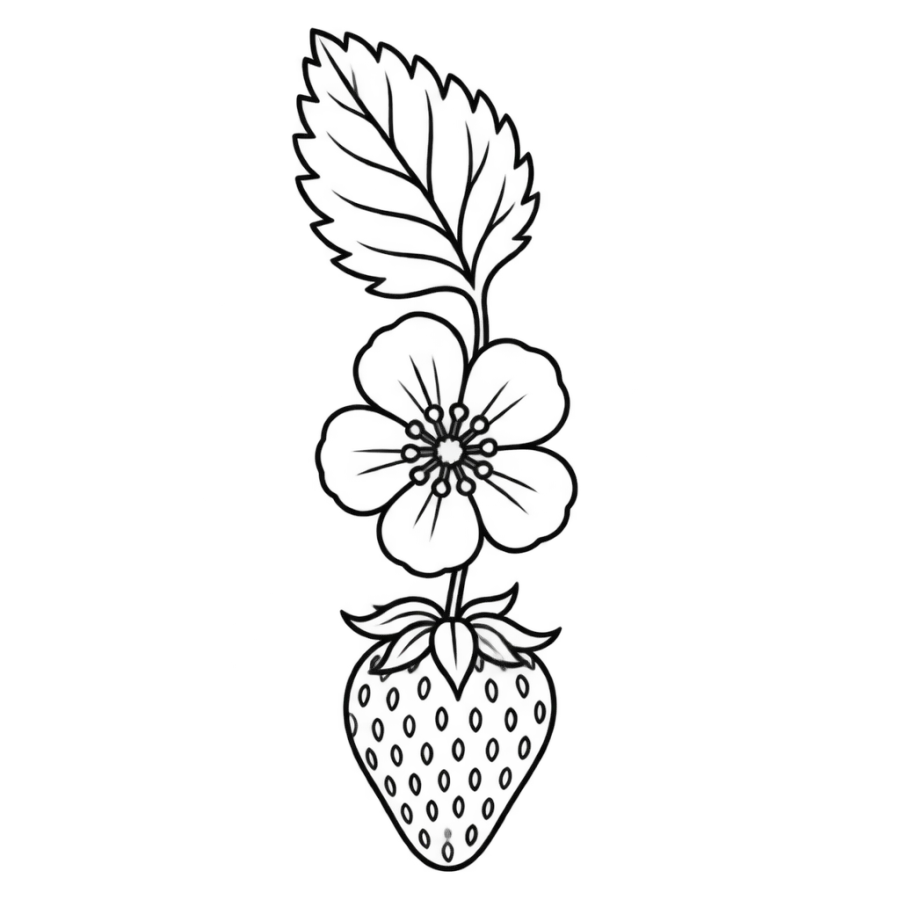
Strawberry leaf, flower and berry stacked, stencil outline
Use this prompt
Honeybee from above with open wings, outline only
Use this prompt
Four leaf clover stencil drawn with simple closed outlines
Use this promptDescribe an idea of your own and get four designs back in about 20 seconds.
Open the generator
Questions people ask
How small can a tattoo stencil be?
About 2 cm for anything with interior detail, and smaller only for a plain symbol. A tattooed line heals to roughly 1 mm wide, so a 2 cm design is around twenty line widths across in total. Below that, the gaps between lines are the same size as the lines and they close up.
Do small tattoos blur over time?
They soften the same way large ones do, but it shows sooner because the gaps are smaller relative to the design. Ink spreads slightly in the dermis for life. Keeping 1.5 mm between lines, using SPF 30 or higher once healed, and avoiding fingers and feet all slow it down.
What needle is used for small tattoo stencils?
A 3RL at 0.30 mm for the line, and often a 3RL or a single needle for any dot shading. Some artists use a bugpin 0.25 mm grouping for very small work, which lays a slightly tighter line. Grey wash with a magnum needle rarely suits anything under 4 cm.
Is a small tattoo cheaper?
Not usually, because most studios charge a minimum of $80 to $150 that covers setup and supplies. A 3 cm piece and a 6 cm piece frequently cost the same, so the larger version is better value. Very small does save chair time, which matters more if you are booking several pieces at once.
Which placements suit small stencils?
Inner forearm, back of the upper arm, behind the ear, outer ankle and the sternum all hold 3 to 6 cm work well. Avoid fingers, the side of the hand and the feet, where friction and fast skin turnover blur a small design within a couple of years.