Tattoo stencils for women, placement by placement
Tattoo stencils for women come down to placement, so this page is about the body areas people ask for most and the proportions each one gives a stencil.
- A sternum stencil is applied with the person upright, because chest tissue moves when you lie down.
- A rib cage curves in two directions at once, so a flat stencil has to be cut and realigned.
- Spine work is tattooed with the back slightly rounded, and the stencil goes on in the same position.
- Fine hair holds a stencil off the skin, so artists shave areas that already look bare.
- Spine stencil3 to 6 by 20 to 40 cm
- Sternum stencil8 to 14 by 10 to 18 cm
- Apply the stencilStanding, in the pose
- Shave firstEven where you see none

The areas that come up on this query are the sternum, the spine, the ribs, the hip, the collarbone, the inner forearm, the outer thigh and behind the ear. Each one hands a stencil a specific shape to fill. A spine piece is a 3 to 6 cm wide column that can run 40 cm tall. A sternum piece is symmetrical around a line someone has to mark on the body first.
Curved and mobile surfaces are the technical problem, and most of these placements are both. AI Tattoo Lab generates linework at the size you set, which gives you something to print, hold against the spot in a mirror, and change before anyone marks you. That one step catches most sizing mistakes while they are still free to fix.
The placements this search is usually about
Each area gives a stencil a usable rectangle, and the ratio of that rectangle decides whether a design fits. A tall narrow design will not sit on a collarbone. A wide symmetrical design will not sit on a spine. Measuring the spot before picking the design saves the whole conversation.
| Placement | Usable area | Shape it needs | Pain |
|---|---|---|---|
| Inner forearm | 8 to 12 by 20 to 25 cm | Tall narrow panel | 3 to 4 / 10 |
| Spine | 3 to 6 by 20 to 40 cm | Long vertical, centred on the bone | 6 to 8 / 10 |
| Sternum | 8 to 14 by 10 to 18 cm | Symmetrical around a marked centre line | 7 to 8 / 10 |
| Ribs | 10 to 18 by 15 to 25 cm | Curved, applied in the pose it will be seen in | 7 to 9 / 10 |
| Outer thigh | 12 to 20 by 15 to 30 cm | Wide, slight curve, room for a seam | 4 to 5 / 10 |
| Collarbone | 3 to 5 by 10 to 16 cm | Narrow band following the bone | 6 to 7 / 10 |
| Behind the ear | 2 to 4 by 2 to 5 cm | Tiny, 3 to 6 lines only | 5 to 6 / 10 |
Curved and moving surfaces distort a flat stencil
A stencil is printed flat and a body is not. On a rib cage, a hip or the side of a breast, a sheet laid flat touches at the centre and lifts at the edges, so the transfer either wrinkles or stretches. Artists handle it by cutting the sheet into sections, aligning the centre first, and redrawing part of the join freehand where the curve pulls the line out of true.
Position matters as much as the cut. A sternum or underbust stencil is applied with the person sitting or standing upright, because lying back changes the spacing between the ribs and the position of breast tissue noticeably. The same goes for a spine piece, which is applied with the back rounded into roughly the position it will be tattooed in.
Female tattoo stencils and the symmetry problem
Several of these placements are symmetrical, and symmetry is the hardest thing to transfer. The eye catches a 1 mm offset on a sternum piece instantly, while the same error on a forearm goes unnoticed for years. The fix is mechanical: mark a centre line with a skin marker, measure from a fixed landmark on both sides, then align the stencil to the marks rather than by eye.
A mandala or an ornamental chest piece is worth checking in a mirror at normal standing distance before the first line, because looking down at your own chest foreshortens the whole design and nobody else ever sees it from that angle. Ask the artist to photograph the stencil straight on and look at the photo. A 2 mm drift that is invisible on the body shows up immediately in a picture.
Sizing, shaving and healing by area
Most of these placements need a bigger design than people first choose. A sternum piece under 10 cm tall reads as a small mark in a large open area, and a spine piece under 20 cm looks stranded. Print the stencil, tape it on, and look at it from across the room.
Practical notes by area
- Sternum and ribs heal with a bra band or waistband rubbing them, so plan clothing for three weeks
- Spine sits directly over bone, which most people rate 6 to 8 out of 10
- Hip and outer thigh are the lowest pain of this group and hold the most detail
- Behind the ear holds 3 to 6 lines at most, and hair has to be shaved back
- Collarbone skin is thin over bone, so line weight above 1 mm spreads faster there
12 stencils for women, with the prompt behind each one
Every design below came out of AI Tattoo Lab. Tap one to load its prompt into the generator, then change a word and make it yours.

Three lavender sprigs tied with a ribbon, pure outline stencil
Use this prompt
Round rose window medallion of twelve petal panels, outline only
Use this prompt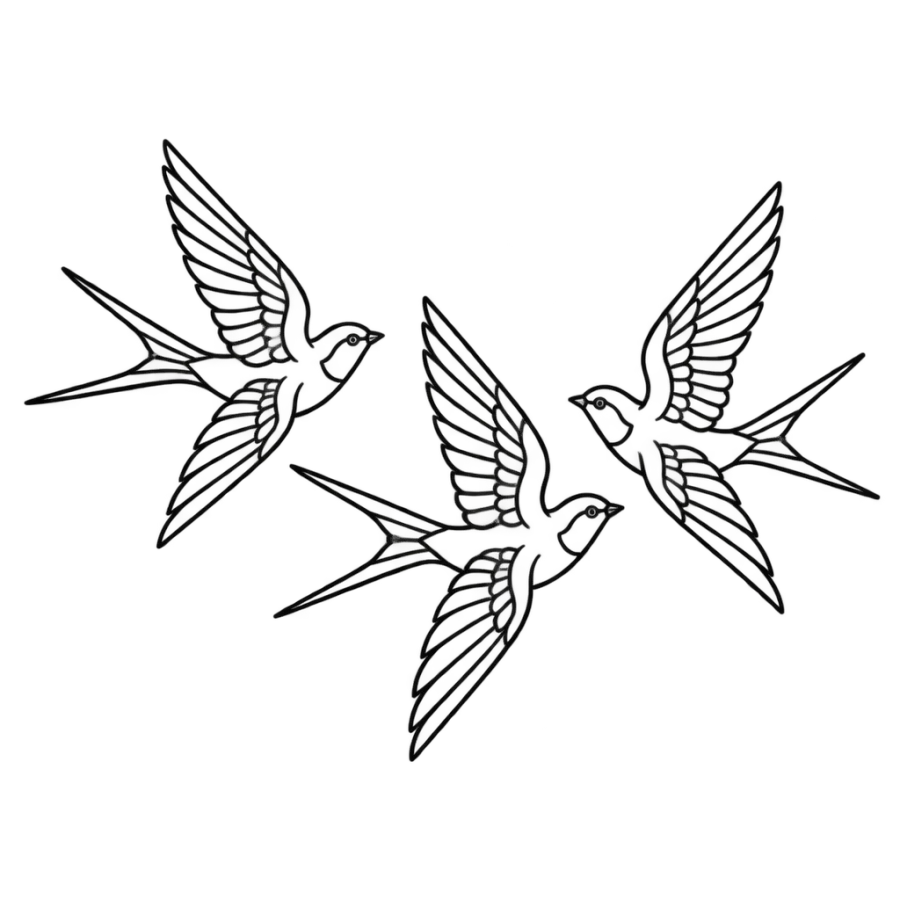
Three swallows in flight across a wide band, outline only
Use this prompt
Hummingbird feeding at a trumpet flower, pure outline stencil
Use this prompt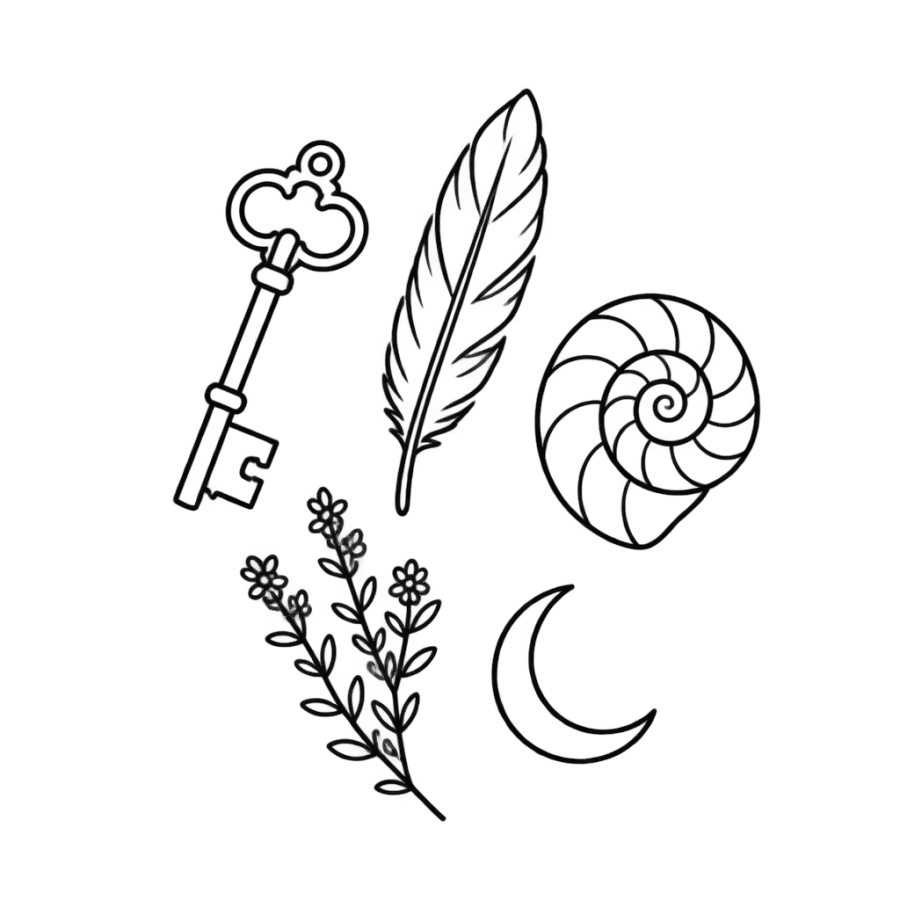
Scattered cluster of a key, feather, shell, herb sprig and crescent
Use this prompt
Arched window with a fern growing through it, outline only
Use this prompt
Two koi mirrored head to tail inside a circle, pure outline
Use this prompt
Olive branch with paired leaves and olives as a botanical outline
Use this prompt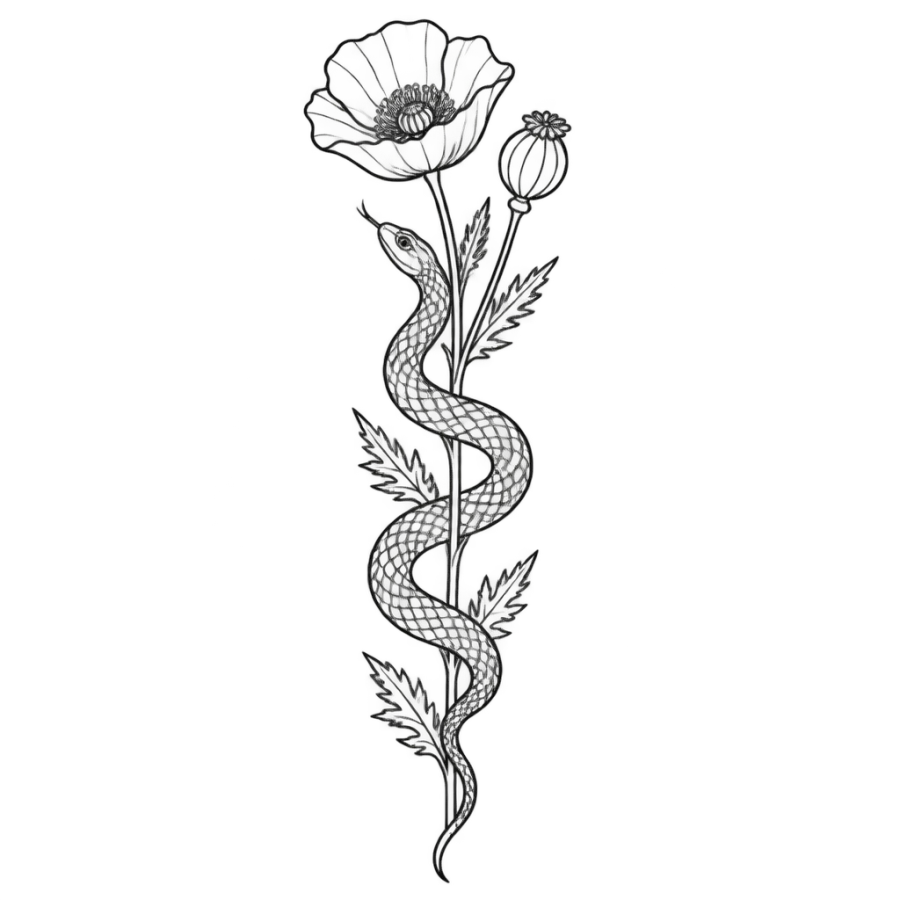
Snake coiled around a poppy stem with a bloom, outline only
Use this prompt
Lotus mandala with a crescent moon at the centre, pure outline
Use this prompt
Lake horizon with pines, a ridge and a heron flying over
Use this promptDescribe an idea of your own and get four designs back in about 20 seconds.
Open the generator
Questions people ask
What tattoo stencils work best for women?
The question is really about placement. Sternum, spine, ribs, hip, collarbone, inner forearm and behind the ear are the areas people ask about most, and each gives a different shape. A spine takes a 3 to 6 cm wide column up to 40 cm tall. A sternum takes a symmetrical design 10 to 18 cm tall.
How do you apply a stencil on a curved area like the ribs?
Cut the sheet into sections, align the centre first and work outward, pressing each part separately. Apply it with the person in the position they will be tattooed in, usually sitting or standing. Expect the artist to redraw part of a join freehand where the curve pulls the line out of true.
Do I need to shave before a stencil is applied?
Yes, and the artist will do it even on areas that look bare. Fine hair holds the transfer paper off the skin, so the carbon lands unevenly and the line breaks up. Shaving also stops hair being dragged into the puncture, which reduces irritation during the heal.
How big should a sternum or spine tattoo be?
A sternum piece usually wants 10 to 18 cm of height and 8 to 14 cm of width to hold its own in that space. A spine piece runs 20 to 40 cm long and 3 to 6 cm wide. Print the stencil at true size, tape it on, and look at it from across a room before deciding.
Which of these placements hurts most?
Ribs and sternum, usually 7 to 9 out of 10, because the skin is thin over bone and the whole area moves when you breathe. Spine is 6 to 8. Hip and outer thigh are 4 to 5. Behind the ear is sharp but brief, around 5 to 6, since those sessions are short.