Geometric tattoo ideas and designs
Geometric work is the only tattoo style where the human eye catches a one millimeter error instantly, which makes stencil placement as important as the tattooing itself.
- Pain level5 / 10, steady and long
- Healing2 to 3 weeks typically
- Typical size10 to 30 cm (4 to 12 in)
- Studio cost$300 to $1,500

Geometric tattooing covers mandalas, sacred geometry grids, polygonal animals, platonic solids and pattern panels. The drawing is usually the easy part, since vector software can produce perfect symmetry in minutes. Getting that perfection onto a curved, moving, three dimensional body is the actual craft, and it is where most geometric tattoos fail.
A circle stencilled flat onto a bicep becomes an oval the moment the arm relaxes. Experienced artists distort the design on purpose before applying it, or cut the stencil into sections and reassemble it on the skin so the piece reads as symmetrical from the angle a person actually sees it.
Pulling a straight line on skin
Long straight lines are among the hardest things to tattoo. Most artists use a 5RL or 7RL, stretch the skin hard in three directions, and pull the whole line in a single unbroken movement, because any stop and restart leaves a visible join. Some work with a straight edge or a taut thread as a guide, and many simply build the line from two or three overlapping passes planned in advance.
Consistency of weight matters more than absolute straightness. A geometric piece where every line is 0.8 mm reads as precise even if one line wanders slightly. A piece where lines vary between 0.6 mm and 1.2 mm looks wrong immediately, even when every angle is mathematically correct. Most artists therefore keep a single liner setup for the whole structural pass rather than swapping needle sizes mid piece.
Where geometric designs go wrong
- A circular stencil applied to a curved limb without distortion
- A center line that does not follow the actual body midline
- Fine internal lines spaced closer than 2 mm
- Mixed line weights inside one pattern
- A design planned on a flat sketch with no fitting session on the body
Shading inside a geometric frame
Geometric work is rarely just lines. Common approaches are solid black fills inside selected shapes, dotwork gradients that fade a mandala outward, and smooth grey wash panels behind a lined structure. Each changes the feel: solid fill makes it graphic and bold, stipple makes it soft and hand made, grey wash pushes it toward an illustrative look.
Whatever the fill, the structural lines should stay a step heavier than anything inside them. When internal detail matches the frame in weight the design flattens and the geometry stops reading. That hierarchy is also what keeps the piece legible after a decade of ink spread. A simple rule is to keep the frame at least one needle grouping heavier than the fill, for example a 7RL structure over 3RL detail.
How geometric tattoos age
Line spread is the enemy of precision. Over 10 to 15 years, thin lines widen by a few tenths of a millimeter, and in a dense pattern that is enough to close the small gaps and turn a section into a grey mass. The outer structure holds fine. It is the detailed center of a mandala that goes first.
This is why artists push for larger sizes and wider spacing. A 20 cm mandala with 3 mm gaps will still read clearly at twenty years. The same mandala shrunk to 10 cm has 1.5 mm gaps and becomes a dark disc. Sun fading also makes the design look uneven, since thin lines lighten faster than the filled areas.
Placement, size and cost
Flatter, more stable areas serve geometric work best: outer forearm, upper back, the space between the shoulder blades, the outer thigh and the sternum. Spine pieces are popular because the body already gives you a true center line. Avoid spanning a joint with a rigid grid, since elbows and knees will visibly break the pattern when they bend.
A 15 cm mandala usually takes three to five hours, landing around $450 to $1,000 at typical rates. Ornamental geometric sleeves are 15 to 30 hours and run $2,500 to $6,000. Add drawing time: most artists charge or require a deposit for custom geometry, because the design work alone can take several hours.
15 geometric tattoo designs, with the prompt behind each one
Every design below came out of AI Tattoo Lab. Tap one to load its prompt into the generator, then change a word and make it yours.
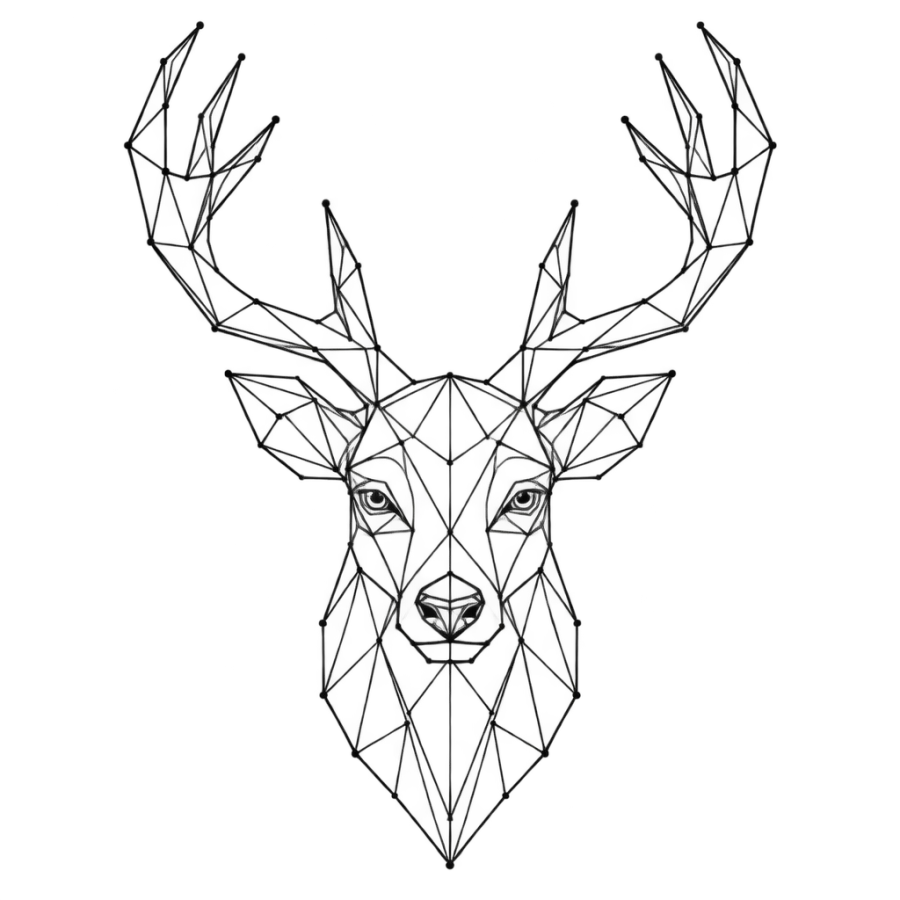
A stag head built from triangles and thin connecting lines, geometric, clean linework
Use this prompt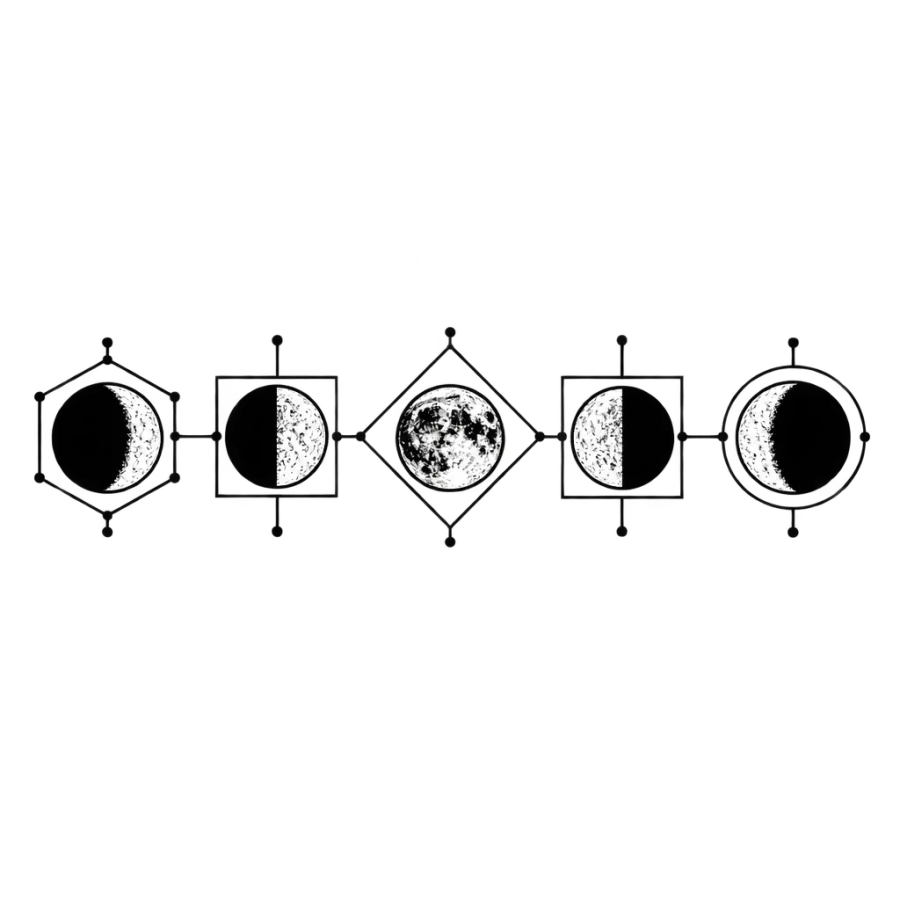
Five moon phases each nested inside a different geometric shape, geometric linework
Use this prompt
An optical illusion sphere made from evenly spaced curved lines, geometric linework
Use this prompt
A wolf head split by a big circle with straight rays, geometric lines
Use this prompt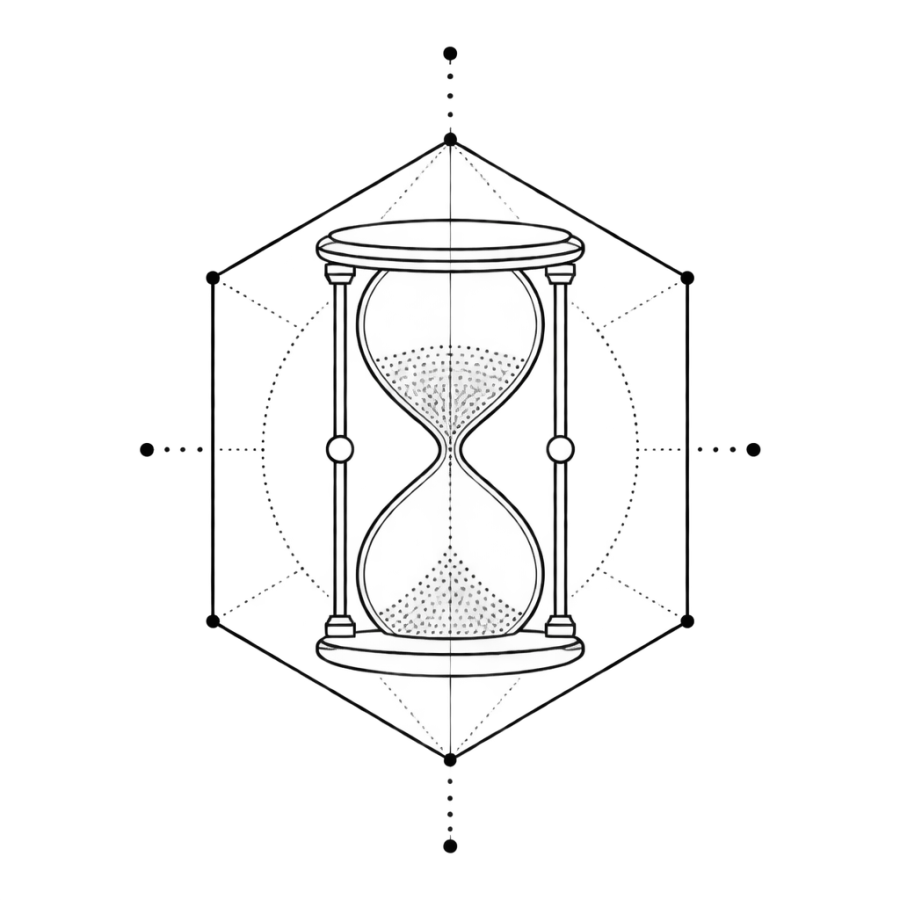
An hourglass inside a hexagon, sand falling as tiny dots, geometric
Use this prompt
A tall column of stacked triangles and thin rings, geometric linework
Use this prompt
A honeybee on a honeycomb grid of hexagons, fine geometric lines
Use this prompt
A solid black flower of life circle with petals left as negative space
Use this prompt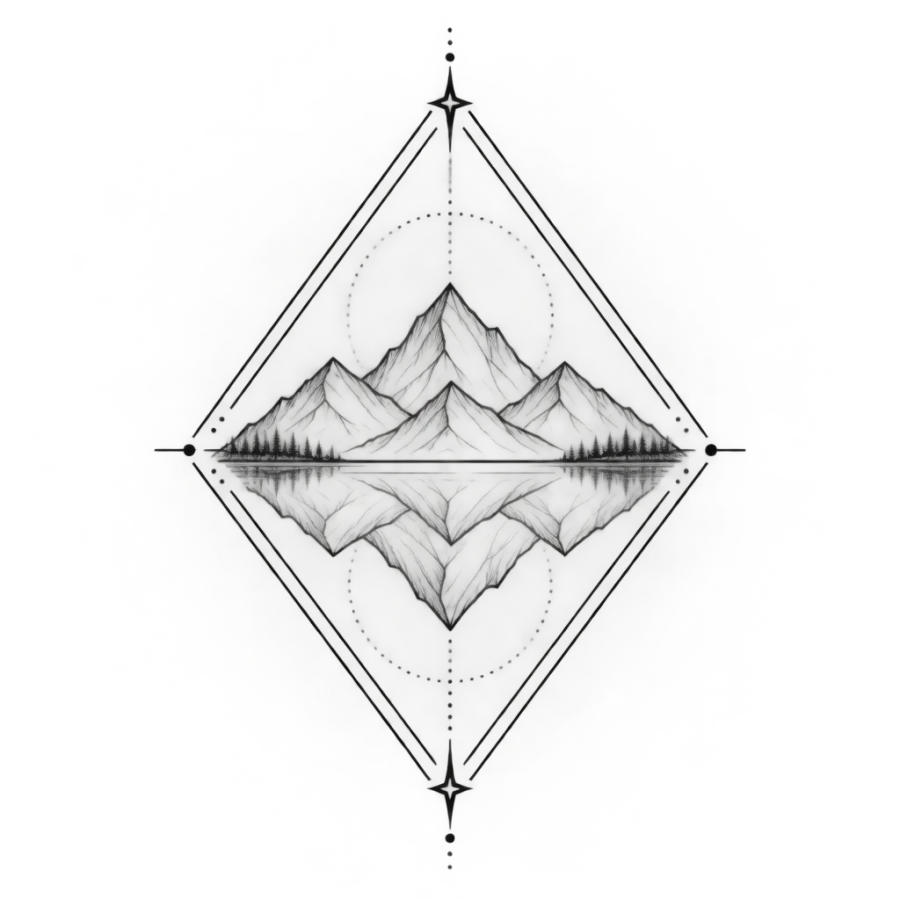
Mountains mirrored in still water inside a diamond, geometric lines
Use this prompt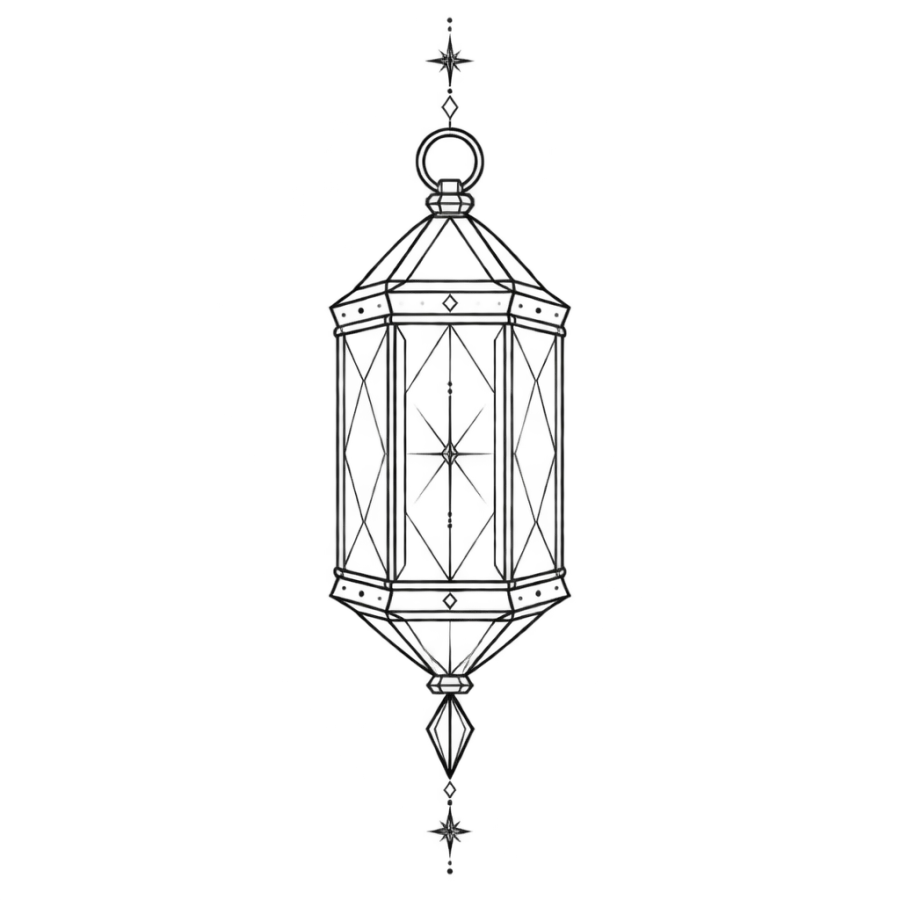
An antique lantern made of faceted glass panels, geometric linework
Use this prompt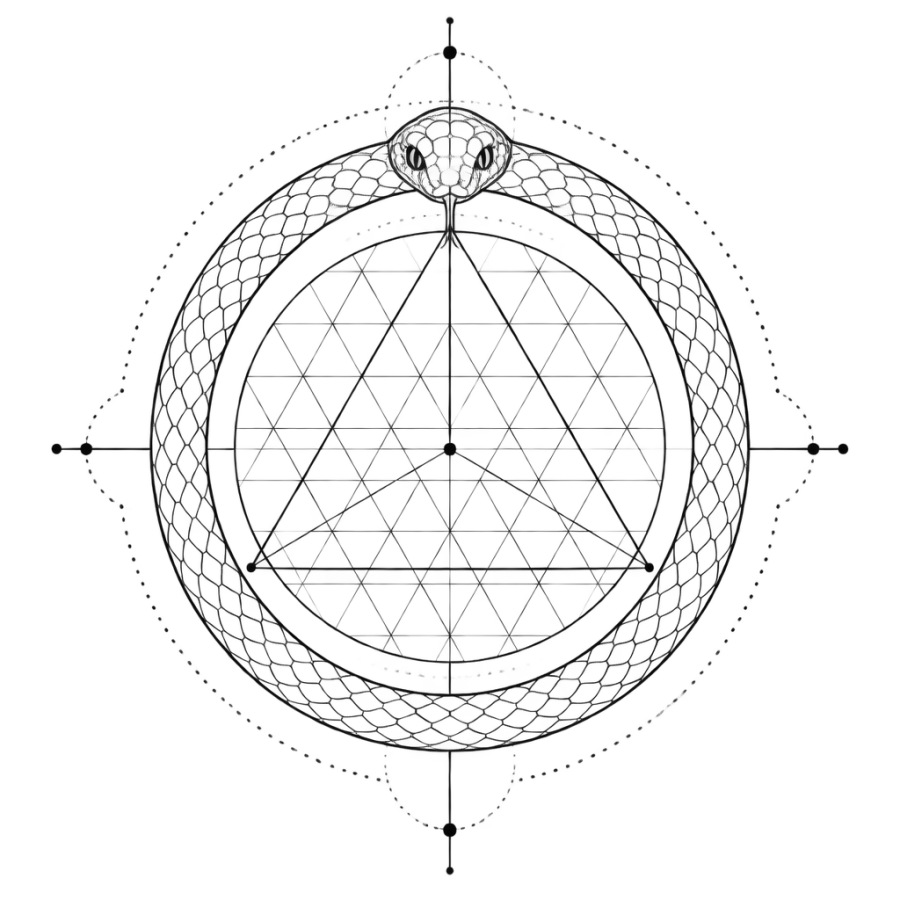
A snake coiled into a perfect circle over a thin triangle grid
Use this prompt
Two mirrored moths built from triangles and arcs, geometric line work
Use this prompt
An impossible cube through a circle and triangle, one continuous line
Use this prompt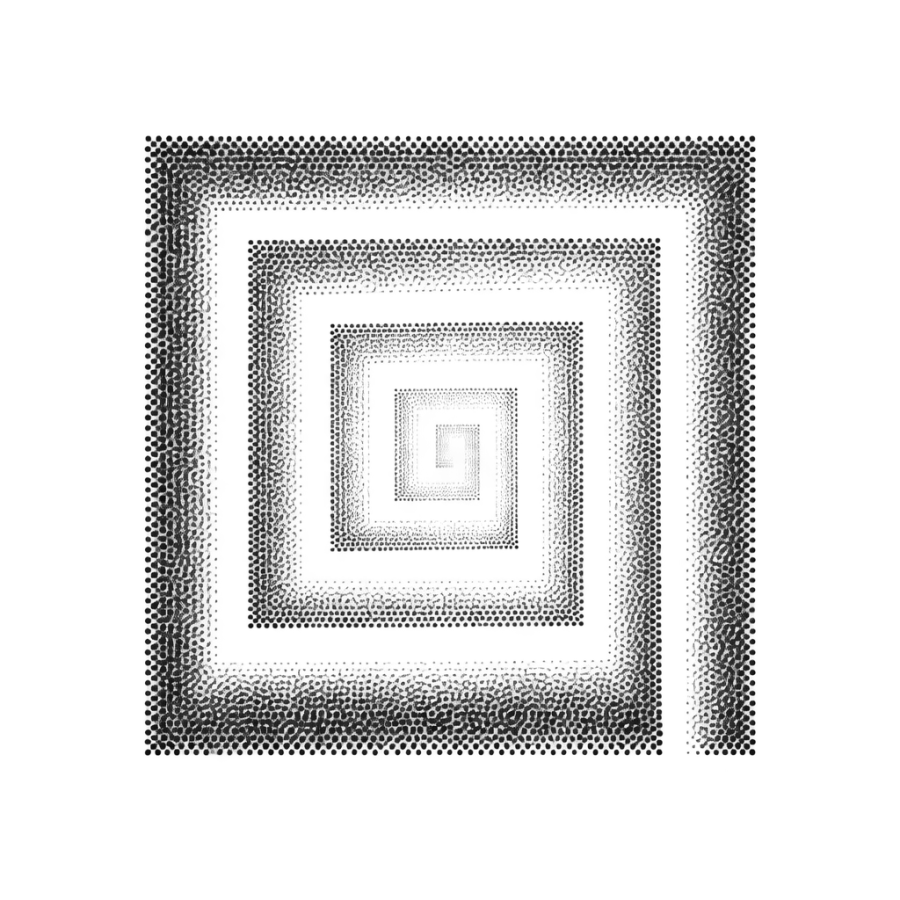
A nested square spiral in graded stippled dots, no outlines
Use this promptDescribe an idea of your own and get four designs back in about 20 seconds.
Open the generator
Questions people ask
Why does my geometric tattoo look crooked?
Usually because a flat design was applied to a curved body. A circle stencilled on a bicep becomes an oval when the arm moves, and a grid across the ribs skews as you breathe. Good artists distort the stencil before applying it and check it in a mirror with you standing naturally.
How long does a mandala tattoo take?
A 15 cm mandala usually takes three to five hours, and a large back or thigh piece can run 12 to 20 hours across several sessions. Dotwork shading adds significant time, sometimes doubling it, because stippling covers far less area per hour than a magnum does.
Do geometric tattoos age well?
The overall structure ages well and the fine interior does not. Lines widen slightly over 10 to 15 years, so gaps under about 2 mm close up and dense centers turn grey. Going larger and keeping generous spacing is the single best thing you can do for longevity.
Can geometric tattoos be perfectly symmetrical?
On paper yes, on a body no. Human bodies are not symmetrical, so a piece measured perfectly on a flat sketch will look slightly off on skin. Artists aim for symmetry as it appears from a normal viewing angle, which sometimes means building deliberate asymmetry into the stencil.
What placement works best for geometric designs?
Flat and stable areas: outer forearm, upper back, sternum, outer thigh and along the spine. These hold a grid without distorting much. Avoid stretching a rigid pattern over the elbow, knee or inner arm, where movement and loose skin break the lines visually every time you bend.