Sleeve tattoo ideas and planning
A sleeve is not a collection of tattoos but one composition wrapping a cylinder, built over many sessions and a year or more.
- Pain level3 to 8 / 10 by zone
- Total time20 to 40 hours
- Typical size55 to 65 cm (22 to 26 in)
- Studio cost$3,000 to $8,000 full
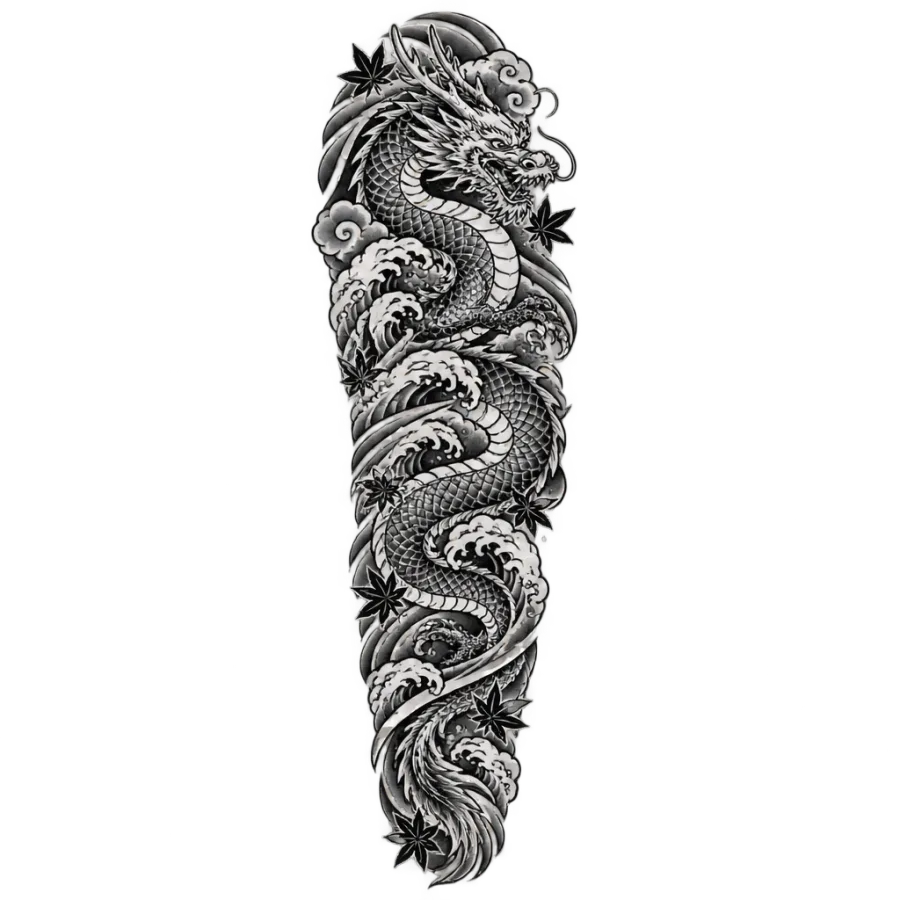
A sleeve is one composition that wraps the whole arm, not a group of separate tattoos that happen to sit near each other. That distinction decides everything: how it is planned, how long it takes, what it costs, and whether it still looks right in ten years.
Full sleeves run from the shoulder to the wrist and take most people 20 to 40 hours of tattooing across six to twelve sessions and a year or more. Half sleeves stop at the elbow. Either way, the first appointment should be a consultation about the whole arm, not a booking for one piece.
Pain varies enormously across one arm
The arm is not one pain level. The outer upper arm is the mildest place on the body at 3 out of 10, and the outer forearm is about 4. The inner bicep, the armpit edge and above all the ditch of the elbow are what people remember: the elbow ditch is thin skin over nerves and commonly rates 8.
Plan the order around that. Many artists tackle the elbow area in a short focused sitting rather than at the end of a long one, when you are already worn down. Individual sessions usually run 4 to 6 hours, with three to four weeks between them so each section heals fully before the next.
Sleeve pain by zone
- Outer upper arm: 3 out of 10
- Outer forearm: 4 out of 10
- Inner bicep and inner forearm: 6 out of 10
- Armpit edge: 7 out of 10
- Inner elbow ditch: 8 out of 10
Designing one flowing composition
An arm is a cylinder about 55 to 65 cm (22 to 26 in) long that changes diameter from shoulder to wrist and bends in the middle. Nobody sees the whole thing at once, so a sleeve has to read from four angles and hold together while you move. That is why sleeves use flowing shapes rather than square panels.
The usual solution is a main subject on the outer arm, secondary elements wrapping the sides, and a background that ties it all together: clouds and wind bars in Japanese work, smoke or texture in black and grey, pattern fill in blackwork. Background is not filler. It is the thing that stops a sleeve looking like stickers.
What a sleeve costs and how to book it
Cost is the part people underestimate. At $150 to $250 an hour, a full sleeve typically lands between $3,000 and $8,000, and a half sleeve between $1,500 and $3,500. Many artists charge a day rate instead, around $800 to $1,500. Deposits are standard and good artists are often booked months ahead.
Do not commission a sleeve piece by piece. Bring reference for the whole arm to the first consultation, agree the subject, the style and the flow, then let the artist map it out. If you already have scattered tattoos on that arm, say so early, because working around them or covering them changes both the plan and the price.
Healing between sessions, styles and visibility
Each session heals like any other tattoo, 2 to 3 weeks on the surface, and most artists want a three to four week gap before the next sitting. That rhythm is what stretches a sleeve across a year or more. In between, the arm looks unfinished, which is worth preparing yourself for.
Japanese, blackwork, black and grey realism and American traditional all suit the format, because each has an established way of handling background and flow. On visibility, a long sleeve shirt covers the lot, but a half sleeve that stops above the elbow is the version that stays hidden in short sleeves.
15 sleeve tattoo designs, with the prompt behind each one
Every design below came out of AI Tattoo Lab. Tap one to load its prompt into the generator, then change a word and make it yours.

Connected ferns, thistles, poppies and trailing ivy flowing as a full sleeve, blackwork botanicals
Use this prompt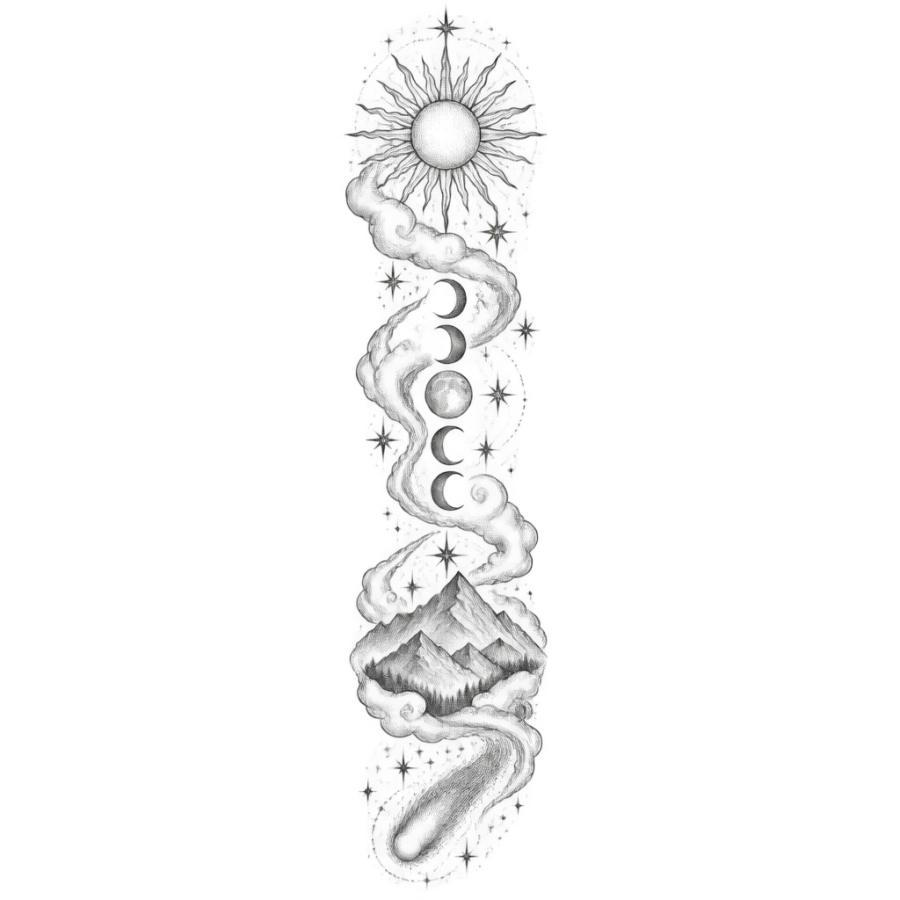
A sun, clouds, moon phases, mountains and a comet linked as a sleeve, fine line
Use this prompt
Stacked lace armbands, a filigree medallion and cascading scrollwork as a full sleeve, ornamental
Use this prompt
A full sleeve of heavy black waves with koi cut out in negative space
Use this prompt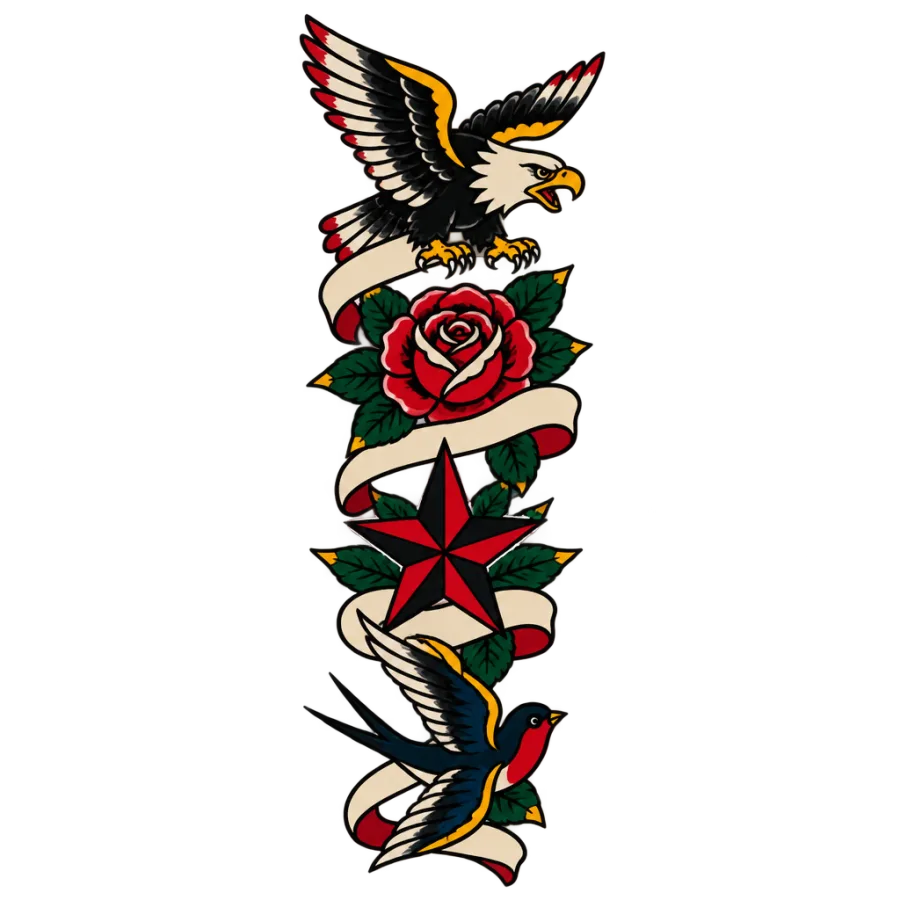
A full sleeve of an eagle, rose, nautical star and swallow linked by banners
Use this prompt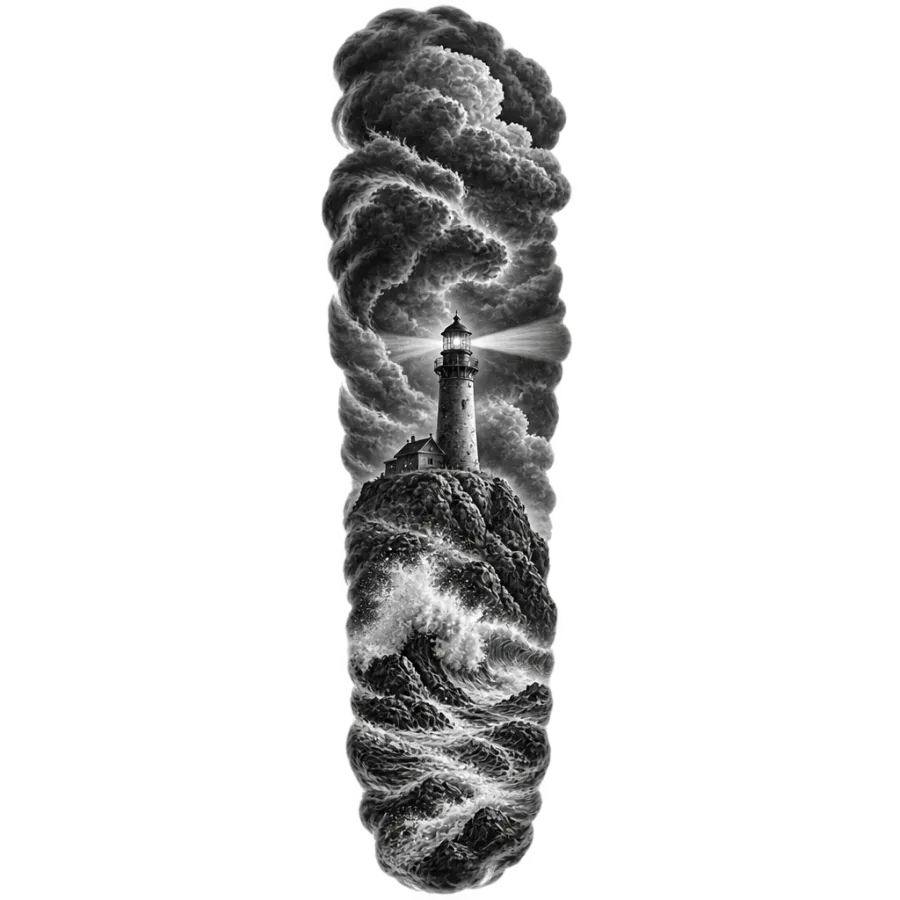
A full sleeve of storm clouds, a lighthouse on a headland and crashing surf
Use this prompt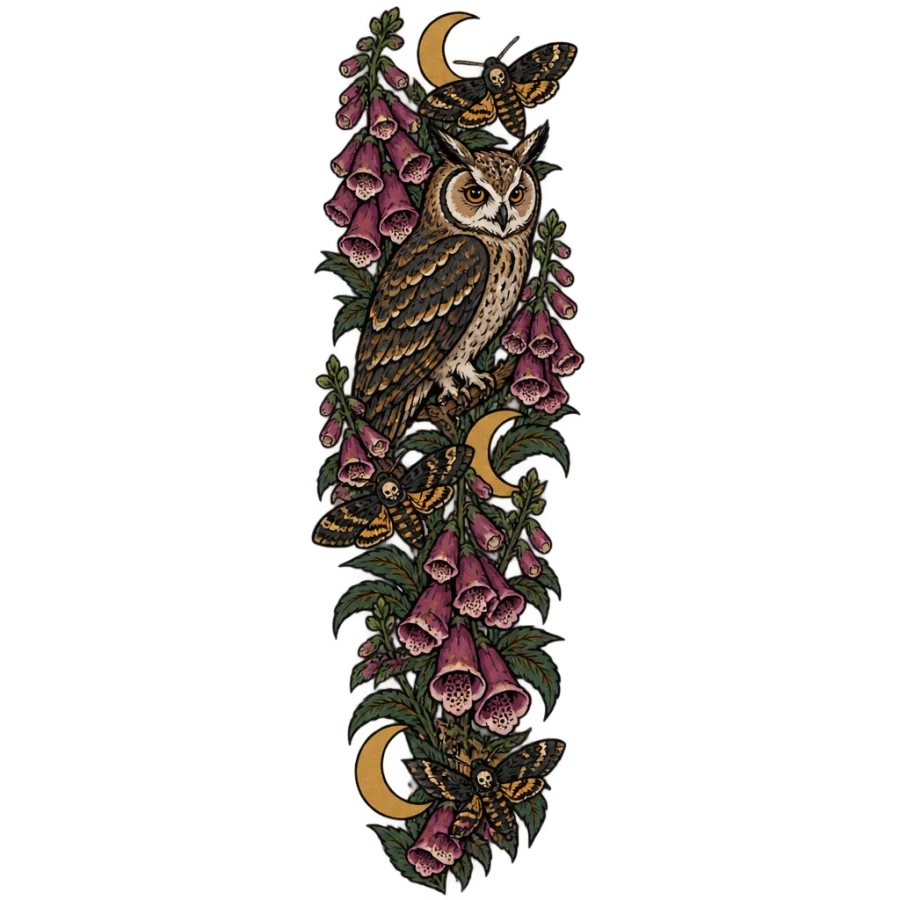
A full sleeve of an owl among foxgloves with moths and crescent moons
Use this prompt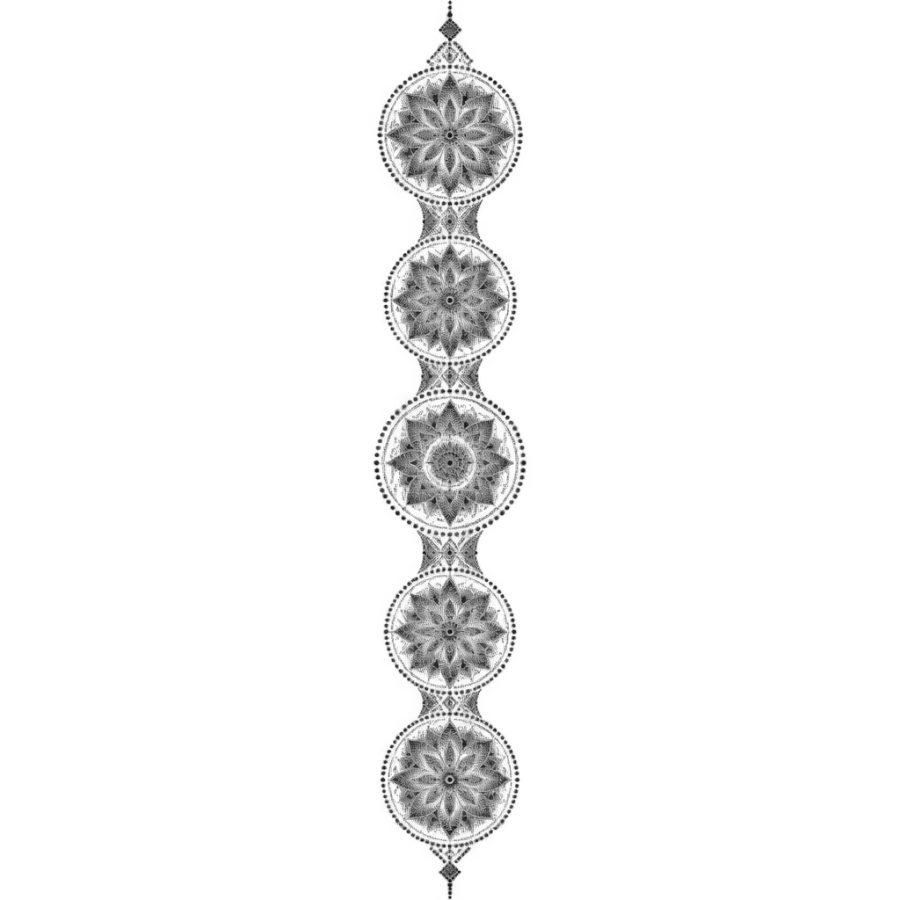
A full sleeve of stacked mandalas joined by narrow stippled geometric bands
Use this prompt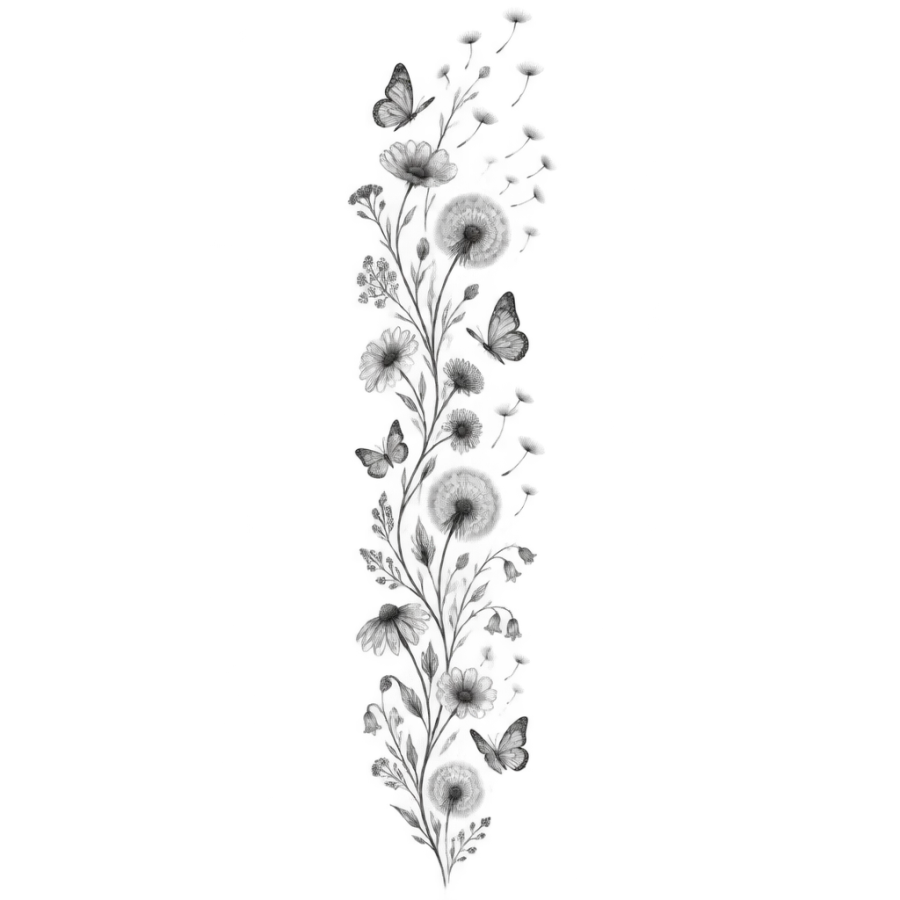
A full sleeve of wildflower stems, drifting dandelion seeds and butterflies
Use this prompt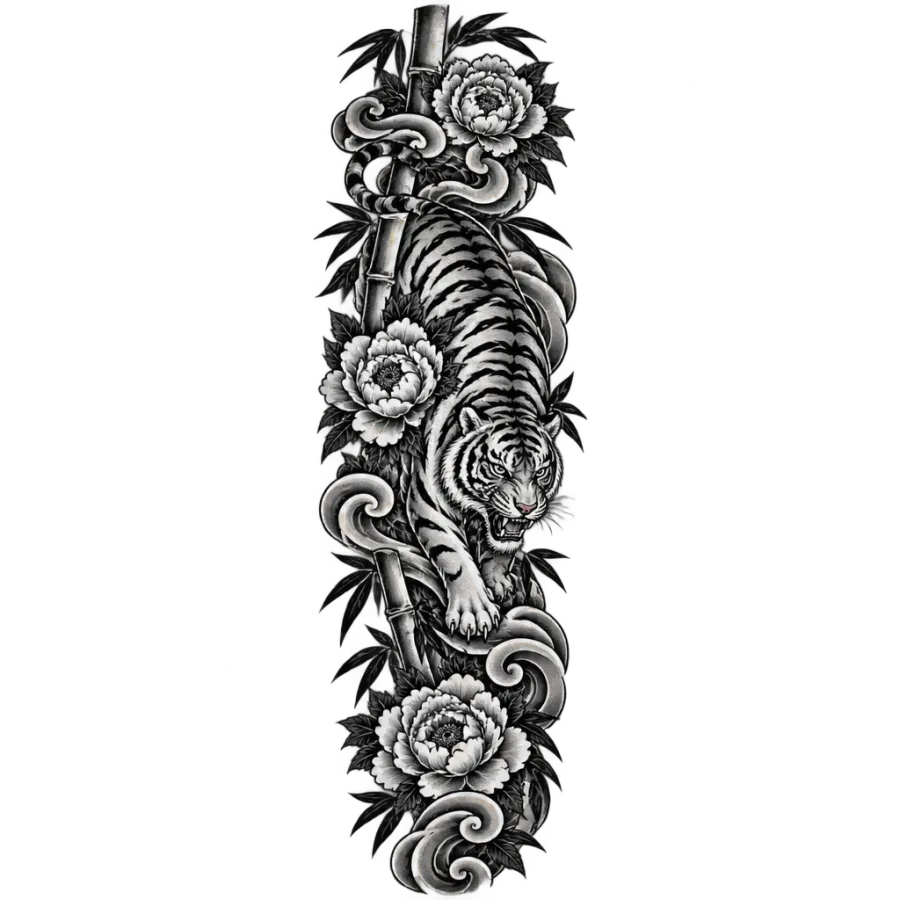
A full sleeve of a tiger prowling through bamboo, peonies and wind bars
Use this prompt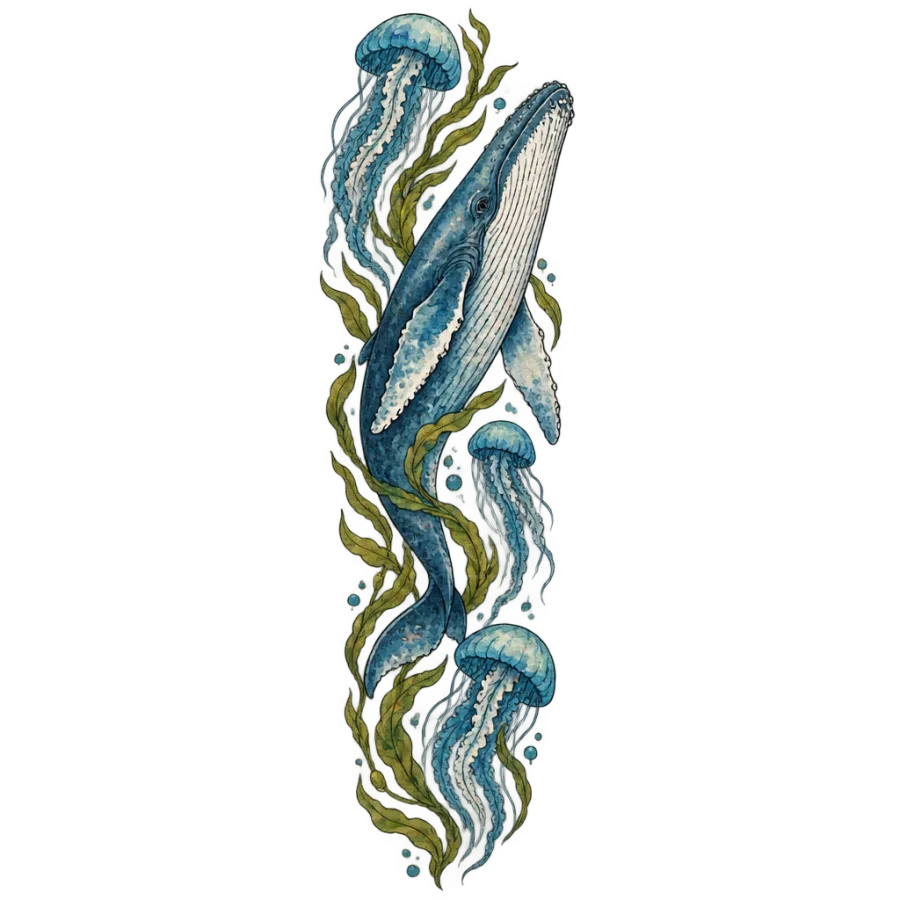
A full sleeve of a humpback whale rising through jellyfish and trailing kelp
Use this prompt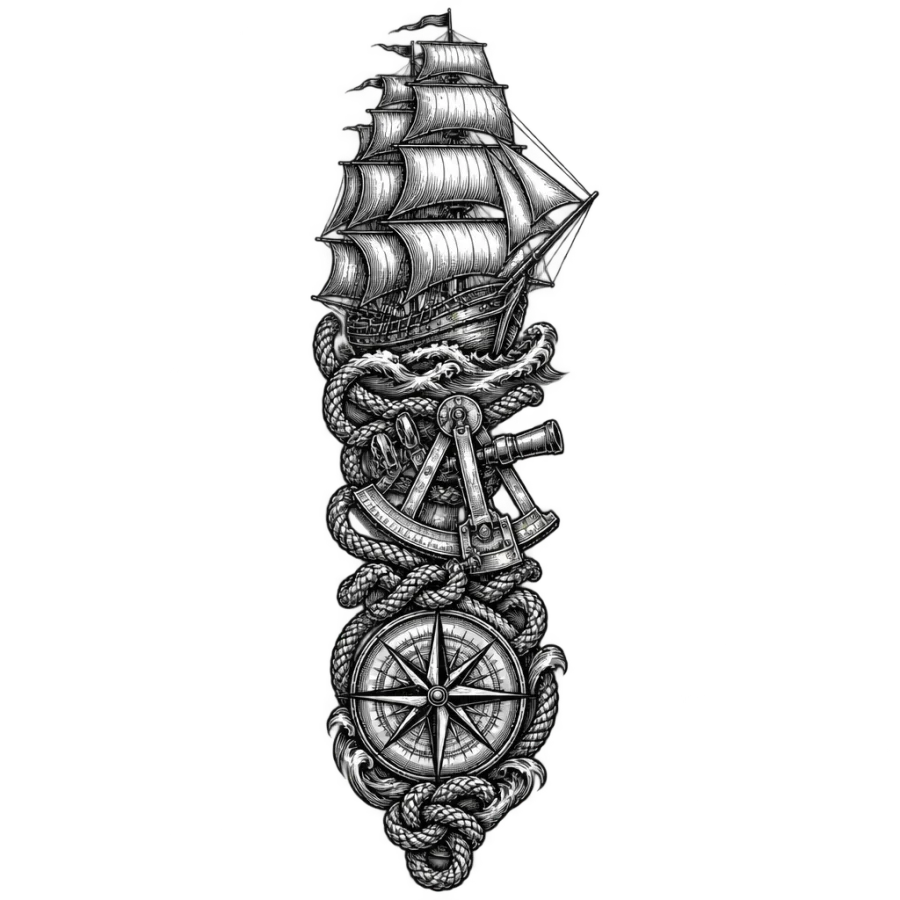
A sleeve of a tall ship, a sextant and rope knots, old engraving style
Use this prompt
Mirrored art nouveau lily stems climbing a central column, full sleeve
Use this prompt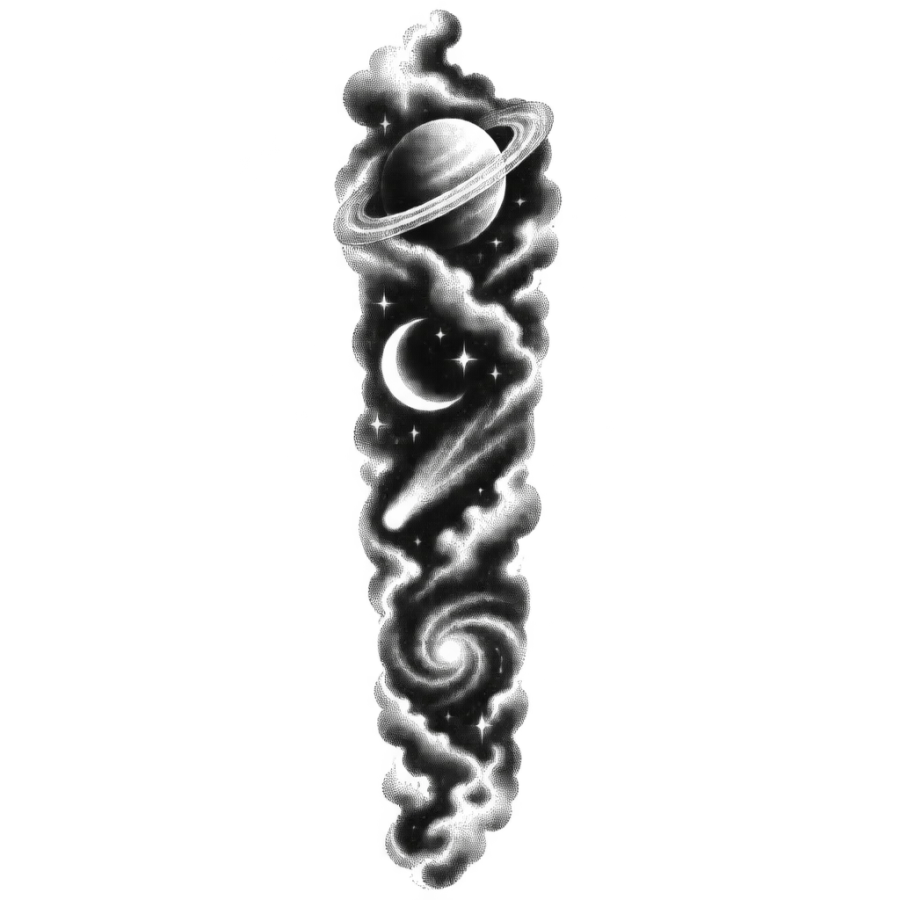
A sleeve of a ringed planet, a comet and nebula clouds, dotwork only
Use this promptDescribe an idea of your own and get four designs back in about 20 seconds.
Open the generator
Questions people ask
How much does a full sleeve tattoo cost?
In the United States most full sleeves land between $3,000 and $8,000, depending on style, detail and the artist. At $150 to $250 an hour over 20 to 40 hours, the arithmetic is straightforward. A half sleeve runs $1,500 to $3,500. Expect a deposit to hold each session.
How long does a sleeve take to finish?
Usually six to twelve sessions of 4 to 6 hours each, spread over a year or more. Outlining comes first, then shading, then color if any. Most artists want three to four weeks between sittings so each section heals fully, which is the main thing setting the pace.
What is the worst part of a sleeve?
The inner elbow, at roughly 8 out of 10. It is thin skin over a nerve bundle and it flexes constantly, which also makes it slower to heal. The armpit edge and the inner bicep come next. The outer upper arm and outer forearm are the easy parts.
Can I turn my existing tattoos into a sleeve?
Often yes, but tell the artist at the consultation. Existing pieces can be worked into a background, framed or covered, and each option changes the design and the cost. Be prepared to hear that one old tattoo does not fit the plan and would be better covered than kept.
Half sleeve or full sleeve?
Start with a half sleeve if you are unsure. An upper half sleeve from shoulder to elbow stays hidden under a short sleeved shirt, costs roughly half as much and can be extended later if the artist designs it with an open edge. A full sleeve is a much bigger commitment of time and money.