Japanese irezumi tattoo ideas and designs
Irezumi is the most structured tattoo tradition there is, with settled rules about which motifs pair, which season they belong to, and how background carries the whole body.
- Pain level7 / 10 across long sessions
- Healing3 to 4 weeks per session
- Typical sizeHalf sleeve upward, 30 cm+
- Studio cost$2,500 to $8,000 a sleeve
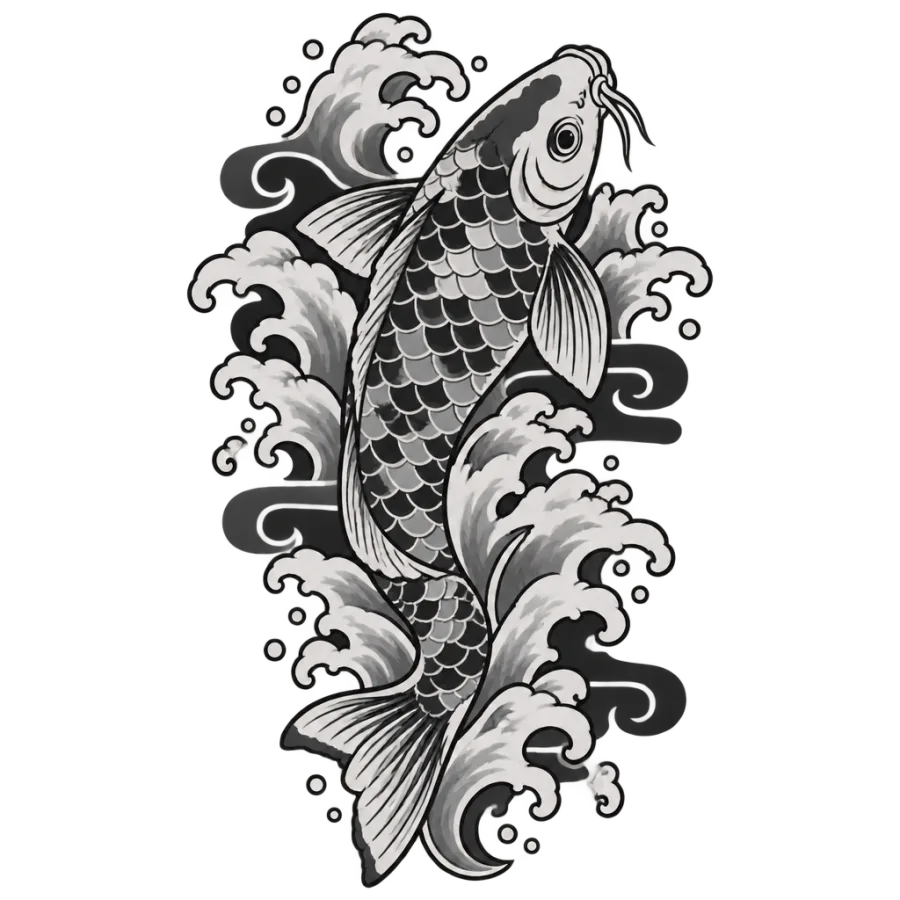
Japanese tattooing developed as a full body art form, which is why a single Japanese piece still tends to look like part of something larger. The subject sits inside a moving background of wind bars, water and cloud, and that background is what gives the style its sense of flow around an arm or across a back.
There is a grammar to it. A koi swims with maple leaves and water. A dragon travels with clouds. A hannya mask pairs with chrysanthemum or with snake. Cherry blossom means spring and short life, so it does not usually appear with an autumn motif. Artists who work in the tradition treat these pairings as craft rules rather than decoration.
How irezumi is built on the body
Traditional pieces are planned as body units rather than as isolated images. A hikae is a chest panel that reaches the shoulder, a nagasode is a full sleeve to the wrist, a munewari is a chest split that leaves a bare strip down the sternum. Deciding the unit first is what stops a collection of separate tattoos from looking like clutter ten years later.
Machine work uses an 11RL or 13RL for the main outlines, which stay bold and consistent, then large magnums for the black gradient known as bokashi. Hand poked tebori is still practiced by a small number of artists, mostly for the shading, and it produces a softer gradient that many collectors prefer. It also takes considerably longer and costs more.
Background elements that tie a piece together
- Mizu, stylised water with curling white tips
- Kumo, rolling cloud forms that carry dragons and phoenixes
- Kaze, wind bars that give diagonal movement across a limb
- Ishi, rock shapes used to anchor the base of a panel
- Nukibori, the choice to leave the background out entirely
Motifs and what they carry
Koi climbing upstream stands for persistence, and a koi that has completed the climb becomes a dragon. Tigers deal with courage and protection against bad fortune. The hannya mask is a jealous spirit, and it is usually worn as a reminder rather than a threat. Fudo Myoo, snakes, foxes and severed heads all have long established meanings within the tradition.
Flowers set the season and the mood. Peony is wealth and boldness, chrysanthemum is autumn and longevity, cherry blossom is spring and impermanence, maple leaves belong to autumn water scenes. Mixing seasons in one piece is the most common mistake in Japanese inspired designs, and it is the first thing an experienced artist will fix.
Why Japanese work ages so well
Bold outlines, large flat color areas and a strong light to dark structure mean irezumi survives decades with very little change. Hundred year old bodysuits still read clearly. The black background actually improves the aging of the color inside it, because the contrast against solid black keeps the subject legible even as reds and greens soften.
The main change over 15 years is in the finer wave tips and the smallest scale details, which soften and merge. Color refreshes are less common in this tradition than in western color work, partly because the design was built around black from the start. Sun protection still matters more than anything else you can do.
Sessions, commitment and cost
This is not a walk in style. Most artists book sleeves as a series of three to five hour sessions, once every four to six weeks, over a year or more. Outline sessions come first for the whole unit, then color and background are filled in stages, which is why a partly finished Japanese sleeve looks like a black outline map for several months.
Realistic pricing in the United States runs $2,500 to $8,000 for a full sleeve and $8,000 to $30,000 for a bodysuit, depending on the artist and the region. Many established Japanese style artists charge a flat day rate of $800 to $1,500 and require a deposit that covers drawing time.
15 Japanese (Irezumi) tattoo designs, with the prompt behind each one
Every design below came out of AI Tattoo Lab. Tap one to load its prompt into the generator, then change a word and make it yours.
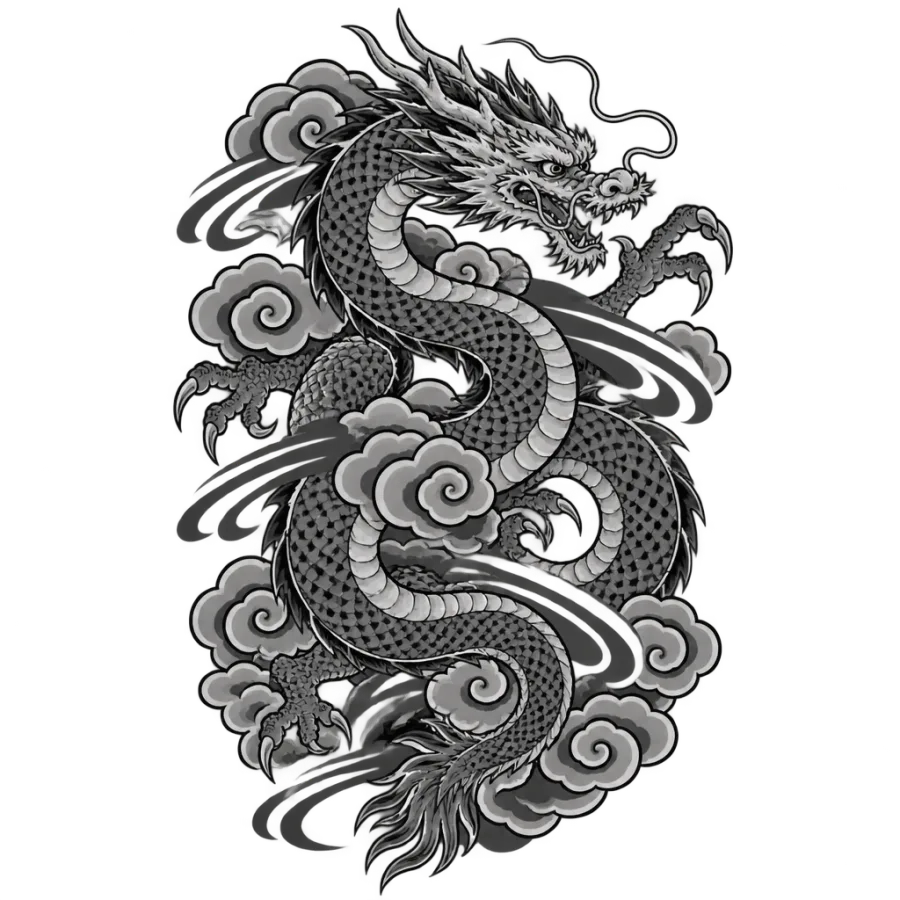
A coiling eastern dragon among stylized clouds, Japanese irezumi, bold flowing linework
Use this prompt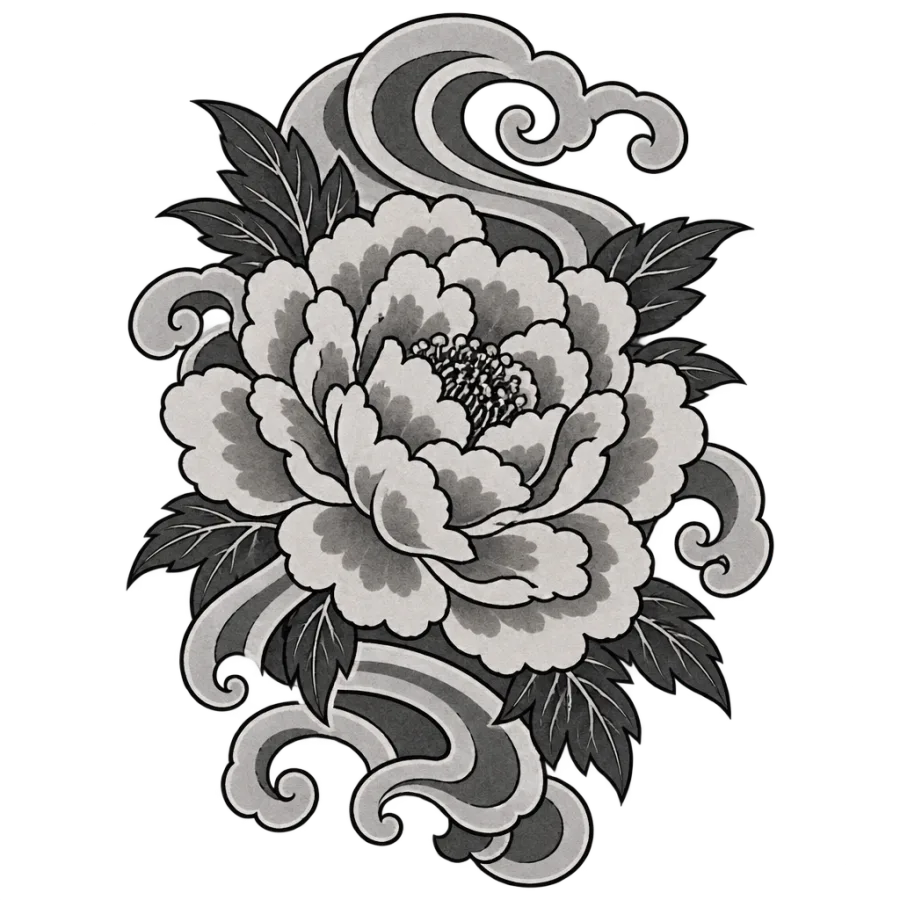
A big peony blossom framed by curling wind bars, Japanese irezumi style
Use this prompt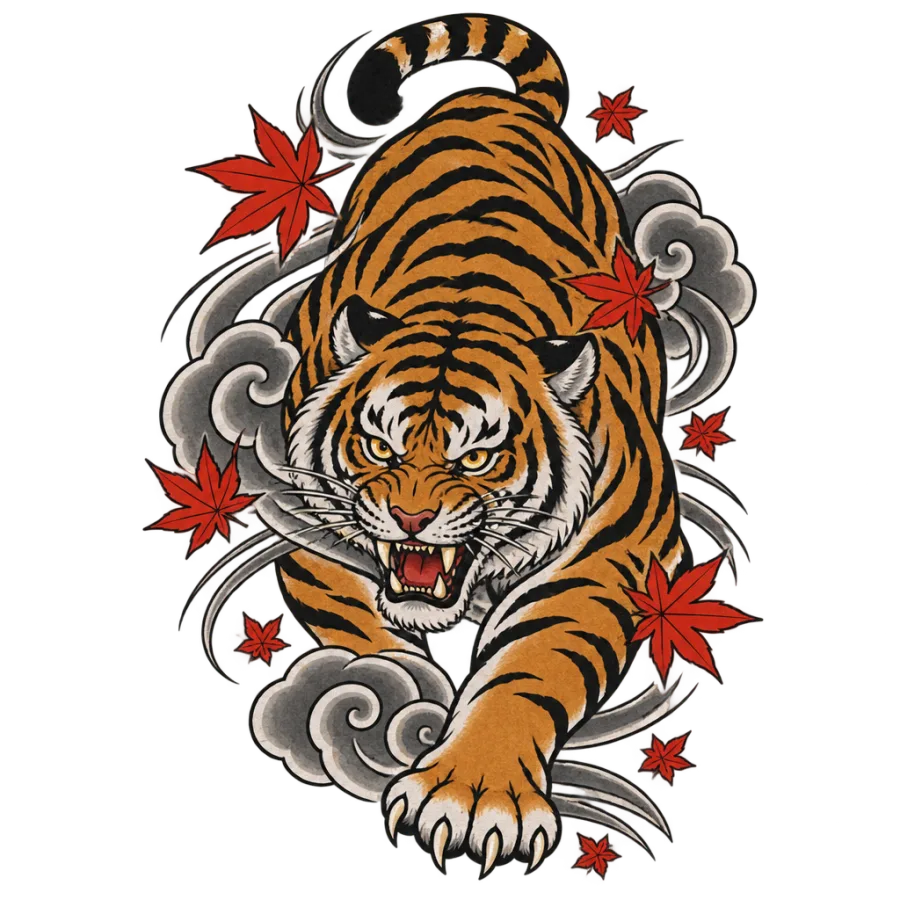
A prowling tiger among falling maple leaves, Japanese irezumi with traditional background
Use this prompt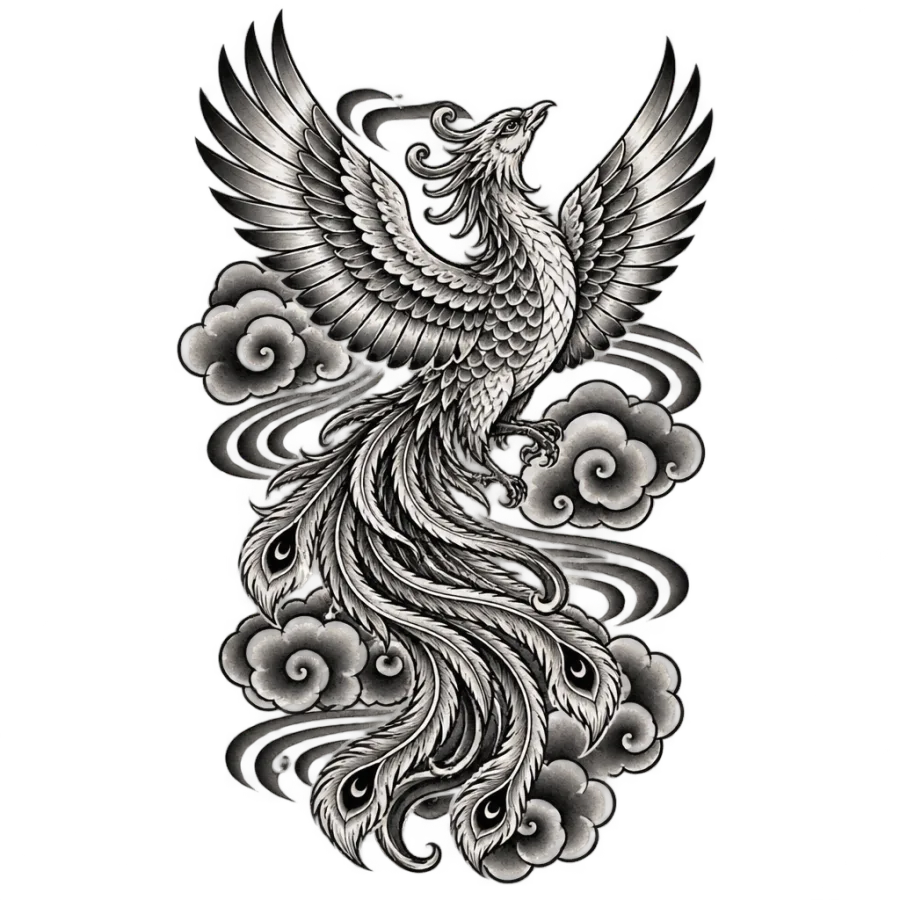
A phoenix rising with sweeping tail feathers among clouds, Japanese style
Use this prompt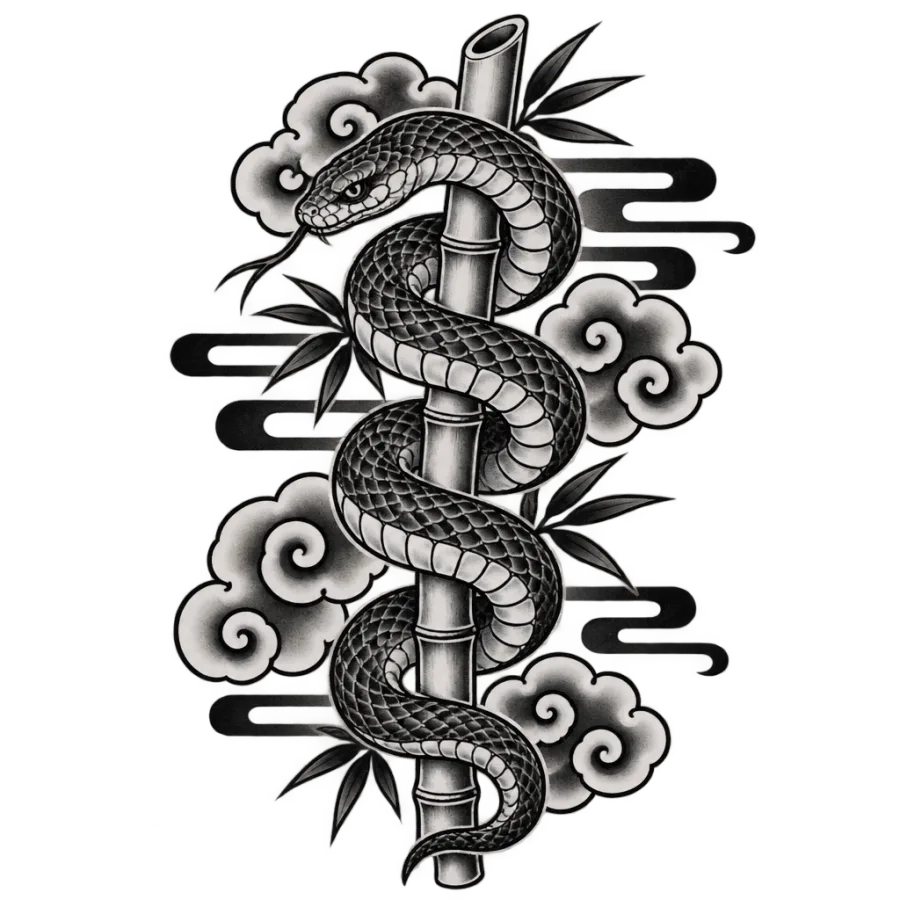
A snake coiled around bamboo with wind bars, Japanese irezumi style
Use this prompt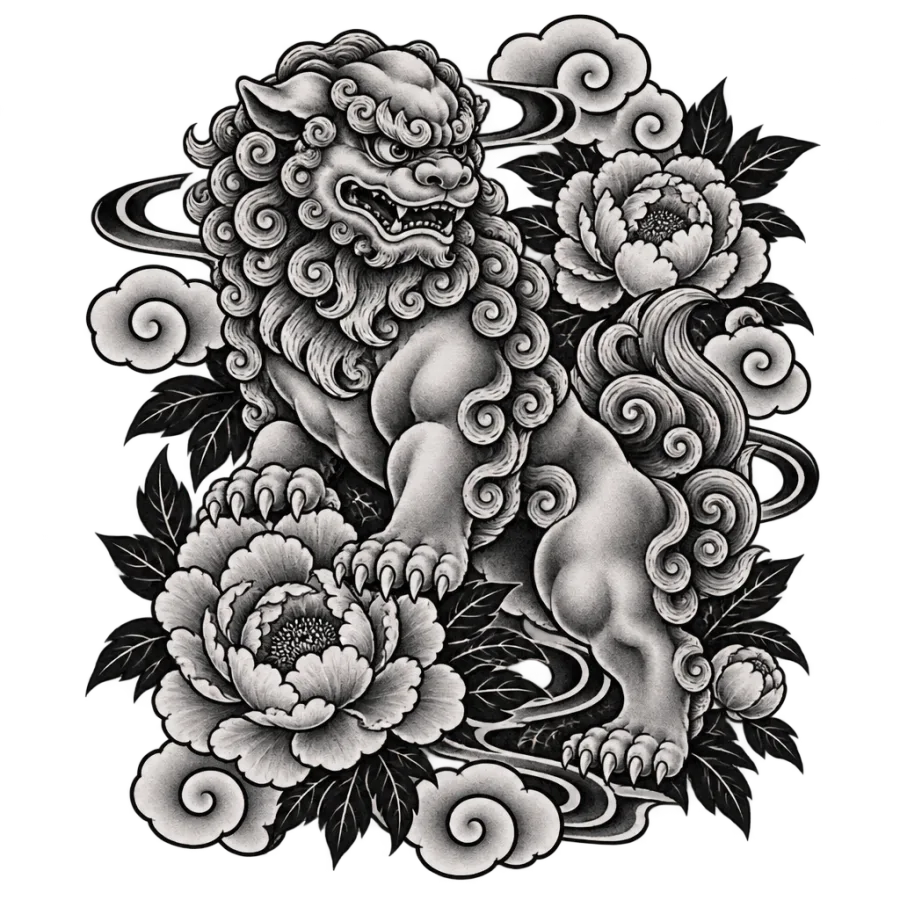
A guardian lion dog among peony blossoms, Japanese irezumi, grey wash
Use this prompt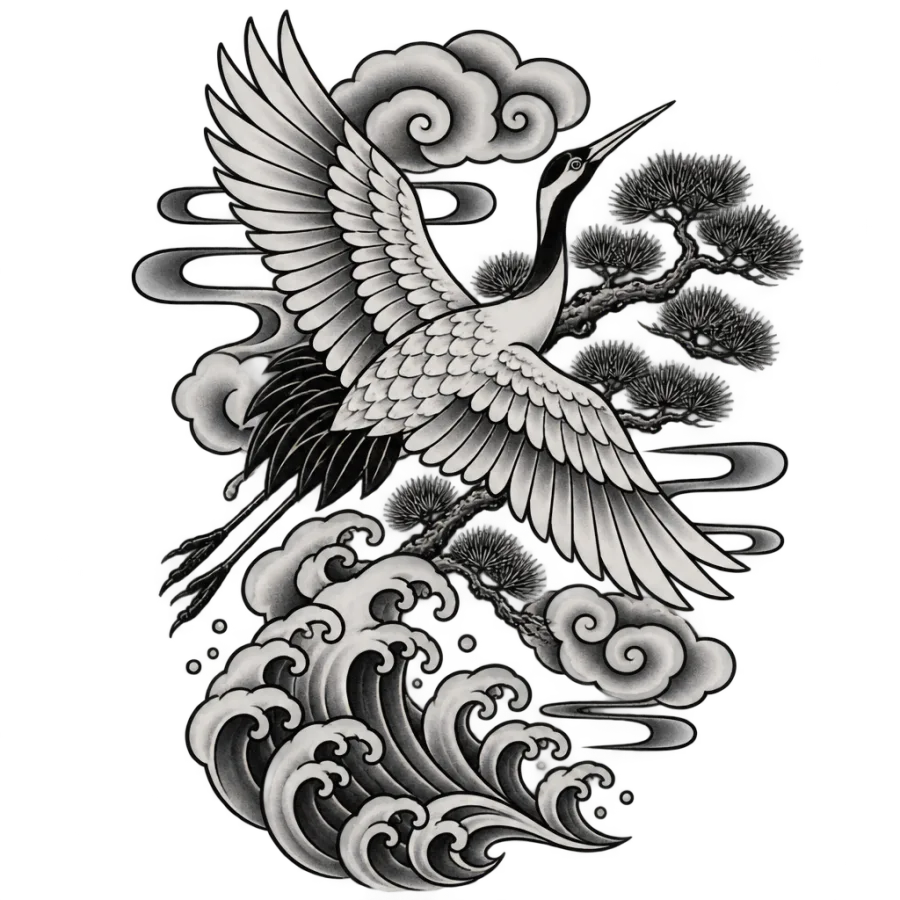
A crane flying above stylized waves with a pine branch, Japanese style
Use this prompt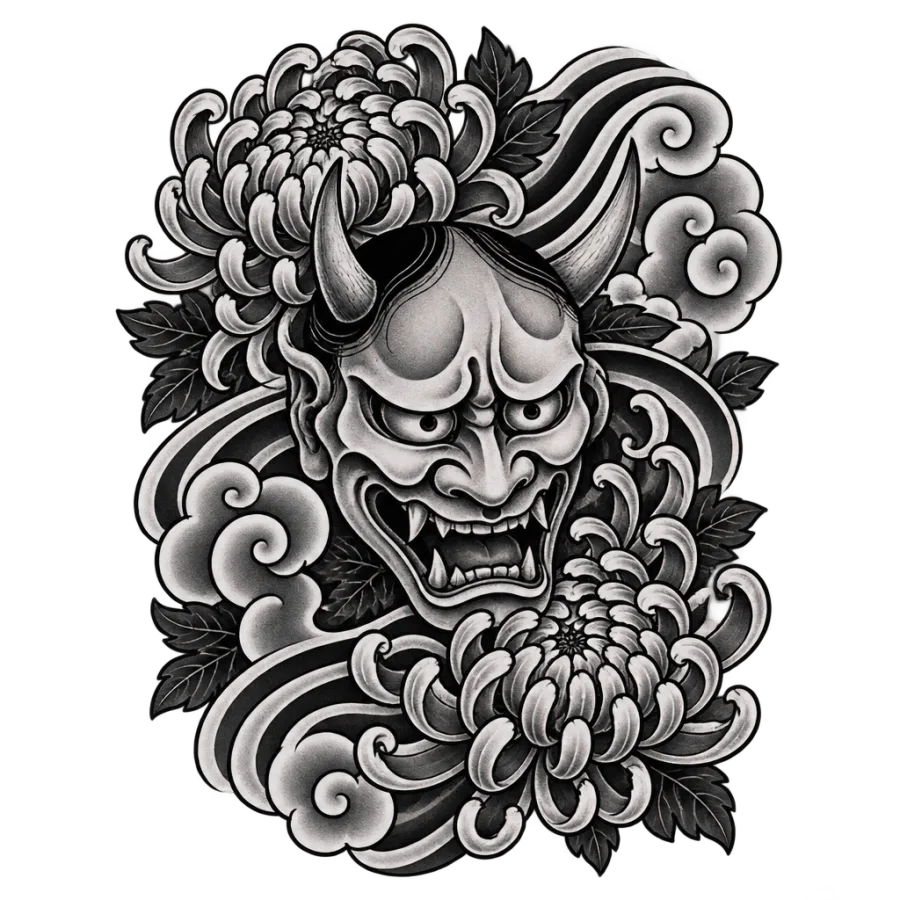
A hannya mask surrounded by chrysanthemum blossoms, Japanese irezumi
Use this prompt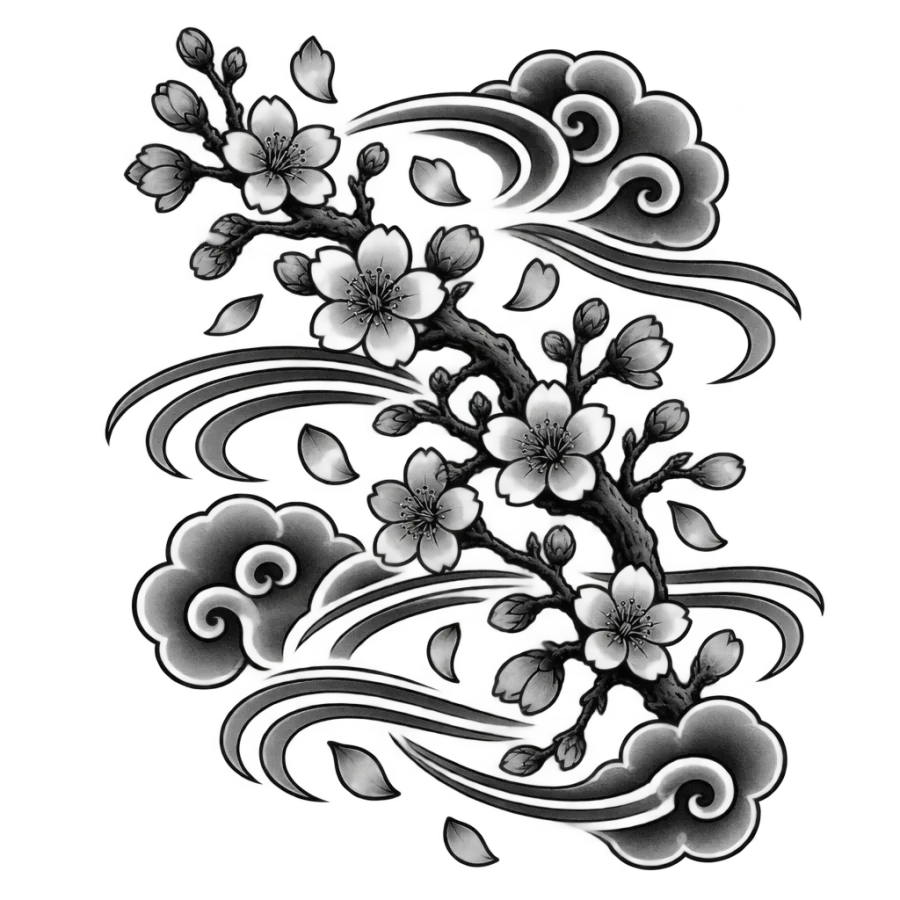
A cherry blossom branch with falling petals and wind bars, Japanese style
Use this prompt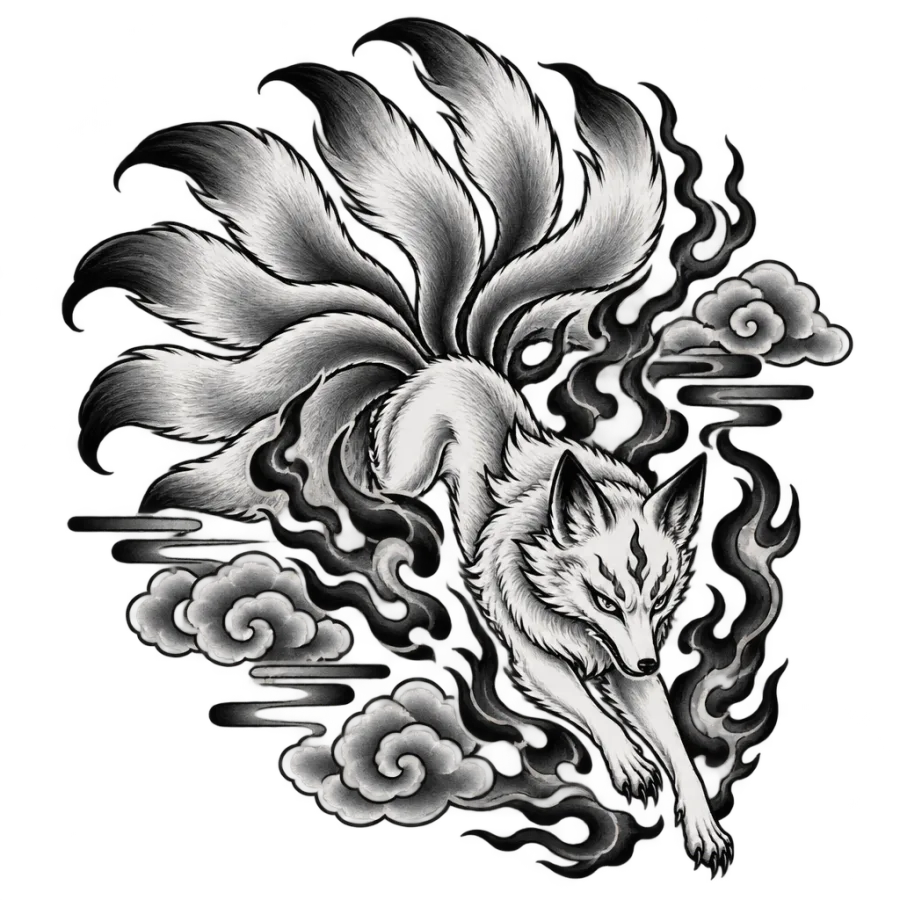
A nine tailed fox spirit leaping through swirling flames, Japanese irezumi
Use this prompt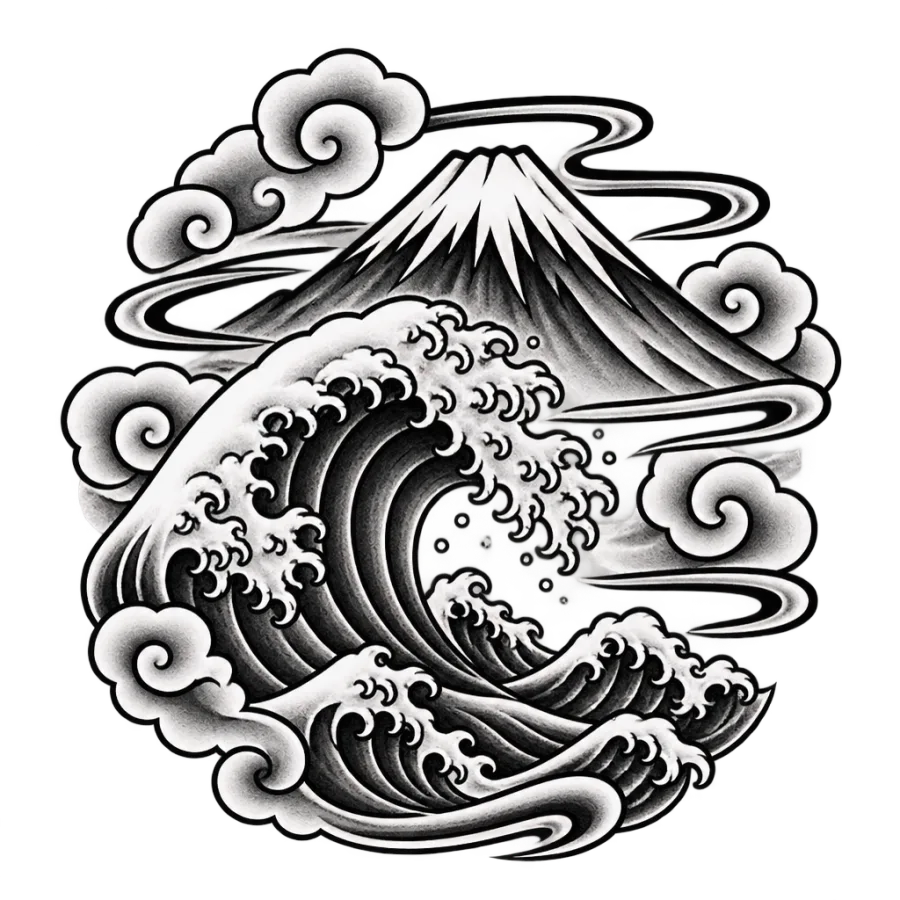
Mount Fuji behind a cresting great wave, Japanese irezumi, grey wash
Use this prompt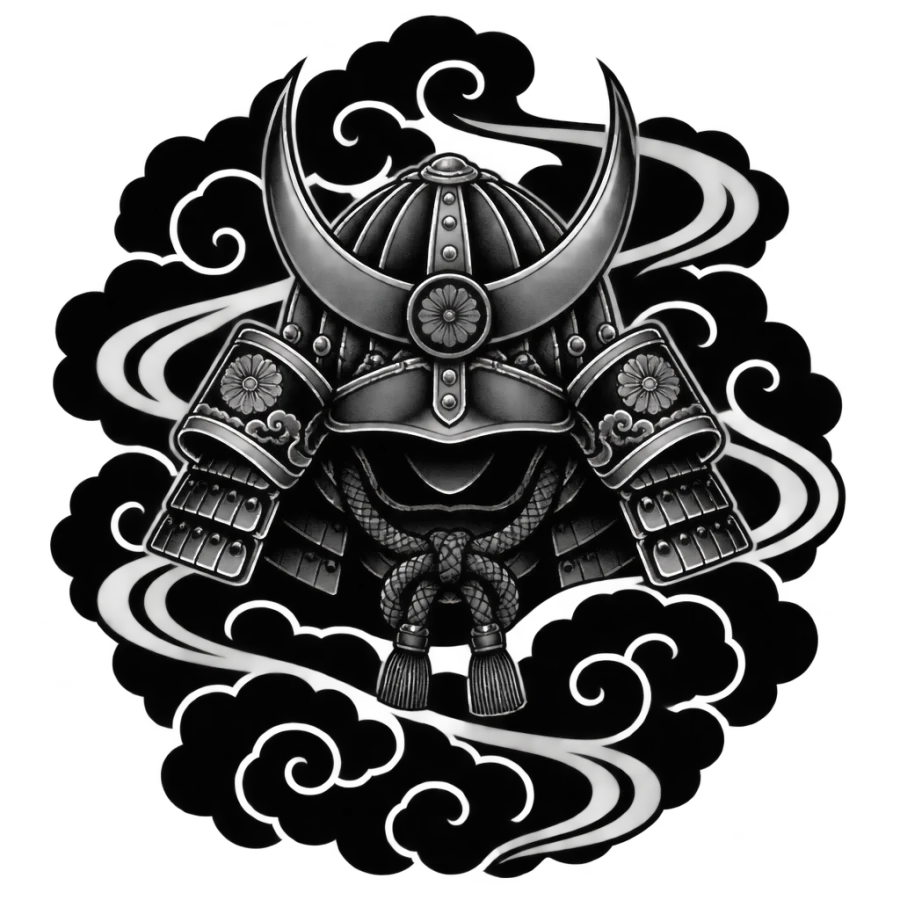
Samurai kabuto helmet among heavy black clouds, irezumi style
Use this prompt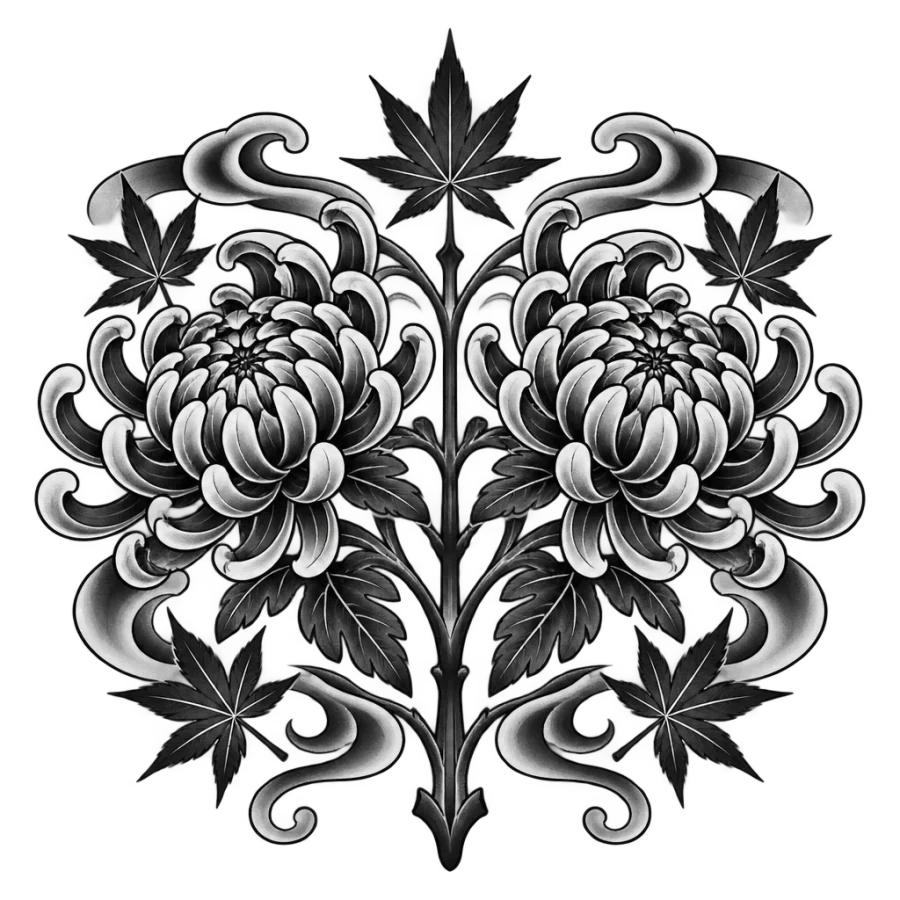
Two mirrored chrysanthemums with maple leaves, irezumi symmetry
Use this prompt
Dragonfly and lotus pads cut into a solid black circle
Use this promptDescribe an idea of your own and get four designs back in about 20 seconds.
Open the generator
Questions people ask
What is the difference between irezumi and tebori?
Irezumi is the tradition and its visual language. Tebori is one way of applying it, by hand with a rod of needles rather than a machine. Most modern Japanese style tattoos are machine outlined, and some artists use tebori only for shading because the hand worked gradient is softer and heals smoothly.
Can I get a Japanese tattoo if I am not Japanese?
Most artists working in the tradition say yes, provided you respect the rules of the style. Learn what the motifs mean, avoid mixing seasons without reason, and be careful with imagery tied to specific religious or criminal associations. Choosing an artist who actually studies the tradition matters more than your background.
How long does a Japanese sleeve take?
Usually a year or more. Expect three to five hour sessions every four to six weeks, totalling 25 to 50 hours. Outlines for the whole unit are often done first, then shading and color are built in sections. Booking the full project with one artist keeps the flow consistent.
Do I need the background, or can I just get the dragon?
You can skip it. A piece without background is called nukibori, and it is a legitimate traditional choice. Background wind, water and cloud are what let separate motifs connect into one flowing unit, so if you plan to extend the piece later, adding background from the start saves work.
What does a koi fish tattoo mean?
Persistence through difficulty. The story has a koi swimming up a waterfall against the current and becoming a dragon at the top, so a koi facing upstream usually reads as a struggle still in progress. Color matters too, with black koi often chosen to mark overcoming hardship.