Ornamental tattoo ideas and designs
Ornamental work has no subject to depict. Its job is to decorate a specific part of a specific body, which makes anatomy the starting point rather than the reference image.
- Pain level7 / 10 on the sternum
- Healing2 to 4 weeks typically
- Typical size15 to 45 cm (6 to 18 in)
- Studio cost$500 to $2,500

Ornamental tattooing draws on baroque filigree, lace, jewelry, mehndi patterning and architectural carving. There is nothing to recognize in it. A chandelier piece under the collarbones is not a picture of a chandelier, it is a decorative structure designed to follow those particular collarbones and to sit correctly when that person stands.
This changes how the work is planned. The artist usually starts by drawing directly on the skin with a marker, finding the center line, the points where the pattern should pinch and where it should open, and only then builds the motifs. A flat design supplied in advance almost always needs rebuilding on the body.
Fitting a pattern to a body
Symmetry in ornamental work is judged by eye, not by ruler. Artists set the center line on the sternum or spine first, then mirror the pattern outward, checking in a mirror with the client standing rather than lying on the bed. A design that measures perfectly while you are flat on your back will often look skewed once you stand up.
Armbands are the clearest example. A band stencilled level around a bicep appears to slope downward at the front because the arm is a cone, not a cylinder. Experienced artists deliberately angle the band so it reads as level from the front, and the correction is usually larger than you would expect.
Where ornamental pieces are commonly placed
- Sternum and under the collarbones, following the chest opening
- Spine, using the vertebrae as a natural center line
- Upper arm and forearm bands that wrap the limb
- Hip and thigh panels shaped like drapery or a garter
- Back of the hand and wrist as cuff style decoration
The mix of techniques it uses
Ornamental work rarely uses one technique. A single piece may combine 3RL line work for the filigree, solid black packed with a 15M1 in the heavy anchors, stipple with a 5RL to fade an edge, and small areas of negative space cut deliberately into the black. That variety is what gives ornamental pieces their depth without any shading of a subject.
Motifs repeat with small variations rather than copying exactly. Teardrops, gems, scrollwork, beading, chains and lace edges recur through the design at different scales, which is what makes a pattern feel handmade instead of printed. Truly identical repetition tends to look mechanical on skin. Artists build that variation in from the first marker sketch, adjusting each motif to the space it lands in.
How ornamental designs age
The heavy elements age extremely well, since solid black and bold structural lines hold their shape for decades. The risk sits in the fine filigree, where hairline scrollwork spaced under 2 mm merges into grey over 10 to 15 years and a delicate lace edge can turn into a soft band.
The best defence is a clear weight hierarchy. If the design still reads as a deliberate pattern once every 1RL detail is removed, it will look good in twenty years. Ask to see healed work from your artist, particularly anything near a joint, where creasing wears down fine detail faster than anywhere else.
Sessions, pain and cost
Sternum and rib pieces are genuinely painful, as the needle works over bone with very little between. Most people manage three to four hours before the session stops being productive. Spine work is similar. Upper arm and thigh ornamental pieces are much easier and can run five or six hours comfortably.
A sternum ornamental piece typically takes four to six hours and costs $600 to $1,500. An ornamental armband runs two to four hours at $300 to $900. Large hip and thigh panels become multi session projects in the $2,000 to $5,000 range. Custom drawing fees are common, since the design cannot be reused on anyone else.
15 ornamental tattoo designs, with the prompt behind each one
Every design below came out of AI Tattoo Lab. Tap one to load its prompt into the generator, then change a word and make it yours.
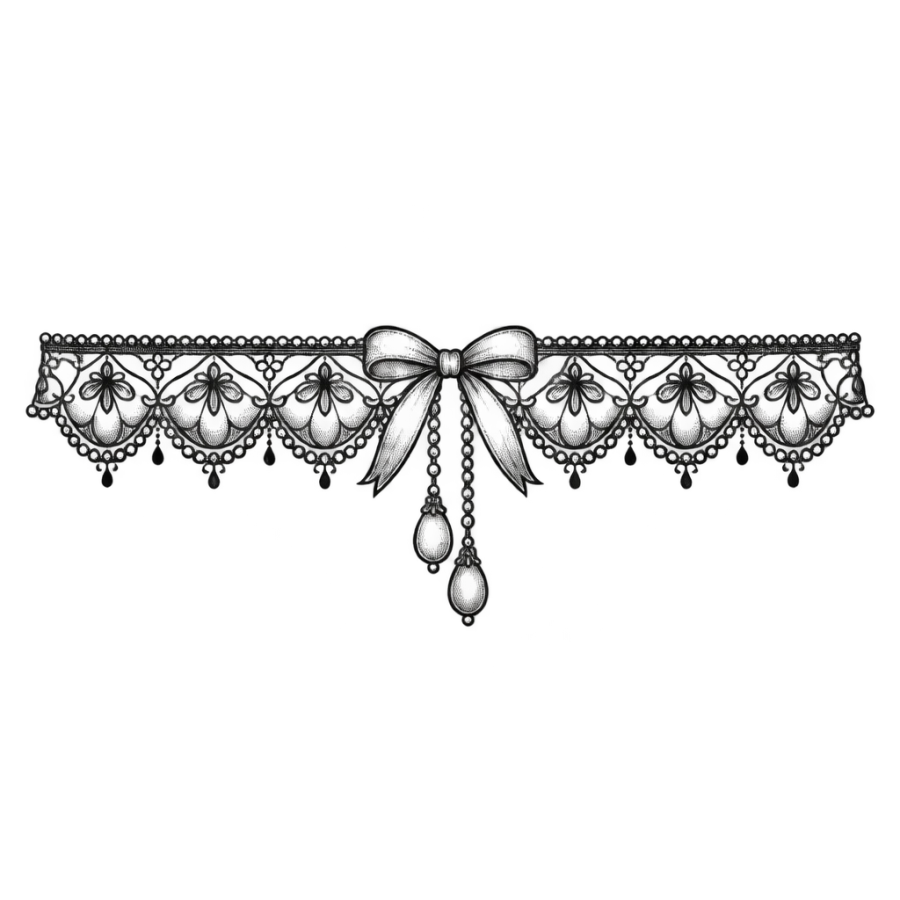
A lace garter band with a scalloped edge, bow and pearl drops, ornamental
Use this prompt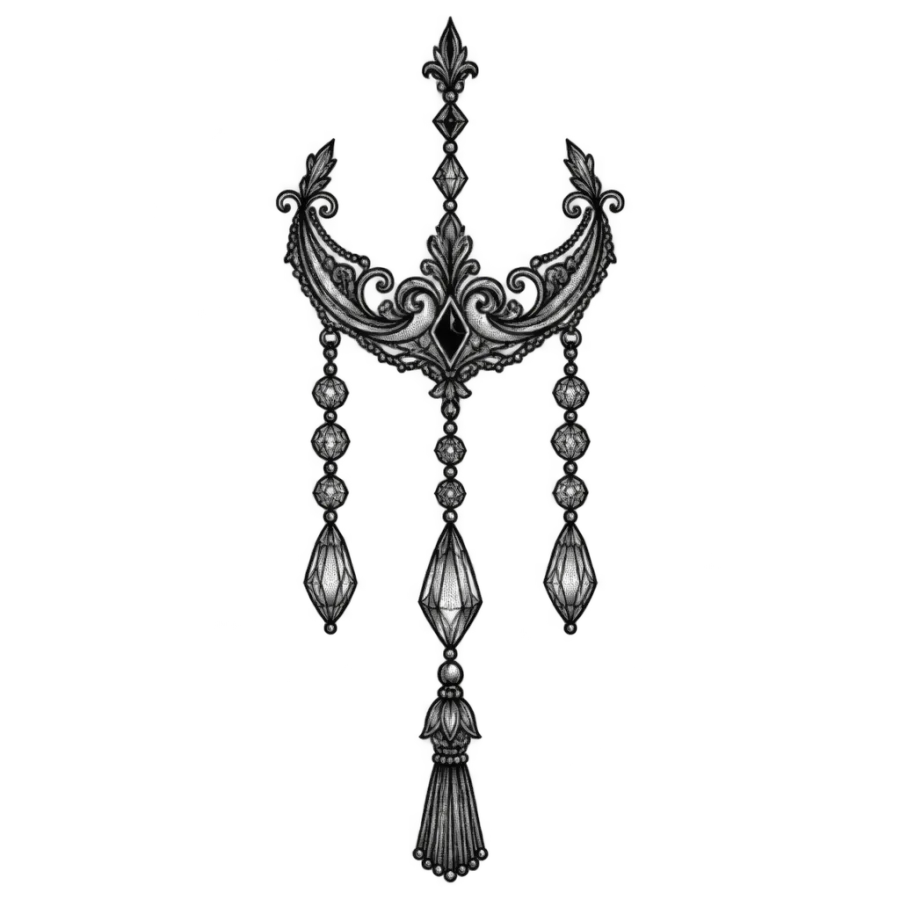
A chandelier drop with scrollwork crown and strands of crystal beads, ornamental filigree
Use this prompt
A tall spine ornament of stacked mirrored arabesque motifs, ornamental filigree linework
Use this prompt
A baroque scrollwork heart made of acanthus leaf curls, ornamental
Use this prompt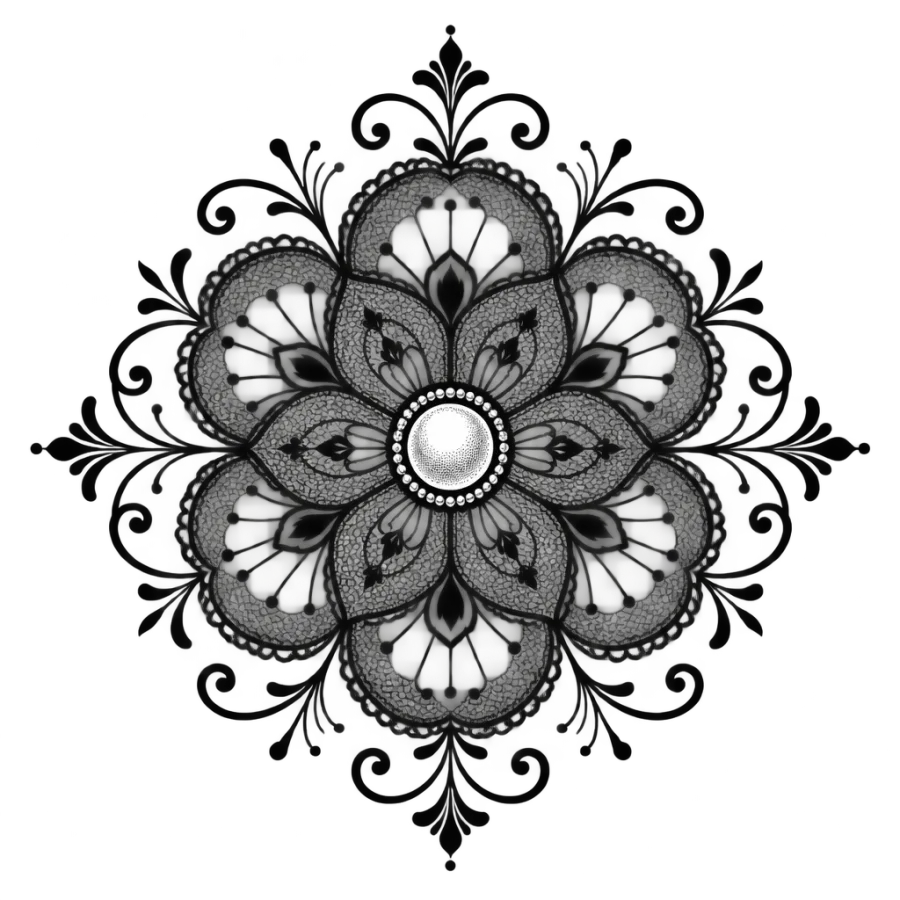
A round lace rosette medallion with a pearl at its center, ornamental
Use this prompt
An ornate antique keyhole plate with curling filigree edges
Use this prompt
A crown of ornate scroll arches set with small gems, filigree style
Use this prompt
A filigree butterfly with lace patterned wings, ornamental linework
Use this prompt
A wide armband of repeating paisley teardrops in heavy solid black
Use this prompt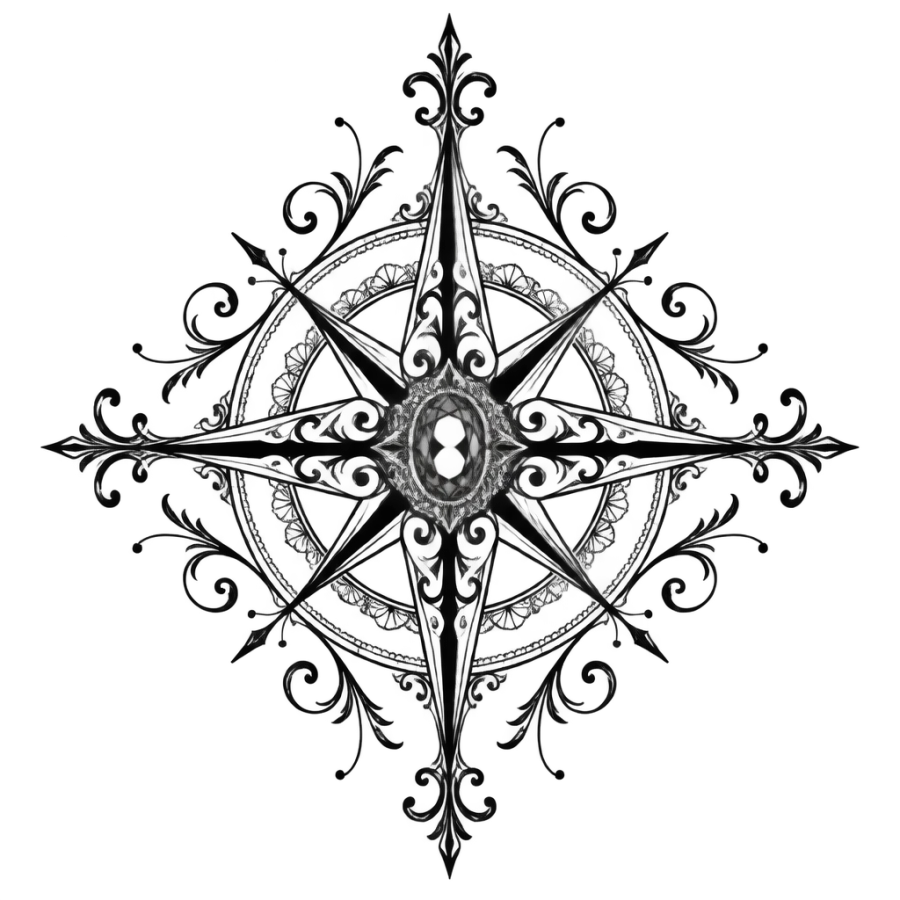
An ornate compass rose with scrollwork points and a jewel center
Use this prompt
An ornate crescent moon hung with fine chains and teardrop gems
Use this prompt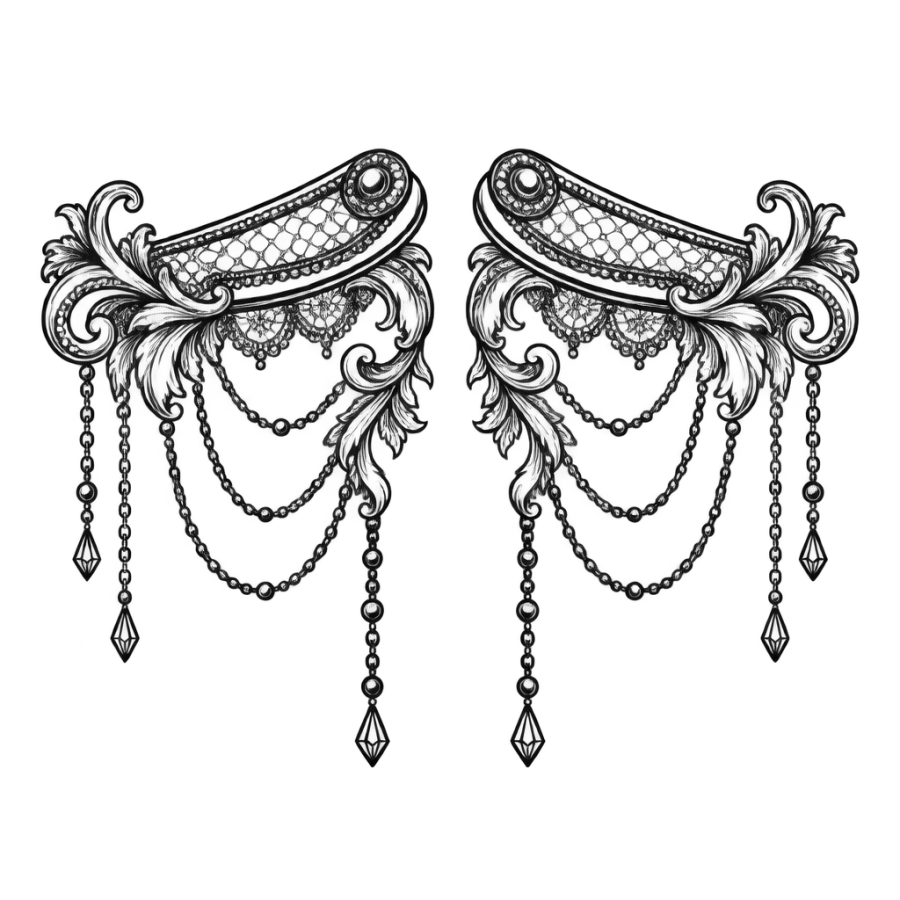
A mirrored pair of ornamental epaulette panels with hanging chains
Use this prompt
A quatrefoil arabesque panel in solid black with thin white gaps
Use this prompt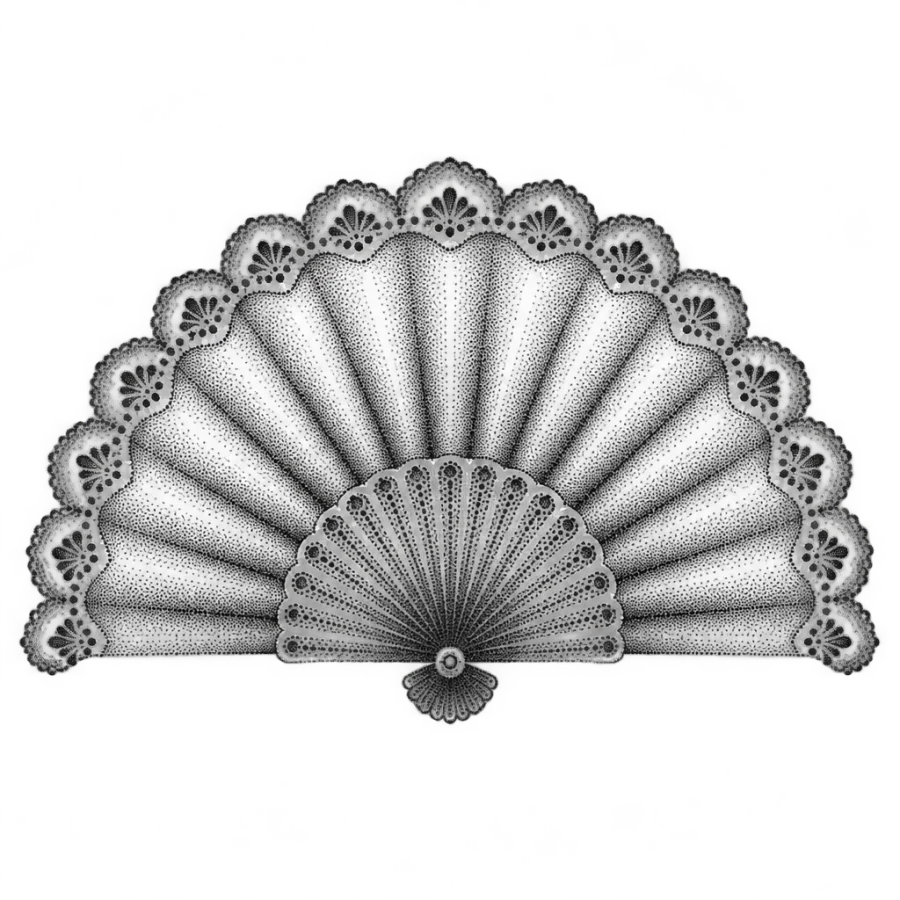
An ornamental fan spread open with a lace edge, dotwork only
Use this promptDescribe an idea of your own and get four designs back in about 20 seconds.
Open the generator
Questions people ask
What is the difference between ornamental and geometric tattoos?
Geometric work is built on measurable shapes and mathematical structure. Ornamental work is built on decorative motifs such as filigree, lace and beading, judged by eye and fitted to the body. They overlap often, and many mandala pieces are genuinely both, but the design logic behind them differs.
Why does my ornamental armband look crooked?
Because an arm is a cone rather than a cylinder. A band stencilled level all the way round appears to drop at the front. Artists correct for this by angling the band so it reads level from a normal viewing angle, and the correction needed is usually more pronounced than people expect.
How much does a sternum ornamental tattoo cost?
Usually $600 to $1,500 for four to six hours of work at common United States rates. Add a drawing fee at many studios, since the design is built for your specific anatomy and cannot be reused. Larger chest and stomach pieces move into multiple sessions and higher totals.
Does ornamental tattooing hurt a lot?
On the sternum, spine and ribs, yes. The needle works over bone with little padding, and the long, detailed nature of the style means extended exposure. Most people find three to four hours is their limit in those spots. Upper arm and thigh ornamental work is considerably more comfortable.
Can an ornamental design be generated in advance?
Yes, and it is a good way to settle the motifs, density and overall shape you want. Bring the result to a licensed artist, who will redraw it directly onto your skin so the center line, the pinch points and the symmetry match your actual body rather than a flat image.