Travel tattoo ideas, meaning and designs
The difference between a travel tattoo that means something and one that means nothing is usually whether the map data is real.
- Common symbolsMaps, peaks, nautical star
- Typical size6 to 30 cm
- Usual placementsCalf, thigh, outer forearm
- Studio cost$200 to $900
A generic globe with a dotted line round it says you like the idea of going places. The contour lines of one actual mountain, traced from a topographic map, say you went up that one. Travel is the theme where accuracy does the emotional work, because the shapes involved are real shapes and people who know them recognize them instantly.
It is also a theme that benefits from restraint. The urge is to fit everywhere you have been into one piece, which produces a crowded tattoo that ages into a smudge. Most people are happier marking one trip that changed something, or building a set of small matching pieces over years with the same artist and the same line weight.
Symbols and their sources
The nautical star is the oldest of the travel marks in Western tattooing. Sailors took it from the compass rose and the north star, and it meant finding the way home rather than wandering. Sextants, rope and ships come from the same tradition and suit bold linework. Mountains, hot air balloons and aircraft are modern and neutral, which is their advantage: they carry no history that you need to check first.
Paper planes, suitcases and passport stamps have become a visual shorthand for travel in general. They read clearly but they are the equivalent of a stock photo. If you use one, tie it to something real, a flight number, a route, a date, so the image points at an actual journey rather than at the idea of journeys.
What works and what it means
- Nautical star: finding the way back, from sailors' flash
- Contour lines of a real peak: a specific climb, unreadable to strangers
- Flight path arc between two points: the move, not the holiday
- Coastline in outline: a place shape people who know it will spot
- Constellation as it appeared that night: quiet and precise
Getting the detail right
Coordinates are the most requested personalization here and the easiest to get wrong. Decide the format before the stencil, since degrees with minutes and seconds looks different from decimal degrees, and check the north and east markers carefully. Give a second person the numbers and have them paste them into a map to confirm they land where you think. Artists cannot verify this for you.
The same applies to topography. Pull contour lines from a real map rather than letting anyone draw a generic triangle, and bring the source image at a size the artist can work from. Coastlines and country outlines should come from an accurate source too, because people who live there will notice if the bay is the wrong shape.
Placements people choose
Calves and outer thighs are popular because they take a wide landscape composition and hold detail well, with skin that ages slowly compared with hands or feet. The outer forearm suits a single band or a small mountain range and is easy to see yourself. Backs and ribs take panoramic scenes and long horizontal lines.
Feet and ankles get requested for travel pieces for obvious reasons, but the top of the foot fades quickly with shoe friction and is one of the sharper places to sit for. If you want the idea without the maintenance, the inside of the ankle holds up better than the top of the foot.
What dates fast, and what to bring
The word wanderlust in a thin script, the dotted line circling a globe and the world map filled in country by country all belong firmly to the 2010s, and the fill in map has a practical problem too: adding small patches of ink over years never quite matches in tone. A set of separate small pieces in one consistent style does the same job and looks deliberate instead of accumulated.
Take these to the appointment
- Coordinates in a chosen format, verified on a map by someone else
- A real topographic or map source image at good resolution
- Correct spellings of any place names, including accents
- A plan if you intend to add more travel pieces over time
- Your AI Tattoo Lab designs printed, with the area measured in cm
15 travel tattoo designs, with the prompt behind each one
Every design below came out of AI Tattoo Lab. Tap one to load its prompt into the generator, then change a word and make it yours.

A paper plane arcing over mountain peaks with a dotted flight trail, minimalist single line
Use this prompt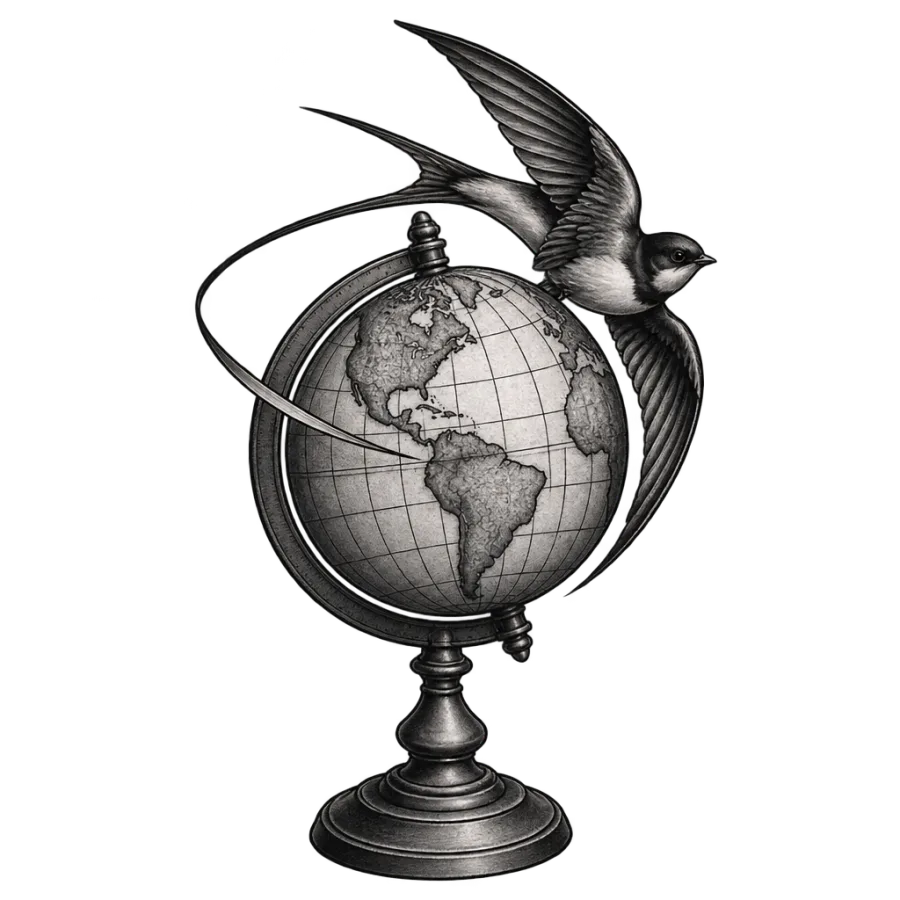
An antique globe on a stand with a swallow circling it, black and grey realism
Use this prompt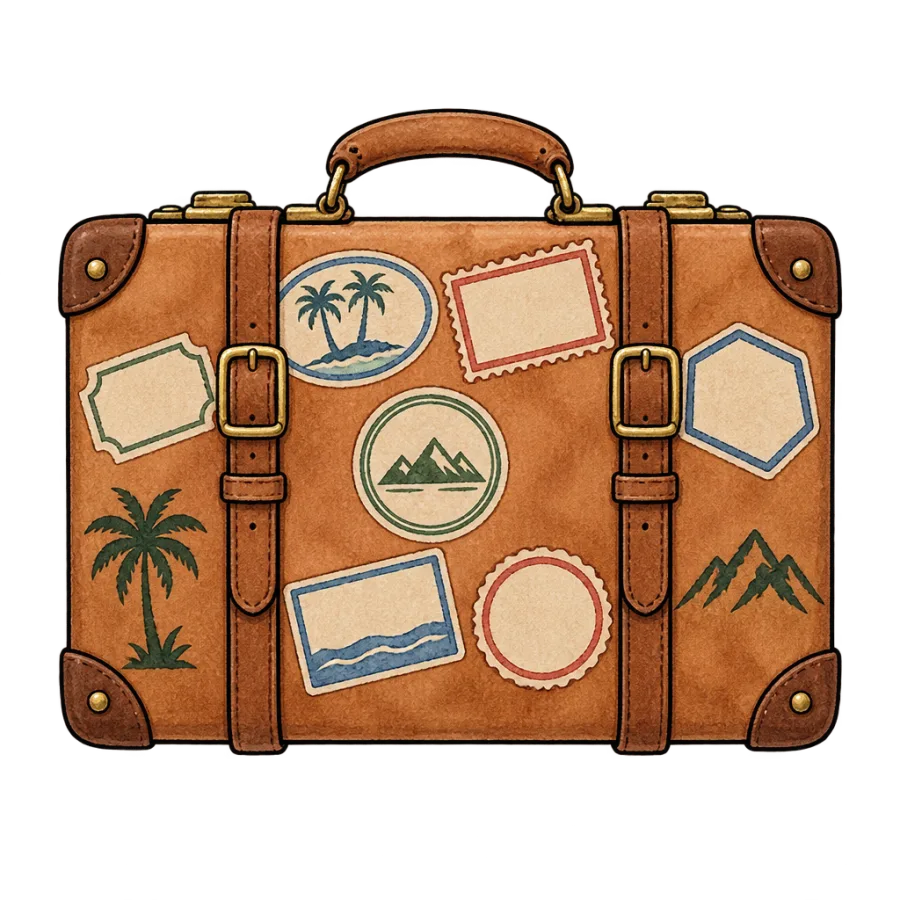
A vintage leather suitcase covered in travel stamp labels, watercolor with soft washes
Use this prompt
A hot air balloon drifting above rolling hills and small clouds
Use this prompt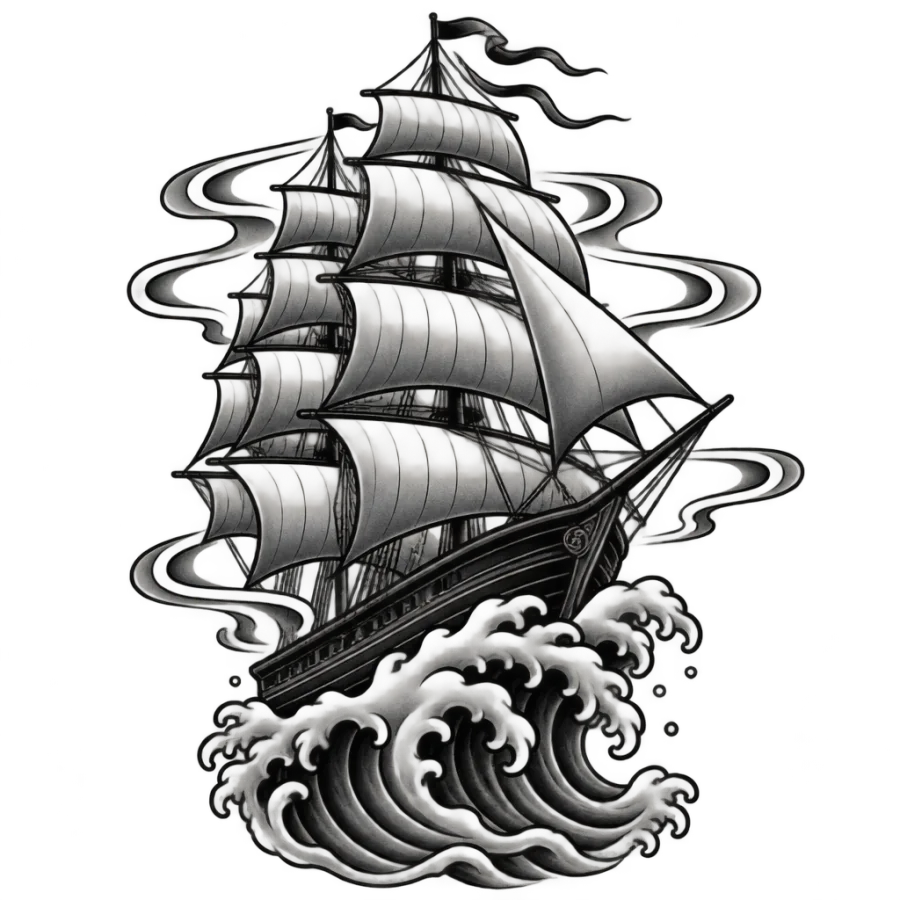
A tall sailing ship with full sails riding a cresting wave
Use this prompt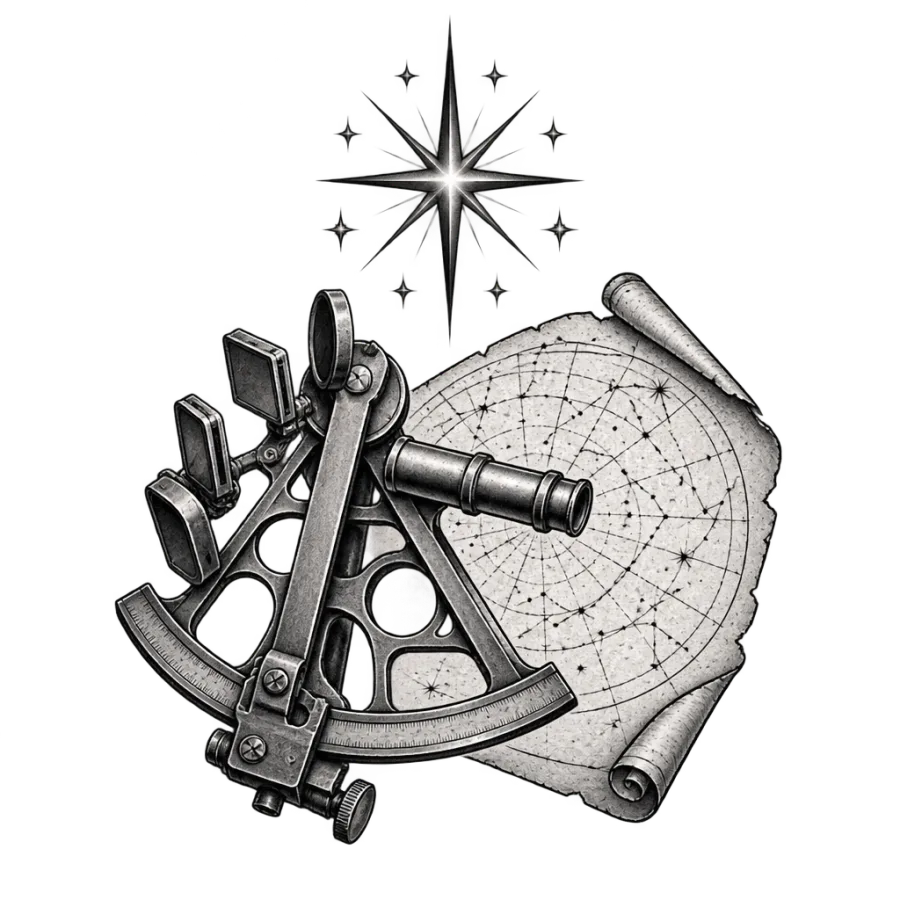
A brass sextant beside a star chart with the north star above
Use this prompt
A winding road curving through pine trees toward distant mountains
Use this prompt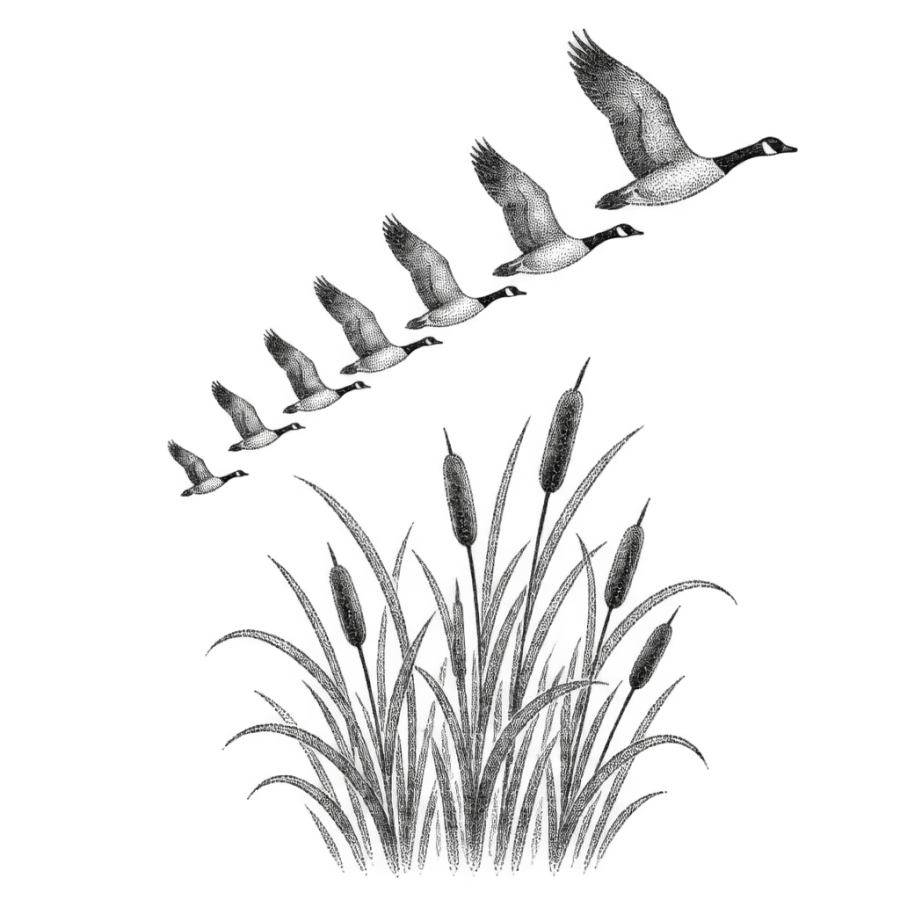
A flock of wild geese flying in a V above tall reeds
Use this prompt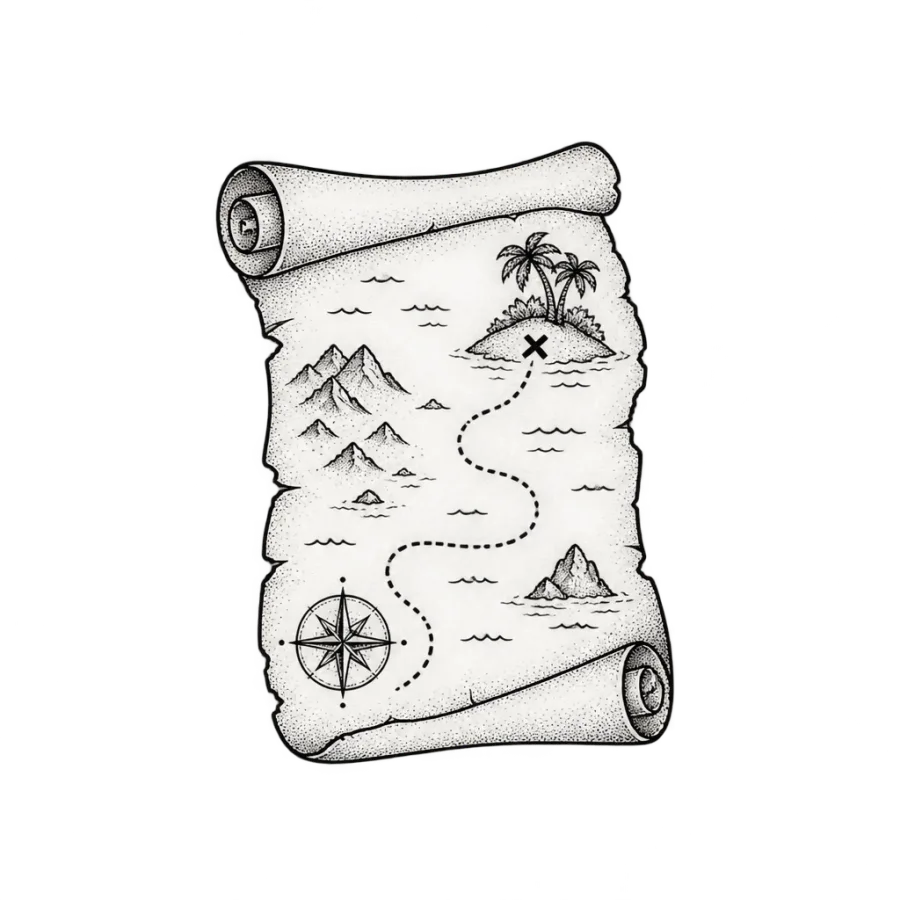
An unrolled map scroll with a dotted route to a palm island
Use this prompt
A round medallion of mountain peaks, ocean waves and a rising trail
Use this prompt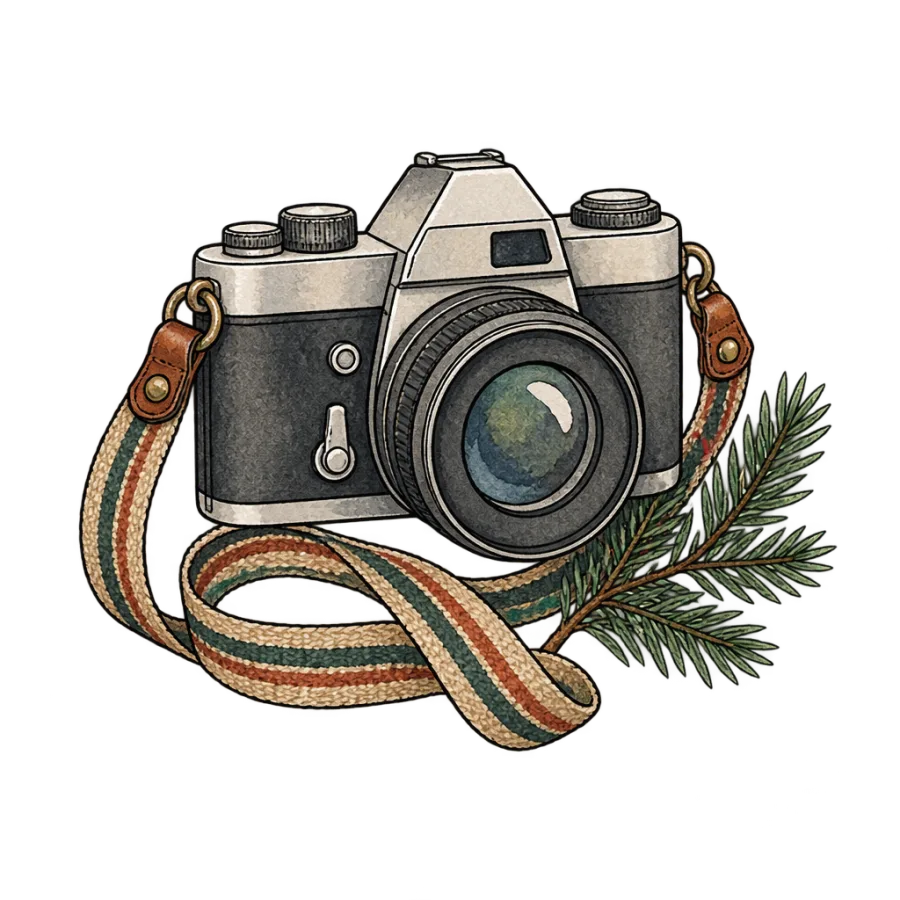
A vintage film camera with a woven strap and a pine sprig
Use this prompt
Steam train crossing a wooden trestle bridge, old engraved look
Use this prompt
Two palm trees mirrored either side of a setting sun over water
Use this prompt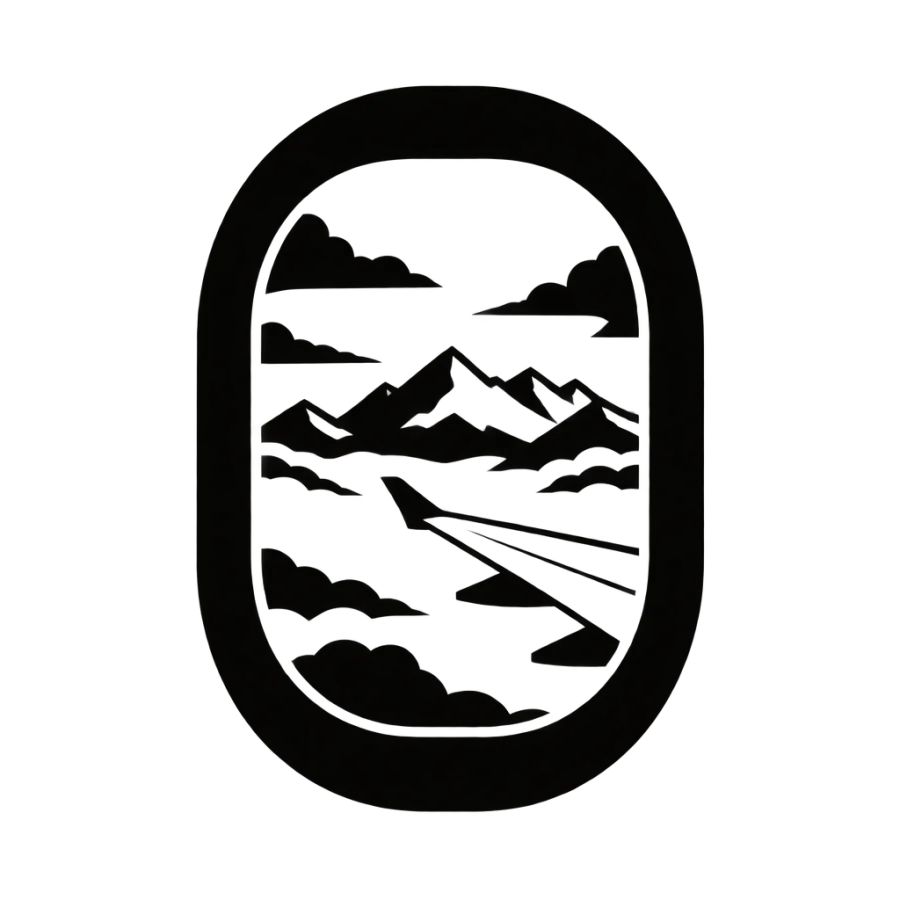
View from a plane window with mountains cut out in negative space
Use this promptDescribe an idea of your own and get four designs back in about 20 seconds.
Open the generator
Questions people ask
How do I make sure coordinate tattoos are accurate?
Choose the format first, either degrees with minutes and seconds or decimal degrees, and keep the north, south, east and west markers consistent. Type the final string into a map and confirm the pin lands where you expect, then have a second person repeat the check. The artist cannot verify the numbers for you.
What does a nautical star tattoo mean?
It comes from sailors' flash, drawn from the compass rose and the north star, and meant finding the way home safely rather than travel for its own sake. It also carries associations with specific communities in different eras, so if the history matters to you it is worth a few minutes of reading.
Are world map tattoos a good idea?
The full map filled in country by country over years rarely ages well, because each added patch heals to a slightly different tone and small landmasses blur. A single accurate coastline, a route line, or a set of separate small pieces in one consistent style holds up much better.
Where do travel tattoos hurt least?
Outer thigh and calf are among the easier large areas, typically three to five out of ten, and they take a wide composition. The top of the foot and the ankle bone are considerably sharper, often seven or eight, and foot tattoos also fade faster because of shoe friction.
How much does a mountain range tattoo cost?
A simple 10 cm contour or range on the forearm is typically $200 to $400. A detailed calf or thigh landscape with shading usually runs four to eight hours at $120 to $250 an hour, so $600 to $1,600. Ask for a session plan rather than a single figure.