Ideas for tiny tattoos that last at 2 cm
Ideas for tiny tattoos run into a hard physical limit at about 2.5 cm, below which an artist has an outline and nothing to put inside it.
- A 1RL puts down a line of roughly 0.2 to 0.3 mm when it is fresh
- That same line settles nearer 0.5 mm within the first month
- Lettering needs about 5 mm of cap height per letter to stay open
- Nothing with interior lines holds reliably below about 2 cm
- Typical size1 to 2.5 cm (0.4 to 1 in)
- Needle1RL or 3RL single needle
- Interior linesNone under 1.5 cm
- Shop minimum$80 to $150 in the US

Tiny means under about 2.5 cm (1 in), and at that scale the rules get simple. One needle, usually a 1RL or a 3RL. One subject. No shading, no texture, no second color. The whole design has to work as a shape, because by the time it has healed and settled, the shape is all that is left of it.
That sounds limiting and it is also why tiny work can outlast much bigger tattoos. A 1.5 cm solid black triangle has nothing in it that can close up. A 1.5 cm rose has eight petal edges inside 15 mm, and every one of them is a line waiting to touch its neighbor. Choose the first kind and the tattoo is still correct in 2050.
What a tiny tattoo can physically hold
A 1RL is a single needle, and the line it puts down is roughly 0.2 to 0.3 mm wide when fresh. On a 1 cm design that line is a thirtieth of the whole image, which sounds fine until it settles to 0.5 mm and becomes a twentieth. Two of those lines with a 0.5 mm gap between them are already touching at a glance from arm's length.
So the honest inventory at this size is short. A single dot. A small cross. An arrow. A letter or two at 5 mm cap height. A flat black silhouette with no internal line at all. A simple geometric figure with an open middle. Everything else is a bigger tattoo pretending to be a tiny one.
| Design | 2 cm | 1.5 cm | 1 cm |
|---|---|---|---|
| Single dot, cross or arrow | Yes | Yes | Yes |
| Flat black silhouette | Yes | Yes | Edges close |
| One continuous line figure | Yes | Yes | No |
| Word at 5 mm cap height | Yes | No | No |
| Flower with five petals | Yes | Edges merge | No |
| Face, portrait or animal eye | No | No | No |
Tiny tattoos that are still legible in twenty years
Legibility at twenty years is a spacing problem. Every line widens as it settles and keeps widening slowly for as long as the tattoo exists, so the gaps in the design are the thing that disappears, in order from narrowest to widest. Plan backwards from that. Draw the design, find the two closest lines, and if they are under 1 mm apart at the size you want, either go bigger or take one of them out.
Tiny designs that hold their shape
- A flat black animal silhouette with no internal line, such as a cat, a bird or a whale
- A single symbol: a cross, a semicolon, an anchor, a lightning bolt, an arrow
- A geometric figure with an open center, drawn at one consistent line weight
- A short set of Roman numerals in block capitals at 6 to 8 mm tall
- One continuous line profile, where the line never doubles back on itself
- A small solid blackwork shape, which ages better than any outlined design this size
Single needle, hand poke and who should do it
Hand poked work puts the ink in one puncture at a time with a needle on a stick and no machine. At this size it has a real advantage, since the artist controls the depth of each dot and a 1RL line goes in evenly without the vibration of a rotary or a coil. It is slower, it usually heals slightly lighter, and some lines need a second pass. It is not gentler on skin and it is not safer, and the hygiene requirements are identical.
Machine work at 1RL is fine too, in the hands of someone who does it often. Ask to see healed photographs of their tiny work, not fresh ones. A fresh single needle line looks perfect on everyone. A photograph of the same tattoo at two years tells you whether that artist puts the ink at the right depth, which is the whole skill at this size. Too shallow and the line drops out in patches. Too deep and it spreads into a soft grey smear.
Where to put something tiny, and where not to
Friction and skin turnover decide this. The sides of the fingers, the back of the hand, the tops of the feet and the inside of the wrist are the four spots tiny tattoos are most often asked for and the four that blur the fastest, because the skin there replaces itself quickly and rubs against something all day. A tiny piece in those places commonly wants a touch up within one to three years.
The places that hold tiny work are the outer forearm, the back of the upper arm, the shoulder blade, the calf and the ribs. Curvature matters as much as friction. A 1.5 cm design on a strongly curved surface such as the side of a finger or the edge of the ankle bone is only fully visible from one angle, so part of it is always foreshortened.
12 tiny tattoos, with the prompt behind each one
Every design below came out of AI Tattoo Lab. Tap one to load its prompt into the generator, then change a word and make it yours.

A tiny swallow in flight drawn in eight simple lines
Use this prompt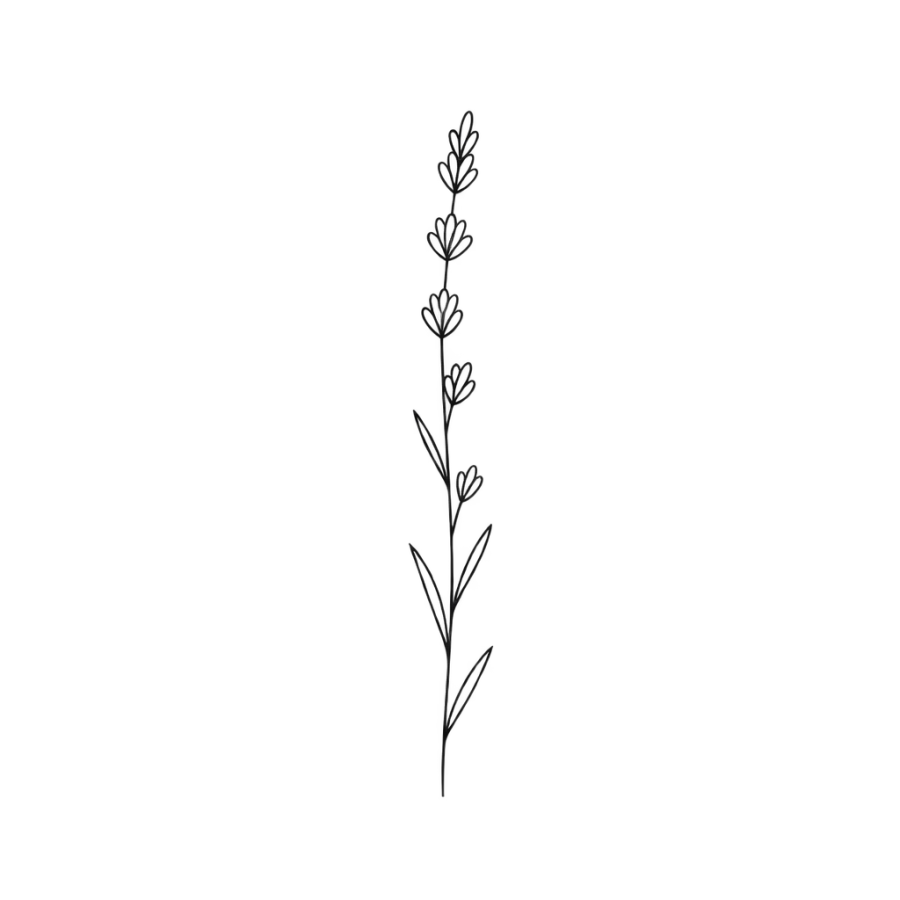
A tiny lavender sprig, thin stem and a few buds
Use this prompt
A tiny mountain range in five straight lines
Use this prompt
A tiny folded paper boat in five simple lines
Use this prompt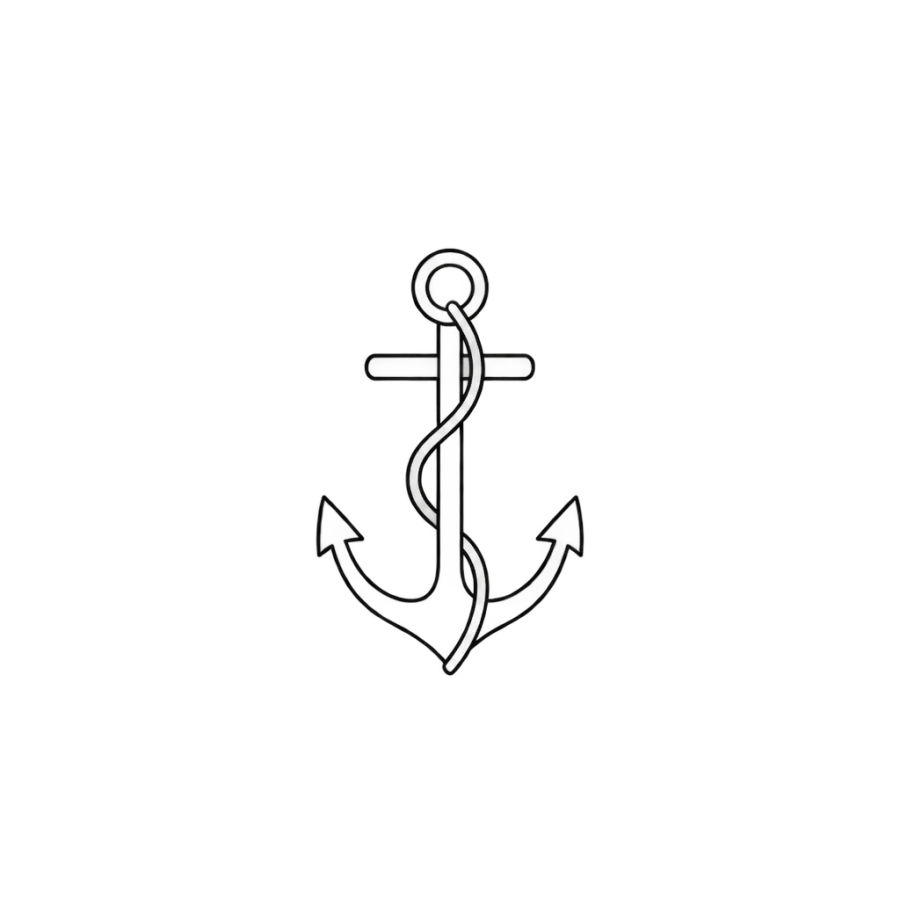
A tiny anchor with a single rope loop, few lines
Use this prompt
A tiny curling wave drawn in one continuous line
Use this prompt
A tiny sun, plain circle with eight short rays
Use this prompt
A tiny solid black cat silhouette sitting with a curled tail
Use this prompt
A tiny four leaf clover with a short stem, simple outlines
Use this prompt
A tiny solid black lightning bolt, one simple shape
Use this prompt
A tiny ornamental diamond with dots and dashes around it
Use this promptDescribe an idea of your own and get four designs back in about 20 seconds.
Open the generator
Questions people ask
What is the smallest a tattoo can be?
About 1 cm for a design with no interior line, like a dot, a cross or an arrow, done with a 1RL. A silhouette can work at 1 to 1.5 cm. Anything with lines inside it needs 2 cm or more, and anything with lettering needs about 5 mm of cap height per letter.
Do tiny tattoos blur or disappear?
They blur before they disappear. Lines widen as they settle and keep widening slowly for decades, so the gaps between them close first and the shape goes soft. Pigment loss only becomes obvious much later, and sun exposure speeds all of it up. Daily SPF 30 on healed skin is the biggest thing you control.
Are tiny tattoos cheaper?
They cost the shop minimum, commonly 80 to 150 dollars in the US, which is the same as a 5 cm piece at most studios. Going smaller rarely saves money on the day, and it can cost more over time if the design needs touch ups or a rework at double the size.
Do tiny tattoos hurt less?
They hurt for less time, which is most of what people mean. The sensation per second depends on the spot, so a 1.5 cm piece on the ribs or the ankle bone still rates 7 or 8 out of 10 while it is happening. The difference is that it happens for ten minutes instead of two hours.
Can an artist copy a tiny AI design exactly?
They can use it as a reference and will usually change it. A generator can draw lines finer than skin holds, so a licensed artist will thicken them, widen any gap under 1 mm, and drop detail that will not survive. Looking at the design at its real size is the part worth doing before you book.