Dragon tattoo ideas, meaning and designs
A dragon is a long subject on a long limb, so the first decision is not the style but which of two unrelated traditions you actually want.
- Pain level6 / 10 across a back
- Healing3 to 4 weeks per session
- Typical size25 to 60 cm (10 to 24 in)
- Studio cost$800 to $6,000
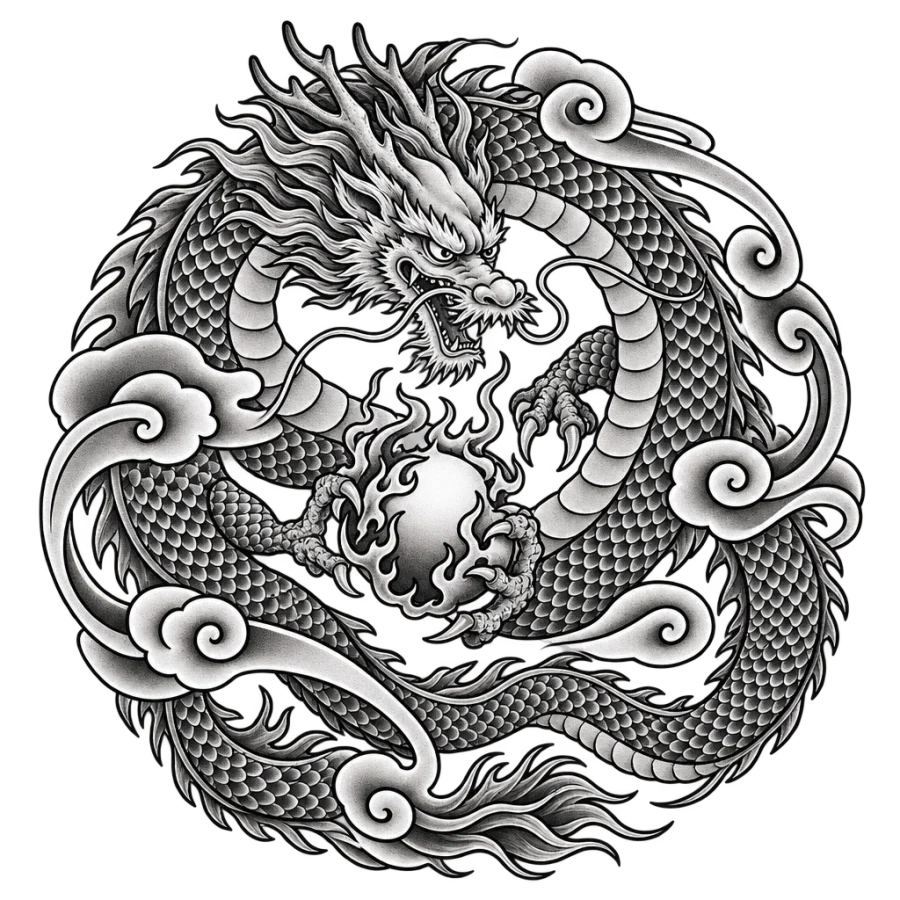
A Japanese or Chinese dragon is a serpent with legs. No wings, a long body with a mane down its spine, deer antlers, whiskers, and claws that grip. It is a water creature tied to rain and rivers, understood as benevolent for most of its history, and drawn properly it travels along an arm the way a river travels through a valley.
The Western dragon is a winged reptile with a heavy body and a short neck, built to sit on a hoard or fight a knight. Medieval Christian art used it for the devil, which is why St George is always killing one. These two creatures got the same English word by accident, and mixing them produces a design that reads as neither.
The two dragons, and why they do not mix
Japanese irezumi treats the dragon, or ryū, as one of a handful of core subjects alongside the koi, the tiger and the phoenix. It is drawn in a settled visual language: the body coils, the head turns back on itself, and the whole figure sits in a field of stylised clouds, wind bars or waves. Many dragons hold or chase a flaming jewel, the tama, which is usually read as wisdom or the moon.
Chinese dragons look closely related and are drawn with a longer, thinner body and a looser posture, often above the clouds instead of inside them. Western dragons are built on a completely different silhouette, with bat wings, a barrel chest and a narrow head, and they read best in black and grey realism or in etching style linework. Picking one tradition and staying inside it is the single decision that makes a dragon tattoo look deliberate.
Telling the traditions apart
- A Japanese dragon has no wings, three claws per foot and a mane along the back
- A Chinese dragon has a longer body, often four or five claws, and floats above cloud banks
- A Western dragon has membrane wings, a heavy chest and a lizard head
- A Welsh dragon is a specific heraldic figure, red, rampant, with a knotted tail
How a Japanese dragon is composed
The composition starts from the body line, not the head. An artist maps a single long curve down the arm or across the back first, checks it against how the limb moves, then hangs the head, claws and scales off that curve. If the body line is wrong the dragon looks stuck on. If it is right, the dragon appears to move when you move.
Background does the rest of the work. Clouds, wind bars and waves fill the space around the body and give the piece its black mass, which is what keeps an irezumi tattoo readable at twenty years. Scales are stacked crescents, not fish scales, and they get smaller down the body. The head carries the most detail, so it is usually placed where you want the eye to land, often at the shoulder or the top of the back.
Size, sessions and what it costs
A dragon is an awkward subject to shrink. Below about 20 cm the claws, teeth and scale rows start to merge, and you are better off with a deliberately simplified linework dragon than a shrunken detailed one. A forearm dragon wrapping from wrist to elbow is typically 25 to 30 cm along the body. A back piece is 45 to 60 cm and is designed around the spine.
Time is the real cost. A full Japanese sleeve with a dragon and background is usually 25 to 40 hours over six to twelve sittings, at $150 to $300 an hour in most Western cities. A single forearm dragon without heavy background is three to six hours. Artists who work in traditional Japanese style often want to design the whole sleeve before they start the first session, and that is worth taking as a good sign.
Placement, aging and the usual mistakes
Dragons want length. The back, a full sleeve, the outside of the thigh and the calf all give a body line enough room to curve twice. A dragon crossing from the chest onto the shoulder works if the artist plans for how the shoulder rotates, and looks broken if they do not. Anything that crosses a joint should be drawn on the body with marker before the stencil goes on.
Bold Japanese work ages better than nearly anything else, because the outlines are heavy and the background is solid black. The mistakes are usually about flow and detail density. A dragon copied from a film still and placed flat on a shoulder tends to look pasted. A dragon with every scale outlined at 15 cm turns into texture within a decade, and that is the version people come back to have reworked.
Ways a dragon tattoo goes wrong
- The body line ignores how the arm rotates, so the dragon folds in half when you bend your elbow
- Eastern head and Western wings on the same animal
- Scales outlined individually at a size where they cannot survive
- Background left out, which removes the black mass that keeps it readable
- A back piece started without a full design, so the second half never fits the first
12 dragon tattoo designs, with the prompt behind each one
Every design below came out of AI Tattoo Lab. Tap one to load its prompt into the generator, then change a word and make it yours.
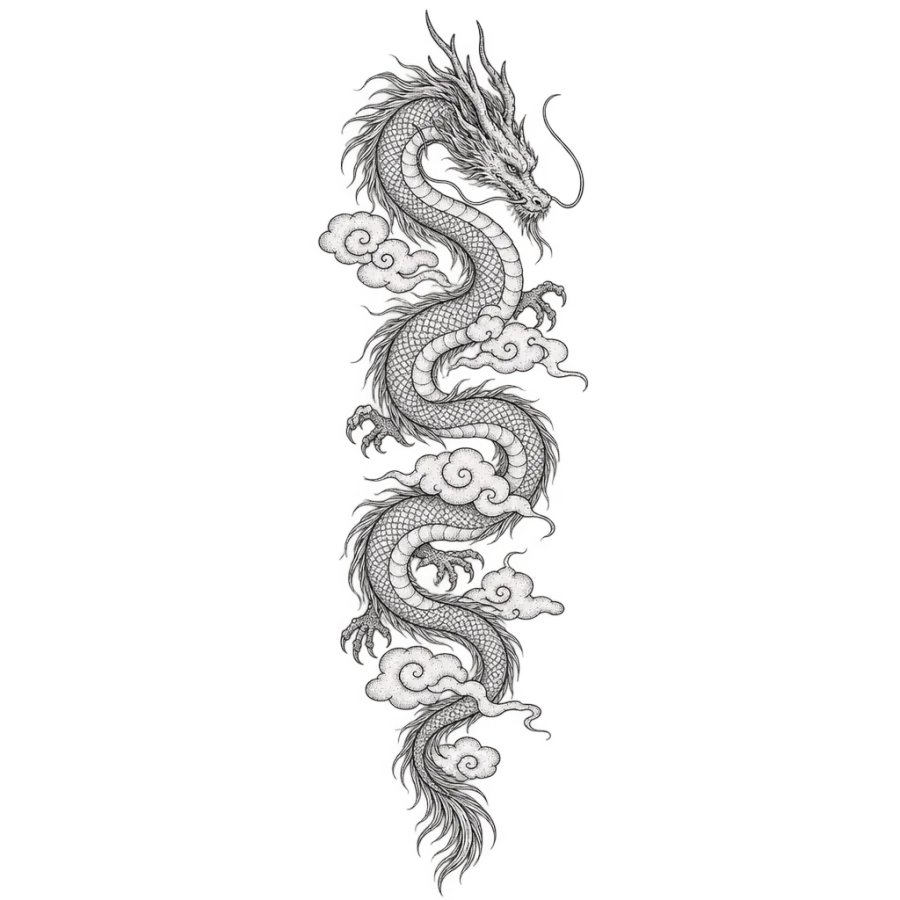
Dragon tattoo design
Use this prompt
Dragon tattoo design
Use this prompt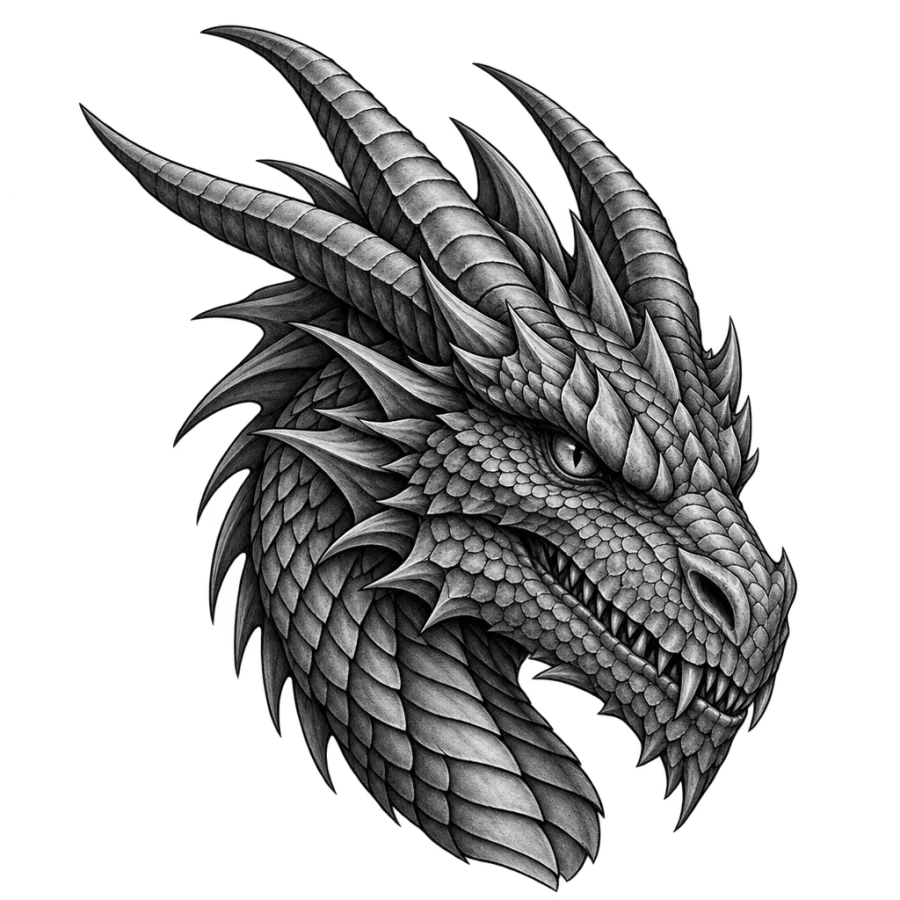
Dragon tattoo design
Use this prompt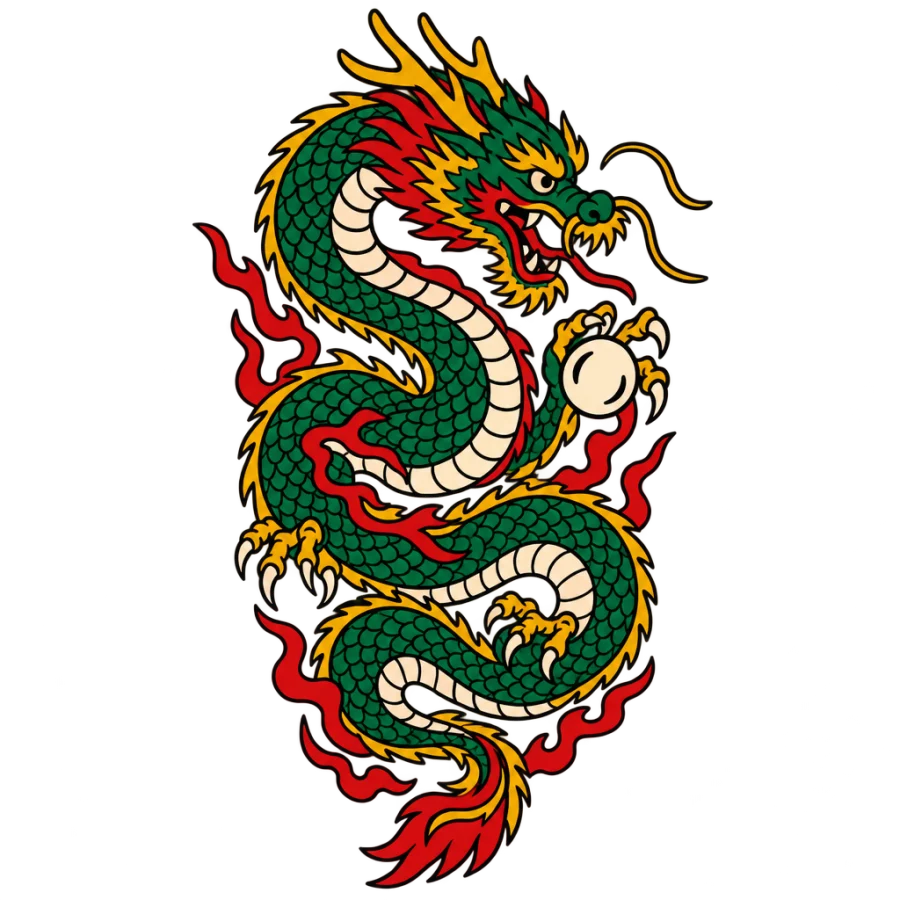
Dragon tattoo design
Use this prompt
Dragon tattoo design
Use this prompt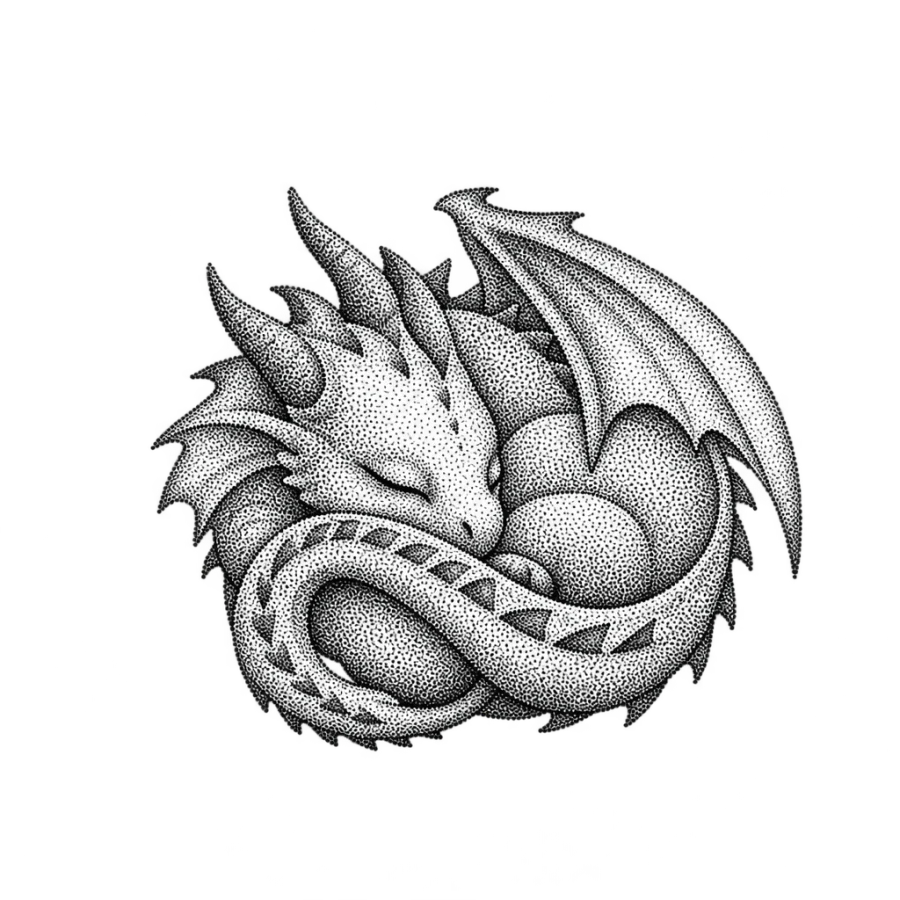
Dragon tattoo design
Use this prompt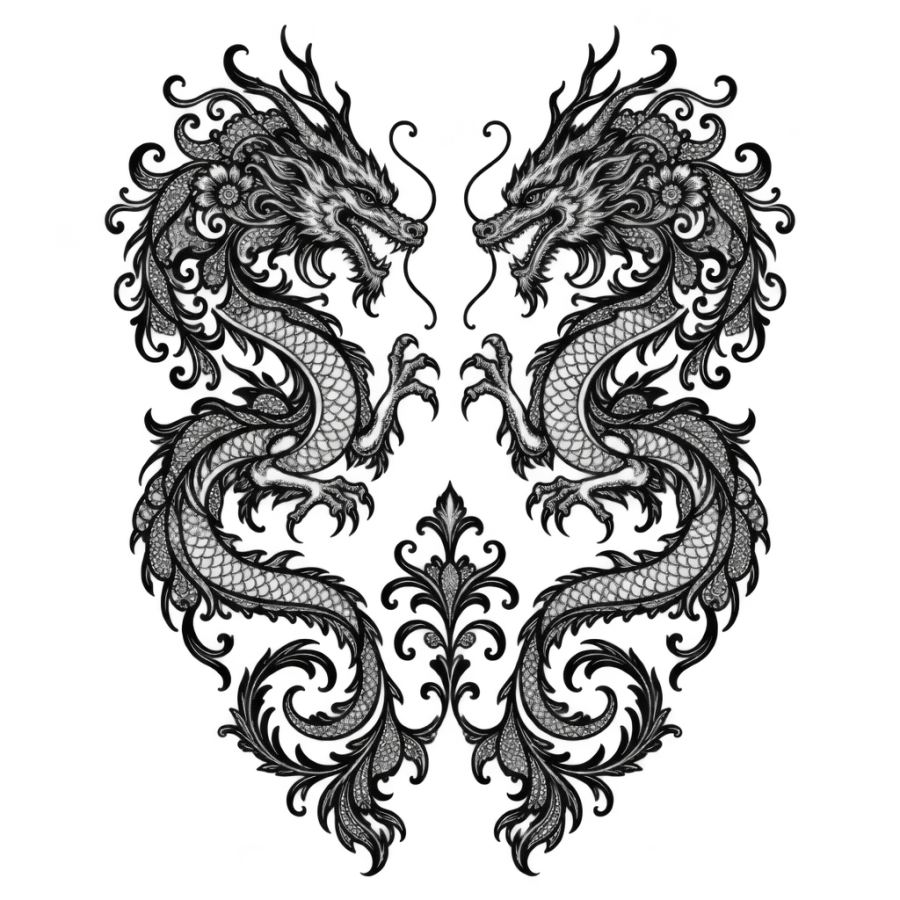
Dragon tattoo design
Use this prompt
Dragon tattoo design
Use this prompt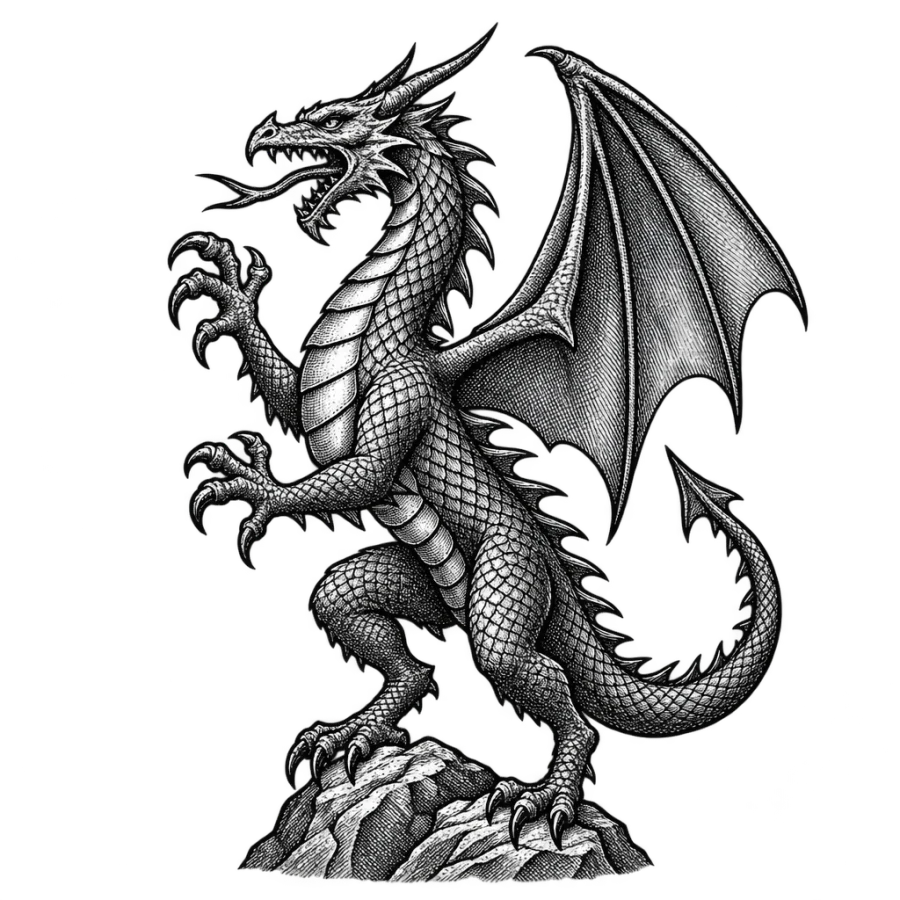
Dragon tattoo design
Use this prompt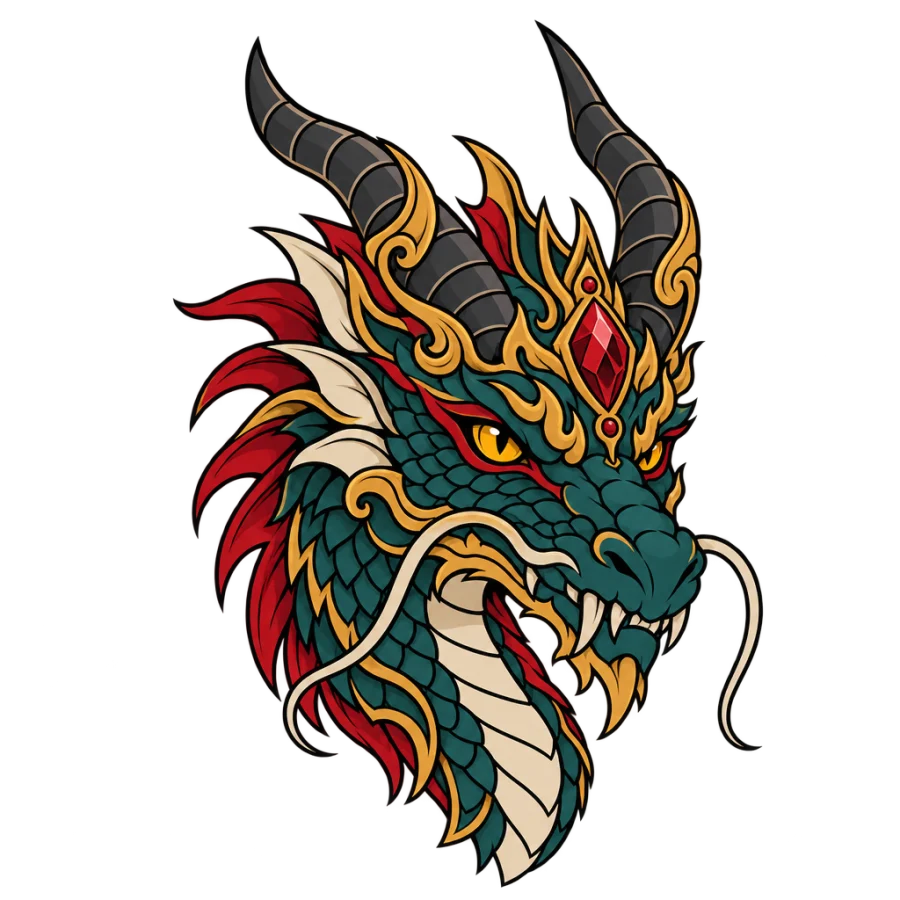
Dragon tattoo design
Use this prompt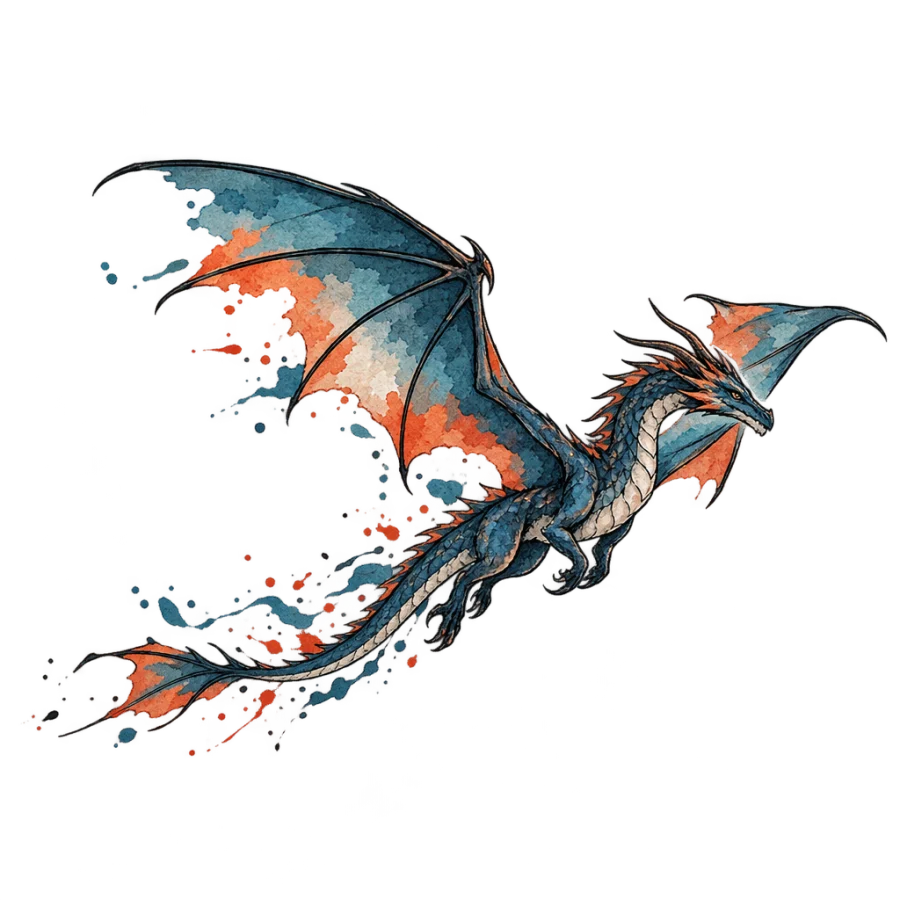
Dragon tattoo design
Use this promptDescribe an idea of your own and get four designs back in about 20 seconds.
Open the generator
Questions people ask
What does a dragon tattoo mean?
In East Asian traditions the dragon is a water creature tied to rain, protection and authority, so people choose it for wisdom or guardianship. The Western dragon was drawn as a monster in medieval Christian art and now tends to mean defiance or guarding something that matters to you.
How many claws should a Japanese dragon have?
Three per foot is the usual convention in Japanese art. Chinese dragons are commonly drawn with four, and five was reserved for imperial use. None of this is a coded message, and an artist will follow whichever tradition the rest of your design belongs to.
How big does a dragon tattoo need to be?
Around 20 cm is the floor before claws, teeth and scale rows start merging. A forearm dragon is usually 25 to 30 cm along the body, and a back piece runs 45 to 60 cm. Below 20 cm, ask for a simplified linework dragon instead of shrinking a detailed one.
How long does a dragon sleeve take?
A full Japanese sleeve with a dragon and background is typically 25 to 40 hours over six to twelve sessions. At $150 to $300 an hour that lands between $4,000 and $12,000 in most Western cities. Expect the artist to design the whole sleeve before the first needle touches skin.
Can I use an AI dragon design for a real tattoo?
Use it to settle the tradition, posture and composition. Then take the stencil to a licensed artist who will redraw the body line so it follows how your arm rotates, thin out scale detail that cannot survive, and add the background that holds the piece together over decades.