Compass tattoo ideas, meaning and designs
A compass rose has a fixed logic: four long points, four shorter ones between them, and eight shorter still, and breaking that pattern is visible forever.
- Pain level5 / 10 on the outer arm
- Healing2 to 3 weeks on the surface
- Typical size8 to 20 cm (3 to 8 in)
- Studio cost$250 to $1,200

The compass rose on old sea charts is a real design with real rules. Portolan charts from the thirteenth and fourteenth centuries carry roses of thirty two points, with the longest marking the cardinal directions. A fleur de lis at north and a cross at east, pointing toward Jerusalem, both appear on Italian charts and are still the details that make a rose look authentic rather than invented.
Worth separating from that: the popular story that sailors tattooed compasses so they would always find their way home is modern. The documented sailor tattoos are the nautical star, the swallow, the anchor and the words hold fast across the knuckles. A compass is a fine tattoo and its history is shorter than the internet suggests.
The geometry, and why it has to be measured
A traditional rose has four cardinal points at full length, four intercardinal points slightly shorter, and eight half wind points shorter again. That hierarchy is what gives it structure. A rose with sixteen identical points looks like a star, and a rose where one point is a few degrees out looks broken from across a room without anyone being able to say why.
This is one of the few tattoos where freehanding is a bad idea. Artists build the stencil with a compass and a protractor, or they draw it digitally, then they check the placement against the curve of the limb. On a bicep or a calf, a perfect circle on paper becomes an oval on skin, so the stencil usually needs to be stretched slightly along one axis.
What a proper compass rose has
- Four long cardinal points with shorter intercardinal and half wind points between
- A fleur de lis or an arrow marking north
- Points drawn with two tones so each one has a lit and a shaded half
- A center circle or boss where the points meet
- An outer ring with degree marks if the design calls for it
A rose, a compass and an astrolabe are different objects
People use the word compass for three separate things. A compass rose is a flat symbol printed on a chart. A magnetic compass is a physical instrument with a housing, a glass face, a floating card and a lubber line marking the direction of travel. An astrolabe or a sextant is neither, and both turn up in tattoos labelled as compasses.
The choice changes the drawing. A flat rose is a graphic and suits blackwork, dotwork and ornamental treatment. A physical compass needs perspective, a cast shadow, a highlight on the glass and a visible thickness to the case, which pushes it into realism and requires 12 to 15 cm before the details survive.
Coordinates, and how to avoid a permanent error
Coordinates are the most common addition and the most common mistake. Decide on a format and keep it consistent: either degrees, minutes and seconds with the hemisphere letters, or decimal degrees with a minus sign for south and west. Mixing the two, or dropping the hemisphere entirely, gives you a set of numbers that points at a different place.
Check the numbers against a map before the stencil is printed, then check them again on the stencil. Character height should be at least 5 mm, and 6 mm if the font has serifs, because small numerals with thin strokes grey out faster than almost any other lettering. Ask for a font with even stroke weight.
Size, placement and what dates
Eight centimeters is the floor for a sixteen point rose, and a thirty two point rose wants 14 cm or more. A realistic instrument compass needs 12 to 15 cm. The circular shape suits the shoulder cap, the chest, the outer forearm, the calf and the inner bicep, and the deltoid in particular flatters a round design.
The compass combined with a clock, a rose and a lion in one collage was sold as flash by a lot of studios in the 2010s and is now a frequent rework request. A compass with a real map fragment, a specific coordinate, or a route you actually traveled holds up better, because it points at something in your life instead of a trend.
12 compass tattoo designs, with the prompt behind each one
Every design below came out of AI Tattoo Lab. Tap one to load its prompt into the generator, then change a word and make it yours.
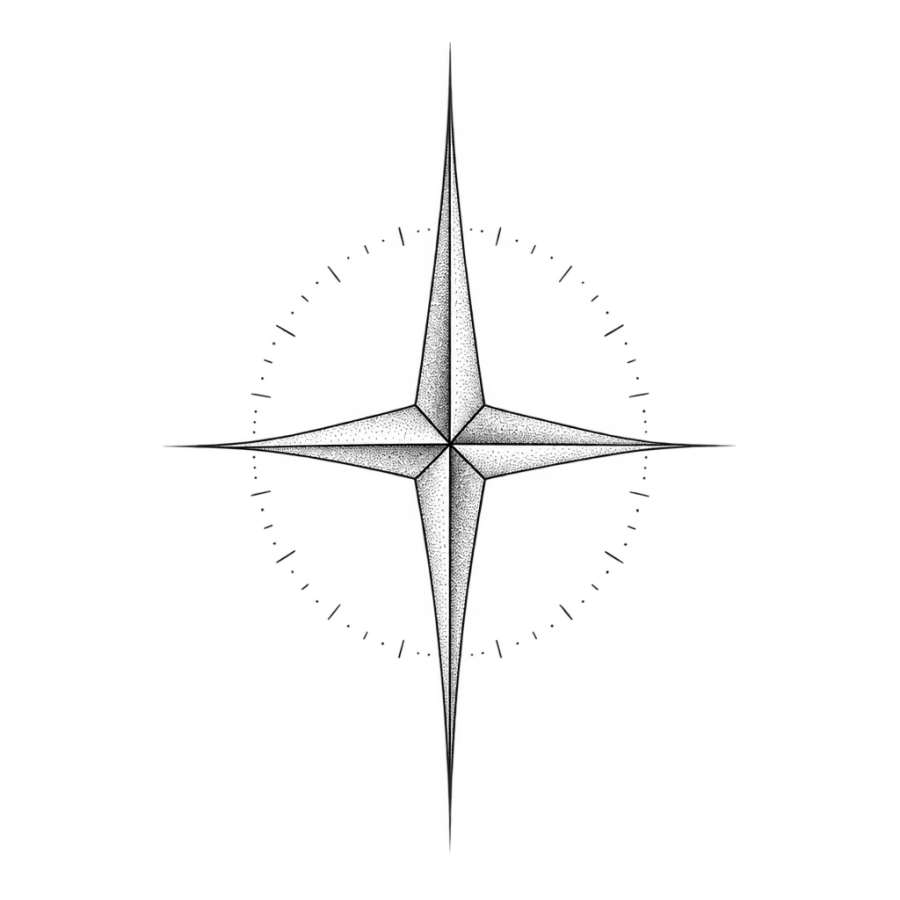
A slender four point compass rose with a thin tick ring, fine line
Use this prompt
A compass rose cut out of a solid black disc, heavy blackwork
Use this prompt
A compass rose among breaking waves and wind bars, Japanese irezumi
Use this prompt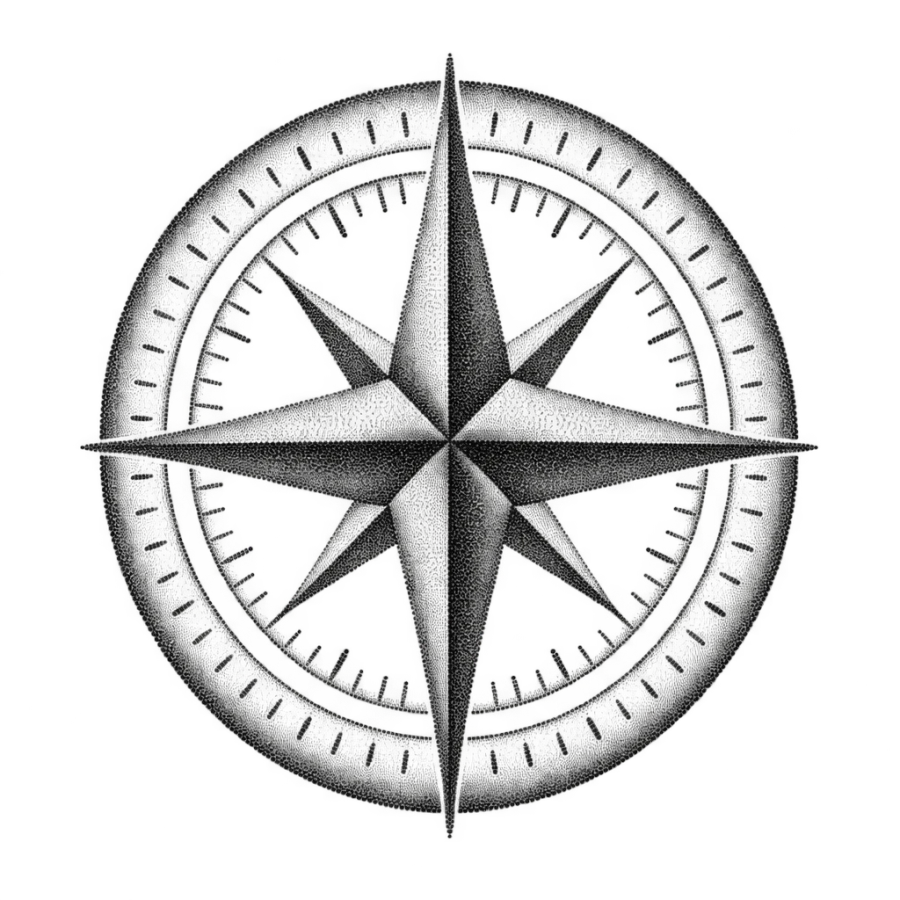
A round compass medallion with two tick rings, dotwork stippling only
Use this prompt
A compass of nested triangles and long axis lines, geometric line work
Use this prompt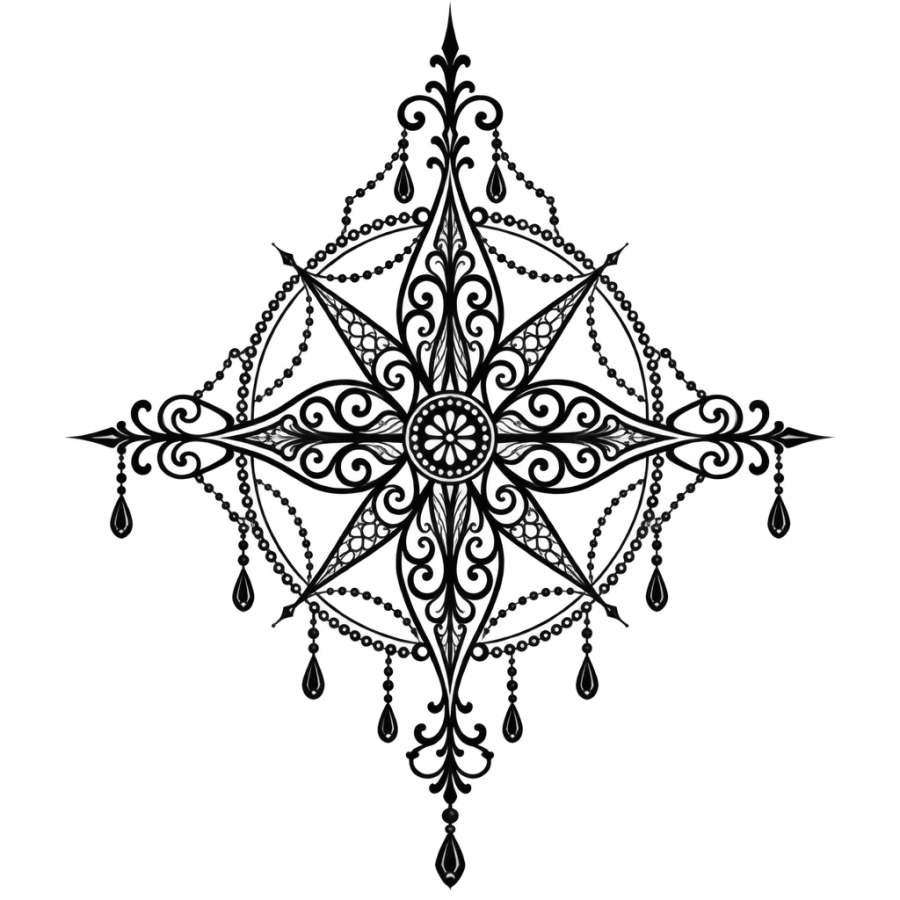
A compass rose with lace scroll points and hanging drops, ornamental filigree
Use this prompt
A four point compass star in a thin circle, one continuous line
Use this prompt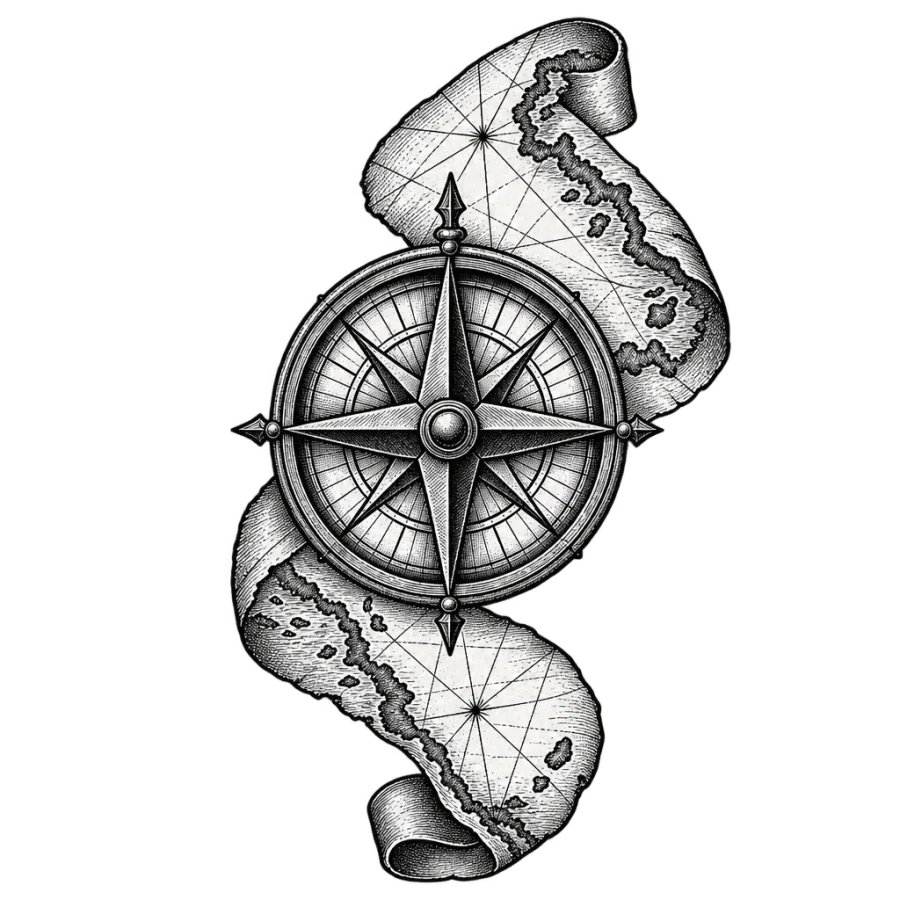
An antique mariner compass rose with a curling coastline, engraving style
Use this prompt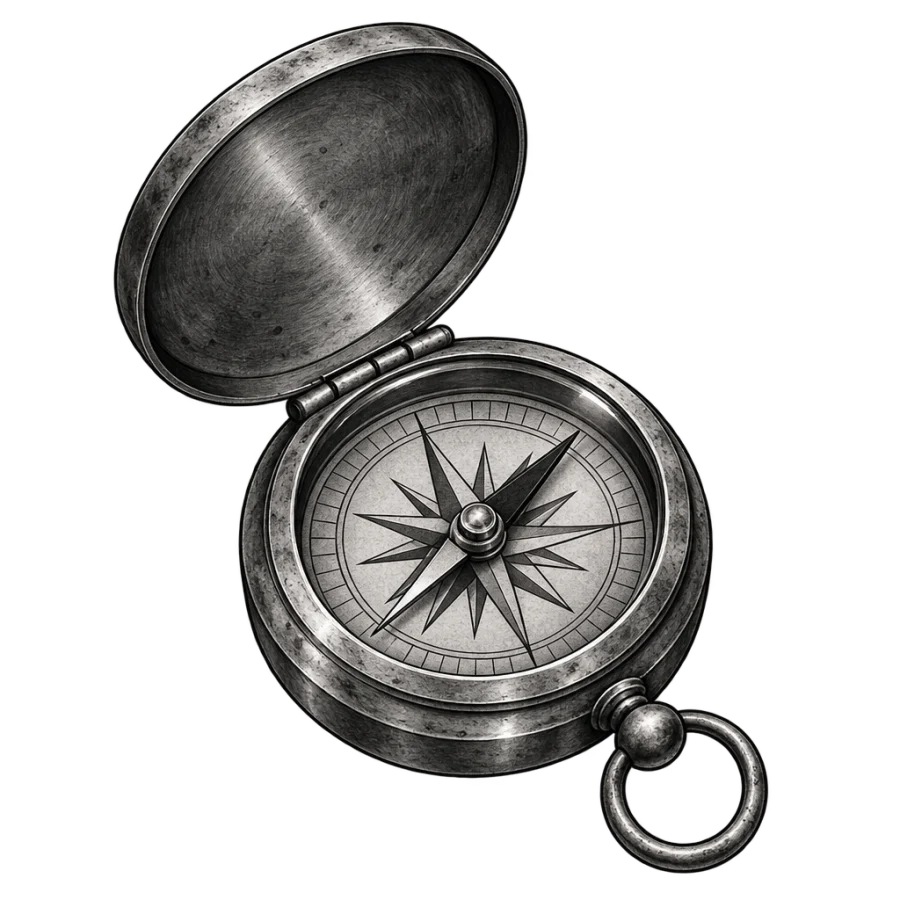
A worn brass pocket compass with the lid open, black and grey realism
Use this prompt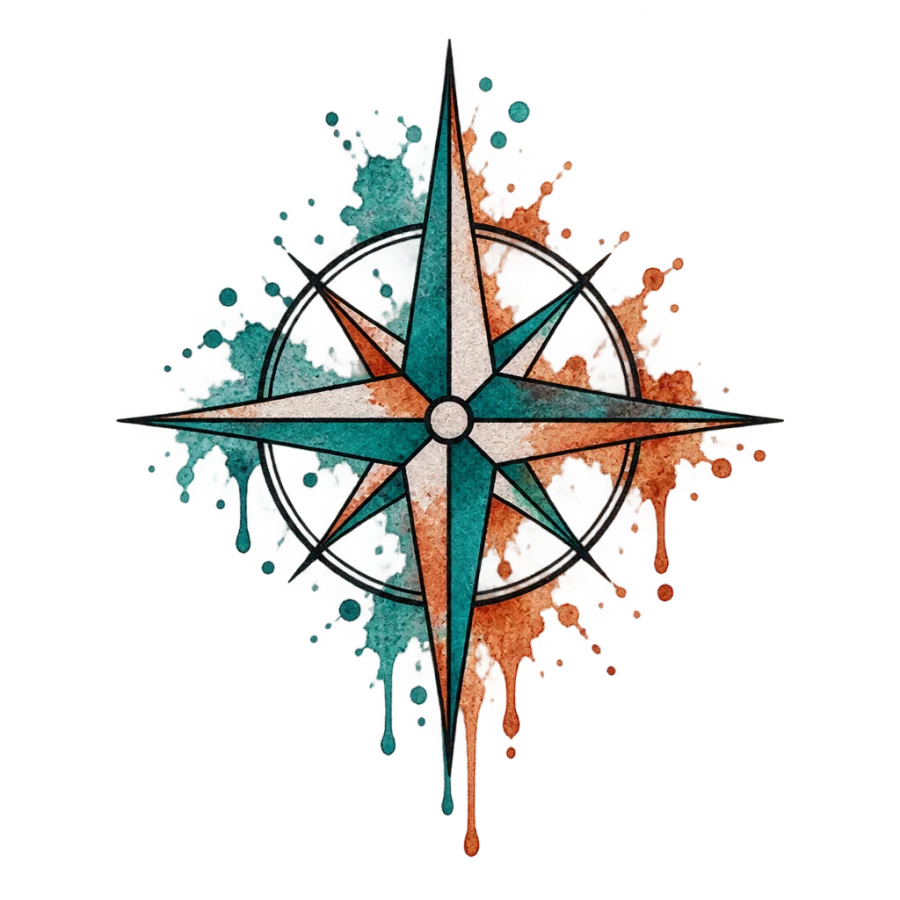
A compass rose with teal and rust washes bleeding out, watercolor tattoo
Use this prompt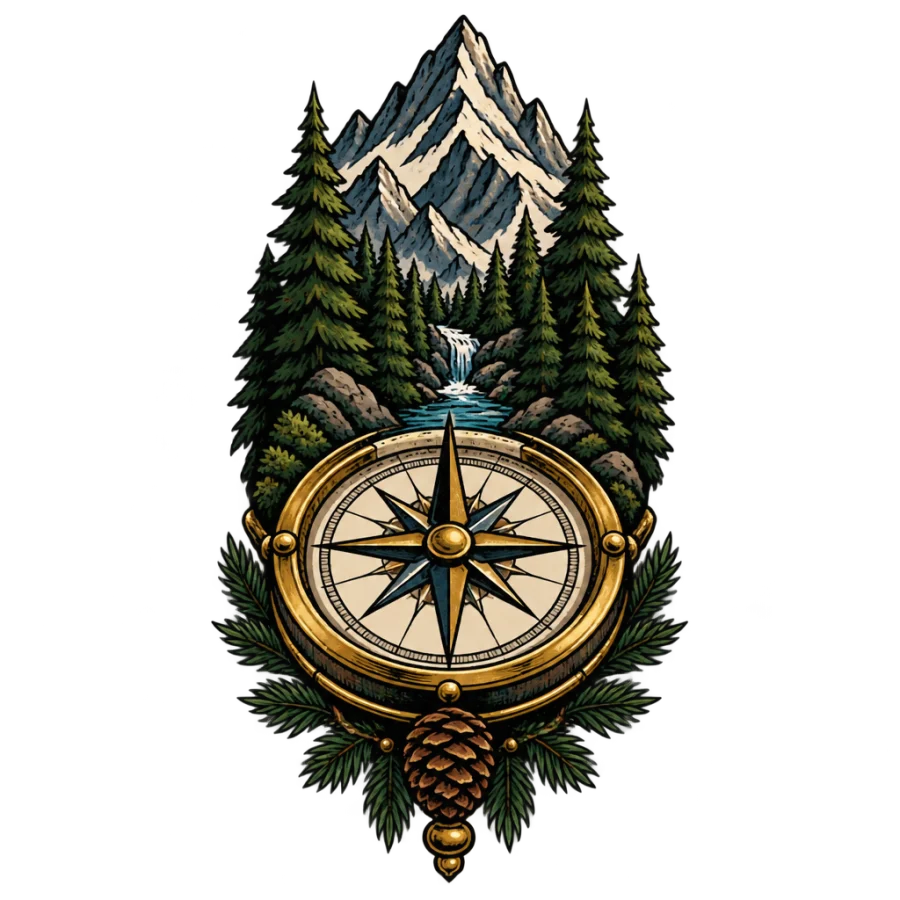
A compass dial with pine forest and mountains rising from it, neo traditional
Use this promptDescribe an idea of your own and get four designs back in about 20 seconds.
Open the generator
Questions people ask
What does a compass tattoo mean?
Direction and travel, usually chosen after a move or a period without a clear plan. The compass rose comes from sea charts of the thirteenth and fourteenth centuries. The claim that sailors wore one to guarantee a safe return home is a modern invention.
How big should a compass tattoo be?
Eight centimeters for a sixteen point rose and 14 cm or more for a thirty two point one. A realistic instrument compass with a case and glass needs 12 to 15 cm. Below those sizes the shorter points merge and the rose reads as a plain star.
Why do compass tattoos look uneven?
Because the geometry was drawn by hand. A rose needs four long cardinal points, shorter intercardinal points and shorter half winds, all measured. Artists build the stencil with instruments or digitally, then stretch it slightly to account for the curve of an arm or a calf.
How do I get coordinates right in a tattoo?
Pick one format and stay with it, either degrees, minutes and seconds with hemisphere letters or decimal degrees with a minus sign for south and west. Check the numbers on a map before the stencil is printed, then check the stencil itself. Keep character height at 5 mm or more.
Where does a compass tattoo look best?
The shoulder cap suits it particularly well, since the curve of the deltoid flatters a circular design. The chest, outer forearm, calf and inner bicep all work. Ask the artist to check the stencil with the limb in a relaxed position, because a circle on paper becomes an oval on skin.