Wave tattoo ideas, meaning and designs
Almost every wave tattoo in a Western shop descends from one print made around 1831, and knowing that helps you ask for what you actually want.
- Pain level4 / 10 on the forearm
- Healing2 to 3 weeks on top
- Typical size5 to 30 cm (2 to 12 in)
- Studio cost$150 to $900
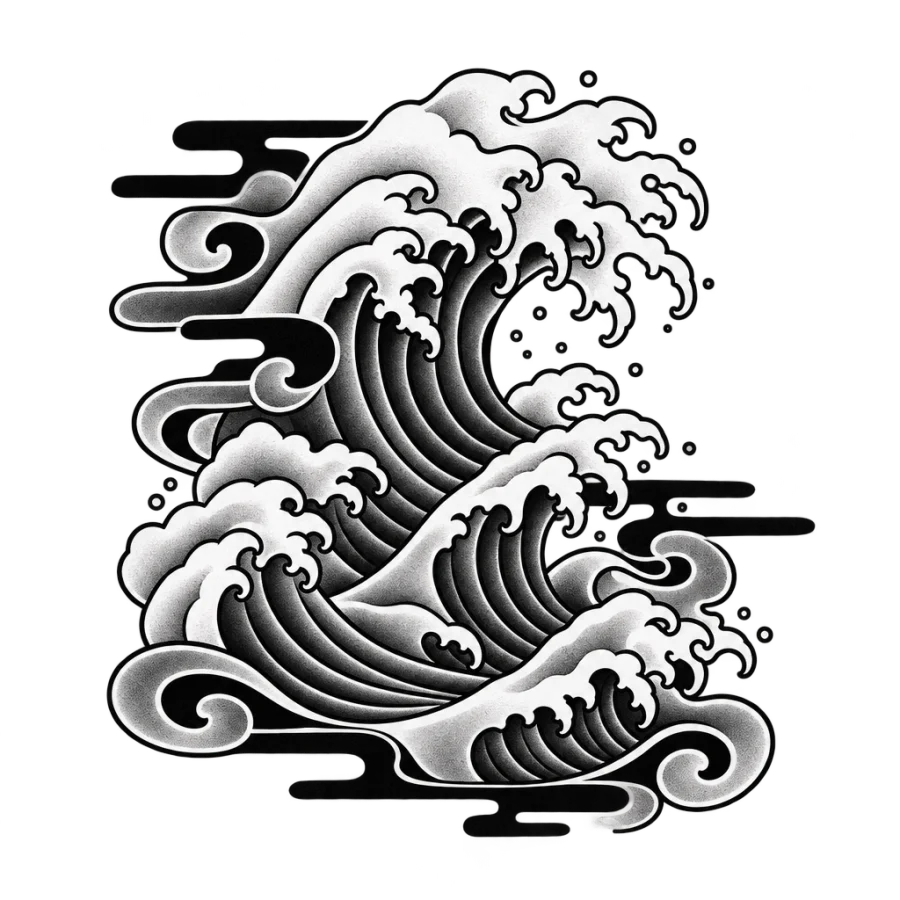
Hokusai made The Great Wave off Kanagawa as the first sheet in Thirty Six Views of Mount Fuji, around 1831. The clawed foam at the crest, the small boats underneath, Fuji sitting low in the background: that image has been reproduced so widely that most people picture it when they picture a wave, whether they know the source or not.
Japanese tattooing has its own water language going back further than the print. Finger waves are drawn as bundles of parallel lines that curl at the tip, with heavy black in the troughs and bare skin in the foam. That system exists because it reads at a distance and holds up over decades, which is more than can be said for a photographic wave.
How Japanese water is built
A traditional wave has three layers. The outline defines the crest and the curl. Inside it, groups of parallel lines follow the motion of the water, spaced evenly and thinning as they reach the tip. Behind that, solid black fills the trough so the white of the foam has something to push against. The clawed fingers at the top of the crest are drawn last and they are what makes it a wave rather than a hill.
The spacing of those parallel lines is what decides how the tattoo looks in twenty years. Lines laid closer than about 2 mm apart will merge as the ink spreads, and the wave turns into a grey shape. Good Japanese artists space wider than looks right on paper for exactly this reason.
What to ask for in a traditional wave
- Line groups spaced at least 2 mm apart so they stay separate
- Solid black in the troughs to hold the foam as bare skin
- Clawed fingers at the top of the crest
- The whole wave following the direction of the limb, not cutting across it
Size, and what a small wave can be
A simplified wave of three or four curved lines works at 4 to 6 cm on a wrist, an ankle or behind the ear. That is a symbol rather than a picture, and it stays clean because there is nothing inside it to fill. A recognizable Great Wave composition with foam claws and a curl needs 15 cm or more before those claws separate properly.
The middle range is where people get caught out. A detailed wave at 8 or 9 cm has all the elements of a big one packed into half the space, and those elements are what close up first. If you are working at that size, cut the number of line groups rather than shrinking them, and leave the foam as one shape instead of several.
Sizes and what fits
- 4 to 6 cm, three or four curved lines, no internal detail
- 8 to 12 cm, a simplified wave with two or three line groups and solid black
- 15 to 20 cm, full foam claws, spray dots and a proper curl
- 25 cm and up, a Great Wave composition with boats or Fuji behind it
Placements that suit moving water
Waves wrap, which is unusual and useful. A band around the forearm, the bicep or the ankle works because water has no top or bottom edge the way an animal does, so the design can run all the way round and meet itself. Ask for the join to sit on the inside of the limb where it is least visible.
The ribs and the outer thigh suit a single large wave following the body's curve. On a calf, a wave reading upward with the crest toward the knee looks natural because the leg tapers the same way. Keep the direction of the water consistent with the way the limb moves, since a wave running against the anatomy looks wrong even to people who cannot say why.
Ageing and the combinations to think twice about
Japanese style waves age better than almost any other water treatment because they were designed by people working without photographs, using line spacing and solid black. Realistic water is the opposite. Spray and translucency depend on subtle greys, and those go flat in five to eight years, leaving a soft blue grey area rather than water.
For combinations, the circular scene with a wave, a mountain and a setting sun inside a thin ring was everywhere from about 2016 to 2020, and it dates a piece to those years now. A wave with one other element, or a wave alone running around a limb, holds up better. Copying Hokusai's print directly is legal and common, though most artists will redraw it to fit your arm.
Wave designs people ask for
- A Great Wave adaptation with the foam claws over the shoulder
- A wave band wrapping the forearm with the join on the inside
- A small three line wave on the inner wrist or the ankle
- A wave with a surfer or a small boat in the trough
- Japanese finger waves as the background for a koi or a dragon
12 wave tattoo designs, with the prompt behind each one
Every design below came out of AI Tattoo Lab. Tap one to load its prompt into the generator, then change a word and make it yours.
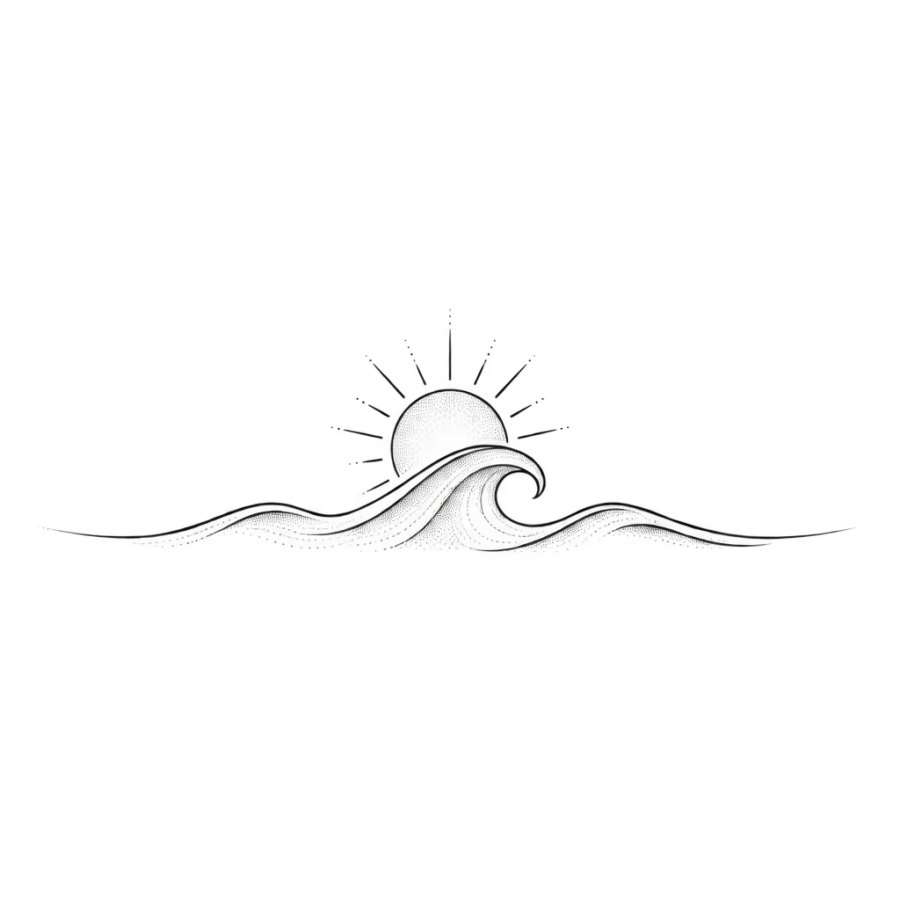
Wave tattoo design
Use this prompt
Wave tattoo design
Use this prompt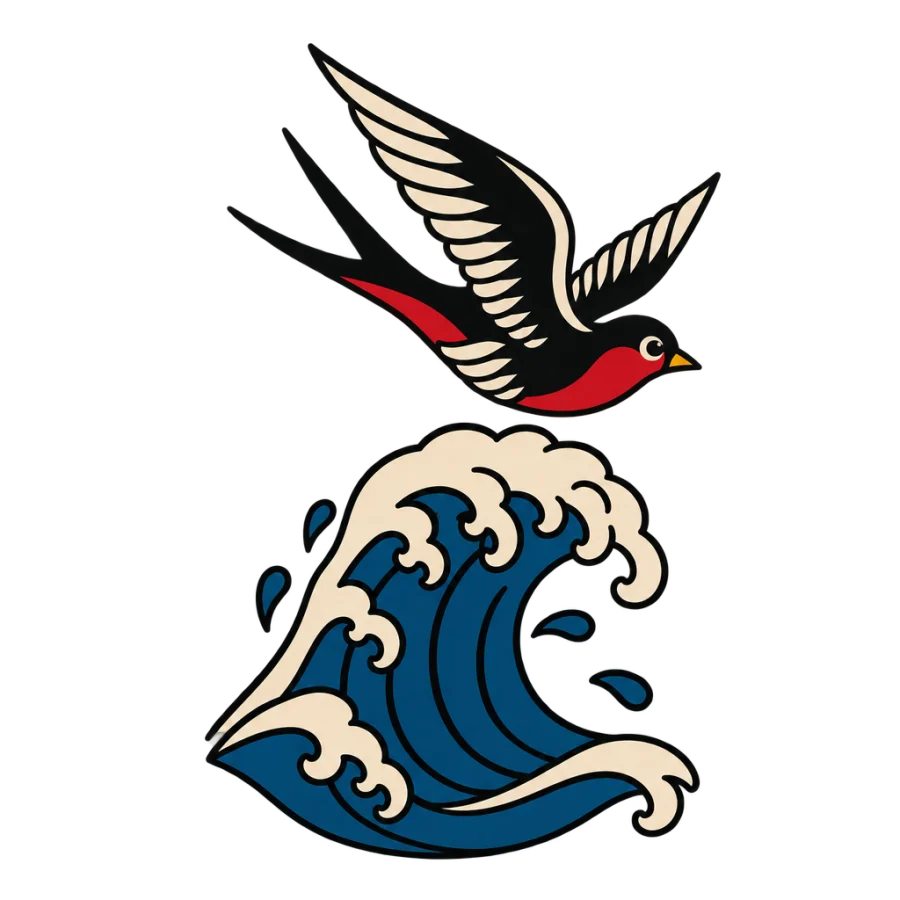
Wave tattoo design
Use this prompt
Wave tattoo design
Use this prompt
Wave tattoo design
Use this prompt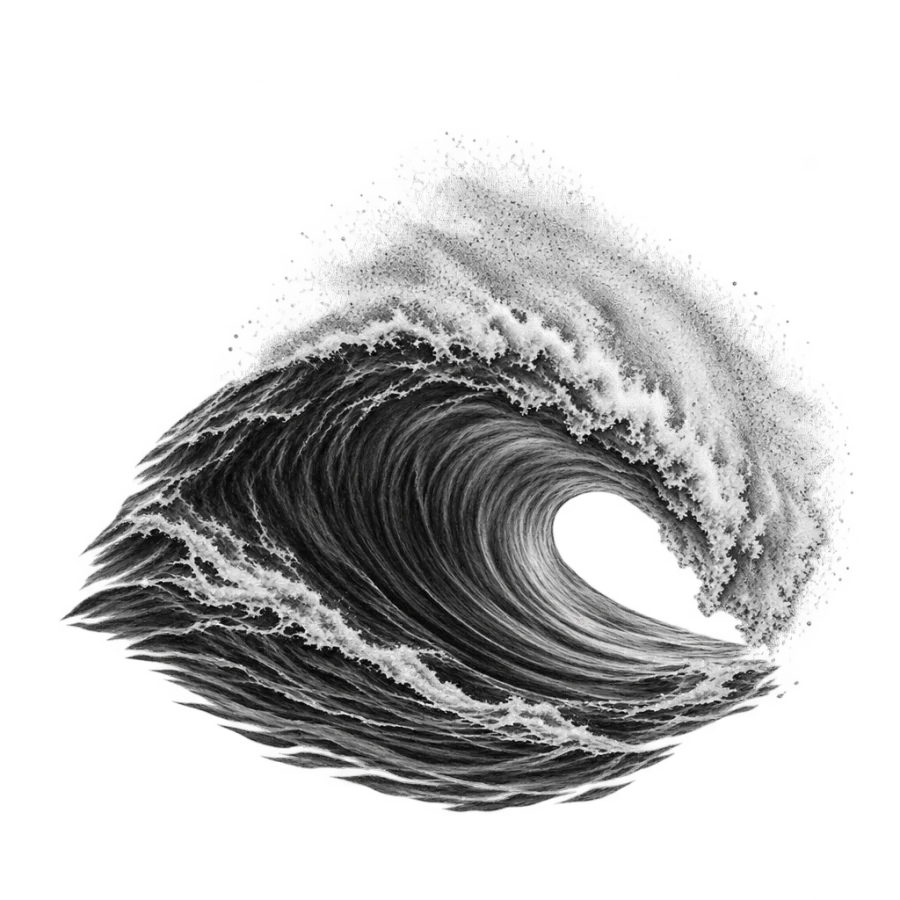
Wave tattoo design
Use this prompt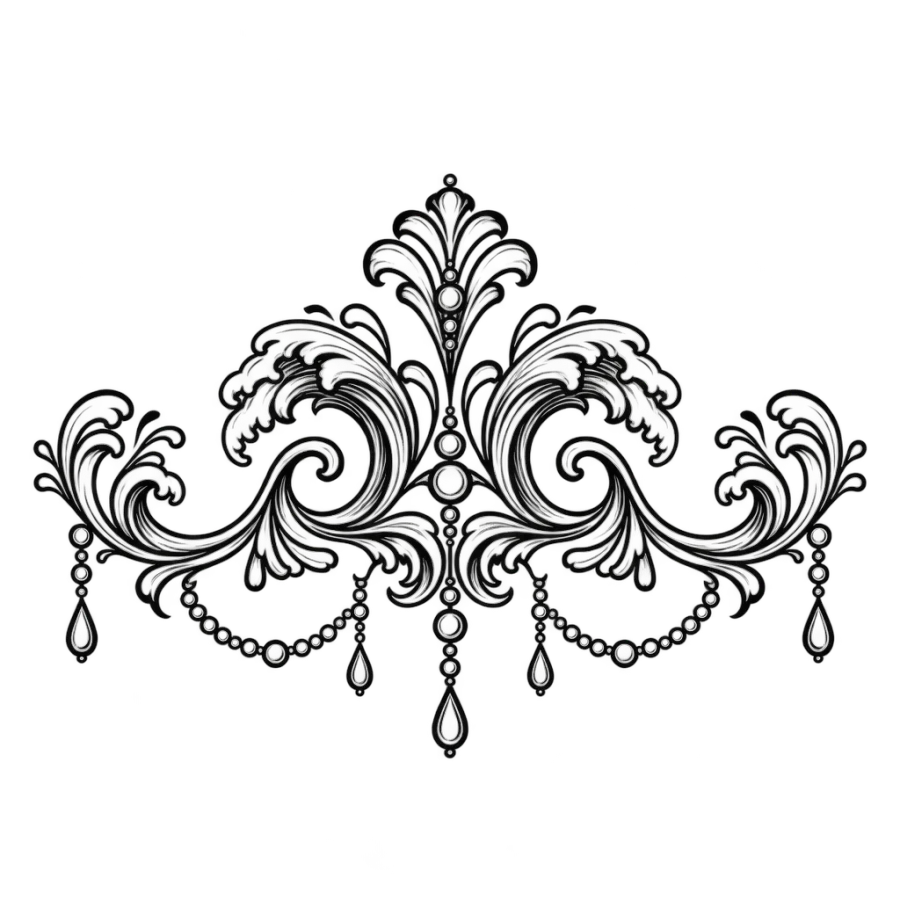
Wave tattoo design
Use this prompt
Wave tattoo design
Use this prompt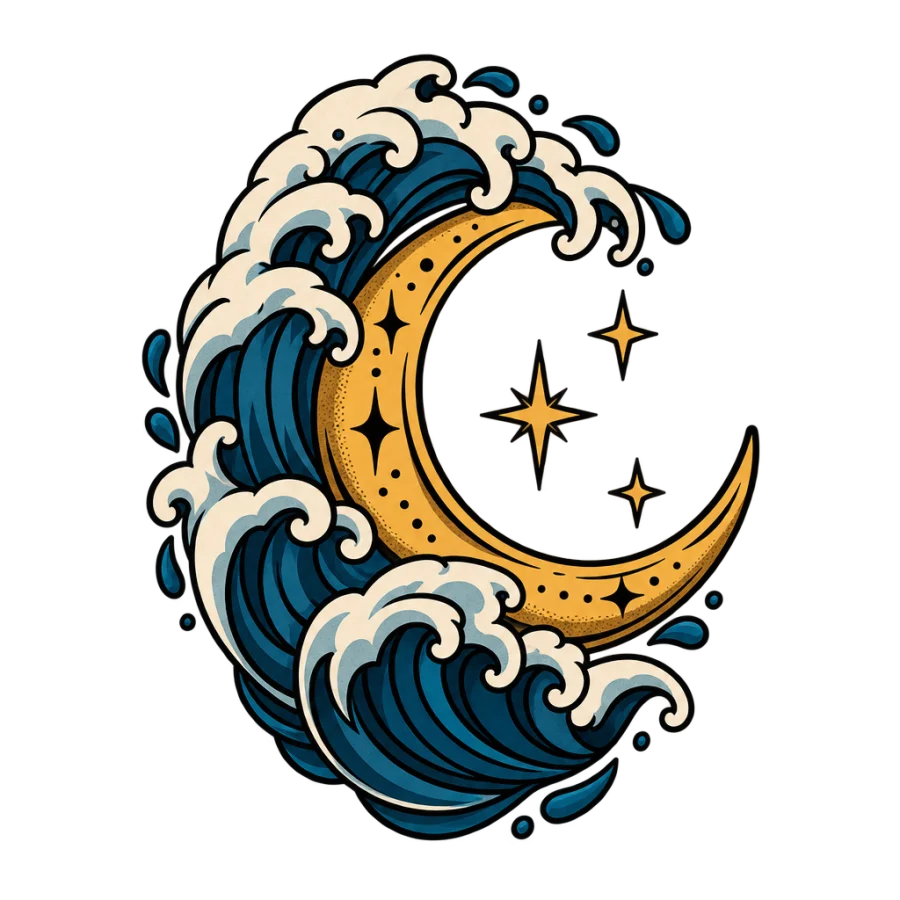
Wave tattoo design
Use this prompt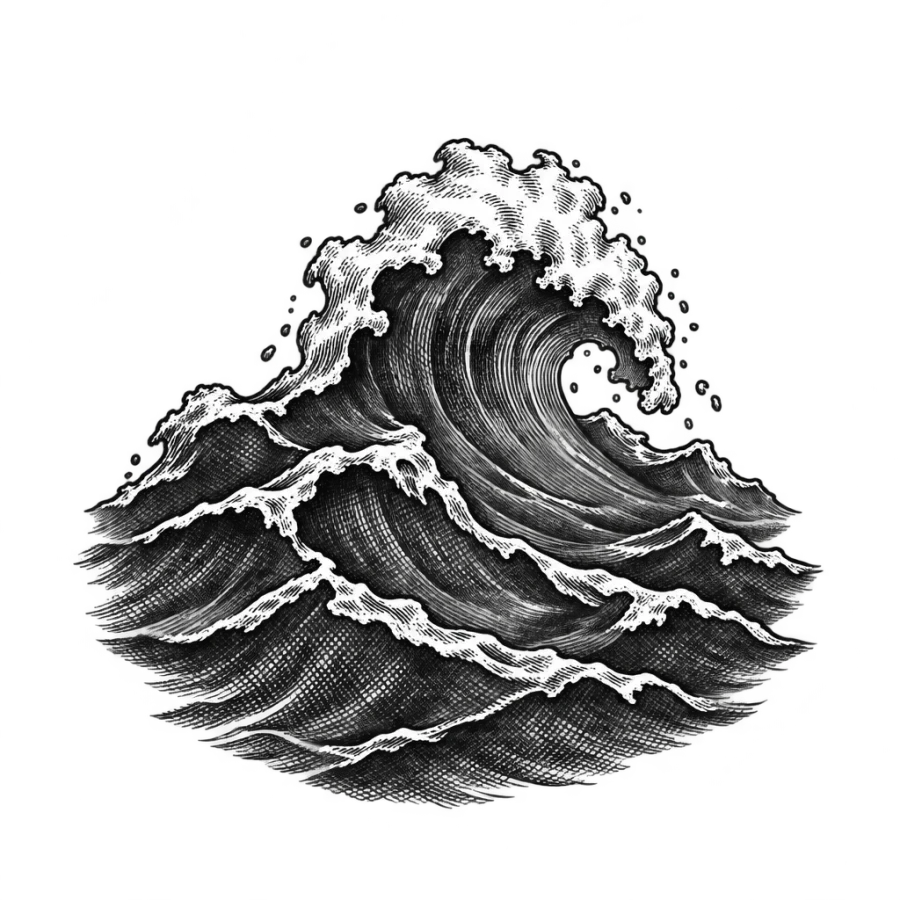
Wave tattoo design
Use this prompt
A breaking wave carved out of a solid black circle, negative space
Use this promptDescribe an idea of your own and get four designs back in about 20 seconds.
Open the generator
Questions people ask
What does a wave tattoo mean?
Most often the sea itself, a coast someone comes from or a sport they built their life around. The second reading is change, since a wave keeps its shape while everything inside it moves through. In Japanese sleeves water is background rather than symbol, holding the other elements together.
How small can a wave tattoo be?
A simplified wave of three or four curved lines reads clearly at 4 to 6 cm because there is nothing inside it to fill in. A Great Wave composition with foam claws and a curl needs 15 cm or more. The awkward size is 8 or 9 cm with full detail crammed in.
Can I copy the Great Wave for a tattoo?
Yes. Hokusai's print is from around 1831 and is long out of copyright, and adaptations of it are extremely common. Most artists will redraw it to fit the curve of your arm rather than trace the original, since a flat print does not sit correctly on a limb without adjustment.
Do wave tattoos age well?
Japanese style waves do, because they are built from spaced line groups and solid black. Keep the line spacing at 2 mm or more. Realistic water ages worst, since spray and transparency rely on light greys that flatten into a soft area within five to eight years.
How much does a wave tattoo cost?
A small three line wave is usually the shop minimum, around $120 to $180. A wave band wrapping the forearm runs $400 to $700 depending on width. A large Great Wave adaptation on the shoulder or thigh takes four to eight hours and commonly costs $700 to $900.