Star tattoo ideas, meaning and designs
A star is the smallest shape that still reads clearly on skin, which is why it turns up on wrists, fingers and elbows more than almost anything else.
- Pain level3 / 10 on the forearm
- Healing2 weeks on top
- Typical size1 to 10 cm (0.4 to 4 in)
- Studio cost$80 to $350

The nautical star is the one with history behind it. Five points, each split down the middle into a light half and a dark half, giving a faceted look borrowed from the compass rose on old charts. Sailors wore it as a sign they could find their way home, and it stayed standard flash in American shops through the whole twentieth century.
Everything else under the heading is newer and looser. Scattered small stars, a five pointed outline on the wrist, a constellation traced in dots with fine connecting lines. These are chosen for a person, a birth month or the look of the thing, and they need different handling from the traditional star because they carry so much less ink.
The nautical star, drawn properly
A nautical star is five points radiating from a center, with each point divided along its length so one side catches light and the other is in shadow. Traditional versions fill the shadow halves in solid black and the lit halves in a color or leave them bare. That alternation is the whole design, and it is what separates a nautical star from a plain five pointed star.
The traditional home for one is the elbow, or the web of skin between thumb and forefinger. Both are painful spots and both are places where the alternating halves stay legible because the design is graphic. Sailors and later punk and rockabilly scenes used it heavily, so it carries a period flavour that some people want and some people avoid.
Constellations, and how to keep them readable
A constellation is dots joined by hairline connectors, which is a harder tattoo than it looks. Each dot needs to be at least 1.5 to 2 mm across or it will spread into a fuzzy point and lose its edge within a few years. The connecting lines should be thinner than the dots so the stars stay the focus, usually laid with a single needle at very light pressure.
Get the shape right before you commit. Real constellations are lopsided and most stock designs tidy them into something symmetrical that does not match the sky. If it is for a birthday, ask for the actual star positions of that sign. The whole cluster usually wants 8 to 12 cm across on a forearm or spine to hold the spacing.
Rules for constellation work
- Dots at 1.5 to 2 mm minimum, larger for the brighter stars in the pattern
- Connecting lines thinner than the dots, laid light
- 8 to 12 cm across the whole cluster so the gaps survive
- Actual star positions, since stock designs tidy them into symmetry
Small stars, and how small is too small
A solid black five pointed star holds its shape down to about 8 mm because it is a filled shape with no internal detail. An outlined star needs to be bigger, roughly 15 mm, or the outline meets itself in the middle of each point and the star fills in. That is the single most common small tattoo failure and it happens within three to five years.
Scattered stars along the collarbone, up the forearm or behind the ear work well as a set if the sizes vary. A run of identical stars reads as a pattern. Mixed sizes, some solid and some outlined, reads as something someone chose. If you plan to add more over time, tell the artist now so they leave the composition open at one end.
Minimum sizes that stay sharp
- Solid five pointed star, 8 mm and up
- Outlined star, 15 mm and up, with a 1 mm line
- Nautical star with split points, 3 cm and up
- Star of David or any star with internal lines, 4 cm and up
Ageing, cover ups and what people regret
Solid stars are among the best aging tattoos there are. There is nothing inside them to blur. The trouble comes from placement and from period styles. The shooting star with a trailing swirl across the hip or lower back was everywhere in the early 2000s, and it is now one of the most common cover up requests artists see.
Finger stars fade fastest of all. The skin there sheds constantly and the ink sits over moving joints, so expect a touch up in two to four years and accept that the piece will never look as crisp as it did at a week old. If you want permanence in a small star, the outer forearm, the shoulder or the ankle bone side will all hold it far longer.
Star designs people ask for
- One small star per child, added along the forearm over the years
- Nautical star on the elbow in black and one color
- A birth constellation in dotwork down the spine
- Stars scattered across the collarbone in mixed sizes
- The north star with a long vertical ray, often paired with a compass
12 star tattoo designs, with the prompt behind each one
Every design below came out of AI Tattoo Lab. Tap one to load its prompt into the generator, then change a word and make it yours.
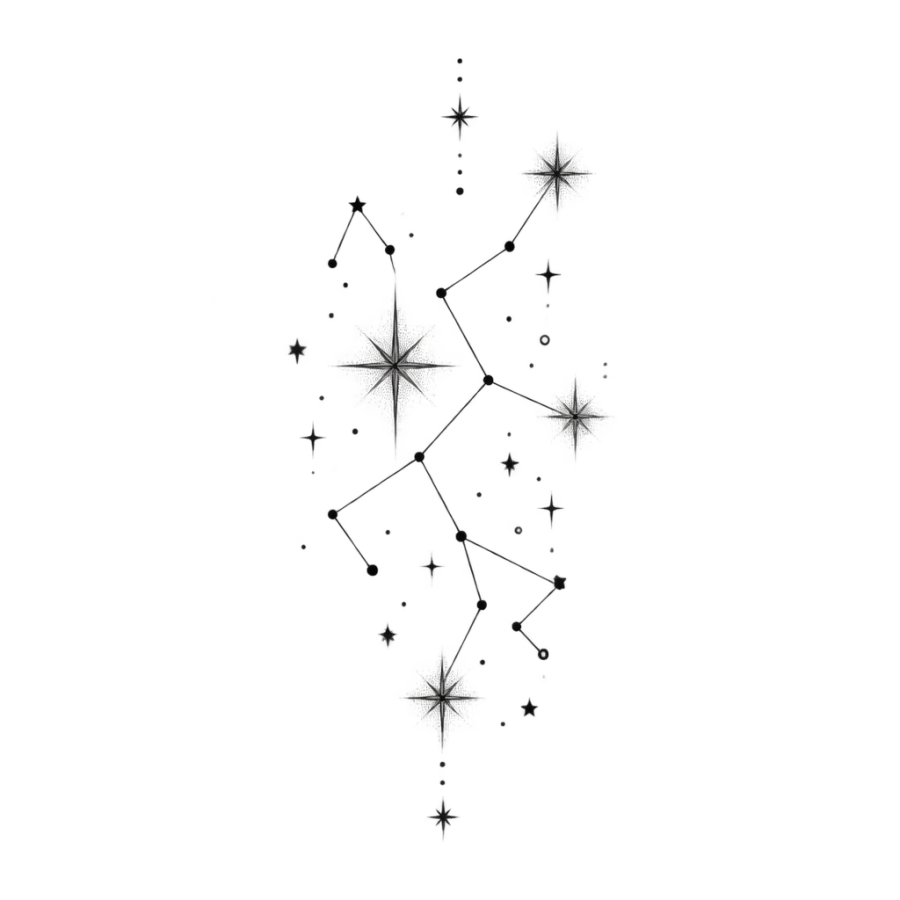
A scattered cluster of small stars joined by hairlines, fine line tattoo
Use this prompt
An eight point starburst in solid black with thin splits, blackwork
Use this prompt
A shooting star arcing through curling clouds and wind bars, irezumi
Use this prompt
A six point star with a soft fading halo, dotwork stippling only
Use this prompt
A seven pointed star inside two concentric circles, geometric line work
Use this prompt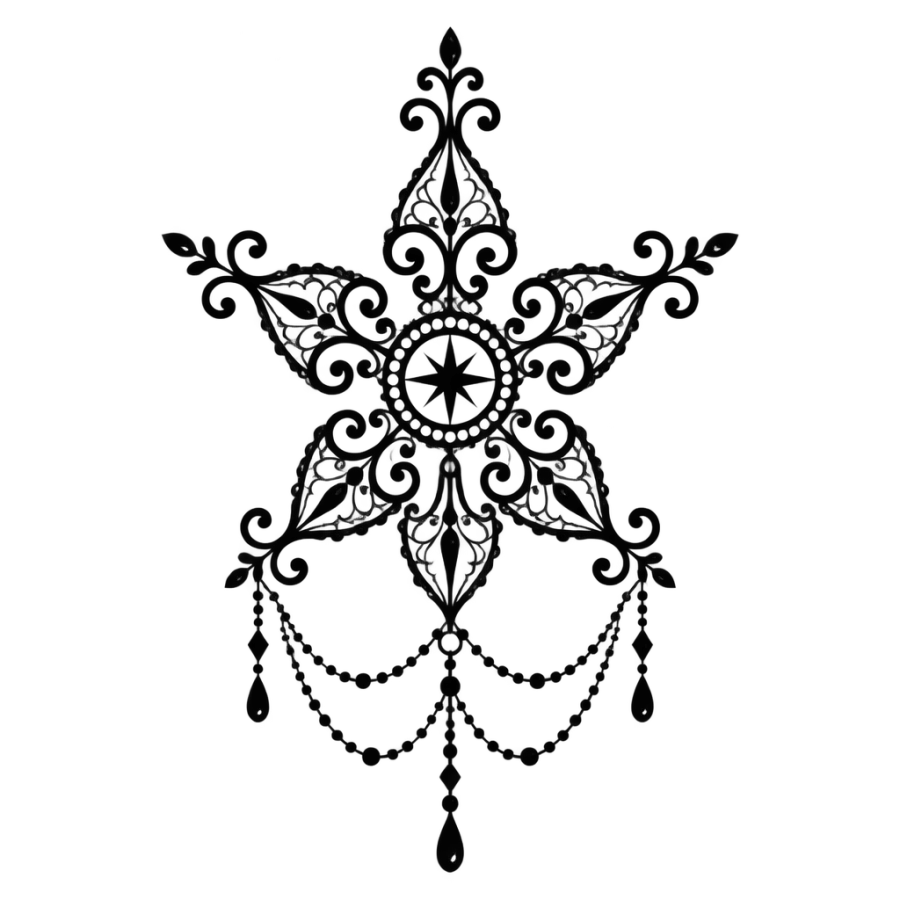
A lace star medallion with a beaded chain swag, ornamental filigree
Use this prompt
A falling star with a long curving trail in one continuous line
Use this prompt
A comet with a bright head and streaked tail, antique engraving style
Use this prompt
A bright star burning inside a nebula cloud, black and grey realism
Use this prompt
A star with pink and violet washes spraying behind it, watercolor tattoo
Use this prompt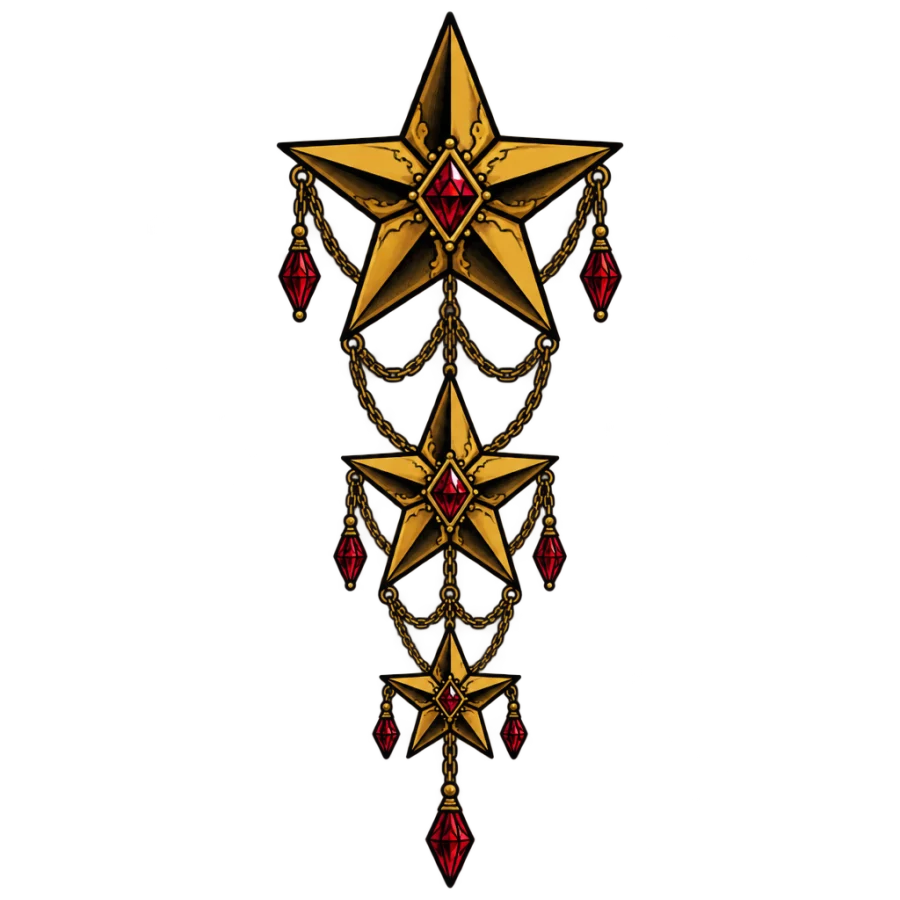
Three stacked stars linked by draping chains and gems, neo traditional
Use this promptDescribe an idea of your own and get four designs back in about 20 seconds.
Open the generator
Questions people ask
What does a star tattoo mean?
Guidance, usually. The nautical star came from sailors as a sign of finding the way home, and the north star carries the same idea in everyday speech. Constellation tattoos are generally about a specific person or birthday. Small scattered stars often stand for family members, one star each, added over time.
How small can a star tattoo be?
A solid black five pointed star holds down to about 8 mm. An outlined star needs roughly 15 mm, otherwise the lines meet in the points and it fills in solid within a few years. A nautical star with its split light and dark halves needs at least 3 cm to keep that pattern visible.
What is a nautical star tattoo?
A five pointed star where each point is split lengthwise into a light half and a dark half, taken from the compass rose on nautical charts. Sailors wore it for finding their way home. It later became common in punk and rockabilly circles, so it reads as a period design to many people.
How much does a small star tattoo cost?
Most studios charge a minimum of $80 to $150 regardless of how small the piece is, so a single star usually costs the minimum. A set of scattered stars or a constellation down the spine is typically $180 to $350 and takes under two hours. Add tip on top.
Do star tattoos on fingers last?
Not well. Finger skin renews quickly and sits over moving joints, so the ink breaks up faster than anywhere else on the body. Expect a touch up every two to four years and some permanent softening of the edges. The side of the wrist or the ankle holds a small star far longer.