Heart tattoo ideas, meaning and designs
There are three hearts in tattooing: the symbol, the organ and the sacred heart, and they belong to different histories that people often mix by accident.
- Pain level3 / 10 on the upper arm
- Healing2 weeks on the surface
- Typical size2 to 15 cm (1 to 6 in)
- Studio cost$80 to $800

The symbol is the simplest shape on any flash sheet and the least forgiving. Two lobes, a point, perfect symmetry. Every viewer can see instantly if one lobe is fatter than the other or if the whole thing leans, which is why artists spend longer placing a 3 cm heart stencil than a 15 cm flower.
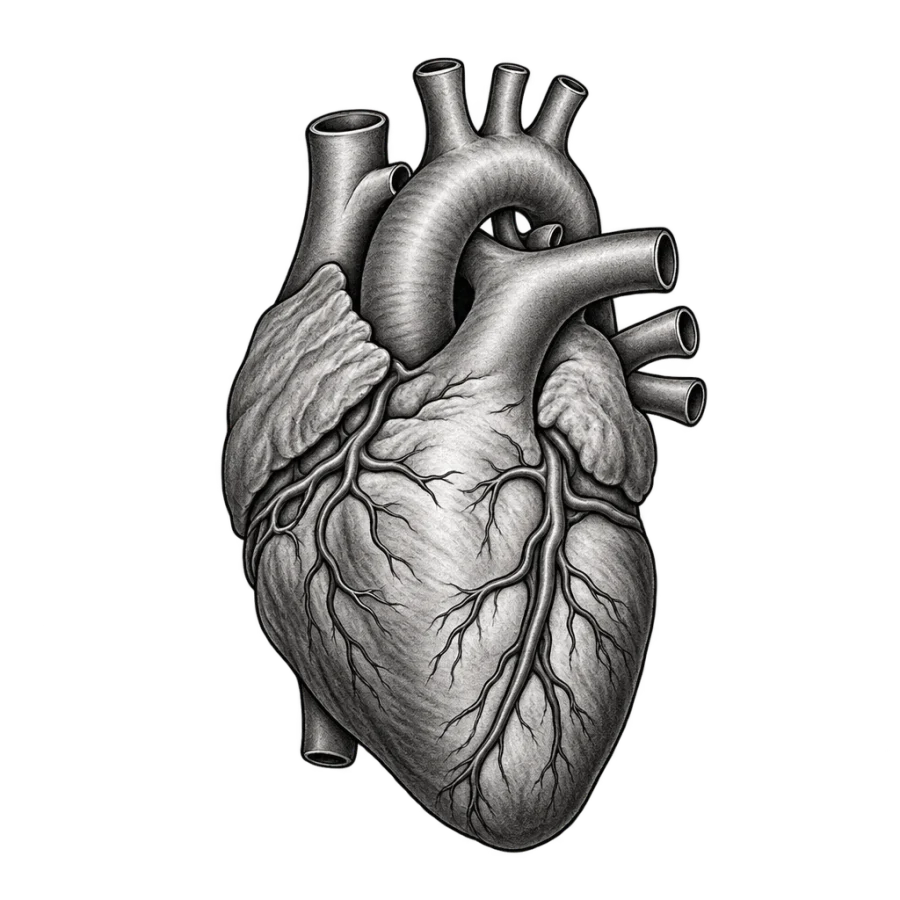
The anatomical heart is a different job entirely. It is asymmetric, lumpy, and defined by the great vessels crossing at the top: the aorta arching over the pulmonary trunk. Get that crossing right and the drawing reads as a real organ. Leave it out and you have a lumpy bag with tubes, which is what most small anatomical hearts turn into.
Getting a symmetrical shape onto an asymmetrical body
A lobed heart has a vertical axis, and bodies do not. On a forearm the axis should follow the line you see when your arm hangs relaxed, which is rarely the line of the bone. On the chest it has to account for the fact that the sternum curves and moves when you breathe. Good artists place the stencil, have you stand up, look at it from two meters away, and redraw it.
Size interacts with this. A 2 cm heart on a finger is almost pure outline and is forgiving, because there is nothing inside to go crooked. A 10 cm heart with internal shading is unforgiving, since any tilt in the highlight reads as a tilt in the whole shape. If you want a large symmetrical heart, the sternum and the center of the back are the two spots where a natural midline exists.
The anatomical heart, drawn properly
The organ sits mostly behind the sternum and tilts to the left, and it is about the size of a closed fist. In a drawing, the parts that make it legible are the aorta arching to the right and back, the pulmonary trunk crossing in front of it, the coronary arteries running in a groove across the surface, and the left ventricle being visibly thicker walled than the right.
This needs room. Ten centimeters is the practical floor, and 14 to 16 cm lets an artist put real detail into the vessels and the fat deposits along the coronary grooves. Below 8 cm the vessels merge and the whole thing turns into a blob with three stalks. If you want something small and anatomical, a simplified line drawing works far better than a shrunken realistic one.
What an anatomical heart needs to read
- The aorta arching over and behind the pulmonary trunk
- Coronary arteries following the grooves rather than drawn straight
- A left ventricle with a visibly thicker wall than the right
- Enough size that the vessels stay separate, so 10 cm at minimum
- A tilt to the left rather than sitting upright and centered
Red ink, and how small hearts age
A small solid red heart is one of the fastest fading tattoos there is. Red pigment lightens toward pink and can shift slightly orange over ten to fifteen years, and at 2 cm there is not much ink there to begin with. Adding a black outline is the single most useful thing you can do, since the shape survives even after the fill has gone soft.
Red is also the pigment most commonly linked to delayed reactions, where a patch becomes raised or itchy months or years after healing. It is uncommon and worth mentioning to your artist if you have reacted to anything before. Black and grey hearts, and hearts left as open outline with no fill, sidestep the issue.
Placement, and the name question
Small hearts suit the finger, the inner wrist, the ankle, behind the ear and the inner bicep. Larger ones sit well on the sternum, the outer upper arm and the front of the thigh. A heart directly over the actual organ is a common request and works, though the real heart sits nearer the center of the chest than most people place it.
Names in a banner are the most regretted element in tattooing, and hearts attract them more than any other design. Artists will usually suggest an empty scroll, a date, initials, or a handwritten word taken from something the person actually wrote. A parent's or a child's name is the exception most artists will tattoo without hesitation.
12 heart tattoo designs, with the prompt behind each one
Every design below came out of AI Tattoo Lab. Tap one to load its prompt into the generator, then change a word and make it yours.
Heart tattoo design
Use this prompt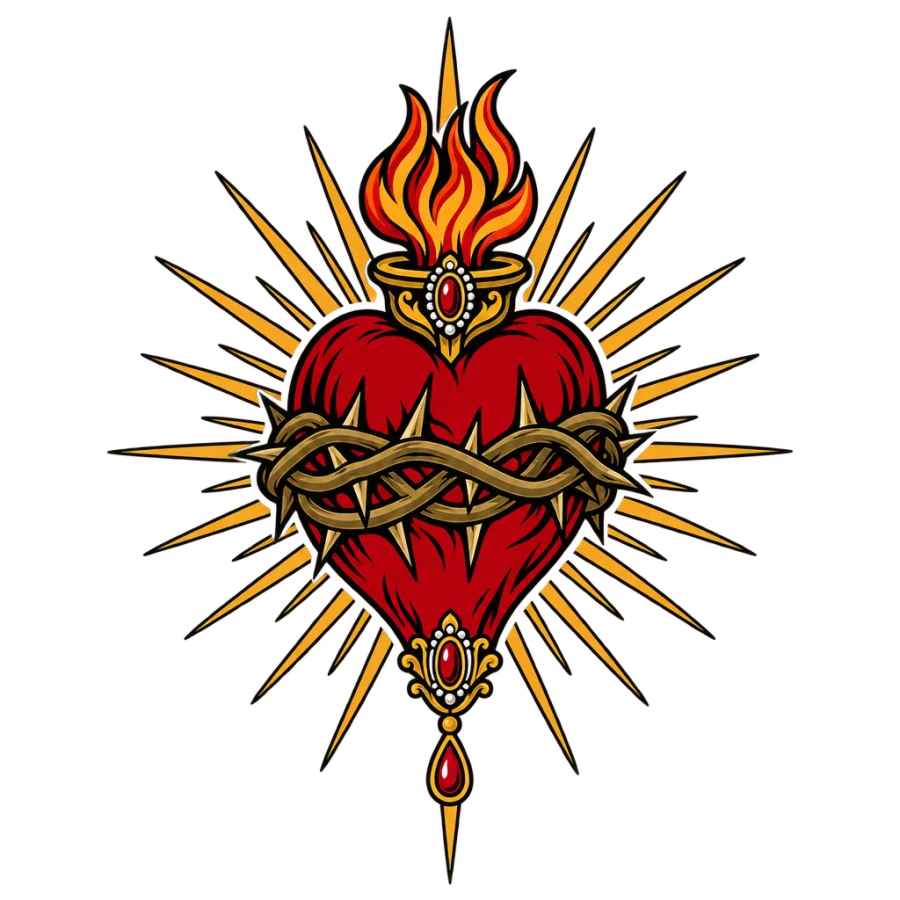
Heart tattoo design
Use this prompt
Heart tattoo design
Use this prompt
Heart tattoo design
Use this prompt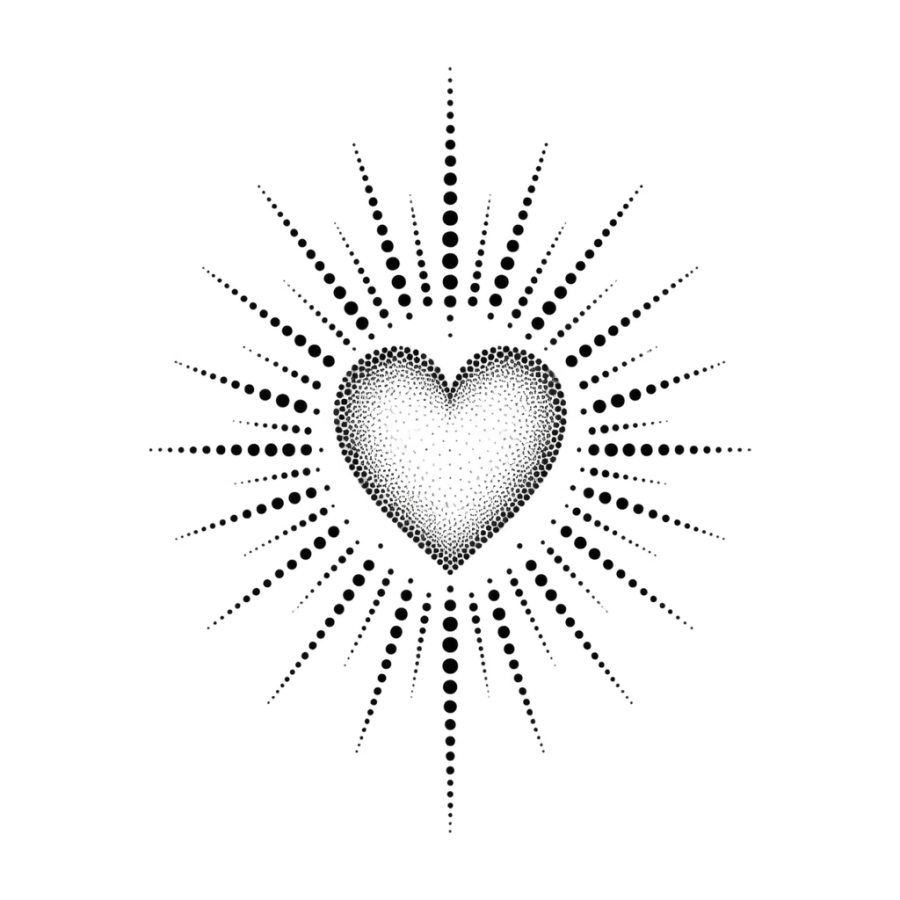
Heart tattoo design
Use this prompt
Heart tattoo design
Use this prompt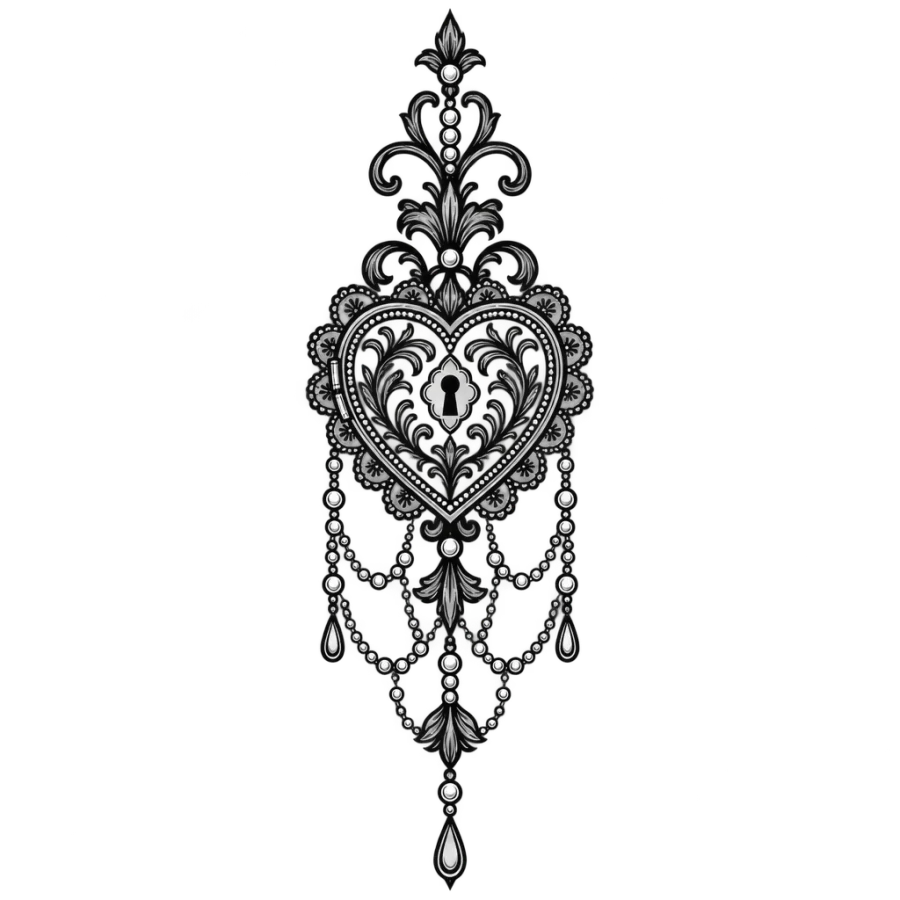
Heart tattoo design
Use this prompt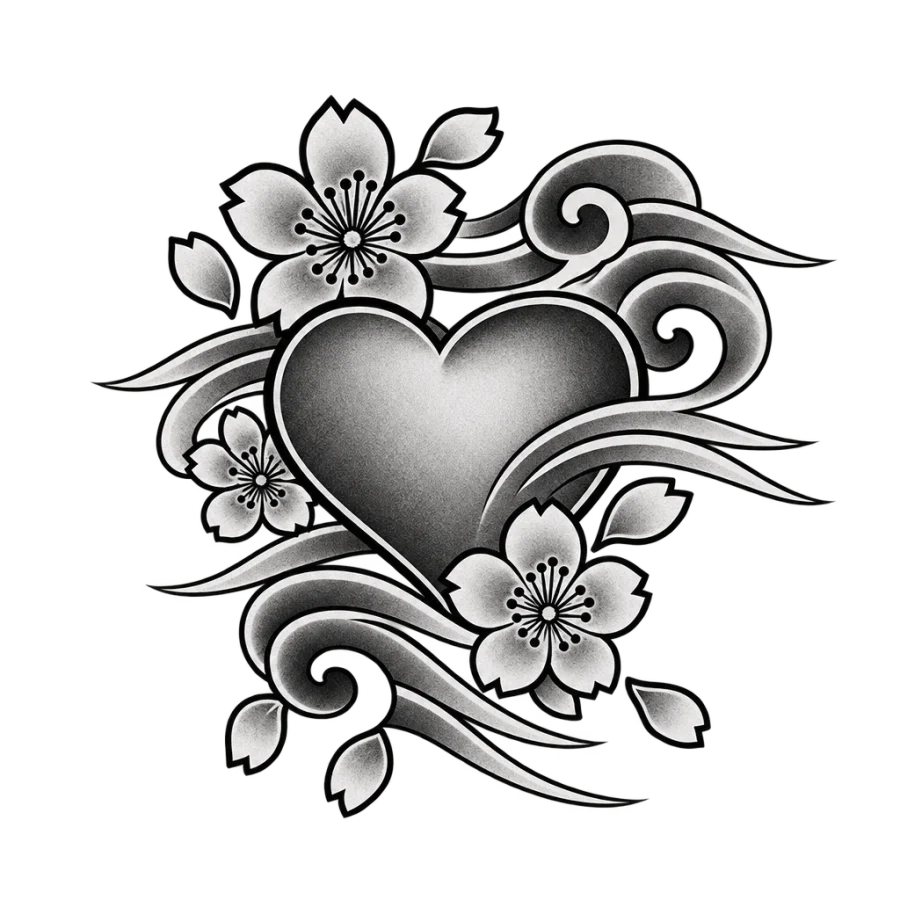
Heart tattoo design
Use this prompt
Heart tattoo design
Use this prompt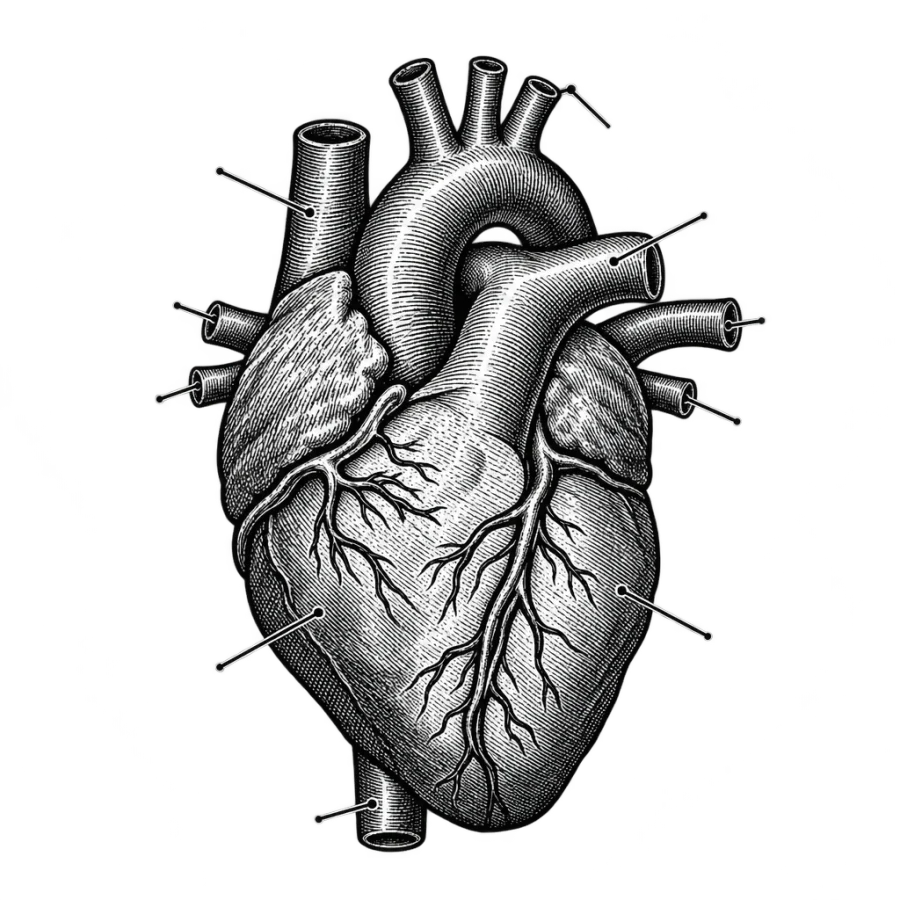
Heart tattoo design
Use this prompt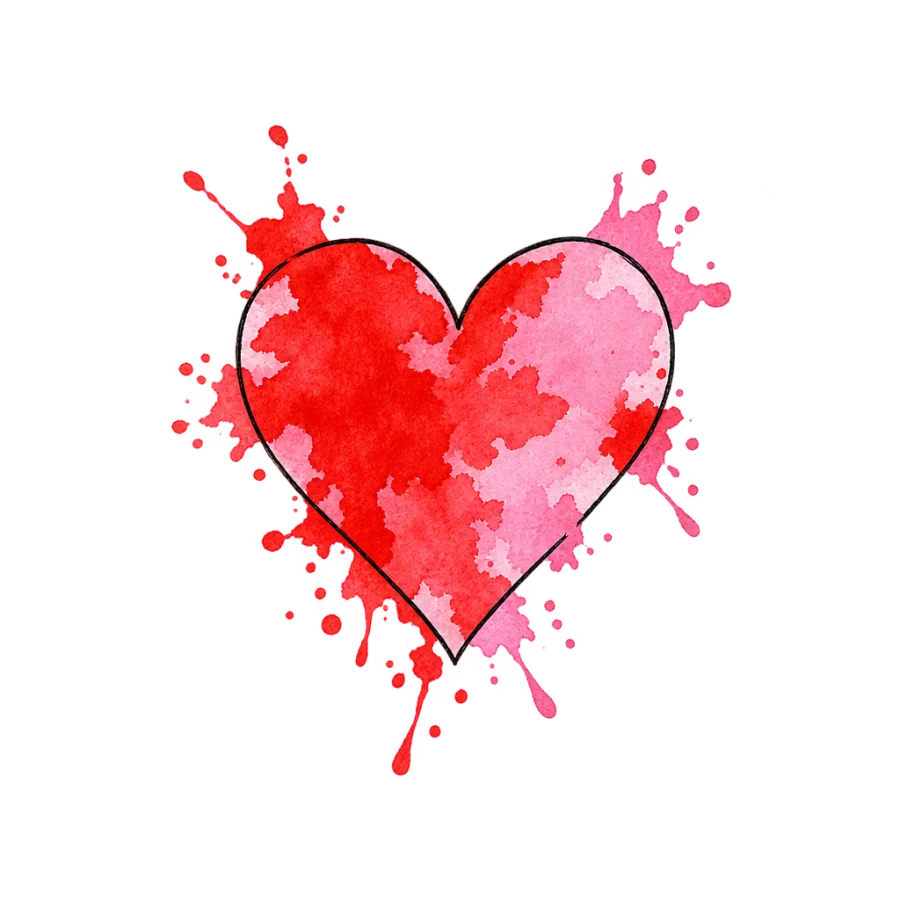
Heart tattoo design
Use this promptDescribe an idea of your own and get four designs back in about 20 seconds.
Open the generator
Questions people ask
What does a heart tattoo mean?
Love, in almost every version. The lobed symbol has carried that meaning in European art since the thirteenth century. An anatomical heart usually points at something more literal, survival or a medical history, and a Sacred Heart with thorns and flames is a specifically Catholic devotional image.
Does the heart shape come from the silphium plant?
Probably not. The story that the symbol comes from the seed pod of silphium, an ancient contraceptive plant, is repeated widely but rests on thin evidence. The shape appears as a symbol of love in European manuscripts from the thirteenth century, with no clear line back to the plant.
How big does an anatomical heart tattoo need to be?
About 10 cm at minimum, and 14 to 16 cm if you want detail in the vessels. Below 8 cm the aorta, pulmonary trunk and coronary arteries merge into a few stalks. For something small, a simplified line drawing reads far better than a shrunken realistic version.
Do red heart tattoos fade?
Yes, faster than black. Red lightens toward pink and can shift slightly orange over ten to fifteen years, and a small solid heart has little ink in it to start with. A black outline keeps the shape long after the fill softens, which is why traditional hearts still read decades later.
Should I tattoo my partner's name in a heart?
Names are the most commonly covered element in tattooing. Most artists suggest an empty banner, a date, initials, or a word in the person's own handwriting. Parents and children are the exception that artists rarely question, since those relationships do not end the same way.