Butterfly tattoo ideas, meaning and designs
Butterflies are tattooed more than almost any other subject, which is the exact reason the drawing has to be specific instead of generic.
- Pain level4 / 10 on the shoulder
- Healing2 to 3 weeks on the surface
- Typical size5 to 12 cm (2 to 5 in)
- Studio cost$120 to $500
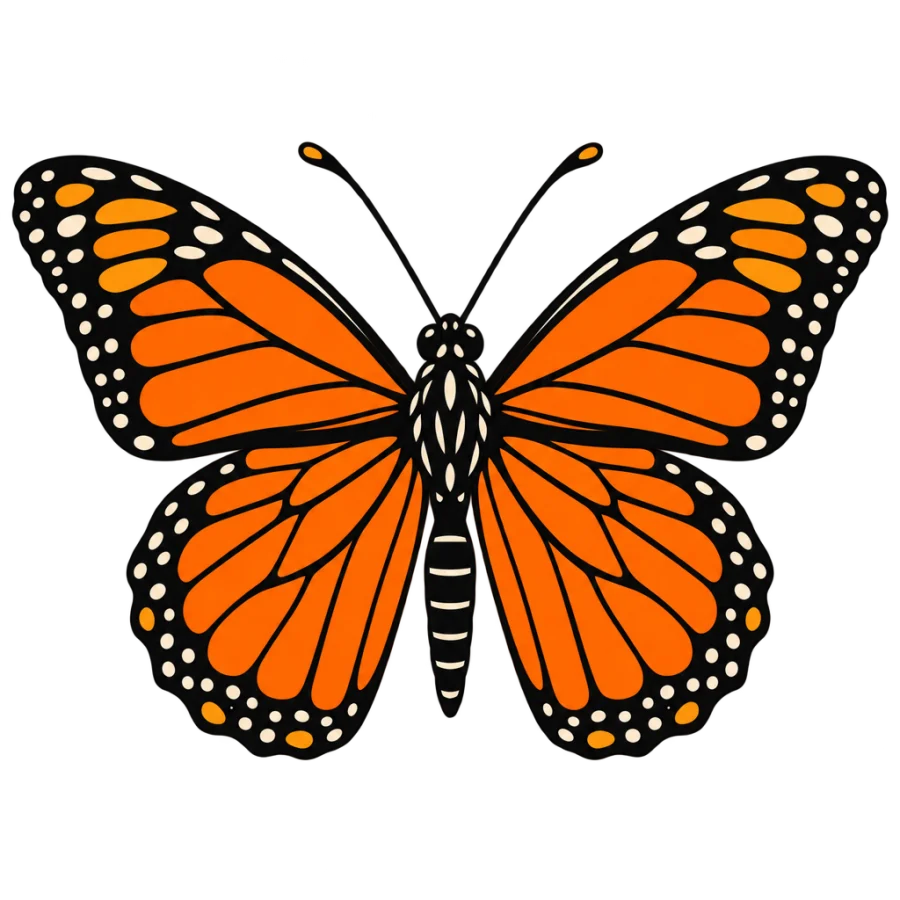
The gap between a butterfly that looks like clip art and one that looks like yours is usually species, posture and line weight. A monarch, a luna moth and a swallowtail are three different animals with three different wing shapes, and an artist working from a real reference has something to draw.
The other half of the job is symmetry. Wings that fail to mirror each other read as an error to everyone who sees them, including you, every morning for thirty years. Most artists build the stencil from a single wing, flip it, then push it out of true by a few degrees so it sits square on a shoulder that never was.
Where the butterfly meaning comes from
The transformation reading is real but recent, and older sources are stranger. Greek writers used one word, psyche, for the soul and for the butterfly, and Roman grave art sometimes shows a butterfly leaving the body. Japanese art uses the butterfly for a young woman, for a pair of lovers when two are drawn together, and sometimes for the dead. None of those meanings traveled as a set.
Two modern strands matter for tattoos. Butterflies got attached to memorial work through the monarch migration into central Mexico each autumn, and they get paired with a semicolon by people marking survival of a suicidal period. A butterfly also carries a decade of baggage in the West from the lower back pieces of the late 1990s, which were mocked for years and are being tattooed again without much apology.
Pick the species before you pick the style
Monarch wings are orange panels divided by thick black veins with a white dotted border, so they suit bold outlines and hold up small. Luna moths have long trailing tails and a pale green body, which reads beautifully in fine line and badly in heavy blackwork. Swallowtails have deep tail extensions and a busier pattern that needs room. Blue morphos are the hardest, because their color is structural rather than pigment and no ink reproduces that flash.
Posture is the other choice, and it changes the whole composition. Wings spread flat gives you a symmetrical, almost heraldic shape that suits a sternum or the center of the back. Wings folded up in profile gives you a narrow vertical shape that fits a forearm or an ankle. A three quarter view looks alive and is much harder to draw well, so ask to see the artist's healed work before committing to one.
What each style does with a butterfly
- Fine line keeps the wing cells as open outlines with a little stipple in the body, and needs at least 6 cm
- American traditional flattens the wings into three or four color panels inside a bold black outline
- Blackwork fills the wings solid and cuts the pattern out as negative space, which ages better than any other version
- Black and grey realism builds the scale texture in soft wash and wants 10 cm or more
- Ornamental treats the butterfly as a symmetrical motif and hangs beads, lace or mandala work off it
Sizing, and the detail that closes up first
Below about 4 cm a butterfly loses its wing veins, and the panels between them merge into a shape with a dark edge. Antennae are the other casualty. Drawn thinner than the artist's finest line they drop out during healing or spread into a fuzzy tick. Most artists thicken antennae deliberately and taper them, which looks heavier on the stencil and correct on skin a year later.
A monarch needs roughly 6 cm across the spread wings before the vein pattern survives. A realistic swallowtail with visible scale texture needs 10 to 14 cm. If you want a butterfly at 3 cm, ask for a silhouette or a heavily simplified version with four or five internal lines, not a shrunken copy of a detailed drawing.
Placement, aging and the common regrets
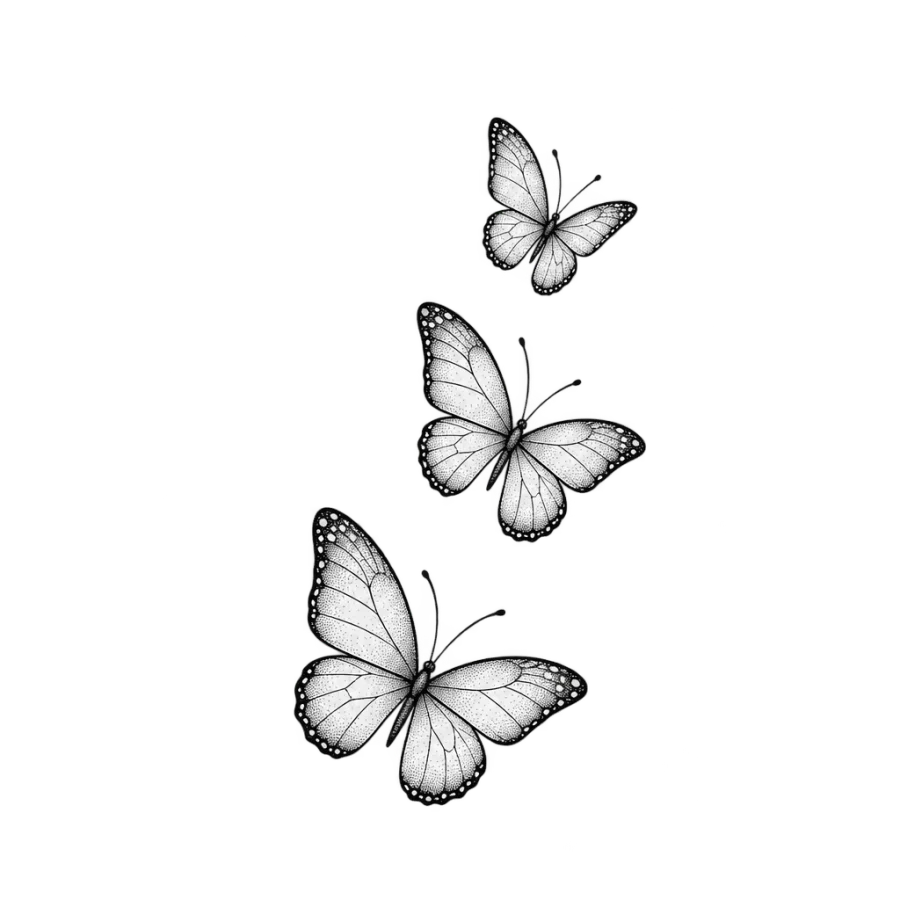
The spread shape is wider than it is tall, so it sits naturally on the sternum, between the shoulder blades, on the back of the shoulder, or across the top of a foot. The folded profile shape suits the forearm, the outer ankle and the ribs. A vertical line of three or four butterflies at decreasing sizes along the spine is a common request and works because it follows the body instead of fighting it.
What people regret is mostly scale and color. Tiny hyper detailed butterflies on the ribs and the fingers blur within a few years because the skin there moves constantly. White ink highlights on the wings yellow and disappear. The other regret is a butterfly floating alone on an upper arm with no relationship to anything, which becomes awkward the moment you add a second tattoo nearby.
Decisions that pay off at year ten
- At least 2 mm of clear skin between any two internal wing lines
- Solid black or saturated color in the wing panels, never a light grey wash
- Antennae drawn at full line weight with a taper, never hairline
- A placement with low friction, so avoid the inner wrist and the side of the finger
- Daily SPF 30 once healed, because orange and yellow fade fastest of all
12 butterfly tattoo designs, with the prompt behind each one
Every design below came out of AI Tattoo Lab. Tap one to load its prompt into the generator, then change a word and make it yours.
Butterfly tattoo design
Use this prompt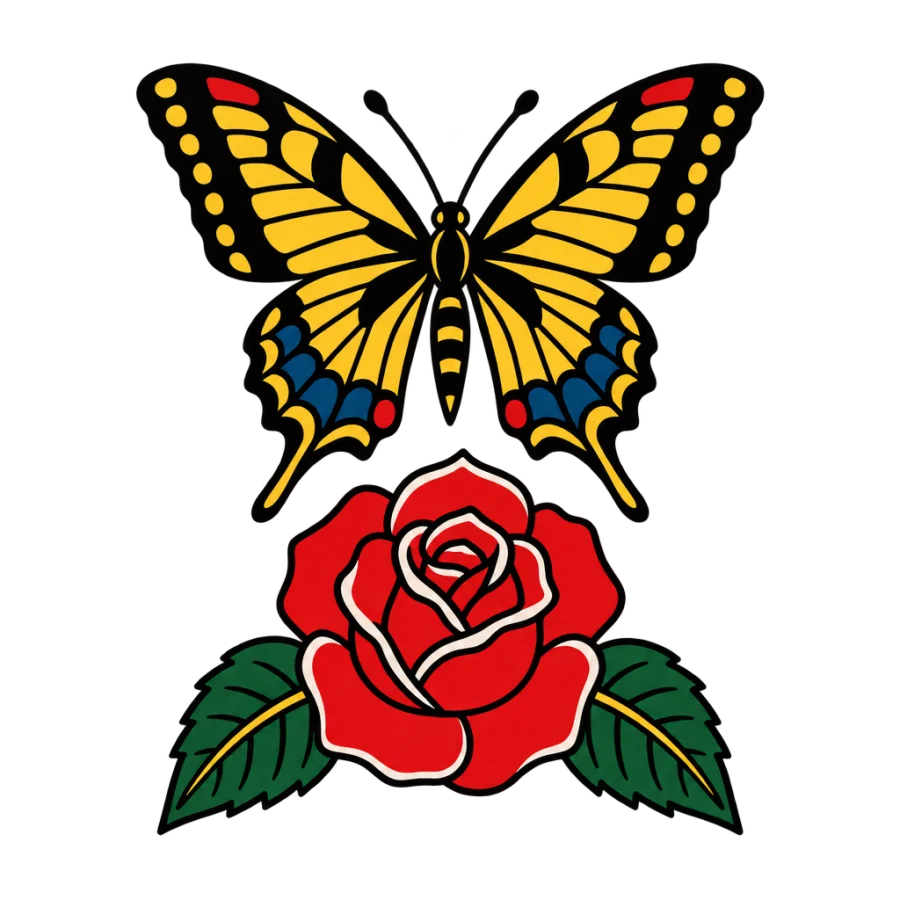
Butterfly tattoo design
Use this prompt
Butterfly tattoo design
Use this prompt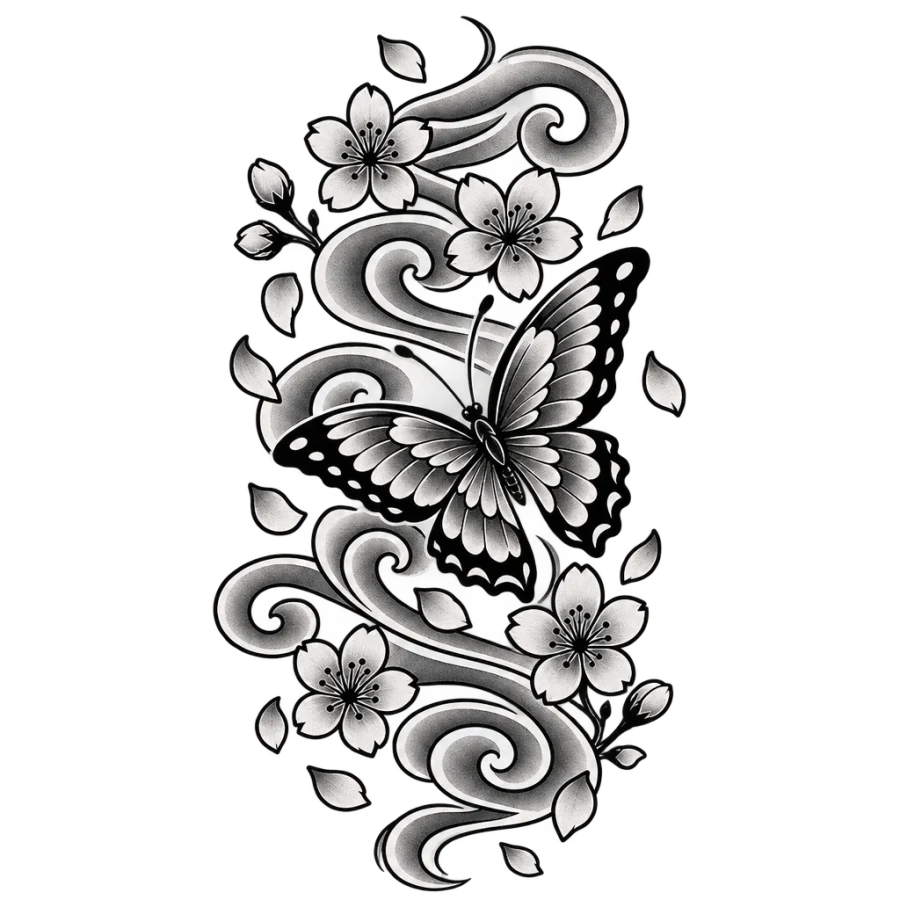
Butterfly tattoo design
Use this prompt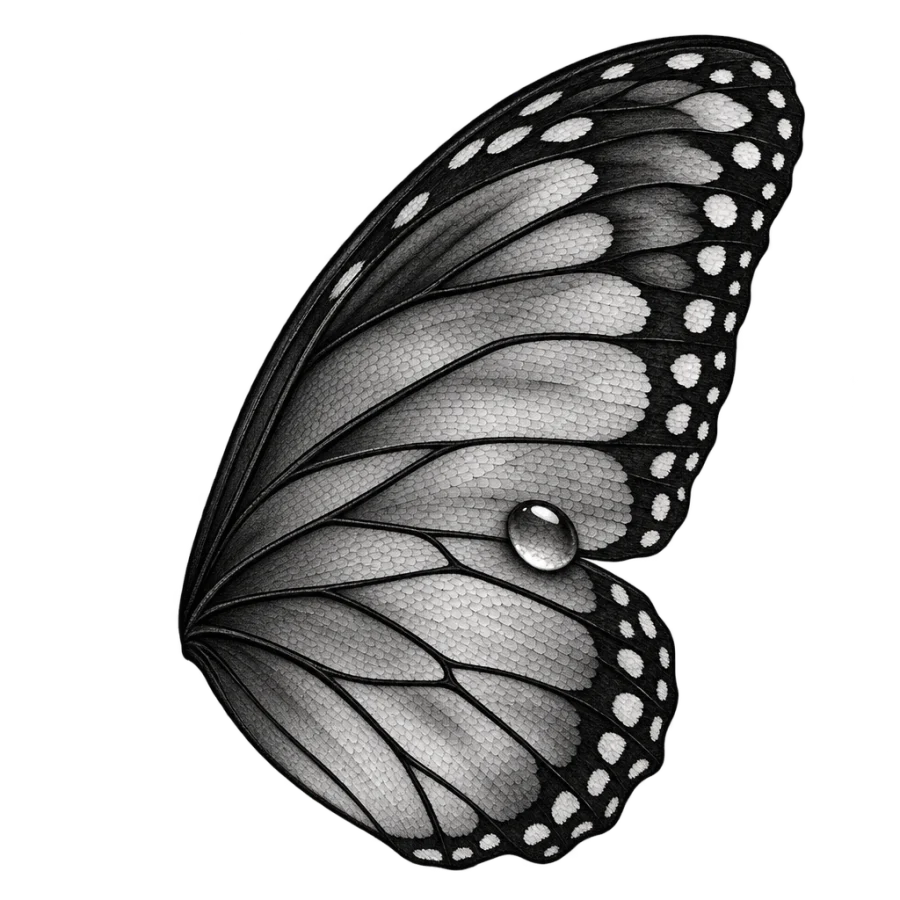
Butterfly tattoo design
Use this prompt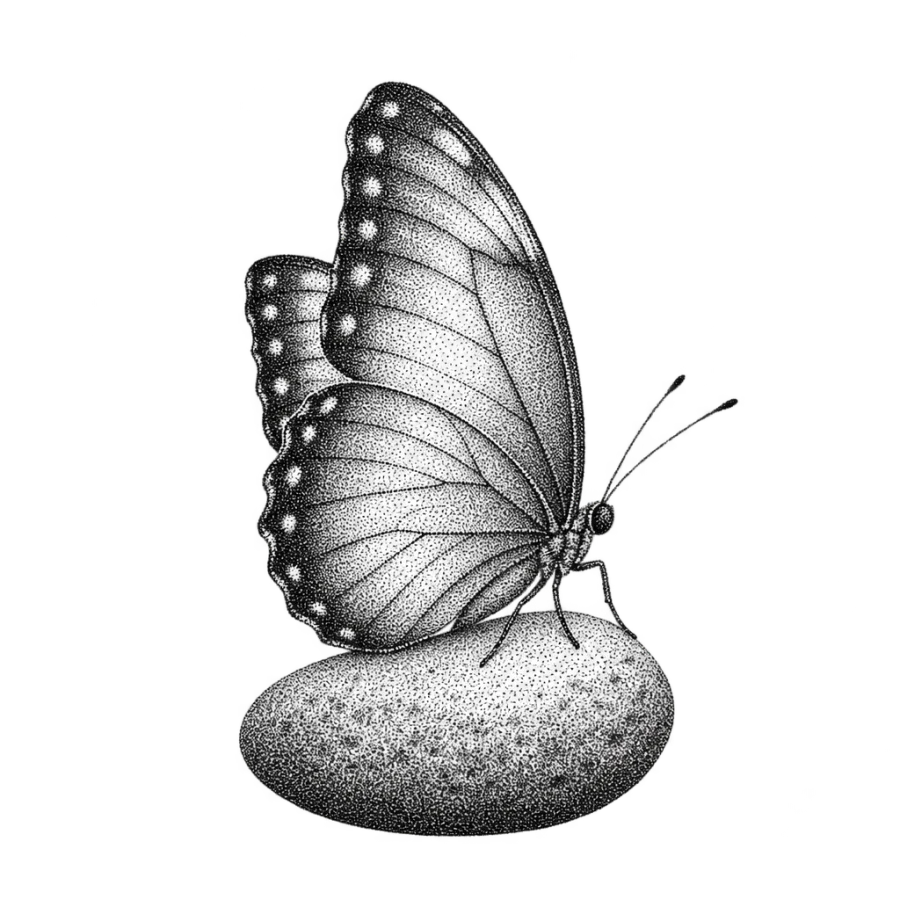
Butterfly tattoo design
Use this prompt
Butterfly tattoo design
Use this prompt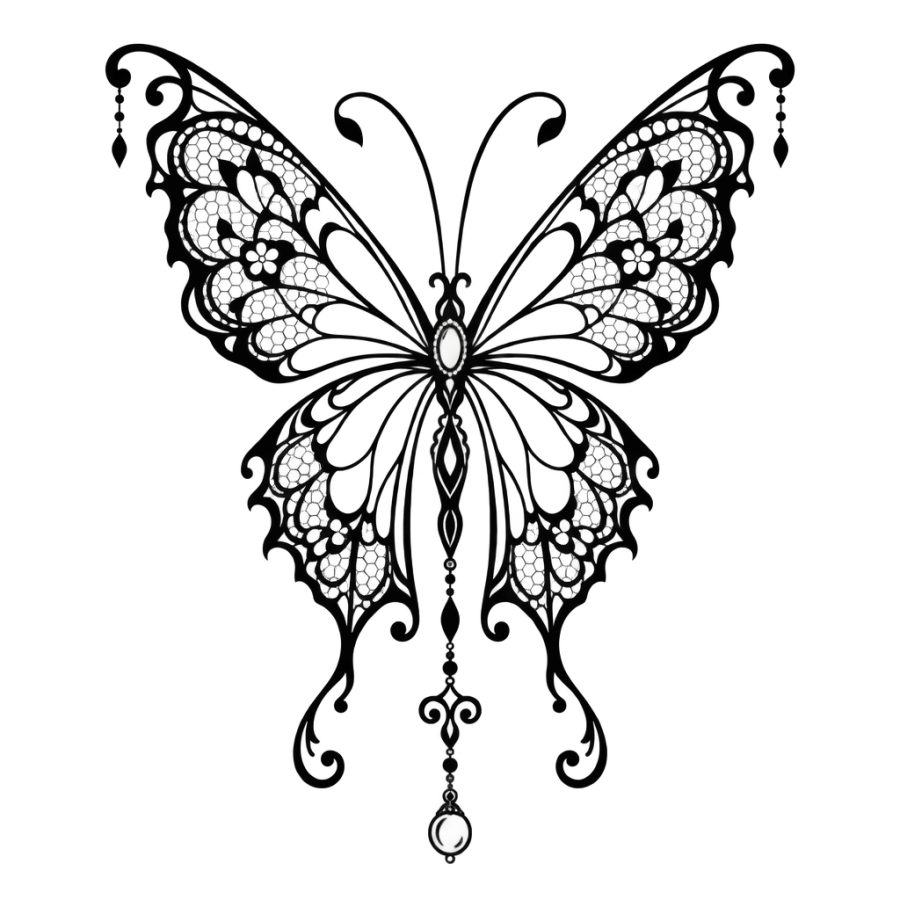
Butterfly tattoo design
Use this prompt
Butterfly tattoo design
Use this prompt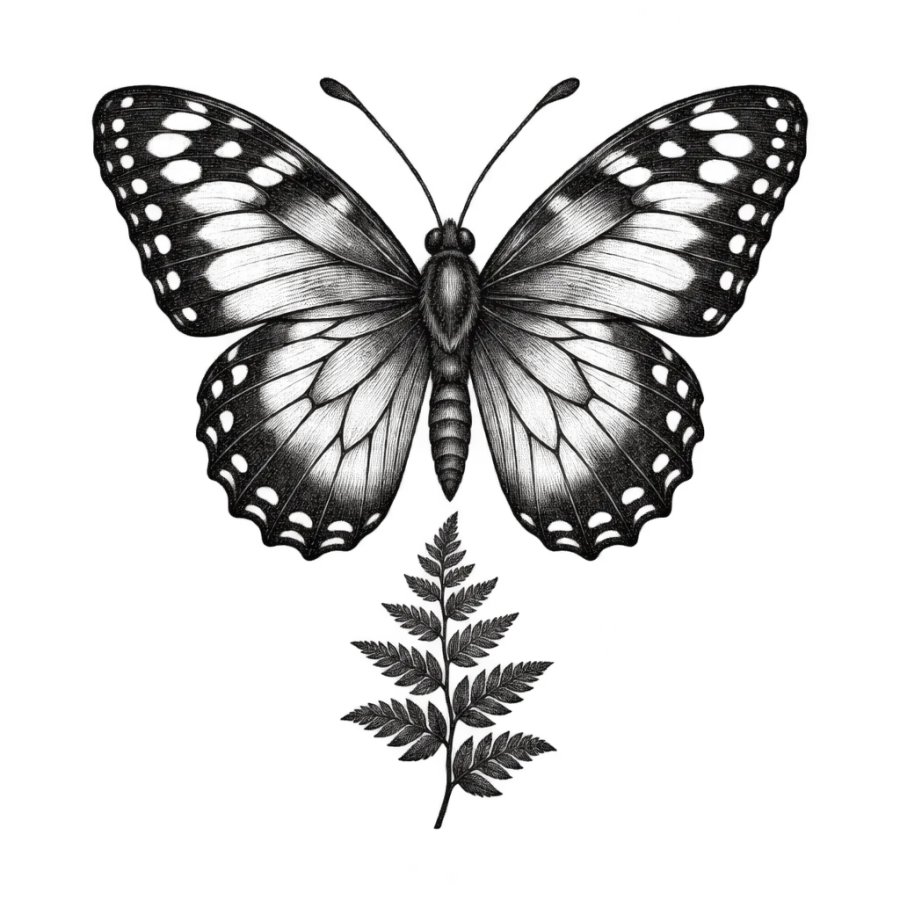
Butterfly tattoo design
Use this prompt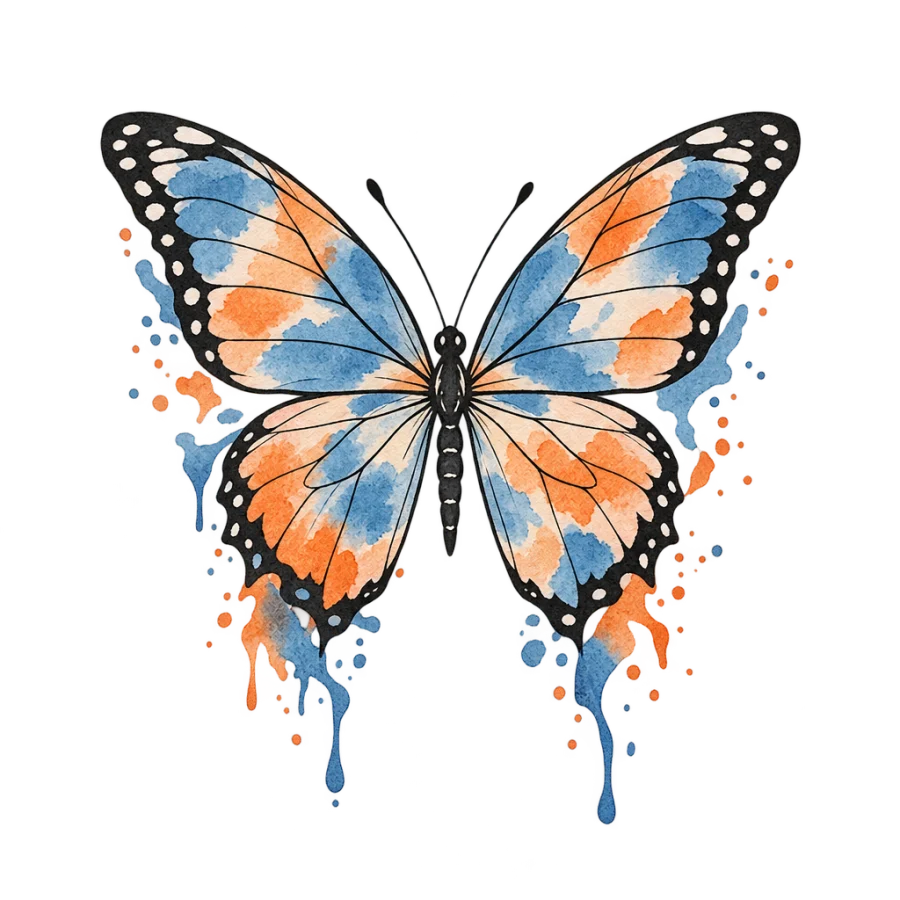
Butterfly tattoo design
Use this promptDescribe an idea of your own and get four designs back in about 20 seconds.
Open the generator
Questions people ask
What does a butterfly tattoo mean?
Most commonly transformation, and often coming through a hard period. Older traditions add the soul, from the Greek word psyche, and in Mexico monarchs are tied to the dead returning. The color based meanings you see online were made up recently and carry no traditional weight.
How small can a butterfly tattoo be?
About 4 cm if the design is simplified, and 6 cm before wing veins survive healing. A detailed realistic butterfly wants 10 cm or more. Anything smaller works only as a silhouette with four or five internal lines, and the antennae still need to be drawn at full weight.
Where do butterfly tattoos look best?
Spread wings suit the sternum, the upper back and the back of the shoulder, because the shape is wide and symmetrical and those areas are flat. A folded wing profile suits the forearm, the ribs or the outer ankle. Skip the inner wrist and fingers if you want the detail to last.
Do butterfly tattoos fade badly?
Color ones fade faster than most, since orange and yellow are the least stable pigments and butterflies use a lot of both. Blackwork and dotwork versions hold up almost indefinitely. Sunscreen after healing is the single biggest factor, followed by keeping internal lines at least 2 mm apart.
Can I bring an AI butterfly design to a tattoo artist?
Yes, as a reference. Generate the design, download the stencil, then take it to a licensed artist who will correct the wing symmetry by eye, thicken anything too fine to hold, and fit the shape to your anatomy. A generator cannot judge how your skin takes a thin line.