Angel wings tattoo ideas and meaning
Most angel wings tattoos are memorials, and the two things that decide whether one looks good in ten years are size and symmetry.
- Pain level6 / 10 over the spine
- Healing3 to 4 weeks on top
- Typical size5 to 40 cm (2 to 16 in)
- Studio cost$200 to $2,000
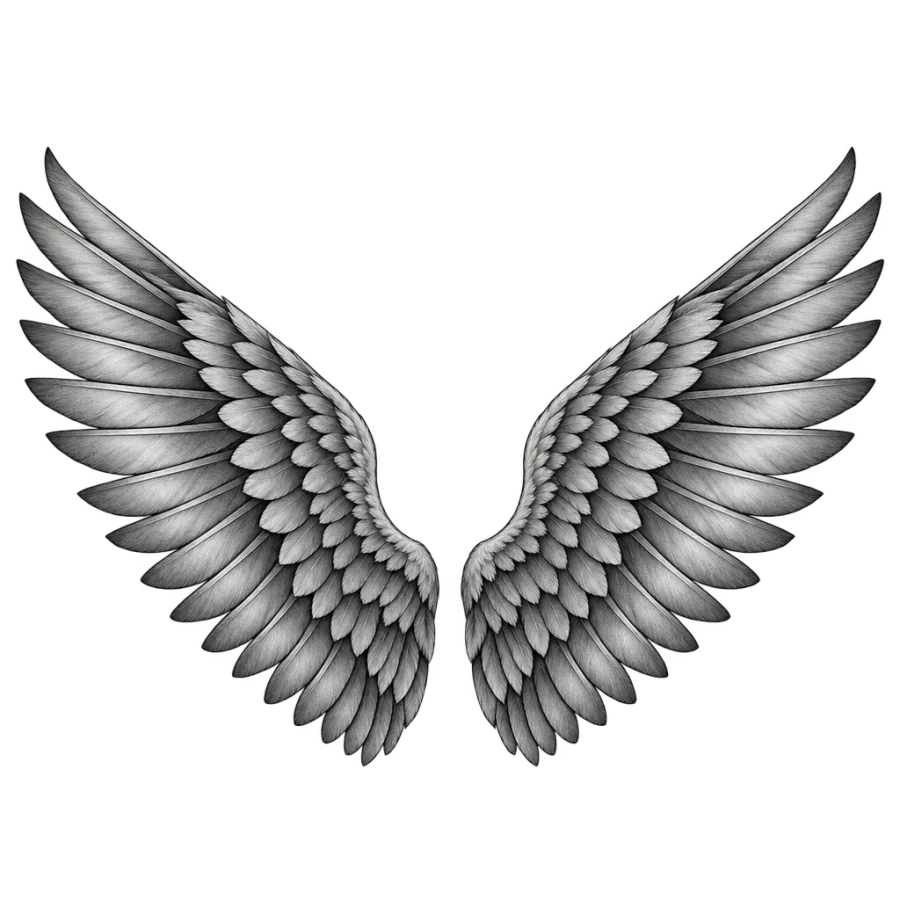
Winged figures in Western art run back through Christian angels to the Greek Nike and the Roman Victory, always drawn with the wings of a large bird. That is why almost every angel wing tattoo uses the same structure: short covert feathers near the shoulder joint, longer secondaries below them, and a row of long primaries sweeping out at the tip.
The usual reason people get them is a death. A pair of wings with a name and two dates, or a single wing on the shoulder for a parent, is one of the most common memorial pieces artists are asked for. A smaller group choose wings for the guardian angel idea, meaning something watching over them rather than someone they lost.
How a wing is built, and why symmetry is hard
A convincing wing has three feather zones. Small covert feathers overlap in rows near the joint, secondaries sit under them at medium length, and the primaries are the long ones that form the outer edge. Getting the primaries long enough is what makes a drawing read as a wing rather than a leaf.
Symmetry across the back is genuinely difficult. Your shoulder blades are not mirror images, your spine has a slight curve, and skin sits differently on each side. Good artists stencil one wing, flip it, then adjust the second by hand while you stand naturally. Ask to see both stencils on while you are standing, not sitting, because posture changes how the pair lines up.
Ask your artist about these
- Where the top of each wing sits against your shoulder blades
- Whether the piece is checked standing up as well as leaning forward
- How long the primary feathers run against the full wing height
- Whether the wings meet at the spine or leave a gap for lettering
Size, and what closes up when you go small
A realistic pair of wings across the upper back needs each wing at about 25 to 40 cm tall. That gives the artist room to separate three feather layers with real shadow between them. Under 15 cm per wing the covert rows start merging into a grey block and after five or six years you have a pair of soft shapes with no feather structure left.
Small wings still work, they just have to be drawn differently. At 4 to 6 cm, behind the ear or on the wrist, the design should be a line drawing with maybe seven or nine feathers per wing and clear skin between each one. Anything that tries to show feather texture at that scale is going to fill in. A solid black silhouette wing at 5 cm also holds well.
Sizes and what each one gives you
- 4 to 6 cm, line drawing with individual feathers spaced 1.5 mm apart
- 10 to 15 cm, stylized wings on the forearm, chest or ribs
- 20 to 30 cm per wing, the standard upper back memorial pair
- 35 to 45 cm per wing, full back with feather realism and a name between them
Placements that suit a pair of wings
The upper back is the obvious home because it matches where wings would attach, and the shoulder blades give the artist two natural anchor points. It is also a comfortable place to sit through a long session, apart from directly over the spine, where the needle on bone is sharp enough that most people ask for a break.
Other spots change the design. A single wing down the outer forearm works at 15 to 20 cm and reads well because the arm is already wing shaped. Wings on the ribs hurt considerably more and shift when you breathe, so the artist has to work in short passes. Behind the ear and on the wrist, keep it small, simple and accept it as a symbol.
Names, dates and the things people regret
If a name goes between the wings, size the lettering for legibility over time. Letters under about 8 mm tall in a script face will close up in the counters, the enclosed spaces inside letters like a, e and o, within five to ten years. Simple serif or clean script at 12 mm or more stays readable. Dates in full digits hold better than tiny roman numerals.
The regret people mention most is scale. Wings sized to look modest on the day often look undersized against the back once healed, because the back is a large area and the eye reads the piece relative to it. The other one is adding a halo, a cross and a banner to a design that was already complete, which crowds the composition and makes a cover up much harder later.
Variations artists get asked for
- One wing on the shoulder blade, with the plan to add the second later
- Wings with a name and two dates in the gap over the spine
- Baby wings for an infant loss, usually 8 to 12 cm on the forearm
- Wings drawn half feathered and half dissolving into birds
- A wing paired with a broken or scarred wing, one either side of the spine
12 angel wings tattoo designs, with the prompt behind each one
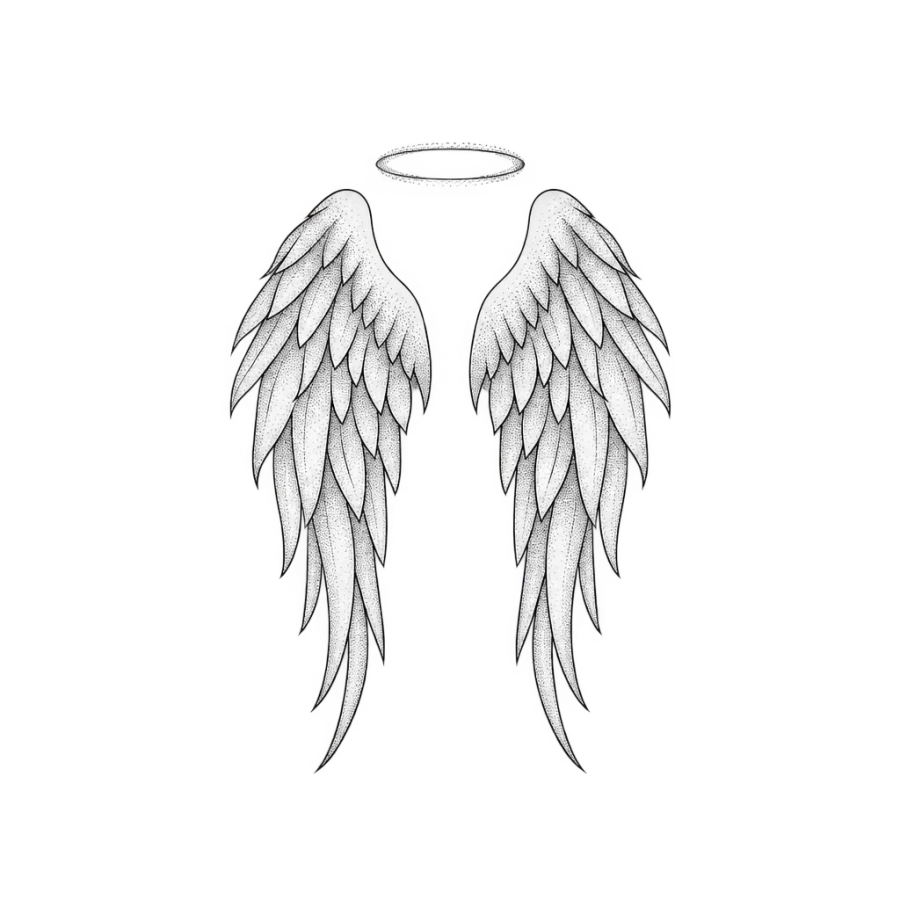
Every design below came out of AI Tattoo Lab. Tap one to load its prompt into the generator, then change a word and make it yours.
Angel wings tattoo design
Use this prompt
Angel wings tattoo design
Use this prompt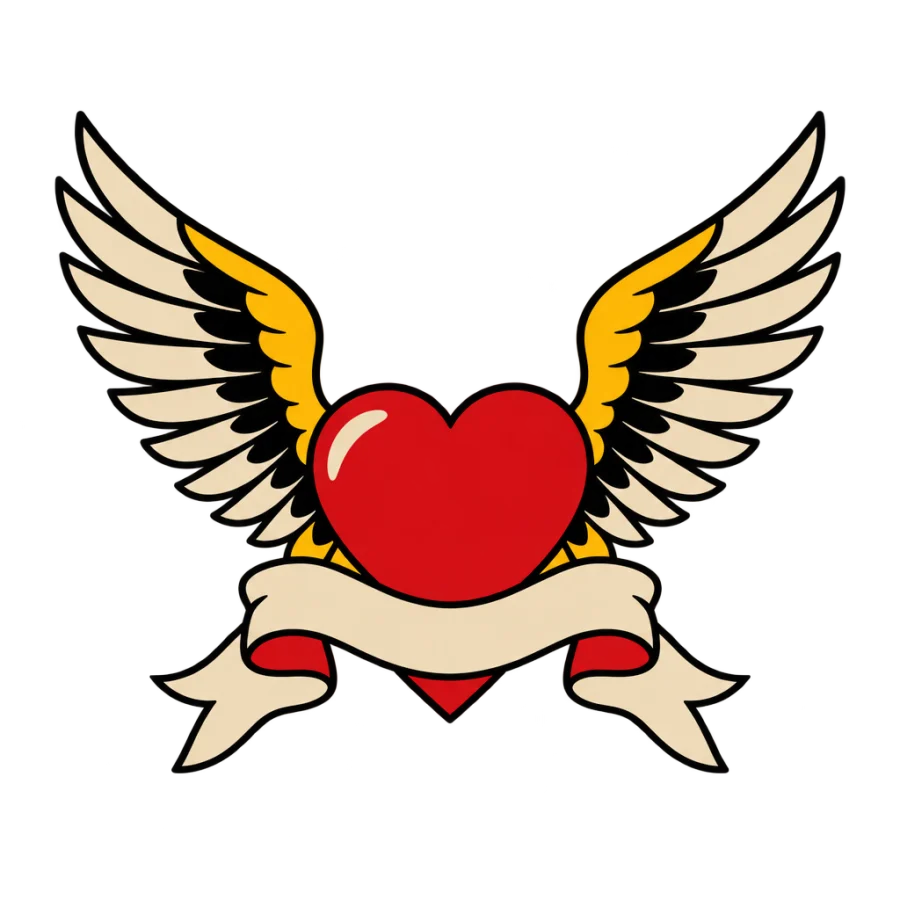
Angel wings tattoo design
Use this prompt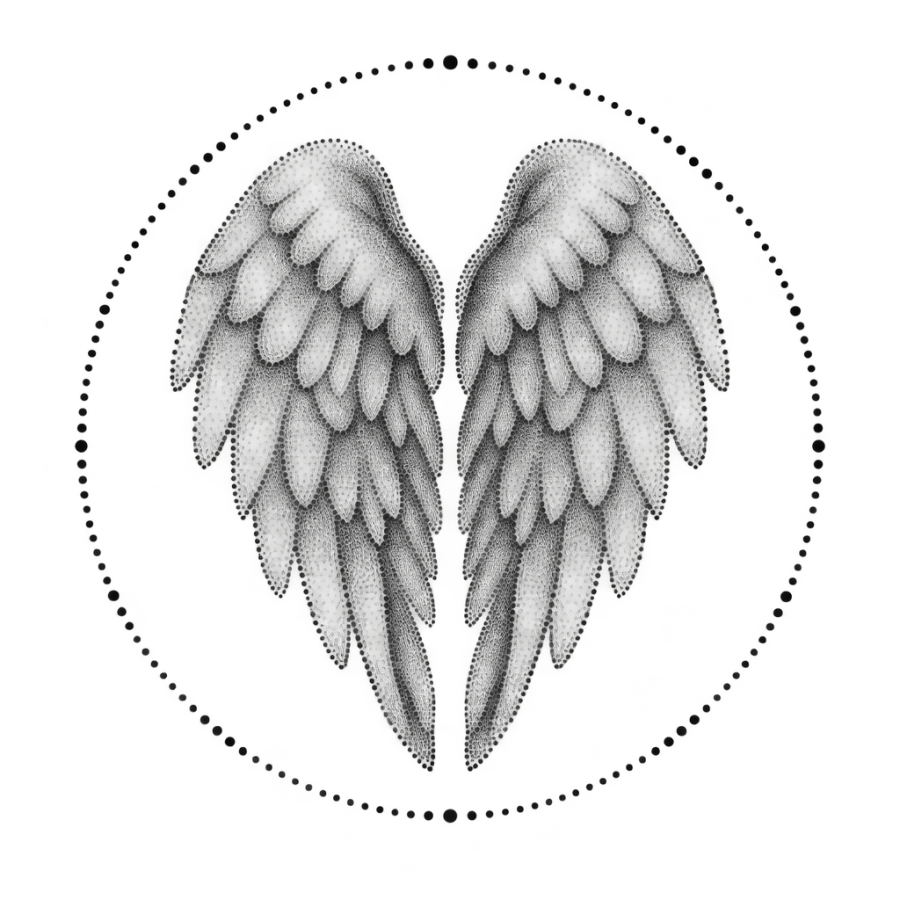
Angel wings tattoo design
Use this prompt
Angel wings tattoo design
Use this prompt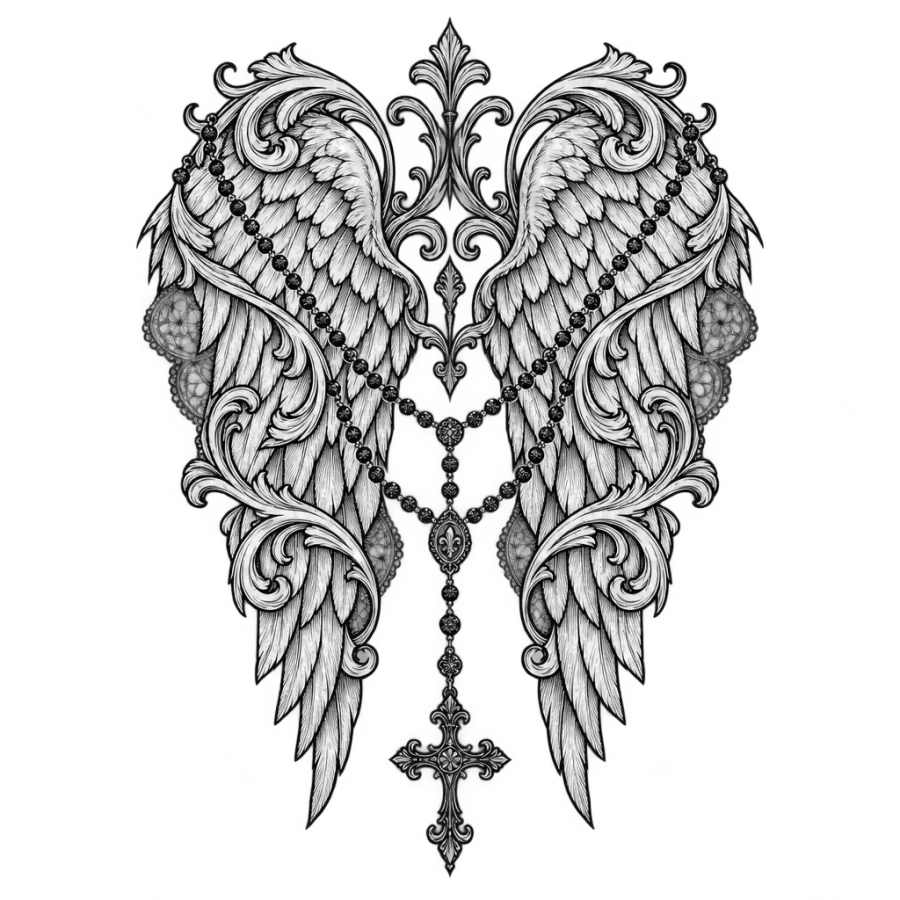
Angel wings tattoo design
Use this prompt
Angel wings tattoo design
Use this prompt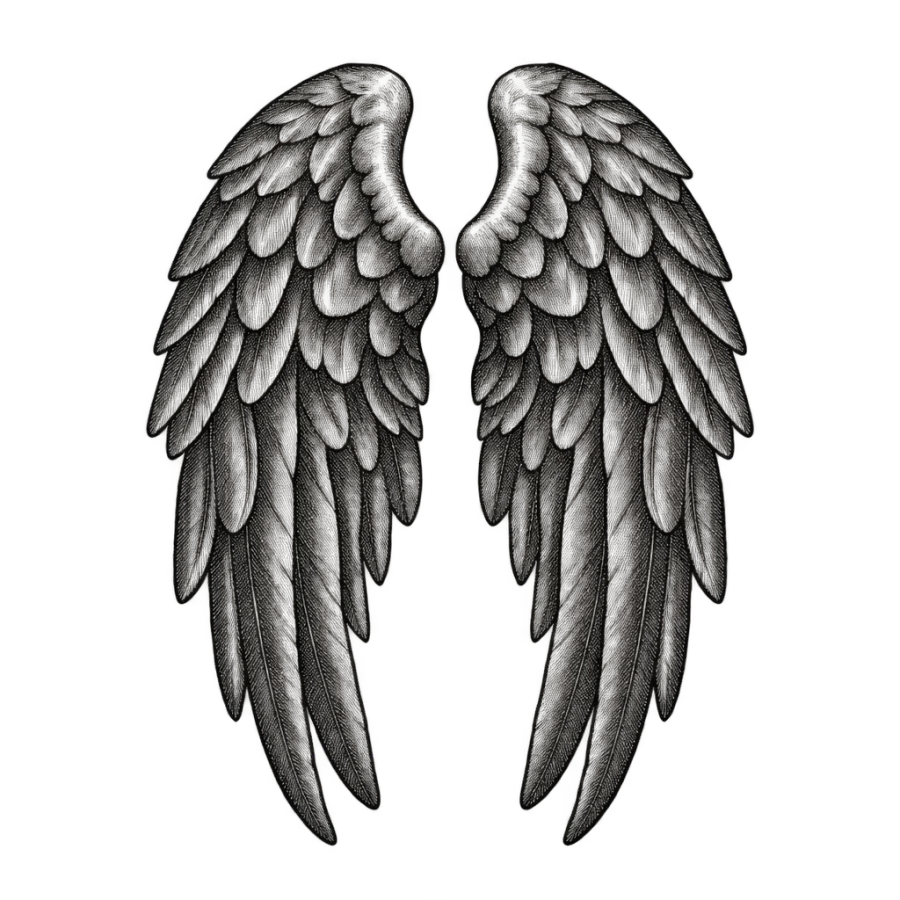
Angel wings tattoo design
Use this prompt
Angel wings tattoo design
Use this prompt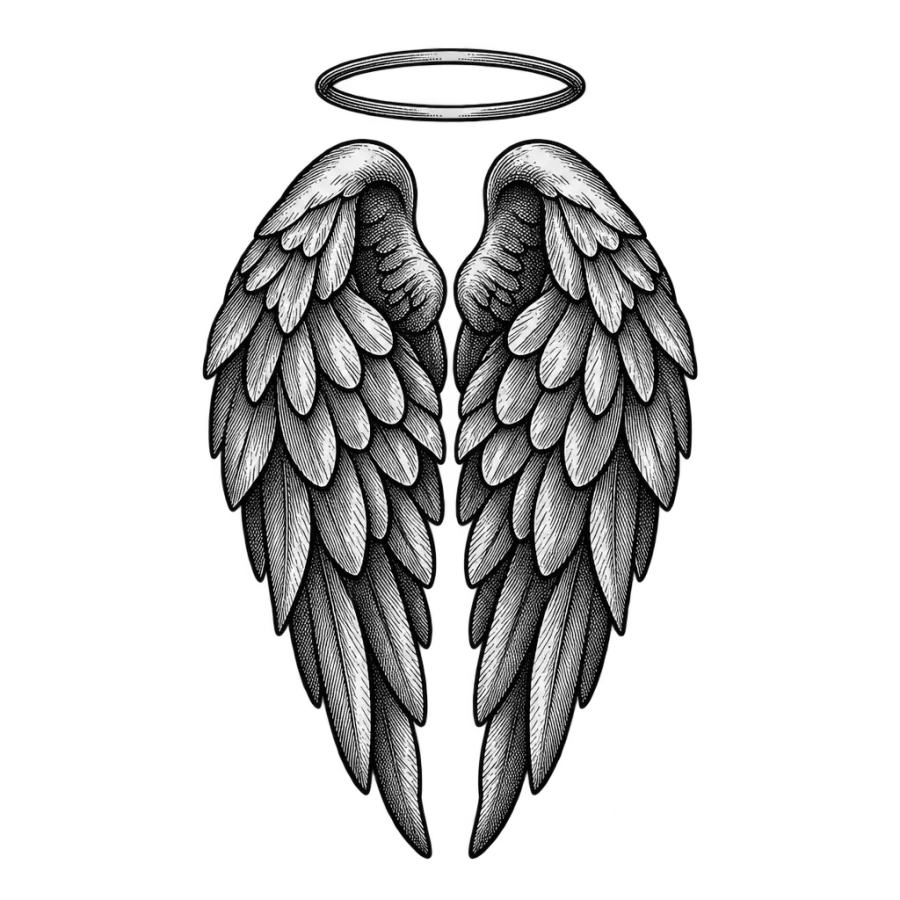
Folded angel wings at rest under a thin halo, antique engraving style
Use this prompt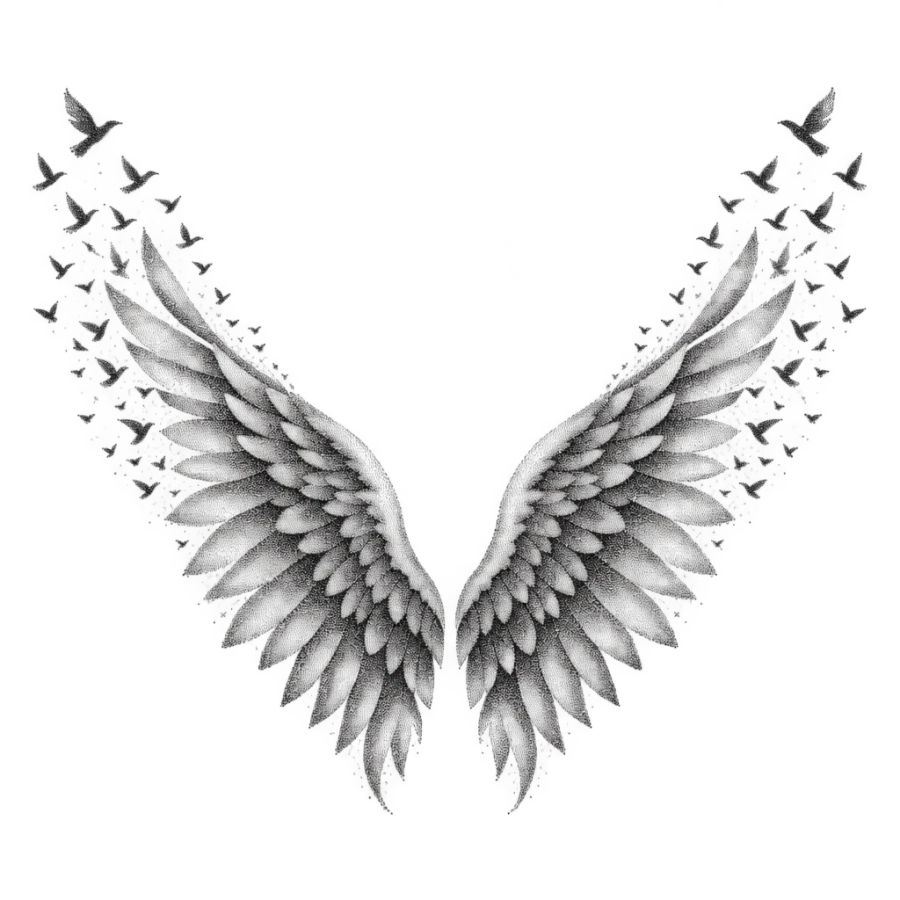
Angel wings whose feather tips break apart into small birds, dotwork stippling
Use this promptDescribe an idea of your own and get four designs back in about 20 seconds.
Open the generator
Questions people ask
What do angel wings tattoos mean?
Most often they mark someone who died, which is why they usually carry a name or dates. The imagery comes from Christian art, where wings marked a messenger between heaven and earth, and before that from Greek and Roman victory figures. Some people wear them for a living guardian rather than a loss.
How big should angel wings be on the back?
Each wing wants roughly 25 to 40 cm tall for a feathered pair on the upper back. That gives room for covert, secondary and primary feathers to stay separate as the ink spreads. Under 15 cm per wing the feather rows merge into a grey mass within five or six years.
How much does an angel wings tattoo cost?
Small behind the ear or wrist wings run about $150 to $250. A stylized pair on the chest or forearm is usually $400 to $800. A realistic upper back pair takes two or three sessions of four to six hours and commonly lands between $1,200 and $2,000 depending on the artist.
Do angel wings have to be symmetrical?
They should look symmetrical on your body, which is not the same as being identical on paper. Shoulder blades sit differently on each side and the spine curves, so artists flip the stencil then adjust the second wing by hand. Check the stencil while standing upright before anything is tattooed.
Does an angel wings tattoo on the back hurt?
The fleshy part of the upper back is moderate, around 5 out of 10 for most people. Directly over the spine and along the shoulder blade edge is sharper, closer to 7, because the needle is working over bone with little padding. Long sessions on the back tire people out more than they expect.