Phoenix tattoo ideas, meaning and designs
The rising from ashes story belongs to one bird out of three that share the name, and picking the right one changes the entire drawing.
- Pain level6 / 10 over the ribs
- Healing3 to 4 weeks per session
- Typical size20 to 50 cm (8 to 20 in)
- Studio cost$600 to $4,000
The Greek phoinix is the bird that burns and comes back, described by Herodotus in the fifth century BC as an Egyptian bird that carries its dead parent to the temple of the sun. Egyptian sources have the Bennu, a heron linked to the sun and to rebirth, which is probably the older source. That strand is where rebirth from fire comes from, and it is the one most people mean.
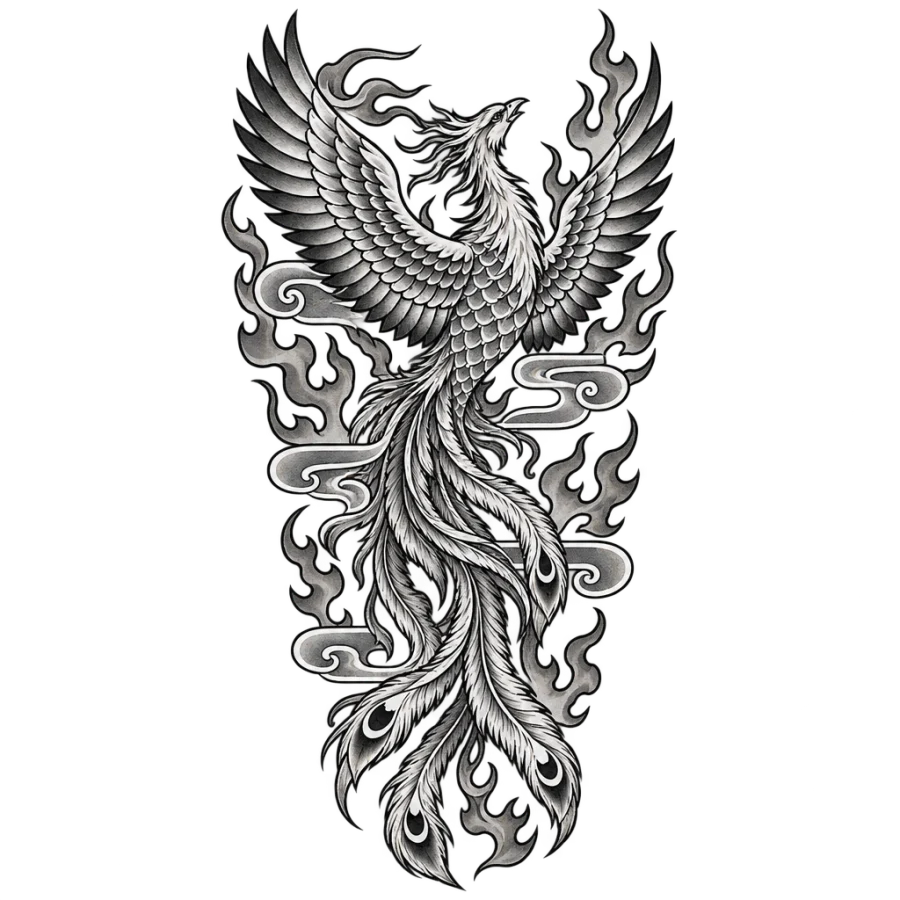
The Chinese fenghuang and the Japanese hō-ō are a different creature that got translated into English as phoenix. They do not burn. They appear in times of peace, are associated with the empress and with harmony, and they look like an elaborate composite bird with a pheasant's tail. Irezumi phoenixes are hō-ō, which is why they sit in clouds rather than flames.
Choosing which phoenix you mean
A Greek style phoenix is an eagle or heron shaped bird with wings up and flame wrapping the lower body. The tail is long but not ornamental, and the drawing depends on the contrast between feather and fire. It suits black and grey realism, neo traditional and watercolor, and it works as a single figure without a background.
A hō-ō is built from parts: a pheasant tail with three or five long streamers, a crest, scalloped body feathers and legs like a crane. It almost never appears alone. In Japanese work it sits among peonies, clouds or paulownia leaves, and it is usually paired across a back piece or a sleeve with a dragon. If you want traditional Japanese, you want this bird and you should let the artist place the background.
Keeping flames and feathers apart
The recurring failure in phoenix tattoos is that the flames and the tail feathers turn into the same texture. Both are long, tapering, repeating shapes, and at a distance they merge into a single orange mass. Artists solve it with contrast. Feathers get outlined and the flames do not, or the flames stay in warm color while the bird is worked in black and grey, or solid black sits between the two so the eye can find the edge.
Direction helps too. Flames move upward in irregular licks with gaps between them. Feathers follow the bone of the wing in ordered rows. An artist who draws that difference gets a readable phoenix at 25 cm. An artist who packs both with the same hatching gets something that looks like a flame shaped bird by year five.
What keeps a phoenix readable over time
- Black or very dark value separating the bird from the fire
- Wing feathers drawn in ordered rows that follow the bone underneath
- Gaps of bare skin inside the flame shapes, so the fire keeps its edges
- Tail streamers reduced to three or five, with real space between them
- Red and orange packed to full saturation, because both fade early
Size, placement and what color costs you
A phoenix is a vertical subject with a wide top. That fits the back, the outside of the thigh, the ribs and the front of the shoulder running onto the chest. On a forearm it works if the wings tuck in and the tail runs down toward the wrist. The floor is around 20 cm for a simplified version and 30 cm once the tail is ornamental.
Color is the expensive decision. A red and orange phoenix looks spectacular for the first five years, then loses the warm end first, and by fifteen years the fire reads as a soft peach against a still solid black bird. Some artists compensate by packing the warm tones far denser than looks necessary at the time. Black and grey with a single spot color is the more conservative route and holds its shape far longer.
Ageing, touch ups and the variations people ask for
Expect one touch up between years three and seven if the piece is heavily colored, mostly to bring the reds back. A black and grey phoenix with heavy outlines can go twenty years untouched. Sunscreen matters more here than on most subjects, since the warm pigments a phoenix depends on are the ones that photodegrade first.
The common variations are worth naming early because they change the composition. Some people want the bird emerging from a specific object, a violin, a book, a burning house. Some want ashes falling from the tail. Some want the phoenix combined with a lost person's date, which usually works better as small lettering in the background than as a banner across the bird.
Variations that work in practice
- Phoenix rising out of a cracked hourglass instead of open flame
- Half phoenix and half skeleton along a vertical split
- Black and grey bird with the fire left as bare skin
- Hō-ō paired with a dragon across a back piece
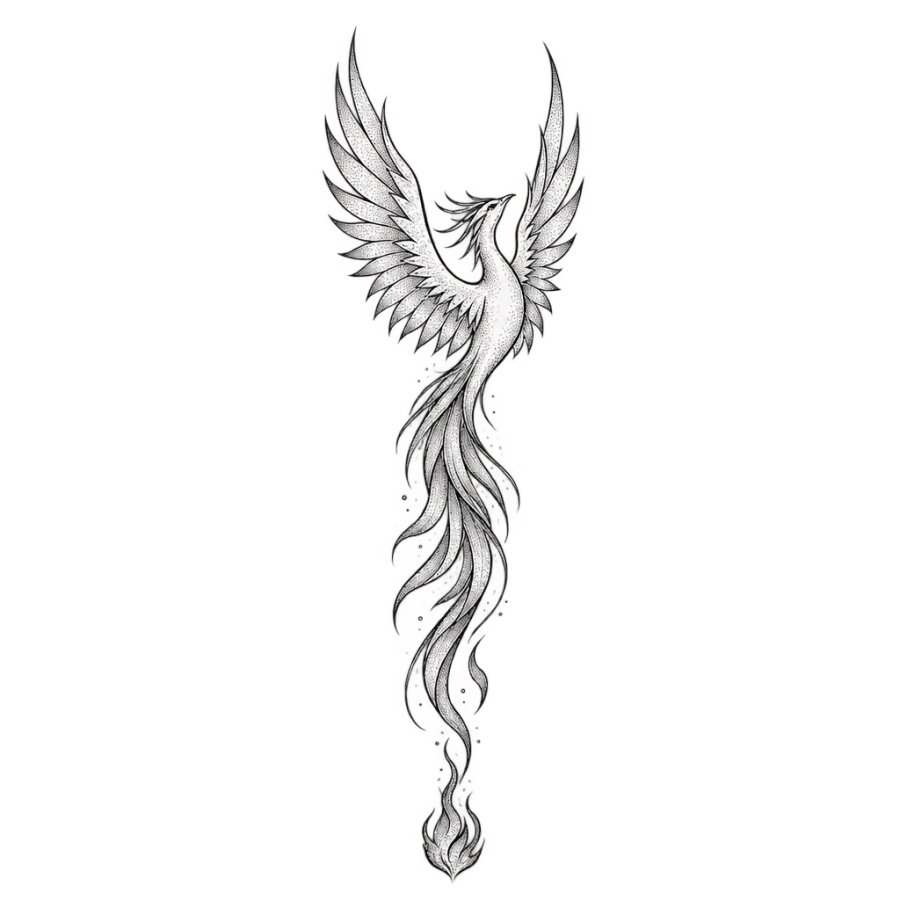
- Ashes drawn as fine dotwork trailing from the tail
12 phoenix tattoo designs, with the prompt behind each one
Every design below came out of AI Tattoo Lab. Tap one to load its prompt into the generator, then change a word and make it yours.
Phoenix tattoo design
Use this prompt
Phoenix tattoo design
Use this prompt
Phoenix tattoo design
Use this prompt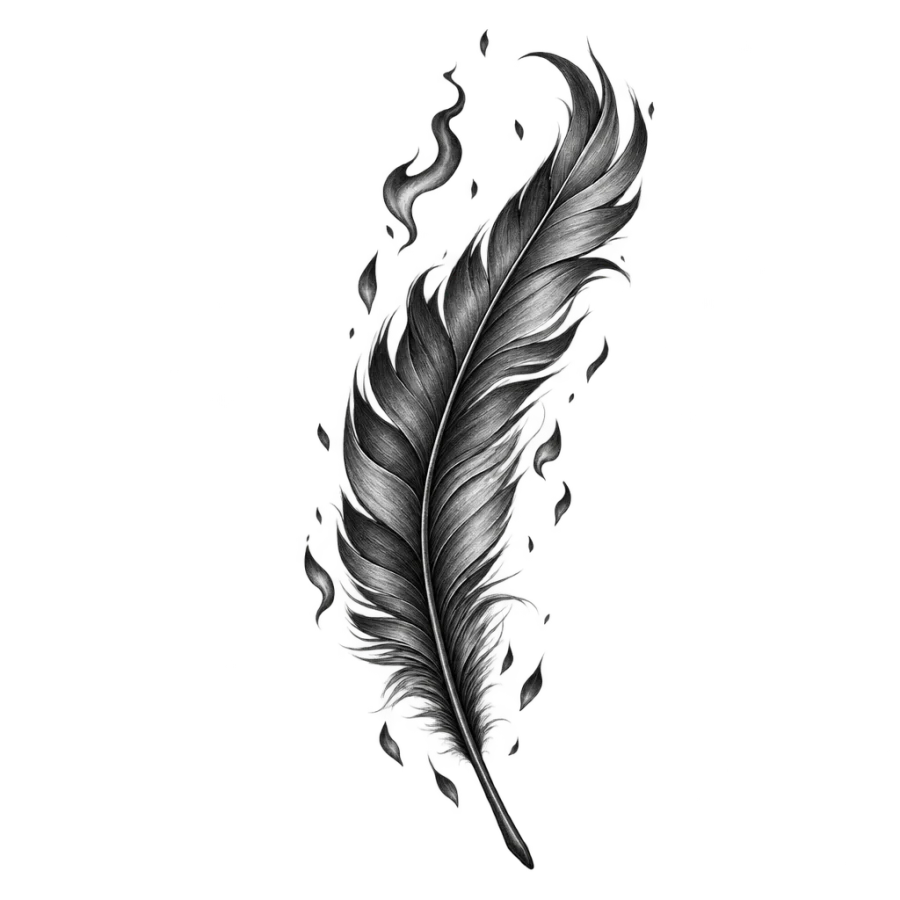
Phoenix tattoo design
Use this prompt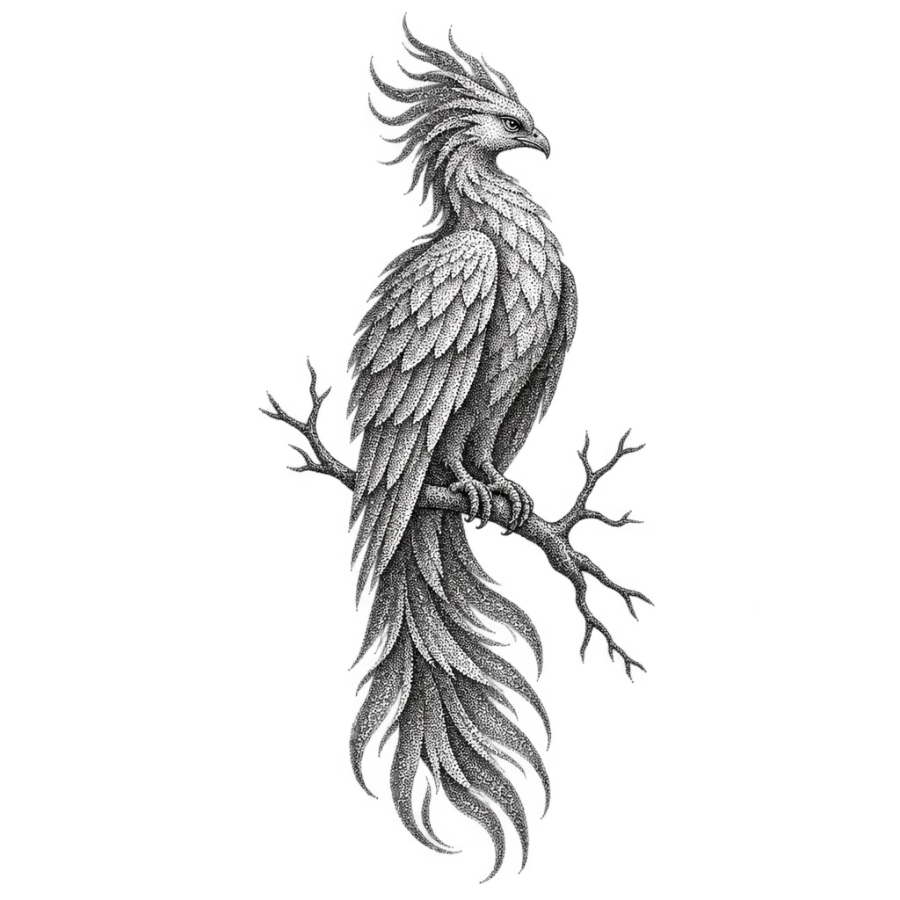
Phoenix tattoo design
Use this prompt
Phoenix tattoo design
Use this prompt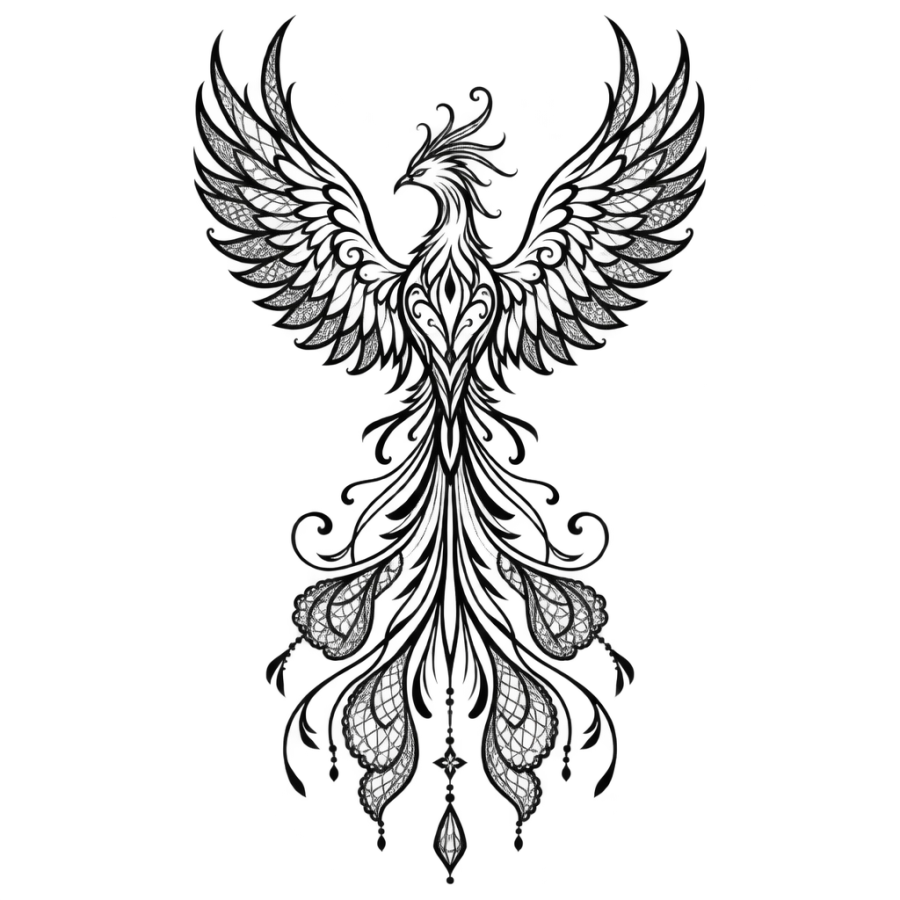
Phoenix tattoo design
Use this prompt
Phoenix tattoo design
Use this prompt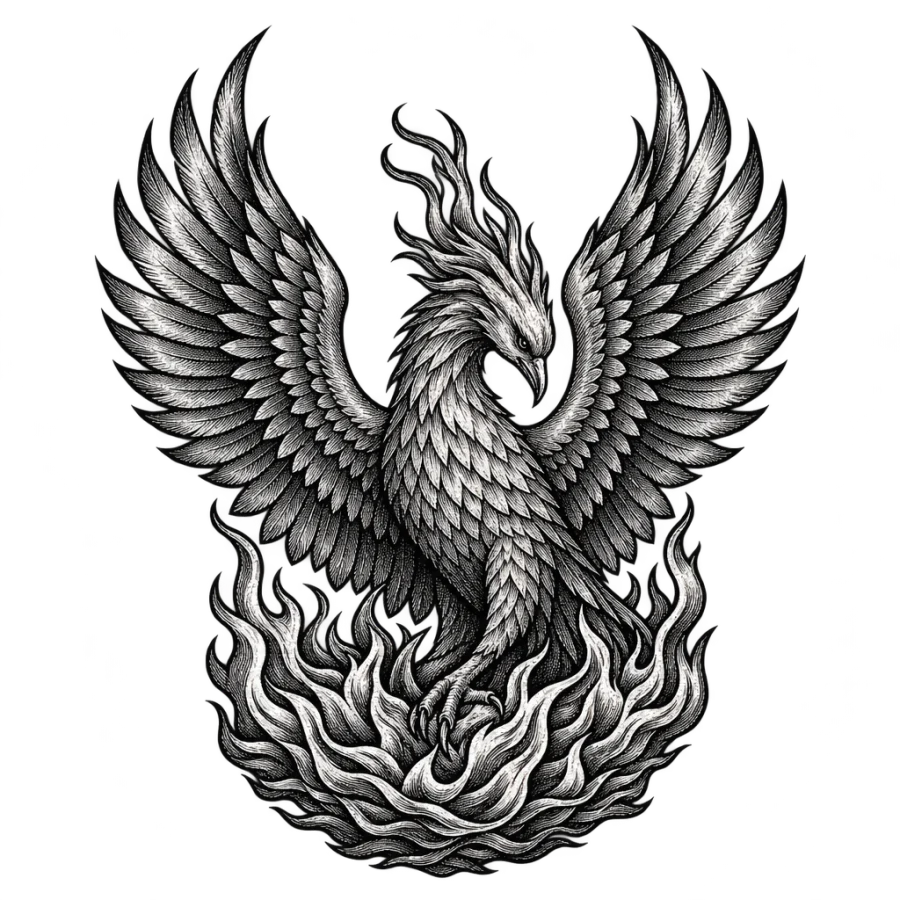
Phoenix tattoo design
Use this prompt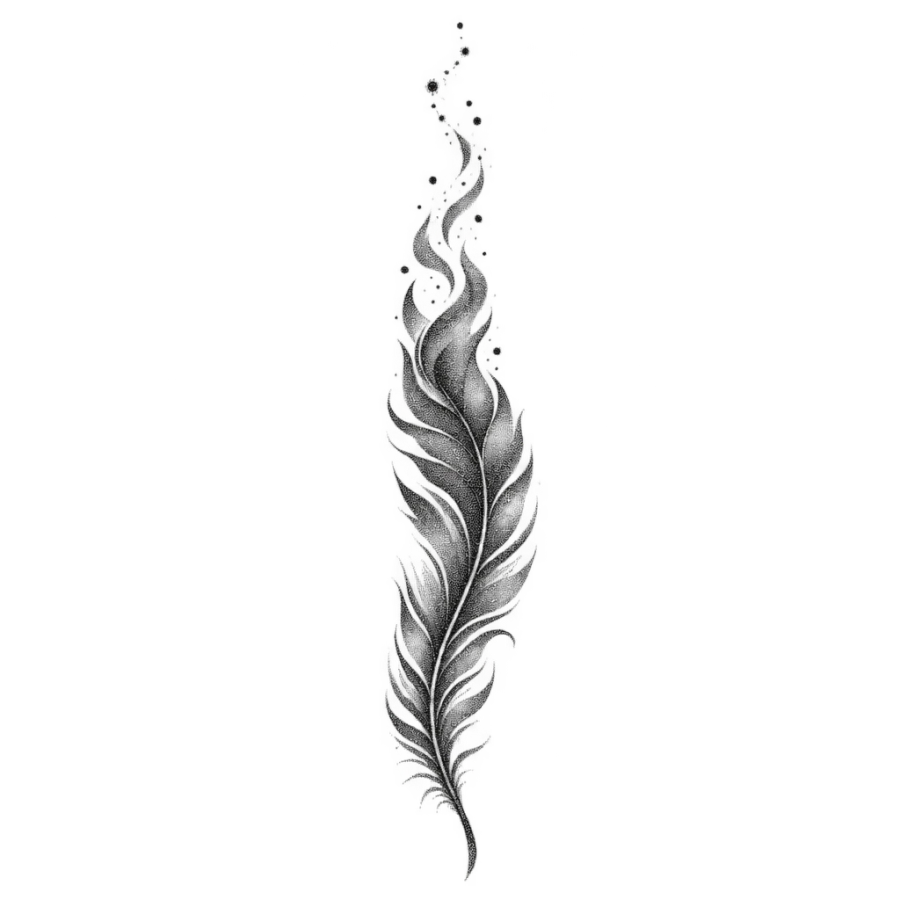
A single phoenix tail feather with embers drifting up from the tip
Use this prompt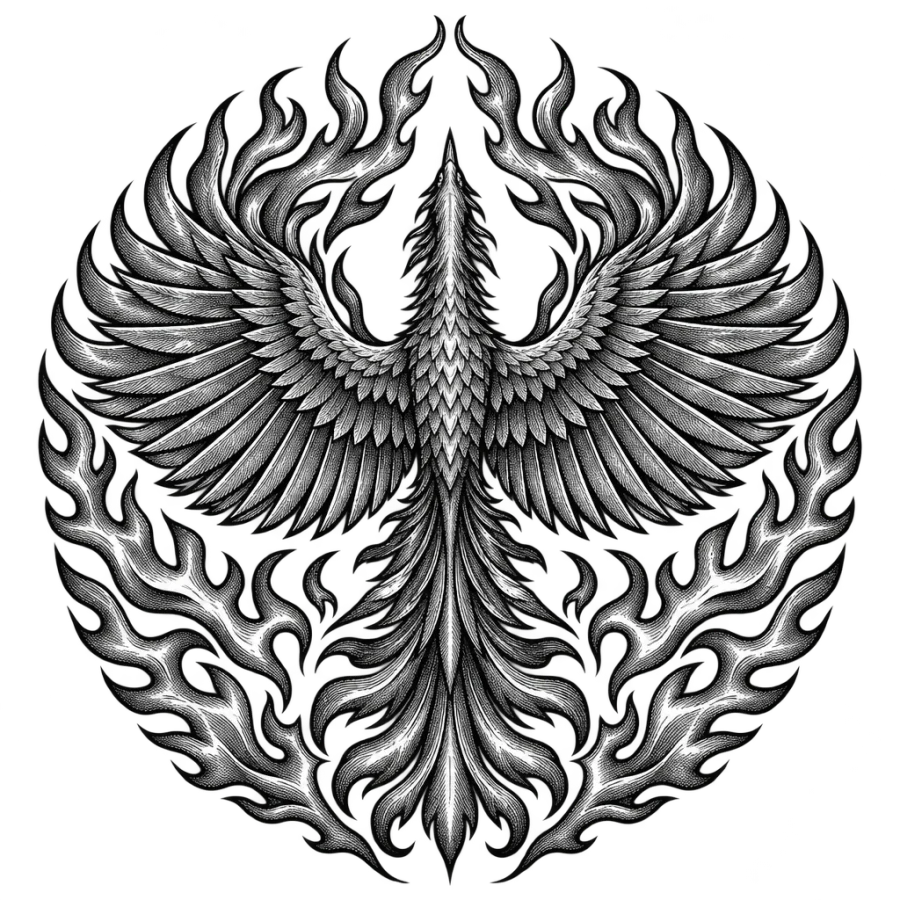
A phoenix seen from above, wings spread into a round flame medallion
Use this promptDescribe an idea of your own and get four designs back in about 20 seconds.
Open the generator
Questions people ask
What does a phoenix tattoo mean?
Surviving something and beginning again. The burning and returning story comes from Greek and Roman writers describing an Egyptian bird, and early Christian writing used it for resurrection. The East Asian bird that shares the English name has no fire story and means harmony instead.
How big should a phoenix tattoo be?
Around 20 cm for a simplified bird and 30 cm once the tail is ornamental. Below that, the flames and feathers merge because both are long tapering shapes. A back piece phoenix usually runs 40 to 50 cm and gives the artist room to keep the two textures separate.
Is a Japanese phoenix the same thing?
No. The hō-ō in Japanese tattooing, and the fenghuang it comes from, is a composite bird with a pheasant tail that appears in peaceful times. It does not burn or rise from ashes. It sits among clouds and peonies and is often paired with a dragon across a large piece.
Does a color phoenix tattoo fade quickly?
The warm tones do. Red and orange are the least stable pigments and a fire phoenix uses a lot of both, so expect noticeable softening by year five and a touch up somewhere between years three and seven. Daily sunscreen after healing slows it considerably.
Can an AI phoenix design be tattooed as is?
Treat it as a reference. Generate the bird and composition you want, download the stencil, then work with a licensed artist who will separate the flames from the feathers properly, reduce the detail that cannot survive at your chosen size, and fit the shape to your back or thigh.