Koi fish tattoo ideas, meaning and designs
The koi story is about a carp that swims up a waterfall and turns into a dragon, which is why the fish is almost always drawn mid struggle.
- Pain level6 / 10 over the ribs
- Healing3 to 4 weeks per session
- Typical size25 to 45 cm (10 to 18 in)
- Studio cost$700 to $4,000
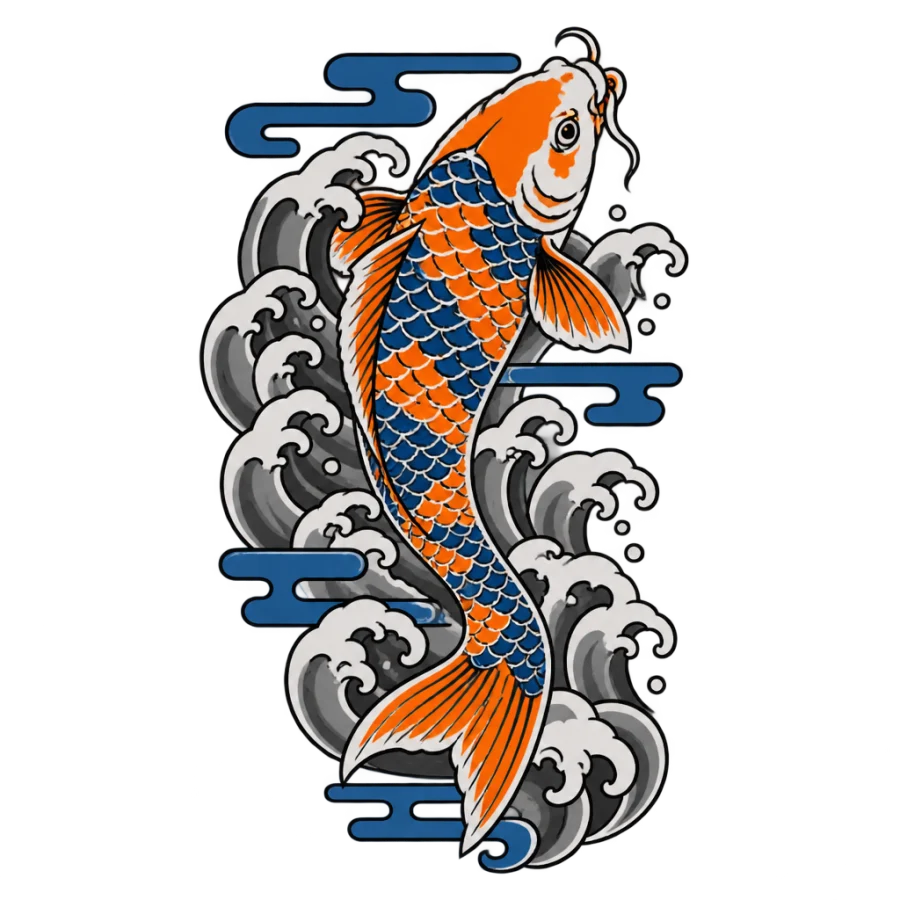
The legend is Chinese before it is Japanese. Carp swimming up the Yellow River reach a waterfall at Longmen, the Dragon Gate, and any fish that clears it becomes a dragon. The image carried into Japan, where carp streamers are flown for Children's Day on the fifth of May, one for each member of the family, in the same spirit of wishing a child a hard climb and a good outcome.
In tattooing the koi is one of the core Japanese subjects and it is rarely drawn alone. It comes with water, and the water is half the tattoo. Finger waves, spray dots and the solid black between them give the piece its structure, and an artist working in traditional Japanese style will design the water before they finalise the fish.
How a koi is drawn in Japanese work
The body is an S curve, never a straight fish. The head turns one way, the tail the other, and the fins trail behind the motion like fabric. Barbels at the mouth are exaggerated well beyond life. Scales are drawn as overlapping crescents that get smaller toward the tail, usually with one lighter row along the lateral line to suggest the curve of the body.
Water is built from a small vocabulary. Finger waves curl over at the crest, spray is a field of dots that thins as it rises, and the deep areas are packed solid black. That black is what holds the whole tattoo together over thirty years, which is why traditional artists push back when a client asks for the fish without the water.
The parts of a traditional koi composition
- An S curved body with the head and tail turned in opposite directions
- Trailing fins drawn with long parallel rays
- Overlapping crescent scales that shrink toward the tail
- Finger wave water with curled crests and dotted spray
- Maple leaves, lotus or chrysanthemum used as seasonal accents
Color, variety and what the names mean
If you want a specific look, ask for a variety by name. Kohaku is white with red markings. Taisho sanke adds black on top of that. Showa sanshoku is black with red and white over it. Ogon is a single metallic color, usually gold or platinum. Asagi has a blue net pattern on the back with red along the belly and fins. These are breeders' categories and they give an artist a precise reference to work from.
For longevity, the black and red varieties are the safest. Red and orange are the least stable pigments in any tattoo, but on a koi they sit as large solid areas instead of fine detail, which means fading reads as softening instead of loss. A gold ogon relies on yellow, the weakest pigment of all, and tends to need work sooner.
Size, placement and direction
Koi need length. Twenty five to thirty five centimeters along the body is typical on a forearm or a calf, and 40 to 50 cm on a thigh or a back panel. Below about 15 cm the scale rows and the fin rays merge, and you are better off with a simplified linework koi. The fish is a vertical subject, so it suits the outer forearm, the calf, the outer thigh, the ribs and one half of a back piece.
Direction is the decision people spend the longest on, usually because of the upstream and downstream story. Since that story has no traditional basis, the practical question is better: which way does the fish look correct when your arm hangs at your side, and which way does it look correct in a mirror. Most artists on a lower leg point the head upward, toward the knee.
Cost, sessions and aging
A single koi with water on a forearm is usually four to seven hours across one or two sittings, roughly $600 to $1,600. A koi and dragon composition on a back or a full sleeve is 20 to 35 hours and is priced as a whole project. Traditional artists often want to design the entire area first even if you only book the first panel.
Bold Japanese work ages better than almost anything else, because the outlines are heavy and there is solid black holding the composition. Expect the reds to warm and soften over fifteen years while the shape stays completely intact. The koi tattoos that go wrong are the ones tattooed without water, where the fish slowly loses its context and ends up floating on a limb with nothing around it.
12 koi fish tattoo designs, with the prompt behind each one
Every design below came out of AI Tattoo Lab. Tap one to load its prompt into the generator, then change a word and make it yours.
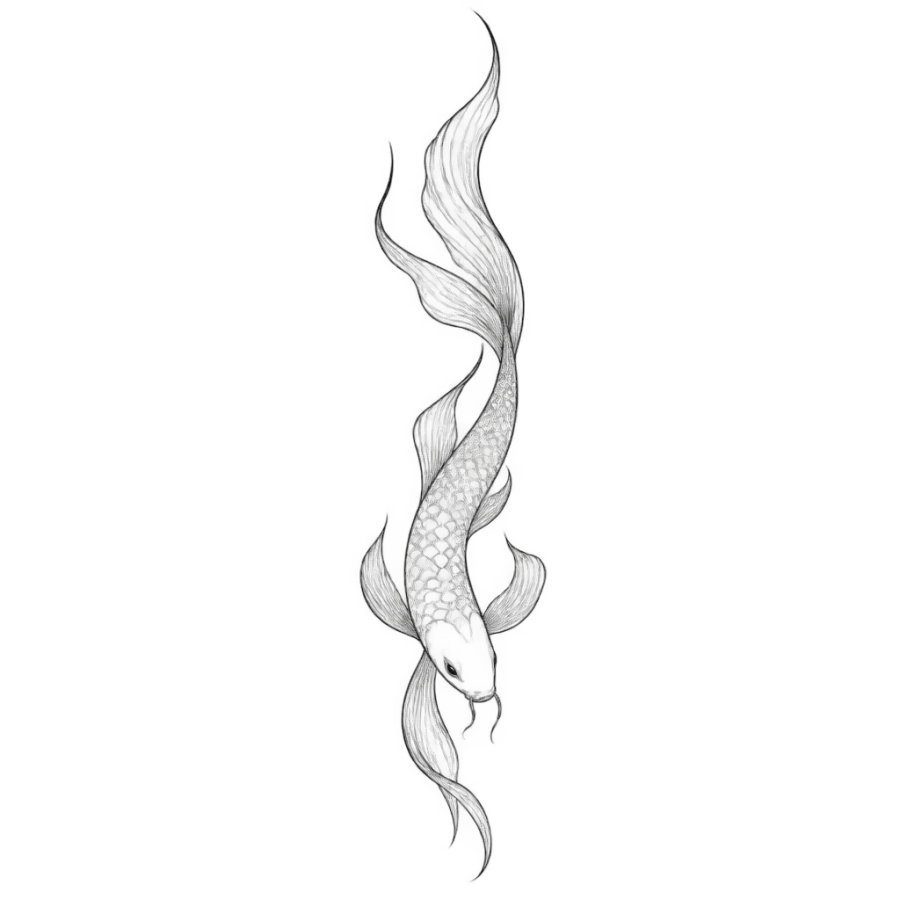
A slender koi with long trailing fins drifting downward, fine line
Use this prompt
A koi curved into a round medallion, solid black with negative space
Use this prompt
A koi built from faceted triangles inside a circle, geometric
Use this prompt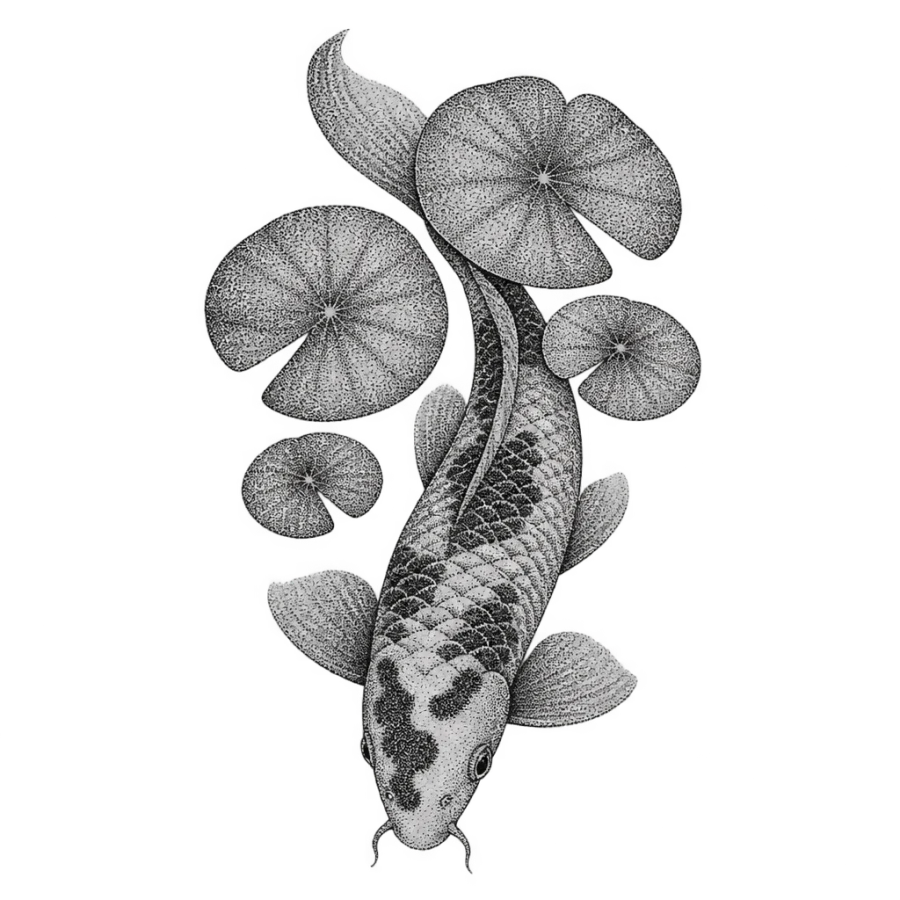
A koi at rest beneath floating lotus pads, seen from above
Use this prompt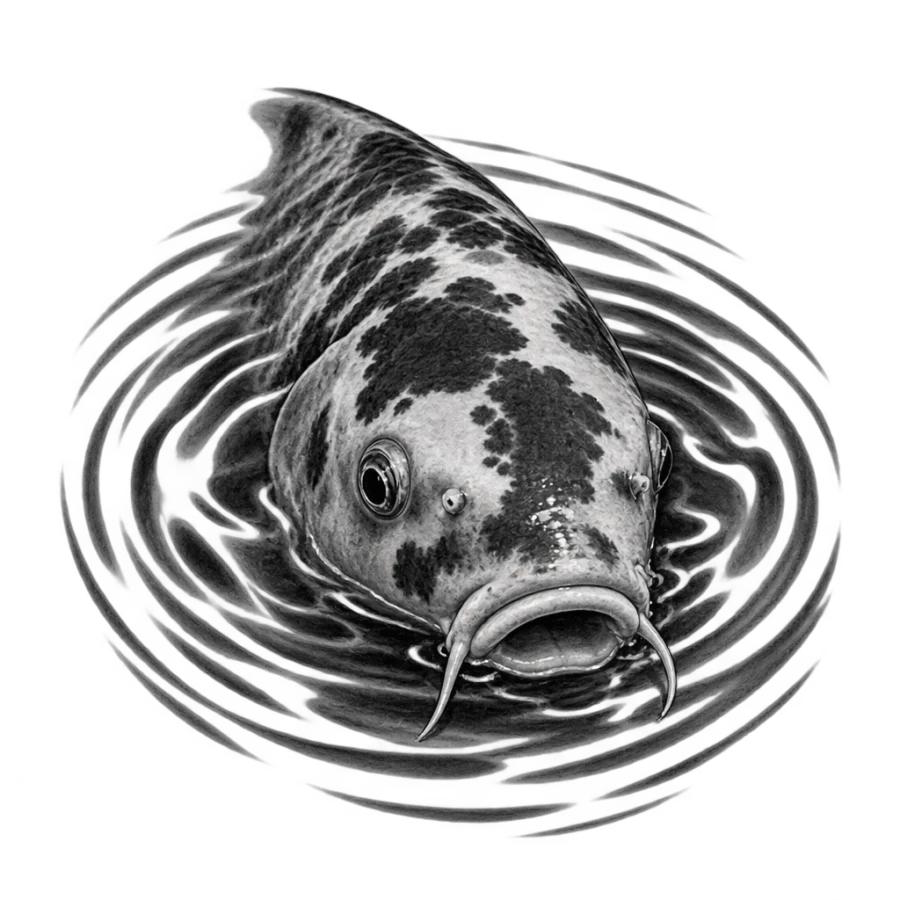
A koi head breaking the water surface with ripple rings
Use this prompt
A koi drawn in one unbroken continuous line
Use this prompt
Two koi circling head to tail in a round lace medallion
Use this prompt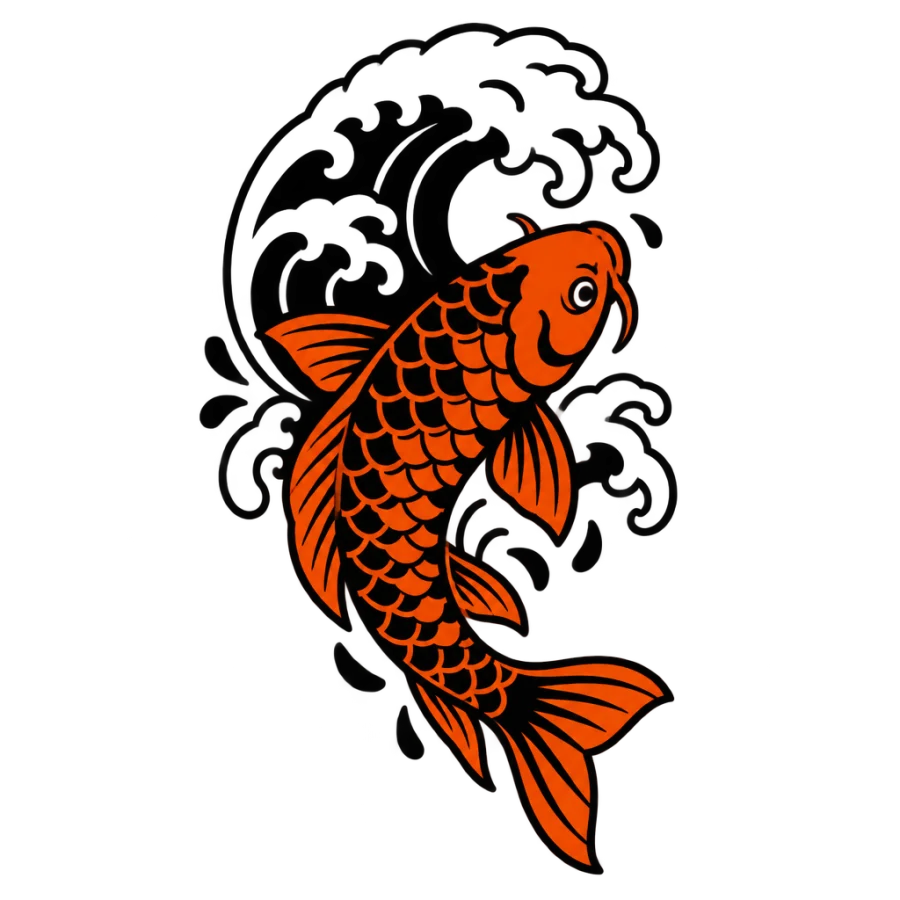
A bold koi swimming under a curling wave crest
Use this prompt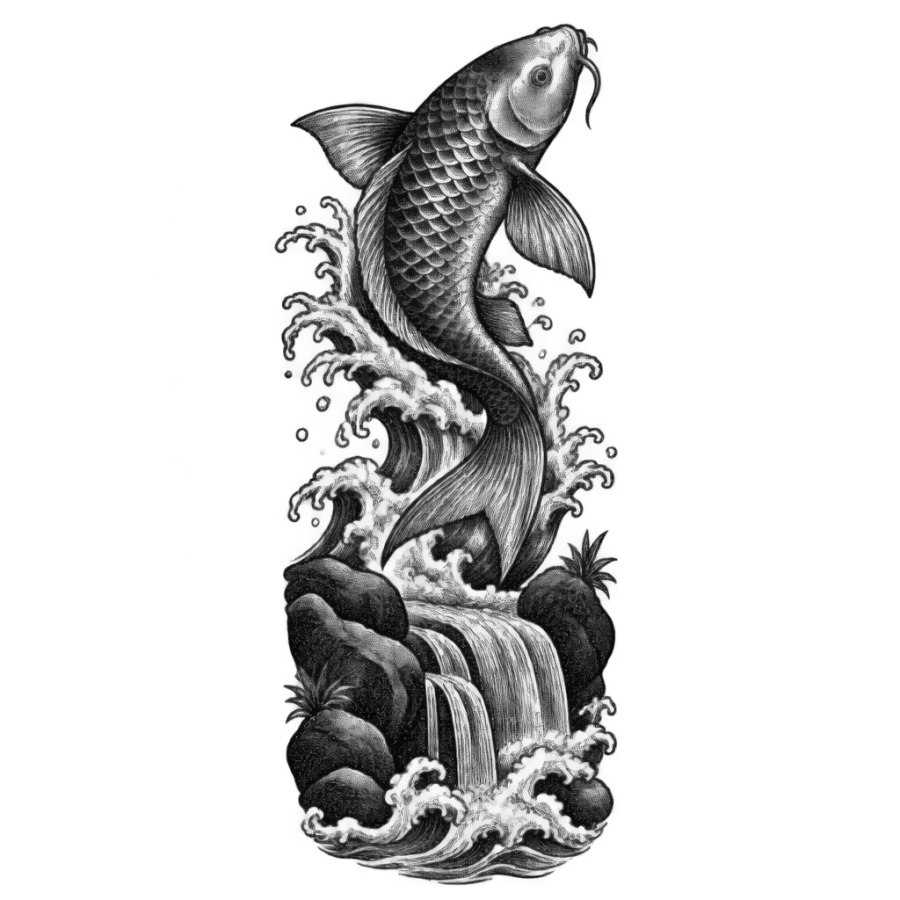
A koi leaping over a small waterfall, engraved crosshatch
Use this prompt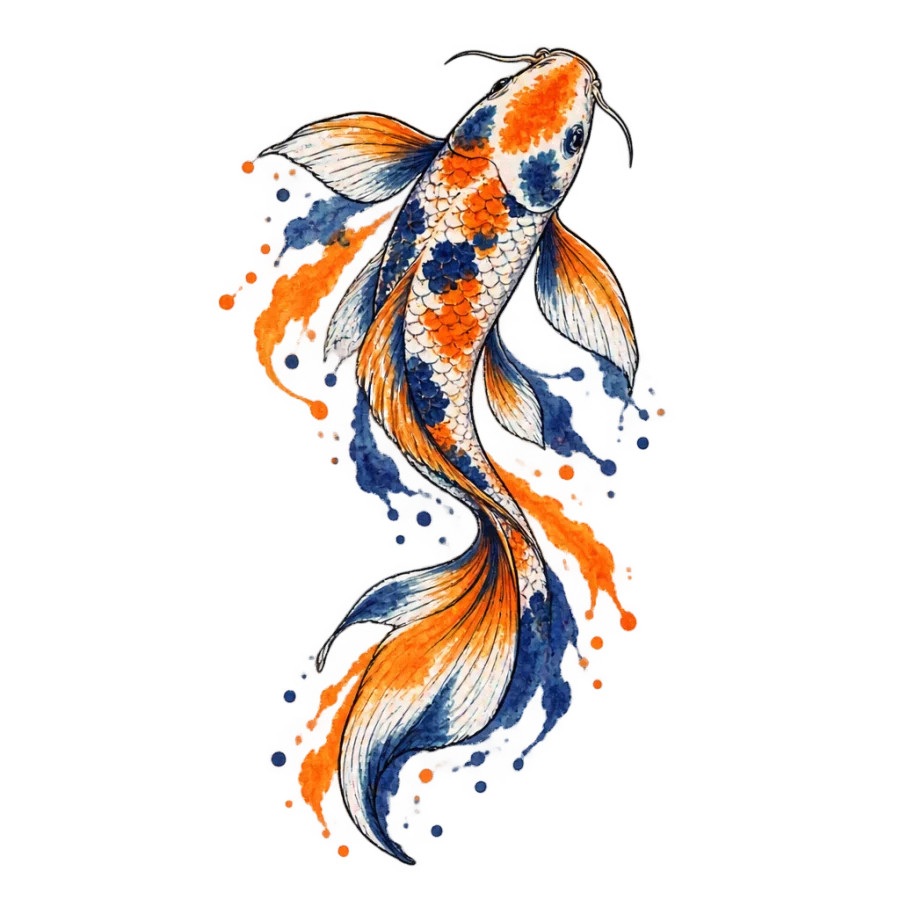
A koi with loose orange and indigo washes trailing behind
Use this prompt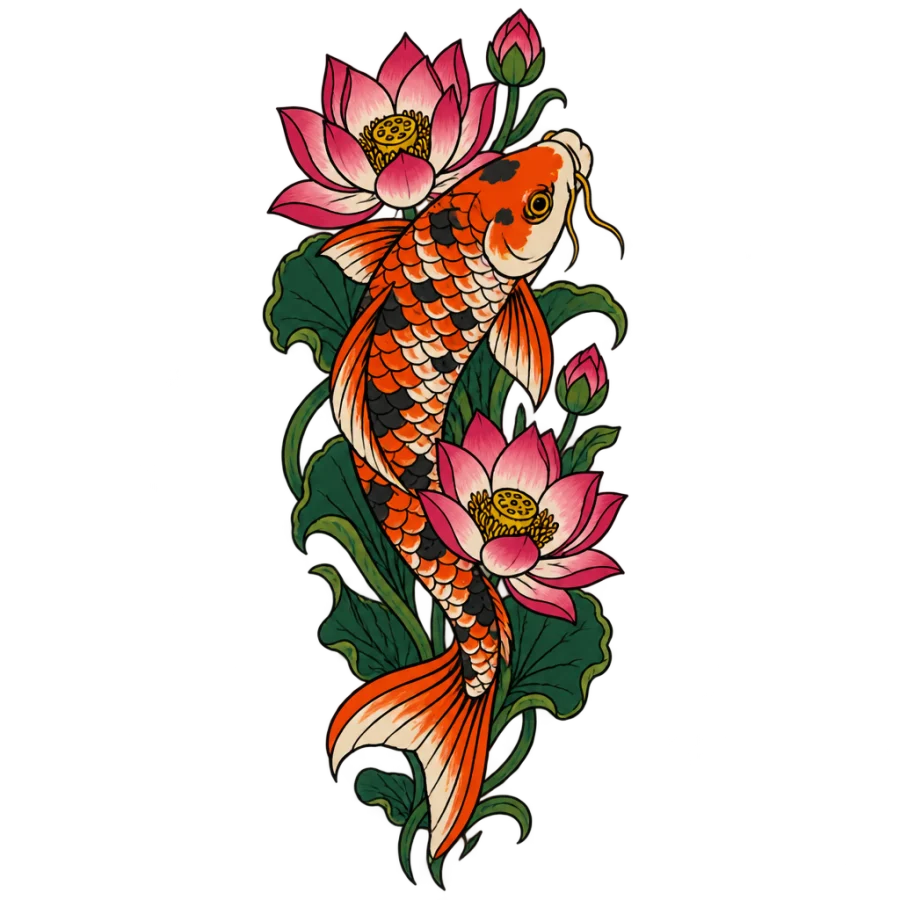
A koi wrapped in open lotus blossoms and stems, colour
Use this promptDescribe an idea of your own and get four designs back in about 20 seconds.
Open the generator
Questions people ask
What does a koi fish tattoo mean?
Persistence through something hard. The source is a Chinese legend in which carp swim up the Yellow River and any that clears the waterfall at the Dragon Gate becomes a dragon. Japan adopted the image, and carp streamers are still flown for children on the fifth of May.
Does the direction a koi swims mean something?
Not traditionally. The idea that an upstream koi means you are still struggling and a downstream one means you have arrived is tattoo shop lore with no Japanese source. Choose the direction that looks correct on your arm or leg when it is relaxed and in a mirror.
What do koi colors mean?
They are breeding varieties rather than symbols. Kohaku is white with red, taisho sanke adds black, showa sanshoku is black with red and white over it, ogon is a single metallic color and asagi has a blue net back. Naming the variety gives your artist a precise reference.
How big does a koi tattoo need to be?
Twenty five to thirty five centimeters along the body for a forearm or calf, and 40 to 50 cm on a thigh or back. Below roughly 15 cm the scale rows and fin rays merge, so ask for a simplified linework koi instead of shrinking a detailed one.
Do I need the water around my koi?
In traditional Japanese work, yes. The finger waves and the solid black between them give the tattoo its structure and are the reason irezumi stays readable for decades. A koi tattooed alone tends to look unfinished over time and is harder to extend into a larger piece later.