Cross tattoo ideas, meaning and designs
A cross is the simplest shape on this list and the least forgiving, because every viewer can see instantly whether the two bars are square.
- Pain level4 / 10 on the forearm
- Healing2 to 3 weeks on the surface
- Typical size5 to 20 cm (2 to 8 in)
- Studio cost$100 to $700
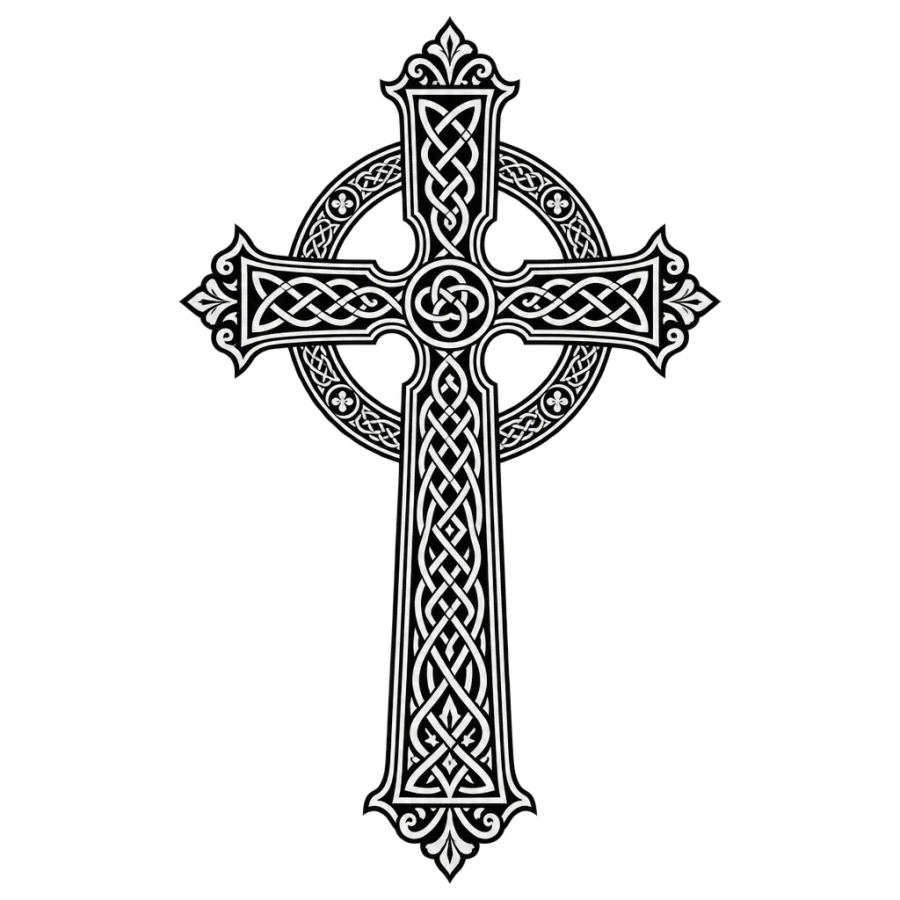
There is no generic cross. A Latin cross with a long lower arm is the standard Western Christian form. An Orthodox cross has three bars, the lowest slanted. A Celtic cross has a ring around the intersection and usually carries knotwork. A Coptic cross is equal armed with flared ends. Each belongs to a tradition, and wearing one says you are choosing that tradition even if you did not intend to.
The practical problem is geometry on a curved surface. A rectangle looks straight on paper and leans on a forearm, because the forearm is a cone that twists when you turn your hand. Artists solve it by placing the stencil with your arm in the position other people usually see it, then checking it from three angles before the first line goes down.
Which cross you actually mean
The Latin cross is plain and vertical, with the crossbar set about a third down. A crucifix adds the figure of Christ and is a much harder tattoo, because a small human body needs anatomy and drapery that only survive above roughly 12 cm. Rosary beads wrapping a cross are a Catholic device and a useful compositional one, since the chain gives the artist a way to follow a limb.
Celtic high crosses, like the tenth century Muiredach's Cross at Monasterboice, are the reference for most Celtic cross tattoos: a ringed cross covered in interlace panels. Worth knowing before you book, a plain circle enclosing a cross with equal arms is a different symbol, the sun cross, and it has been adopted by white nationalist groups. Artists will usually steer you toward the interlaced high cross form for that reason.
The main forms at a glance
- Latin cross, plain, long lower arm, the default Western Christian form
- Orthodox cross with three bars and a slanted footrest, used across Eastern churches
- Celtic high cross, ringed, panelled with interlace, tied to Ireland and Scotland
- Coptic cross, equal armed with flared ends, Egyptian Christian
- Crucifix, the cross with the figure, which needs at least 12 cm to hold
Getting a straight line onto a curved body
Put a cross on the inner forearm and the vertical arm should follow the line between the wrist and the elbow crease, not the line of the bone underneath. On the outer forearm it tracks the ulna. On the spine it follows the vertebrae, which are rarely perfectly straight, so the artist marks the actual line with the client standing the way they normally stand.
The center of the chest is the hardest spot. The sternum curves in two directions and breathing moves it. Most artists will draw the stencil, have you stand, sit and raise your arms, and redraw it at least once. Expect that process to take twenty minutes and do not rush it, because a chest cross that leans is visible in every photograph you will ever be in.
Size, texture and lettering
A plain cross works small. Two to three centimeters on a wrist or a finger is fine because there is almost nothing to close up. Once you add texture the floor rises fast: wood grain needs about 8 cm, interlace panels need 10 cm before the strands stop merging, and a crucifix figure needs 12 to 15 cm. Nail heads, rope wraps and thorn crowns each add another few centimeters to the minimum.
Lettering is where most cross tattoos are decided. A date in small roman numerals along the lower arm of the cross is the most common addition and it holds well at 6 mm character height if the font has no thin serifs. Verse references work. Full verses usually do not, because the line length forces the type so small it greys out within a decade.
Placement, aging and what people regret
Forearms take crosses well and keep them visible at work only when your sleeves are up, which is why the inner and outer forearm are the two most requested spots. The upper arm, the shoulder blade and the center of the back all suit larger panelled versions. Behind the ear and on the finger are popular and are the first places a fine cross blurs, because the skin there is thin and constantly moving.
Regrets divide into two kinds. Geometric ones are crooked crosses and crosses that looked level when the arm was flat on an armrest and lean in every mirror since. The other kind is meaning drift, where someone tattooed a tradition they have since left. That is worth sitting with for a few months, because a cross is one of the harder shapes to cover, and laser removal of solid black takes eight to twelve sessions.
Before you book
- Ask for the stencil to be checked standing up, not lying on the table
- Decide the tradition, since a Celtic ring or an Orthodox third bar is not decoration
- Keep any date in roman numerals at 6 mm character height or larger
- Avoid a plain circle around an equal armed cross
- Sit with the design for a few weeks, because solid black is hard to remove
12 cross tattoo designs, with the prompt behind each one
Every design below came out of AI Tattoo Lab. Tap one to load its prompt into the generator, then change a word and make it yours.
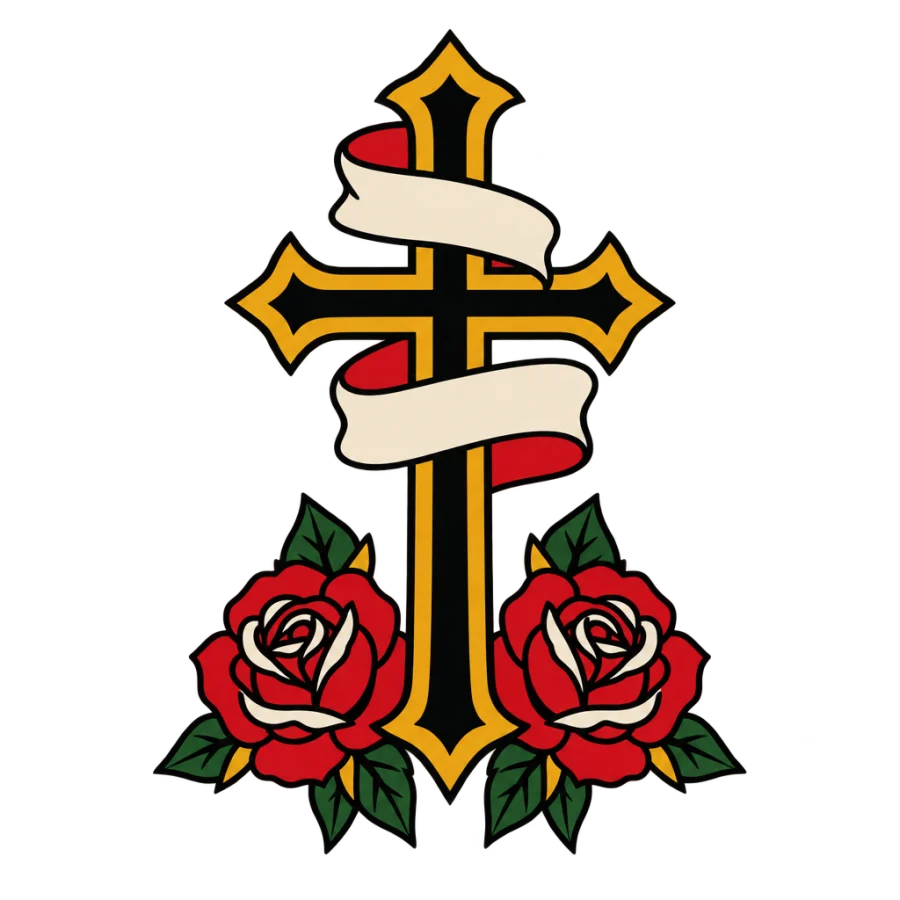
A cross wrapped in a ribbon banner with two roses at the base
Use this prompt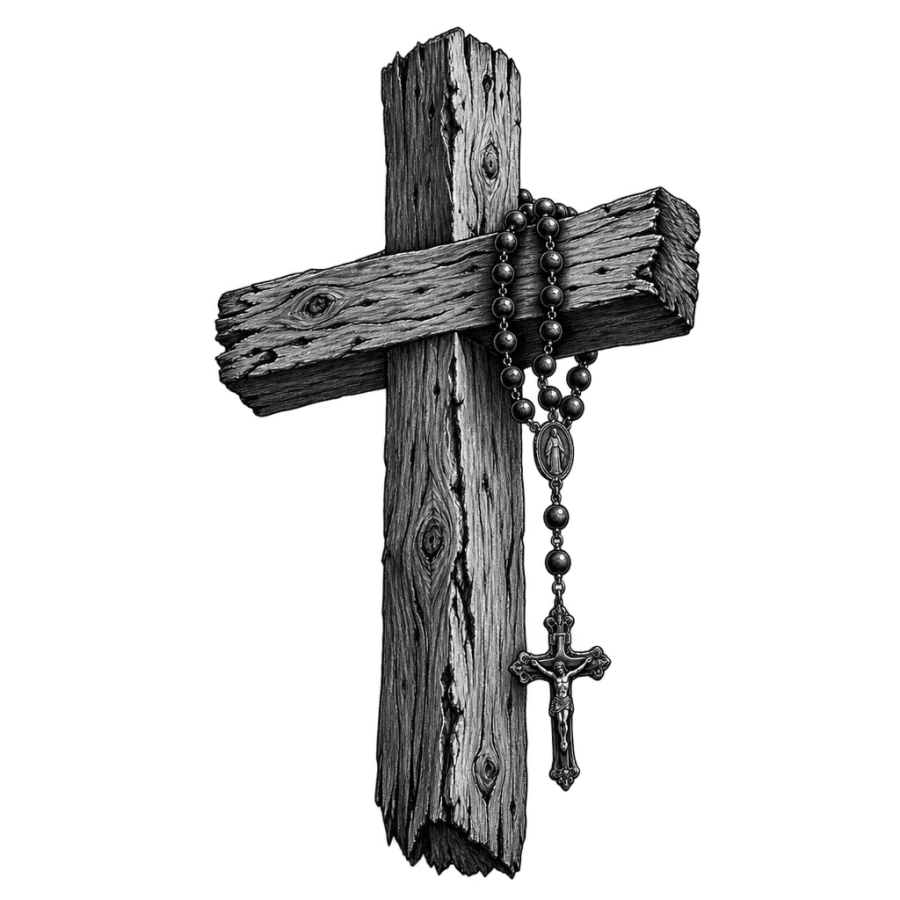
A weathered wooden cross with a rosary draped over one arm
Use this prompt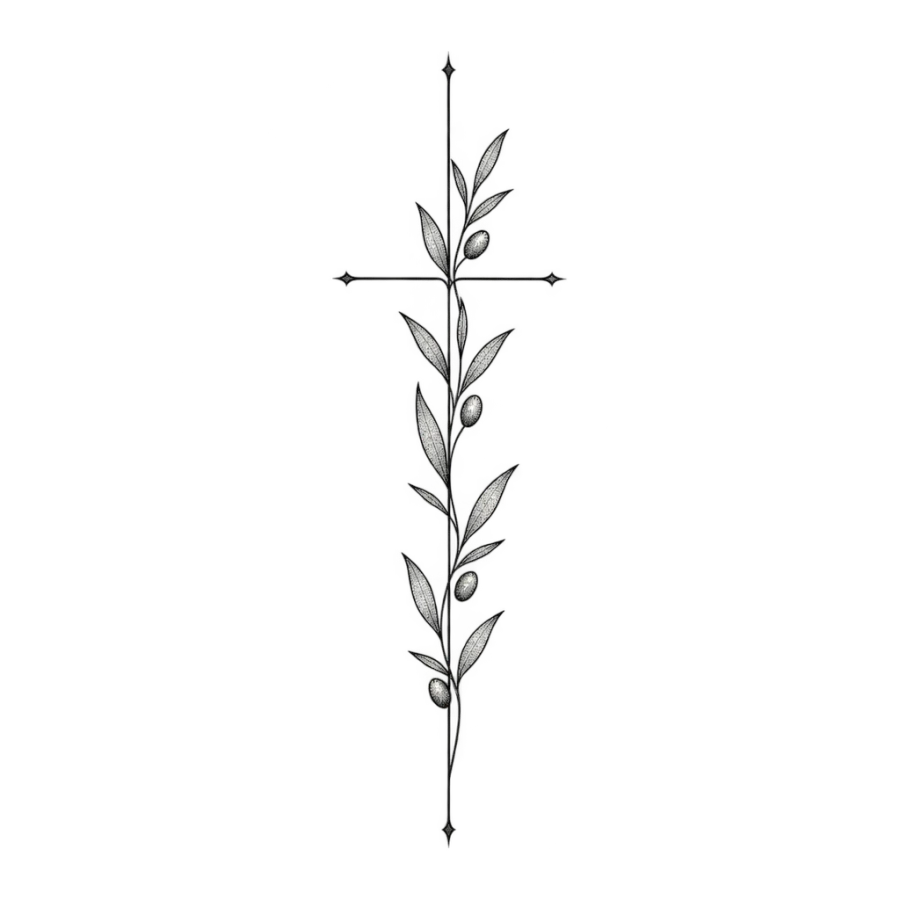
A slender cross with olive leaves growing along it, fine line
Use this prompt
A cross built from interlocking triangles inside a circle, geometric
Use this prompt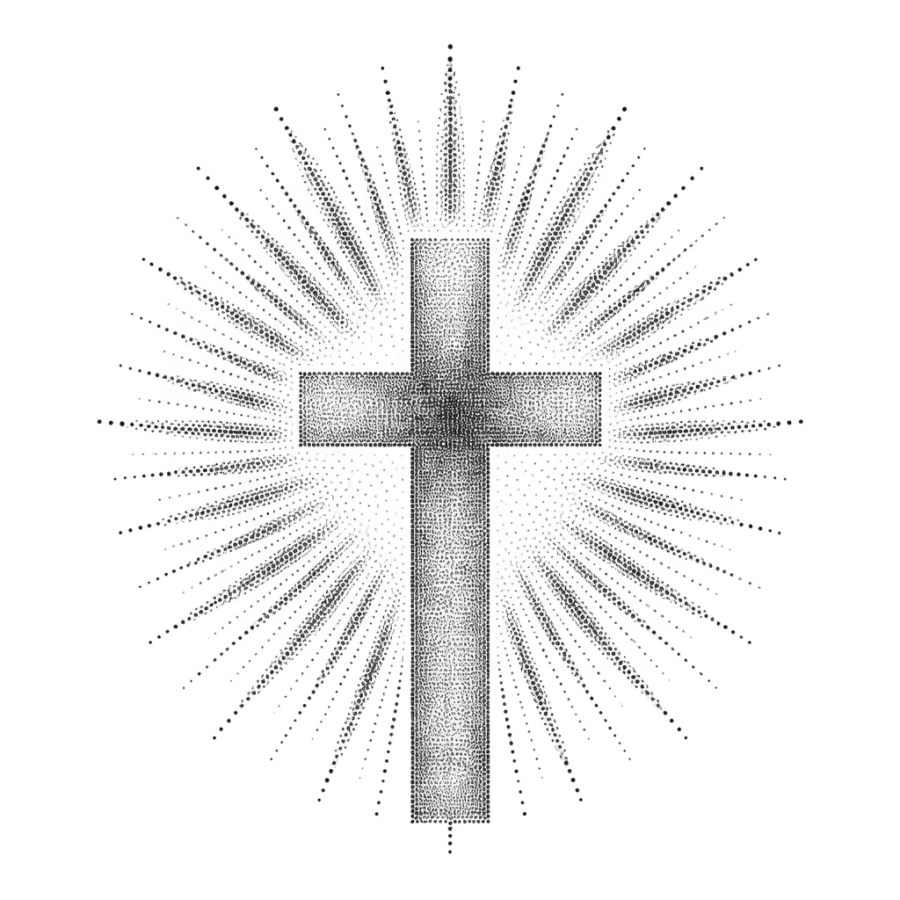
A cross in front of a radiant sunburst, stippled dots only
Use this prompt
A cross drawn in one unbroken line looping into a heart
Use this prompt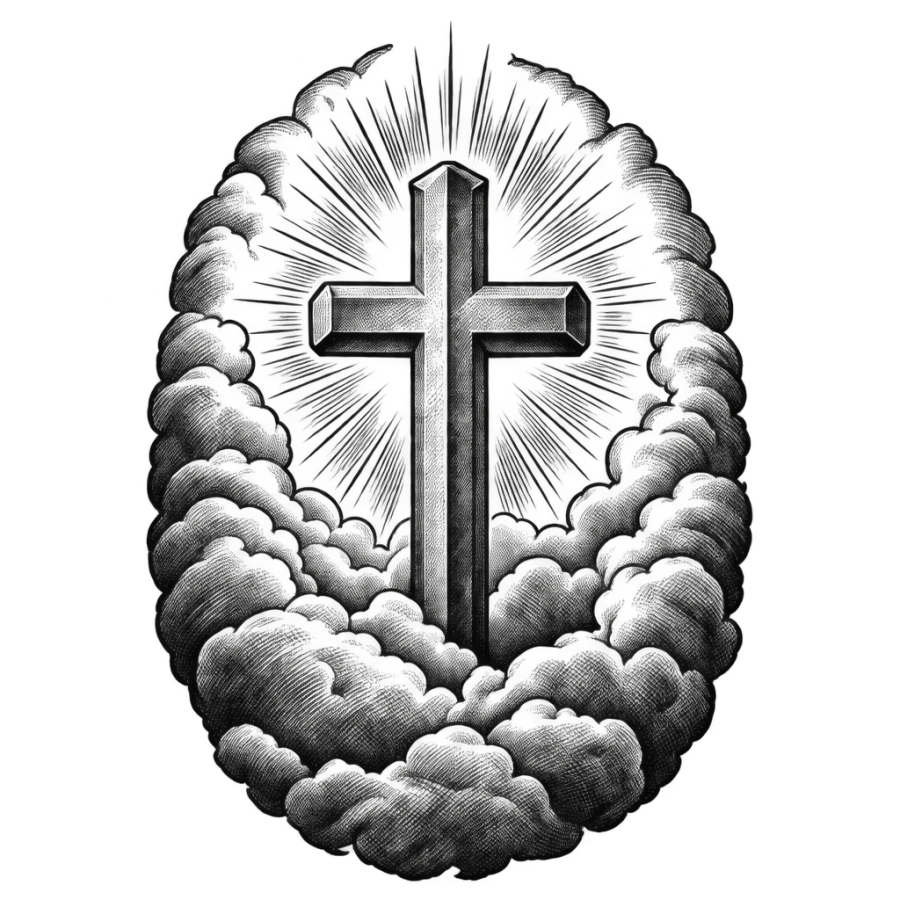
A cross rising out of clouds with light rays behind it
Use this prompt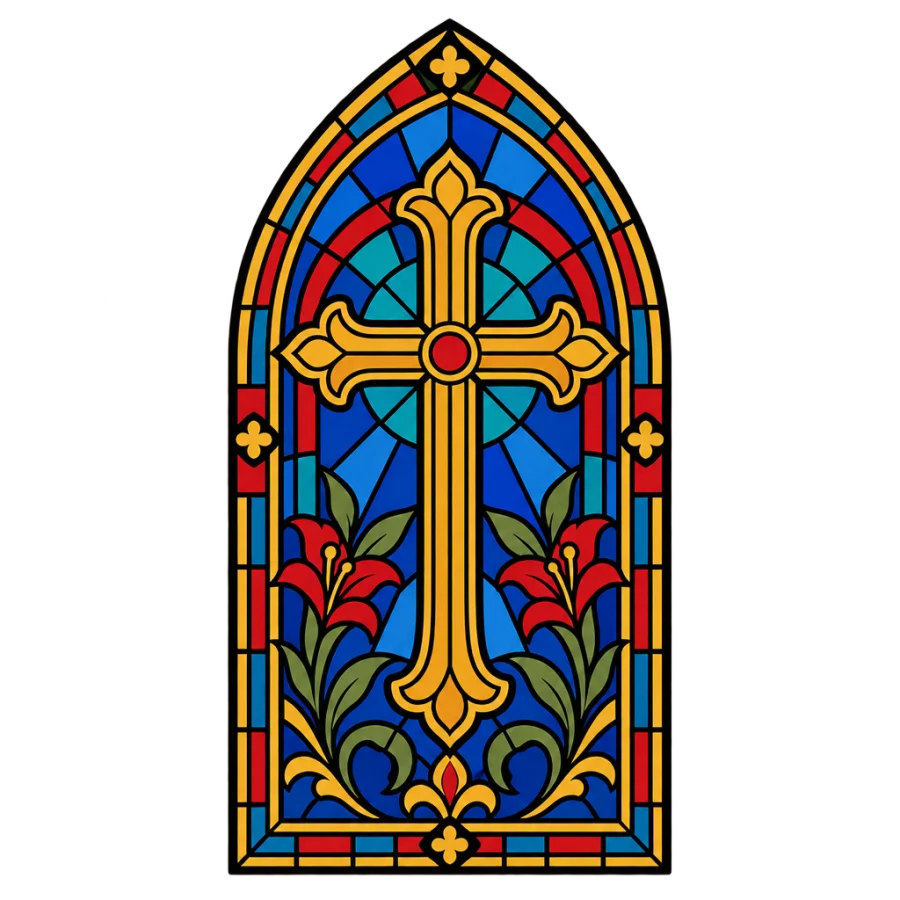
A cross inside a stained glass window arch, colour panels
Use this prompt
A heavy Gothic cross in solid black with negative space cutouts
Use this prompt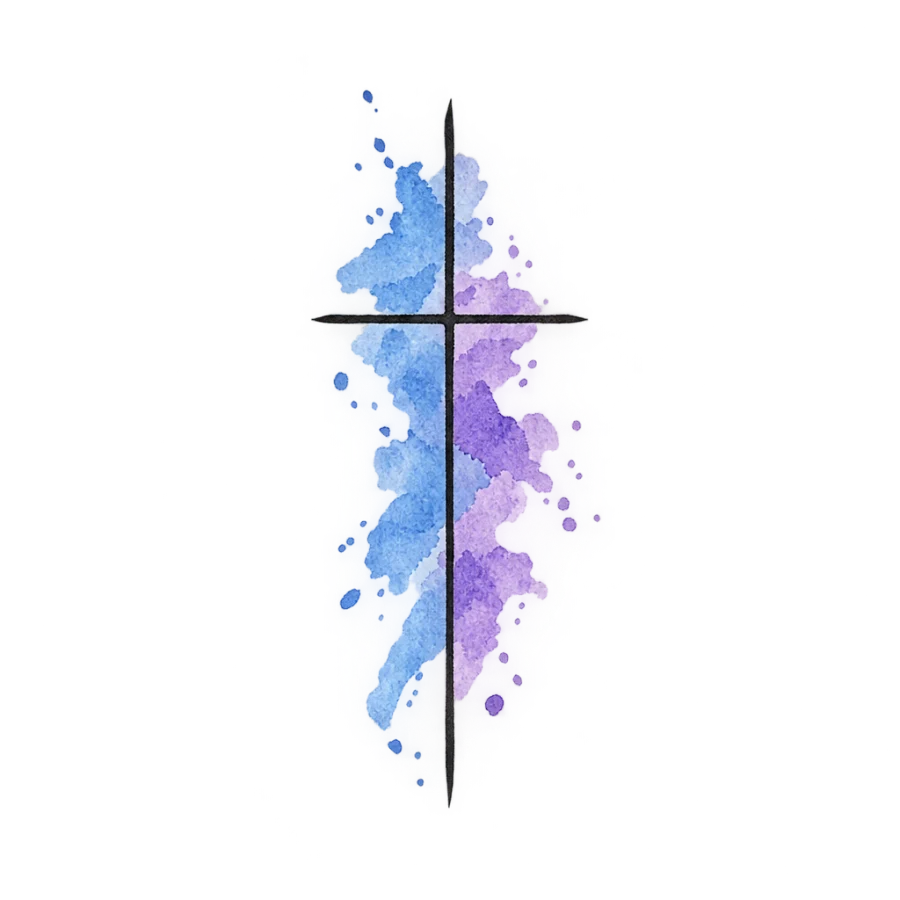
A slim cross with loose blue and violet watercolour washes behind
Use this prompt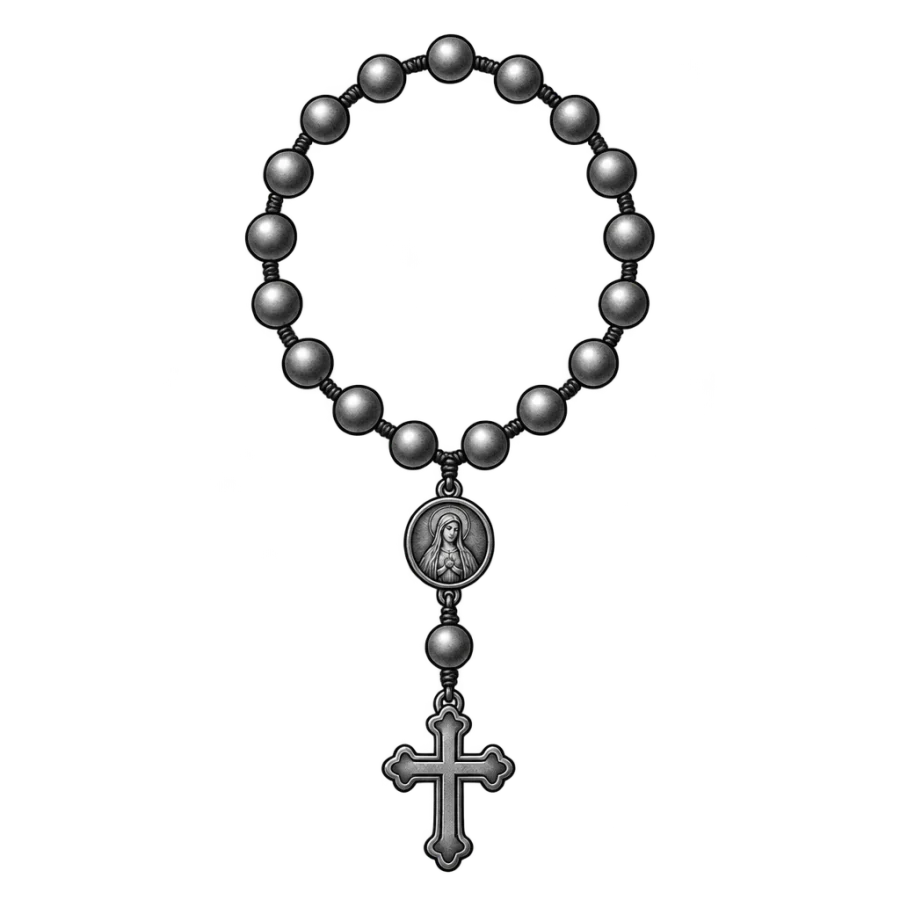
A rosary laid in a circle with a small cross hanging below
Use this promptDescribe an idea of your own and get four designs back in about 20 seconds.
Open the generator
Questions people ask
What does a cross tattoo mean?
Usually Christian faith, referring to the crucifixion. Many cross tattoos are also memorials carrying a name or a date. A Celtic cross often points to Irish or Scottish family background, and an Orthodox three bar cross usually signals Greek, Russian, Serbian or Ethiopian heritage.
Is it a sin to get a cross tattoo?
Christians disagree. Leviticus 19:28 tells Israelites not to cut or mark their bodies, and some read that as a standing prohibition while others read it as addressing specific ancient mourning practices. No single answer covers every church, so it is worth asking within your own tradition.
How small can a cross tattoo be?
A plain cross holds at 2 to 3 cm because there is nothing inside it to close up. Wood grain needs about 8 cm, Celtic interlace needs 10 cm before the strands merge, and a crucifix with a figure needs 12 to 15 cm to keep the anatomy readable.
Where is the best place for a cross tattoo?
The inner and outer forearm are the most requested, since the shape follows the limb and you control visibility with sleeves. Larger panelled crosses suit the shoulder blade, upper arm and center back. Fingers and behind the ear look good early and blur fastest.
Should I put a Bible verse with my cross?
A reference like a book, chapter and verse works well at small size. A full verse usually forces the lettering so small that it greys into a smudge within ten years. If you want the whole passage, plan for a larger placement and a font with no hairline serifs.