Cat tattoo ideas, meaning and designs
Most cat tattoos are portraits of one specific cat, which makes them harder than they look, because a cat is recognized by very small markings.
- Pain level4 / 10 on the forearm
- Healing2 to 3 weeks on top
- Typical size6 to 20 cm (2 to 8 in)
- Studio cost$180 to $900
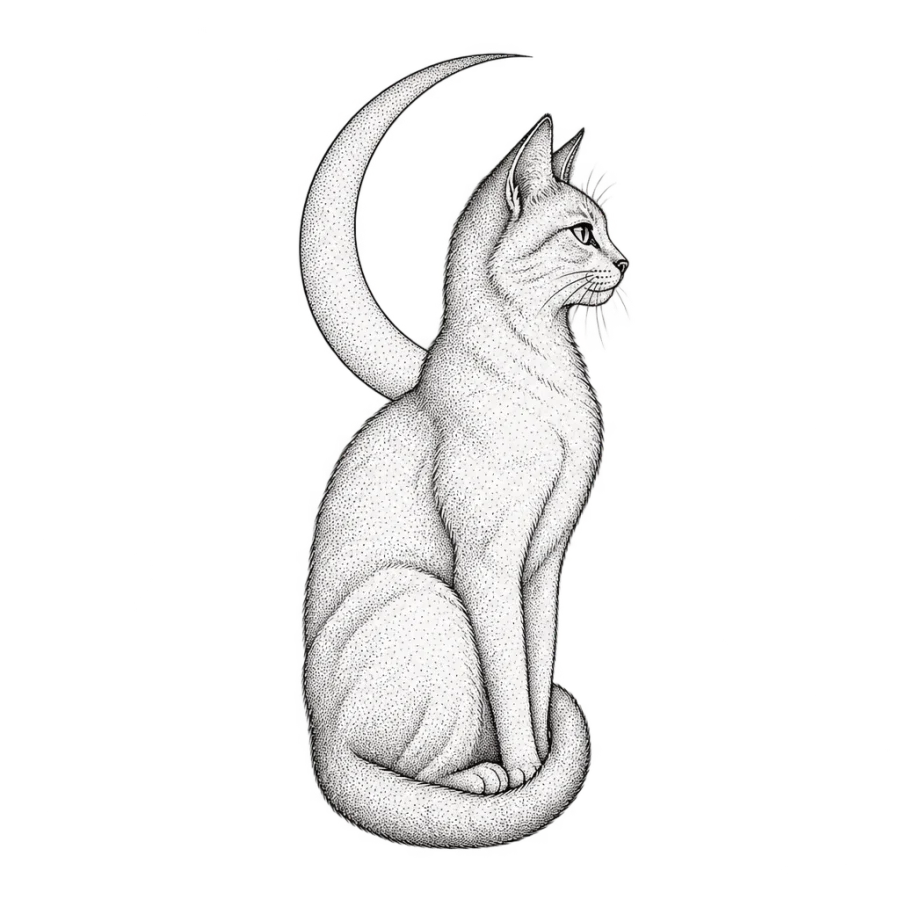
Cats have been tattoo subjects for as long as people have been sentimental about them, which is a long time. Egypt kept cats in enormous numbers and buried them in dedicated cemeteries, and the goddess Bastet was drawn with a cat's head. Japan produced the maneki neko, the beckoning cat with one raised paw that sits in shop windows, a convention that goes back to the Edo period.
Those are fine designs, but the most common request in a shop today is simply someone's own cat, usually after it dies. That changes the job from illustration to portraiture, and portraiture has rules. The main one is that a cat is identified by nose shape, eye color and the exact pattern of markings on its face.
Getting a portrait to look like your cat
The reference photo does more work than the artist does. You want a photo shot at the cat's eye level, in daylight, with the eyes in focus and the face turned slightly to one side. Phone photos taken from above are the most common thing people bring in and the least useful, because looking down foreshortens the muzzle and flattens the markings.
Black cats are the hardest. Pure black fur has no visible detail in a photo, so the artist has to build the cat out of greys with black kept for the deepest shadows, then define the outer edge against a darker background or a halo of light. Tell your artist early if the cat is black, because it changes how much space the piece needs.
What to send your artist
- Two or three photos at the cat's eye level in daylight
- One close photo of the face showing nose color and markings
- A note on eye color, which photos often shift
- Any detail that identifies the cat, a torn ear tip, a white chin patch
Size, and where portraits fall apart
A realistic cat portrait needs 12 to 15 cm at minimum and 18 to 20 cm is safer. Under that, the whiskers, the nose leather and the fine markings around the eyes have nowhere to go, and those are exactly the features that make it look like your cat rather than a cat. Fur texture is built with a magnum needle in several light passes and needs surface area.
Small cat tattoos work when they stop trying to be portraits. A single line drawing of a sitting cat at 5 cm is clean and will stay clean. A solid black silhouette of a cat with an arched back holds at 4 cm. Both are good choices for the wrist, ankle or behind the ear, and neither pretends to be a specific animal.
What each size gives you
- 4 to 6 cm, silhouette or single line cat, no facial detail
- 8 to 12 cm, stylized or neo traditional cat with blocked shading
- 15 to 20 cm, a recognizable portrait with fur texture and eye detail
- 20 cm and up, full body cat with a background or a second animal
Styles that suit cats
Black and grey realism is the standard for portraits. Neo traditional suits cats unusually well because the style simplifies fur into shape and color, which means a 10 cm neo traditional cat can carry more personality than a 10 cm realistic one. Fine line works for sleeping and curled poses where the outline alone tells you what it is.
Japanese work has its own cat, the maneki neko, drawn with a bib, a coin and one raised paw. The left paw raised is traditionally for bringing customers and the right for bringing money, a convention that dates to Edo period Japan. American traditional has a black cat with an arched back, a standard flash piece since at least the 1930s.
Memorial pieces and how they age
If the tattoo is for a cat that died, give yourself a few weeks before booking. Artists see a lot of grief tattoos and the ones people regret are usually the ones decided within days, often because the design grew to include dates, a name, a paw print and a quote. A good portrait carries the memory on its own.
For aging, the eyes decide everything. A portrait with genuinely dark pupils and a clear catchlight keeps its expression for fifteen years. Portraits built from light greys go soft within five and the cat stops looking like anyone in particular. Paw prints in solid black hold up well. Very fine whisker lines usually fade first, and most artists accept that and draw only three or four per side.
Designs people ask for
- A portrait of one cat's face, 15 to 20 cm, in black and grey
- A curled sleeping cat drawn as a single continuous line
- Maneki neko with a raised paw and a coin, in Japanese color work
- A black cat with an arched back in American traditional style
- A cat silhouette with a paw print and a date underneath, kept small
12 cat tattoo designs, with the prompt behind each one
Every design below came out of AI Tattoo Lab. Tap one to load its prompt into the generator, then change a word and make it yours.
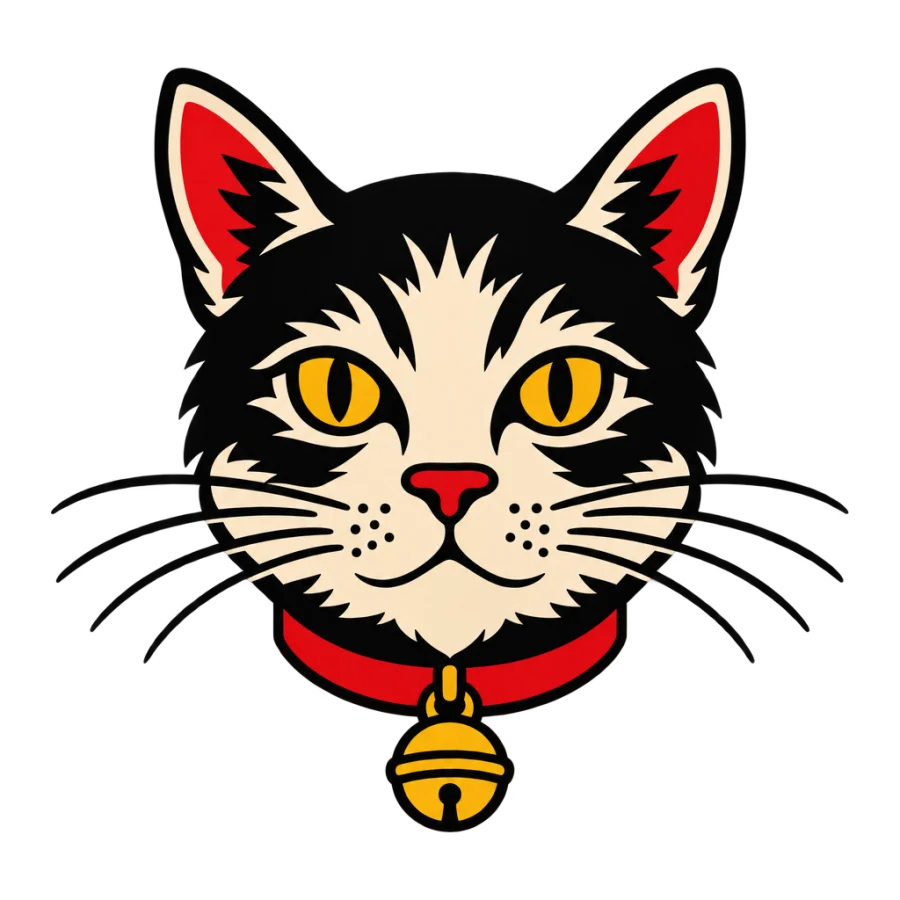
A cat head facing forward with a bell collar, bold traditional flash
Use this prompt
A cat arching its back, solid black silhouette with negative space
Use this prompt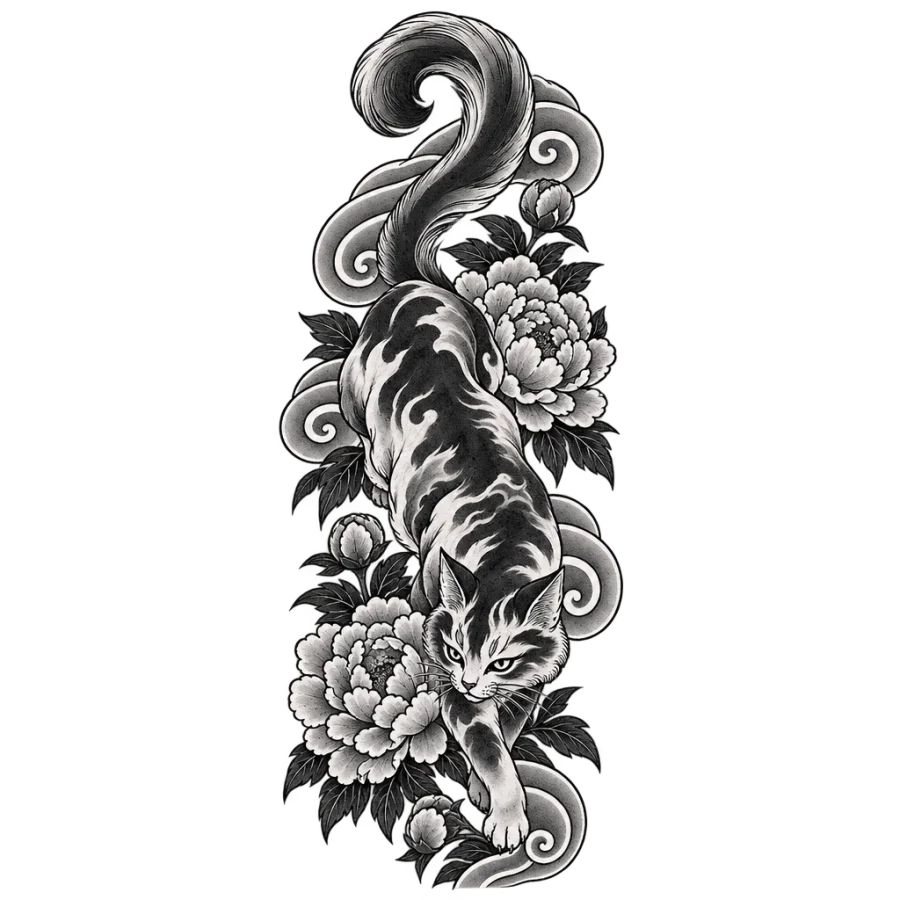
A long tailed cat prowling through peonies, Japanese style with wind bars
Use this prompt
A cat face made of triangles and circles, geometric and symmetrical
Use this prompt
A cat curled asleep in a circle seen from above, dotwork shading
Use this prompt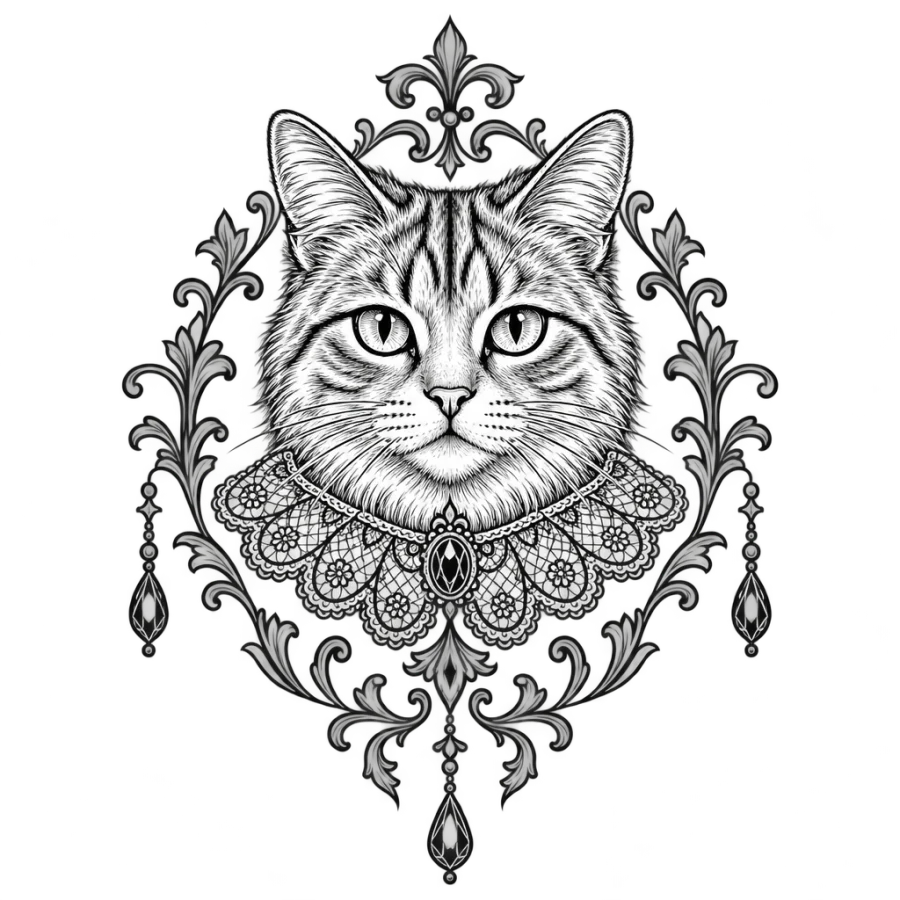
A cat head in a lace collar with filigree scrolls and jewel drops
Use this prompt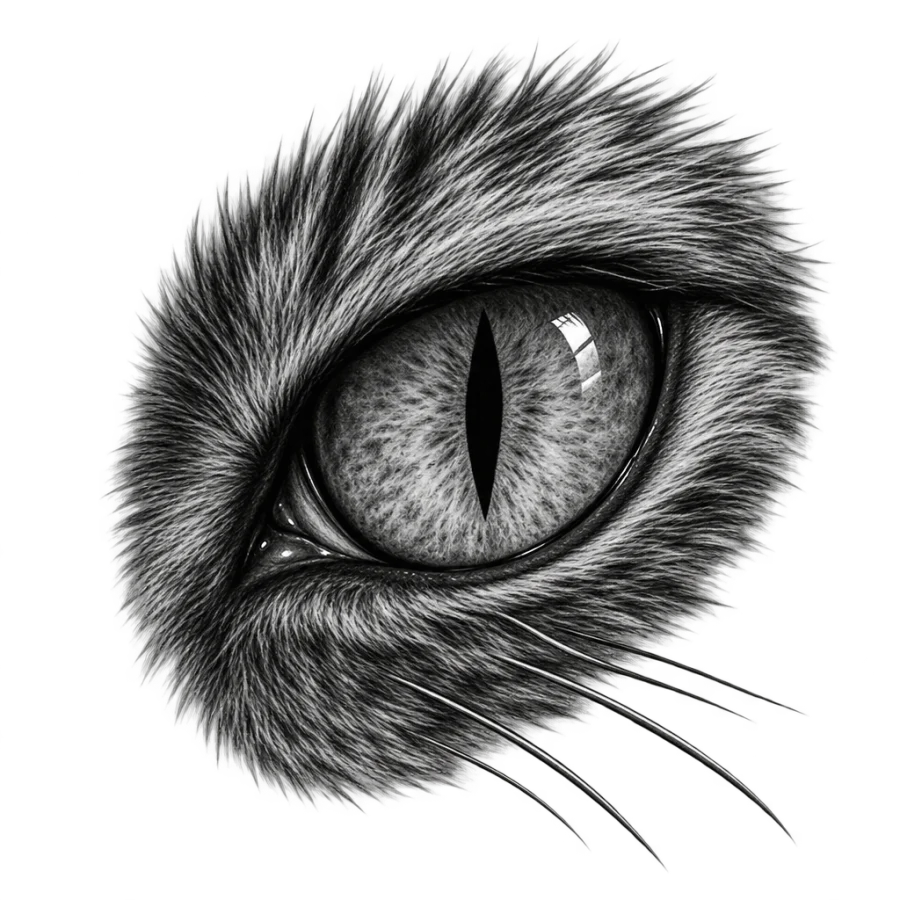
A close up of a single cat eye with brow fur, black and grey realism
Use this prompt
A cat stretching, drawn in one continuous line, very minimal
Use this prompt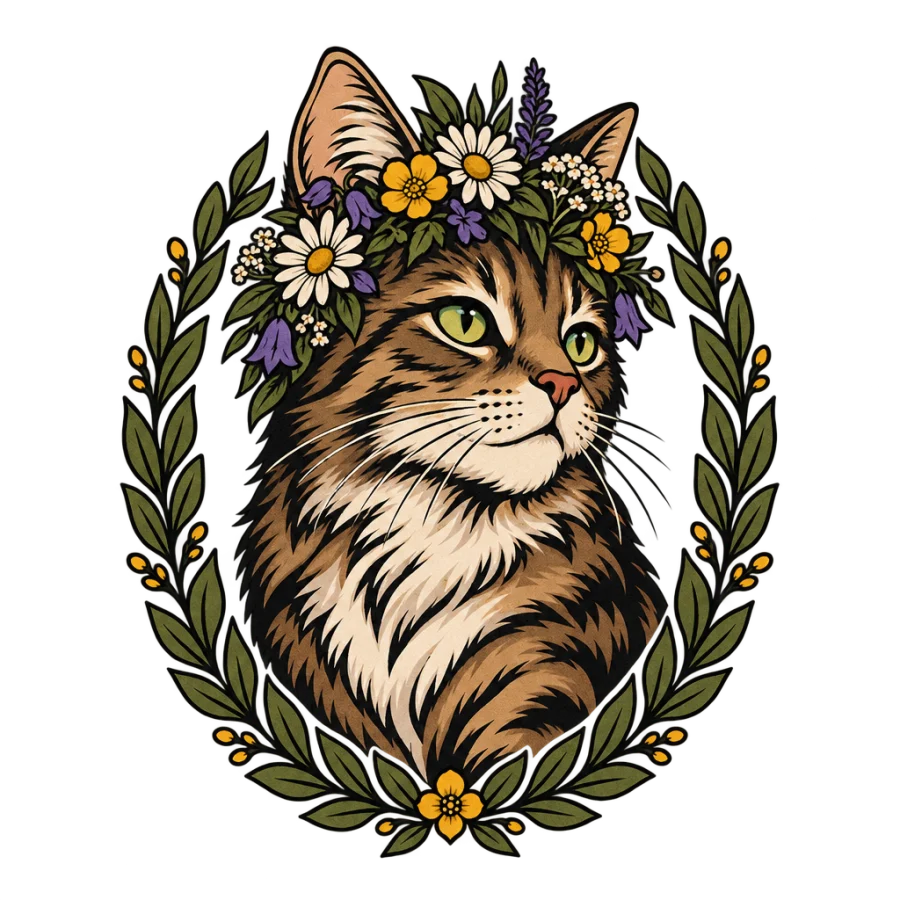
A cat wearing a wildflower crown in a leafy oval frame, neo traditional
Use this prompt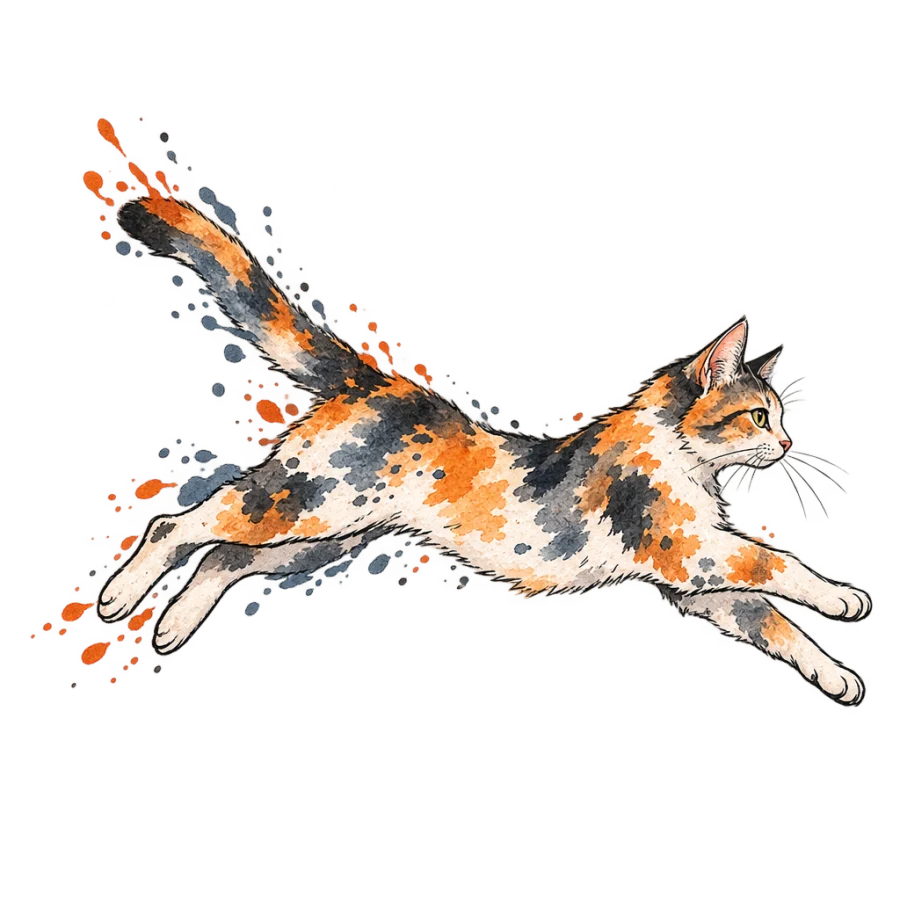
A cat leaping with watercolor splashes trailing off its fur and tail
Use this prompt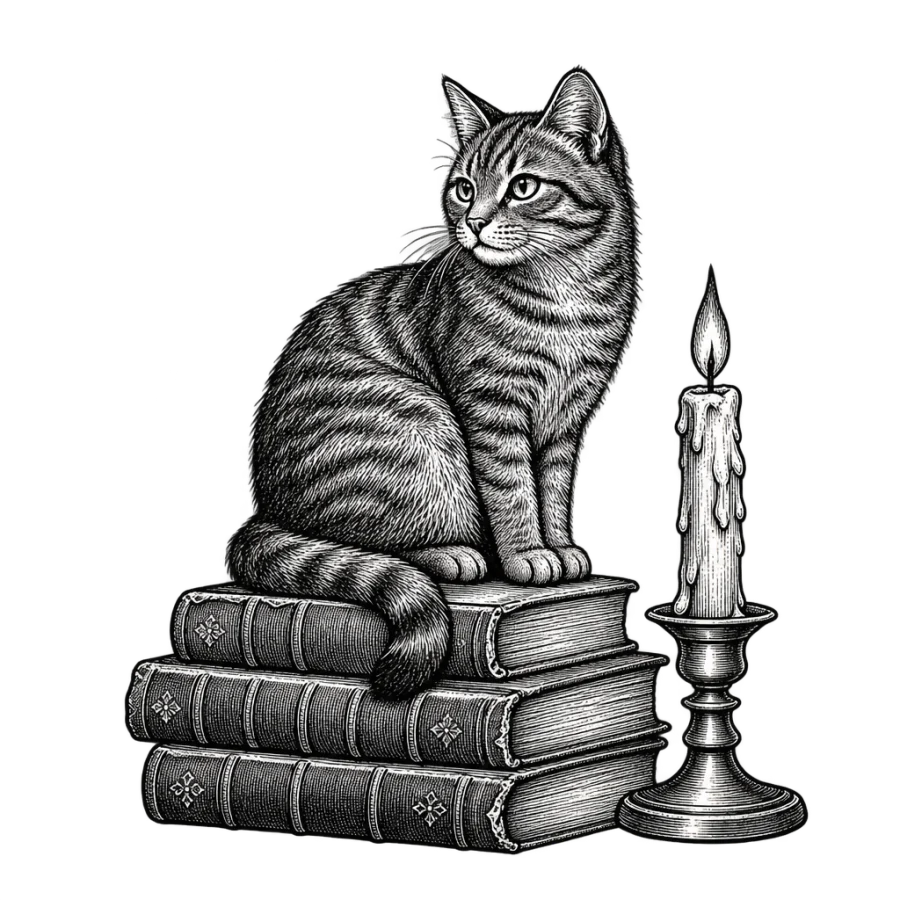
A cat sitting on a stack of old books with a candle, engraved style
Use this promptDescribe an idea of your own and get four designs back in about 20 seconds.
Open the generator
Questions people ask
How big does a cat portrait tattoo need to be?
Twelve to fifteen centimeters at minimum, and 18 to 20 cm is safer. The features that identify your cat are small: nose shape, eye color, the markings around the eyes. Below 12 cm those merge and you get a generic cat. Stylised or silhouette cats work fine much smaller.
What photo should I bring for a cat tattoo?
Two or three daylight photos taken at the cat's eye level, with the face turned slightly to one side and the eyes in focus. Add one close shot of the face. Photos taken from standing height looking down are the least useful because they flatten the muzzle and distort the markings.
Are black cat tattoos harder to do?
Yes. Black fur shows almost no detail in a photograph, so the artist builds the cat from greys and saves true black for the deepest shadows, then separates the outline using a dark background or rim light. It usually needs more space than a tabby portrait. Mention it when you book.
How much does a cat tattoo cost?
A small line drawing or silhouette is usually $150 to $250. A neo traditional cat of 12 cm runs about $350 to $550. A realistic portrait of 18 cm takes four to six hours and commonly costs $600 to $900, more with a well known portrait artist.
What does a cat tattoo mean?
Most often it means one specific cat, usually one that has died. Beyond that, cats carry associations with independence and self possession. In Egypt they were protective household animals and the goddess Bastet was drawn with a cat's head. The Japanese maneki neko is a luck charm for business.